In this guide
💡 The Short Version: Adult tickets to the Kon-Tiki Museum cost NOK 180, children aged 6 to 17 and students pay NOK 70, and Oslo Pass holders enter free. The museum is on the Bygdøynes waterfront beside the Fram Museum. It shows the original balsa-wood raft Kon-Tiki that sailed 4,300 nautical miles across the Pacific in 1947, and the papyrus reed boat Ra II from Thor Heyerdahl’s 1970 Atlantic crossing. It is open daily year-round, 09:30 to 18:00 in high summer and 10:00 to 17:00 from September to April. Joint tickets with the neighbouring museums are sold at the desk. Or book a tour: the Oslo Discovery Tourad from NOK 1,050 is a 5.5-hour guided bus tour that includes the Fram Museum and either the Kon-Tiki or the Folk Museum, so the Bygdøy transport and the tickets come in one booking.
⚠️ The Bygdøy ferry runs from mid-April to late September only. The rest of the year take Ruter bus 30, which leaves every 10 minutes from Jernbanetorget and Nationaltheatret for the museum gate. The Viking Ship Museum nearby is closed for rebuilding until late 2027.
Admission prices
Buy tickets at the desk or online on the official Kon-Tiki Museum site. Online tickets are not tied to a time slot:
| Ticket type | Price (kon-tiki.no) |
|---|---|
| Adult | NOK 180 |
| Senior (67+) | NOK 140 |
| Student | NOK 70 |
| Child (6–17) | NOK 70 |
| Family (2 adults + up to 5 children) | NOK 400 |
| Groups of 10 or more | NOK 130 each |
| Oslo Pass | Free |
- Oslo Pass savings: the Kon-Tiki Museum (NOK 180) and the Fram Museum (NOK 180) are neighbours on Bygdøynes; the Oslo Pass (from NOK 580) covers both.
- Accessibility: step-free access, and a lift to the underground galleries and the cinema. Assistance dogs are allowed.
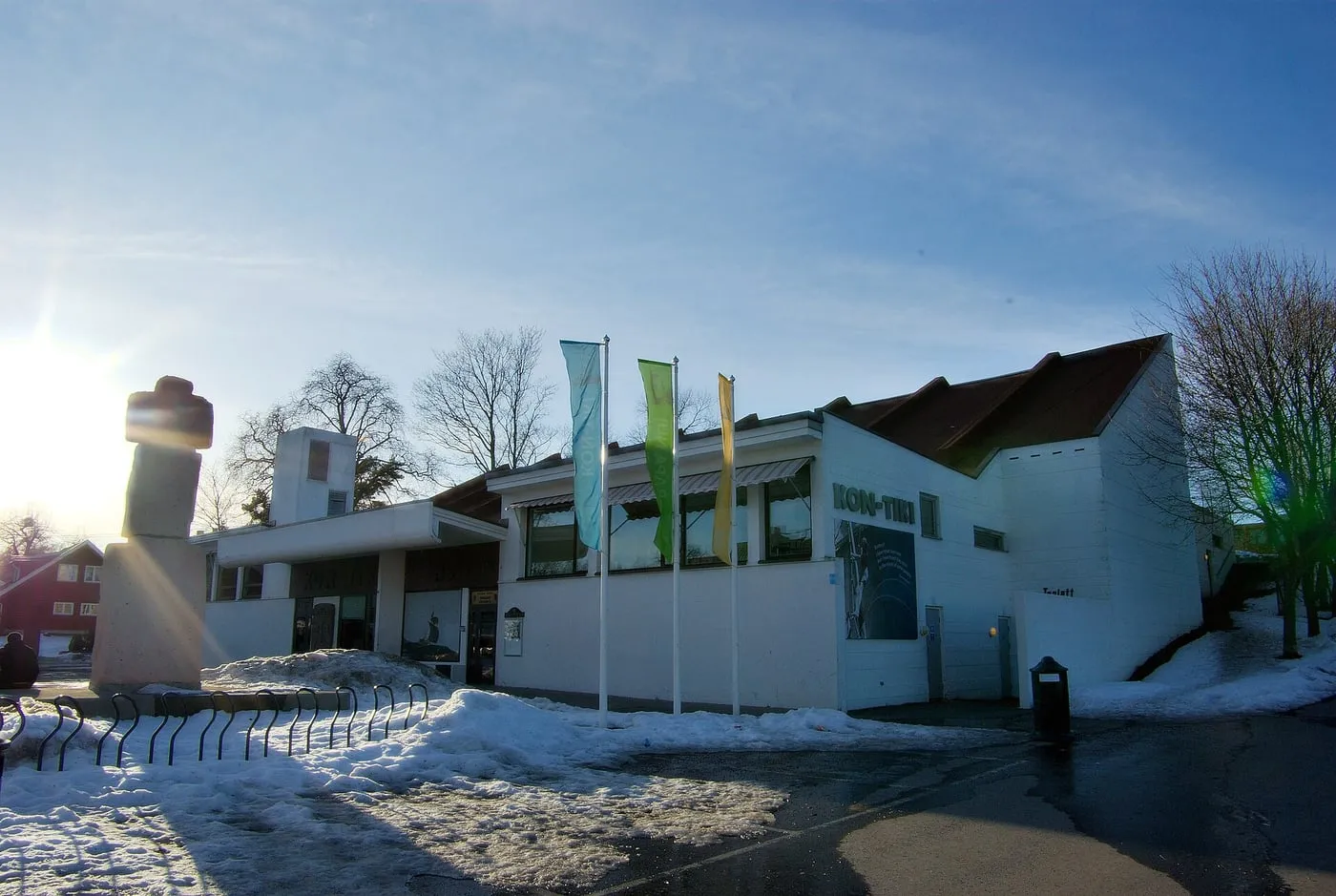
Tickets and tours
Kon-Tiki Museum entry ticket
From NOK 180 · 4.5 stars from 61 reviews · entry ticket
Oslo: Kon-Tiki Museum Entry Ticketad is an entry ticket to the museum: Thor Heyerdahl’s work, the original Kon-Tiki raft and the Oscar-winning Kon-Tiki film.
Discovery tour with two museums
From NOK 1,050 · 4.7 stars from 428 reviews · 5½ hours · guided bus tour
Oslo: Oslo Discovery Tour with 2 Museums Includedad covers Holmenkollen, Vigeland Sculpture Park, the Fram Museum and either the Norwegian Folk Museum or the Kon-Tiki Museum.
Grand city tour with a fjord cruise
From NOK 1,500 · 4.7 stars from 711 reviews · 7½ hours · guided bus tour and boat
Oslo: Grand City Sightseeing Tour by Bus with Fjord Cruisead swaps the Folk Museum for the Kon-Tiki Museum between October and April, and adds a fjord cruise.
Thor Heyerdahl and experimental archaeology
The Norwegian explorer Thor Heyerdahl (1914–2002) argued against the academic view that the oceans were barriers to prehistoric peoples. He held that trade winds and currents worked as sea routes, and he tested the idea by building full-scale replicas of ancient vessels from period materials and sailing them across open ocean:
The 1947 Kon-Tiki expedition
Heyerdahl wanted to show that pre-Columbian South Americans could have settled the Polynesian islands:
- Building in Peru: In early 1947 his team felled nine balsa trees in the Ecuadorian rainforest. At the naval dockyard at Callao, Peru, the logs were lashed together with hemp rope, with no nails or metal fastenings.
- The voyage: On 28 April 1947 Heyerdahl and five Scandinavian crewmen (Herman Watzinger, Erik Hesselberg, Knut Haugland, Torstein Raaby and Bengt Danielsson), with their parrot Lorita, left Peru. Carried by the Humboldt Current and the trade winds, the raft drifted 4,300 nautical miles (nearly 8,000 kilometres) in 101 days.
- The landing: On 7 August 1947 Kon-Tiki hit the barrier reef of Raroia atoll in the Tuamotu archipelago of French Polynesia and came ashore.
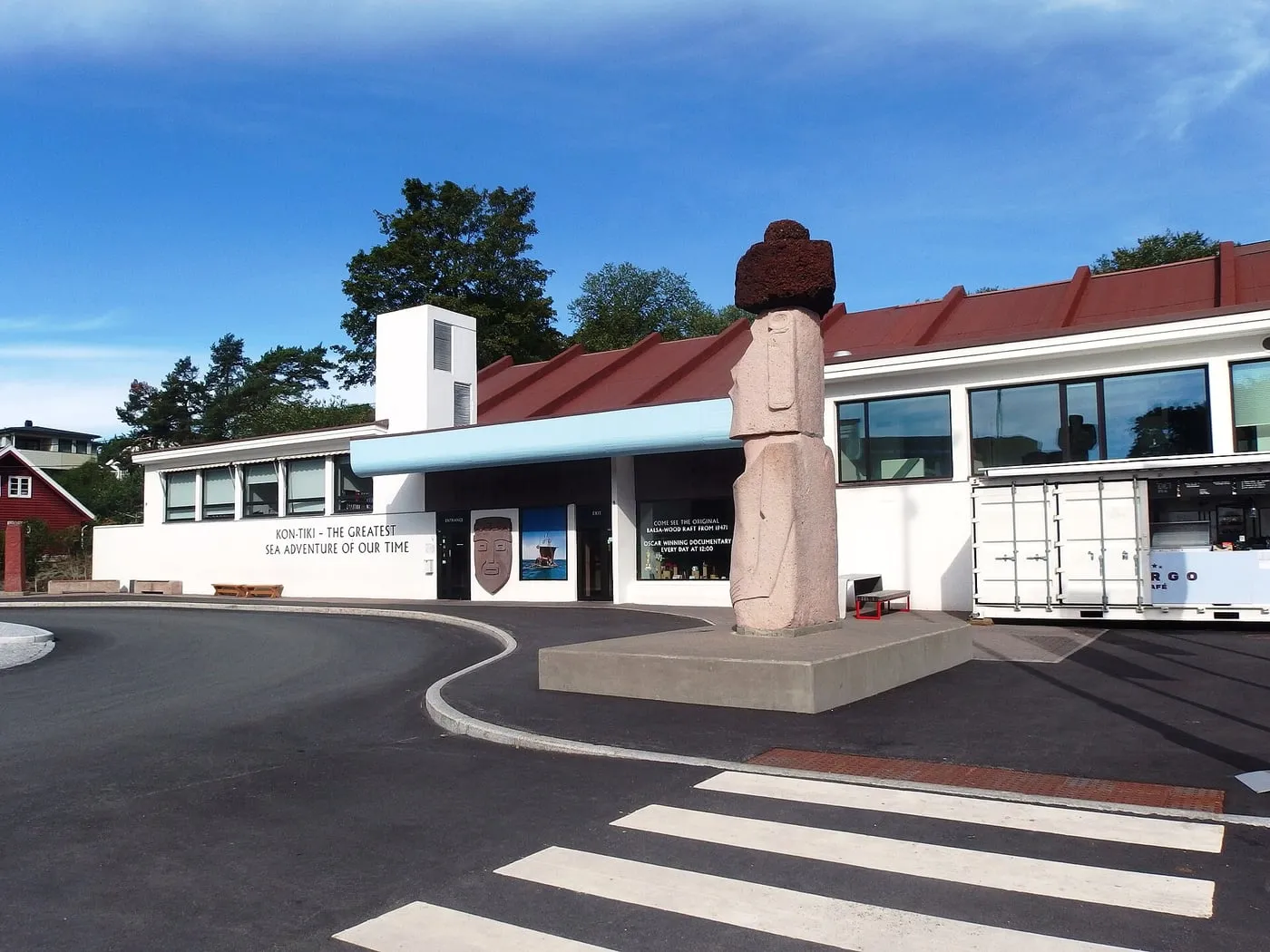
The vessels and key exhibitions
Two display halls are linked by an underground gallery:
1. The original Kon-Tiki raft
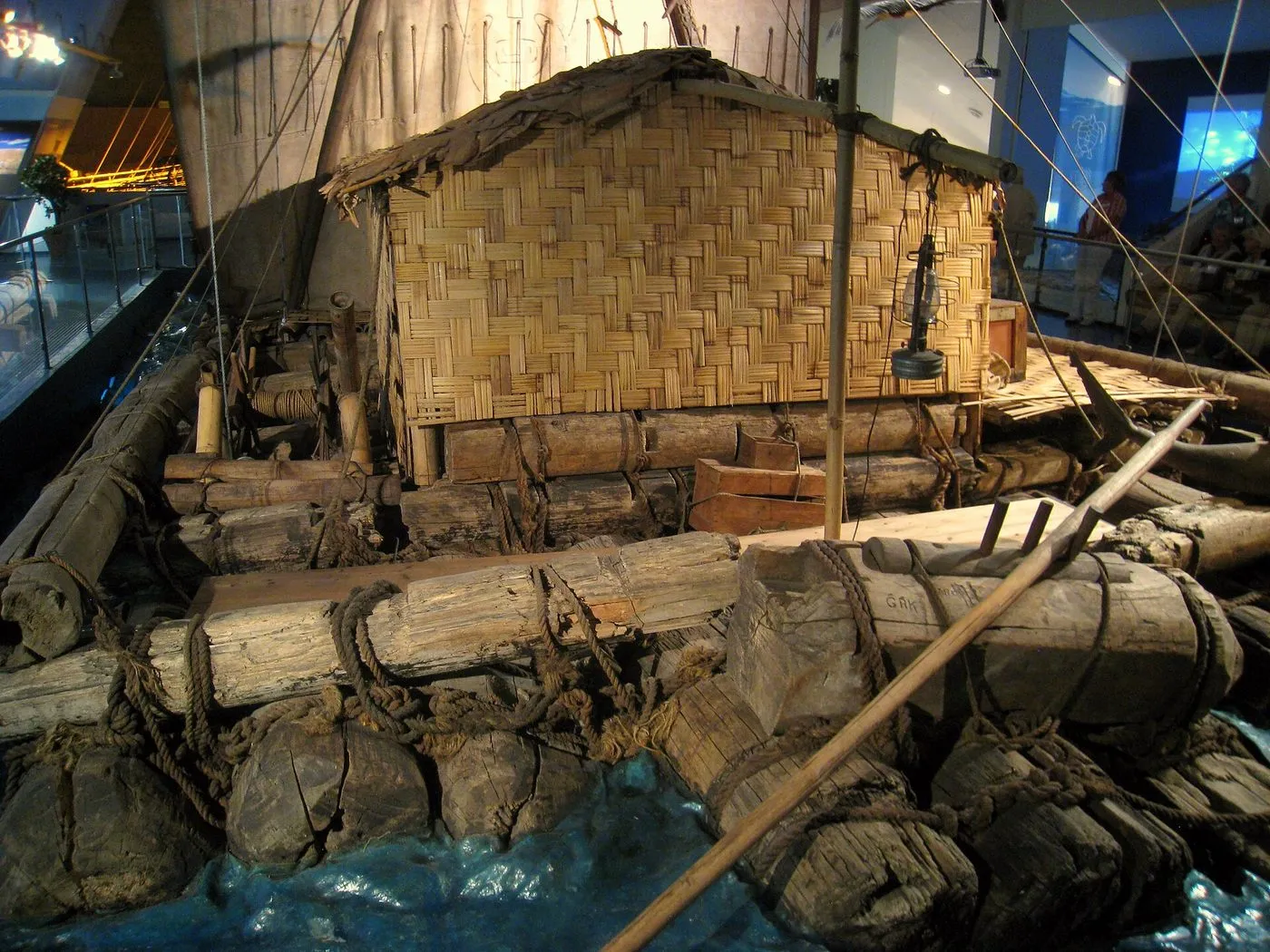
The original raft stands in the main hall:
- The balsa logs: the actual Ecuadorian balsa logs, now dried and aged, still held together by the original hemp cordage. The open bamboo deck let waves drain straight through.
- The bamboo cabin: a tiny open-sided shelter thatched with banana leaves, barely big enough for the six crew to sleep in shifts.
- The square sail: coarse canvas painted by crewman Erik Hesselberg with the face of the pre-Inca sun god Kon-Tiki (Viracocha).
- The underwater gallery: an escalator goes down to a chamber beneath the raft, dimly lit like deep water, showing the barnacled underside of the logs and a 10-metre model of the whale shark that swam beneath the raft for hours during the crossing.
2. The papyrus reed vessel Ra II
In the adjoining hall stands Ra II, the 12-metre vessel constructed from papyrus reeds:
- The Atlantic crossing (1970): The first papyrus boat, Ra, broke apart in heavy seas in 1969 because of flaws in the stern. For Ra II, Heyerdahl brought four Aymara boatbuilders from Lake Titicaca in Bolivia to build the boat in Safi, Morocco.
- 57 days at sea: A crew of eight men from different countries and backgrounds, under the flag of the United Nations, sailed Ra II 3,270 nautical miles (6,100 kilometres) from Morocco to Bridgetown, Barbados, to show that ancient craft could have crossed to the Americas long before Columbus.
3. Easter Island and the secret family caves
Heyerdahl led major archaeological expeditions to Easter Island (Rapa Nui) in 1955–1956 and returned in the late 1980s:
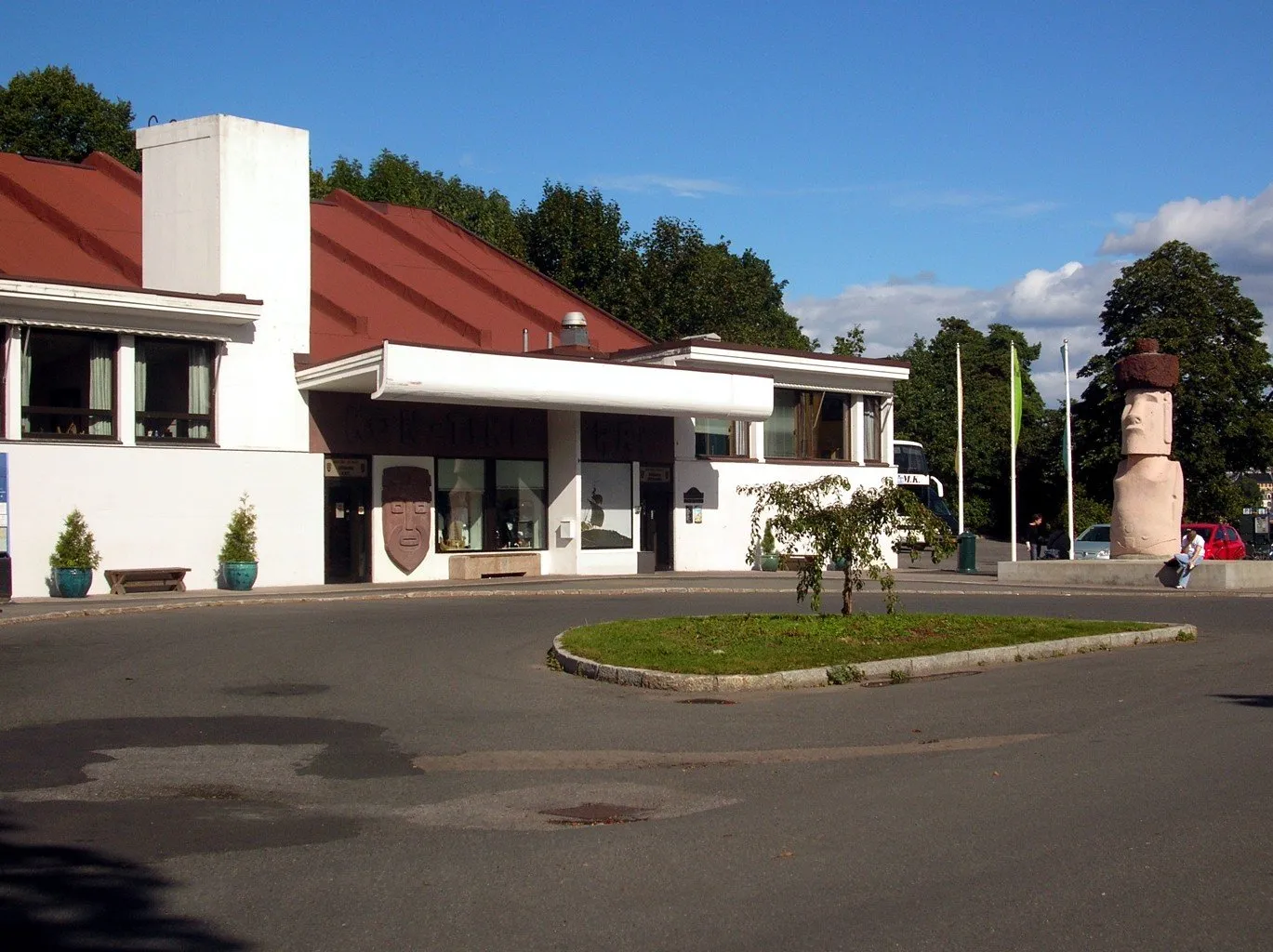
- The statues: stone sculptures, basalt carving adzes and casts of moai, with displays on Heyerdahl’s experiment in which islanders showed how twenty men could “walk” a multi-tonne statue upright with ropes.
- The secret caves: a recreated lava cave shows the hereditary family chambers where Rapa Nui elders hid sacred stone figures from missionaries and raiders.
Opening hours and visiting timetable
The Kon-Tiki Museum is open every day of the year:
| Season | Daily opening hours | Holiday notes |
|---|---|---|
| May | 10:00 to 18:00 | Normal operations on public holidays |
| June to August | 09:30 to 18:00 | Peak summer hours |
| September to April | 10:00 to 17:00 | Autumn and winter timetable |
- Holidays: On Christmas Eve (24 December) and New Year’s Eve (31 December) the museum closes at 15:00. It is open on Christmas Day and Boxing Day.
- Film: The cinema shows Heyerdahl’s 1950 documentary Kon-Tiki, which won an Academy Award and was shot by the crew on a hand-cranked 16mm camera, daily at 12:00 in English.
Getting to Bygdøynes
The museum is at Bygdøynesveien 36 on the Bygdøy peninsula, next to the Fram Museum and the Norwegian Maritime Museum:
- By bus (year-round): Ruter bus 30 runs every 10 minutes from Oslo Central Station (Jernbanetorget), Nationaltheatret and Solli plass, 365 days a year, to the Bygdøynes stop outside the gates. A single in the Ruter app costs NOK 46 (Zone 1); the Oslo Pass covers it.
- By ferry (mid-April to late September): The private Bygdøyfergene ferry leaves every 20 to 30 minutes from Rådhusbrygge 3 (City Hall Pier 3), calls at Dronningen and docks at Bygdøynes (12 minutes in all). Tickets are sold separately and Ruter passes are not valid; it is free with the Oslo Pass.
- By city bike: There is an Oslo Bysykkel station on Bygdøynes pier outside the entrance. The ride from central Oslo takes 25 minutes along the Frognerstranda cycle path.
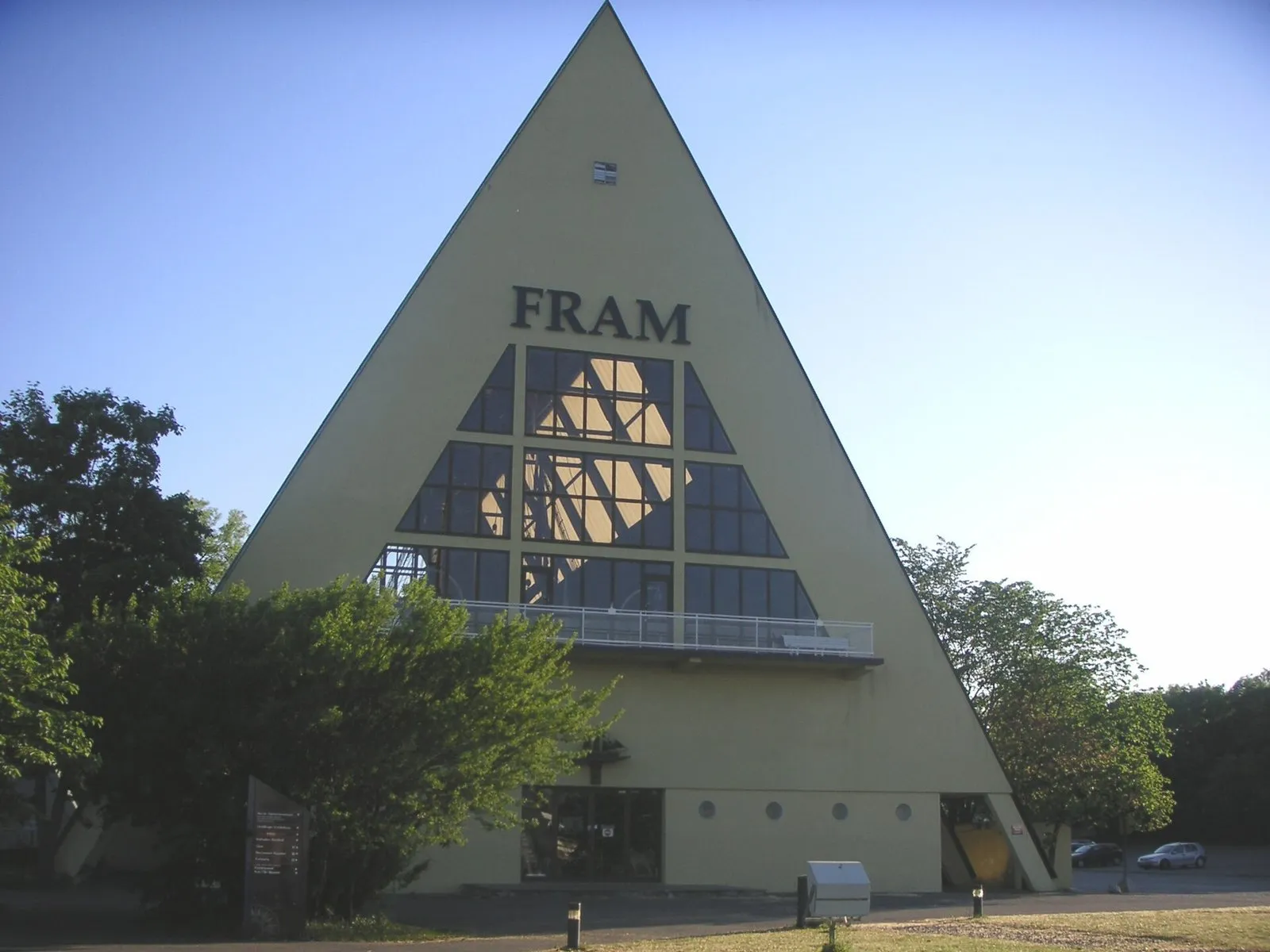
Next door is the polar ship at the Fram Museum, and to the north is the stave church at the open-air Norsk Folkemuseum. See also 3 days in Oslo.
Common questions
How much are tickets to the Kon-Tiki Museum?
Standard adult admission is NOK 180, seniors aged 67 and over pay NOK 140, children aged 6 to 17 pay NOK 70, and students pay NOK 70. Children under 6 enter free, as do Oslo Pass holders.
What is inside the Kon-Tiki Museum in Oslo?
The museum houses the original balsa-wood raft Kon-Tiki from the 1947 Pacific crossing, the papyrus reed vessel Ra II from the 1970 Atlantic crossing, original Easter Island stone sculptures, and interactive expedition exhibits.
When is the Kon-Tiki Museum open?
The museum opens daily year-round: 10:00 to 17:00 from September through April, 10:00 to 18:00 in May, and 09:30 to 18:00 from June to August. It closes at 15:00 on Christmas Eve and New Year's Eve.
How long should I spend at the Kon-Tiki Museum?
Most visitors spend 60 to 90 minutes on the two vessel halls, the underwater whale shark gallery and the Easter Island cave displays.