In this guide
💡 The Short Version: The inner Oslofjord islands are served by the city transit system. Ruter ferry line B1 leaves year-round from City Hall Pier 4 (Rådhusbrygge 4) at Aker Brygge for Hovedøya, Lindøya, Gressholmen, Bleikøya and Nakholmen on an ordinary NOK 46 Zone 1 single, which the Oslo Pass covers. Hovedøya is ten minutes from the pier, with the ruins of a 12th-century English Cistercian abbey and sheltered beaches. Sightseeing boats leave from neighbouring piers: NOK 362 for a wooden sailing ship or NOK 690 for a silent hybrid-electric catamaran. Or book a tour: a 2-hour guided cruise on a silent electric shipad from NOK 587 has live commentary from the guides, and the 1.5-hour audio-guide cruisead from NOK 430 is the cheaper option, so you need not work out the public ferry timetables.
⚠️ You cannot buy tickets on the islands. Buy through the Ruter app, or get a physical card at a mainland convenience store, before boarding. Don’t miss the last boat: there is no night service or water taxi on the fjord, and a sea-rescue pick-up is costly.
Public ferries vs commercial sightseeing cruises
Take the public ferry to explore the islands on foot, or a sightseeing cruise for narration from the water. Both leave from the quays beside Rådhusplassen (City Hall Square).
| Pier | Boats |
|---|---|
| Rådhusbrygge 3 | Båtservice sightseeing and vintage wooden sailing boats |
| Rådhusbrygge 4 | Ruter island ferries, lines B1 and B2, to Hovedøya and Lindøya |
| Stranden / Aker Brygge | Brim Explorer silent electric catamaran tours |
| Vessel / Service | Departure Pier | Standard Fare | Journey Time | Highlights |
|---|---|---|---|---|
| Ruter Line B1 | Rådhusbrygge 4 | NOK 46 single | 10 to 50 min loop | Year-round access to 5 inner islands on a standard transit fare |
| Ruter Line B2 | Rådhusbrygge 4 | NOK 46 single | 20 to 30 min | Summer-only service to the Langøyene swimming beaches and campsites |
| Båtservice Fjord Cruise | Rådhusbrygge 3 | NOK 362 adult | 2 hours | Wooden sailing ship (S/S Helena); sails through the Dyna Lighthouse channel |
| Brim Explorer Electric | Rådhusbrygge | NOK 690 adult | 2 to 2.5 hours | Battery-electric boat with glass-walled saloons and a café-bar |
The public ferries work like city buses: scan your phone ticket at the shore gate, board, and get off at any island pier. A valid Ruter ticket or an active Oslo Pass covers every public island crossing.
Sightseeing cruises you can book
Guided cruise on a silent electric ship
From NOK 587 · 4.7 stars from 2,132 reviews · 2 hours · guided
Oslo: Guided Sightseeing Fjord Cruise on Premium Silent Boatad sails past the Oslofjord’s landmarks aboard the electric ship Ms Brisen, with guides talking about history, nature and the city. It has an outdoor terrace and panoramic salons.
Scenic cruise with audio guide
From NOK 430 · 4.5 stars from 6,907 reviews · 1½ hours · audio guide
Oslo: Scenic Fjord Cruise with Audio Guide Commentaryad explores the inner Oslofjord on an electric ship. Download the free app for commentary in six languages.
Traditional wooden boat
From NOK 429 · 4.5 stars from 6,222 reviews · 2 hours
Oslo Fjord Traditional Sailing Cruise on a Wooden Boat 2 Hoursad is a 2-hour sail on a wooden boat with panoramic views.
Wooden ship mini cruise
From NOK 299 · 4.5 stars from 635 reviews · 50 minutes · museum ferry ticket included
Oslo: Fjord Mini Cruise by Wooden Sailing Shipad is a 50-minute trip on a traditional wooden ship with audio guidance in 13 languages and a museum ferry ticket included.
Exploring the islands: stops and highlights
There are no cars on the inner islands. They range from medieval abbey ruins to summer cabin colonies and bird reserves.
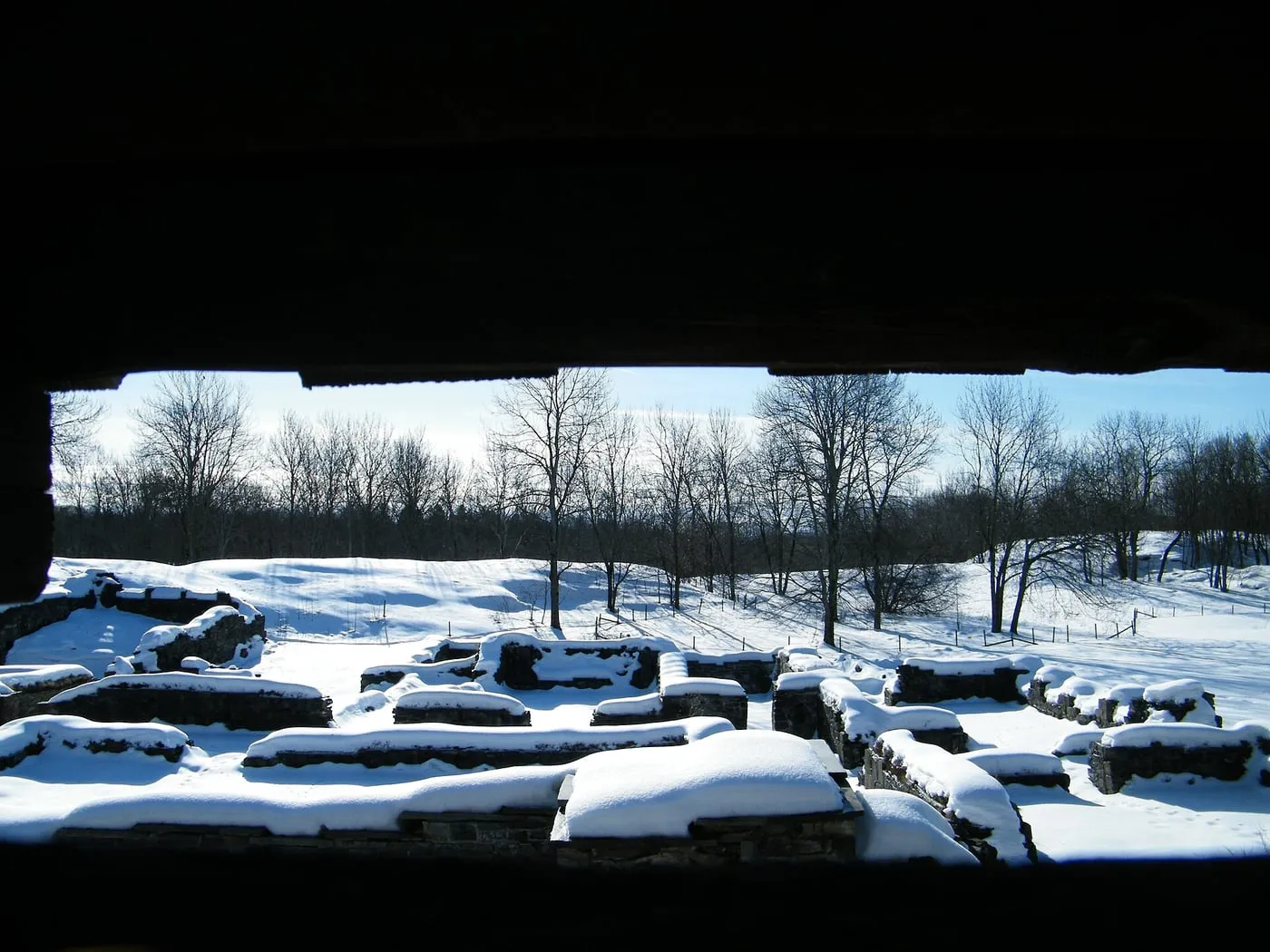
Hovedøya: medieval cloister ruins and swimming bays
Hovedøya is 1.5 kilometres south of City Hall, under ten minutes away on Line B1. From the pier, gravel paths lead through pine and oak woods to the ruins of Hovedøya Abbey (Hovedøya kloster).
English Cistercian monks from Kirkstead Abbey in Lincolnshire founded the monastery in May 1147 at the invitation of the Bishop of Oslo. It lasted nearly four centuries, until 1532, when the abbot backed Christian II during a political crisis. The Danish commander of Akershus Fortress sacked it, burned its timber roofs and seized its estates for the Crown. The surviving stone walls, chapter house and cloister garth still show the layout of the abbey.
Also on Hovedøya:
- South-facing beaches: Grassy slopes drop to sheltered pebble and sand beaches, warm enough for swimming from late June to August.
- Napoleonic cannon batteries: Two stone artillery redoubts built between 1808 and 1814 stand on the eastern hilltops, built to defend Christiania harbour against British warships in the Gunboat War.
- Klosterkroa Café: A summer café near the monastery serving coffee, soft drinks, waffles and open sandwiches.
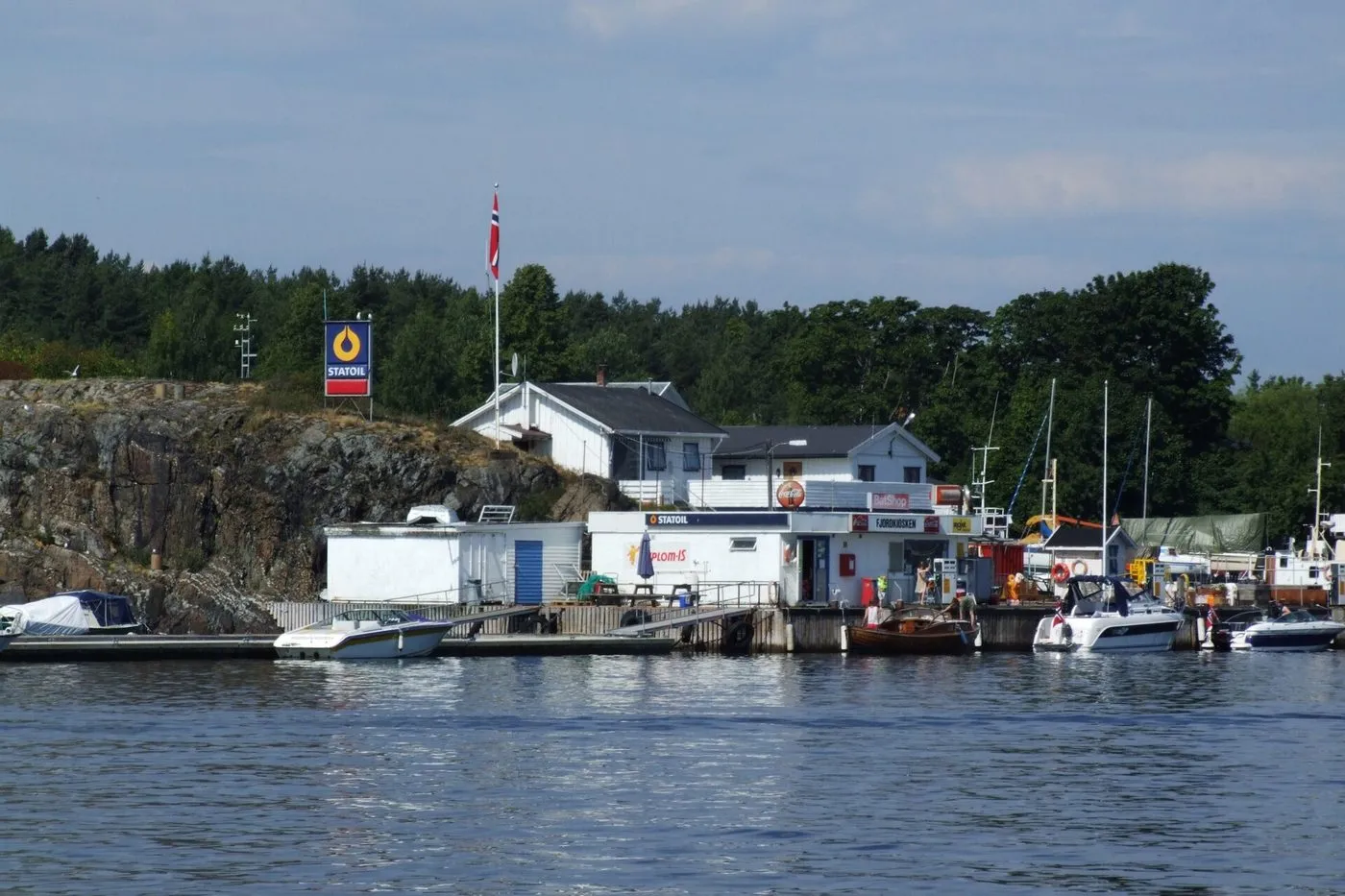
Lindøya: red and yellow cabin colonies
Lindøya is covered with roughly 300 small wooden summer cabins from the 1920s (hytteliv is Norwegian cabin life). Heritage rules limit their colours to Falun red, ochre yellow and forest green, with white window trim.
The island has two ferry piers on opposite sides:
- Lindøya vest (West): Closest to the bathing jetties and swimming ladders, and the small seasonal shop and café.
- Lindøya øst (East): Looks over the inner bay towards Bleikøya and Nakholmen.
A gravel path links the two piers in a 15-minute walk through narrow cabin lanes lined with lilac and wild roses. The southwest nature reserve protects limestone outcrops and rare plants.
Gressholmen, Heggholmen, and Rambergøya
These three islands were once separate and are now joined by narrow stone causeways, giving one walking area:
- Heggholmen Lighthouse: A small timber lighthouse from 1826 on the northern spit of Heggholmen.
- Seaplane base: In 1927 Gressholmen became Norway’s first municipal airport for floatplanes. The hangar and harbour ramp still stand near the eastern shore.
- Gressholmen Kro: A restaurant open in summer, serving local seafood, craft beer and baked goods in an outdoor garden.
- Rambergøya Nature Reserve: The southern arm has mudflats and shallow lagoons protected for migratory wading birds and nesting eider ducks.
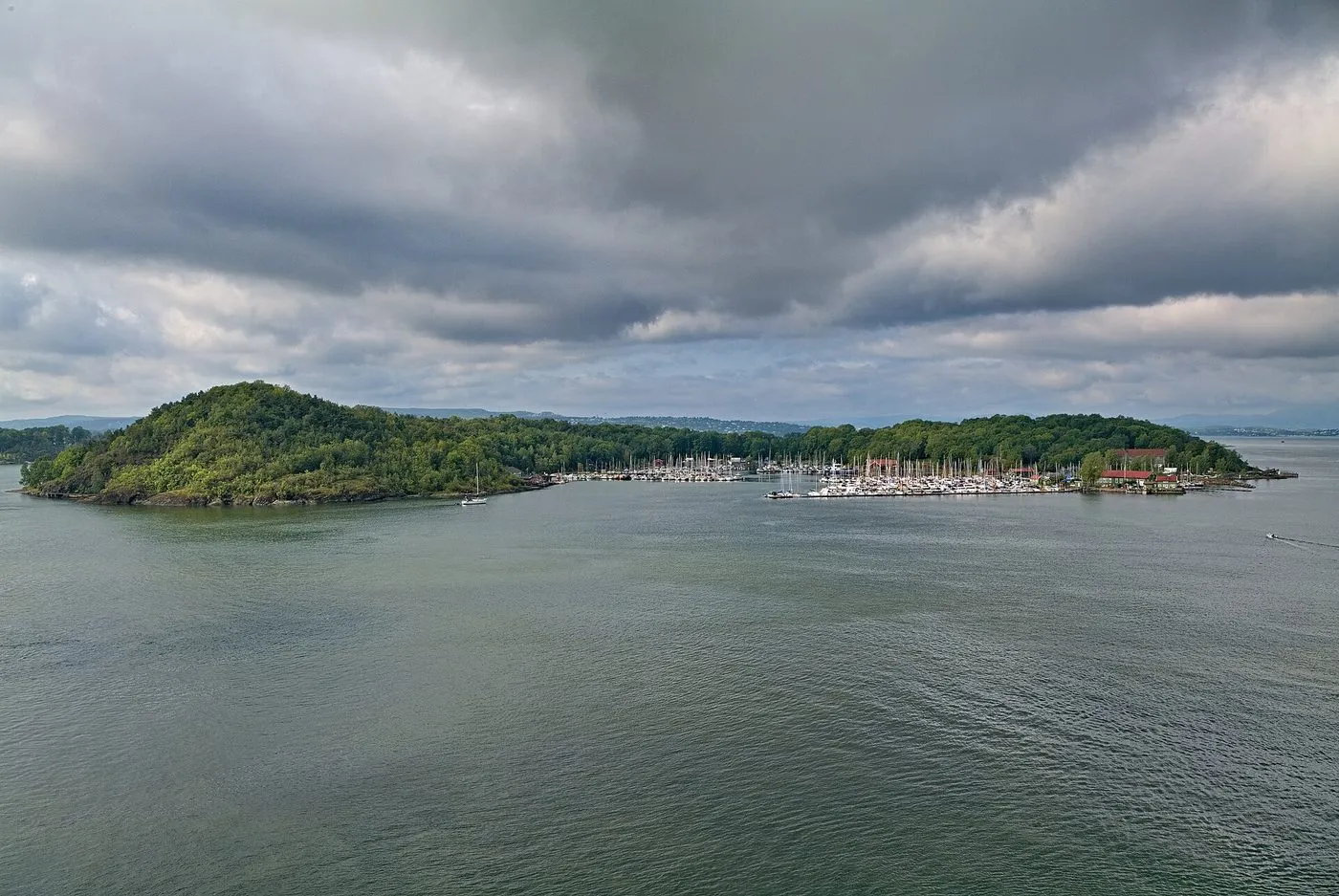
Bleikøya and Nakholmen
These are the quietest of the islands:
- Bleikøya: A steep central ridge and 90 private summer cabins. The northern end is a bird sanctuary where gulls, terns and eiders nest from 15 April to 15 July, and landing in the reserve is forbidden in those dates.
- Nakholmen: Just west of Lindøya, with about 180 wooden cottages and a navigation beacon that guides ships into the main harbour channel.
Langøyene: swimming, saunas, and overnight camping
Langøyene is the island for tent camping. It was two islands joined by landfill in the early 20th century, and after a long clean-up it reopened with modern facilities.
It has:
- A sandy beach with shallow, family-friendly water.
- Grassy tent-camping zones with freshwater taps and toilet blocks.
- Recreation lawns, beach volleyball courts and seasonal kiosks.
- Summer transport on Ruter Line B2, which runs from late May to early September.
Fares, ticketing, and practical ferry rules
| Island | From Rådhusbrygge 4 |
|---|---|
| Hovedøya | 10 min |
| Bleikøya | 15 min |
| Gressholmen (causeways to Heggholmen and Rambergøya) | 25 min |
| Lindøya | 35 min |
| Nakholmen | 45 min |
Fare table (Ruter Zone 1)
All inner island public ferries fall within Ruter Zone 1. No surcharge applies for water crossings.
| Ticket type | Adult | Child (6–17) | Senior (67+) |
|---|---|---|---|
| Single ticket, Zone 1 (valid 60 min), ruter.no | NOK 46 | NOK 23 | NOK 23 |
| Oslo Pass (24h / 48h / 72h) | Included | Included | Included |
Essential ferry rules
- Buy tickets before boarding: The ferries and island piers have no ticket machines or counters. Buy in the Ruter app or carry a card bought on the mainland (Narvesen, 7-Eleven or Oslo Central Station). Inspectors make spot checks, and travelling without a valid ticket is an on-the-spot fine of NOK 1,150.
- 60-minute validity: A single ticket lasts 60 minutes from activation. If you take a tram or metro to Aker Brygge and board the ferry within that hour, you need no second ticket.
- Take your rubbish back: The islands have few bins. Carry wrappers, cans and packaging back to the mainland.
- No fires: Open fires and disposable foil barbecues (engangsgrill) are banned on all islands because of wildfire risk on the rocky pine ground. Only the permanent concrete grills may be used.
- Dogs: Keep dogs on a short leash on all islands to protect nesting birds.
- Winter timetables: From late October to late March Line B1 runs about 7 to 8 loops a day. Check the last return boat in the Ruter app before you leave the mainland.
Sightseeing cruises and guided fjord boat tours
Commercial cruises run alongside the public ferries, with commentary and heated saloons.
Brim Explorer: silent hybrid-electric catamaran
Brim Explorer runs 24-metre hybrid-electric catamarans from the City Hall waterfront. They cruise silently past Akershus Castle, Dyna Lighthouse, the Bygdøy museum peninsula and the glass skyline of Bjørvika and the Oslo Opera House.
- Ticket: NOK 690 per adult.
- On board: Two-level lounges with floor-to-ceiling windows, electric propulsion, a café serving local craft beer and pastries, and an outdoor deck.
- Commentary: In several languages, streamed to your phone or spoken by live guides.
Båtservice: classic wooden sailing ship cruises
Båtservice has run fjord sightseeing tours since 1946 on wooden sailing ships such as the S/S Helena.
- Ticket: NOK 362 per adult for a 2-hour loop.
- On board: Wooden masts and rigging, bench seating with wool blankets and infrared heaters in cooler months, and a bar serving hot coffee and Norwegian snacks. The cruise sails south past Dyna Lighthouse and along the forested Bygdøy shore.
Suggested island hopping itineraries
A half-day loop on Line B1 takes about 3½ hours: ferry from Aker Brygge (pier 4) to Hovedøya for the abbey and batteries (75 minutes), on to Lindøya for the cabin walk (45 minutes), then back.
Route 1: The Classic Heritage & Walk (3 to 4 hours)
- 10:00: Board Ruter ferry B1 at Rådhusbrygge 4.
- 10:10: Disembark at Hovedøya. Explore the 12th-century Cistercian abbey ruins and follow the forest trail uphill to the Napoleonic cannon batteries overlooking Akershus Fortress.
- 11:35: Catch the next B1 departure from Hovedøya to Lindøya øst.
- 11:50: Stroll across Lindøya along the flower-bordered cottage lanes from East pier to West pier. Enjoy a packed picnic or grab an ice cream at the local seasonal shop.
- 12:55: Board the B1 ferry at Lindøya vest for the scenic cruise past Nakholmen back to City Hall.
Route 2: Nature, Lighthouses, and Summer Dining (4 to 5 hours)
- 11:00: Board Line B1 to Gressholmen.
- 11:25: Walk across the stone causeways connecting Gressholmen, Heggholmen, and Rambergøya. Visit the historic 1826 Heggholmen wooden lighthouse and view the remnants of the 1927 seaplane ramps.
- 13:00: Sit down for lunch at Gressholmen Kro (summer season) enjoying fresh shellfish or open-faced shrimp sandwiches (rekesmørbrød).
- 14:40: Return to City Hall Pier on Line B1.
Planning your day on the water
To ensure a seamless fjord outing, keep these practical points in mind:
- Food and water: Outside peak July weekends the island cafés keep short hours. Bring water and a packed lunch from a supermarket such as Kiwi or Rema 1000 near Central Station.
- Footwear: Trails are gravel, earth and uneven granite slabs. Wear trainers or trail shoes, not thin sandals.
- Harbour saunas: A five-minute walk east along the quay brings you to the floating saunas at Langkaia and Sukkerbiten; see floating saunas in Oslo.
- Mainland sights: The ferry pier is within five minutes’ walk of Oslo City Hall and the National Museum, so a morning on the islands and an afternoon in a gallery fit together.
- Further afield: See day trips from Oslo, or go south to the timber town and fortress in Drøbak and Oscarsborg Fortress.
Common questions
How much does the Oslofjord public ferry cost?
The island ferries are part of the Ruter city network. A Zone 1 single costs NOK 46, and Ruter sells 24-hour and 7-day passes in its app. The Oslo Pass covers all Ruter island ferries. Tickets are not sold on the islands, so buy before boarding.
Where do the Oslofjord island ferries depart from?
From Rådhusbrygge 4 (City Hall Pier 4) at the eastern edge of Aker Brygge, in front of Oslo City Hall. Line B1 runs year-round to Hovedøya, Bleikøya, Gressholmen, Lindøya and Nakholmen. In summer line B2 also serves Langøyene.
How often do the island ferries run in winter?
Line B1 runs all year, but departures drop from every 20 to 30 minutes in peak summer to roughly 7 or 8 a day in winter. Timetables change in late October and late March.
What happens if I miss the last ferry back to Oslo?
There are no water taxis in the inner Oslofjord and no night service. If you miss the last boat, you have to call the Norwegian Society for Sea Rescue (Redningsselskapet) or a private charter company, and a rescue pick-up is expensive. Check the last return time in the Ruter app before you go.
How much is a commercial Oslofjord sightseeing cruise?
A two-hour cruise on a wooden sailing ship such as Båtservice's S/S Helena costs NOK 362. A two-hour silent electric fjord cruise with Brim Explorer costs NOK 690, with indoor lounges and open observation decks.