In this guide
💡 The Short Version: Oslo’s weather changes quickly and varies a lot between seasons. In winter (November to March), wear three layers: a merino wool base layer, a fleece or wool mid-layer and a windproof, waterproof coat that covers the hips, with boots that have deep rubber tread. In summer (June to August), pack light daytime layers, a warm sweater for fjord breezes, swimwear for the harbour saunas and a waterproof shell for showers. Norway uses European two-pin plugs, tap water is safe to drink and contactless cards pay for almost everything. Or book a tour: a 3½-hour winter walk and campfire by torchlightad from NOK 625 goes through the snow-covered forest above Oslo, with a hot drink and marshmallows at the fire.
⚠️ Don’t pack smooth-soled shoes or cotton base layers. From December to March Oslo’s pavements, steps and hill paths freeze into black ice, and flat-soled sneakers or dress shoes have no grip. Cotton undershirts stay damp with sweat and chill you when you leave a warm metro carriage for a sub-zero street.
Seasonal climate and wardrobe overview
Rain or snow falls in every month (30-year averages from Blindern station), so waterproofing matters in every season:
| Season & Months | Daytime High / Night Low | Monthly Precipitation | Core Wardrobe Strategy | Essential Key Items |
|---|---|---|---|---|
| Winter (Nov–Mar) | 0°C to 5°C / -5°C to -1°C | 41 to 85 mm (snow/sleet) | Full 3-layer thermal system; insulated windproofing | Merino wool thermals, heavy parka, winter boots, studded ice grips (brodder) |
| Spring (Apr–May) | 11°C to 17°C / 2°C to 7°C | 48 to 60 mm (rain showers) | Adaptable spring layers; warm morning knitwear | Mid-weight wool sweater, light waterproof trench or shell, trainers |
| Summer (Jun–Aug) | 20°C to 23°C / 11°C to 13°C | 80 to 103 mm (summer rain) | Breathable cotton/linen by day; warm evening layers | T-shirts, light sweater, packable rain jacket, swimwear, sunglasses |
| Autumn (Sep–Oct) | 10°C to 16°C / 4°C to 9°C | 82 to 93 mm (frequent rain) | Thermal mid-layers; waterproof footwear for wet trails | Windproof hooded jacket, wool cardigan, water-resistant walking shoes |
The Norwegian three-layer rule (Tre-lags-prinsippet)
Norwegians say “Det finnes ikke dårlig vær, bare dårlige klær” (“There is no bad weather, only bad clothing”). For autumn, winter and early spring, use three layers:
| Layer | What to wear |
|---|---|
| Base | Merino wool top and leggings, to keep skin dry |
| Mid | A fleece jacket, wool jumper or down vest for warmth |
| Outer | A windproof, waterproof breathable shell |
1. Base Layer (Inner Layer)
- Material: Merino wool (or a performance polyester blend). It wicks sweat away from the skin, insulates when damp, resists odour and regulates temperature.
- What to avoid: Cotton t-shirts, tank tops and denim next to the skin in winter. Cotton absorbs sweat and stays cold and clammy.
2. Mid Layer (Insulating Layer)
- Function: Traps the warm air your body makes and lets moisture escape outwards.
- Choices: A fleece zip-up, a Norwegian woollen sweater (lusekofte) or a packable down jacket.
- Flexibility: Take it off in heated shops, museums and metro stations to avoid overheating.
3. Outer Layer (Shell Layer)
- Function: Blocks wind, rain, sleet and wet snow.
- Specifications: A breathable, fully seam-sealed jacket with a durable water-repellent (DWR) finish and a hydrostatic head rating of at least 10,000 mm. Look for an adjustable hood with a stiffened peak, storm flaps over the zips and a cut long enough to cover your hips and lower back when you sit on cold ferry benches.
Footwear by season and terrain
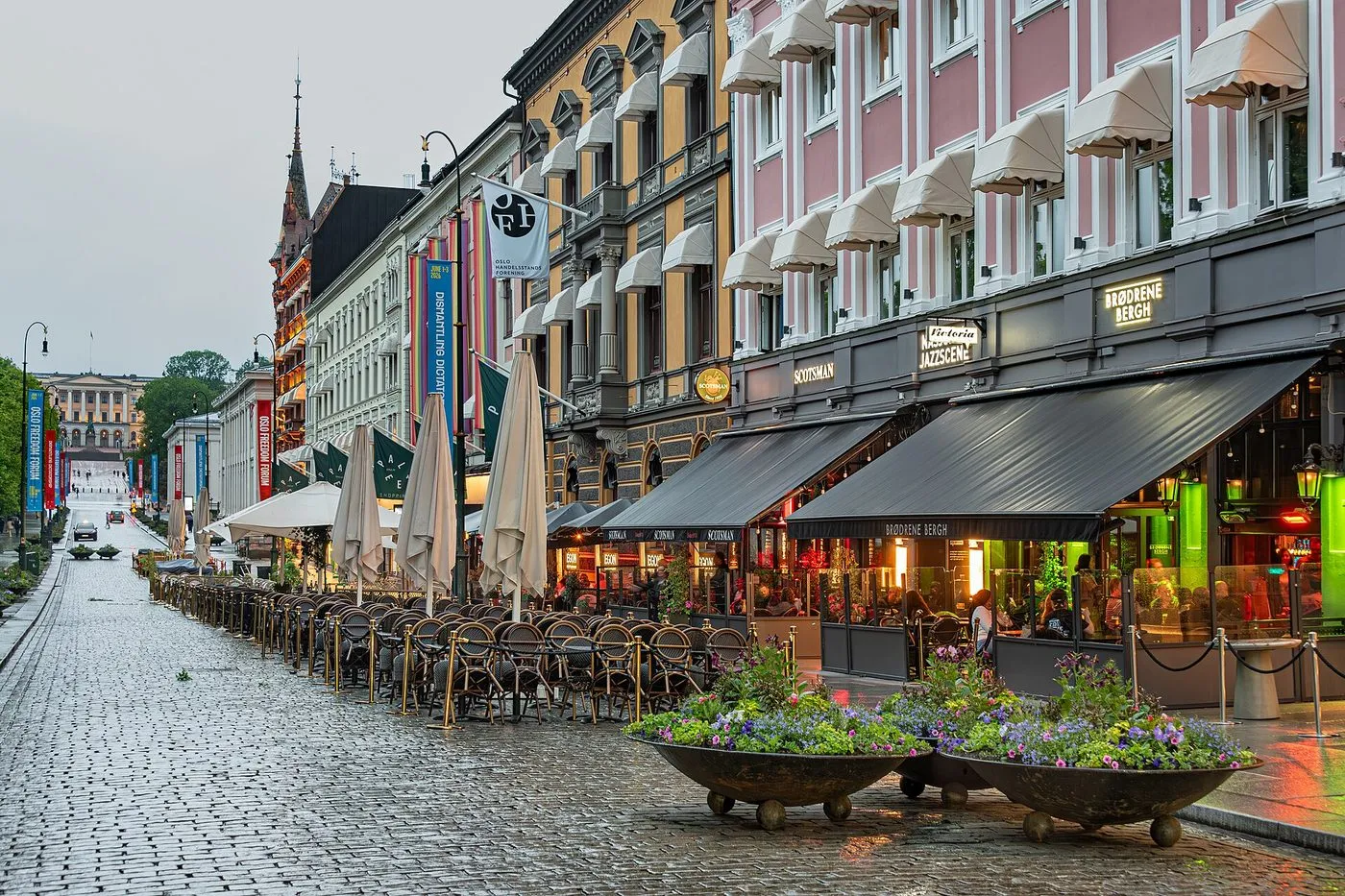
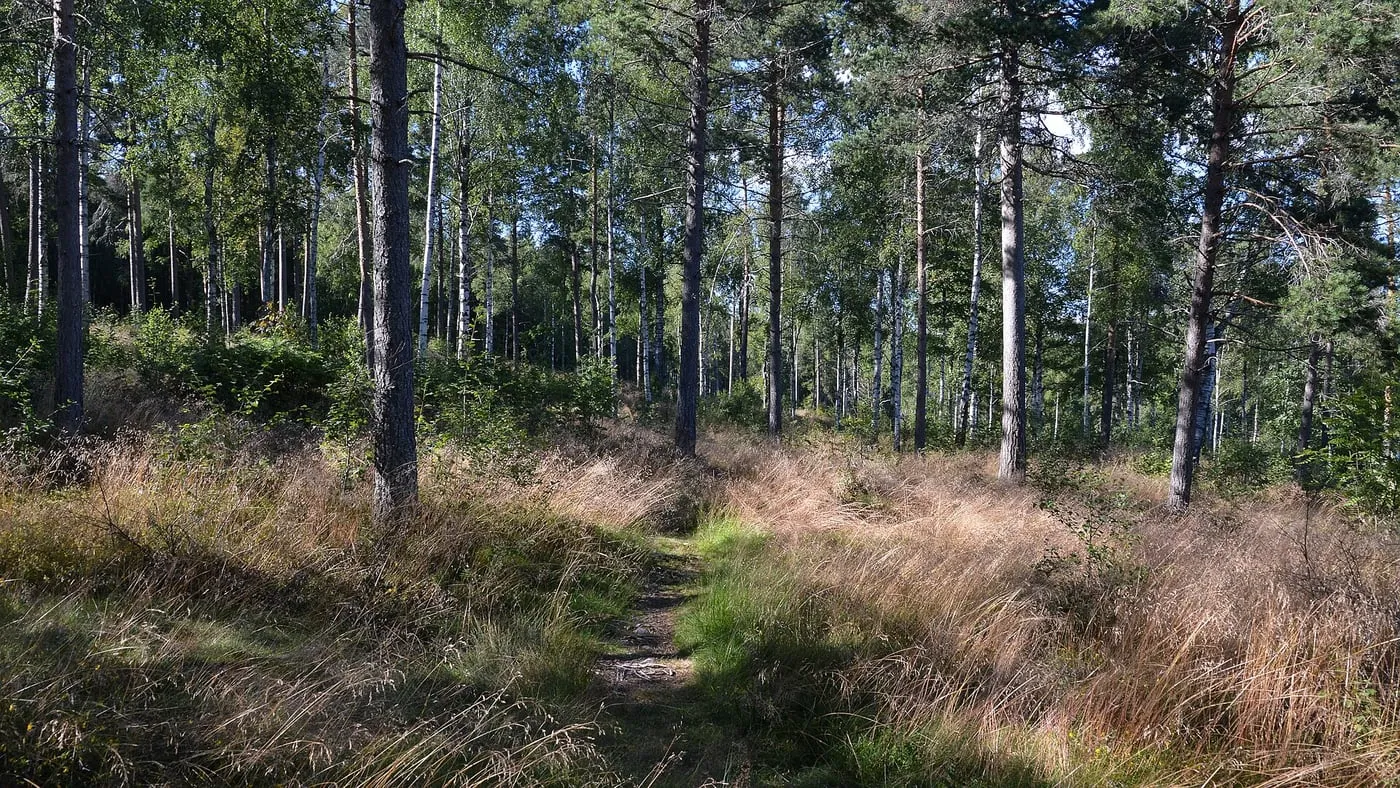
You will walk a lot: cobbles in Damstredet, granite ramps on the Opera House roof and forest trails around Holmenkollen.
Winter footwear (November to March)
- Boots: Insulated, waterproof boots lined with fleece or shearling, with ankle support and deep soles in soft winter rubber (such as Vibram Arctic Grip).
- Ice grips (brodder): When rain freezes over packed snow, even good boots slip on “black ice” (holke). Norwegians carry slip-on rubber cleats with metal spikes (brodder), sold at pharmacies (Apotek), convenience stores and outdoor shops. Wear them outside and take them off on polished museum floors.
- Socks: Thick wool socks (for example Smartwool or Darn Tough), not thin synthetic dress socks.
Summer and shoulder season footwear
- Trainers and walking shoes: Supportive, broken-in running shoes or trail trainers with good grip.
- Gravel: Frogner Park, the Bygdøy museum grounds and the Akerselva river trail are mostly crushed gravel. Ballet flats and canvas shoes wear out and give no arch support.
Packing for floating saunas and fjord swimming
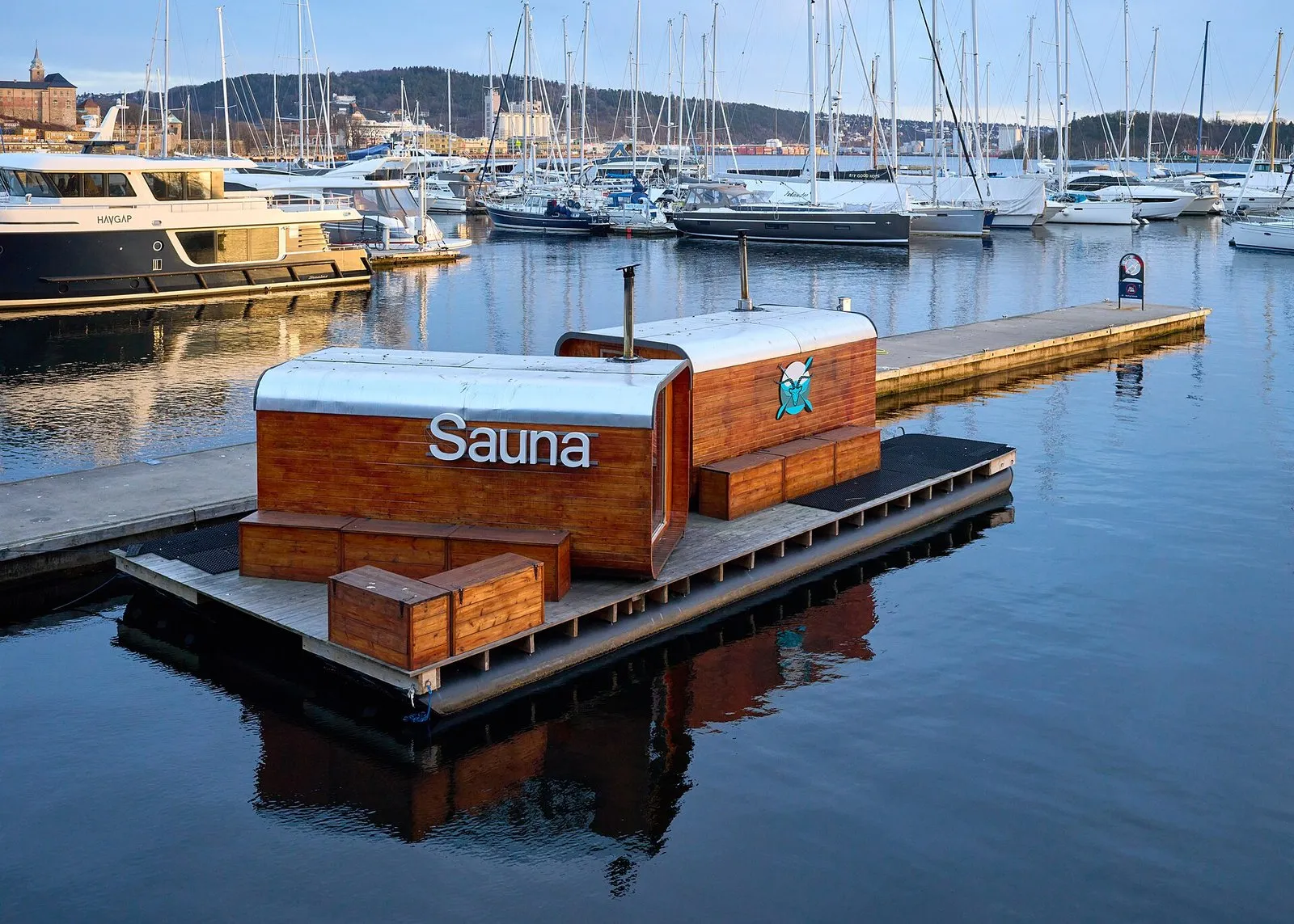
The harbour saunas at Langkaia, Sukkerbiten and Tjuvholmen run all year, so bring bathing kit in every season: swimwear, a quick-dry towel (or rent one on site), slides or neoprene booties for the icy pontoons, a dry bag for damp kit, a woollen sauna hat for sub-zero days and a water bottle.
- Footwear on the pontoon: In winter the wooden pontoons are coated with frozen sea spray and frost. Barefoot to the ladder is painful; wear rubber slides or neoprene booties.
- Sauna hat (badstulue): A wool or felt hat in the hot room stops your head overheating and keeps your ears warm for the plunge into 2°C seawater.
- Booking rules and locations are in floating saunas in Oslo.
Electronics, power, and tech gear
- Plug adapters: Norway uses the European Type C and Type F plug (two round pins, 230V, 50Hz). UK, US and Australian visitors need an adapter.
- Power bank: Phone batteries drain faster in sub-zero cold. Your Ruter tickets and Oslo Pass are on your phone, and a dead battery can leave you facing a transit fine of NOK 1,150. Carry a 10,000 mAh charger and keep the phone in an inside pocket.
- Cameras and condensation: A cold camera taken into a humid café fogs up inside. Seal it in a plastic bag before going in and let it warm up before taking it out.
Essential daily accessories
- Water bottle: Oslo’s tap water comes from mountain reservoirs and is safe to drink. A reusable insulated bottle saves money.
- No-fee payment cards: Bring Visa or Mastercard debit or credit cards that charge no foreign transaction fee, and set up Apple Pay or Google Wallet.
- Sunglasses: Useful in every season. In midsummer the sun sets after 22:00; in winter low sunlight off the snow around Holmenkollen causes glare.
- Lip balm and moisturiser: Winter wind and central heating dry skin and lips.
Comprehensive packing checklist
Essential Clothing
- 2–3 Merino wool thermal base-layer tops
- 1–2 Merino wool thermal leggings / long johns
- 2 Mid-layer fleeces or pure wool jumpers
- 1 Windproof and waterproof outer jacket (Gore-Tex or equivalent, minimum 10k rating)
- 1 Pair of comfortable, sturdy walking trousers (avoid heavy cotton denim in winter)
- 1 Warm woollen beanie hat covering the ears
- 1 Pair of windproof, waterproof insulated gloves or mittens
- 1 Fleece or wool neck warmer / gaiter (safer and warmer than long trailing scarves)
- 3–4 Pairs of heavy woollen walking socks
Footwear & Hardware
- Waterproof boots with deep rubber lugged treads
- Studded slip-on ice grips (brodder, or buy them in Oslo)
- Comfortable cushioned trainers for summer and city museum days
- Rubber flip-flops / pool slides for floating saunas
Gear & Documents
- Passport (valid at least 3 months beyond departure date from Schengen zone)
- GHIC or EHIC healthcare card (for UK/EU travellers)
- European Type C/F electrical plug adapter
- 10,000 mAh portable external power bank
- Reusable water bottle
- Swimwear and quick-dry microfibre towel
- Waterproof daypack (15 to 25 litres) with rain cover
Summary and next steps
- Pack layers, not bulk: Layers let you adjust between sub-zero hill winds and heated trams.
- Next steps: 1 or 2 days in Oslo, 3 days in Oslo, best time to visit Oslo and public transport in Oslo.
Common questions
What is the most important clothing rule for visiting Oslo in winter?
Dress in three layers (the Scandinavian *tre-lags-prinsippet*): a merino wool base layer, an insulating fleece or wool mid-layer, and a windproof, waterproof outer jacket. Avoid cotton base layers: they hold sweat and chill you when you step into sub-zero air.
Do I need specialised snow boots in Oslo?
From December to March you need waterproof winter boots with deep, soft rubber soles (such as Vibram Arctic Grip). Smooth leather dress shoes and flat-soled sneakers are dangerous on frozen cobbles. If the streets are icy, buy slip-on studded rubber ice grips (brodder) at a pharmacy.
Do I need a waterproof raincoat in Oslo during summer?
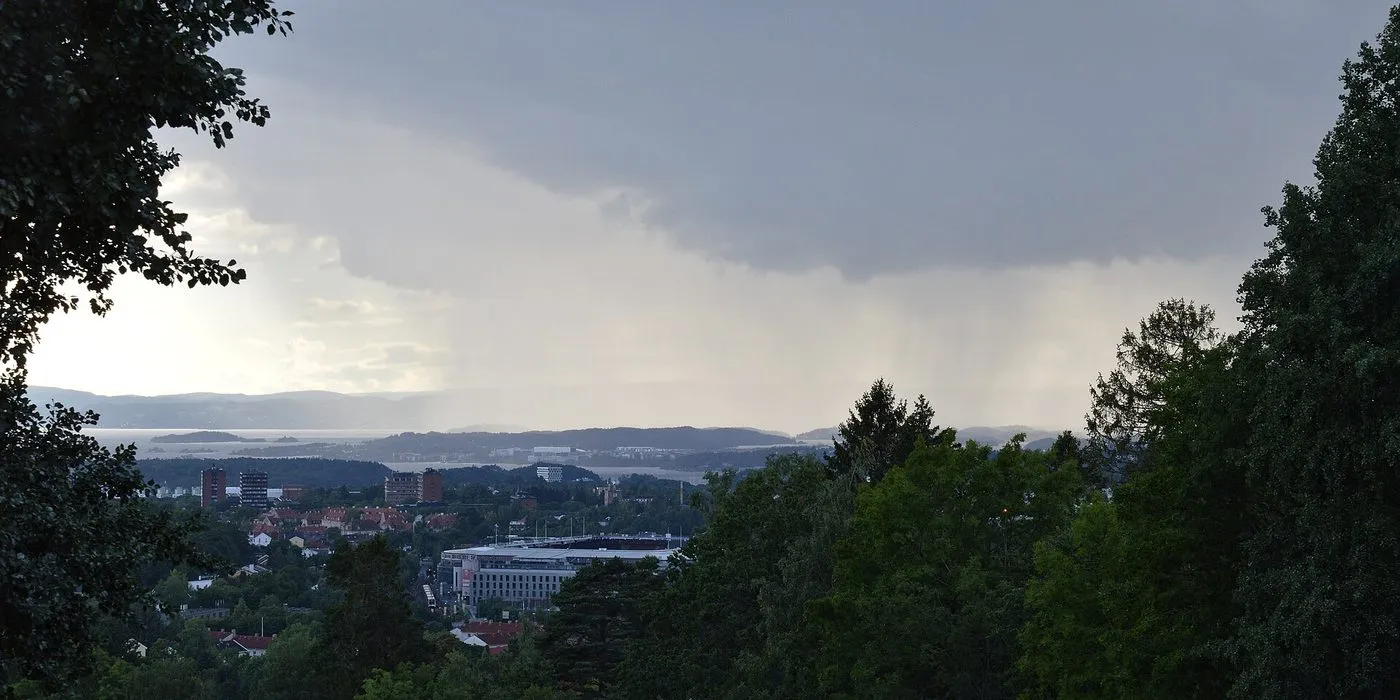
Yes. August is Oslo's wettest month, averaging 103 mm, and showers can build quickly over the hills. Pack a light, packable waterproof shell even if the daytime high is above 22°C.
What should I pack for Oslo's floating saunas and harbour pools?
Swimwear, a quick-drying towel, flip-flops or water shoes for the cold wooden pontoons, and a dry bag for wet kit. In winter add a woollen hat to protect your head and ears when you plunge into the fjord.
What electrical plugs and power voltage does Norway use?
230V at 50Hz, with European Type C and Type F two-pin plugs. Visitors from the UK, US, Canada and Australia need a plug adapter.