In this guide
💡 The Short Version: Kuala Lumpur is a welcoming multicultural society where cultural guidance from Tourism Malaysia highlights how simple respect ensures an exceptional trip. When entering mosques, cover your shoulders and knees (women also cover their hair); complimentary hooded robes are loaned free at the entrance of the National Mosque and Federal Territory Mosque under JAKIM visitor guidelines. At Hindu temples and Batu Caves, cover knees and shoulders, and remove your footwear before entering sacred prayer areas. When dining with your fingers on banana leaf rice or roti canai, strictly use your right hand; the left hand is considered unclean. Public escalators follow the British rule: stand on the left, walk on the right. Smoking and vaping are strictly banned within three metres of all eateries, carrying fines up to RM 10,000.
Historic Masjid Jamek at the river confluence. Photo: CEphoto, Uwe Aranas, Wikimedia Commons, CC BY-SA 3.0.
Places of worship: dress codes and respectful conduct
Kuala Lumpur is celebrated for its multi-faith heritage, where grand Islamic mosques, elaborate South Indian Hindu gopurams, Taoist clan temples, and Christian churches sit within walking distance of one another.
1. Islamic Mosques (Masjid Negara & Federal Territory Mosque)
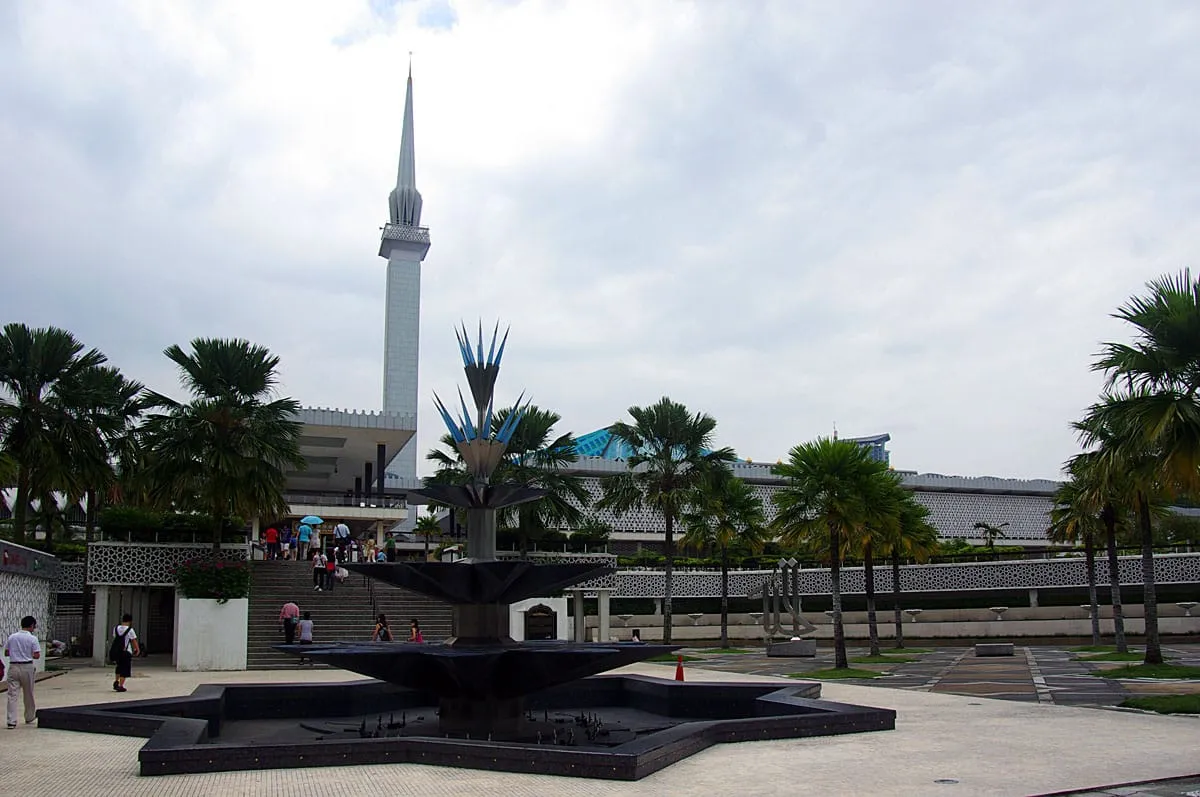
The National Mosque (Masjid Negara) and the sprawling Ottoman-influenced Federal Territory Mosque (Masjid Wilayah) welcome non-Muslim visitors outside scheduled daily prayer windows.
- Visiting windows: Non-Muslims are admitted during specified intervals (typically Saturday to Thursday 09:00–12:00, 15:00–16:00, and 17:30–18:30; Friday visiting is restricted to 15:00–16:00 and 17:30–18:30 after congregational Friday prayers conclude).
- Dress requirements: Men must wear shirts covering the shoulders and trousers covering the knees. Women must cover their arms to the wrists, legs to the ankles, and completely cover their hair with a scarf.
- Complimentary robes: If your attire does not meet the criteria, the mosque visitor reception desk will lend you a full-length, hooded robe (jubah) free of charge for the duration of your visit.
- Remove footwear: Leave shoes outside on the designated wooden racks before stepping onto the polished marble concourses.
- Prayer halls: Non-Muslim visitors must observe prayer halls from outside the roped cordons. Never walk directly across the prayer carpets or step in front of a worshipper engaged in prostration (sujud).
2. Hindu Temples & Batu Caves
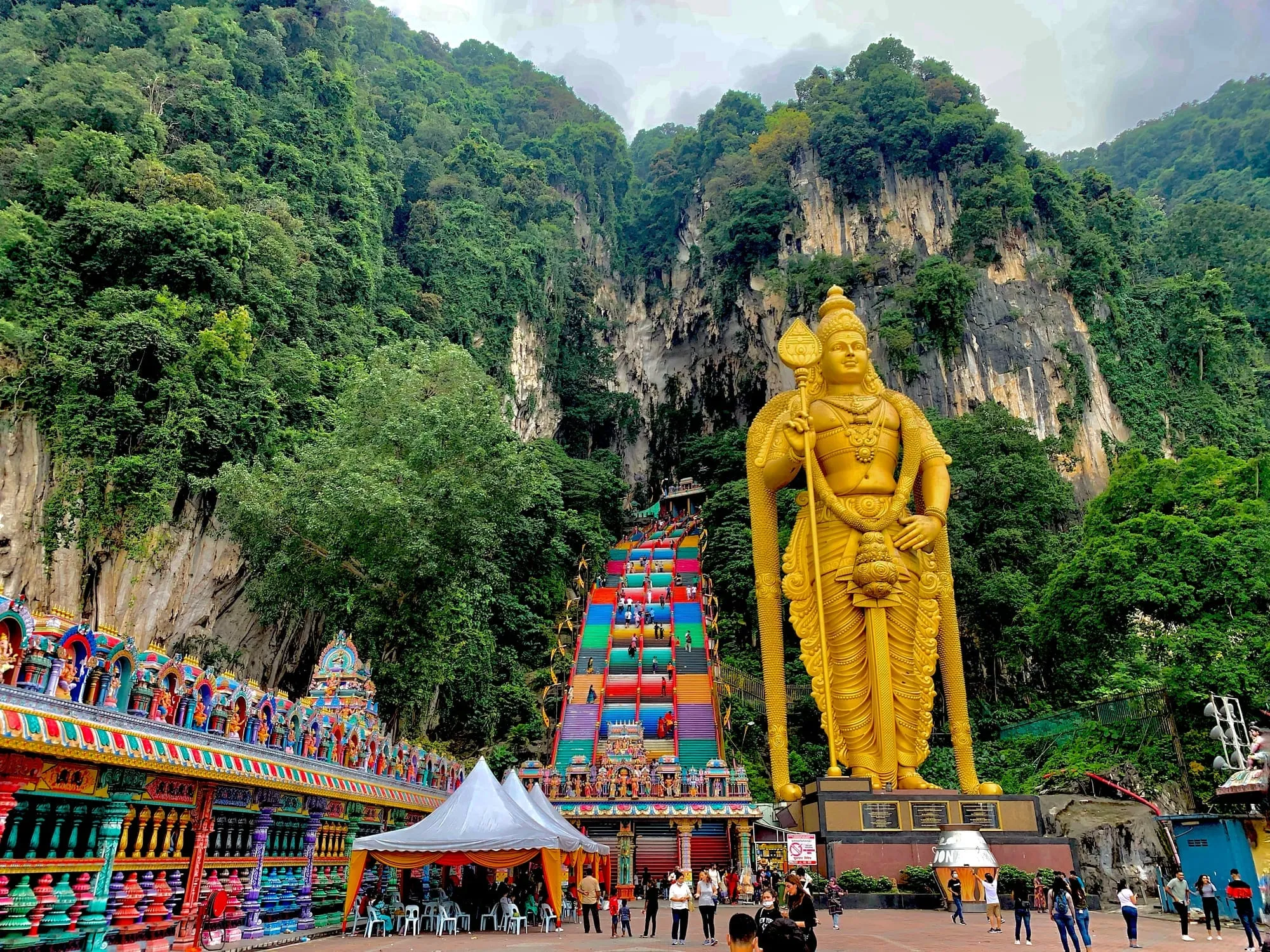
Batu Caves and the historic Sri Mahamariamman Temple on Jalan Tun H.S. Lee are deeply sacred sites dedicated to Lord Murugan and Mariamman.
- Dress code on the steps: Strict attire enforcement applies at the foot of the 272 rainbow steps leading up to Cathedral Cave. Shoulders and knees must be fully covered. Singlets, mini-skirts, cropped tops, and running shorts are turned away. Sarongs can be rented at the base for approximately RM 15 (with a RM 10 deposit refunded upon return).
- Footwear: You may wear walking shoes while climbing the concrete 272 steps outdoors, but shoes must be removed before entering any consecrated Hindu temple shrine at the base or inside the upper caverns.
- Conduct: Never touch sacred statues, stone lingams, or flower offerings, and avoid pointing the soles of your feet towards temple altars or deities when seated.
3. Chinese & Taoist Temples
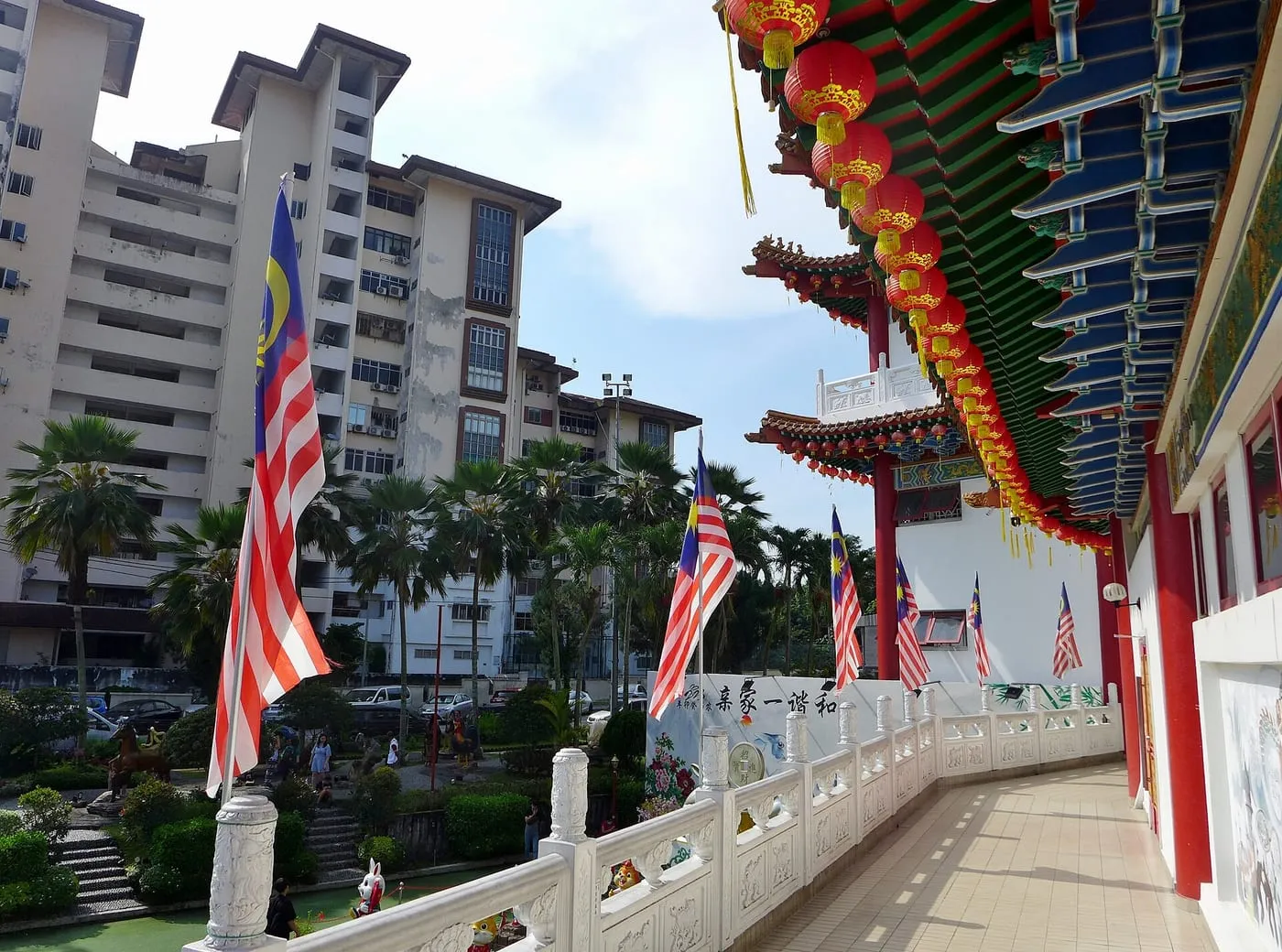
At Thean Hou Temple on Robson Heights and Guan Di Temple in Chinatown:
- Dress respectfully (t-shirts and knee-length shorts or dresses are acceptable).
- Remove hats and sunglasses before entering main prayer halls.
- You can observe worshippers lighting joss sticks and tossing Kau Chim fortune divination sticks; maintain quiet voices and avoid photographing devotees while they are in active personal prayer.
Table manners and dining customs
Kuala Lumpur’s culinary landscape spans busy Malay night bazaars, Chettinad banana leaf messes, and open-air Chinese street stalls:
The right-hand rule
In traditional Malay and Indian communities, eating with your fingers is standard practice for dishes like roti canai and nasi lemak.
- Always use your right hand: Gather rice, curry, and vegetables with the fingertips of your right hand, using your thumb to gently push food into your mouth.
- The left hand stays aside: In Islamic and Hindu traditions, the left hand is associated with personal bathroom washing and is considered ritually unclean. Never use your left hand to pick up food, touch shared serving platters, hand payment cards to servers, or pass items to another person. If you are left-handed, polite forks and spoons are universally provided upon request.
Banana leaf rice protocol
When dining at South Indian restaurants in Brickfields Little India or Bangsar:
- Servers place a fresh green banana leaf before you and ladle hot white rice, three vegetable side dishes, crispy poppadoms, and your choice of curries (fish, chicken, or dhal) directly onto the leaf.
- Folding your leaf when finished: When you have completed your meal, fold your banana leaf in half towards your body (inward). This signals that you thoroughly enjoyed the meal. Folding the leaf away from yourself (outward) is traditionally done only at funerary repasts or to indicate dissatisfaction.
Table sharing (dap toi)
In crowded Chinese coffee shops (kopitiams) and hawker centres during lunch rush—such as eating curry mee along Madras Lane—sharing a table with strangers is completely standard. Simply gesture politely and ask, “Anyone sitting here?” before sitting down.
Public transit and escalator courtesy
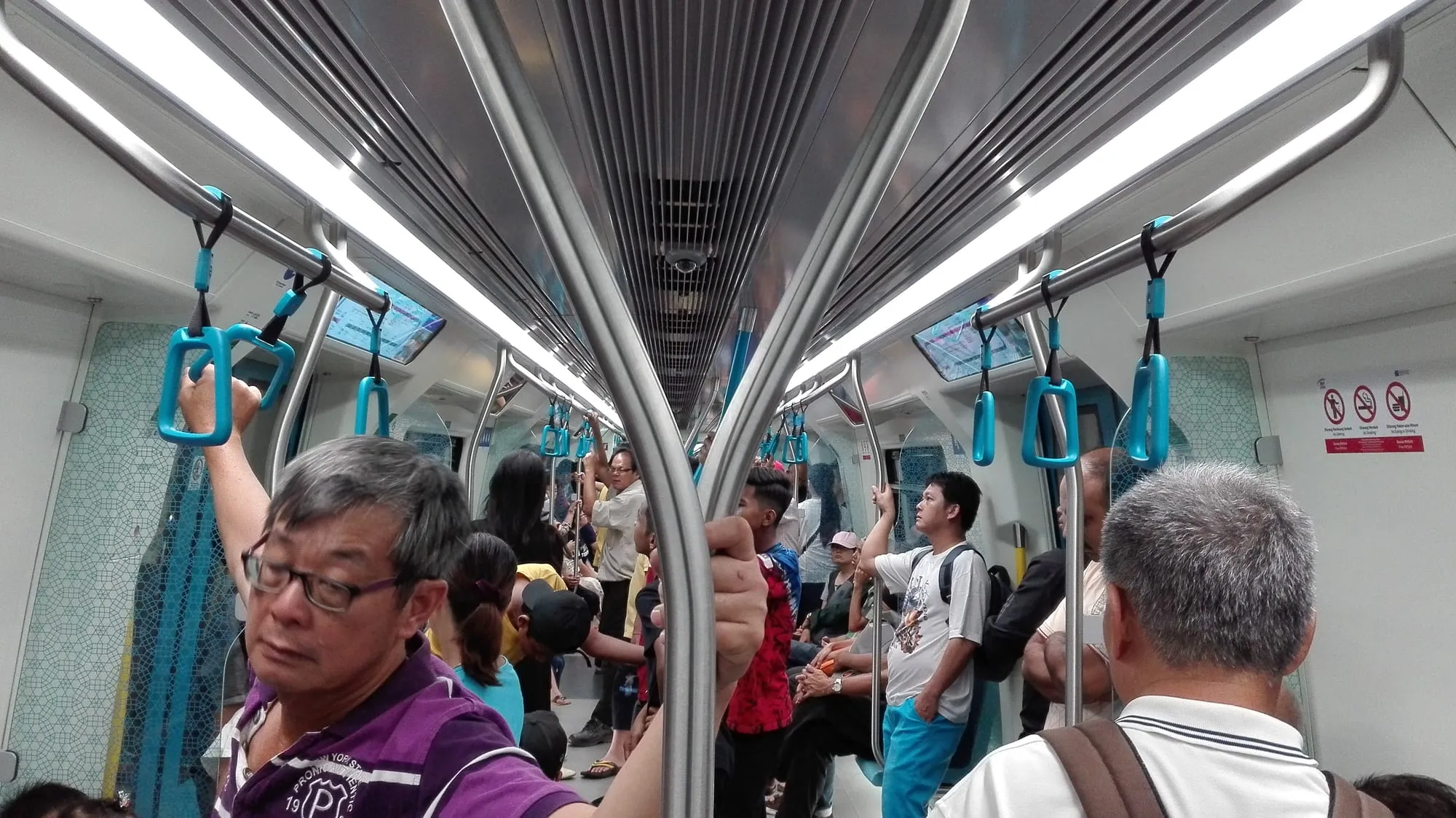
Kuala Lumpur’s modern urban rail network—spanning the MRT, LRT, and Monorail lines detailed in our public transport guide—operates with clean, orderly civic courtesy:
- Escalator rule: Stand on the left side of all escalators, leaving the right side open for commuters walking past.
- Priority seats: RapidKL trains designate brightly coloured Priority Seats near the carriage doors for pregnant women, elderly passengers, and disabled individuals. Offer your seat immediately when an eligible passenger boards.
- Women-only coaches: The MRT Kajang Line and LRT Kelana Jaya Line feature dedicated pink-coloured Women-Only Coaches (Khas untuk Wanita) in the centre of each train. Male travellers—including male children over 12—must strictly board regular carriages.
- No eating or drinking: Consuming snacks, chewing gum, or drinking sweetened beverages aboard trains or on paid station platforms is prohibited to maintain clean transit cars.
- Durian ban: Fresh durian fruit is strictly prohibited across all trains, public buses, and inside most international hotel lobbies due to its potent lingering aroma.
Malaysian social norms and laws to know
The Malaysian handshake
When introduced to an adult in Malaysia:
- A standard gentle handshake is common in business and cosmopolitan circles.
- Traditional Malay greeting (Salam): Many Malay Muslims prefer a gentle two-handed grasp followed by lightly touching their right hand to their chest (symbolising a greeting from the heart).
- Cross-gender greetings: Conservative Muslim men may not shake hands with women, and vice versa. Wait for a local host or hostess to extend their hand first; if they do not, place your right hand over your heart and nod politely.
Gesturing with your thumb
Never point at people, religious icons, or directions using an extended index finger, which is perceived as aggressive. Instead, Malaysians point gracefully using the thumb of the right hand, with the other four fingers folded inward against the palm.
Strict smoking and vaping bans
Smoking or vaping inside any dining establishment—including open-air roadside stalls, sidewalk cafes, Mamak terraces, and air-conditioned shopping mall restaurants—is strictly forbidden under the Control of Tobacco Products Regulations.
- Smokers must move at least 3 metres away from the perimeter of any food premises before lighting a cigarette.
- Violators face on-the-spot compound fines of RM 250, escalating to statutory court fines of up to RM 10,000.
Zero drug tolerance
Malaysia enforces draconian narcotics legislation under the Dangerous Drugs Act. Trafficking and possession of illicit drugs—including cannabis and cannabis-derived CBD oils—carry severe mandatory prison terms, corporal punishment (caning), and potential capital punishment. Never carry packages through airport customs for third parties.
What to explore next
Continue preparing for your visit with our guides to money in Kuala Lumpur, is Kuala Lumpur safe, finding the best neighbourhoods in where to stay in Kuala Lumpur, and the essential things to do in Kuala Lumpur.
Common questions
What should I wear when visiting mosques in Kuala Lumpur?
Modest attire covering shoulders, upper arms, and knees is strictly required. Women must cover their heads and wear long sleeves and trousers or full-length skirts. Major religious sites like the National Mosque (Masjid Negara) and the Federal Territory Mosque provide complimentary purple or blue hooded robes (jubah) and head coverings at visitor reception desks.
What is the dress code for Batu Caves and Hindu temples?
Both men and women must have their knees and shoulders covered to climb the 272 steps into the main Cathedral Cave at Batu Caves or enter Sri Mahamariamman Temple in Chinatown. Shorts, sleeveless singlets, and short skirts are prohibited. Visitors with exposed legs can rent a sarong at the entrance counter for around RM 15 (including a refundable deposit upon return).
Which hand should I use when eating or handing over items in Malaysia?
Always use your right hand when eating finger foods (such as tearing roti canai or mixing banana leaf rice), passing money, or handing over objects. In traditional Malay and Indian cultural customs, the left hand is reserved for personal hygiene and is considered discourteous to use when interacting with others or handling food.
Is public smoking or vaping allowed in Kuala Lumpur restaurants?
No. Under Malaysian federal health regulations, smoking and vaping are strictly prohibited inside all air-conditioned restaurants, open-air food courts, Mamak stalls, and outdoor hawker centres. Anyone caught smoking within 3 metres of an eating establishment faces a statutory fine of up to RM 10,000 or imprisonment.
Do people remove their shoes before entering homes and places of worship in Malaysia?
Yes. You must remove your footwear before stepping into any mosque prayer hall, Hindu temple sanctum, Sikh gurdwara, or private Malaysian home. Clean shoe racks or lockers are provided outside entrances.