In this guide
The Short Version: Malaysia’s national breakfast culture revolves around two culinary masterpieces: nasi lemak (fragrant rice steeped in coconut milk and knotted pandan leaves, paired with fiery sweet sambal, crispy anchovies, roasted peanuts, and spiced fried chicken) and roti canai (flaky, paper-thin layered flatbread tossed into the air by Mamak maestros and grilled on searing iron griddles). For nasi lemak, the premier destinations are Village Park Restaurant in Damansara Utama for its spiced fried chicken (ayam goreng berempah), and Nasi Lemak Wanjo in the heritage Malay enclave of Kampung Baru. For roti canai, head to Mansion Tea Stall near Masjid Jamek for their gravy-drenched Roti Banjir Special topped with two runny half-boiled eggs, or TG’s Nasi Kandar in Bukit Bintang for round-the-clock crispy flatbreads paired with frothy teh tarik. Single portions range from RM2.50 for street-wrapped packets to RM14.50 for full restaurant platters. Or book a tour: experience authentic Malaysian breakfast rituals on the top-rated Sambal Streets food tourad (from RM 226, 4.9 stars from 2,176 reviews).
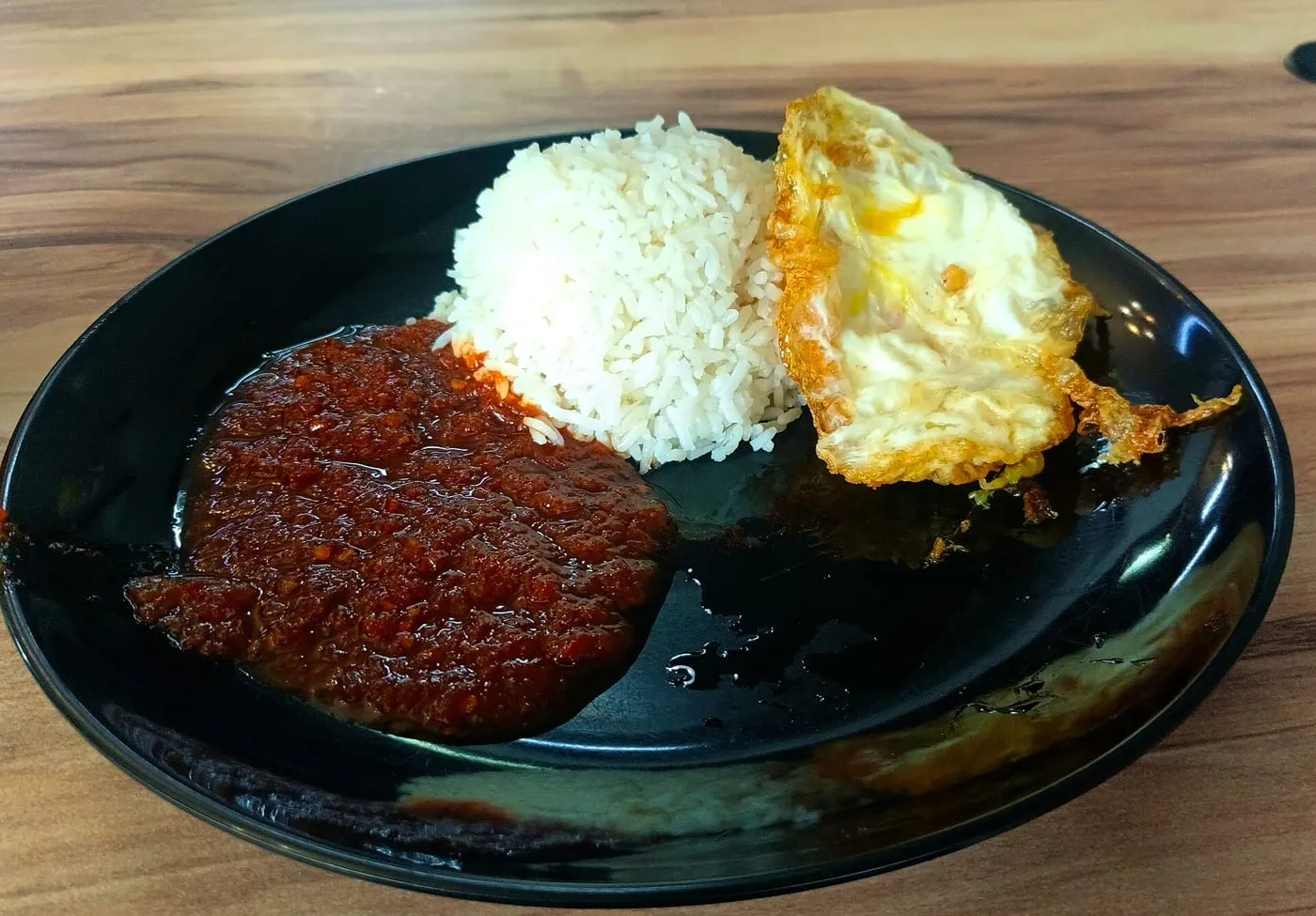
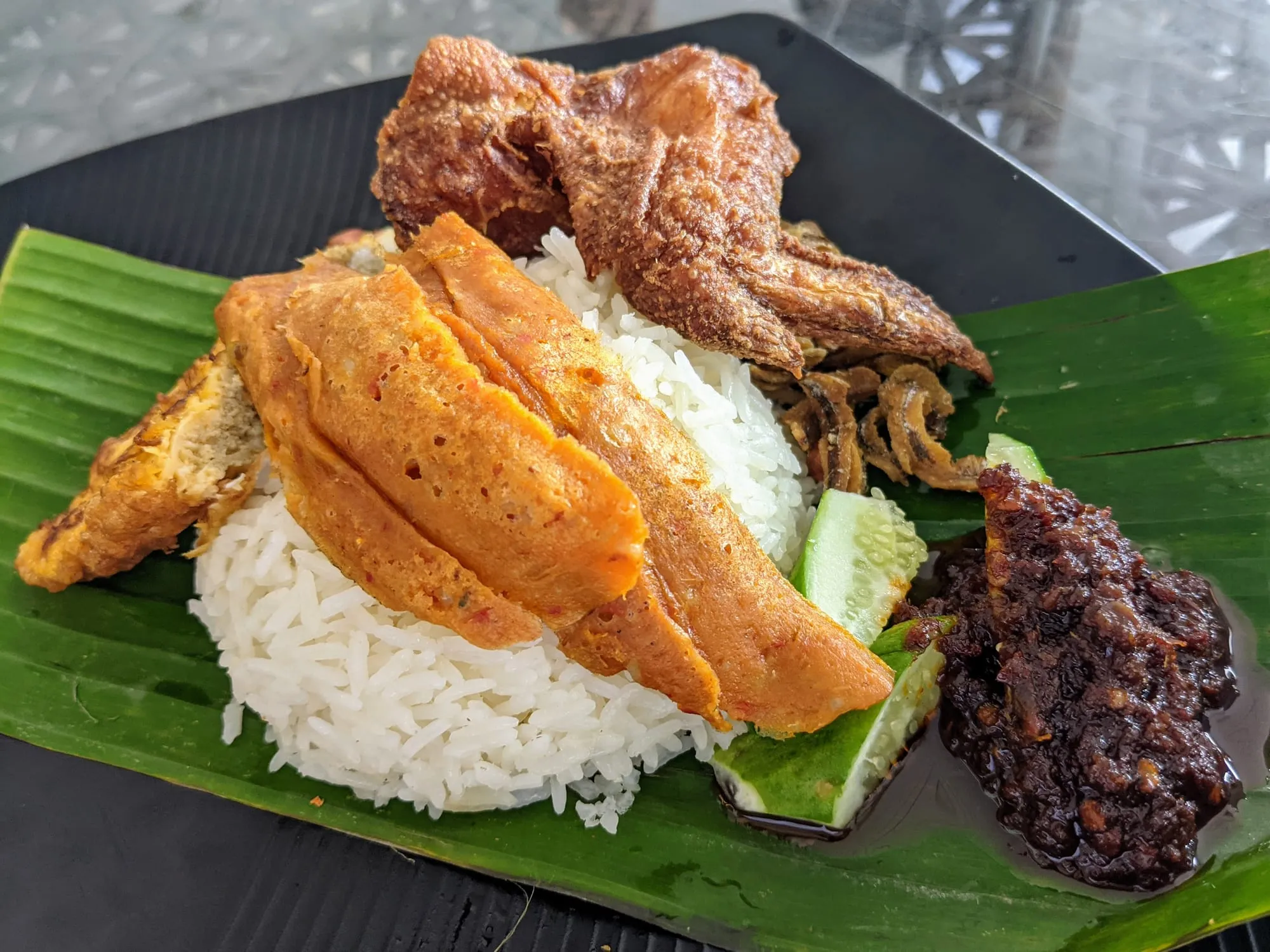
A traditional plate of nasi lemak. Photo: AyyanD, Wikimedia Commons, CC BY-SA 3.0.
The anatomy of authentic Nasi Lemak
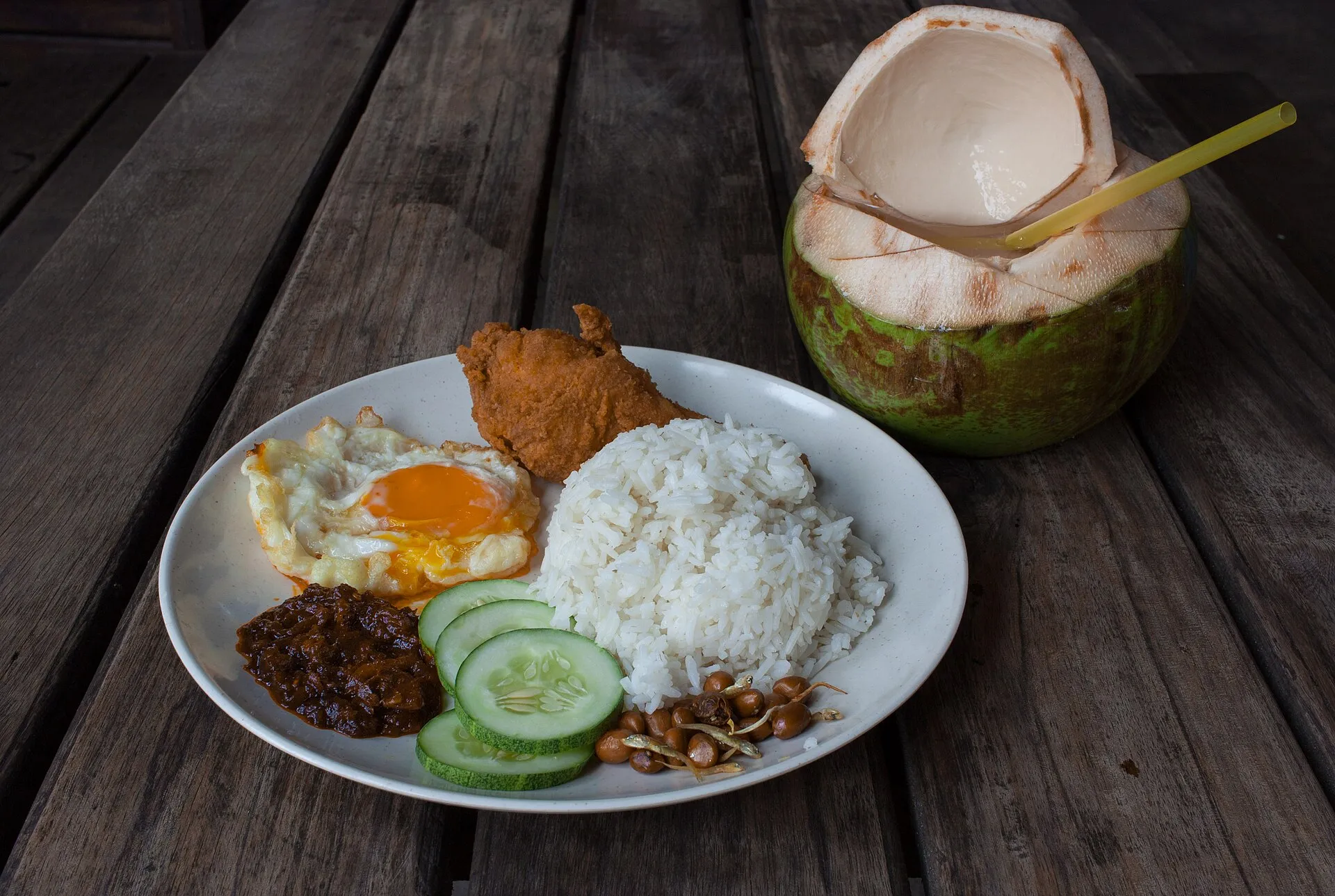
Widely revered as Malaysia’s national dish, nasi lemak translates literally as “rich rice” or “fatty rice”, referring to the cooking process where long-grain white rice is steeped in freshly squeezed coconut milk (santan) alongside crushed ginger, lemongrass, and knotted pandan (screwpine) leaves. The resulting grains emerge glossy, aromatic, and rich.
| Component | Ingredients | Role on the plate |
|---|---|---|
| Fragrant Santan Rice | Jasmine rice steeped in coconut milk, fresh ginger & bruised pandan | Rich, aromatic foundation absorbing accompanying curries |
| Sambal Tumis | Slow-cooked shallots, dried chillies, belacan shrimp paste & tamarind | Sweet, savoury, fiery condiment dictating the stall’s reputation |
| Ayam Goreng Berempah | Whole chicken leg spiced with lemongrass, turmeric and ginger | Crispy spiced golden skin with aromatic crumb clusters |
| Traditional Garnishes | Fried crispy ikan bilis (anchovies), roasted peanuts, hard-boiled egg & cucumber | Textural crunch, richness balance, and cooling freshness |
A proper plate of nasi lemak balances richness, heat, crunch, and acidity across five essential components:
- The Rice (Nasi): Fluffy and distinctly separated, infused with fragrant coconut cream and floral pandan aromatics.
- The Sambal: The soulful core of the dish. A complex sauce prepared by slow-frying dried red chillies, shallots, garlic, ginger, and fermented shrimp paste (belacan) with tamarind juice and palm sugar until the fragrant red oil separates (pecah minyak). KL sambals strike a careful balance between fiery heat and mellow caramel sweetness.
- The Crispy Anchovies (Ikan Bilis) & Peanuts: Tiny dried silver anchovies deep-fried to a brittle, shattering crunch, paired with roasted skin-on groundnuts.
- Hard-Boiled Egg & Cucumber: Half a hard-boiled or sunny-side-up egg alongside thick, fresh cucumber slices that temper the chilli heat of the sambal.
- The Star Protein: While basic versions (nasi lemak biasa) stop at the egg, standard KL plates are accompanied by a hearty main. The most celebrated is Ayam Goreng Berempah—a whole chicken quarter marinated in ground lemongrass, turmeric, fennel, and coriander seeds, deep-fried until the skin turns deep golden-red and covered in fragrant, crunchy spiced crumbs. Other beloved accompaniments include Rendang Daging (dry-braised beef cooked for hours in toasted coconut and spice paste) and Sambal Sotong (tender cuttlefish stewed in rich chilli sauce).
Top Nasi Lemak institutions in Kuala Lumpur
Kuala Lumpur features hundreds of nasi lemak vendors, ranging from dawn roadside tables to busy restaurants that draw diners from across the country.
| Restaurant | Location | Signature variation | Opening hours | Typical cost |
|---|---|---|---|---|
| Village Park Restaurant | Damansara Utama (5 Jalan SS 21/37) | Legendary Ayam Goreng Berempah with lemongrass spiced crumbs | 06:30–17:30 daily | RM13.50 to RM16.50 |
| Nasi Lemak Wanjo | Kampung Baru (8 Jalan Raja Muda Musa) | Slow-simmered sweet-spicy sambal with tender beef rendang | 06:00–01:00 daily | RM8.50 to RM14 |
| Nasi Lemak Antarabangsa | Kampung Baru (39 Jalan Raja Muda Musa) | Historic heritage stall famous for sambal sotong | 08:00–00:00 (Tue–Sun) | RM8 to RM13.50 |
| Nasi Lemak Tanglin | Tanglin Food Court (Jalan Cenderasari) | Heritage recipe operating since 1948 with beef lung (sambal paru) | 07:00–12:30 daily | RM7 to RM12.50 |
Village Park Restaurant (Damansara Utama)
5 Jalan SS 21/37, Damansara Utama, Petaling Jaya · MRT TTDI (Kajang Line), then a 5-minute Grab ride or feeder bus T813 · Daily 06:30–17:30 · Cash, Touch ‘n Go eWallet, DuitNow QR, credit and debit cards · Michelin Selected
Located in Petaling Jaya’s commercial Damansara Uptown district, Village Park is widely regarded as the capital region’s benchmark for ayam goreng berempah. Co-founded by a husband-and-wife team, the eatery draws politicians, local chefs, and weekend queues that stretch down the street.
The hallmark here is the poultry: served piping hot straight from the deep fryer, the chicken thigh features crackling, paper-thin skin encasing moist, juicy meat, heaped with an extra mountain of golden crunchy lemongrass-turmeric crumbs. Paired with aromatic, light rice and a moderately spicy sambal with subtle sweet notes, a standard plate costs approximately RM13.50. Despite the crowds, table turnover is remarkably fast.
Nasi Lemak Wanjo (Kampung Baru)
8 Jalan Raja Muda Musa, Kampung Baru · LRT Kampung Baru (Kelana Jaya Line, 6-minute walk) · Daily 06:00–01:00 · Cash and DuitNow QR
Operating in the heart of traditional Malay Kampung Baru since 1966, Wanjo started as a modest wooden roadside stall and has grown into a spacious, air-conditioned cafeteria-style institution. Diners move along a stainless steel counter where servers scoop hot coconut rice onto plates before you point out your preferred additions.
Wanjo’s sambal leans slightly sweeter and less aggressively pungent with belacan, making it especially accessible for those new to Malaysian spices. Excellent side dishes include slow-braised beef rendang with thick coconut gravy (RM12), fried chicken (RM10.50), sambal paru (spiced fried beef lung with a rich, chewy texture, RM9), and savoury begedil (Malay spiced potato patties, RM2). A complete platter averages RM10 to RM14.
Nasi Lemak Antarabangsa (Kampung Baru)
39 Jalan Raja Muda Musa, Kampung Baru · LRT Kampung Baru (Kelana Jaya Line, 7-minute walk) · Tuesday to Sunday 08:00–00:00, closed Monday · Cash and DuitNow QR
Situated just 100 metres from Wanjo along Jalan Raja Muda Musa, Nasi Lemak Antarabangsa has traded since 1973. The name (“International Nasi Lemak”) was coined by early patrons because airline flight crews and foreign diplomats regularly travelled into the Malay village at night to eat here.
Antarabangsa is celebrated for its darker, more pungent sambal, which carries a robust kick of dried chilli and fermented shrimp paste. The signature order is coconut rice paired with sambal sotong—tender, slow-cooked squid enveloped in a thick, savoury red gravy (around RM11.50).
Nasi Lemak Tanglin (Perdana Botanical Garden)
Kompleks Makan Tanglin, Gerai No. 6, Jalan Cenderasari · KTM/LRT/MRT Pasar Seni or Muzium Negara (15-minute walk) or Grab · Daily 07:00–12:30 (or until sold out) · Cash and DuitNow QR · Michelin Selected
Established in 1948 at the Tanglin Food Court near the National Mosque and the police headquarters, Nasi Lemak Tanglin represents one of the oldest continuous recipes in Kuala Lumpur. Operating from 07:00 until midday, it remains a cherished morning ritual for civil servants and morning joggers walking through the nearby botanical gardens.
The sambal at Tanglin is dark mahogany, rich in caramelised shallots, and simmered for over four hours. Their standout side protein is sambal paru goreng (crispy spiced beef lungs, RM9.50) and tender beef rendang (RM11). Arrive before 09:30 to avoid finding the most popular sides exhausted.
How to construct your plate
- Step 1: Order “Nasi Lemak Biasa” for the classic base of santan rice, sambal, boiled egg, roasted peanuts, fried anchovies, and cucumber slices (RM3 to RM5).
- Step 2: Point to your choice of hot protein: “Ayam Goreng Berempah” (spiced fried chicken, +RM6 to RM9), “Rendang Daging” (tender dry-braised beef, +RM5 to RM8), or “Sambal Sotong” (spicy squid, +RM5 to RM7).
- Step 3: Add optional garnishes: “Telur Mata” (sunny-side-up fried egg with runny yolk, +RM1.50) or “Begedil” (deep-fried spiced potato cake, +RM2).
The craft of Roti Canai: dough, technique, and variations
Introduced to British Malaya by Tamil Muslim migrants from South India in the late nineteenth and early twentieth centuries, roti canai has evolved into an essential ritual of daily Malaysian life. The word roti derives from the Sanskrit word for bread, while canai refers either to the kneading and flattening technique (mencanai in Malay) or to its origins linked to the city of Chennai.
The dough consists of high-protein wheat flour, water, salt, a touch of condensed milk or sugar for browning, and vegetable oil or clarified butter (ghee). After resting overnight in oiled bowls, balls of pliable dough are worked by skilled Mamak cooks who twirl, slap, and flip the dough into a translucent sheet thinner than baking parchment. The sheet is then folded loosely like an envelope to trap air pockets between the layers, placed onto an oiled, searing flat-top steel griddle (tava), and fried until golden and blistered.
Once removed from the heat, the cook vigorously claps the hot flatbread between two cupped hands—a dramatic movement that fractures the exterior crust and fluffs the buttery internal layers.
| Variation | Preparation style | Characteristics & texture | Typical price |
|---|---|---|---|
| Roti Canai (Kosong) | Plain unleavened dough stretched paper-thin and folded into round or square | Flaky exterior with soft, chewy, layered interior | RM2.00–RM2.80 |
| Roti Telur | Dough folded with a beaten egg and sliced onions inside | Thicker, softer, and more savoury and filling | RM3.20–RM4.00 |
| Roti Planta | Enriched with generous slathers of Planta margarine and sugar | Decadently rich, buttery, golden and crisp | RM3.50–RM4.50 |
| Roti Bom | Coiled thickly with ghee and sweetened condensed milk | Small, dense, sweet disk with crispy caramelised edges | RM4.00–RM5.50 |
| Roti Tisu | Rolled into a soaring conical paper-thin wafer drizzled with condensed milk | Ultra-crispy sweet showstopper standing 40 cm tall | RM6.00–RM9.00 |
| Murtabak | Stuffed with spiced minced beef, chicken, or mutton, eggs, and onions | Substantial pan-fried square served with pickled pink onions | RM10.00–RM16.00 |
Understanding the roti variations
- Roti Canai / Roti Kosong (RM2.00–RM2.80): The baseline standard. Light, crispy on the outer surface, and stretchy inside.
- Roti Telur (RM3.20–RM4.00): A whole raw egg is folded inside the translucent dough before it hits the griddle, producing a richer, denser, and softer bread.
- Roti Planta (RM3.50–RM4.50): Prepared with generous lashings of Planta (Malaysian salted margarine) and sugar, creating a savoury-sweet flavour.
- Roti Bom (RM4.00–RM5.50): Rolled into a tight spiral rather than folded flat, resulting in a smaller, much thicker round with a dense, flaky crumb sweetened with condensed milk.
- Roti Tisu (RM6.00–RM9.00): Stretched so thin that light passes through it, grilled crisp, drizzled with condensed milk, and rolled into an impressive 40-centimetre conical tower that stands upright on a wide plate.
- Murtabak (RM10.00–RM16.00): A substantial pan-fried flatbread stuffed with spiced minced mutton, chicken, or beef, beaten eggs, and diced red onions, accompanied by pickled pink onions steeped in sweet rose syrup vinegar.
Top Mamak stalls and restaurants in Kuala Lumpur
Mamak restaurants are community living rooms where people of all backgrounds gather over sizzling griddles and foaming glasses of hot pulled tea (teh tarik).
| Mamak eatery | Address & neighbourhood | Must-order speciality | Operating hours |
|---|---|---|---|
| Mansion Tea Stall | Ground Floor, Selangor Mansion, Jalan Masjid India | Roti Banjir Special (two runny eggs drenched in dhal & sambal) | 24 hours daily |
| TG’s Nasi Kandar | 3 Tengkat Tong Shin, Bukit Bintang | Crispy Roti Canai, garlic naan, and mutton curry | 24 hours daily |
| Valentine Roti | Stor No. 1, Jalan Semarak (opposite MINDEF), Keramat | Roti Valentine (stuffed with sardines, cabbage & onions) | 16:00–00:00 (Mon–Sat) |
| Restoran Sri Nirwana Maju | 43 Jalan Telawi 3, Bangsar Baru | Evening Roti Canai, mee goreng, and mutton varuval | 11:30–23:00 daily |
Mansion Tea Stall (Masjid Jamek)
Ground Floor, Selangor Mansion, Jalan Masjid India · LRT/MRT Masjid Jamek (5-minute walk) · Open 24 hours daily · Cash only
Tucked beneath the ground colonnade of the mid-century Selangor Mansion apartments near the Masjid Jamek rail interchange, Mansion Tea Stall has achieved legendary status among local food lovers. Open around the clock, this rustic stall is famous for one creation: Roti Banjir Special (RM5.50).
To prepare it, the cook chops two fresh, crispy roti canai into bite-sized squares inside a deep metal bowl. He then “floods” (banjir) the bread in a generous ladle of hot yellow dhal curry mixed with fiery fish curry gravy and a spoonful of spicy sambal. Finally, two soft-poached half-boiled eggs are cracked directly on top. When served, you break the runny orange yolks, mixing egg, curries, and flaky bread into a rich, velvety gravy. It is messy, comforting, and best paired with a frothy glass of hot teh tarik kurang manis (pulled milk tea with reduced sugar, RM2.50).
TG’s Nasi Kandar (Bukit Bintang)
3 Tengkat Tong Shin, Bukit Bintang · MRT/Monorail Bukit Bintang (5-minute walk) · Open 24 hours daily · Cash and DuitNow QR
Situated at the junction of Tengkat Tong Shin and Changkat Bukit Bintang, TG’s provides an accessible and welcoming introduction to Mamak culture within easy walking distance of major Bukit Bintang hotels.
The roti griddle faces the street, allowing diners to watch the bread masters toss and stretch dough continuously throughout the day. TG’s serves an exceptionally crisp plain roti canai (RM2.50) paired with rich, thick dhal and sharp fish curry that carries noticeable heat. Their menu also extends to tandoori chicken (RM11), freshly baked garlic naan (RM4.50), and spiced mutton dishes (RM11).
Valentine Roti (Jalan Semarak)
Stor No. 1, Jalan Semarak (opposite MINDEF), Kampung Datuk Keramat · LRT Damai (Kelana Jaya Line) + Grab · Monday to Saturday 16:00–00:00, closed Sunday · Cash and DuitNow QR
Operating from an open-air zinc-roofed warung along Jalan Semarak opposite the defence ministry complex, Valentine Roti is a beloved late-night dining institution. The specialty here is the house-invented Roti Valentine (RM7), where paper-thin dough is filled with canned sardines, finely shredded cabbage, sliced red onions, and bird’s-eye chillies before being grilled to a crisp golden finish. It is served with rich yellow dhal and spicy sambal, washed down with iced teh o ais limau (RM2.80).
Restoran Sri Nirwana Maju (Bangsar)
43 Jalan Telawi 3, Bangsar Baru · LRT Bangsar (Kelana Jaya Line) + Grab · Daily 11:30–23:00 · Cash, Touch ‘n Go eWallet, credit and debit cards · Michelin Bib Gourmand
Located along Jalan Telawi in suburban Bangsar (not in Brickfields, despite common confusion), Sri Nirwana Maju is famous across the city for its midday banana leaf rice feasts, but switches its outdoor griddle into high gear from 17:00 onwards to cater to evening diners craving flatbreads.
Their plain roti canai (RM2.80) is distinguished by its golden-brown, shattering exterior and delicate layering. For something heartier, order their Roti Telur Bawang (layered with egg and sweet red onions, RM4) alongside a bowl of their fragrant mutton varuval curry (RM16).
The art of ordering Mamak beverages
No roti canai meal is complete without ordering a traditional Mamak drink. Beverages are ordered using a distinctive vocabulary of Malay and Hokkien shorthand:
| Drink name | Composition | Flavour profile | Typical price |
|---|---|---|---|
| Teh Tarik | Hot black tea vigorously “pulled” with condensed and evaporated milk | Frothy, creamy, sweet national tea beverage | RM2.50 |
| Teh O Ais Limau | Iced black tea with fresh calamansi lime juice and sugar | Refreshing, citrusy, and thirst-quenching on hot afternoons | RM2.80 |
| Kopi Ais | Strong dark roasted local coffee poured over crushed ice with condensed milk | Bold, roasty caffeine kick with silky caramel sweetness | RM3.20 |
| Milo Dinosaur | Iced chocolate malt drink topped with a heaping scoop of dry Milo powder | Malaysian childhood indulgence, thick and malty | RM4.50 |
| Sirap Bandung | Chilled rose cordial syrup combined with evaporated milk | Bright pink, floral, sweet cooling beverage | RM3.00 |
Because Malaysian drinks tend to be prepared with generous amounts of sweetened condensed milk, appending the phrase “kurang manis” (literally “less sweet”) ensures your beverage retains a balanced flavour without overpowering sugar.
For travellers interested in a guided walk covering both heritage Malay stalls and Mamak roti masters with commentary on local history, consider exploring the available Kuala Lumpur food tours.
Tours and guided options
Kuala Lumpur’s breakfast culture revolves around Mamak griddles and fragrant pandan rice stalls. Joining a morning food tour introduces you to authentic roti flipping, dhal dipping sauces, and fiery house-made sambals.
Sambal Streets food tour with traditional Malaysian breakfasts
From RM 226 · 4.9 stars from 2,176 reviews · 4 hours · 15+ curated culinary tastings
Sambal Streets food tour with traditional Malaysian breakfastsad: Join a guided walking tour in Kuala Lumpur and get to grips with Malaysian cuisine with the help of a local foodie. Savor more than 15 tastings and discover Malaysia’s culinary story along the way.
Chinatown and heritage centre food tour with breakfast bites
From RM 231 · 5 stars from 9 reviews · 3 hours · historic kopi tiam breakfast culture
Chinatown and heritage centre food tour with breakfast bitesad: Discover the flavours of Kuala Lumpur on our guided food tour. Explore Chinatown and the colonial district, and taste over 12 authentic dishes that reflect Malaysia’s cultural blend !
Kuala Lumpur food and nightlife tour with 6 tastings
From RM 205 · 4.6 stars from 107 reviews · 4 hours · evening hawker dining and desserts
Kuala Lumpur food and nightlife tour with 6 tastingsad: Experience Kuala Lumpur’s delectable culture with this guided evening food tour. Sample delicious local culinary creations as you explore the city’s diverse neighbourhoods.
Common questions
What is the difference between Nasi Lemak Bungkus and a full plate?
Nasi lemak bungkus is a pre-wrapped pyramid packet folded in banana leaf and brown paper, containing coconut rice, sambal, half a hard-boiled egg, fried anchovies, and peanuts for RM2 to RM4. A full plate ordered at a sit-down restaurant includes freshly scooped rice topped with hot proteins such as spiced fried chicken (ayam goreng berempah) or beef rendang for RM10 to RM16.
What is the best time of day to eat roti canai in Kuala Lumpur?
Roti canai is traditionally an early morning breakfast staple consumed between 07:00 and 11:00, or a late-night supper dish between 21:00 and 02:00. While 24-hour Mamak restaurants serve flatbreads all day, the griddles are hottest and the dough is freshest during morning and late-evening rushes.
What dipping gravies come with roti canai?
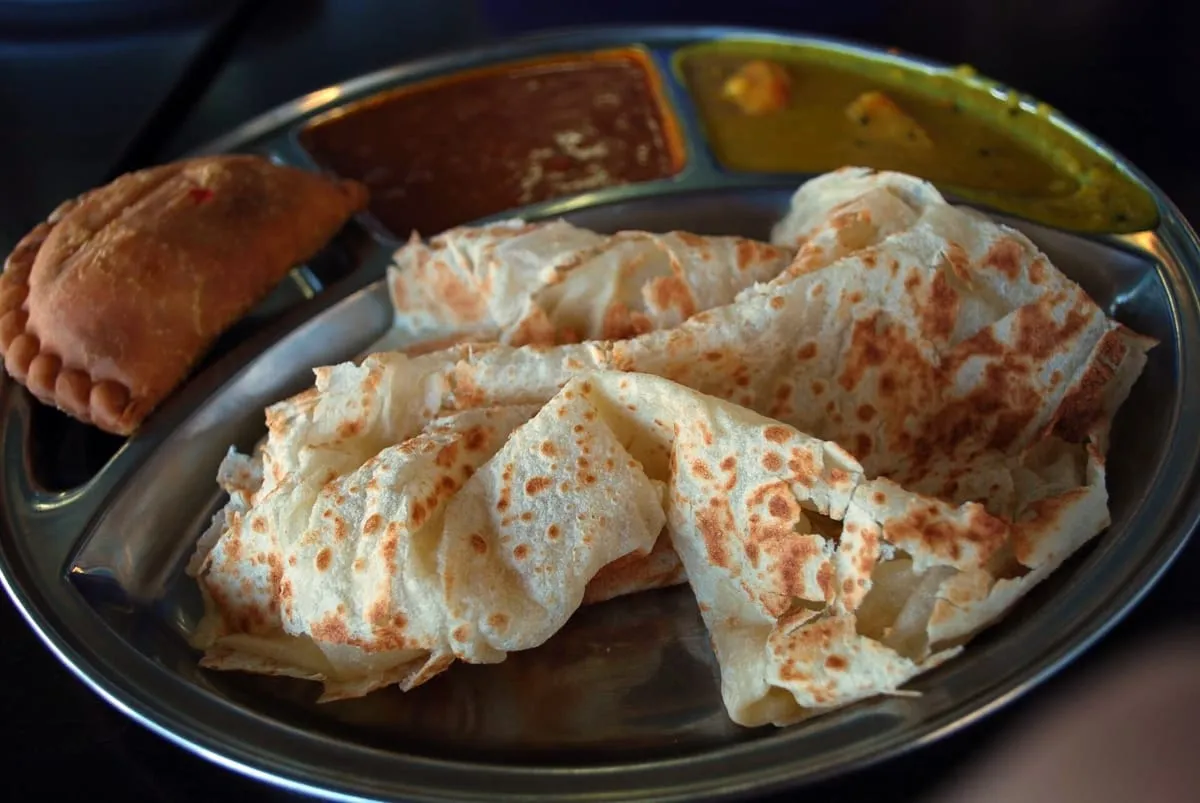
A standard order of roti canai is served on a divided stainless steel tray with three distinct dipping sauces: dhal (mild, slow-cooked yellow lentil gravy), kari ikan (a tangy, sharp fish curry spiced with fenugreek), and a small dollop of spicy red chilli sambal. Chicken curry (kari ayam) is also available upon request.
Can vegetarians eat nasi lemak and roti canai?
Plain roti canai is vegetarian (made of wheat flour, water, salt, and vegetable oil or ghee), and dhal is entirely plant-based; always specify no fish or chicken curry. Standard nasi lemak is not vegetarian because authentic sambal almost always contains fermented shrimp paste (belacan) and is served with dried anchovies (ikan bilis). Dedicated Indian or Buddhist vegetarian stalls prepare meat-free versions using mushroom sambal.