In this guide
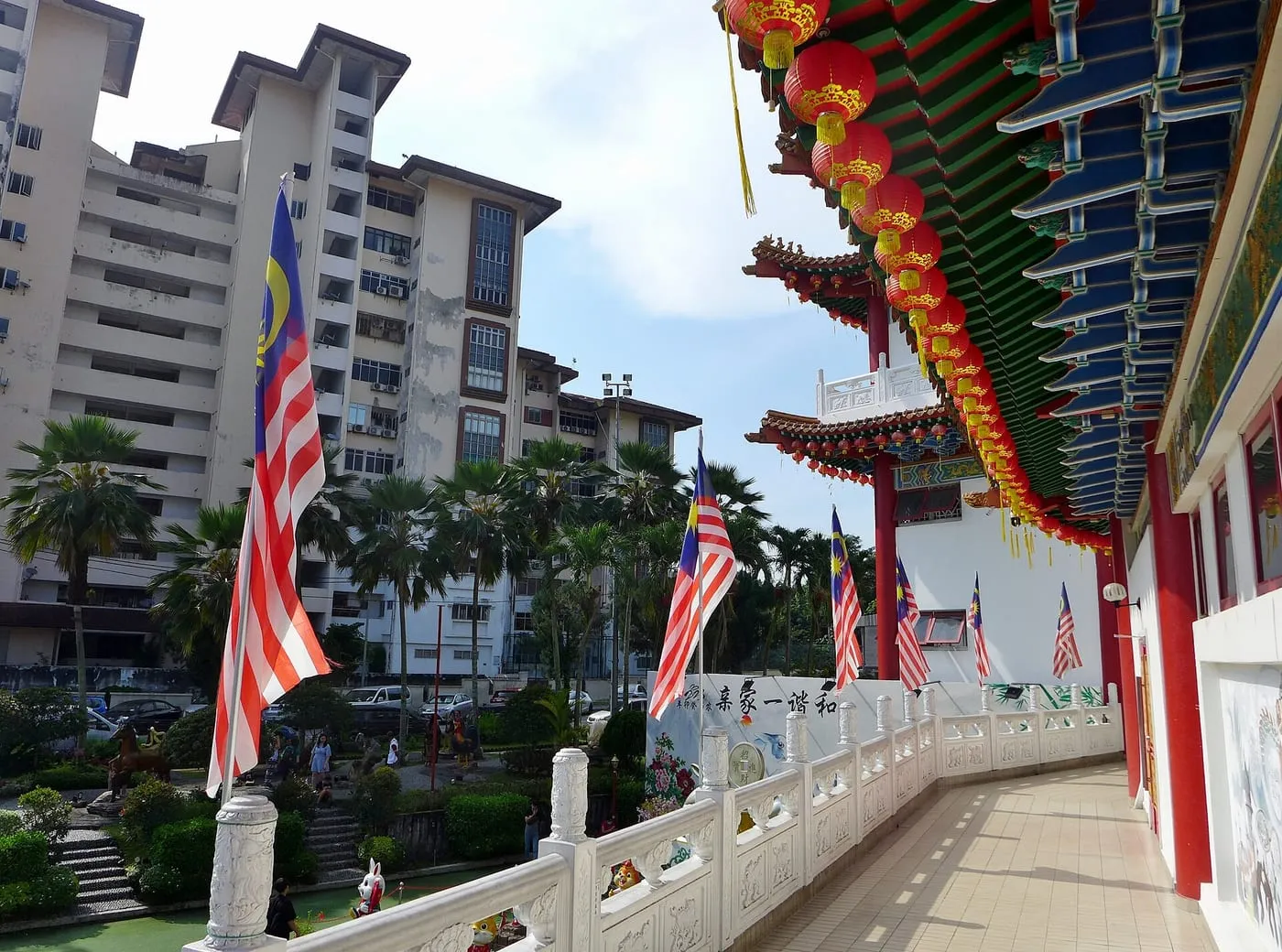
The Short Version: Grounded in Kuala Lumpur’s historic riverside trading quarter, pairing the 1936 Art Deco Central Market (Pasar Seni) with the active shophouses of Petaling Street Chinatown creates an notable cultural and heritage shopping circuit. Both destinations are completely free to enter and open daily from 10:00 to 22:00, situated immediately adjacent to Pasar Seni MRT/LRT interchange. Central Market offers air-conditioned, fixed-price artisan boutiques, hands-on wax-resist batik painting workshops (RM15 to RM35), Royal Selangor pewter ware, and hand-woven songket textiles across ethnic craft lanes. Two minutes away, Chinatown offers Petaling Street’s bargain street stalls, historic tea houses, heritage coffee shops serving kaya toast, and sacred sanctuaries including the colourful 22-metre gopuram tower of Sri Mahamariamman Hindu Temple and the Cantonese terracotta roof friezes of Chan See Shu Yuen Clan Temple. Or book a tour: taste your way through historic alleyways on the Chinatown food tour with 12 tastingsad (from RM 231, 5.0 stars from 9 reviews) led by a local food expert.
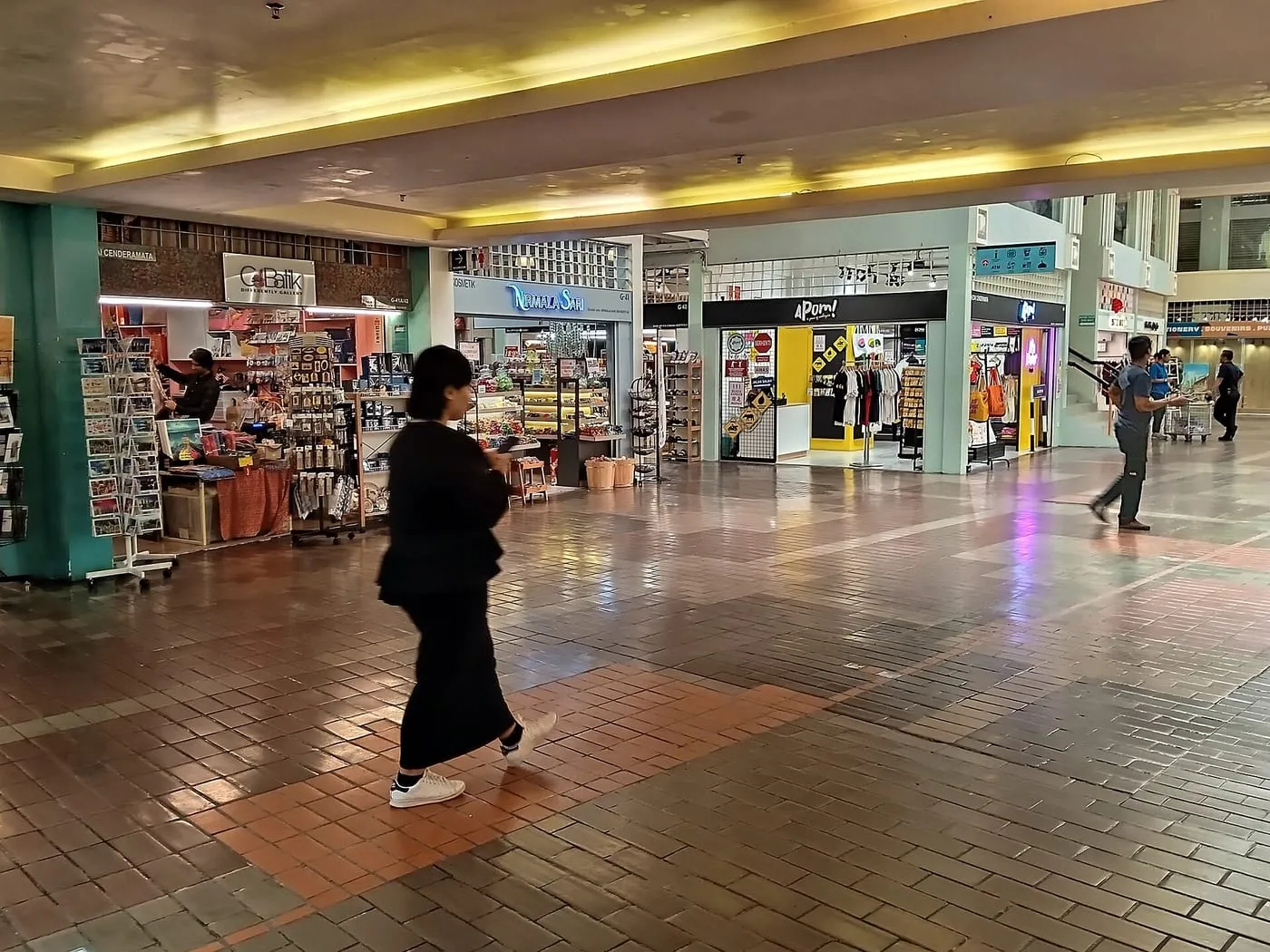
The interior arcade of Central Market. Photo: Wiki Farazi, Wikimedia Commons, CC0.
Central Market (Pasar Seni): 1936 Art Deco heritage and artisan crafts
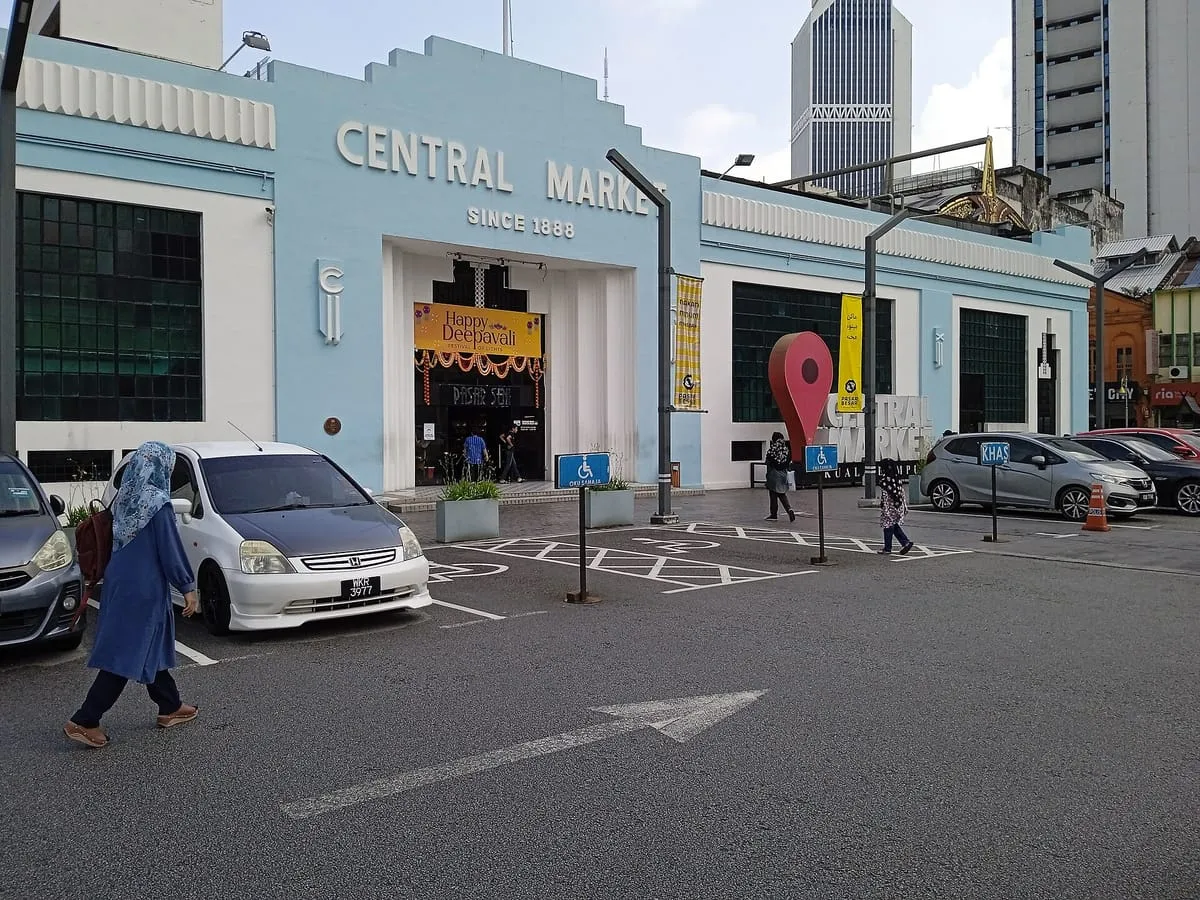
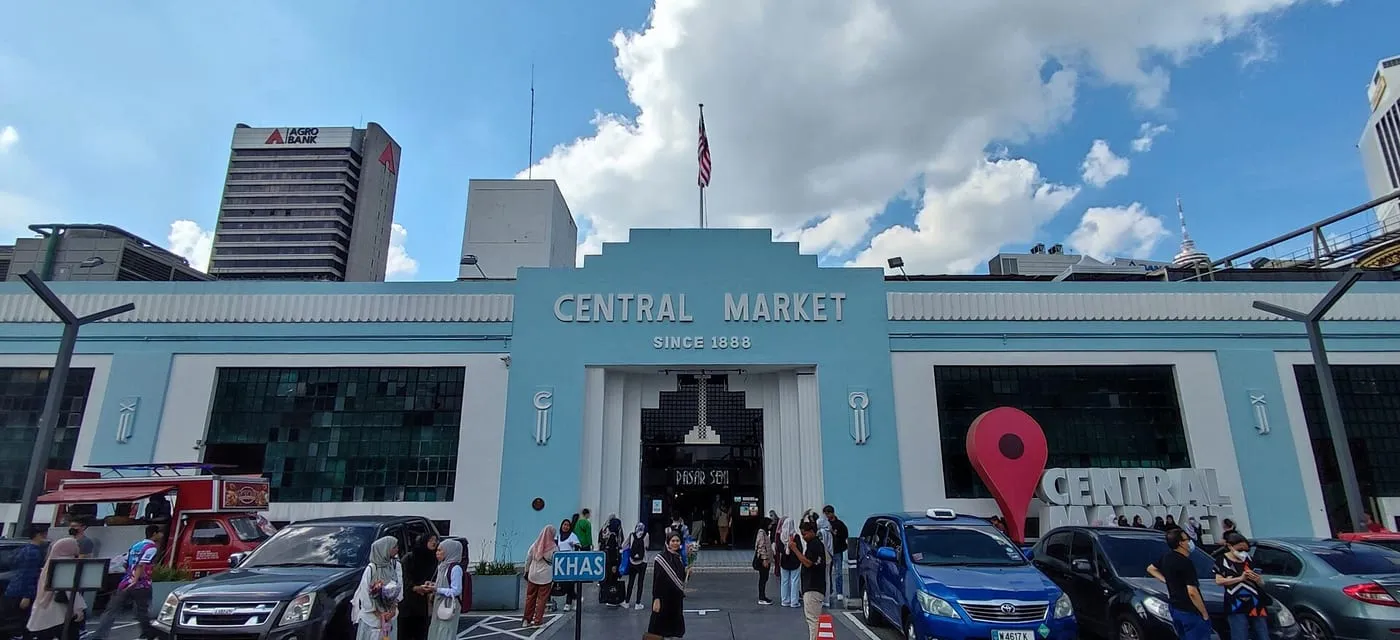
Originally established in 1888 by Yap Ah Loy, the third Kapitan Cina of Kuala Lumpur, Central Market began life as an open-air wet market supplying meat, fish, and produce to tin miners. In 1936, the British colonial authorities replaced the timber shed with the streamlined Art Deco edifice that stands today, finished in distinctive pale turquoise and sky-blue plasterwork.
When the municipal council slated the complex for demolition in the late 1970s to build high-rise offices, Malaysian heritage activists successfully campaigned to preserve it. In 1986, it was revitalized as a designated national cultural heritage landmark, converting the market hall into an air-conditioned showcase for Malaysian arts, handicrafts, and regional antiquities.
Internal layout: the ethnic craft lanes
The ground floor of Central Market is organised into thematic pedestrian avenues reflecting Malaysia’s multicultural fabric:
- Lorong Melayu (Malay Lane): Lined with boutiques selling Kelantanese and Terengganu hand-printed batik shirts, silk sarongs, intricately woven songket fabrics with silver and gold metallic threading, woven pandan leaf mats, and hand-carved mahogany kitchenware.
- Lorong Cina (Chinese Lane): Showcases traditional Chinese calligraphy scrolls, inkstones, jade amulets, tea sets, and hand-carved chops (stone name seals carved on-site within 20 minutes).
- Lorong India (Indian Lane): Brimming with lively embroidered pashminas, brass oil lamps (diyas), sandalwood incense, aromatic essential oils, and colourful glass bangles.
- Kasturi Walk: An open-air, covered pedestrian promenade flanking the western side of the market building, inaugurated with an enormous traditional Malay wau bulan (moon kite) steel archway. Kiosks here serve traditional street snacks such as putu bambu (steamed rice flour cylinders with melted palm sugar in bamboo tubes), fresh coconut shakes, and cold fruit skewers.
Central Market Annexe & hands-on batik workshops
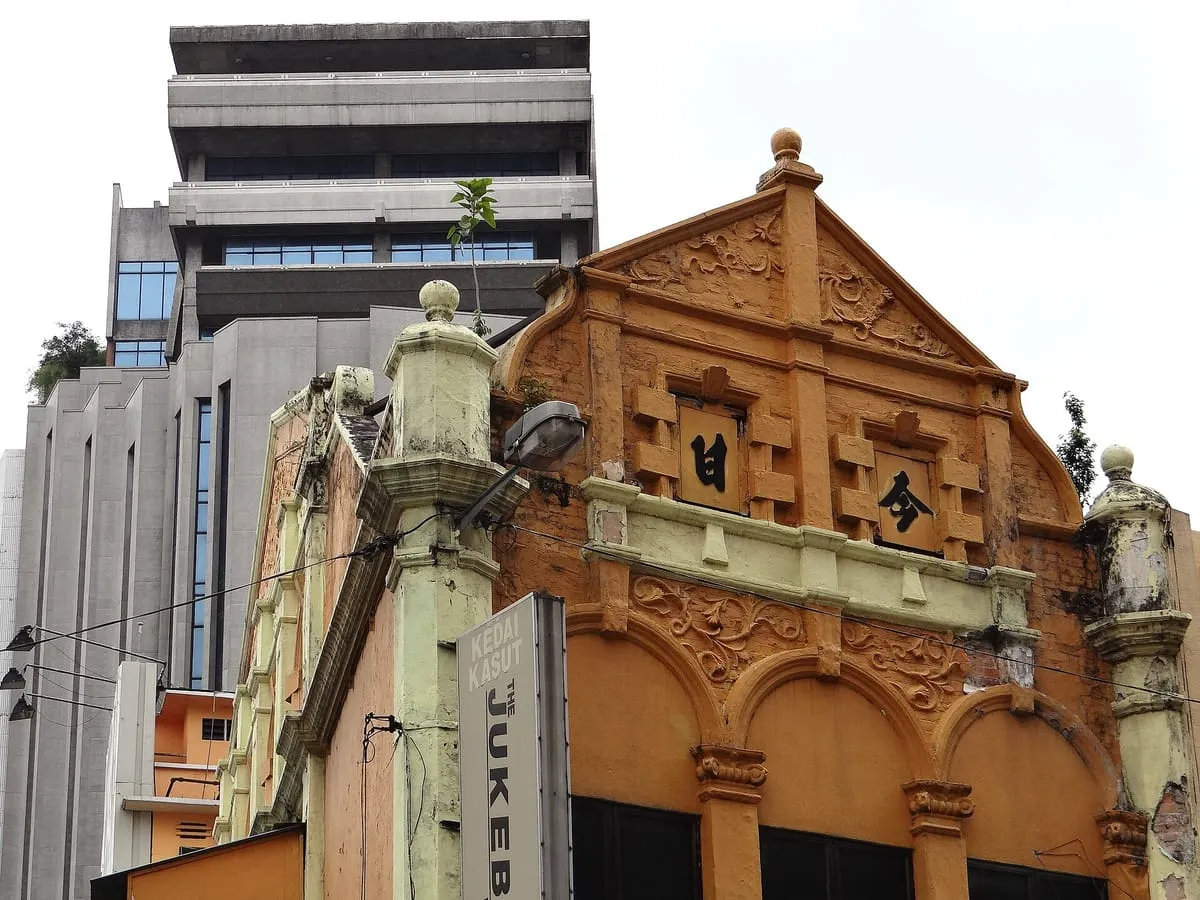
Behind the main hall sits the Central Market Annexe, a dedicated creative hub housing independent contemporary art galleries, caricature sketch artists, and craft workshops.
The most popular activity is DIY Batik Painting at studios like Ainna Artwork:
- Select a pre-waxed cotton fabric canvas (ranging from compact postcard designs of tropical hibiscus flowers and sea turtles up to large tote bags or wall banners).
- Use watercolour-style textile dyes to blend vivid gradients across the wax-bordered compartments.
- Studio staff blow-dry and iron your artwork, sealing the pigment so you can take your finished, colourfast Malaysian batik souvenir home immediately. Sessions cost between RM15 and RM35 and take 30 to 45 minutes.
Petaling Street Chinatown: shopping, bargaining and street snacks
Exiting Central Market and walking two blocks east brings you to Petaling Street (Chee Cheong Kai in Cantonese, meaning “Starch Factory Street”, recalling early tapioca mills). Marked by monumental green-roofed Chinese gates guarded by stone dragons at both ends, the street is covered by a high green polycarbonate canopy known locally as the “Green Dragon”, shielding shoppers from tropical rain.
Market shopping and bargaining etiquette
Petaling Street is lined with hundreds of stalls selling clothing, sneakers, luggage, watches, wallets, phone accessories, and novelty travel souvenirs.
| Shopping Aspect | Practical Rule | Recommended Etiquette |
|---|---|---|
| Starting Price Quotes | Typically inflated by 50% to 100% | Smile and maintain a polite, relaxed, friendly demeanour |
| Counter-Offering | Start at 40% to 50% of the opening quote | Offer reasonable increments; do not make insulting low-ball bids |
| Final Agreed Price | Settle around 60% of original quote | If the vendor declines, walking away politely often triggers a final concession |
| Payment Methods | Cash (RM) strongly preferred | Small notes (RM5, RM10, RM20) make transactions much quicker |
| Quality Inspection | Check seams, zips, and straps carefully | Inspect the exact boxed item you are handed before handing over cash |
Famous Chinatown street delicacies
Interspersed among the watch and bag vendors are historic street-food carts that have occupied the same street corners for over half a century:
- Madam Tang Muah Chee: Steamed glutinous rice dough cut into bite-sized morsels and tossed vigorously in freshly roasted crushed peanuts, toasted sesame seeds, and sugar (RM5 to RM7 per box).
- Air Mata Kucing (Mou Tak Teng since 1963): A thirst-quenching iced herbal drink brewed from monk fruit (luo han guo), dried winter melon, and sweet dried longans (RM3.50 per cup).
- Kim Sian Kee Salted Roast Duck: Crispy-skinned, herbal salted roast duck served with fragrant garlic rice.
For more food insights, consult our dedicated where to eat in Kuala Lumpur guide.
Historic Chinatown temples: Hindu and Taoist heritage
What makes Kuala Lumpur’s Chinatown distinct from many global counterparts is its direct juxtaposition of Chinese Taoist, clan ancestral, and South Indian Hindu places of worship along the very same streets:
1. Sri Mahamariamman Temple (1873)
Located on Jalan Tun H.S. Lee just 150 metres from Petaling Street, this is Kuala Lumpur’s oldest functioning Hindu temple:
- The Gopuram: An astounding 22.9-metre-tall, five-tiered pyramidal entrance tower adorned with 228 vividly painted, hand-sculpted figures of Hindu deities carved by sculptors from southern India.
- Silver Chariot: The temple houses the famous 21-foot silver chariot that transports the deities Lord Murugan and his consorts during the annual Thaipusam pilgrimage from Chinatown to the limestone caves.
- Visitor rules: Admission is free. All visitors must remove footwear at the attended shoe-deposit counter near the entrance (a nominal RM0.50 maintenance fee applies). Modest dress covering shoulders and knees is required; wrap sarongs are loaned if needed.
2. Guan Di Temple (1888)
Directly across the road from Sri Mahamariamman Temple stands this striking Taoist shrine dedicated to Guan Di (Guan Yu), the deified general of the Three Kingdoms era revered for loyalty, righteousness, and martial valor:
- Inside, heavy coils of incense hang from the timber beams, filling the hall with fragrant smoke.
- Visitors can view the famous 59-kilogram bronze Guan Dao (crescent blade spear). Devotees believe that touching or lifting the heavy weapon brings good fortune, protection, and inner strength.
3. Chan See Shu Yuen Clan Temple (1906)
Standing at the southern extremity of Petaling Street near Maharajalela monorail station:
- Constructed by the Chan, Chen, and Tan clan families, this is one of Malaysia’s largest and most elaborate ancestral clan temples.
- Its exterior eaves are decorated with Cantonese terracotta glazed roof friezes depicting scenes from Chinese mythology, warrior sagas, and floral motifs crafted by artisans brought from Guangdong.
To connect these temples into a wider historic journey including Merdeka Square and the Sultan Abdul Samad Building, follow our detailed Colonial District and Chinatown walk.
Heritage cafes, Kwai Chai Hong and speakeasies
In recent years, the southern lanes of Chinatown surrounding Lorong Panggung have experienced a sensitive renaissance, with young artisans restoring dilapidated pre-war shophouses into characterful bakeries, exhibition spaces, and hidden cocktail lounges:
- Kwai Chai Hong (Ghost Lane): A beautifully restored 1960s alleyway paved with vintage cobblestones and hung with red wooden street lamps. Interactive QR-code murals depict 1960s barbers, noodle vendors, and traditional Cantonese opera singers, making it a favourite spot for street photography.
- Ho Kow Hainam Kopitiam (established 1956): The neighbourhood’s most famous heritage breakfast spot. Arrive early for traditional charcoal-toasted Hainanese bread with fragrant pandan kaya jam and cold slabs of salted butter, paired with runny half-boiled eggs and thick aromatic kopi kaw (averaging RM10 to RM15 per set).
- Merchant’s Lane & Chocha Foodstore: Atmospheric cafe-bistros tucked behind unmarked timber shophouse doors, retaining exposed raw brickwork, peeling pastel paint, open internal sunwells, and lush hanging philodendrons.
How to get to Central Market and Chinatown
Public transit access to the heritage precinct is notable:
- By MRT & LRT: Take either the LRT Kelana Jaya Line or the MRT Kajang Line to Pasar Seni station. Exit A connects via a covered pedestrian bridge directly to the doors of Central Market; Exit D leads straight onto the southern end of Jalan Sultan and Chinatown.
- By Monorail: Take the KL Monorail to Maharajalela station, which deposits you right outside the Chan See Shu Yuen Clan Temple at the southern end of Petaling Street.
- By Foot from Merdeka Square: Central Market sits only a 5-minute walk south of Merdeka Square and the Sultan Abdul Samad Building, crossing the bridge over the confluence of the Klang and Gombak rivers.
Discover more self-guided adventures in our guide to free things to do in Kuala Lumpur and explore nearby boutique accommodation options in where to stay in Kuala Lumpur.
Tours and guided options
Central Market and Chinatown are free public precincts easy to explore on foot. Guided street food and heritage tours lead you into tucked-away clan temples, historic shophouses, and hidden market hawker stalls you might otherwise pass by.
Chinatown and city centre food tour with 12 tastings
From RM 231 · 5 stars from 9 reviews · 3 hours · heritage hawker stalls and tea houses
Chinatown and city centre food tour with 12 tastingsad: Discover the flavours of Kuala Lumpur on our guided food tour. Explore Chinatown and the colonial district, and taste over 12 authentic dishes that reflect Malaysia’s cultural blend !
Kuala Lumpur half-day heritage trail guided walking tour
From RM 207 · 4 hours · colonial quarter and Petaling Street
Kuala Lumpur half-day heritage trail guided walking tourad: Discover the rich history and culture of Kuala Lumpur on a walking tour. Visit the Sin Sze Si Ya Temple, the Sri Maha Mariamman Temple, the Central Market, and the Buddhist Maha Vihara Temple.
Night heritage and street food walking tour in Chinatown
From RM 228 · 4 stars from 1 review · 4 hours · evening markets and lantern alleys
Night heritage and street food walking tour in Chinatownad: Discover Kuala Lumpur’s heritage, evening markets, and street food on a guided evening walking tour. Explore hidden alleys, taste local treats, and enjoy the city’s lively night atmosphere.
Common questions
What are the opening hours for Central Market and Petaling Street Chinatown?
Central Market (Pasar Seni) opens daily from 10:00 to 22:00. Petaling Street Chinatown operates daily from roughly 10:00 to 23:00, with market stalls, fruit vendors, and souvenir tables reaching their liveliest peak after 17:00 when neon lights switch on.
Can you do hands-on batik painting at Central Market?
Yes. The Central Market Annexe houses independent studios including Ainna Artwork and DIY craft kiosks. Visitors can choose pre-waxed fabric designs or draw their own canting hot wax outlines, painting them with textile dyes for RM15 to RM35 depending on the size of the canvas.
How much should you bargain at Petaling Street market stalls?
For counterfeit designer watches, handbags, sneakers, and novelty souvenirs along Petaling Street, vendors typically quote inflated starting prices. Politeness and good humour are key; counter-offering roughly 40% to 50% below the opening quote and settling around 60% is common practice. Fixed-price craft stalls inside Central Market generally do not negotiate.
Which historic temples are within walking distance of Petaling Street?
The ornate Sri Mahamariamman Temple (founded in 1873, Kuala Lumpur's oldest operating Hindu temple) sits directly on Jalan Tun H.S. Lee. Just opposite stands the red-brick Guan Di Taoist Temple (1888), while the Chan See Shu Yuen Clan Temple with its intricate Cantonese terracotta roof friezes sits at the southern terminus of Petaling Street.
 shopping mall beneath the Twin Towers](/_astro/suria-klcc-atrium-shopping-levels.DtKbsFZq_Z1goekV.webp)