In this guide
The Short Version: Kuala Lumpur is one of Southeast Asia’s most generous cities for budget travellers, where fine landmarks charge zero admission. Ascend the 272 rainbow steps at Batu Caves into the vast Cathedral Cave (free), marvel at panoramic skyline views from the roof terrace of Thean Hou Temple (free), and wander through 91 hectares of bamboo groves and lotus ponds in Perdana Botanical Gardens (free). In the city centre, cool off in the KLCC Park children’s wading pool (free), watch the Lake Symphony musical fountains (free) erupt each evening under the Petronas Towers, and take in the nighttime River of Life blue mist illumination (free) at historic Merdeka Square. Or book a tour: visit the city’s top public monuments with air-conditioned transport on a half-day city highlights tourad (from RM 40, 4.5 stars from 1,043 reviews).
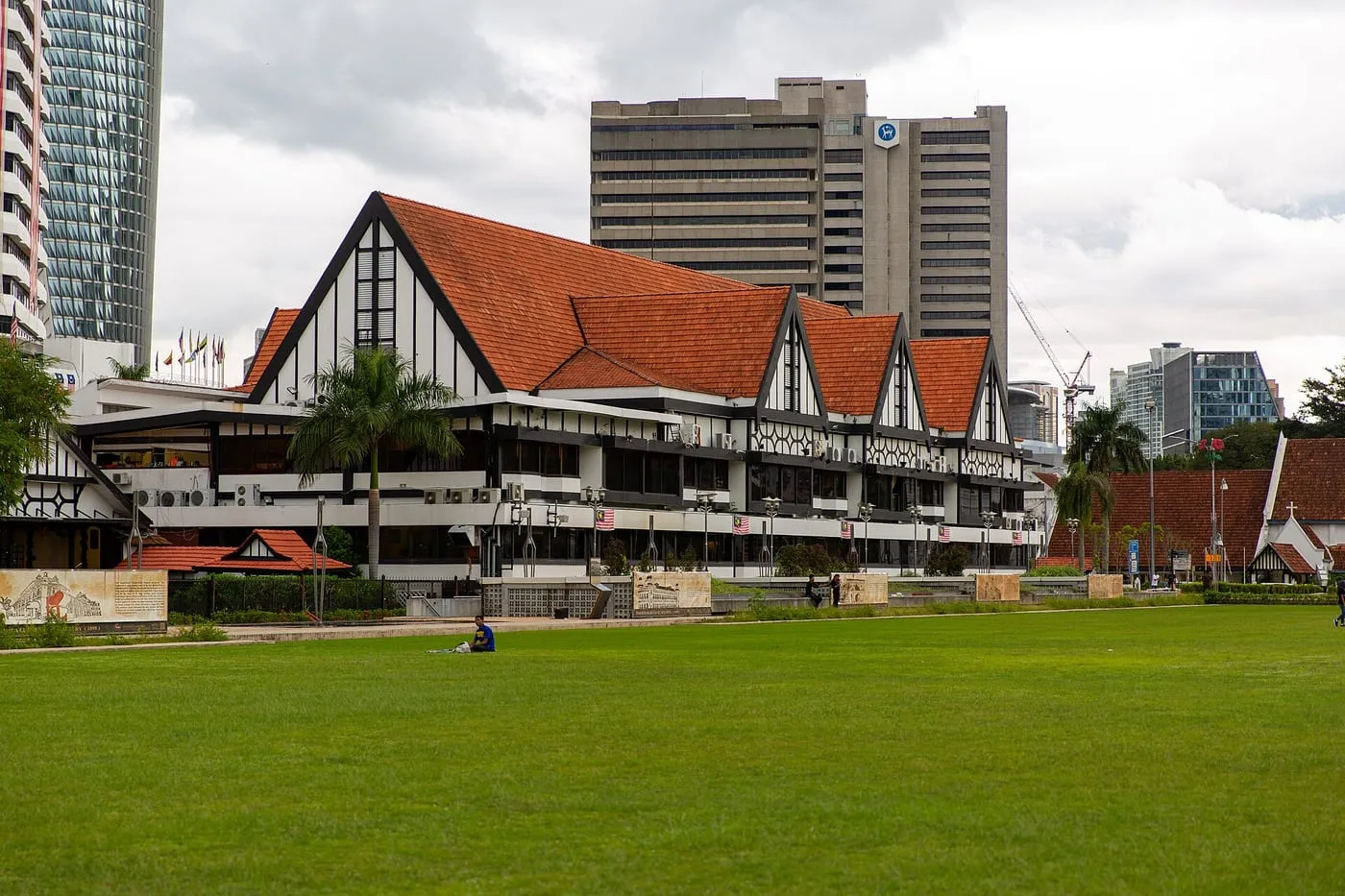
The Royal Selangor Club on Merdeka Square. Photo: Shesmax, Wikimedia Commons, CC BY-SA 4.0.
Top free sights in Kuala Lumpur
While paid viewpoints like the Petronas Twin Towers Skybridge or KL Tower observation decks require ticket purchases, many of Kuala Lumpur’s most memorable cultural and natural highlights charge no entrance fee.
| Attraction | District | Nearest transit station | Highlights & practical tips |
|---|---|---|---|
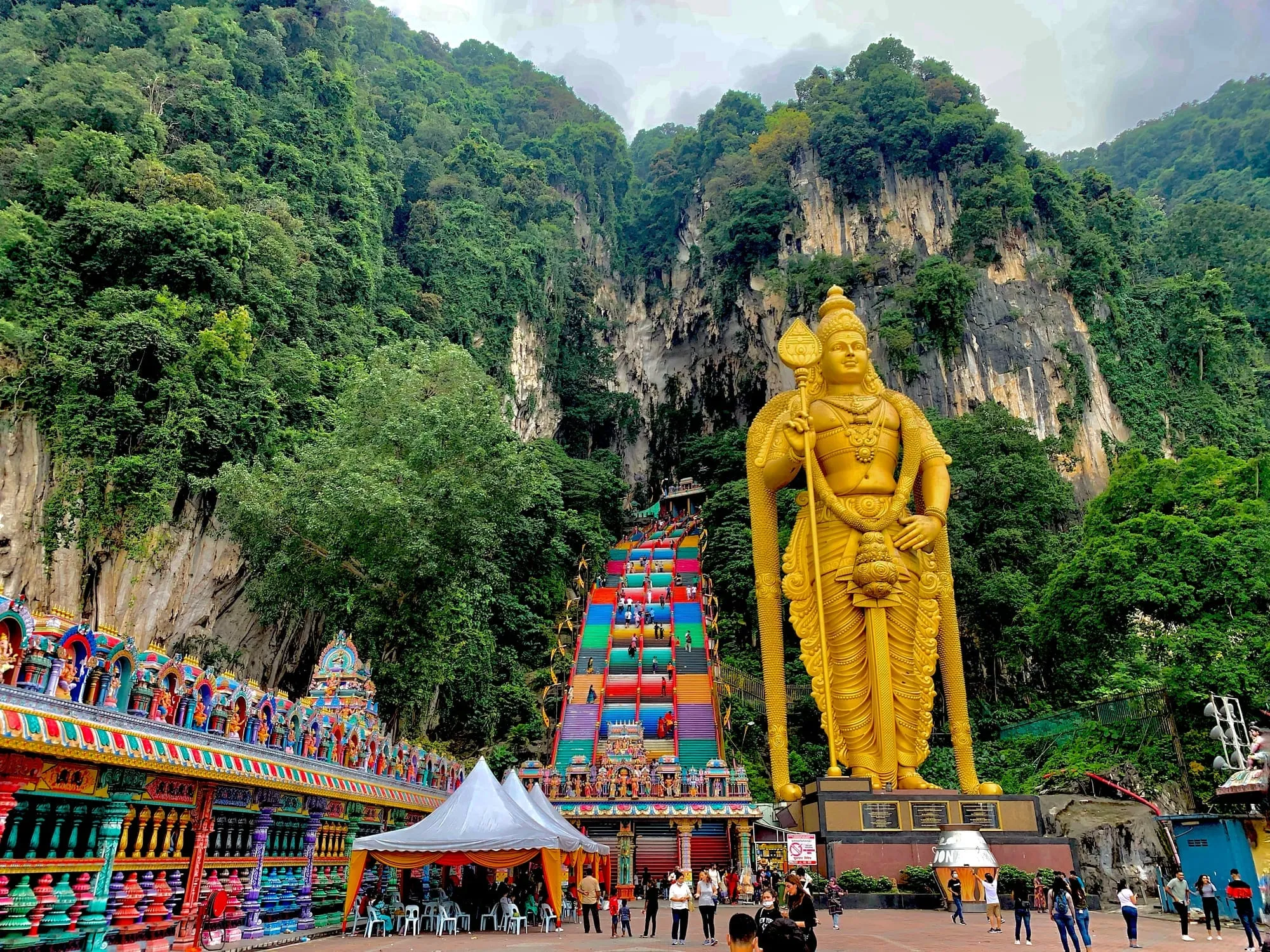
| Batu Caves | Gombak | Batu Caves (KTM Komuter) | 42.7m golden Murugan statue, 272 rainbow steps, and massive limestone caverns; visit before 09:00 |
| Perdana Botanical Gardens | Lake Gardens | Muzium Negara (MRT) | 91-hectare colonial park, Sunken Garden, orchid collections, and tranquil lakeside footpaths |
| Thean Hou Temple | Robson Heights | KL Sentral (LRT/MRT + RM6 Grab) | Six-tiered Chinese temple, thousands of hanging red lanterns, and panoramic skyline vistas |
| Merdeka Square & River of Life | Heritage Core | Masjid Jamek (LRT) | Independence flagpole, Moorish civic architecture, and nighttime illuminated river mist shows |
| National Mosque (Masjid Negara) | Perdana Core | Kuala Lumpur (KTM) / Pasar Seni (LRT) | 16-pointed umbrella dome and reflective pools; complimentary robe hire for visitors |
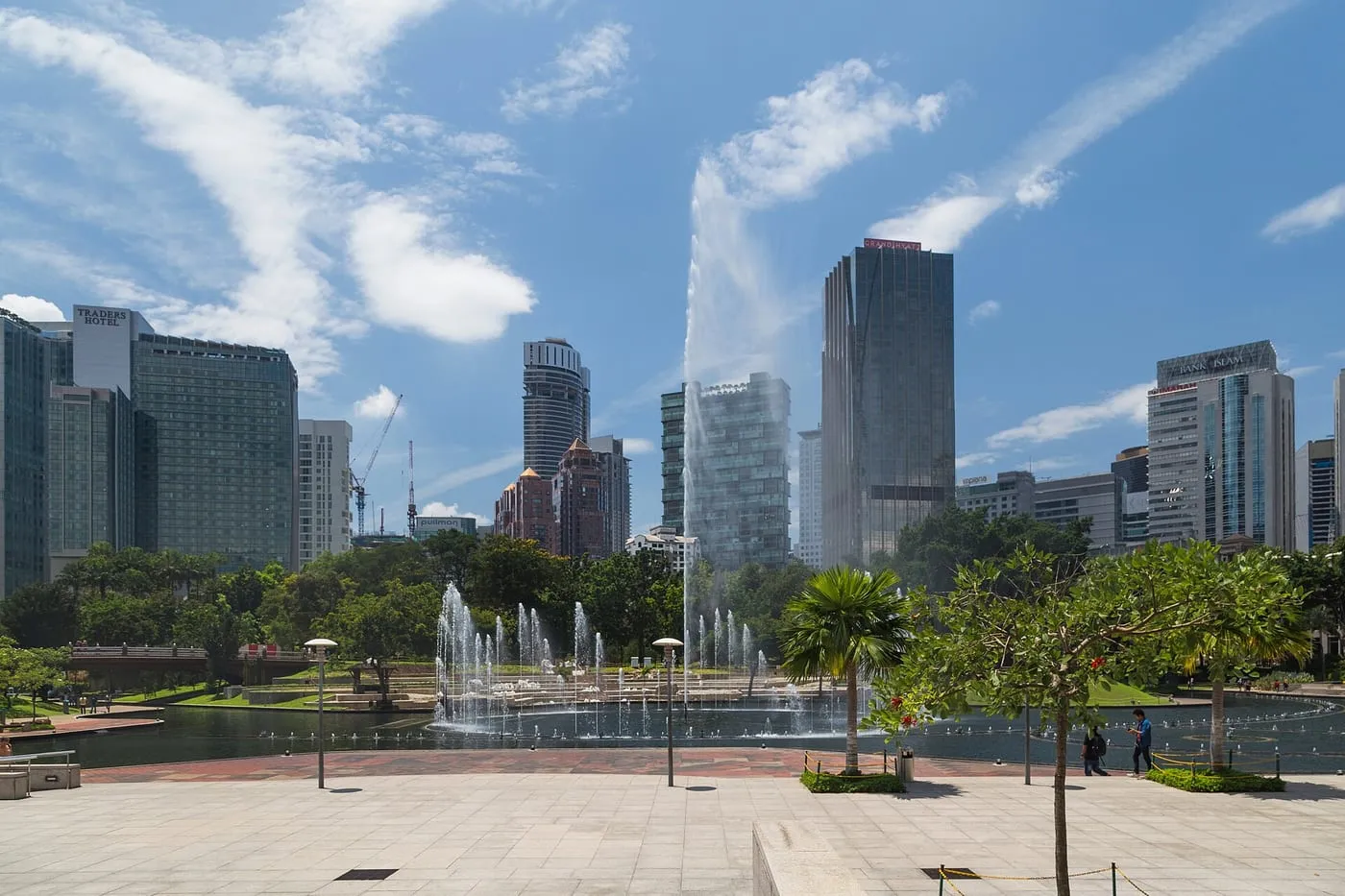
| KLCC Park & Lake Symphony | City Centre | KLCC (LRT) | 50-acre tropical green park, free wading pool, jogging track, and nightly choreographed water fountains |
| Kwai Chai Hong & Petaling Street | Chinatown | Pasar Seni (LRT/MRT) | Restored 1960s heritage alleyway murals, historic Chinese shophouses, and lively evening bazaar stalls |
1. Batu Caves: Cathedral Cave & Lord Murugan Statue
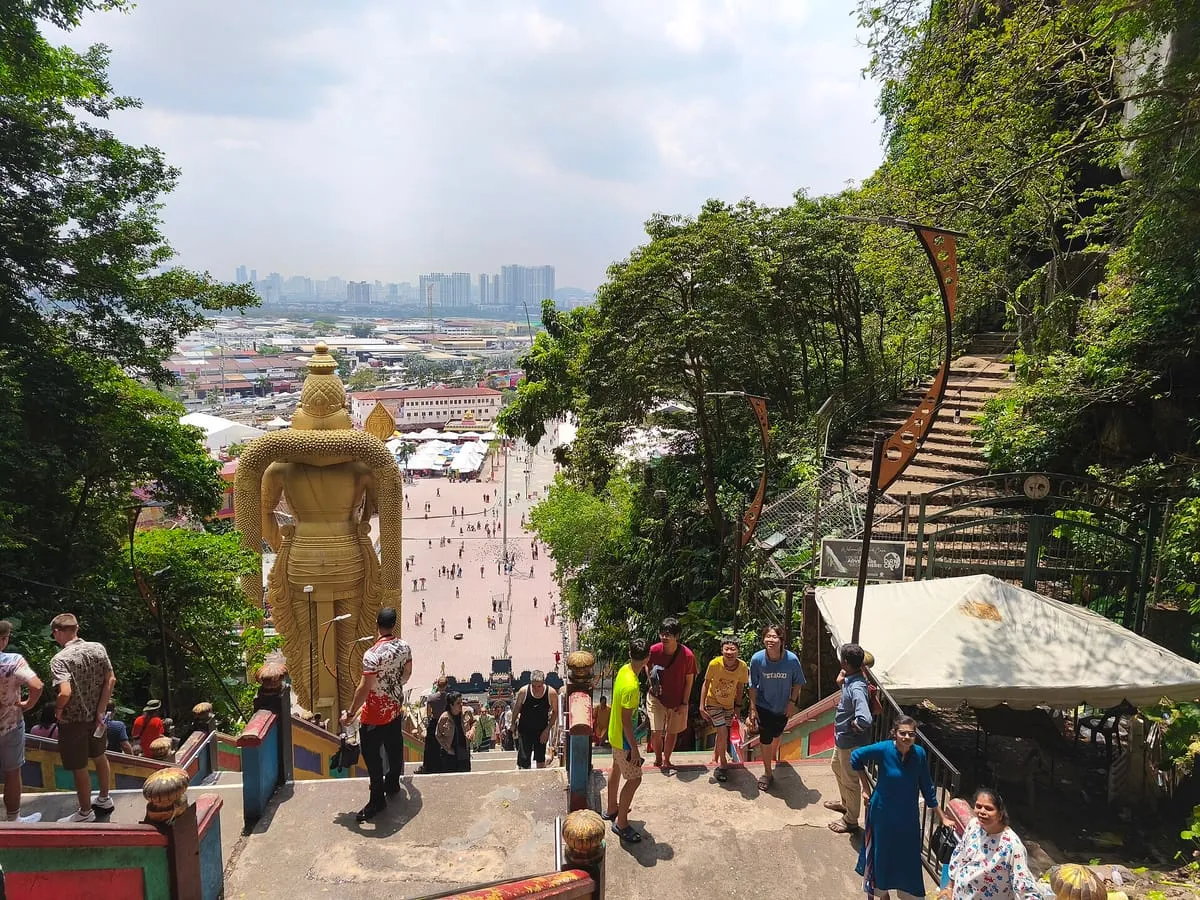
Located 13 kilometres north of the city centre, Batu Caves is Malaysia’s major Hindu shrine and one of the country’s most photographed spectacles. A 42.7-metre golden statue of Lord Murugan—the Hindu god of war—stands at the base, guarding the towering limestone hill.
To enter the main Cathedral Cave (also called Temple Cave), climb the famous 272 steps, painted in a lively rainbow gradient. The cavern inside features a vaulted limestone ceiling reaching over 100 metres high, pierced by natural openings that send beams of sunlight onto ornate Hindu shrines.
- Cost: Completely free. Smaller commercial caves at the base (such as Ramayana Cave) charge a nominal RM5 entry fee.
- Getting there: Catch the KTM Komuter train directly from KL Sentral to Batu Caves station for RM2.60 each way.
- Etiquette: Strict dress codes apply. Knees and shoulders must be covered. Sarongs can be rented at the staircase base for RM5 if your clothing is too revealing.
- Festival note: If visiting during January or February, witness over a million devotees participating in Thaipusam at Batu Caves.
2. Perdana Botanical Gardens (Lake Gardens)
Established in 1888 as Kuala Lumpur’s primary recreational retreat, the Perdana Botanical Gardens span 91 hectares of rolling greenery in the heart of the capital. This lush sanctuary provides an immediate escape from urban congestion and traffic fumes.
Key highlights within the park include:
- The Sunken Garden: A formal amphitheatre planted with colourful petunias, topiary shrubs, and a central fountain surrounded by pergolas.
- The Bamboo Playhouse: An architectural bamboo pavilion perched over the water, designed by Malaysian architect Eleena Jamil.
- Lakeside Boardwalks: Raised wooden walking paths surrounding the central lake, bordered by weeping willows, floating lotus blossoms, and monitor lizards sunning on the banks.
- Herb and Spice Garden: Informative pathways featuring indigenous tropical plants used in traditional Malay, Chinese, and Indian cuisine and medicine.
The gardens are open daily from 07:00 to 20:00 with zero entry fee. Arrive between 07:30 and 09:30 to join local residents practising tai chi and jogging along the shaded tree-lined circuits.
3. Thean Hou Temple & Robson Heights Viewpoint
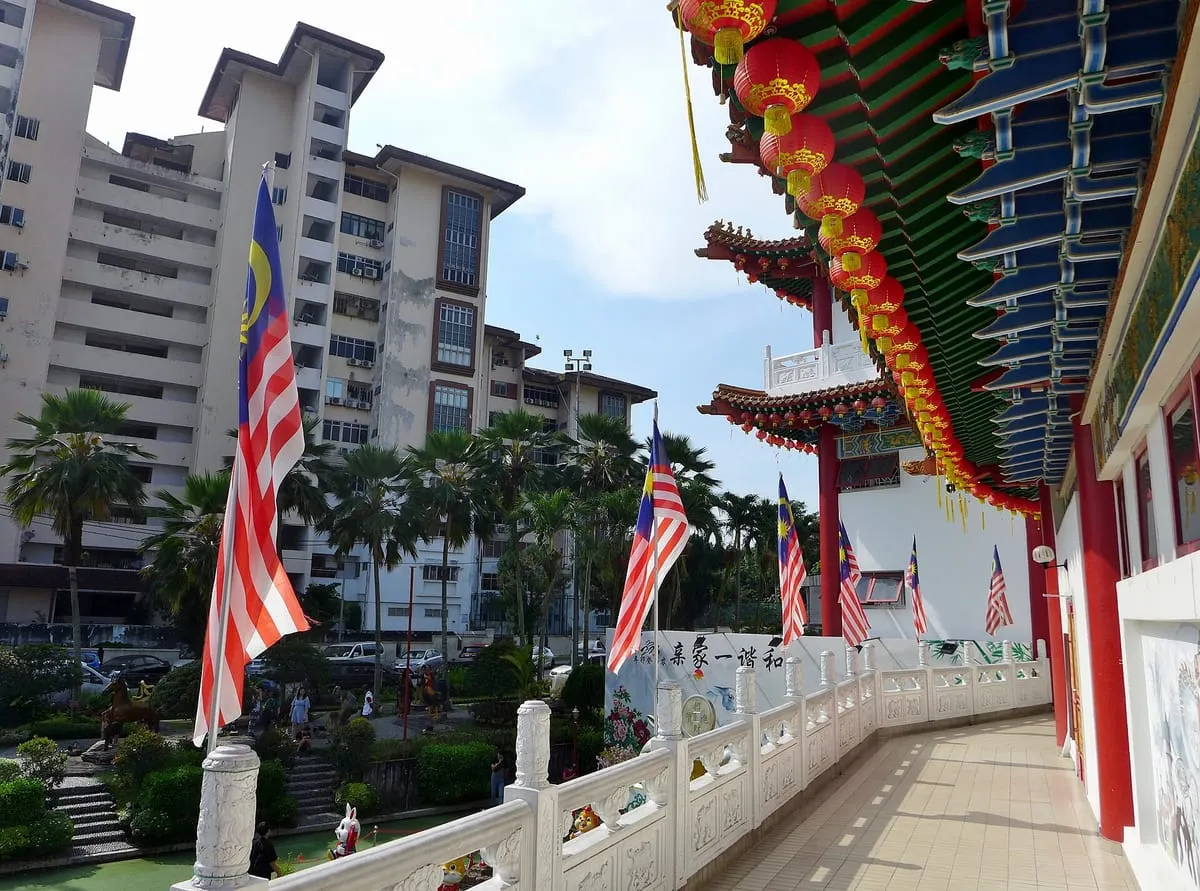
Perched atop Robson Heights overlooking Kuala Lumpur, Thean Hou Temple is a grand six-tiered shrine dedicated to Mazu, the Chinese protector goddess of seafarers. Built between 1981 and 1987 and opened in 1989 by the Hainanese community, the complex synthesises Buddhist, Taoist, and Confucian architecture.
Wander past multi-tiered pagoda roofs adorned with ceramic dragons and phoenixes, through grand colonnades supported by red lacquer pillars. The main prayer hall houses three ornate altars flanked by modern divination machines and intricate carvings.
Step out onto the upper open-air viewing terraces to take in sweeping panoramas of the city skyline, framed by hundreds of glowing crimson lanterns strung across the courtyard. During Chinese New Year and the Mid-Autumn Festival, thousands of extra lanterns turn the temple into an illuminated beacon.
- Cost: Free entry (donations welcome).
- Hours: Daily 08:00 to 22:00.
- Getting there: Take the LRT or MRT to KL Sentral, then take a short 5 to 7-minute Grab ride up the hill for roughly RM6 to RM8.
4. Merdeka Square & River of Life Light Mist Show
Merdeka Square (Dataran Merdeka) is the cradle of modern Malaysia. At midnight on 31 August 1957, the British Union flag was lowered here and the Malayan flag raised, marking national independence.
Surrounding the manicured lawn stand architectural landmarks:
- Sultan Abdul Samad Building: Built in 1897 from red brick and white plaster, blending Mogul arches, copper cupolas, and a 41-metre clock tower.
- Royal Selangor Club: A black-and-white Mock Tudor clubhouse established in 1884.
- The 95-Metre Flagpole: Marked with a flat marble plaque designating the historic independence site.
Just behind the Sultan Abdul Samad Building lies the River of Life, where the Klang and Gombak rivers meet. Following a multi-million-ringgit municipal river beautification project, this pedestrian promenade features blue-tiled walkways, overhead mist jets, and historic murals.
Visit after 20:00 when the pedestrian bridge illuminates with deep cobalt lighting and rhythmic water mist cascades across the river surface, creating a magical atmospheric reflection of the century-old Masjid Jamek minarets.
5. National Mosque of Malaysia (Masjid Negara)
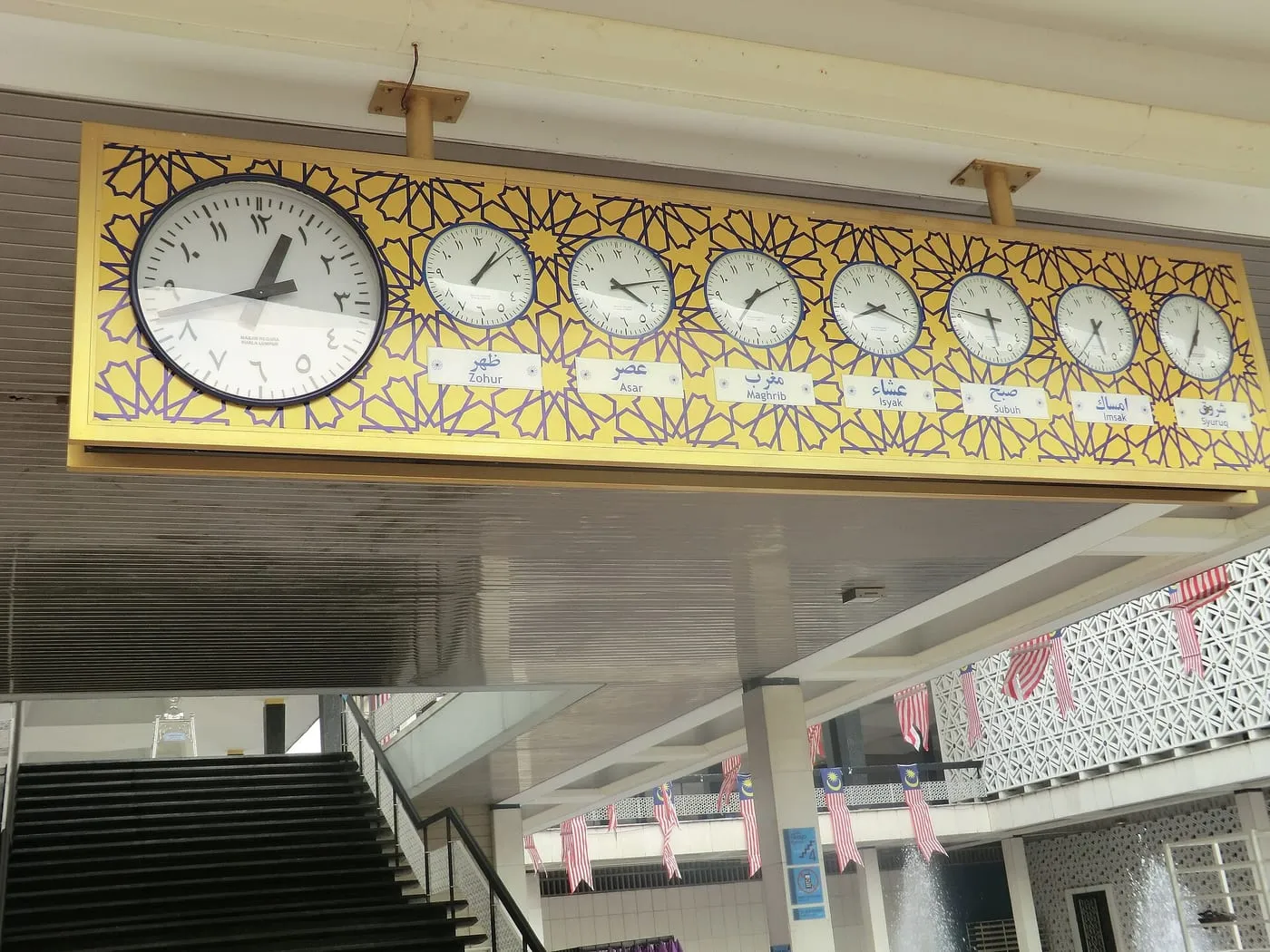
Surrounded by 13 acres of landscaped gardens, the National Mosque (Masjid Negara) was constructed in 1965 to symbolise the unity and aspirations of the newly independent nation. Unlike traditional Middle Eastern domed mosques, its modernist design incorporates a main roof resembling an open 16-pointed umbrella, alongside a 73-metre minaret designed like a folded parasol.
The open prayer hall accommodates 15,000 worshippers, surrounded by terrazzo-paved outdoor courtyards, reflective fountains, and marble colonnades that capture cooling cross-breezes.
- Cost: Free admission.
- Visiting hours for non-Muslims: Saturday to Thursday 09:00–12:00, 15:00–16:00, and 17:30–18:30; Friday 15:00–16:00 and 17:30–18:30 (closed to tourists during Friday congregational prayers).
- Dress requirements: Modest long trousers or skirts are required. The mosque provides lightweight purple hooded robes free of charge at the tourist desk.
Combine your visit with the nearby Islamic Arts Museum Malaysia, located just a two-minute walk away (entry RM20).
6. KLCC Park & Lake Symphony Musical Fountains
Situated directly behind the Petronas Twin Towers, KLCC Park is a 50-acre tropical green space designed by historic Brazilian landscape architect Roberto Burle Marx. The park incorporates over 1,900 indigenous trees and palms selected to attract local birdlife.
The park offers notable free facilities for visitors:
- 1.3-Kilometre Rubberised Jogging Track: Built with high-grade shock-absorbing polyurethane, ideal for morning runs beneath shady canopy trees.
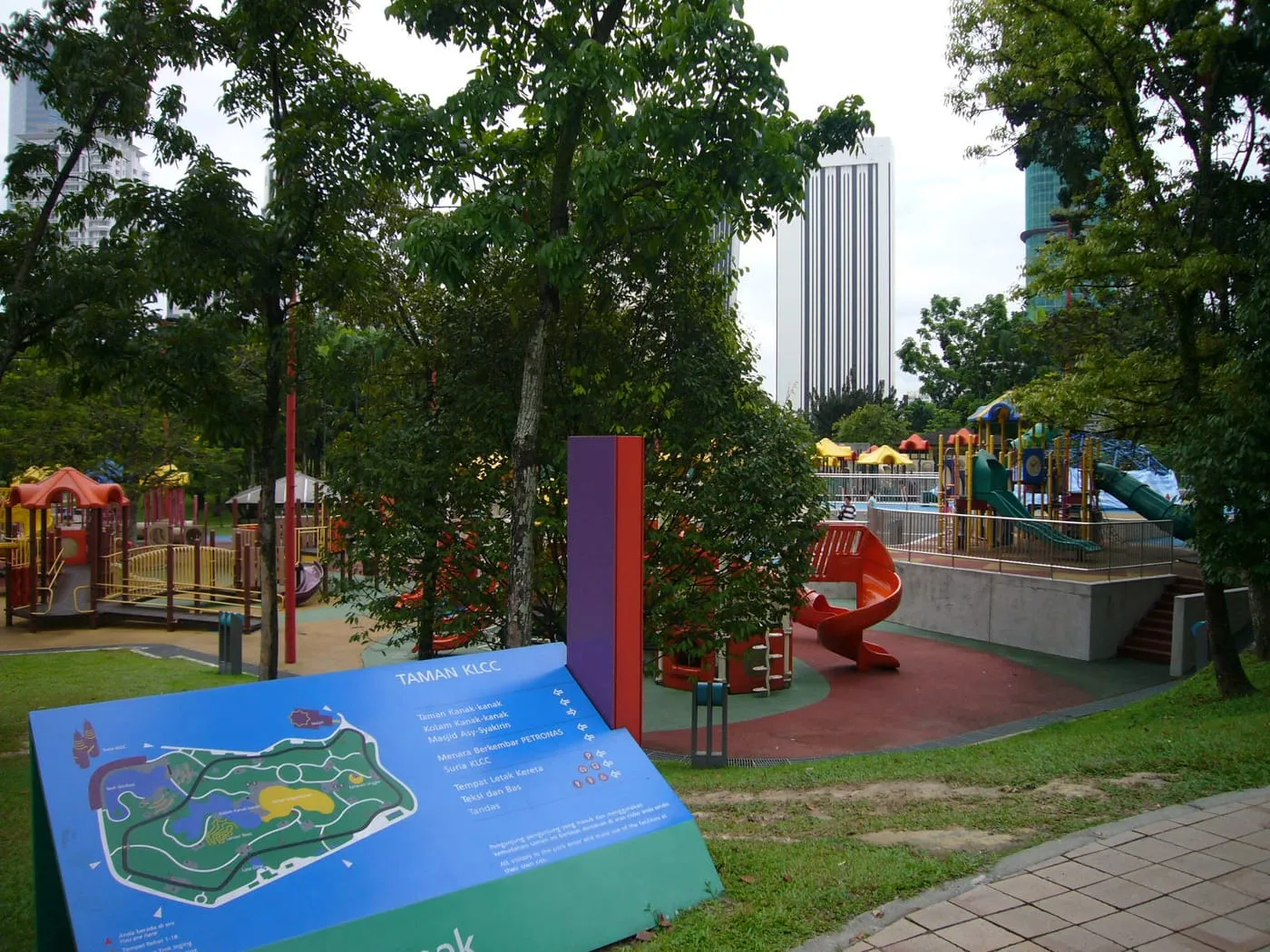
- Expansive Children’s Playground & Wading Pool: One of the largest public children’s playgrounds in Southeast Asia, complete with climbing frames and a free outdoor splash and wading pool (open Tuesday to Sunday, free entry). Read more in our guide to Kuala Lumpur with Kids.
- Lake Symphony Fountain Shows: The 10,000-square-metre artificial lake in front of Suria KLCC features dozens of computer-controlled water jets that shoot up to 42 metres into the air.
Lake Symphony Schedule (Daily):
- Light & Sound Musical Shows: 20:00, 21:00, and 22:00.
- Light-Only Shows: 19:30, 20:30, and 21:30.
Gather along the stone steps of the park’s promenade 15 minutes early to secure an unobstructed view of the water fountains dancing against the illuminated stainless steel facade of the towers.
Tours and guided options
While every attraction on this list costs zero ringgit for admission, guided tours offer affordable shared transit to distant free sights like Batu Caves, saving you suburban transit time.
Half-day city highlights tour with local guide
From RM 40 · 4.5 stars from 1,043 reviews · 3.5 hours · stops at major free monuments
Half-day city highlights tour with local guidead: Uncover the beauty and charm of the old and new on a half-day tour of Kuala Lumpur. Contrast the skyscrapers and upscale shopping malls with colonial buildings.
Kuala Lumpur heritage trail guided walking tour
From RM 207 · 4 hours · Merdeka Square and Chinatown
Kuala Lumpur heritage trail guided walking tourad: Discover the rich history and culture of Kuala Lumpur on a walking tour. Visit the Sin Sze Si Ya Temple, the Sri Maha Mariamman Temple, the Central Market, and the Buddhist Maha Vihara Temple.
Batu Caves in-depth cultural temple tour
From RM 150 · 4.7 stars from 1,696 reviews · 4 hours · guided walk up the free temple cave
Batu Caves in-depth cultural temple tourad: Join a sightseeing tour from Kuala Lumpur and visit the Batu Caves, a site of great importance to Hindu pilgrims. Climb the 272 steps to the statue of Lord Murugan and see the six-tier Thean Hou Temple.
7. Urban green sanctuaries: Bukit Kiara and KL Forest Eco Park
If you crave deeper jungle immersion without leaving the metropolitan area, Kuala Lumpur hosts notable green reserves:
Bukit Kiara Federal Park (Taman Persekutuan Bukit Kiara)
Located near Taman Tun Dr Ismail (TTDI), this vast secondary rainforest reserve features paved walking trails and rugged dirt paths. Stroll through the canopy to spot troops of dusky leaf monkeys (spectacled langurs), giant monitor lizards, hornbills, and colourful butterflies. Access is completely free daily from sunrise to sunset.
KL Forest Eco Park (Bukit Nanas)
Formerly known as the Bukit Nanas Forest Reserve, this ancient patch of primary rainforest sits directly beneath the KL Tower in the city centre. While its elevated metal canopy walkway implemented an admission ticket for foreigners (roughly RM40), you can still explore the surrounding perimeter nature trails and forested borders that showcase virgin jungle trees preserved amid urban concrete.
8. Historic alleys & street art: Kwai Chai Hong & Chinatown
Explore the lively open-air street art and restored heritage architecture in Kuala Lumpur’s old Chinese quarter without spending a single sen:
- Kwai Chai Hong (Ghost Lane): Tucked behind Lorong Panggung, this restored heritage alleyway features evocative wall murals depicting 1960s Chinese community life—a traditional calligrapher writing auspicious couplets, an old barber shaving a patron, and courtesans gazing from wooden shophouse balconies. Scan the QR codes beside each mural to hear voice actors bring the scenes to life.
- Jalan Alor Murals: The narrow back alleys behind Jalan Alor have been transformed with lively technicolour murals of tropical jungle animals, giant butterflies, and surreal cloudscapes.
- Central Market Annexe: Step into the air-conditioned art galleries behind Central Market to view rotating contemporary art and batik exhibits by local Malaysian painters, almost always free of charge.
9. Free Go KL City Bus routes
Kuala Lumpur operates the Go KL City Bus, a fleet of comfortable, air-conditioned purple buses that serve major tourist, business, and shopping hubs.
- Payment rule: Go KL buses are free for Malaysian citizens using MyKad. For foreign visitors, a nominal fare of RM1.00 per boarding was introduced to streamline boarding. This remains the most economical motorised transport option in the capital.
- Useful lines:
- Green Line: Runs between KLCC and Bukit Bintang.
- Purple Line: Connects Pasar Seni (Chinatown) with Bukit Bintang via the KL Tower.
- Red Line: Operates from KL Sentral to Merdeka Square and Chow Kit.
To access the buses, simply tap a Touch ‘n Go card or debit card at the front door card reader. For further transit advice, consult our comprehensive guide to Public Transport in Kuala Lumpur.
Budget traveller strategies for Kuala Lumpur
To maximise your travel budget while exploring Kuala Lumpur:
- Eat at Mamak Stalls & Hawker Centres: Skip upscale hotel restaurants and dine where locals eat. Fresh roti canai with dhal curry costs RM2.00 to RM3.00; a fragrant plate of nasi lemak with sambal and boiled egg costs RM4.00 to RM6.00. Explore top spots in Where to Eat in Kuala Lumpur.
- Carry a Refillable Bottle: Drinking water stations are available inside major shopping malls like Suria KLCC and Pavilion.
- Walk via Covered Walkways: Use the elevated air-conditioned walkway connecting Bukit Bintang to KLCC to save on taxi fares while avoiding mid-afternoon heat and rain. Follow our step-by-step route in the Bukit Bintang to KLCC Walk.
- Plan Around 72-Hour Blocks: Combine free sights systematically by following our curated 3 Days in Kuala Lumpur Itinerary.
- Choose Strategic Accommodation: Stay in Chinatown or Brickfields for affordable boutique rooms with direct access to rail junctions. Check our recommendations in Where to Stay in Kuala Lumpur.
Common questions
Is Batu Caves free to visit?
Yes. Entry to the main Cathedral Cave (Temple Cave) at Batu Caves is completely free. You only pay if you wish to enter the smaller side caverns, such as Ramayana Cave (RM5) or join an educational tour in Dark Cave.
Are public parks and gardens free in Kuala Lumpur?
Yes. Perdana Botanical Gardens (Lake Gardens), KLCC Park, and Titiwangsa Lake Gardens are open to the public daily without any admission charge.
What time is the free Lake Symphony fountain show at KLCC?
The musical light and sound fountain displays take place daily at the Lake Symphony esplanade outside Suria KLCC at 20:00, 21:00, and 22:00. Additional light-only shows run at 19:30, 20:30, and 21:30.
Can non-Muslim visitors tour the National Mosque for free?
Yes. Entry to the National Mosque (Masjid Negara) is free for all visitors outside designated Muslim prayer times. Modest robes and head coverings are loaned at the reception desk at zero charge.