In this guide
The Short Version: Navigating Hanoi requires matching the right transit tool to the right neighbourhood. Grab is the primary everyday transport mode for visitors, offering fixed-rate air-conditioned rides (GrabCar) and swift motorbike hops (GrabBike) without fare confusion. The elevated Hanoi Metro Line 2A costs 8,000 VND to 15,000 VND per ride from Cat Linh station, while municipal buses cost just 7,000 VND to 9,000 VND across an extensive urban web. Cyclos provide historic sightseeing loops for 100,000 VND to 150,000 VND per hour, provided prices are locked in beforehand. When walking, cross motorcycle-dense streets with slow, predictable steps and let riders flow naturally around your path.
Overview of transport modes in Hanoi
Hanoi is experiencing a rapid modernisation of its public transit infrastructure, complementing traditional street-level options. The table below outlines each key mode, typical fares, and how best to use them:
| Mode of transport | Single fare | How to pay | Primary strength | Practical advice |
|---|---|---|---|---|
| Hanoi Metro (Line 2A & Line 3) | 8,000 to 15,000 VND | Cash at ticket counters or automated kiosks | Rapid, traffic-free transit to south-western districts | Trains run every 6 to 10 minutes; clean, air-conditioned, elevated viaduct views |
| Municipal City Buses | 7,000 to 9,000 VND | Cash paid directly to conductor on board | Comprehensive coverage reaching every district | Use the free BusMap application to trace routes and real-time arrival stops |
| GrabCar (Ride-Hailing) | 30,000 to 90,000 VND | In-app credit card or cash to driver | Air-conditioned comfort with fixed upfront prices | Avoids meter tampering and provides door-to-door transit in heavy rain |
| GrabBike (Motorcycle Taxi) | 15,000 to 40,000 VND | In-app credit card or cash to driver | Swiftly navigates congested rush-hour streets | Clean passenger helmet provided; ideal for solo travellers without heavy bags |
| Traditional Cyclos | 100,000 to 150,000 VND | Cash in exact denominations | Leisurely photographic sightseeing around lakes | Always confirm the total fee and duration before boarding |
| Walking & Pedestrian | Free | None | Intimate exploration of narrow Old Quarter alleys | Sidewalks often host parked scooters; requires confident street crossing |
The Hanoi Metro network
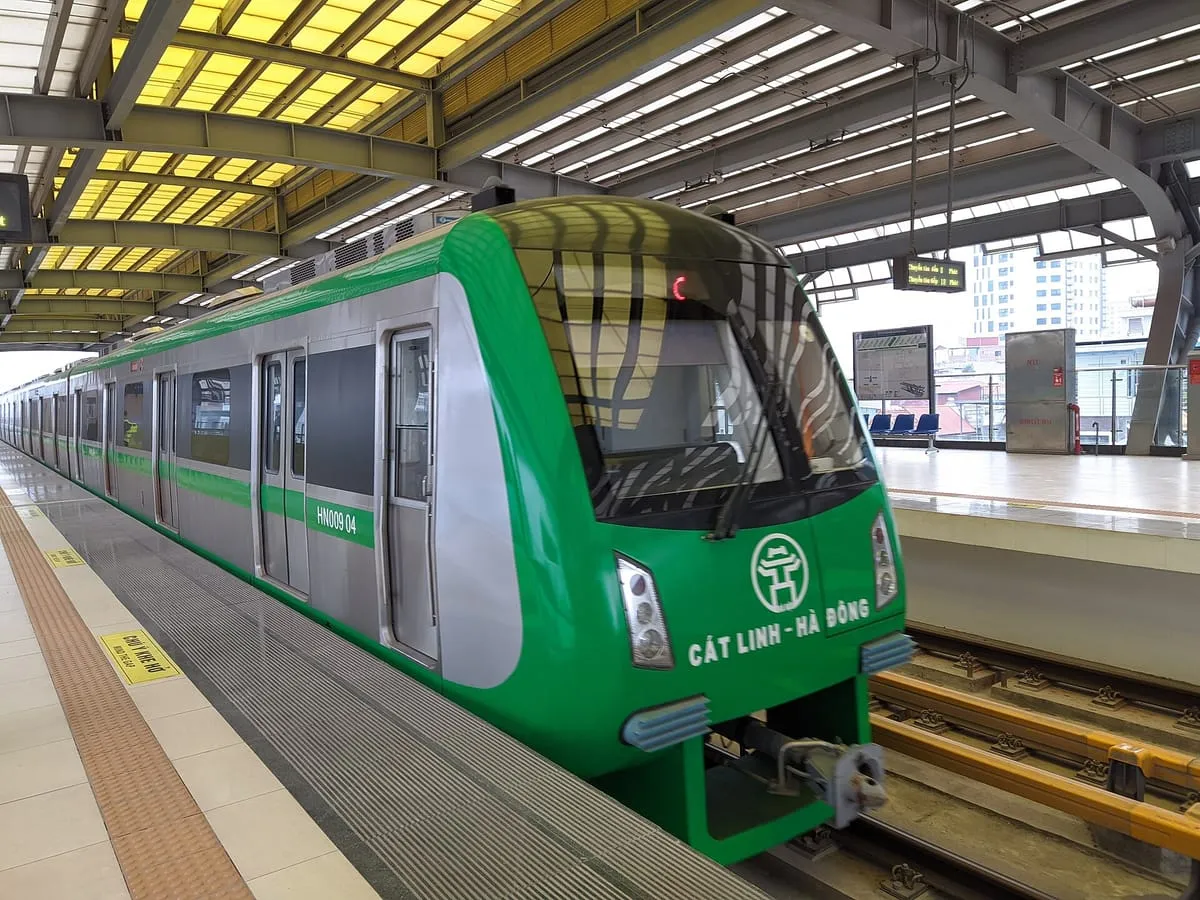
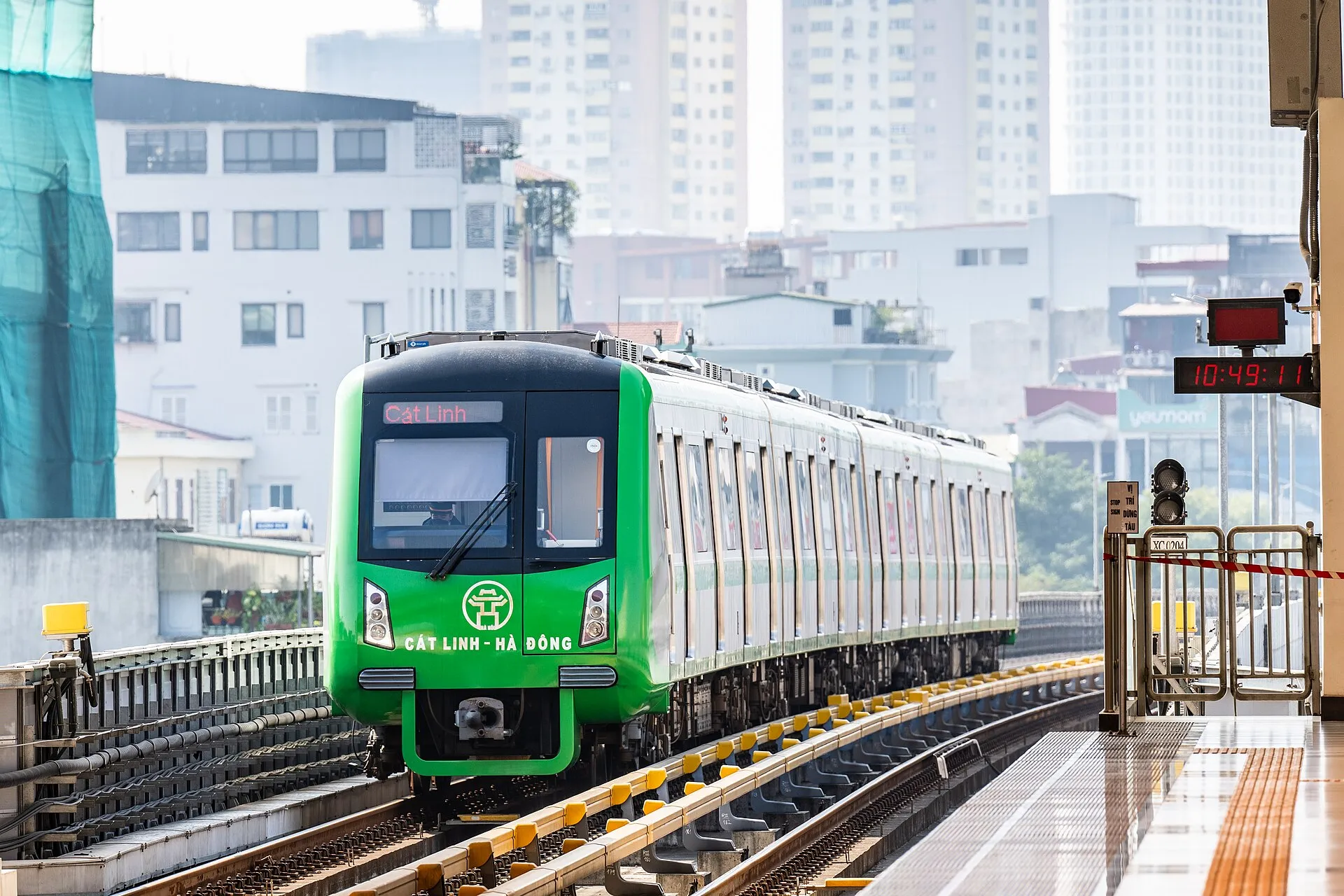
The Hanoi Metro represents the capital’s modern mass-transit backbone, designed to alleviate street-level congestion. Two lines are currently operational in elevated sections:
- Line 2A (Cat Linh to Ha Dong): Running 13 kilometres along an elevated concrete viaduct from Cat Linh station (near the Temple of Literature) southwest to Yen Nghia station in Ha Dong district. The journey takes roughly 23 minutes end-to-end, compared to over an hour by car during peak traffic.
- Line 3 (Nhon to Hanoi Station - Elevated Section): Operates 8.5 kilometres elevated from Nhon in the western suburbs to Cau Giay, passing near the Vietnam Museum of Ethnology and university districts. The underground section connecting Cau Giay through to Hanoi Central Railway Station is under construction.
- Ticketing and fares: Single-journey token coins or magnetic cards cost from 8,000 VND for short trips up to 15,000 VND for the full line length. A day pass offering unlimited rides on Line 2A costs 30,000 VND. Automated ticket vending machines at each station accept cash bank notes, or you can buy tokens from staffed counters.
- Hours and frequency: Metro lines operate daily from 05:30 to 22:00, with trains departing every 6 minutes during peak rush hours (07:00 to 09:00 and 17:00 to 19:00) and every 10 minutes at off-peak times.
The Hanoi city bus network
Hanoi’s municipal bus network consists of over 100 routes operated by Transerco, identifiable by their red-and-yellow or blue liveries.
- Fares and payment: Standard inner-city bus trips cost between 7,000 VND and 9,000 VND. Enter via the front door and take a seat. An onboard conductor wearing a uniform will approach you holding a ticket dispenser; hand over exact cash (or small 10,000 VND or 20,000 VND notes), and they will issue your paper ticket.
- Using route apps: Navigation is greatly simplified by using the free smartphone app BusMap Hanoi or TimBus, which display live bus positions, transfer stops and route timetables in English.
- Useful routes for travellers:
- Bus 09: Loops around Hoan Kiem Lake, the French Quarter and the southern edge of West Lake.
- Bus 86: The dedicated airport express connecting Noi Bai International Airport with the Old Quarter and Hanoi Central Railway Station for 45,000 VND (detailed in our airport to city guide).
- Bus 22A / 22B: Connects the central districts to the Ba Dinh administrative complex.
Grab ride-hailing: GrabCar and GrabBike
The Southeast Asian super-app Grab is the most practical day-to-day transport tool for visitors in Hanoi:
- GrabCar: Standard private cars that pick you up from a GPS pin. Fares are locked into the application before you confirm, completely removing arguments over meters or roundabout routes. A typical ride across central districts (for instance, from the Old Quarter to the Ho Chi Minh Mausoleum) costs between 35,000 VND and 70,000 VND.
- GrabBike: Motorbike taxis ridden by licensed drivers wearing bright green jackets and helmets. GrabBike is significantly cheaper (usually 15,000 VND to 35,000 VND for short hops) and can weave through narrow lanes and gridlocked rush-hour queues far faster than any four-wheeled car. The driver provides you with a clean passenger helmet.
- Payment setup: Link your debit or credit card to the app to make rides completely cashless. Alternatively, select cash payment and hand the driver the exact amount shown on your screen at the end of the trip.
- Pickup tips: In the winding lanes of the Old Quarter, specify your pickup point outside a prominent landmark, hotel lobby or coffee shop, as narrow alleyways can be difficult for larger cars to enter.
Traditional cyclos (pedicabs)
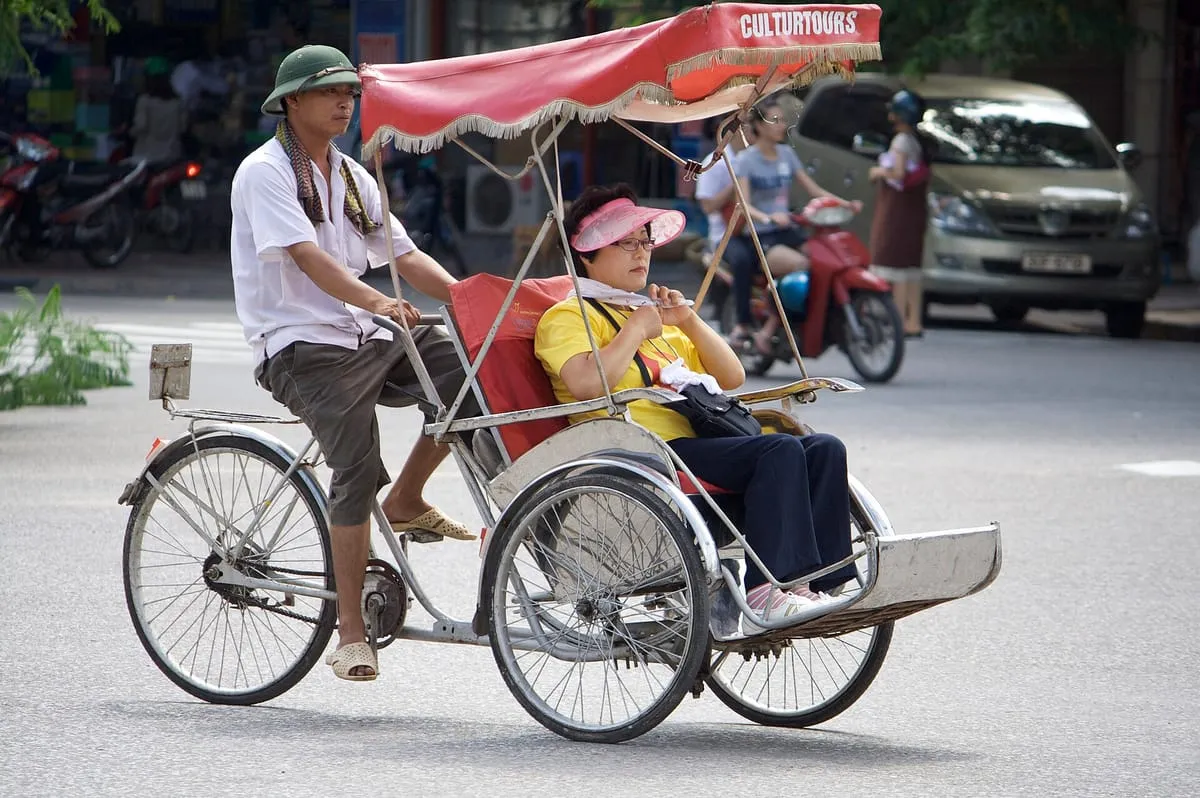
The three-wheeled cyclo (xich lo), with the passenger seated out front in an open carriage pushed by a cyclist behind, is a nostalgic remnant of colonial-era Indochina:
- Where to find them: Cyclos gather in clusters around Hoan Kiem Lake, outside St. Joseph’s Cathedral, near the Hanoi Opera House, and along the southern perimeter of the Old Quarter.
- Fare negotiation: Cyclos do not use meters. You must agree on the complete price, time duration and currency before your feet leave the pavement. Standard rates are between 100,000 VND and 150,000 VND for a 45-minute to one-hour tour. Always state the price clearly and confirm whether the figure is for one person or the entire vehicle.
- Tipping etiquette: An extra tip of 20,000 VND to 50,000 VND is appreciated if the driver has pedalled uphill in summer heat or pointed out interesting architectural details along the way.
- Safety precautions: Keep your bag, smartphone and camera held securely in your lap rather than dangling over the sides of the carriage, particularly when passing near intersections.
How to cross the street safely in Hanoi
Crossing the road in Hanoi is famous worldwide for the sheer volume of scooters, but it operates on a deeply intuitive flow:
- Understand the mechanics: Motorbike riders are not trying to hit pedestrians; their eyes scan ahead and their hands make microscopic adjustments to speed and steering. They anticipate where you will be two seconds in the future based on your current steady pace.
- Step out with purpose: Wait for a minor gap in heavy truck or bus traffic (heavy vehicles cannot brake quickly), then step into the stream of motorbikes at a measured, calm walking pace.
- Maintain predictable speed: Walk across without stopping, sprinting, dodging or jogging. Do not suddenly speed up, and above all, never step backwards. Stepping backward disrupts the rider’s mental calculation of your trajectory and can cause a collision.
- Eye contact and body language: Make gentle eye contact with approaching drivers to verify they have seen you. You can extend your arm slightly downward at your side to signal your intent, but do not make frantic waving gestures.
- Cross in groups: If feeling nervous, wait for a local resident or Buddhist monk to step off the kerb and walk shoulder-to-shoulder on the protected side away from oncoming traffic.
Pedestrian navigation and walking zones
Exploring Hanoi on foot allows you to soak in street life, but requires adjustment to local pavement customs:
- The sidewalk obstacle course: Pavements in the Old Quarter serve multiple functions: parking lots for dozens of motorbikes, outdoor kitchens for soup stalls, vegetable displays, and social seating areas filled with blue plastic stools. You will regularly need to step into the road shoulder to walk around obstacles.
- Hoan Kiem weekend pedestrian zone: Every weekend from Friday at 19:00 until Sunday at 24:00, the ring roads encircling Hoan Kiem Lake are completely closed to all motorised vehicles. The area transforms into a pedestrian festival filled with traditional games (such as o an quan), live music ensembles, roller-skaters, portrait artists and families walking pets.
- Train Street walking: When visiting the famous Hanoi Train Street, respect track barriers and never walk along the active railway sleepers without an invitation and escort from a licensed local cafe owner.
Continue planning your transport links by reading our complete guide from Noi Bai Airport to the city centre and our overview of the best neighbourhoods to stay in Hanoi.
Paying for rides: see money in Hanoi for cash, cards and Grab, and is Hanoi safe? for taxi and traffic tips.
Common questions
Does Hanoi have a metro system and where does it go?
Yes. Hanoi currently operates two metro lines: Line 2A (Cat Linh to Ha Dong), an elevated 13-kilometre route heading southwest from near the Temple of Literature, and the elevated section of Line 3 running between Nhon and Cau Giay. A single ticket costs between 8,000 VND and 15,000 VND depending on travel distance.
How much does public city bus transport cost in Hanoi?
Standard city bus rides cost between 7,000 VND and 9,000 VND per journey. You board through the front doors, find a seat, and hand cash to an onboard conductor who carries a ticket dispenser and provides change.
Is Grab better than traditional street taxis in Hanoi?
Yes. Grab offers upfront fixed pricing, eliminates language barriers through automatic in-app translation, and connects directly to credit cards so you never need to calculate change. You can choose air-conditioned GrabCar automobiles or solo GrabBike scooter rides.
How much should I pay for a cyclo ride in the Old Quarter?
Expect to pay roughly 100,000 VND to 150,000 VND for a 45-minute to one-hour tour around the Old Quarter and Hoan Kiem Lake. Always negotiate the full fare, time limit, and passenger count before sitting in the carriage.
What is the secret to crossing busy roads safely in Hanoi?
Walk at a steady, consistent pace without hesitating or stepping backwards suddenly. Scooter riders anticipate your forward momentum and will smoothly curve around your path. Make calm eye contact with riders as you step across.
's Terminal 2 lit up at night](/_astro/noi-bai-international-airport-terminal-hanoi.DQwUIPPc_WqW2l.webp)