In this guide
💡 The Short Version: Our judgement, not a ranking: pick Miami for flat, easy-to-walk South Beach and Art Deco blocks, Cuban food on Calle Ocho, Everglades wetlands and Florida Keys reefs during its dry November to April season—budgeting for USD pricing, 13% to 14% hotel tax, nightly resort fees and automatic 18% to 20% Miami Beach service charges. Pick Rio de Janeiro for granite-peak drama (Christ the Redeemer and Sugarloaf Mountain), Copacabana and Ipanema promenades, Tijuca rainforest trails, samba and lower everyday BRL bills—with June to August offering Rio’s driest skies while Miami sits in Atlantic hurricane season (1 June to 30 November). Check passports early: UK and EU citizens enter Brazil visa-free but need a $40.62 US ESTA for Miami, while US, Canadian and Australian citizens need a USD 80.90 Brazil e-Visa for Rio. Or book a tour: in Miami, the Biscayne Bay Millionaires’ Homes Cruisead is from $20 and the Everglades Half-Day Airboat Tourad from $49.80; in Rio, full-day coastal boat trips run from BRL 375 for Búziosad and BRL 465 for Arraial do Caboad.
⚠️ Seasons, fees and entry paperwork flip between the two cities. Miami is dry from November to April and enters Atlantic hurricane season from 1 June to 30 November; non-US residents aged 16+ also pay an extra $100 per person at Everglades National Park from 1 January 2026 on top of the $35 vehicle pass. Rio de Janeiro has its hottest, wettest months from December to March (and driest, clearest skies from June to August); US, Canadian and Australian citizens are refused boarding without a pre-approved Brazil e-Visa (USD 80.90), and Museum of Tomorrow and Forte de Copacabana close every Monday.
Miami and Rio de Janeiro side by side
All prices below are operators’ published adult rates in local currency—US dollars ($) for Miami (excluding 7% Miami-Dade sales tax unless noted) and Brazilian reais (BRL) for Rio de Janeiro. Each link leads to the full guide on this site.
| Miami | Rio de Janeiro | |
|---|---|---|
| Currency & tax/tip trap | USD ($). Retail adds 7% tax; dining adds 8% (mainland) or 9% (Miami Beach). Many Miami Beach bills auto-add 18% to 20% gratuity | BRL. Prices include tax; restaurants add an optional 10% serviço (no extra tip expected). Always tap in BRL and choose crédito on foreign cards |
| Headline sights & prices | Vizcaya Museum $32 online (closed Tuesdays); Frost Science from $29.95; Pérez Art Museum from $18 (closed Tue–Wed); Wynwood Walls $12; Biscayne Bay cruises from $18 to $30 | Christ the Redeemer BRL 139 return train; Sugarloaf Mountain BRL 205; Jardim Botânico BRL 80; Maracanã tour BRL 115; Santa Teresa tram BRL 20 return |
| Closed days | Tuesdays: Vizcaya, PAMM, ICA Miami. Wednesdays: PAMM. Mondays: ICA Miami | Mondays: Museum of Tomorrow, MAR, Forte de Copacabana, Petrópolis Imperial Museum. Sundays: Confeitaria Colombo (Centro) |
| Beaches | South Beach, Mid-Beach & Crandon Park: wide flat sand, warm 22–31°C water all year, strict glass/alcohol ban on Miami Beach, sargassum May–Aug | Copacabana, Ipanema & Leblon: mosaic promenades, mountain backdrop, stronger surf, car-free beachfront roads on Sundays 07:00–18:00 |
| Public transport | Metrorail & Metrobus $2.25 ($2.75 from 1 Jan 2027); Downtown Metromover and Miami Beach Trolleys are free | MetrôRio BRL 7.90 contactless Visa/Mastercard tap at gates; VLT light rail BRL 5.00; Uber/99 for hilly Santa Teresa and after dark |
| Airport to beach | MIA to South Beach (18 km): Route 150 Airport Express $2.25 ($2.75 from 1 Jan 2027), or Metrorail Orange Line to Downtown | Galeão (GIG) (20–25 km north of Zona Sul): Uber, 99 or official airport taxi from arrivals booths; domestic SDU sits beside Centro |
| Hotel add-ons | 13% tax in mainland Miami; 14% in Miami Beach, plus mandatory $34 to $82 nightly resort fees at many hotels (and $54 to $75 valet parking) | No mandatory US-style resort fees; hotel rates spike sharply for Réveillon (31 Dec) and Carnival (7–9 Feb 2027) |
| Entry rules | UK, AU & VWP EU: US ESTA $40.62 via esta.cbp.dhs.gov (90 days). Canada: visa-exempt. US: citizen | UK & EU: visa-free (90 days). US, Canada & Australia: Brazil e-Visa USD 80.90 via brazil.vfsevisa.com (90 days) |
| Best weather window | Mid-Nov to Apr (dry, 24–28°C). Hurricane season 1 Jun–30 Nov | Apr–May & Sep–Nov (27–30°C, less rain); Jun–Aug driest skies (26–27°C) |
| How many days | 3 to 4 days (3 days in Miami, 1 or 2 days) | 3 to 4 days (3 days in Rio, 4 days in Rio) |
Notice the neat calendar split. If you are travelling in June, July or August, Rio de Janeiro is in its driest season (42 to 45 mm of rain a month, clear mountain views and 26 to 27°C afternoons), whereas Miami is in peak heat, daily thunderstorms and Atlantic hurricane season. Between December and February, Miami is dry and comfortable (24 to 25°C), while Rio is hot (30 to 32°C), humid and prone to heavy afternoon storms that can shroud Corcovado in cloud—though that is also when Rio stages Réveillon and Carnival.
 Ipanema and Leblon curving toward Morro Dois Irmãos in Rio de Janeiro. Photo: Mucio Scorzelli, Wikimedia Commons, CC BY-SA 4.0.
Book a tour instead
In Miami, guided coaches save car hire and parking on the Everglades and Key West runs, and narrated cruises are the only way onto Biscayne Bay. In Rio, official direct tickets win for Corcovado (BRL 139) and Sugarloaf (BRL 205), while full-day coach-and-boat tours handle the 3-hour coastal highway drives to Arraial do Cabo, Ilha Grande and Búzios.
| City | From | Tour |
|---|---|---|
| Miami | $20 | Biscayne Bay Millionaires’ Homes Sightseeing Cruisead, 1.5 hours from Downtown |
| Miami | $49.80 | Everglades Airboat, Wildlife Exhibit and Round-trip Busad, 5 hours |
| Miami | $39.99 | Key West Day Trip with Pick-upad, 14 hours down the Overseas Highway |
| Miami | $69 | Little Havana Cuban Food and Culture Walking Tourad, 3 hours |
| Rio de Janeiro | BRL 375 | Búzios Full-Day Boat Tourad, 13 hours |
| Rio de Janeiro | BRL 465 | Arraial do Cabo Island Day Tripad, 14 hours with boat and lunch |
| Rio de Janeiro | BRL 525 | Angra dos Reis and Ilha Grande Full-Day Schooner Tourad, 14 hours |
| Rio de Janeiro | BRL 495 | Petrópolis Imperial City Day Tripad, 9 hours |
Which city for whom
Landscape and city feel: flat Art Deco coastline vs granite mountains and rainforest
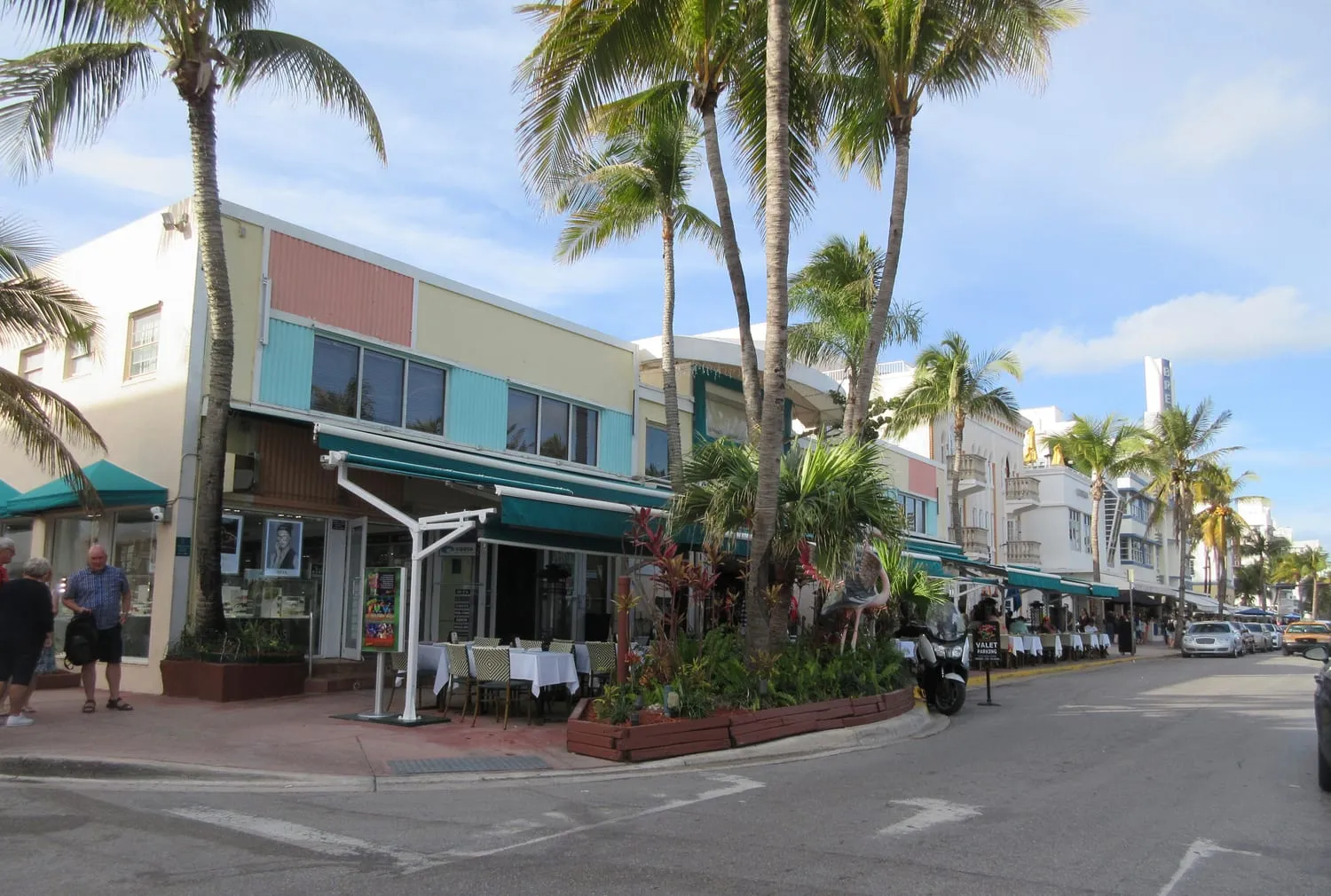
Miami is completely flat, split between mainland neighbourhoods (Downtown, Brickell, Wynwood, Little Havana, Coconut Grove) and the barrier island of Miami Beach across Biscayne Bay. Its visual signature is pastel 1920s to 1940s architecture along our 3.4 km Art Deco walk, mural-covered warehouse blocks at Wynwood Walls and glass Brickell towers seen from Biscayne Bay boat tours.
Rio de Janeiro is built around sheer granite peaks and Atlantic rainforest rising straight behind the sand. You ride the cog train up Corcovado to Christ the Redeemer, take two cable cars up Sugarloaf Mountain for sunset, hike inside Tijuca National Park without leaving the city, and walk 4.3 km through historic Centro and Santa Teresa. If dramatic topography decides your trip, Rio wins easily.
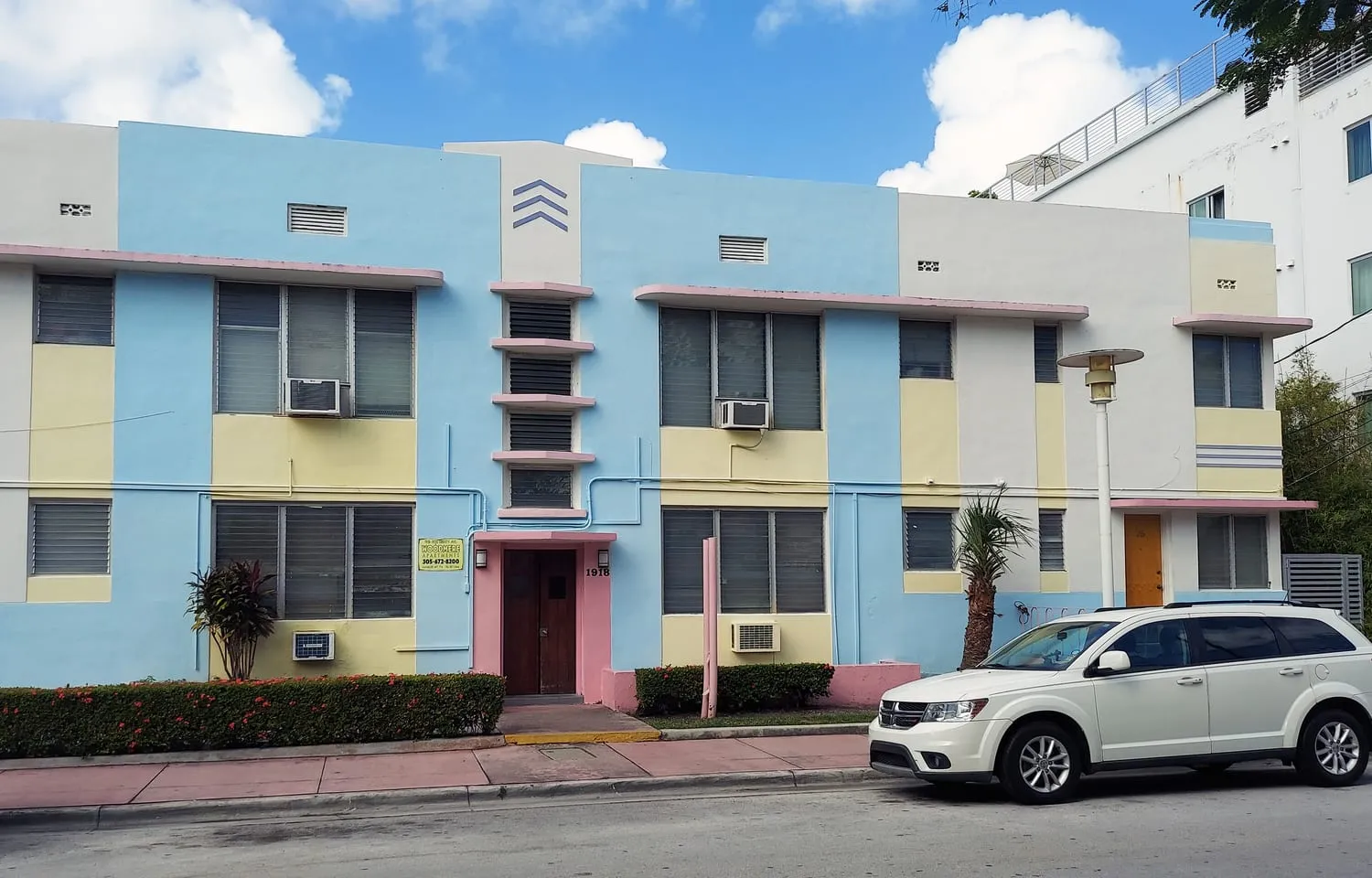 Pastel Art Deco apartment architecture in Miami Beach. Photo: P. Hughes, Wikimedia Commons, CC BY 4.0.
Beaches and swimming: calm family sand vs dramatic surf promenades
In Miami, all beaches are public and free, Atlantic water stays warm all year (22 to 24°C in winter, 29 to 31°C in summer), and Crandon Park on Key Biscayne sits behind an offshore sandbar that keeps waves calm and shallow for children (Miami beaches). Watch the five-colour Ocean Rescue warning flags for rip currents and winter Portuguese man-of-war, expect floating sargassum seaweed from May to August, and note that Miami Beach Police strictly fine personal alcohol and glass on the sand.
In Rio de Janeiro, Copacabana, Ipanema and Leblon form an 8.4 km flat mosaic promenade (Copacabana to Ipanema beach walk) backed by Morro Dois Irmãos and Pedra do Arpoador. Beach culture is social and informal—roving vendors carry wireless card readers for grilled queijo coalho and iced mate—and on Sundays and public holidays the oceanfront avenues close to cars from 07:00 to 18:00. The trade-off is stronger Atlantic surf and tighter street-safety habits: take minimal valuables onto the sand and read is Rio de Janeiro safe? before you go.
Costs, taxes and tipping: Rio wins on everyday spending
Miami is expensive, and headline rates understate the real total. Retail adds 7% sales tax, restaurants add 8% on the mainland or 9% on Miami Beach, hotels add 13% (Miami) or 14% (Miami Beach) plus mandatory $34 to $82 nightly resort fees, and many Miami Beach restaurants and bars automatically add an 18% to 20% service charge even for solo diners (money in Miami, hotels without resort fees). Realistic daily spending excluding hotels runs $65 to $110 on a budget and $140 to $240 mid-range.
Rio de Janeiro gives much further reach per day. MetrôRio is BRL 7.90 per contactless tap, VLT trams are BRL 5.00, sit-down restaurants add an optional 10% serviço with no extra tip expected, and major parks, beaches and Parque Lage are free (money in Rio de Janeiro). Always check the exact BRL total on wireless terminals before tapping, decline dynamic currency conversion, and ask for foreign cards to be processed as crédito.
Food, nightlife and major events
Miami pairs Michelin Guide Florida dining—Two-Star L’Atelier de Joel Robuchon and One-Star Boia De, Ariete and Tambourine Room—with Cuban ventanitas serving $1.50 to $2.50 cafecitos and Bib Gourmand Cuban sandwiches at Sanguich de Miami (where to eat in Miami, Cuban food in Miami). Nightlife runs from 40th-floor Sugar in Brickell to live Cuban bands at Cafe La Trova (bars and rooftops), with strict 21+ physical passport checks. Its biggest calendar week is Art Basel Miami Beach (4 to 6 December 2026), followed by New Year’s Eve at Bayfront Park and Ocean Drive.
Rio de Janeiro revolves around open-air botecos, Saturday feijoada, churrascarias, Michelin-listed tables in Botafogo and Leblon (where to eat in Rio de Janeiro) and live rodas de samba at Pedra do Sal and Lapa (Rio food tours and samba). Its two global calendar events are Réveillon on 31 December (crowds dressed in white on Copacabana Beach for free concerts and offshore fireworks) and Carnival (7, 8 and 9 February 2027 for Grupo Especial Sambódromo parades, with grandstand tickets from BRL 250 via LIESA/Ticketmaster and free street blocos across the city; see best time to visit Rio and Carnival).
 Christ the Redeemer atop Corcovado in Rio de Janeiro. Photo: Arturdiasr, Wikimedia Commons, CC BY-SA 4.0.
Day trips: wetlands and coral reefs vs imperial hills and island lagoons
From Miami, day trips from Miami cover six distinct outings: Key Biscayne (20 to 30 minutes), Fort Lauderdale in 33 to 38 minutes on the Brightline train (from $15), Everglades National Park (50 to 70 minutes; note the $100 non-US resident fee from 1 January 2026, separate from US-41 airboat concessions), Key Largo reef snorkelling (90 minutes) and a 14- to 16-hour Key West day trip down the Overseas Highway.
From Rio de Janeiro, day trips from Rio de Janeiro split between cool mountains and tropical bays: Petrópolis (90 minutes north by Única-Fácil bus to Dom Pedro II’s summer palace; Imperial Museum closed Mondays), clear turquoise coves at Arraial do Cabo, peninsula beaches at Búzios and car-free rainforest bays at Ilha Grande and Angra dos Reis.
Entry rules, safety and ease of logistics
Check your passport before booking flights. For Miami, UK, Australian and Visa Waiver Program EU citizens need a $40.62 US ESTA at esta.cbp.dhs.gov (check travel-history limits such as Cuba on or after 12 January 2021), while Canadian citizens are visa-exempt (Miami entry rules). For Rio de Janeiro, UK and EU citizens enter visa-free for up to 90 days, while US, Canadian and Australian citizens must apply online for a Brazil e-Visa (USD 80.90) at brazil.vfsevisa.com before boarding (Rio entry rules).
On day-to-day logistics, Miami is easier for English speakers and first-time international travellers, with free Metromover and Miami Beach Trolleys, flat pavements and straightforward street safety in visitor zones (is Miami safe?). Rio de Janeiro requires more situational awareness—keep phones out of sight on quiet streets, use Uber or 99 after dark and in hilly Santa Teresa, and review the UK Foreign Office and US State Department advisories in is Rio de Janeiro safe?.
Where to stay in each city
- Miami: Stay in South Beach for Atlantic sand and Art Deco walking, or Downtown and Brickell for direct $2.25 Metrorail access from MIA, free Metromover rides and 13% rather than 14% hotel tax. Compare full totals in where to stay in Miami and hotels without resort fees.
- Rio de Janeiro: Stay in Ipanema for flat, walkable dining and two MetrôRio stations, Copacabana for the broadest hotel choice and faster access to Sugarloaf and Centro, or Botafogo for lower rates with direct Metro links. Compare all six zones in where to stay in Rio de Janeiro.
For full booking tables and itineraries, see our Miami city guide and Rio de Janeiro city guide, or compare more coastal and warm-weather picks in beach city breaks and winter sun city breaks.
Common questions
Is Miami or Rio de Janeiro better for a winter-sun beach trip?
Between December and April, Miami is in its dry season (24 to 28°C, low humidity, swimmable 22 to 24°C Atlantic water) with peak winter hotel rates. Rio de Janeiro is in Southern Hemisphere summer (30 to 32°C, high humidity, heavy afternoon downpours, Réveillon and Carnival crowds). From June to August, the weather flips: Rio enters its dry season (26 to 27°C, clear skies for Corcovado), while Miami is hot, humid and inside Atlantic hurricane season (1 June to 30 November).
Which city is cheaper to visit: Miami or Rio de Janeiro?
Rio de Janeiro is cheaper across everyday transport, food and hotel add-ons. MetrôRio costs BRL 7.90 per contactless tap, restaurants add an optional 10% serviço, and headline hotel prices do not carry Miami Beach's 14% lodging tax plus mandatory $34 to $82 nightly resort fees. In Miami, menu prices exclude 8% to 9% tax and many Miami Beach bills add an automatic 18% to 20% service charge.
What are the visa and ESTA rules for Miami and Rio de Janeiro?
For Miami, UK, Australian and Visa Waiver Program EU citizens need an approved US ESTA ($40.62 at esta.cbp.dhs.gov) before boarding, while Canadian citizens are visa-exempt. For Rio de Janeiro, UK and EU citizens enter Brazil visa-free for up to 90 days, whereas US, Canadian and Australian citizens must hold a Brazil e-Visa (USD 80.90 at brazil.vfsevisa.com) before flying.
Which city has better beaches: South Beach or Copacabana and Ipanema?
Miami Beach has flat, wide Atlantic sand with calm, shallow family water across the causeway at Crandon Park, plus free trolleys—though glass and personal alcohol are banned on Miami Beach sand and summer brings sargassum seaweed. Rio's Copacabana and Ipanema pair wide surf beaches with granite peaks (Morro Dois Irmãos and Sugarloaf), mosaic promenades and roving wireless card-reader vendors, though ocean swell is stronger and beach valuables need close attention.
Which day trips are stronger from Miami or Rio de Janeiro?
Miami pairs city beaches with Everglades National Park (50 to 70 minutes west, plus a $100 non-US resident fee from 1 January 2026), Key Largo coral reef snorkelling (90 minutes) and Key West (3.5 to 4 hours). Rio pairs city mountains with Tijuca rainforest hikes inside the city limits, the imperial hill town of Petrópolis (90 minutes by bus) and full-day coastal schooner trips to Arraial do Cabo, Búzios and Ilha Grande.
How many days do you need in Miami compared with Rio de Janeiro?
Three to four days fits Miami's core sights (South Beach, Art Deco District, Wynwood, Little Havana, Vizcaya and a half-day Everglades trip). Allow four days in Rio de Janeiro to cover Corcovado, Sugarloaf, Copacabana and Ipanema, Centro and Santa Teresa, Jardim Botânico and one coastal or mountain day trip without rushing through tunnel traffic.