In this guide
💡 The Short Version: Three days let you separate Rio’s big ticketed sights by neighbourhood so you spend time looking at the city rather than sitting in tunnel traffic. Day 1 pairs Christ the Redeemer at 08:00 with Urca and Sugarloaf Mountain at sunset. Day 2 stays in Zona Sul for Jardim Botânico (BRL 80), Parque Lage (free), Lagoa and Ipanema Beach to Arpoador sunset. Day 3 rides the Metro to Centro for Confeitaria Colombo, Real Gabinete Português de Leitura, Escadaria Selarón, Parque das Ruínas and the yellow Santa Teresa tram (BRL 20). Run Day 3 on a weekday so every Centro library and Santa Teresa site is open. Or book a tour: if you want an organised historic day on Day 3, the Rio de Janeiro: Lapa and Santa Teresaad tour (from BRL 435, 6 hours) covers the cathedral, the Lapa Arches and the Selarón Steps with a guide.
Three days at a glance
Check the weather forecast each evening. If Day 1 dawns cloudy over Corcovado, swap Day 1 and Day 2 immediately so you save your clear blue sky for the 710-metre summit.
| Day | Neighbourhood focus | Headline stops | Key closed-day check |
|---|---|---|---|
| Day 1 | Corcovado, Botafogo and Urca | Christ the Redeemer cog train (08:00), lunch in Botafogo or Urca, Sugarloaf Mountain cable car (15:30), Mureta da Urca | Both mountains open daily; check cloud cover first |
| Day 2 | Jardim Botânico, Lagoa, Copacabana and Ipanema | Jardim Botânico, Parque Lage, Copacabana to Ipanema beach walk, Pedra do Arpoador sunset | Jardim Botânico opens late (11:00) on Wednesdays; Forte de Copacabana closes Mondays |
| Day 3 | Centro, Lapa and Santa Teresa | Cinelândia, Confeitaria Colombo, Real Gabinete, Metropolitan Cathedral, Escadaria Selarón, Parque das Ruínas, Santa Teresa tram | Real Gabinete closes Sat-Sun; Colombo closes Sun |
Day 1: Christ the Redeemer, Urca and Sugarloaf Mountain
Morning: Corcovado cog train (08:00 to 11:00)
Start with an 08:00 cog-train booking on tremdocorcovado.rio (BRL 139). Take an Uber from Copacabana or Ipanema to Cosme Velho station. Sit on the right-hand side heading uphill for glimpses through the Tijuca canopy toward Guanabara Bay.
Spend time on the summit deck photographing the Art Deco statue in clear morning sun; the escalators to the platform are being replaced until the end of May 2027, so expect about 80 stone steps. Details on the official vans from Paineiras and the change rules if cloud rolls in are in our Christ the Redeemer tickets guide.
Midday: Botafogo lunch and Praia Vermelha (11:30 to 15:00)
From Cosme Velho, take an Uber into Botafogo. Book a midday table at Michelin Bib Gourmand Sult (Rua Fernandes Guimarães 77) or Miam Miam (Rua General Góis Monteiro 34), or head straight to Urca for casual empadas and cold beer along the sea wall at Bar Urca.
Walk from Urca’s bayside streets to Praia Vermelha, a small sheltered cove directly under the granite face of Sugarloaf. If you have energy to spare, walk the flat Pista Cláudio Coutinho coastal path along the base of Morro da Urca.
Late afternoon and evening: Sugarloaf sunset (15:30 to 19:30)
Board the Sugarloaf Mountain cable car (BRL 205 at bondinho.com.br) 90 minutes before sunset. Spend time on the lower peak (Morro da Urca, 220 m) before taking the second cable car to the 396-metre summit. Watch the sun dip behind Corcovado while the streetlights come on along Botafogo and Copacabana. After descending, either stay on the Mureta da Urca for drinks or take an Uber back to Zona Sul for dinner (see where to eat in Rio de Janeiro).
Day 2: Jardim Botânico, Parque Lage and the coastal beaches
Morning: Jardim Botânico and Parque Lage (08:30 to 12:30)
Take an Uber or bus from Ipanema or Leblon along the western shore of Rodrigo de Freitas Lagoon to Jardim Botânico (Rua Jardim Botânico 1008; BRL 80 foreign adult at jbrj.eleventickets.com). Founded in 1808 by Prince Regent Dom João VI, the garden is anchored by the Avenue of Royal Palms, the orchidarium, the Japanese garden and the giant Amazonian water lilies in Frei Leandro lake. Arrive early to beat the midday humidity and spot toucans and monkeys along the shaded paths. On Wednesdays the arboretum opens at 11:00 rather than 08:00.
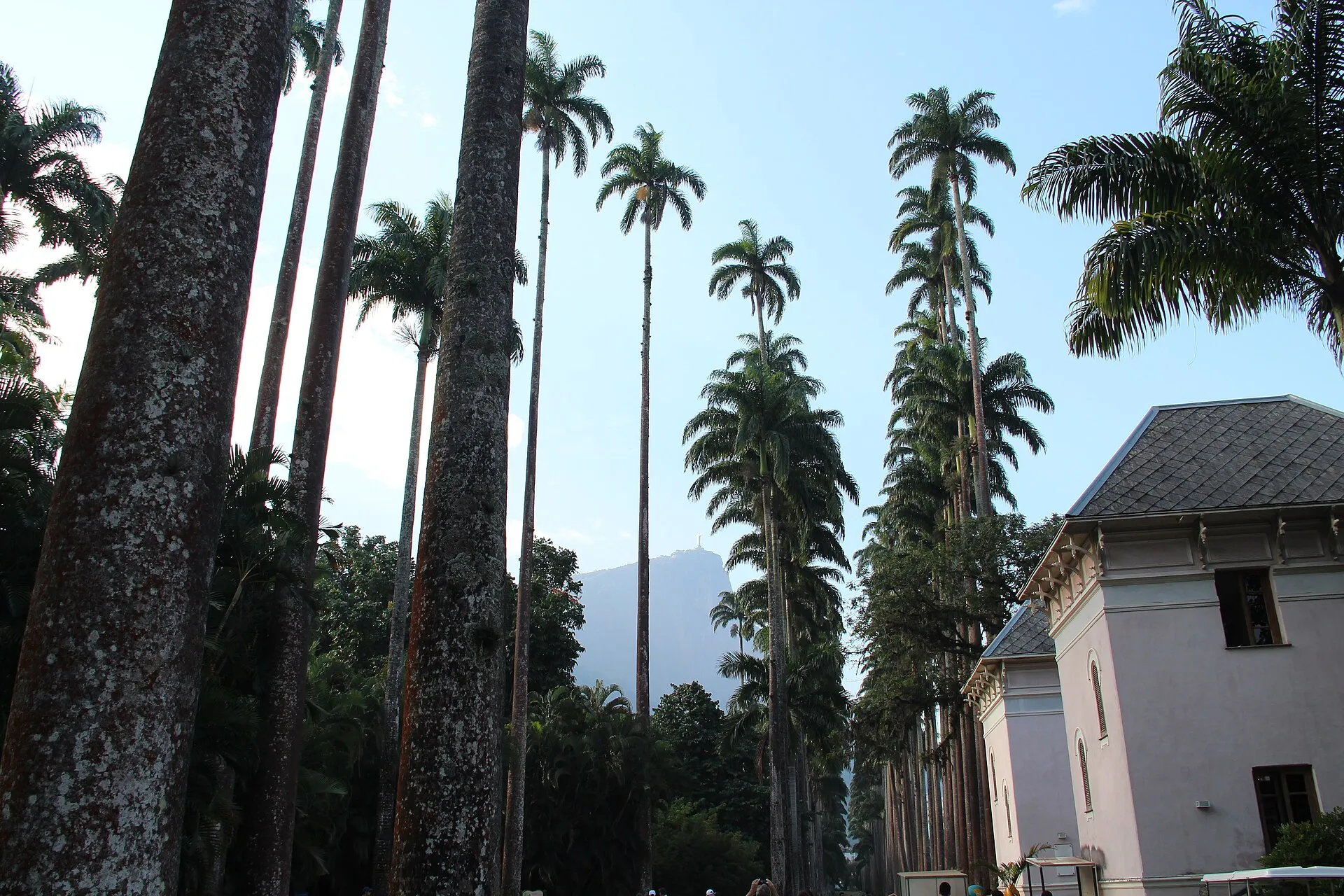
Avenue of royal palms inside Rio de Janeiro’s Botanical Garden. Photo: Marinelson Almeida, Wikimedia Commons, CC BY 2.0.
Walk along Rua Jardim Botânico to Parque Lage (Rua Jardim Botânico 414; free entry, 08:00 to 18:00). The mansion houses Rio’s School of Visual Arts below Corcovado and is closed for restoration, but you can stroll the park’s forested trails and grounds. Both parks are detailed in our Rio Botanical Garden and Parque Lage guide.
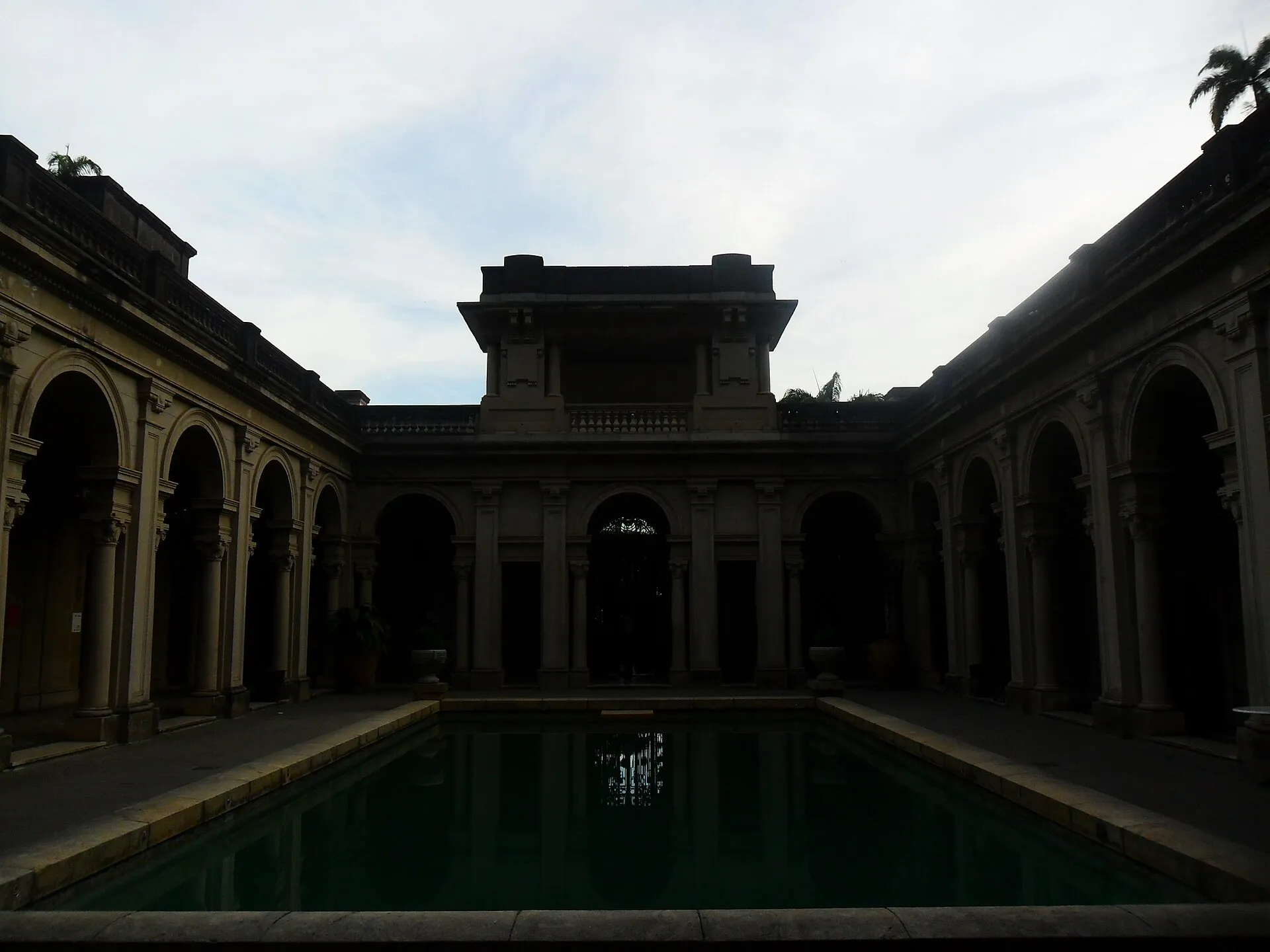
Parque Lage mansion below Corcovado. Photo: Mesocarpo, Wikimedia Commons, CC BY-SA 4.0.
Afternoon: Copacabana, Forte de Copacabana and Ipanema (13:00 to 18:30)
If you want a picanha lunch, Braseiro da Gávea (Praça Santos Dumont 116) is near Jardim Botânico. Otherwise, take an Uber over to Copacabana and walk the southern half of our Copacabana to Ipanema beach walk: start near Posto 4, tour Forte de Copacabana (closed Mondays), and cross into Ipanema for an afternoon swim near Posto 9.
Before sunset, climb onto the smooth granite rock of Pedra do Arpoador between Copacabana and Ipanema. Crowds line the slope facing west toward Morro Dois Irmãos and applaud as the sun sinks into the Atlantic. Follow sunset with dinner in Ipanema or Leblon.
Day 3: Centro, Escadaria Selarón and Santa Teresa
Morning: Historic Centro on foot (09:00 to 12:30)
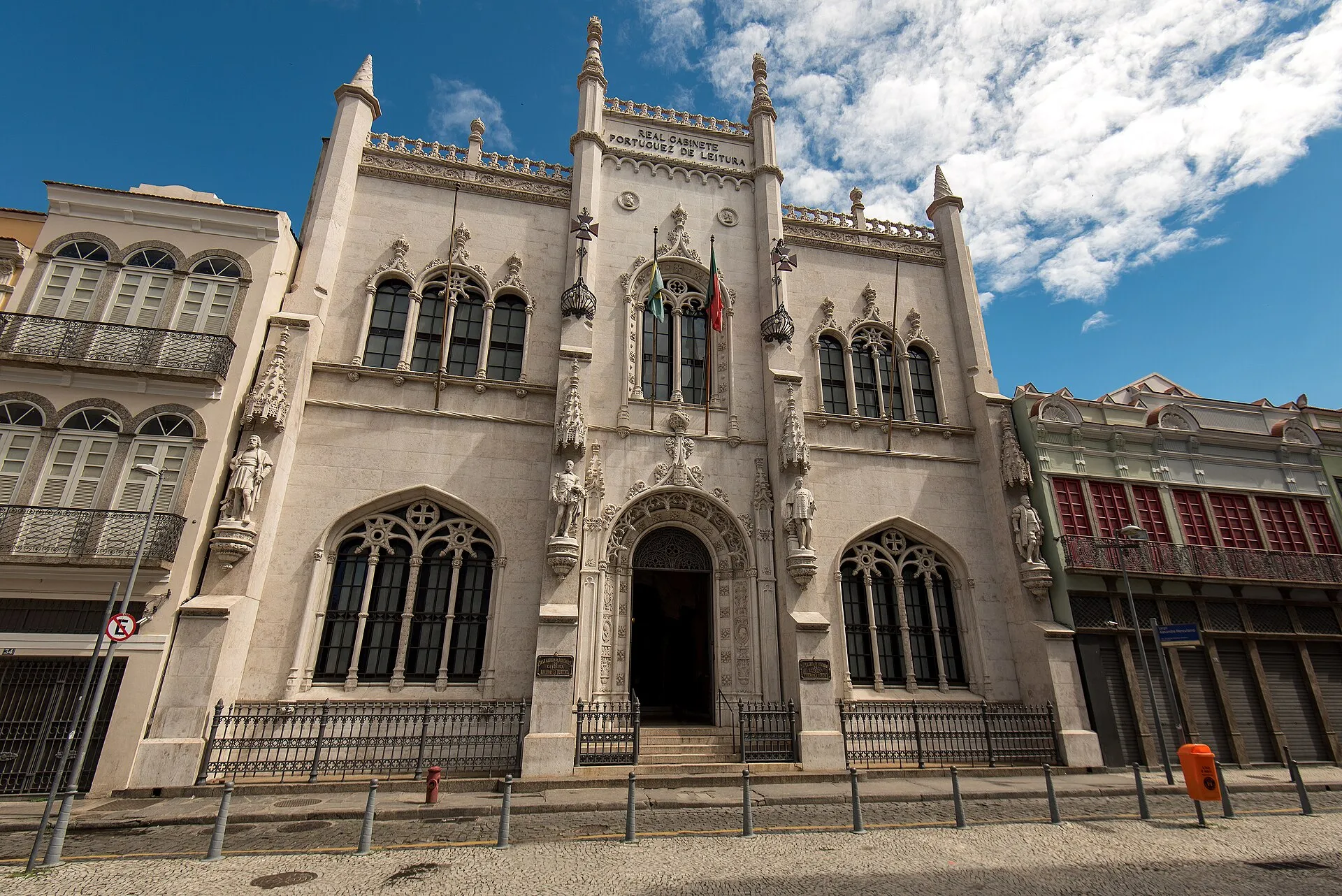
Tap your contactless bank card at MetrôRio (BRL 7.90) to Cinelândia station on Line 1. Step out onto Praça Floriano beside the Beaux-Arts Theatro Municipal (1909) and the National Library. Walk north along Rua Gonçalves Dias to Confeitaria Colombo (founded 1894, closed Sundays) for coffee and pastel de nata under its Belgian mirrors and stained-glass skylight, then continue three blocks west to the Real Gabinete Português de Leitura (Rua Luís de Camões 30; free, Monday to Friday), a Neo-Manueline reading room of Portuguese-language books.
Loop south to the conical concrete Catedral Metropolitana de São Sebastião (free), where tall stained-glass panels rise to a cross in the ceiling. From the cathedral, walk to the white arches of Arcos da Lapa. Every stop, opening time and street turn is mapped in our Centro and Santa Teresa walk.
Afternoon: Escadaria Selarón, Parque das Ruínas and the yellow tram (12:30 to 17:30)
Climb the 215 ceramic-tiled steps of Escadaria Selarón from Lapa straight into the hillside neighbourhood of Santa Teresa. Pause at Parque das Ruínas (Rua Murtinho Nobre 169; free) for wide views across Centro, Santos Dumont Airport and Sugarloaf, and step next door to Museu Chácara do Céu if you enjoy modern Brazilian art.
Continue along cobbled Rua Almirante Alexandrino to Largo dos Guimarães for a late lunch of feijoada and bolinho de aipim at Bar do Mineiro (Rua Paschoal Carlos Magno 99) or terraced Brazilian dishes at Aprazível (Rua Aprazível 62; book ahead). To get back down to Centro, board the historic yellow Bonde de Santa Teresa tram (BRL 20 for tourists, sold mainly at Estação Carioca) as it rumbles across the top of the Carioca Aqueduct. Tram details and tile history are in our Santa Teresa and Selarón Steps guide.
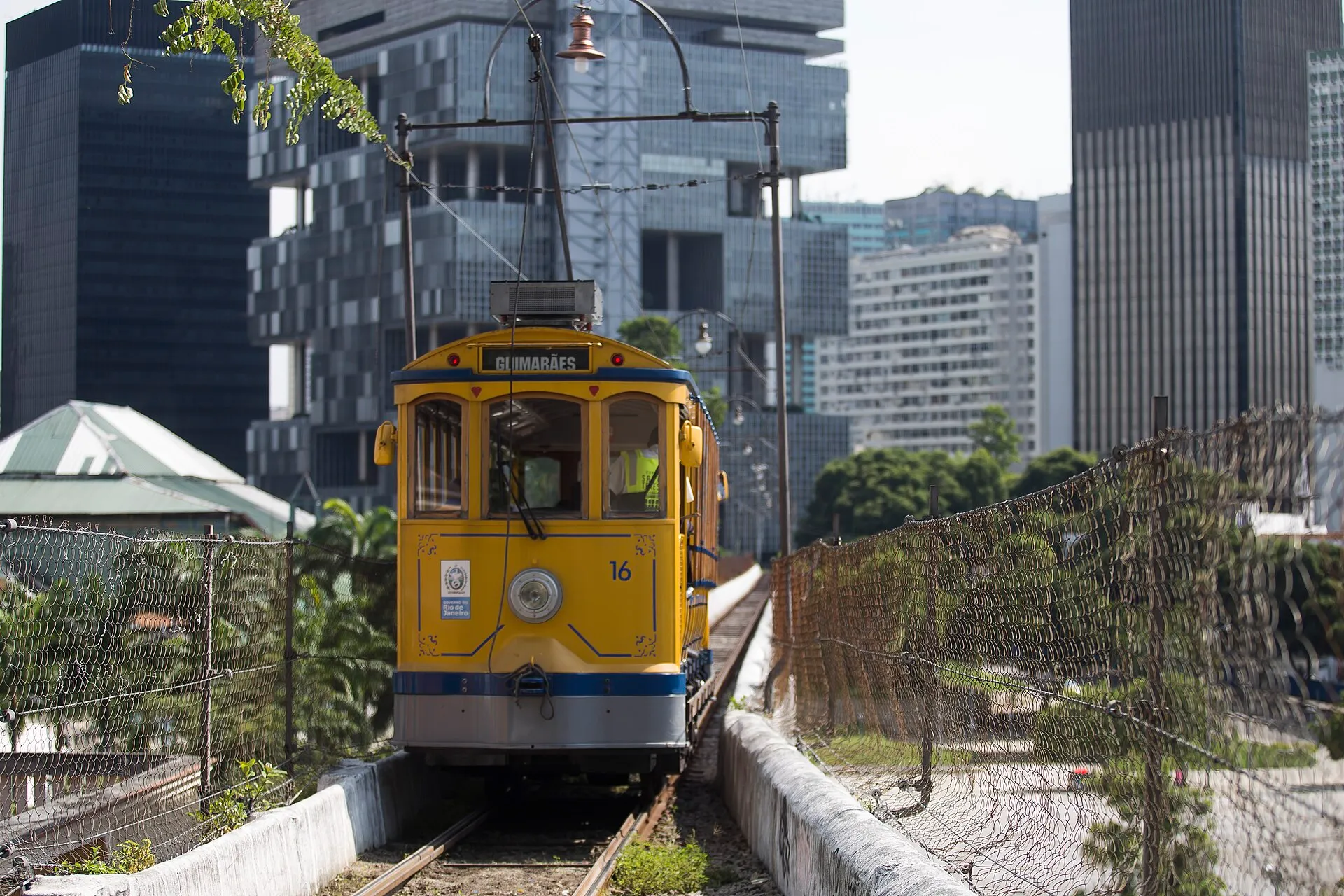
Yellow Santa Teresa tram crossing the Carioca Aqueduct. Photo: MTur Destinos, Wikimedia Commons, Public domain.
Evening: Live samba in Lapa or Pedra do Sal
Finish your third night with live music. On Mondays and Fridays, the historic stone steps of Pedra do Sal in Saúde host an outdoor roda de samba; at weekends, Lapa fills with samba houses such as Rio Scenarium and Beco do Rato. See Rio food tours and samba for the venues and how to book an organised evening.
Stretching to 4 days?
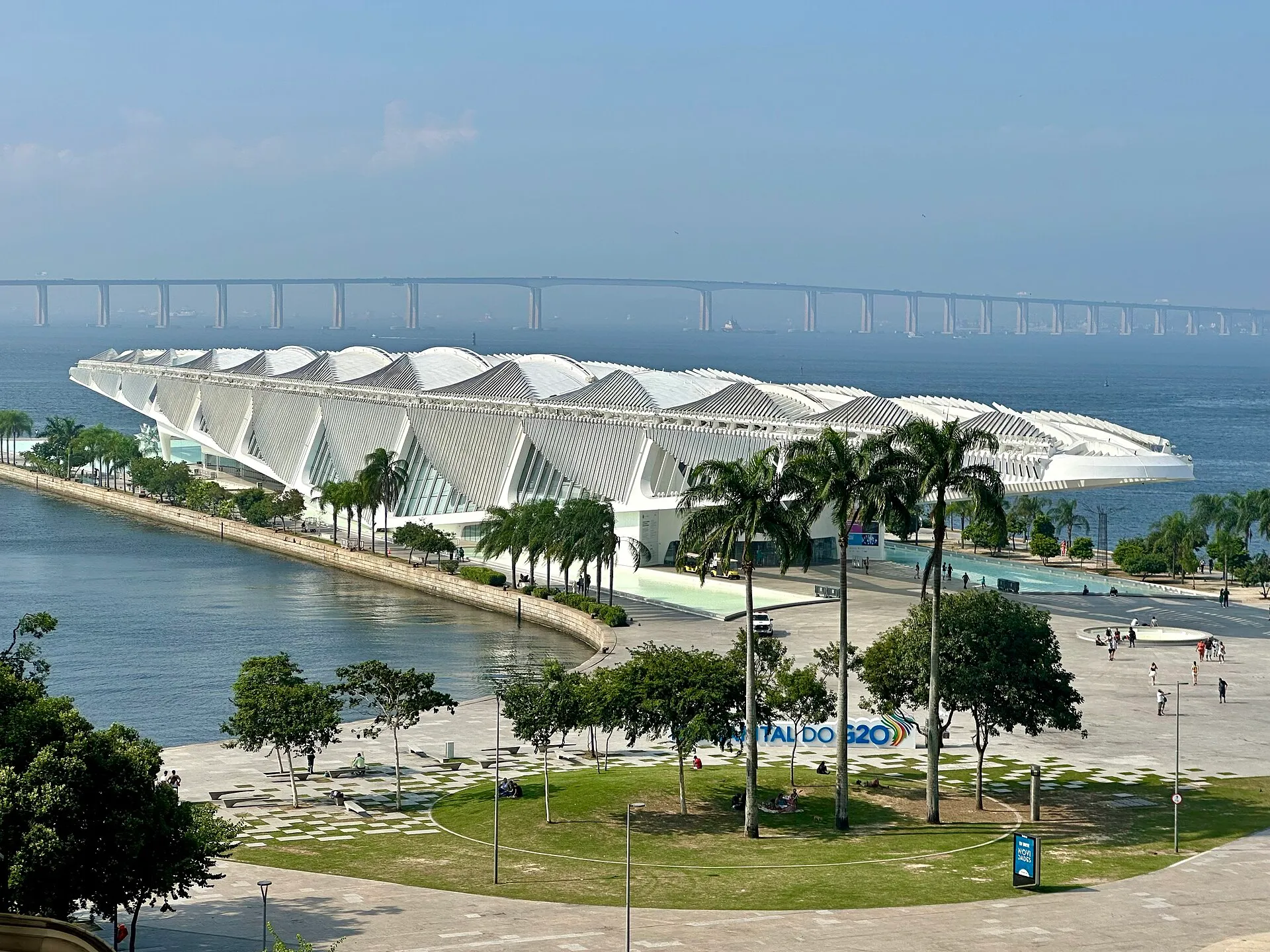
If you have an extra day in Rio, see 4 days in Rio de Janeiro to add the Museum of Tomorrow in Porto Maravilha, Maracanã Stadium, a Tijuca National Park rainforest hike, or a full-day excursion to Petrópolis, Arraial do Cabo or Ilha Grande.
Common questions
Is 3 days enough for Rio de Janeiro?
Three full days cover Rio's headline mountains, beaches, botanical gardens and historic districts without rushing. You get Corcovado, Sugarloaf, Jardim Botânico, Parque Lage, Copacabana, Ipanema, Centro, Escadaria Selarón and Santa Teresa, leaving only out-of-town day trips for a fourth day.
What is the smart day order for 3 days in Rio de Janeiro?
Keep Day 3 (Centro and Santa Teresa) on a weekday so Real Gabinete Português de Leitura and Confeitaria Colombo are open. Put Jardim Botânico on any morning except Wednesday, when the arboretum opens late at 11:00.
What do the main tickets cost over 3 days?
The Corcovado train with monument entry is BRL 139, the Sugarloaf Bilhete Bondinho is BRL 205, Jardim Botânico is BRL 80 for foreign adults and the Santa Teresa tram is BRL 20 for tourists.
Can I visit Lapa samba clubs safely on Day 3?
Take an Uber directly to the door of a named venue such as Rio Scenarium or Beco do Rato, carry one card and a little cash, and take an Uber back to Zona Sul rather than walking through quiet side streets late at night. The UK Foreign Office names Lapa among the places where thefts and pickpocketing are most common.