In this guide
💡 The Short Version: Most visitors get around Rio de Janeiro smoothly using just two modes: MetrôRio by day (BRL 7.90, held through December 2026; tap a contactless Visa, Mastercard or Elo card or an NFC phone straight at the turnstile) and Uber or 99 after dark or for hillside sights like Christ the Redeemer and Santa Teresa. Add the VLT Carioca light rail (BRL 5.00, contactless debit cards accepted since 16 November 2026) for Centro, Porto Maravilha and Santos Dumont Airport. Skip regular city buses late at night.
Rio de Janeiro transport options compared
| Mode | Single fare | How to pay | Where it shines |
|---|---|---|---|
| MetrôRio (Lines 1, 2, 4) | BRL 7.90 | Contactless Visa, Mastercard or Elo card or NFC phone at the gate, or a Giro, Riocard or Jaé card | Fast, air-conditioned spine linking Leblon, Ipanema, Copacabana, Botafogo, Flamengo, Centro and Maracanã |
| VLT Carioca (light rail) | BRL 5.00 | Jaé card (physical or in the app), or contactless debit card inside the tram | Centro, Cinelândia, Santos Dumont Airport (SDU), Praça Mauá (Museum of Tomorrow) and Rodoviária Novo Rio |
| Uber and 99 | Shown in the app before you book | In-app card | Door-to-door evenings, Santa Teresa, Botanical Garden, Sugarloaf (Urca), airports and group travel |
| City buses (ônibus) | BRL 5.00 | Jaé card only; no cash | Daytime links to Urca, Jardim Botânico or Barra da Tijuca when traffic is light |
| Santa Teresa Bonde | BRL 20 return (heritage tram) | Ticket at Carioca station (card or cash) | Historic yellow tram crossing Arcos da Lapa up into Santa Teresa |
MetrôRio: the backbone of sightseeing
MetrôRio is clean, air-conditioned, brightly lit and noticeably faster than sitting in Avenida Nossa Senhora de Copacabana traffic. It runs 05:00 to midnight Monday to Saturday, and 07:00 to 23:00 on Sundays and public holidays. Check metrorio.com.br for special hours during Carnival and on New Year’s Eve.
Key lines and stations for visitors
Line 1 (orange) runs from Ipanema through Copacabana, Botafogo and downtown to Tijuca, and Line 4 (yellow) continues from Ipanema to Leblon and Barra da Tijuca:
- Jardim Oceânico (Barra da Tijuca terminus) to Antero de Quental and Jardim de Alah (Leblon).
- Nossa Senhora da Paz and General Osório (Ipanema; General Osório is also the nearest exit to Arpoador and the south end of Copacabana).
- Cantagalo, Siqueira Campos and Cardeal Arcoverde (Copacabana, spaced evenly along the length of the beach).
- Botafogo (closest metro to Sugarloaf Mountain, then bus 513 or an Uber to Praia Vermelha).
- Largo do Machado (nearest station for Cosme Velho and the Corcovado cog train to Christ the Redeemer, by bus 583 or 422 or an Uber).
- Glória (Lapa and the Selarón Steps), Cinelândia and Carioca (Centro, VLT interchange and Santa Teresa tram), Uruguaiana (Confeitaria Colombo and Saara market).
- Rei Pelé - Maracanã (Line 2, which shares the stations from Botafogo to Central do Brasil with Line 1) for Maracanã Stadium.
Paying at the metro gates
You do not need to queue at a ticket office for MetrôRio:
- Contactless bank cards and phones: Hold a Visa, Mastercard or Elo card, or an NFC phone or watch, against the reader on the turnstile. Each tap charges the BRL 7.90 fare. One card pays for one person per entry, so use a separate card or phone wallet for each traveller.
- Transit cards (Giro, Riocard, Jaé): If you do not have a contactless card, buy a Giro card at the stations or a single QR-code ticket through the RecargaPay app. A Jaé or Riocard card also works at the gates.
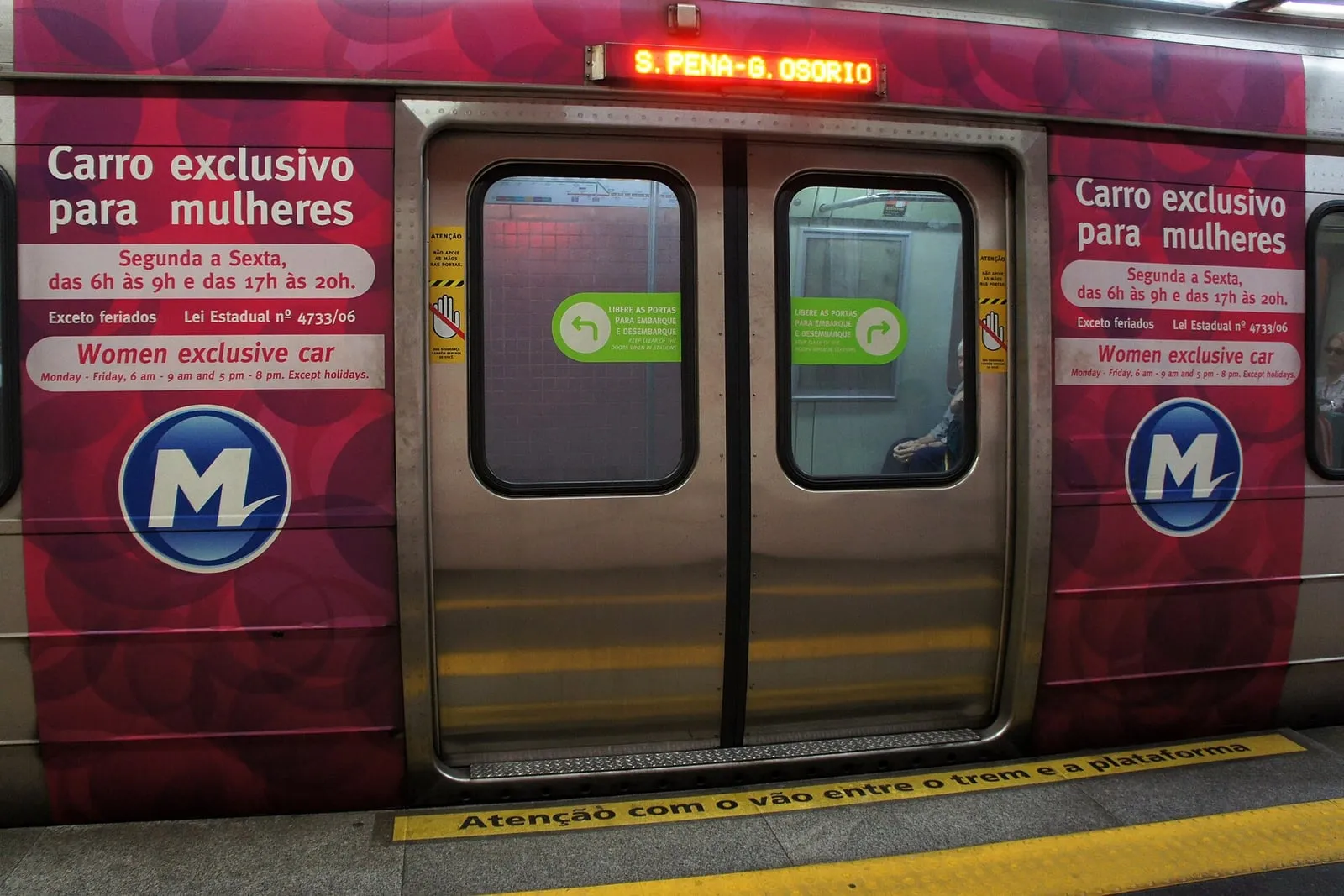
- Women-only carriages: Marked in pink (Vagão Exclusivo para Mulheres) and reserved for women on weekdays at peak hours.
VLT Carioca light rail (Centro and Porto Maravilha)
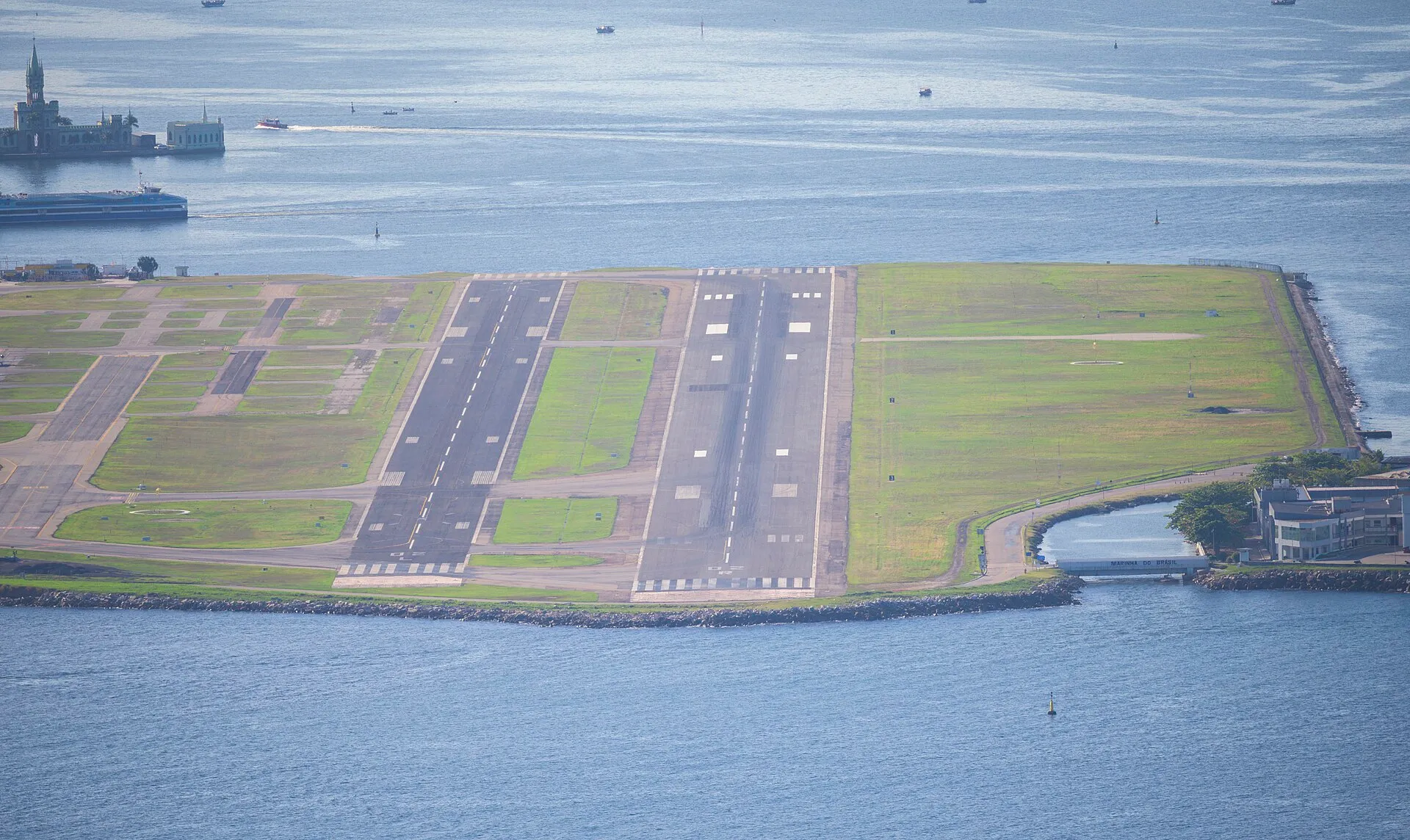
The VLT Carioca is a low-floor tram network serving Centro, the regenerated port district (Porto Maravilha), Santos Dumont Airport (SDU) and Rodoviária Novo Rio intercity bus station.
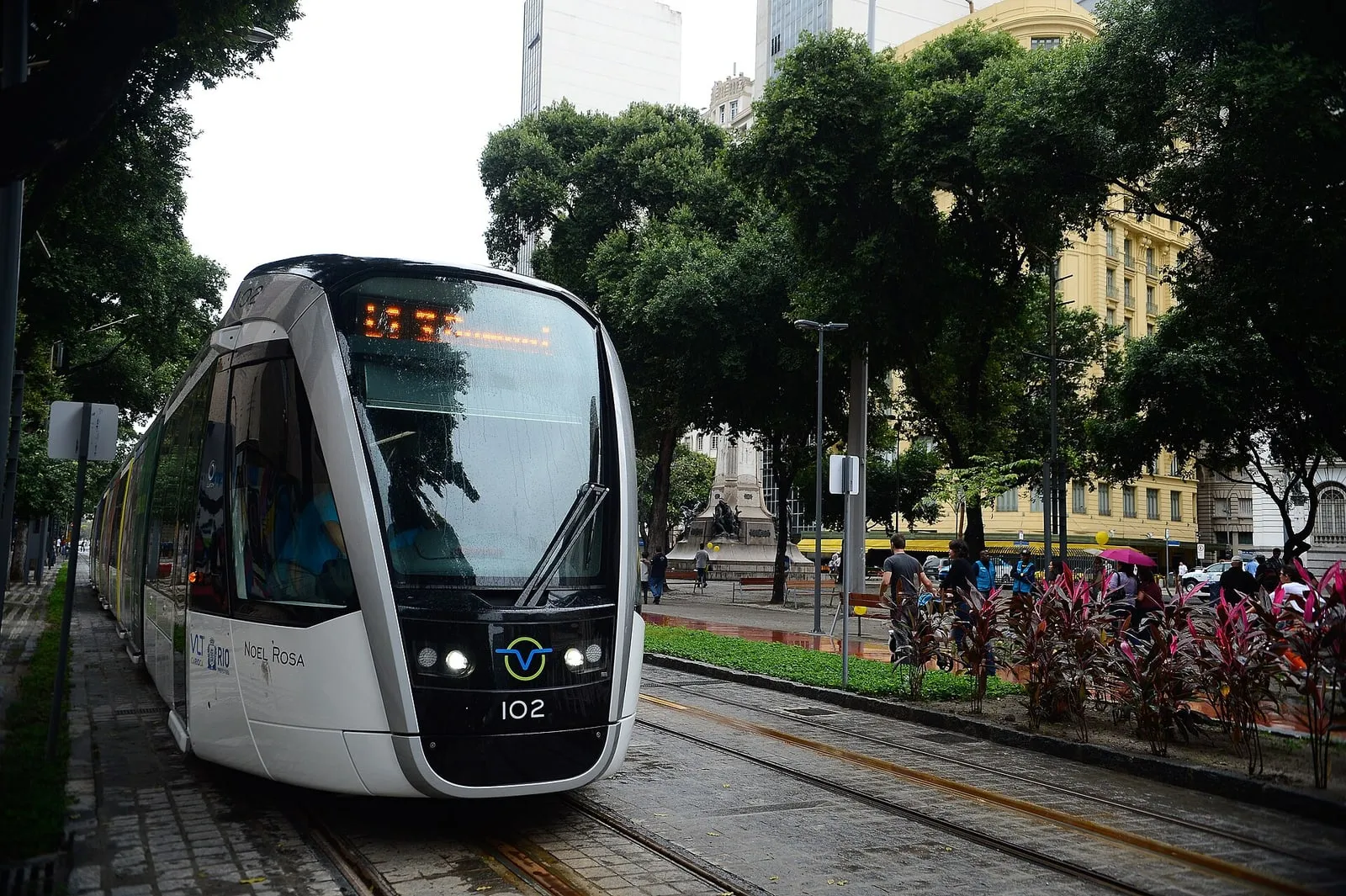
VLT Carioca light rail in central Rio. Photo: Fernando Frazão/Agência Brasil, Wikimedia Commons, CC BY 3.0 br.
- Fare: BRL 5.00 per ride.
- How to pay and validate: VLT trams have no turnstiles, so you pay on board. Tap a Jaé card (physical, or in the Jaé app) or a contactless debit card on the validator inside the tram as soon as you step on. Debit-card payment does not give free transfers, so a trip on two VLT lines costs BRL 10, and you must keep the payment receipt and an ID with you for inspectors, as the fine for riding unvalidated is BRL 170.
- Useful routes for visitors: Lines connect Santos Dumont Airport, Cinelândia and Carioca with Praça Mauá (Museum of Tomorrow) and Rodoviária Novo Rio (for day trips from Rio). Check the VLT Carioca app or the maps at the stops for the line you need.
Uber, 99 and official yellow taxis
Ride-hailing apps (Uber and Brazilian rival 99) are the usual way Cariocas move around after sunset, in the rain or between neighbourhoods that lack a direct metro stop (such as Ipanema to Jardim Botânico, Copacabana to Urca, or anywhere up into Santa Teresa).
- Fares: The app shows the price before you book; see Rio airports to city for airport rides.
- Choose Comfort with luggage or heat: Uber Comfort gets newer cars with air conditioning.
- Official yellow taxis: Yellow cabs with a blue stripe are regulated by the city and run on the meter.
The Santa Teresa Bonde (heritage tram)
The bright yellow open-sided Bonde de Santa Teresa climbs from Estação Carioca (behind Petrobras headquarters in Centro) straight across the top of the Arcos da Lapa aqueduct into the cobbled hillside streets of Santa Teresa.
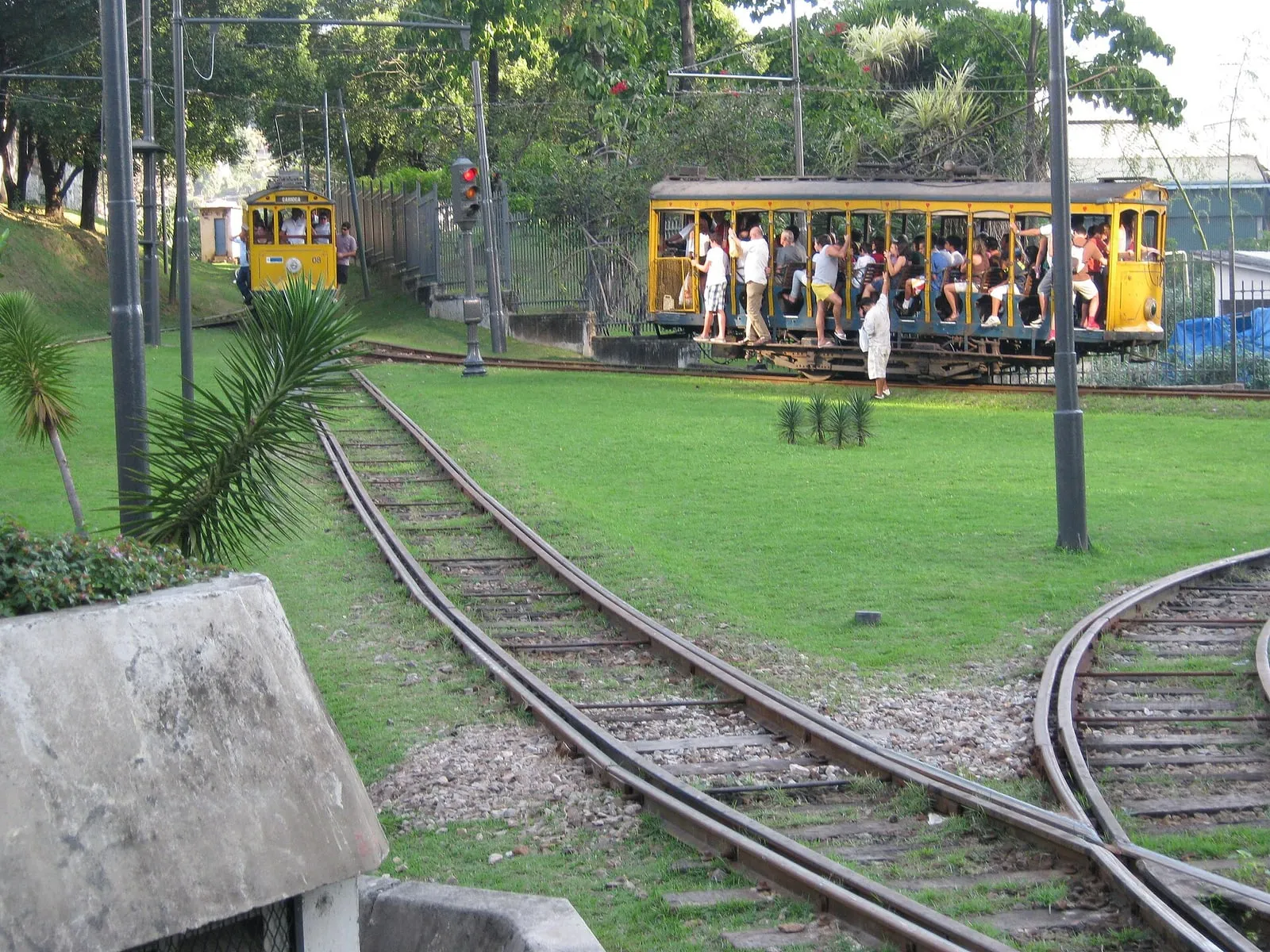
Yellow Santa Teresa bonde at Carioca station. Photo: Halley Pacheco de Oliveira, Wikimedia Commons, CC BY-SA 3.0.
- Fare: BRL 20 return for visitors, paid in cash or by card. Tickets are sold mainly at Estação Carioca.
- Hours: Check the day’s departures at Estação Carioca. On weekdays the Silvestre branch, reopened in 2026, leaves Carioca at 10:00, 11:00, 14:00 and 15:00. Arrive early to avoid queues. See the Santa Teresa and Selarón Steps guide and Centro and Santa Teresa walk.
City buses (ônibus) and Metrô na Superfície
Rio’s municipal buses cost BRL 5.00 per ride and reach places the metro misses, such as Jardim Botânico, Parque Lage and Praia Vermelha (Sugarloaf). Cash has not been accepted on municipal buses since 30 May 2026, so you need a Jaé card. If you do ride one:
- Board at the front door, tap your Jaé card on the validator, and exit at the rear.
- Use Google Maps or Moovit to track live bus numbers. Buses 583 and 422 serve Cosme Velho for the Corcovado train, and 513 serves Urca.
- Avoid city buses after dark: Switch to Uber, 99 or MetrôRio once the sun sets.
Coastal cycle lanes
Separated cycle paths run along the flat Zona Sul waterfront at Copacabana, Ipanema and Leblon, round Lagoa Rodrigo de Freitas, and along Aterro do Flamengo to Centro. On Sundays and public holidays, the oceanfront lanes of Avenida Atlântica (Copacabana), Avenida Vieira Souto (Ipanema) and Avenida Delfim Moreira (Leblon) close to cars from 07:00 to 18:00 for cyclists and pedestrians.

Lagoa Rodrigo de Freitas, ringed by a flat cycle path. Photo: chensiyuan, Wikimedia Commons, CC BY-SA 4.0.
Practical transit safety habits
- Keep phones put away near station exits and open bus windows: Check your route inside the station concourse or a shop before stepping onto the pavement.
- Guard pockets on crowded Carnival or rush-hour trains: Wear daypacks on your front when MetrôRio is packed.
- Have a backup payment method: Carry one contactless card for MetrôRio and some small notes in case a machine rejects a foreign card.
For full street-smart habits by neighbourhood, read is Rio de Janeiro safe?, check money in Rio de Janeiro for card rules, or plan your sightseeing on the Copacabana to Ipanema beach walk and the Rio de Janeiro city hub.
Common questions
Can I pay for the Rio de Janeiro Metro with a contactless bank card?
Yes. MetrôRio turnstiles accept Visa, Mastercard and Elo cards and NFC phones and watches directly, with no need to buy a separate metro card if you only ride MetrôRio.
How much does MetrôRio cost?
The MetrôRio fare is BRL 7.90, held at that level through December 2026 after a planned rise to BRL 8.20 was cancelled. Check metrorio.com.br for the fare from January 2027.
Should tourists take city buses in Rio de Janeiro?
City buses cost BRL 5.00 and no longer take cash, so you need a Jaé card. They cover gaps where the metro does not reach, such as Urca for Sugarloaf or Jardim Botânico. Use MetrôRio or the VLT by day, and Uber or 99 for hillsides and evenings.
Is Uber safe in Rio de Janeiro?
Uber and 99 are standard across Zona Sul and Centro. Check the licence plate before boarding and request rides from inside a lobby or shop rather than standing at the kerb with your phone out.