In this guide
💡 The Short Version: The main visitor zones in Miami and Miami Beach (South Beach, Mid-Beach, Brickell, Coconut Grove, Coral Gables, Wynwood and Little Havana) are straightforward to visit with standard city awareness. The hazards that actually disrupt trips are weather and water, not street crime: Atlantic hurricane season runs from 1 June to 30 November (peaking mid-August to mid-October), summer heat and lightning storms build fast in the afternoon, and rip currents catch out strong swimmers even on sunny days. Swim near a lifeguard tower, never leave bags or passports in parked rental cars, ignore unlicensed ride touts at MIA, and carry full US medical insurance.
⚠️ Never leave passports, luggage or electronics in a parked rental car. The UK Foreign, Commonwealth & Development Office (FCDO) explicitly warns visitors not to leave passports in rental cars, especially in the boot, as thieves target tourist vehicles. Check bags with your hotel concierge instead.
Official travel advisories and emergency numbers
Before travelling to the United States, review current national guidance from the UK FCDO USA travel advice and the US Department of State (along with Ready.gov and the National Hurricane Center for active weather alerts).
- Emergency (police, fire, ambulance): Dial 911 from any mobile or hotel phone.
- Separate police forces: Remember that the City of Miami Beach (the barrier island) and the City of Miami (Downtown, Brickell, Wynwood, Little Havana, Coconut Grove) are separate incorporated cities with separate police departments and local ordinances.
- Medical insurance: US hospital and ambulance bills can run into tens of thousands of US dollars. Travel medical insurance with high emergency coverage and hurricane disruption cover is non-negotiable for international visitors.
Hurricane season, summer heat and afternoon lightning
Atlantic hurricane season (1 June to 30 November)
According to the National Hurricane Center (NOAA), the Atlantic hurricane season runs from 1 June to 30 November. An average season produces 14 named storms, 7 hurricanes (sustained winds of 74 mph or higher) and 3 major hurricanes (Category 3 to 5, winds of 111 mph or higher). The statistical peak falls on 10 September, with most tropical storm activity concentrated between mid-August and mid-October.
- Booking smart: If you visit between June and November, book refundable or flexible hotel rates and verify that your travel insurance covers named-storm cancellations and trip interruption.
- What happens if a storm approaches: Hurricanes do not arrive without notice; forecasts track them days ahead. If a Hurricane Watch or Warning is issued for Miami-Dade County, follow instructions from Miami-Dade Emergency Management and your hotel. Remember that Miami Beach is a barrier island in Evacuation Zone A: when mandatory evacuations are ordered, causeways close before tropical-storm-force winds arrive and hotels shut down.
- Airports: MIA and FLL close once sustained winds make take-offs unsafe, and flights book out 48 to 72 hours beforehand as residents leave.
Heat, humidity and sudden thunderstorms
From May through October, daytime highs regularly reach 31 to 33 °C with high humidity that pushes the heat index past 38 °C. Drink water throughout the day, wear high-SPF reef-safe sunscreen and schedule outdoor walks such as the Art Deco walk or Little Havana walk for early morning.
Short, intense tropical downpours and lightning storms roll across Miami on many summer afternoons between 14:00 and 18:00, often clearing within an hour. South Florida has some of the highest lightning density in North America: leave the beach and swimming pools immediately when you hear thunder and wait 30 minutes after the last thunderclap before returning to the water.
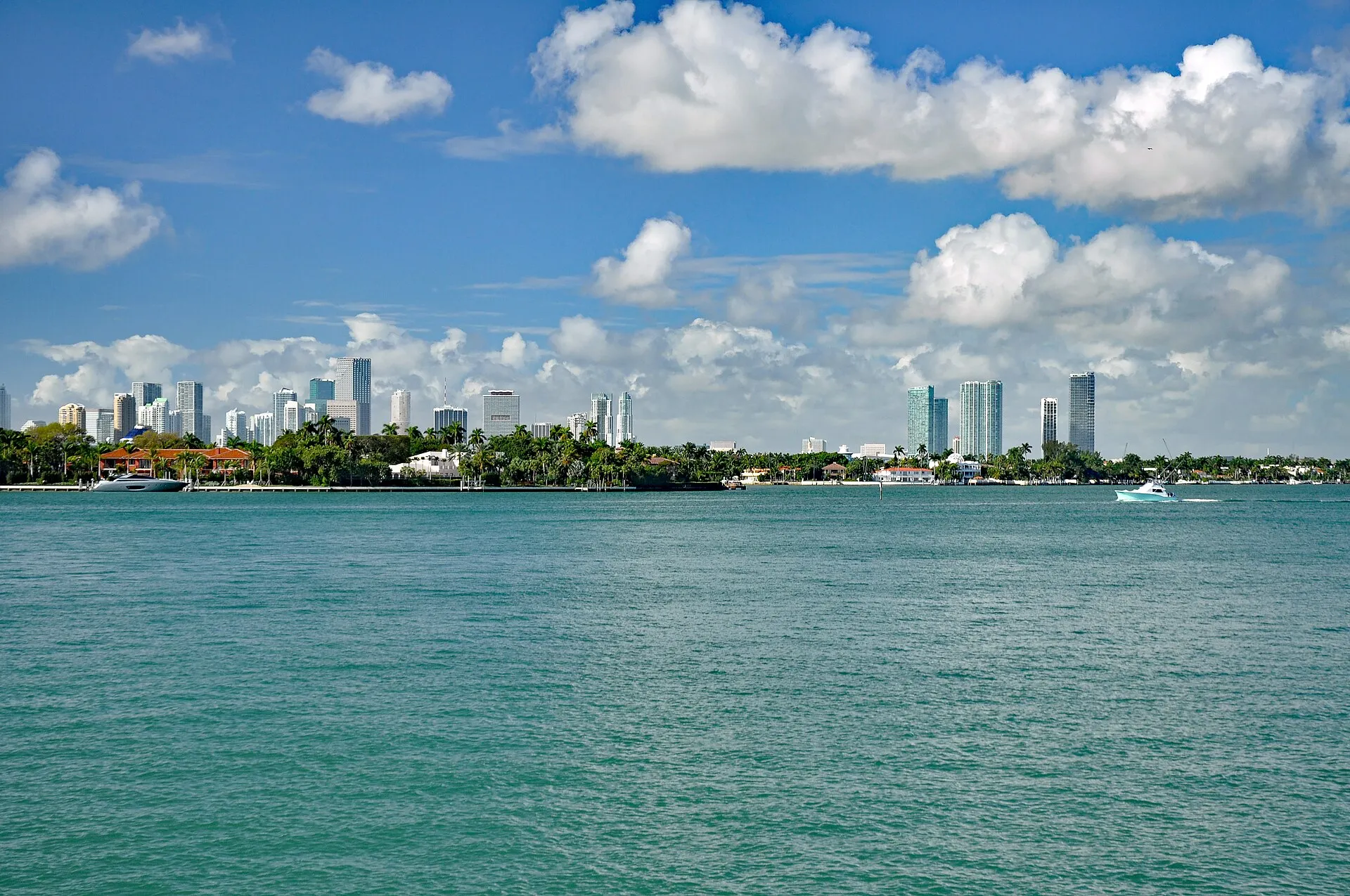
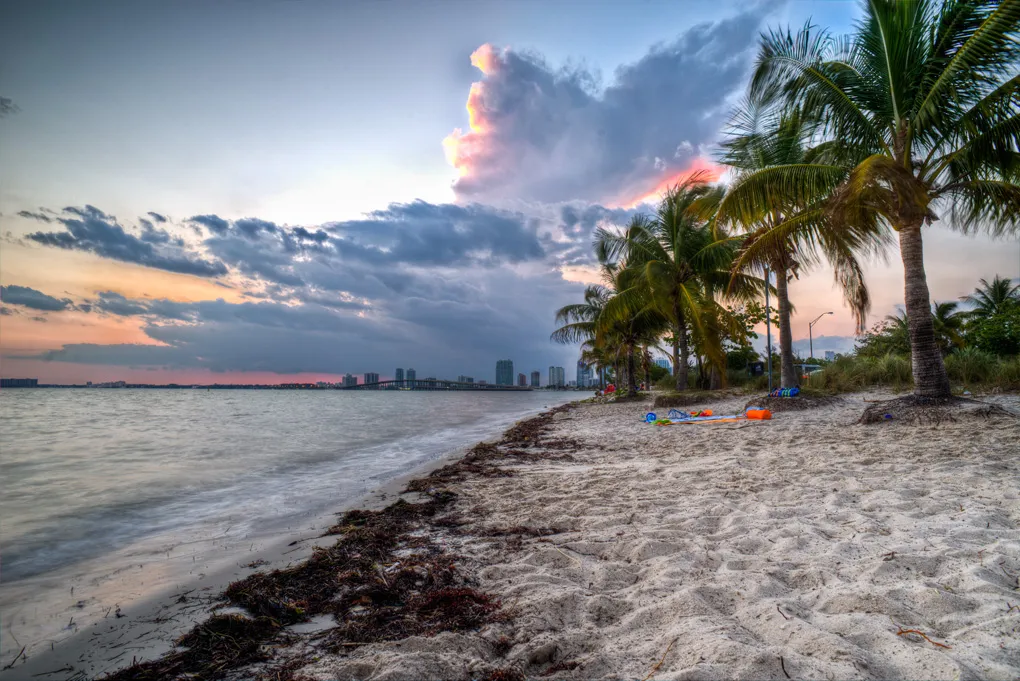 Afternoon storm clouds and sargassum along the shore near Key Biscayne. Photo: Barry haynes, Wikimedia Commons, CC BY-SA 3.0.
Beach safety: warning flags, rip currents and marine life
The Atlantic surf off Miami Beach looks calm on many mornings, yet strong nearshore currents and occasional stinging marine life cause far more visitor rescues than anything on land. Miami Beach Ocean Rescue staffs lifeguard towers along the sand and flies Florida’s statewide warning flags whenever lifeguards are on duty (City of Miami Beach Ocean Rescue).
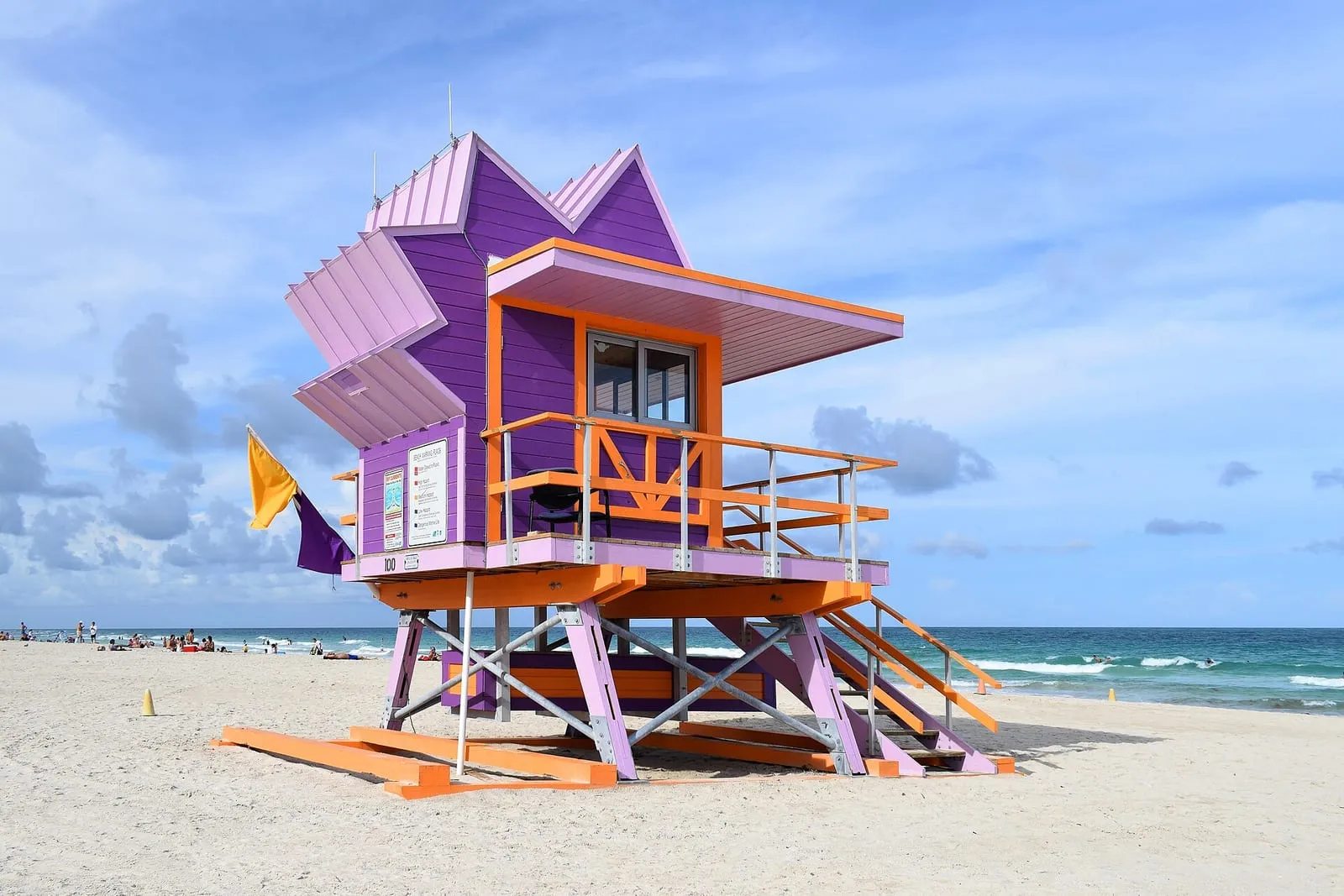
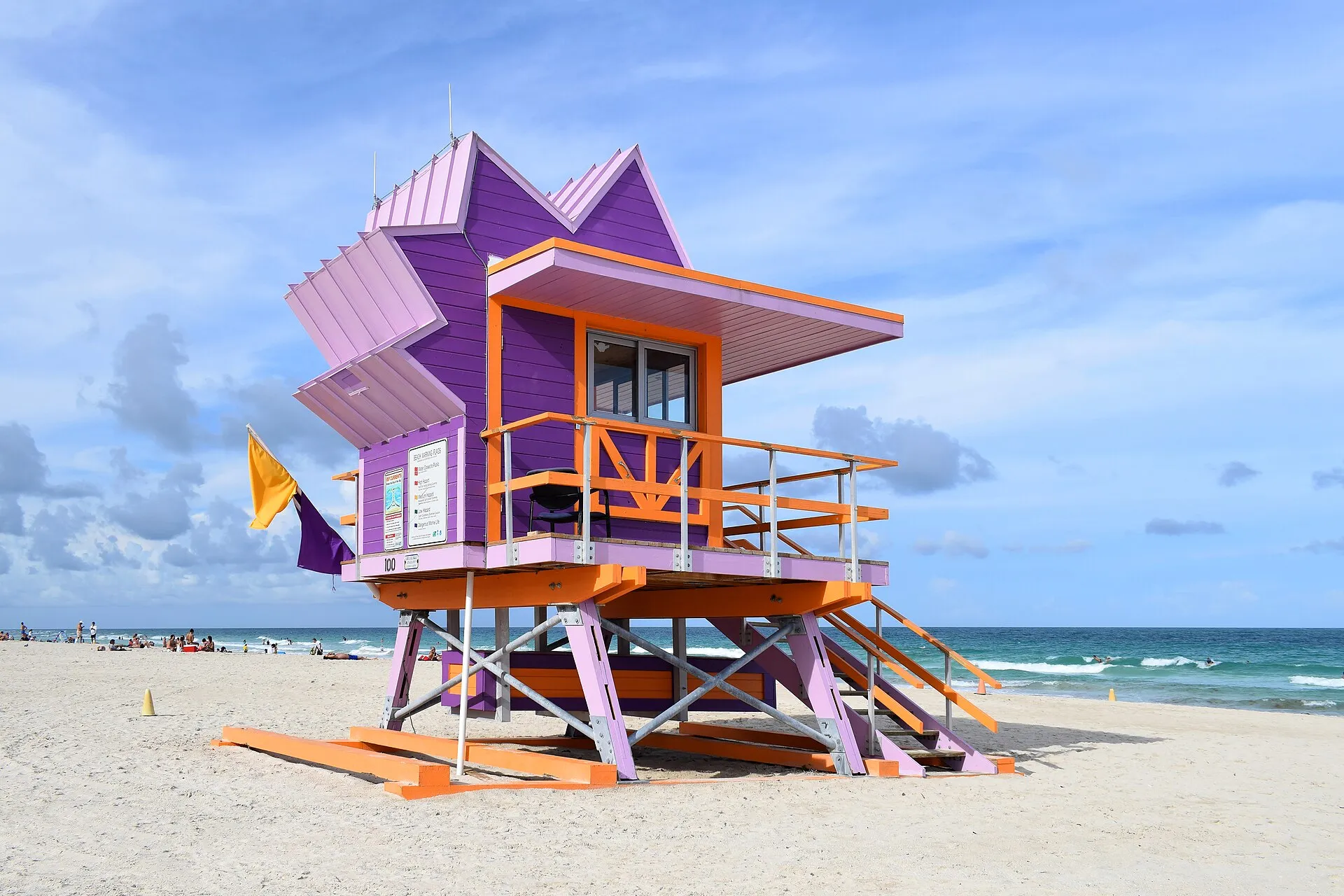
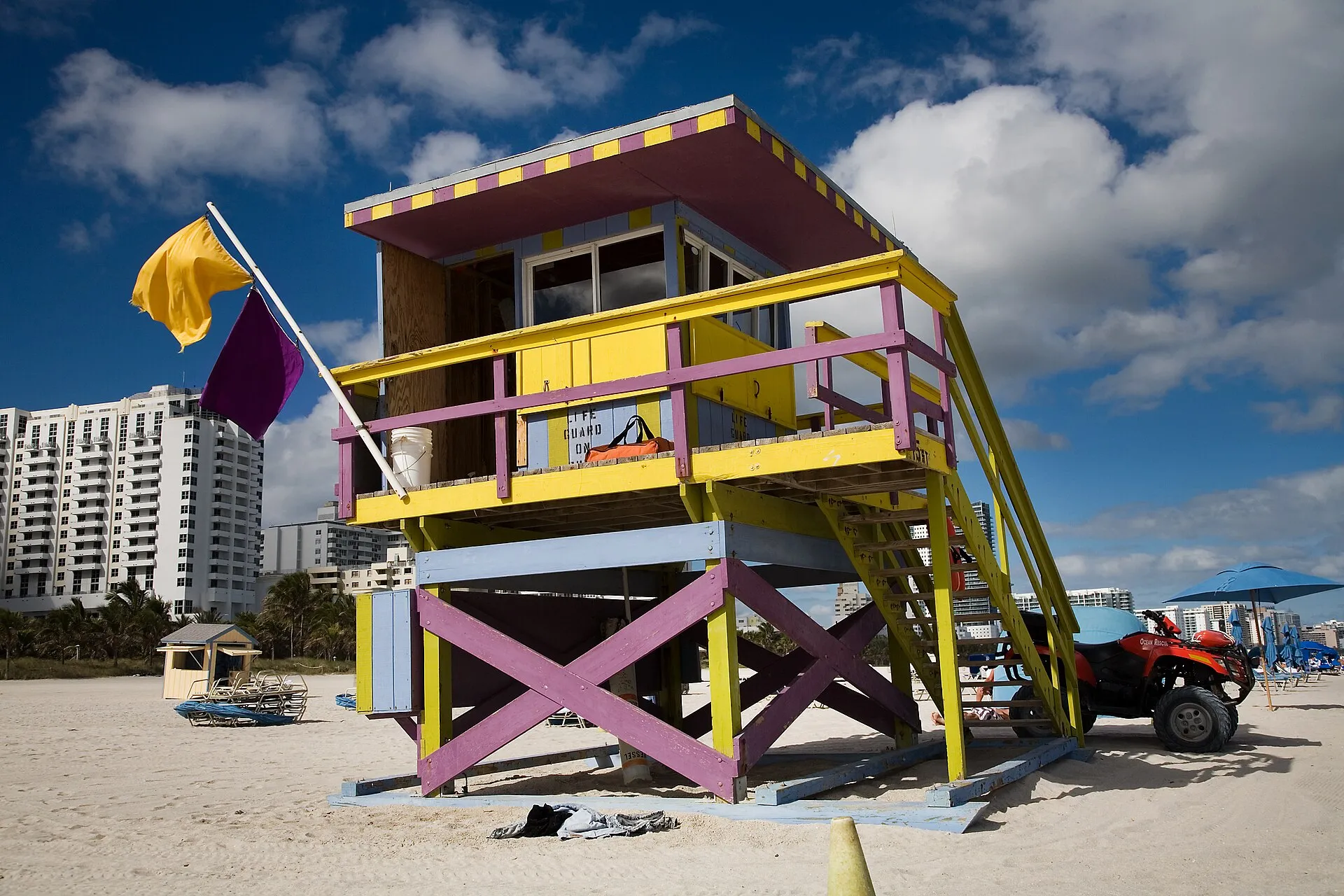 Lifeguard tower flying yellow and purple warning flags on Miami Beach. Photo: Jorge Royan, Wikimedia Commons, CC BY-SA 3.0.
| Flag colour | Meaning | What to do |
|---|---|---|
| Green | Low hazard | Calm conditions, normal caution still applies |
| Yellow | Medium hazard | Moderate surf or currents; weak swimmers should stay shallow |
| Single red | High hazard | High surf and/or strong rip currents; stay out unless a strong swimmer near a lifeguard |
| Double red (or red with crossed-out swimmer) | Water closed to the public | Do not enter the ocean |
| Purple | Dangerous marine life | Jellyfish, Portuguese man-of-war or stingrays reported; check with the lifeguard before swimming |
Notice that the absence of flags does not guarantee safe water: lifeguards lower flags when towers close for the evening.
How to spot and escape a rip current
Rip currents are narrow channels of water rushing seaward through breaks in the sandbar, most common on days with strong onshore winds. Ocean Rescue advises watching for darker, deeper channels between breaking waves, sandy-coloured plumes of water flowing outward, or foam and seaweed moving steadily away from shore.
If a rip current pulls you out:
- Do not fight the current directly toward shore; swimming against it exhausts even fit swimmers.
- Swim parallel to the shoreline until you are clear of the narrow outward pull.
- Once clear, angle back toward the beach and let breaking waves carry you in, or float and wave for a lifeguard.
Sargassum and beach rules
In spring and summer, mats of brown sargassum seaweed can wash onto Miami Beach and Key Biscayne (see Miami beaches and best time to visit Miami). It is unpleasant to wade through and can harbour tiny sea lice larvae; rinse off at the beachfront freshwater showers after swimming. Glass containers, alcohol and foam coolers are banned on Miami Beach sand, and smoking is prohibited on public beaches.
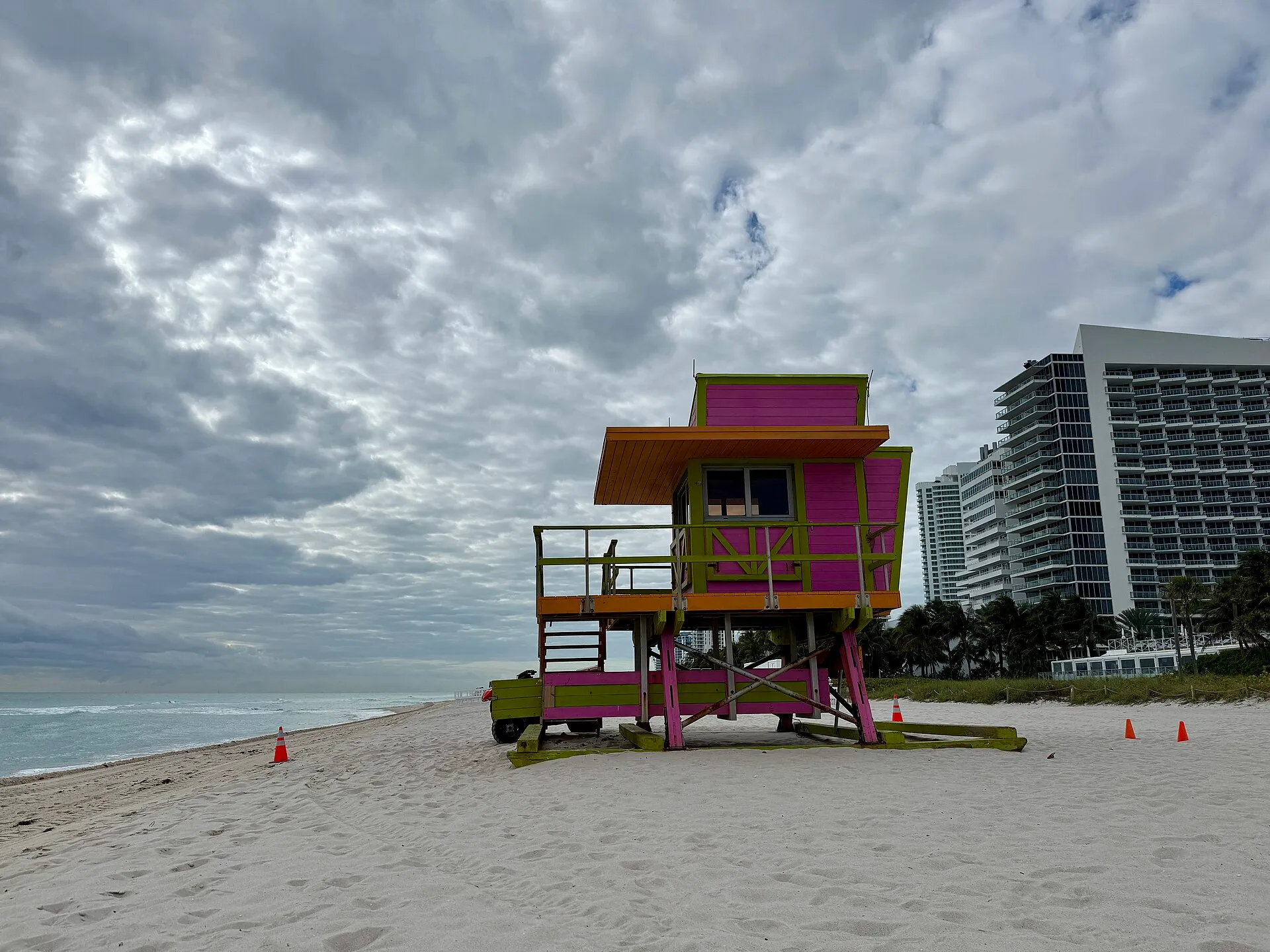 Mid-Beach Park lifeguard stand on an overcast morning. Photo: Dough4872, Wikimedia Commons, CC BY-SA 4.0.
Neighbourhoods by day and at night
Violent crime in Greater Miami rarely targets visitors in tourist districts, though like any large US city, street atmosphere changes sharply within a few blocks.
- South Beach (South Pointe to 23rd Street): Busy and heavily policed day and night along Ocean Drive, Collins Avenue, Washington Avenue and Lincoln Road. Late-night bar crowds around 5th to 15th Streets can get rowdy on weekends, especially in March during US university Spring Break, when the City of Miami Beach enforces strict crowd-control rules (higher garage parking flat fees, bag checks at beach entrances, early liquor-store curfews and DUI checkpoints). Avoid walking onto the unlit beach sand or Lummus Park after dark.
- Mid-Beach & North Beach: Calmer, hotel- and residential-focused stretches with fewer late-night street crowds.
- Brickell: Dense, well-lit financial and residential high-rise district; comfortable for evening walks between restaurants, Brickell City Centre and hotels.
- Downtown Miami: Busy during weekday business hours, cruise turnarounds and Kaseya Center games, but quieter on side streets west of Biscayne Boulevard after dark. Use rideshares or stay on main illuminated avenues at night.
- Wynwood: Busy around NW 2nd Avenue and Wynwood Walls during the day and at weekend dinner hours; avoid wandering into quiet industrial blocks west of I-95 or north of NW 29th Street on foot at night. Take an Uber or Lyft door-to-door.
- Little Havana: Friendly and lively along SW 8th Street (Calle Ocho) between 12th and 17th Avenues during daytime and evening dining hours. Stick to the main Calle Ocho strip rather than dark residential side streets late at night.
- Coconut Grove & Coral Gables: Leafy, residential mainland neighbourhoods that are relaxed day and night.
- Areas visitors have no reason to walk through: Historic Overtown (outside the Metrorail/Brightline transit corridors), Liberty City, Brownsville and parts of Little Haiti after dark are residential areas away from standard sightseeing circuits.
Common Miami scams and tourist traps
Most visitor complaints in Miami come down to overcharging rather than theft:
- Unlicensed airport drivers: Ignore anyone approaching you inside MIA baggage claim or arrivals halls offering a “taxi” or “shuttle”. Use only the staffed taxi queue on the lower curb or official Uber/Lyft pick-up zones (see airport to Miami Beach).
- Double-tipping on Miami Beach: Many Ocean Drive and South Beach restaurants add an automatic 18% to 20% service charge to every bill, then leave a blank tip line. Always read the itemised receipt (see money in Miami).
- Unpriced Ocean Drive mega-cocktails: Some sidewalk bars along Ocean Drive advertise happy hours or serve oversized fishbowl cocktails without clear pricing on the menu, then present a $45 to $65 drink bill plus automatic gratuity. Always ask for a printed menu with prices before ordering.
- Drink spiking and unattended belongings: Watch your drink being poured at busy nightclubs and beach bars, never leave phones or wallets unattended on the sand while swimming, and use your hotel room safe for passports and spare cards.
- Illegal street parking & aggressive towing: Miami Beach and Wynwood tow vehicles rapidly from private lots and permit-only residential zones, with release fees running into hundreds of dollars. Park only in municipal garages or clearly signed PayByPhone spaces.
Check where to stay in Miami for choosing a well-lit base, Miami public transport for getting around after dark, and best time to visit Miami to plan around peak hurricane months.
Common questions
When is hurricane season in Miami?
The official Atlantic hurricane season runs from 1 June to 30 November, according to the National Hurricane Center (NOAA). Statistical activity peaks on 10 September, with most storms forming between mid-August and mid-October.
What do the beach warning flags in Miami Beach mean?
Miami Beach Ocean Rescue flies the Florida statewide flag system when lifeguards are on duty: green means low hazard, yellow means medium hazard (moderate surf or currents), single red means high hazard (high surf or strong currents), double red (or red with a crossed-out swimmer) means water closed to the public, and purple warns of dangerous marine life such as jellyfish or Portuguese man-of-war.
Is South Beach safe to walk around at night?
Main corridors such as Collins Avenue, Washington Avenue, Ocean Drive and Lincoln Road are heavily patrolled and busy into the evening. Take normal city precautions: watch your drinks, keep bags zipped, avoid walking onto dark unlit stretches of the beach sand after sunset and check restaurant bills for automatic gratuities.
Are Miami and Miami Beach policed by the same force?
No. Miami Beach is an independent municipality with its own police department (MBPD), its own municipal laws and its own spring-break crowd measures, separate from the City of Miami Police Department on the mainland.
What emergency number do I dial in Miami?
Dial 911 for police, fire or ambulance anywhere in Miami, Miami Beach and the rest of the United States. For non-emergency medical advice or minor issues, urgent care clinics operate across South Beach, Brickell and Downtown, though US healthcare is expensive without comprehensive travel medical insurance.