In this guide
💡 The Short Version: The price on a Miami menu, hotel listing or shop tag is never what you pay at the till. Retail goods add 7% Miami-Dade sales tax, restaurant bills add 8% in mainland Miami or 9% in Miami Beach, and hotel rooms add 13% in the City of Miami or 14% in Miami Beach plus nightly resort fees. Check every Miami Beach restaurant and bar receipt closely: many venues automatically add an 18% to 20% service charge even for a table of one or two, then print an “Additional Tip” line underneath. Cards and Apple Pay or Google Pay work almost everywhere; keep small $1 and $5 notes for valets, bellhops and Little Havana coffee windows.
⚠️ Read the bottom of every Miami Beach bill before tipping. A $100 dinner on Ocean Drive or Lincoln Road can quickly become $149 if you miss the pre-added 20% service charge and add another 20% on top of the taxed total.
Taxes: why Miami and Miami Beach charge different rates
Miami and Miami Beach are two separate incorporated cities inside Miami-Dade County. Both sit under Florida’s 6% state sales tax and Miami-Dade County’s 1% discretionary surtax, giving a base sales tax of 7% on retail shopping, souvenirs and attractions. Where they diverge is on dining and hotel rooms.
| What you are buying | City of Miami (Downtown, Brickell, Wynwood, Little Havana) | City of Miami Beach (South Beach, Mid-Beach, North Beach) | Notes |
|---|---|---|---|
| Retail & general goods | 7% | 7% | Added at checkout; not on shelf price tags |
| Restaurants & bars | 8% (7% + 1% Homeless & Domestic Violence Tax at venues with liquor licences or above the sales threshold) | 9% (7% + 2% City of Miami Beach Resort Tax) | Added on top of menu prices |
| Hotel rooms | 13% (7% sales/surtax + 6% county tourist, convention and sports taxes) | 14% (6% state + 1% county + 3% Convention Development + 4% Miami Beach Resort Tax) | Applies to room rate; resort fees are usually taxed too |
Notice how quickly those layers stack on a hotel stay in South Beach: a $250 nightly room rate with a $45 resort fee and 14% tax works out to $336.30 per night before parking. For hotels that skip resort fees altogether, see hotels without resort fees in Miami.
The automatic gratuity trap on Miami Beach
Tipping in the United States is already higher than in Europe, Australia or Asia, with 18% to 20% of the pre-tax bill standard for sit-down table service. Miami adds a local twist that catches out even US visitors from other states: automatic service charges.
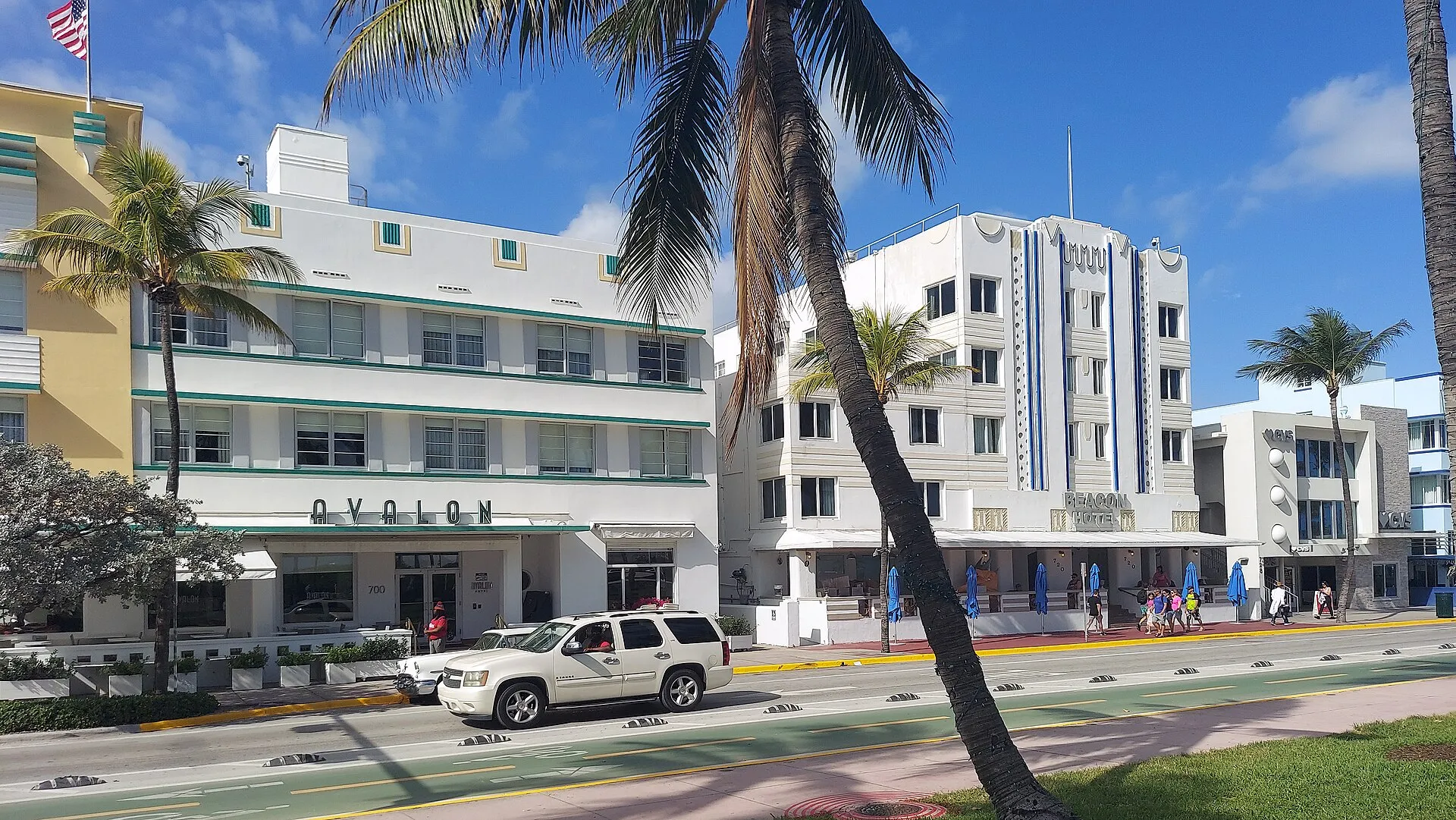
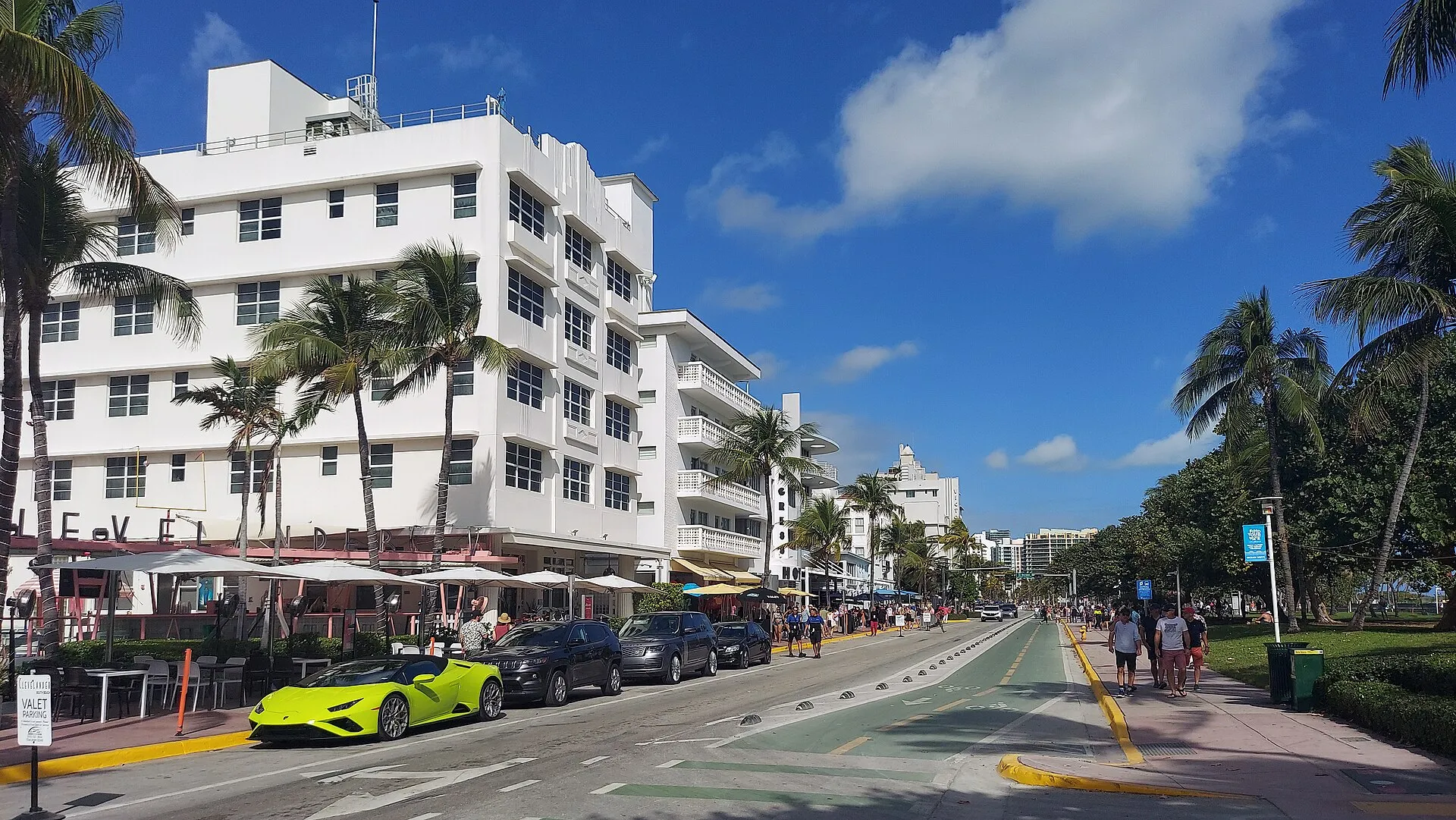 Ocean Drive sidewalk dining in South Beach. Photo: P. Hughes, Wikimedia Commons, CC BY 4.0.
Across South Beach (especially along Ocean Drive, Collins Avenue, Espanola Way and Lincoln Road) as well as many Brickell and Wynwood restaurants and hotel pool bars, venues print an 18% or 20% “Service Charge”, “Auto-Gratuity” or “Admin Fee” onto every single bill, even if you are dining solo or ordering two cocktails at a bar.
- Check the itemised slip first: Look above the subtotal and tax lines for any line labelled Gratuity, Service Charge or 18% / 20%.
- Do not tip twice: If 18% or 20% is already included, you are under no obligation to add more. Leave the “Additional Tip” line blank or write
$0and copy the total cleanly onto the bottom line. - Watch the handheld terminal: When a server hands you a portable card reader with 18%, 20% and 25% tip buttons on screen, ask or check the printed receipt to confirm whether gratuity was already added to the balance before tapping a percentage.
- Tip on the pre-tax subtotal: Where no service charge is included, calculate 18% to 20% on the food and drink subtotal before the 8% or 9% tax.
Standard tipping guide across Miami
When no automatic service charge appears on the bill, these are the normal US dollar amounts across Miami-Dade:
| Situation | Typical tip (USD) | Notes |
|---|---|---|
| Sit-down restaurant (no auto-gratuity) | 18% to 20% of pre-tax bill | Check the bill first; skip if 18% to 20% is already included |
| Bar drinks (no auto-gratuity) | $1 to $2 per beer or wine; 18% to 20% on cocktail tabs | Hotel and rooftop bars often auto-add 18% to 20% |
| Coffee counters & ventanitas | $1 or round up | Optional at walk-up counter service |
| Valet parking | $3 to $5 when your car is returned | Cash is easiest; tip on pick-up, not drop-off |
| Hotel bell staff | $2 to $5 per bag | Cash in small bills |
| Hotel housekeeping | $3 to $5 per night | Leave daily in cash, as staff rotate |
| Taxis, Uber & Lyft | 15% to 20% | In-app for rideshares; card or cash for taxis |
| Guided tours & boat crews | $5 to $10 per person (half-day); $10 to $20 (full-day) | Cash or Venmo/card where offered |
Cards, contactless payments and dynamic currency conversion
Miami is heavily card-friendly. Visa, Mastercard and American Express are accepted at virtually every hotel, restaurant, museum, supermarket, rideshare and Metrorail faregate, and contactless tap (physical card, Apple Pay and Google Pay) works across most terminals.
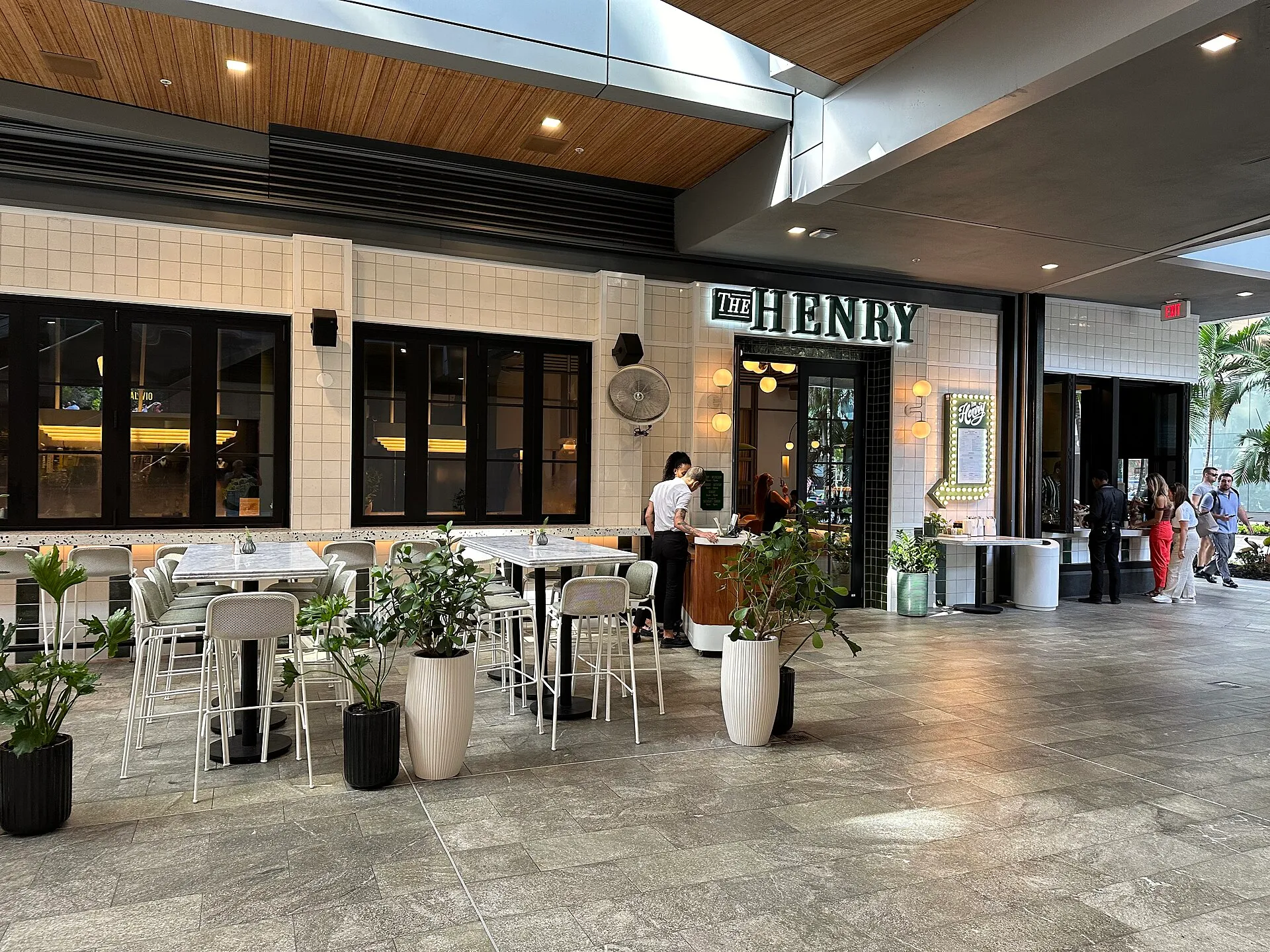 Dining terrace at Brickell City Centre. Photo: Phillip Pessar, Wikimedia Commons, CC BY 2.0.
Three practical card habits save money and hassle:
- Always pay in US dollars (USD): If a card machine or ATM offers to charge you in your home currency (dynamic currency conversion), press Decline / Pay in USD. Your own bank’s exchange rate is almost always far better than the terminal operator’s markup.
- Bring a no-foreign-transaction-fee card: Standard home-country debit and credit cards often charge 2.5% to 3% on every USD transaction. A travel credit or debit card with zero foreign transaction fees saves $60 to $90 on a $3,000 trip.
- Carry a credit card for hotel holds: Miami and Miami Beach hotels routinely place a security authorisation hold of $50 to $200 per night on your card at check-in for incidentals. Using a credit card rather than a debit card keeps that temporary hold from locking up cash in your current account for several days after checkout.
Cash, ATMs and where notes still help
You do not need large stacks of cash in Miami, and carrying hundreds of dollars to the beach is unnecessary. Keeping $40 to $80 in small bills ($1, $5 and $10 notes) covers the few spots where cash is smoother:
- Little Havana ventanitas: Walk-up Cuban coffee windows along Calle Ocho sell a cafecito (sweetened Cuban espresso) for $1.50 to $2.50 and pastries for $2 to $4; some have card minimums or move faster with exact cash (see Cuban food in Miami).
- Tips for valets, bellhops, housekeeping and Freebee drivers.
- Beach-chair and umbrella attendants who set up loungers on the sand.
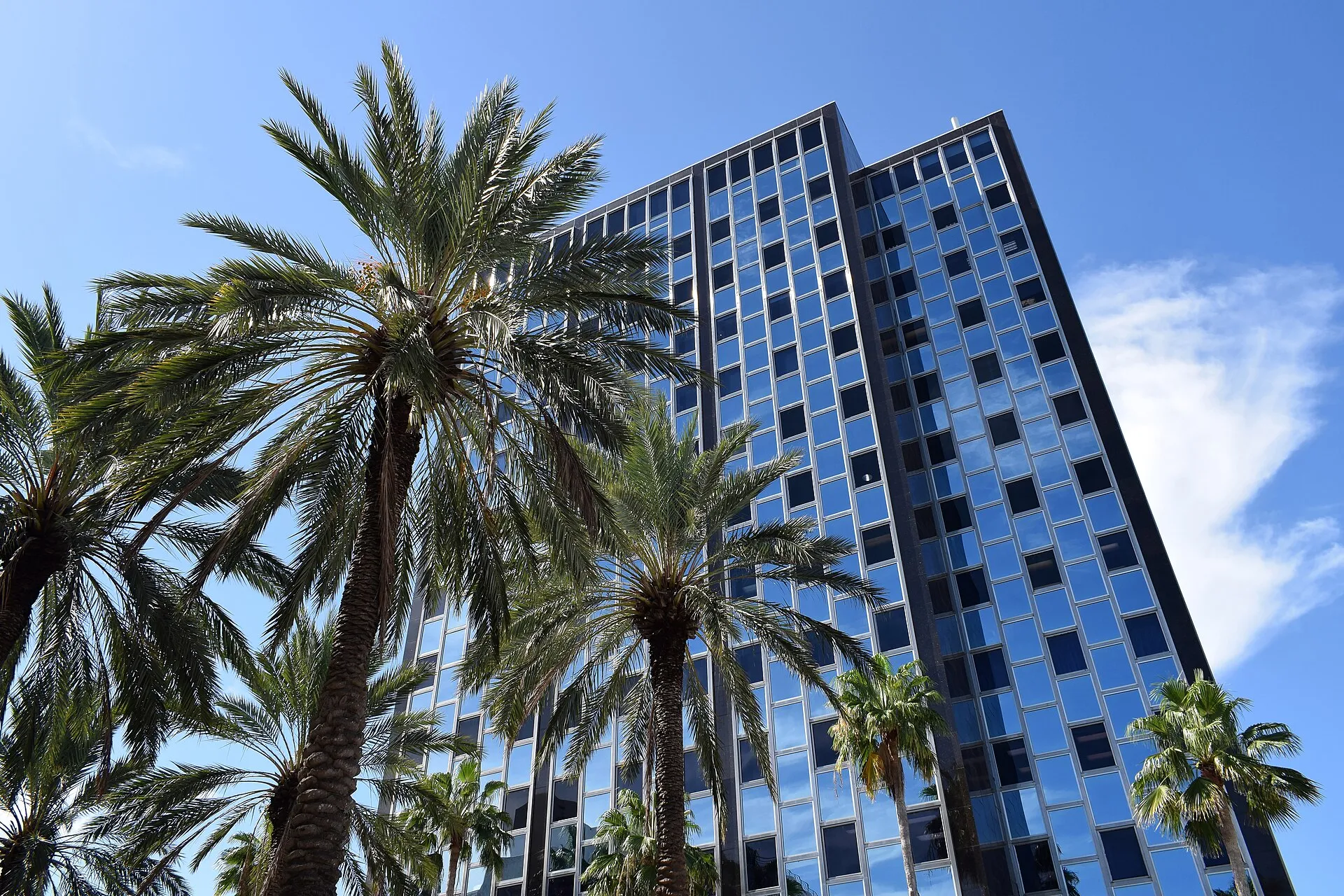 Lincoln Road, Miami Beach. Photo: Radomianin, Wikimedia Commons, Public domain.
ATM fees to watch for
Avoid standalone white-label ATMs inside convenience stores, bars and hotel lobbies on Ocean Drive or Collins Avenue, which often charge $4 to $7 per withdrawal on top of your home bank’s fee. Instead, use bank-branch ATMs from Bank of America, Chase, Wells Fargo or Citibank along Lincoln Road, Alton Road, Brickell Avenue and Flagler Street, and withdraw once rather than in small amounts. Major supermarkets such as Publix also offer cash back at the till when you pay by US debit card.
Realistic daily budget ranges in Miami
Miami is one of the pricier US city breaks, particularly from December through April when hotel rates peak. Excluding flights and accommodation, a realistic per-person daily spend in USD breaks down roughly as follows:
- Budget ($65 to $110 per day): Breakfast pastelito and cafecito at a Cuban bakery ($6 to $10), lunch from our cheap eats in Miami list ($12 to $18), free beach time and free things to do in Miami, $5.65 transit 1-Day Pass or free trolleys, and a casual dinner ($25 to $40 after tax and tip).
- Mid-range ($140 to $240 per day): Sit-down brunch or lunch ($25 to $40), one paid attraction such as Vizcaya or Pérez Art Museum Miami ($18 to $32), two rideshares across the bay ($30 to $45 shared or solo), a cocktail at a bar ($18 to $22 after tax and gratuity) and a neighbourhood dinner ($55 to $85).
- Splurge ($300+ per day): Tasting-menu or Michelin-starred dinner from where to eat in Miami ($150+ with drinks), rooftop bars, private boat or Everglades excursions and rideshares everywhere.
For saving on accommodation, read cheap hotels in Miami and hotels without resort fees, and check best time to visit Miami to see how seasonal hotel rates swing across the year.
Common questions
Why do Miami Beach restaurant bills already include an 18% or 20% gratuity?
Many restaurants, bars and hotel pools in Miami Beach add an automatic service charge or gratuity of 18% to 20% to every bill, regardless of party size. Always inspect the itemised receipt before writing a number on the additional tip line so you do not tip twice.
What is the sales tax in Miami and Miami Beach?
Standard retail sales tax in Miami-Dade County is 7% (6% Florida state sales tax plus 1% county discretionary surtax), added at the till rather than included in shelf prices. Restaurant and bar bills in the City of Miami Beach carry an extra 2% municipal resort tax (9% total), while qualifying mainland Miami restaurants add a 1% Homeless and Domestic Violence Tax (8% total).
How much is hotel tax in Miami compared with Miami Beach?
Hotels in the City of Miami add 13% in combined state and county taxes to the nightly room rate. Hotels in the City of Miami Beach add 14% (6% Florida sales tax, 1% county surtax, 3% Convention Development Tax and 4% City of Miami Beach Resort Tax), on top of any nightly resort or destination fee.
Do I need to carry cash in Miami?
Cards and contactless mobile wallets work almost everywhere, including Metrorail gates, rideshares, restaurants and cafes. Carry $40 to $80 in small US dollar bills ($1, $5 and $10 notes) for Little Havana coffee windows (ventanitas), valet attendants, hotel bell staff, beach-chair staff and Freebee shuttle drivers.
Should I pay in US dollars or my home currency on a card terminal?
Always choose US dollars (USD). Letting a card terminal or ATM convert to your home currency (dynamic currency conversion) applies a poor exchange rate with a hidden markup.