In this guide
💡 The Short Version: Our judgement, not a ranking. Pick New York for the famous sights: the Statue of Liberty, Broadway, the Met and five observation decks, in a city that needs five days to scratch. Pick Chicago for architecture: the Chicago Architecture Center’s 90-minute river cruise (from $57, March to November), the Loop’s early skyscrapers, the Art Institute and Skydeck’s glass boxes on the 103rd floor, in a city that fits into three days. Chicago’s transport is cheaper ($2.50 an ‘L’ ride against $3 on the subway) but its tax is higher (10.5% sales tax against 8.875%), and its winter is colder: an average January high of 0°C against 4°C. Both cities use US dollars and the same ESTA ($40.62).
⚠️ Check the closed days and the cruise season before you book. The Art Institute of Chicago is shut every Tuesday and the Met in New York every Wednesday. The Chicago Architecture Center’s river cruise runs only from March to November, with weekend sailings in December.
Chicago and New York side by side
All prices are the operators’ adult prices in US dollars, before sales tax.
| Chicago | New York | |
|---|---|---|
| Sales tax | 10.5% in shops; 11% on restaurant bills, 12% downtown | 8.875%; clothing and shoes under $110 an item are exempt |
| Hotel tax | About 17% of the room rate, plus 1.5% at large downtown hotels and nightly destination fees at many | 14.75% plus fees |
| Tip | 20% of the pre-tax bill in restaurants | 20% of the pre-tax bill in restaurants |
| Big-ticket sights | Skydeck from $32; Art Institute $32; river cruise from $57 | Empire State Building from $46; the Met $30 |
| Closed days | Art Institute Tuesday | The Met Wednesday |
| A ride | ‘L’ $2.50, bus $2.25; $5 from O’Hare | Subway and bus $3; stops charging at $35 in seven days on one card |
| Passes | 1-Day $5, 3-Day $15, 7-Day $20 | Fare cap instead of passes |
| Airport to the centre | O’Hare by Blue Line, 40 to 45 minutes, $5 | JFK by AirTrain and subway, about 50 minutes, $11.75 |
| January high | 0°C (32°F) | 4°C (39°F) |
| July high | 29°C (85°F) | 29°C (85°F) |
| Days needed | 3 | 3 to 5 |
The sights
New York’s list is longer and better known. The Statue of Liberty’s crown tickets sell out months ahead, Broadway’s theatres are in Midtown, and the Met, MoMA, the Guggenheim and the American Museum of Natural History are all in Manhattan (New York museums). Five observation decks compete for the sunset slot, from the Empire State Building’s open-air 86th floor (from $46) to Edge’s glass floor.
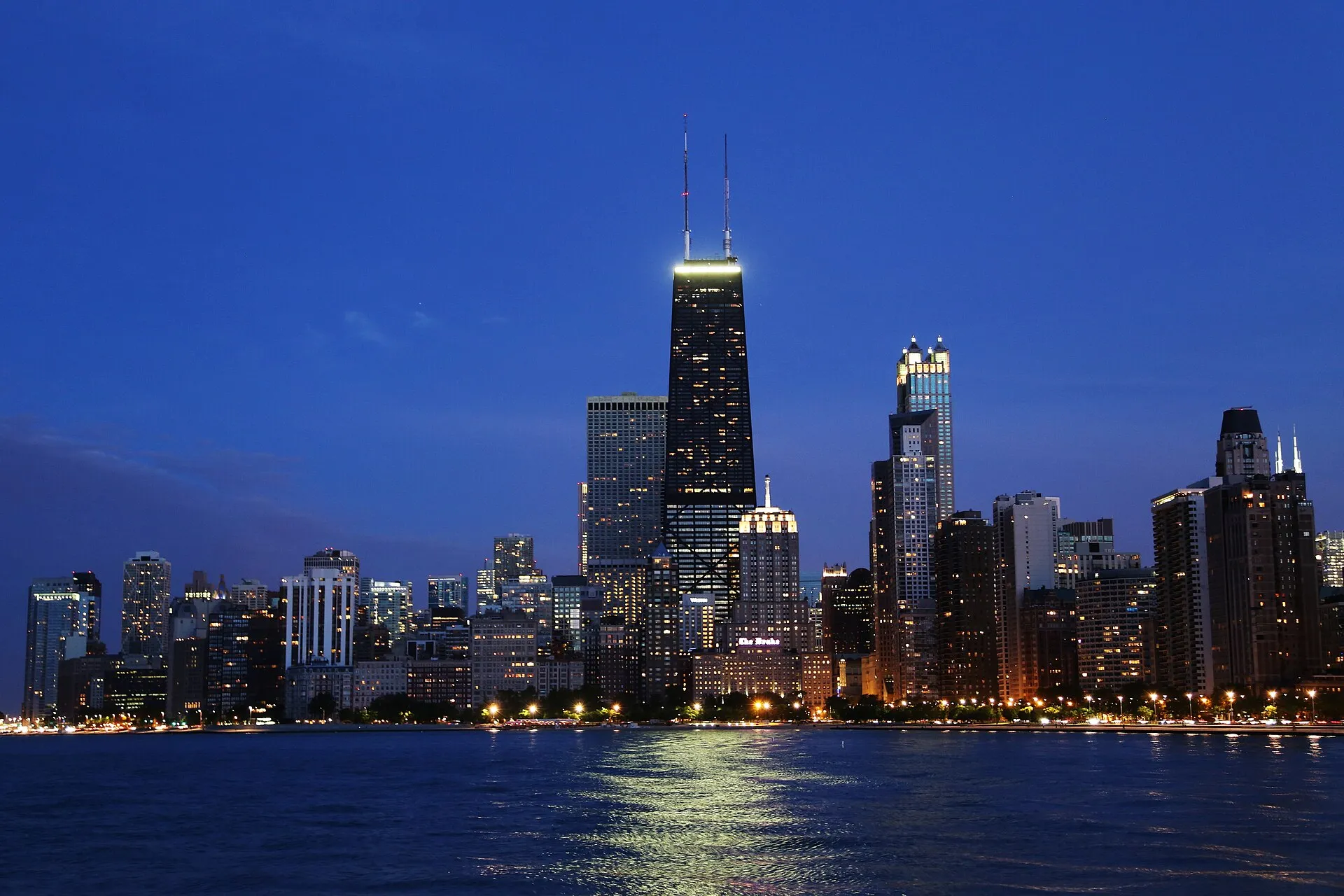
Chicago’s is shorter and centred on buildings. The architecture river cruise covers more than 50 of them in 90 minutes with a volunteer docent, and the Loop architecture walk takes in the Rookery, the Monadnock and the Reliance Building on foot. The Art Institute holds Nighthawks and American Gothic, and the Museum Campus has the Field Museum, where SUE the T. rex stands, beside Shedd Aquarium. For a view, Skydeck puts you on the 103rd floor of Willis Tower, 1,353 feet up, with glass boxes that stick out 4.3 feet from the wall; 360 Chicago on the Magnificent Mile is open later, to 23:00.
 Midtown Manhattan from Top of the Rock. Photo: Giuseppe Milo, Wikimedia Commons, CC BY 3.0.
Costs
Neither city prints tax in the price. Chicago’s sales tax of 10.5% is the higher of the two, and its restaurant bills add 11%, or 12% downtown; New York adds 8.875% and exempts clothing and shoes under $110 an item. Chicago’s hotel taxes come to about 17% of the room rate, plus a 1.5% charge at downtown hotels of 100 rooms or more and, at many hotels, a nightly destination fee (money in Chicago, cheap hotels in Chicago). New York’s hotel bills add 14.75% and fees (money in New York). In both, the restaurant tip is 20% of the pre-tax bill.
Transport is where Chicago saves money. An ‘L’ ride is $2.50, and the CTA’s 3-Day pass is $15 for unlimited trains and buses; from O’Hare the Blue Line is $5 and runs 24 hours (public transport in Chicago). New York’s subway and buses are $3 a ride, tapped with a contactless card or phone, and stop charging once one card has paid $35 in seven days (public transport in New York).
Weather and when to go
Both cities have hot summers and cold winters, but Chicago’s winter is the harder one. The National Weather Service normals give Chicago an average January high of 0°C (32°F) and low of -7°C, with about 11 inches of snow in each of January and February; New York’s January high is 4°C (39°F) (best time to visit New York). Both reach about 29°C (85°F) in July.
For Chicago, June and September are the months to pick, at 24 to 27°C, with the free Blues Festival in June and the Jazz Festival over Labor Day weekend (best time to visit Chicago). In winter, Chicago has the Christkindlmarket in Daley Plaza from 20 November to 24 December 2026, ZooLights and two free midnight fireworks shows on New Year’s Eve, but the river cruise stops after November apart from December weekends. New York lights the Rockefeller Center tree on 2 December 2026 (Christmas in New York), and its Times Square ball drop is free, with no tickets (New Year’s Eve in New York).
How many days
Chicago’s centre is compact: the Loop, Millennium Park, the river and the Magnificent Mile are all on foot, and the Museum Campus is a walk south along the lake. Chicago in one or two days covers the river cruise, the Art Institute and Skydeck; three days adds the Museum Campus and Lincoln Park, Wrigleyville or Oak Park. New York needs three days for Manhattan’s sights and five to add Brooklyn and a museum day: see New York in one or two days, 3 days in New York and 5 days in New York.
Where to stay
In Chicago, stay in the Loop for the sights and every ‘L’ line, or in River North and the Magnificent Mile for restaurants and shops; where to stay in Chicago compares every area. In New York, stay in Midtown for a first visit, at the middle of the subway map; where to stay in New York compares Lower Manhattan, Brooklyn and the Upper West Side.
Other cities and other trips
For another US pair, see San Francisco vs Miami. For the city’s museums against the rest of the site, see museum city breaks; for river and harbour trips, boat-tour cities; for a New Year’s Eve trip, New Year’s Eve city breaks. The Chicago and New York hubs list what to book before you go, and the rest of the comparisons are on Compare cities.
Common questions
Is Chicago or New York better for a first trip to the US?
New York if you want the famous list: the Statue of Liberty, Broadway, the Met and five observation decks. Chicago if you want architecture: the Chicago Architecture Center's river cruise, the Loop's early skyscrapers, the Art Institute and the Museum Campus by the lake. Chicago is smaller, so three days cover more of it.
Which is cheaper, Chicago or New York?
On public transport, Chicago: an 'L' ride is $2.50 and a 3-Day pass $15, against $3 a ride in New York with a $35 cap over seven days. On tax it is closer: Chicago's sales tax is 10.5% and restaurant bills add 11%, or 12% downtown, against 8.875% in New York. Hotel taxes come to about 17% in Chicago and 14.75% plus fees in New York.
Which has the colder winter?
Chicago. The National Weather Service normals give Chicago an average January high of 0°C (32°F) and low of -7°C, with about 11 inches of snow a month in January and February. New York's January high in Central Park is 4°C (39°F).
How many days do Chicago and New York need?
Three days covers Chicago's centre, the Museum Campus and one neighbourhood such as Lincoln Park. New York needs at least three days for Manhattan alone, and five to add Brooklyn and a museum day.
Do Chicago and New York have the same entry rules?
Yes. Both follow US federal rules: UK, Australian and Visa Waiver Program EU citizens need an approved ESTA ($40.62 at esta.cbp.dhs.gov) before flying, for stays of up to 90 days; Canadians need a passport but no ESTA or visa.