In this guide
💡 The Short Version: Our judgement, not a ranking: pick San Francisco for dramatic hills, the Golden Gate Bridge, Alcatraz Island, world-class art and science museums (SFMOMA, de Young, California Academy of Sciences), Michelin-heavy dining and diverse Northern California day trips (Muir Woods, Napa Valley, Yosemite) — especially in April–May or its warm, clear September–October peak. Pick Miami for flat, warm winter sun (mid-November to April), South Beach and Art Deco blocks, Cuban food on Calle Ocho, Everglades wetlands and Florida Keys coral reefs. Both cities run in US dollars ($) and layer heavy add-ons onto headline prices: budget for 8.625% sales tax, SF Mandate restaurant surcharges and 16.31% to 17.50% combined lodging taxes in San Francisco, against 7% to 9% sales/dining tax, 13% to 14% hotel tax, $34 to $82 nightly resort fees and automatic 18% to 20% Miami Beach service charges. Or book a tour: in San Francisco, the Golden Gate Bay Cruisead starts from $39 and the Muir Woods and Sausalito Tourad from $76; in Miami, the Biscayne Bay Millionaires’ Homes Cruisead starts from $20 and the Everglades Half-Day Airboat Tourad from $49.80.
⚠️ Check the calendar and two 2026 National Park surcharges before booking. San Francisco is cool and foggy in midsummer (19.1°C / 66.3°F average July high) and wet from November to March, while Miami sits inside Atlantic hurricane season from 1 June to 30 November. In 2026, non-US residents aged 16+ entering Yosemite National Park (from San Francisco) or Everglades National Park (from Miami) independently also pay an extra $100 per person surcharge on top of the $35 vehicle fee unless using an Annual or America the Beautiful Pass.
San Francisco and Miami side by side
All prices below are operators’ published adult rates in US dollars ($), excluding local sales tax unless noted. Each link leads to the full guide on this site.
| San Francisco | Miami | |
|---|---|---|
| Tax & tipping trap | 8.625% sales tax (CDTFA). Many sit-down restaurants add a 4% to 6% SF Mandate health-care surcharge (not a tip) before an 18% to 20% tip or service charge | 7% retail tax; 8% (mainland) or 9% (Miami Beach) dining tax. Many Miami Beach bills auto-add 18% to 20% service charge regardless of party size |
| Headline sights & prices | Alcatraz Island $47.95 day / $59.65 night; Cal Academy $49–$59; SFMOMA $30; Exploratorium $39.95; de Young & Legion of Honor $20–$25 dual ticket; Bay cruises from $39 | Vizcaya Museum $32 online; Frost Science from $29.95; Pérez Art Museum from $18; Wynwood Walls $12; Biscayne Bay cruises from $18 to $30 |
| Weekly closed days | Mondays: de Young, Legion of Honor, Computer History Museum (also Tue). Wednesdays: SFMOMA | Tuesdays: Vizcaya, PAMM, ICA Miami. Wednesdays: PAMM. Mondays: ICA Miami |
| Hardest advance bookings | Alcatraz (4 to 8 weeks ahead at alcatrazcruises.com); Muir Woods mandatory parking ($10) or shuttle at gomuirwoods.com | Art Basel (4 to 6 Dec 2026) & Christmas hotels; timed entry for Vizcaya and winter Everglades / Key West coaches |
| Public transport | BART & Muni: Muni $2.85 contactless (120-min transfers); cable cars $9.00 single or $15 1-day Muni Visitor Passport | Metrorail & Metrobus $2.25 ($2.75 from 1 Jan 2027); Downtown Metromover and Miami Beach Trolleys are free |
| Airport to city | SFO to downtown (21 km): BART direct to Powell Street in ~30 min for $11.80 one-way | MIA to South Beach (18 km): Route 150 Airport Express bus $2.25 ($2.75 from 1 Jan 2027), or Metrorail Orange Line to Downtown |
| Hotel add-ons | 14% TOT + TID/MED assessments (~16.31% to 17.50% combined) + nightly urban fees ($25–$50) & $50–$75 garage parking | 13% mainland / 14% Miami Beach lodging tax + mandatory $34 to $82 nightly resort fees & $54–$75 valet parking |
| Best weather window | Sep–Oct (warmest, clearest: 21.0–21.2°C) & Apr–May (green hills, 17.4–18.2°C). Cold fog in Jul–Aug (19.1°C) | Mid-Nov to Apr (dry, 24–28°C, low humidity). Atlantic hurricane season 1 Jun–30 Nov |
| Entry rules | Identical US rules: UK, AU & VWP EU need ESTA $40.62 at esta.cbp.dhs.gov; Canada visa-exempt; US citizen | Identical US rules: UK, AU & VWP EU need ESTA $40.62 at esta.cbp.dhs.gov; Canada visa-exempt; US citizen |
| How many days | 3 to 4 days (3 days in SF, 1 or 2 days) | 3 to 4 days (3 days in Miami, 1 or 2 days) |
The weather calendar makes the cleanest first cut. Between December and March, Miami sits in its dry, mild winter peak (24 to 27°C afternoons and warm 22 to 24°C Atlantic water), whereas San Francisco receives roughly 80% of its annual rainfall between November and March (112 mm in January, 121 mm in December, with 14.3°C highs). Flip to September and October, and the roles reverse completely: Miami is in peak Atlantic hurricane risk with heavy humidity and storms, while San Francisco enjoys its warmest, clearest skies of the year at 21.0 to 21.2°C (70°F) alongside Hardly Strictly Bluegrass and Fleet Week (best time to visit San Francisco, best time to visit Miami).
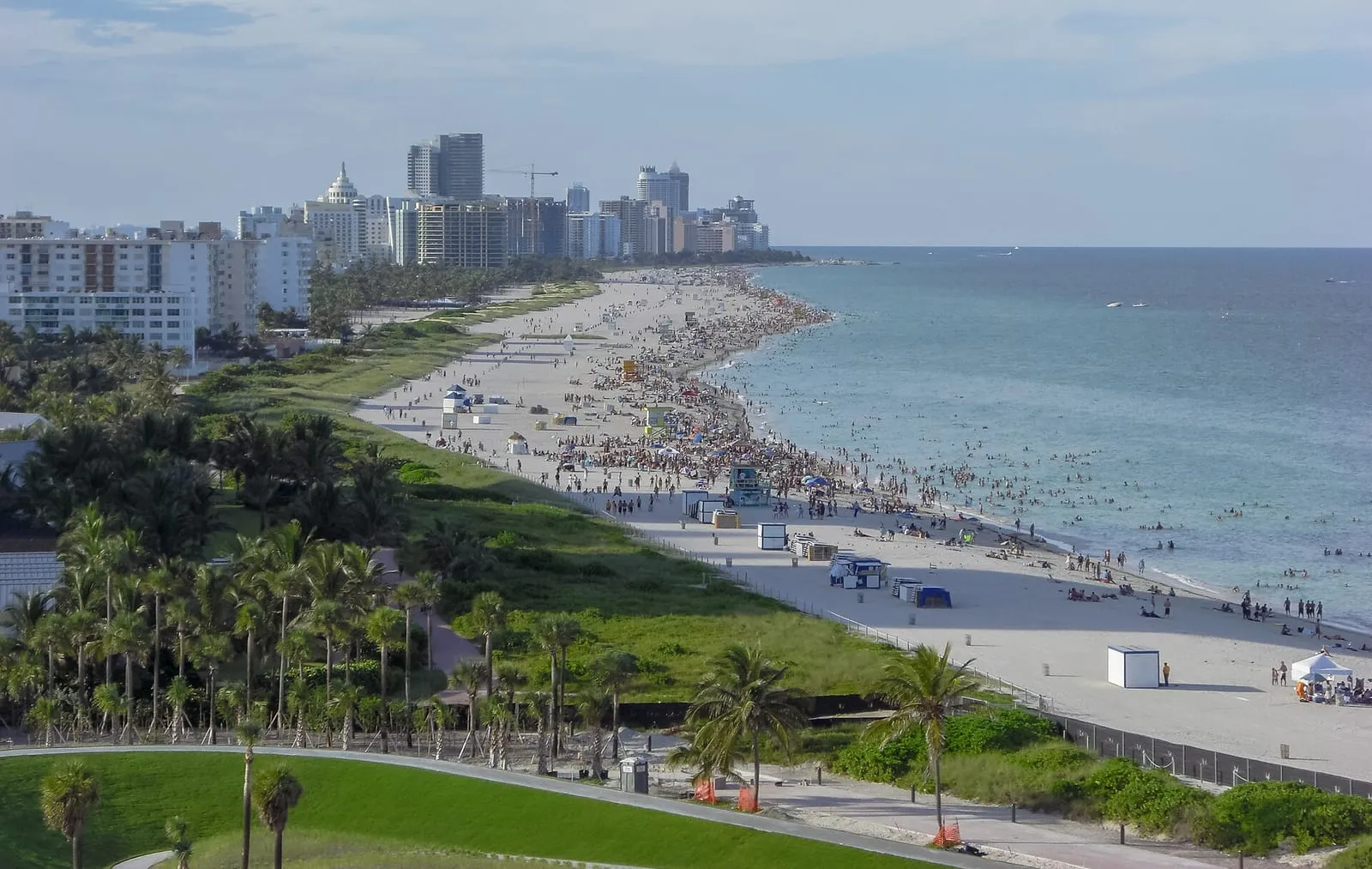 The wide sandy shoreline of Miami Beach along the Atlantic. Photo: Diego Delso, Wikimedia Commons, CC BY 3.0.
Book a tour instead
In San Francisco, guided coaches remove the Muir Woods parking scramble, wine-country designated-driver rules and rental-car break-in risk. In Miami, coaches handle the Everglades and Overseas Highway runs without car hire, while narrated boats are the only way onto Biscayne Bay.
| City | From | Tour |
|---|---|---|
| San Francisco | $39 | Golden Gate Bay Cruisead, 1 hour from Pier 43 1/2 |
| San Francisco | $76 | Muir Woods and Sausalito Tour with Ferry Optionad, 5 to 8 hours |
| San Francisco | $140.25 | Napa and Sonoma Valley Full-Day Wine Tourad, 9 hours |
| San Francisco | $199 | Yosemite National Park and Giant Sequoias Hikead, 15 hours |
| Miami | $20 | Biscayne Bay Millionaires’ Homes Sightseeing Cruisead, 1.5 hours from Downtown |
| Miami | $49.80 | Everglades Airboat, Wildlife Exhibit and Round-trip Busad, 5 hours |
| Miami | $39.99 | Key West Day Trip with Pick-upad, 14 hours down the Overseas Highway |
| Miami | $69 | Little Havana Cuban Food and Culture Walking Tourad, 3 hours |
Which city for whom
Landscape, architecture and city feel: hilly Pacific peninsula vs flat Art Deco coast
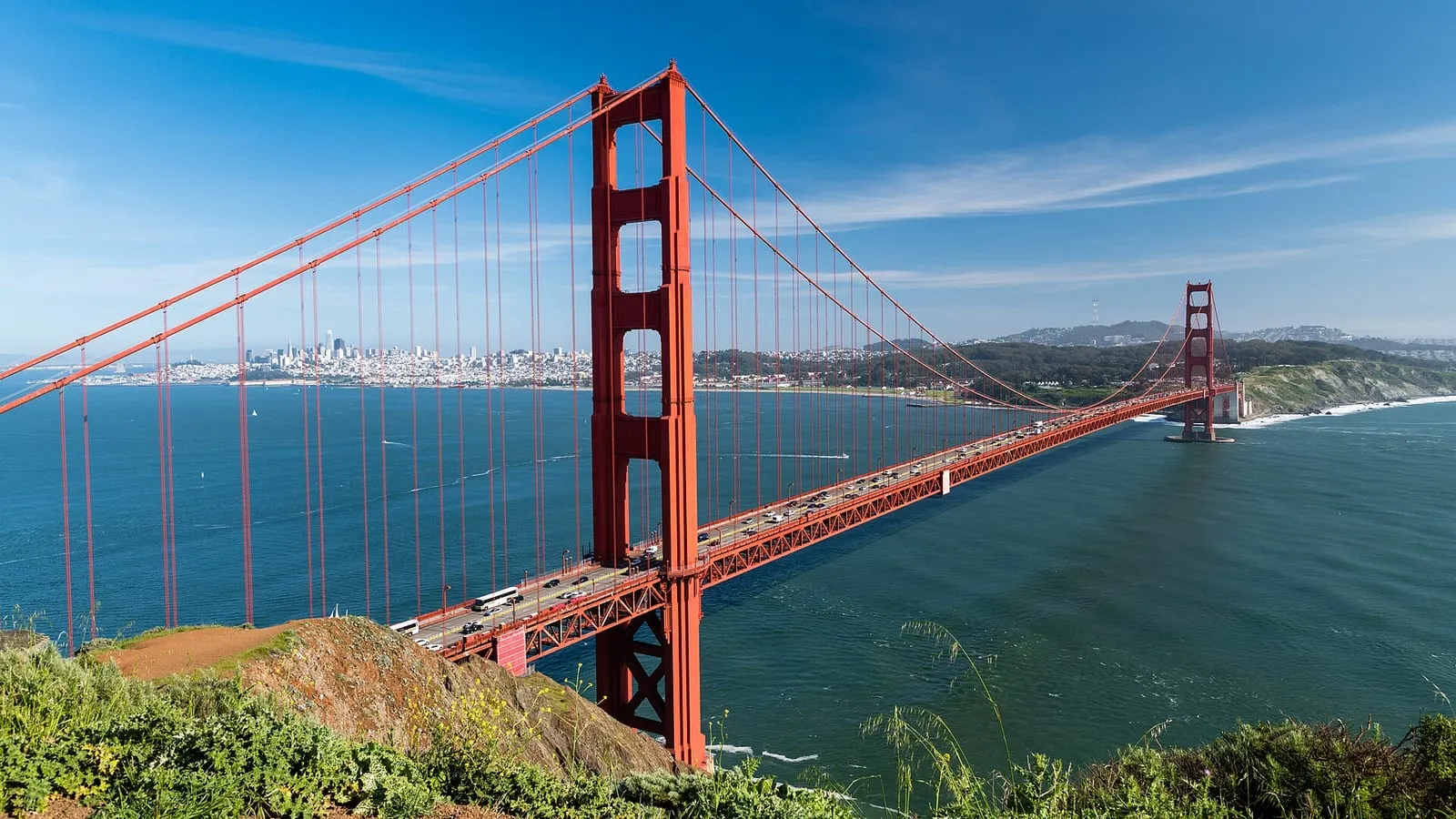
San Francisco occupies a steep, compact 12-by-12-kilometre peninsula framed by the Pacific Ocean and San Francisco Bay. You climb Nob Hill and Telegraph Hill on wooden stairways or cable cars, walk 5.8 km along Crissy Field and across the Golden Gate Bridge to Marin County, wander 1,017-acre Golden Gate Park, and link Grant Avenue with Italian North Beach on our 3.6 km Chinatown and North Beach walk. Expect brisk 10°C microclimate swings between sunny Mission streets and windy Ocean Beach—and pack a windproof jacket even in July.
Miami is completely flat, split between mainland neighbourhoods (Downtown, Brickell, Wynwood, Little Havana, Coconut Grove) and the barrier island of Miami Beach. Its core appeal is outdoor tropical living: wide public Atlantic sand at Miami beaches (with warm 22 to 31°C water all year), more than 800 pastel 1920s to 1940s buildings along our 3.4 km Art Deco walk, mural blocks at Wynwood Walls ($12) and Calle Ocho’s domino park and coffee windows on our 2.4 km Little Havana walk. Note that Miami Beach strictly bans glass and personal alcohol on the sand, and summer brings floating sargassum seaweed.
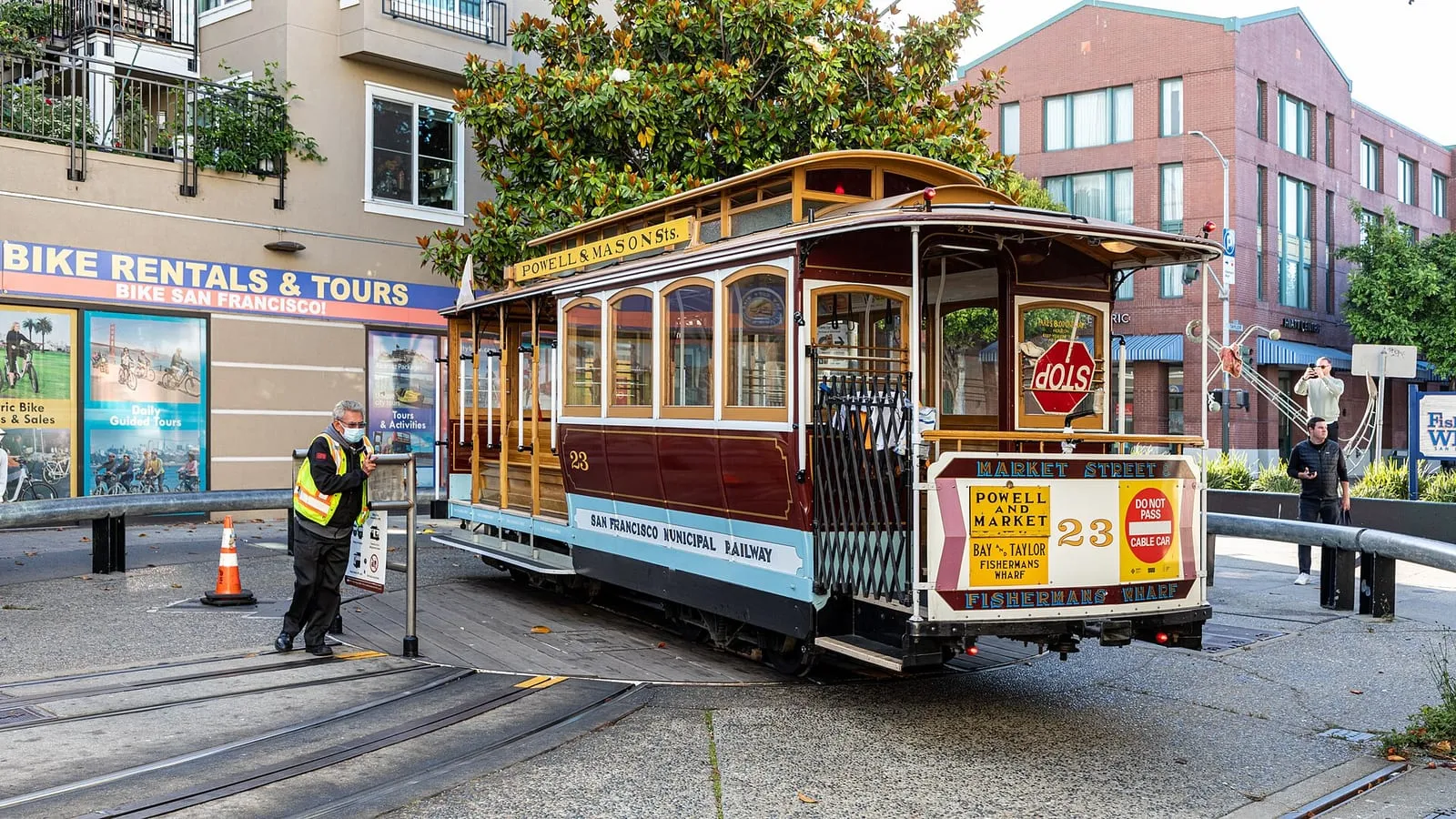 Powell-Mason cable car No. 23 on the wooden turntable near Fisherman’s Wharf. Photo: Dietmar Rabich, Wikimedia Commons, CC BY-SA 4.0.
Museums, sights and booking friction
San Francisco is the stronger museum and monument city, with higher ticket prices and stricter capacity caps. Alcatraz Island ($47.95 day, $59.65 night) must be booked four to eight weeks ahead exclusively through Alcatraz City Cruises (alcatrazcruises.com), as third-party bay cruises circle offshore without docking. Art and science highlights include SFMOMA ($30, closed Wednesdays), the California Academy of Sciences ($49 to $59), the waterfront Exploratorium ($39.95 at Pier 15) and the de Young and Legion of Honor ($20 to $25 for same-day dual admission; closed Mondays; free first Tuesday of each month). San Francisco CityPASS (from $89.95) cuts costs sharply if you combine Cal Academy, a bay cruise, SFMOMA and the Exploratorium.
Miami has a smaller but distinctive museum line-up: bayfront Vizcaya Museum and Gardens ($32 online, closed Tuesdays), Frost Science (from $29.95, date-variable), Pérez Art Museum Miami (from $18, closed Tuesdays and Wednesdays) and free timed entry at ICA Miami (closed Mondays and Tuesdays). Overall booking pressure is lighter than Alcatraz—except during Art Basel Miami Beach (4 to 6 December 2026) and Christmas, when hotel rates double or triple.
Costs, taxes and bill surcharges: two expensive cities with different traps
Excluding flights and hotels, realistic daily spending is almost identical: $65 to $110 on a budget and $140 to $230–$240 mid-range in both cities (money in San Francisco, money in Miami). The difference lies in how surcharges stack onto the receipt:
- San Francisco: Retail and dining add 8.625% sales tax (CDTFA). Many sit-down restaurants also add a 4% to 6% SF Mandate / Healthy SF health-care surcharge (an employer cost, not a tip) before tax and an 18% to 20% tip or automatic service charge. Hotels add 14% TOT plus Tourism Improvement District and Moscone Expansion District assessments (roughly 16.31% to 17.50% combined), plus nightly urban fees ($25 to $50) and $50 to $75 overnight parking.
- Miami: Retail adds 7% tax; dining adds 8% on the mainland or 9% on Miami Beach, and many Miami Beach restaurants and bars automatically add an 18% to 20% service charge even for solo diners—always check the receipt so you do not tip twice. Hotels add 13% tax in mainland Miami or 14% in Miami Beach, plus mandatory $34 to $82 nightly resort fees and $54 to $75 valet parking.
In both cities, major Moscone Center tech conventions (San Francisco) and Art Basel or spring break (Miami) drive sudden hotel spikes; compare transparent totals in SF hotels without resort fees and Miami hotels without resort fees.
Food, nightlife and drinking rules
San Francisco leads on sheer Michelin depth and neighbourhood culinary range (where to eat in San Francisco). Four dining rooms hold Three Michelin Stars (Californios, Benu, Atelier Crenn and Quince), joined by Two-Star Lazy Bear, Saison and Kiln, critic favourites 7 Adams, State Bird Provisions, Mister Jiu’s, Dalida and Zuni Cafe, cash-only Swan Oyster Depot for Dungeness crab, and under-$20 Chinatown dim sum and Mission burritos (cheap eats in San Francisco). Nightlife skews toward indoor-view skyline lounges (Starlite, Top of the Mark) built for cool foggy nights and craft cocktail dens (Smuggler’s Cove, Trick Dog), with a strict California 2:00 AM last-call law (bars and rooftops in San Francisco).
Miami pairs Michelin Guide Florida stars—Two-Star L’Atelier de Joel Robuchon and One-Star Boia De, Ariete and Tambourine Room—with Cuban ventanitas pouring $1.50 to $2.50 cafecitos, Bib Gourmand Cuban sandwiches at Sanguich de Miami and seasonal stone crab at Joe’s Stone Crab (15 October to 1 May; see where to eat in Miami, Cuban food in Miami). Nightlife runs later and warmer, from 40th-floor Sugar in Brickell and Broken Shaker’s garden patio to live Cuban bands at Cafe La Trova (bars and rooftops in Miami). Both cities enforce the US 21+ drinking age strictly—international visitors must carry a physical passport (phone photos are refused).
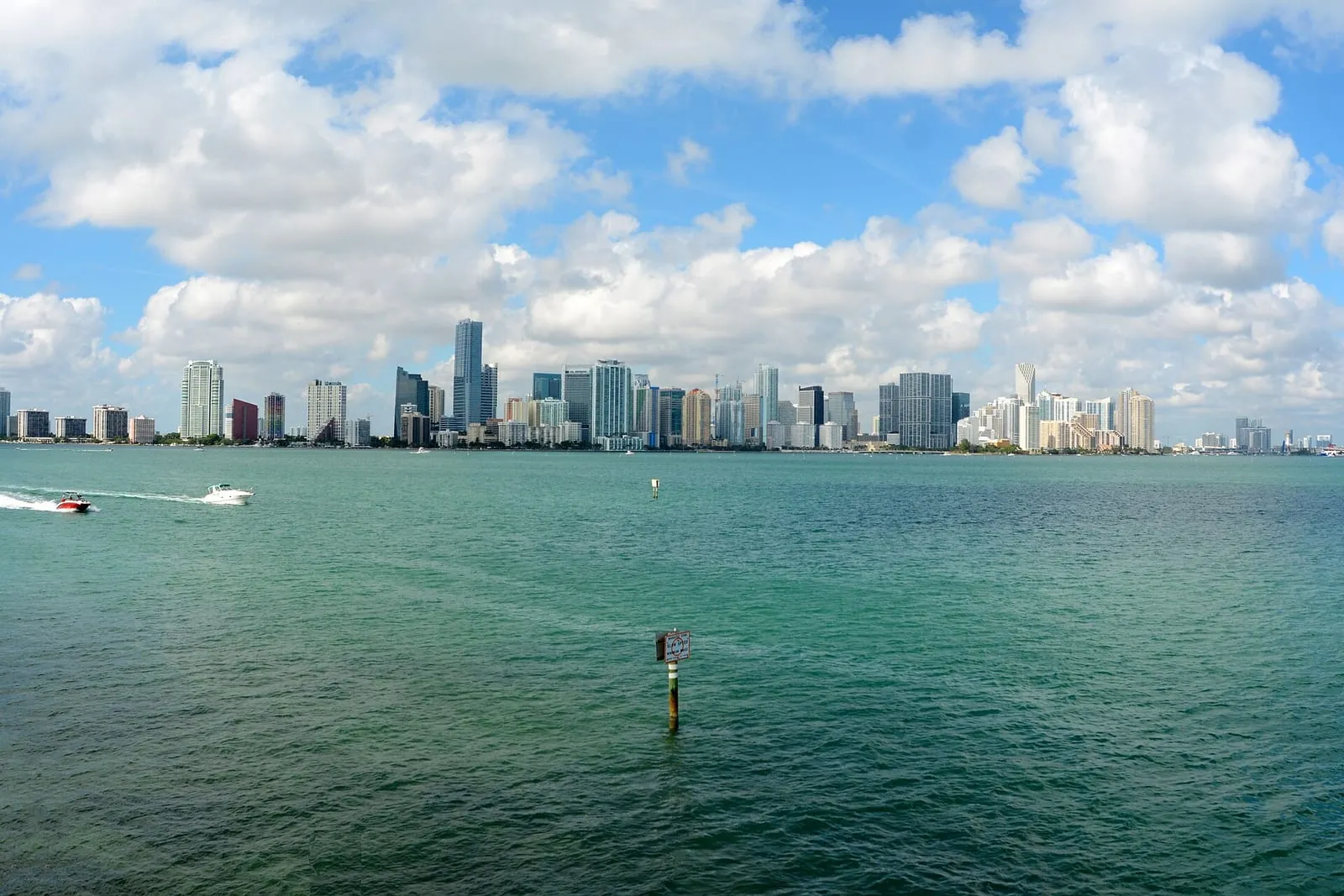 Downtown Miami and Brickell rising behind Biscayne Bay. Photo: Don Ramey Logan, Wikimedia Commons, CC BY 4.0.
Day trips and street safety
From San Francisco, day trips from San Francisco cover six distinct Northern California landscapes: Muir Woods and Sausalito (redwoods plus $8.50 Golden Gate Ferry), Napa Valley and Sonoma wine country, Silicon Valley by Caltrain ($8.50), Monterey and Carmel along Highway 1, and Yosemite National Park (14 to 15 hours round-trip). From Miami, day trips from Miami lean tropical and coastal: Key Biscayne, Fort Lauderdale in 33 to 38 minutes on Brightline (from $15), Everglades National Park and US-41 airboat tours, Key Largo reef snorkelling and Key West (14 to 16 hours round-trip).
On safety, each city has one standout visitor trap. In San Francisco, smashed rental-car windows (“bipping”) at viewpoints like Fisherman’s Wharf, Alamo Square and Twin Peaks are the primary risk—leave nothing in a parked car, even in the locked boot, and avoid the Tenderloin after dark (is San Francisco safe?). In Miami, visitor zones are straightforward by day; watch Atlantic rip-current flags, March spring-break curfews on South Beach and late-night causeway traffic (is Miami safe?).
Where to stay in each city
- San Francisco: Stay near Union Square for direct $11.80 BART access from SFO and cable car lines, or Fisherman’s Wharf for flat waterfront walks to Pier 33 Alcatraz ferries and bay cruises. Compare all areas and total tax/fee costs in where to stay in San Francisco and cheap hotels in San Francisco.
- Miami: Stay in South Beach for Atlantic sand, Art Deco walking and free trolleys, or Downtown and Brickell for direct $2.25 Metrorail access from MIA, free Metromover rides and 13% rather than 14% hotel tax. Compare full totals in where to stay in Miami and cheap hotels in Miami.
For full booking tables and itineraries, see our San Francisco travel guide and Miami travel guide, or compare more US and warm-weather pairings in Miami vs Rio de Janeiro, food city breaks and best cities for boat tours.
Common questions
Is San Francisco or Miami better for weather?
They flip by season. Between mid-November and April, Miami is in its dry winter-sun window (24 to 28°C, swimmable 22 to 24°C Atlantic water) while San Francisco receives roughly 80% of its annual rain (14.3°C average January high). From June to November, Miami enters Atlantic hurricane season with 32°C+ heat and afternoon storms, whereas San Francisco is dry, hitting its warmest, clearest weather in September (21.2°C) and October (21.0°C) after a foggy, 19.1°C July.
Which city is more expensive: San Francisco or Miami?
Both are expensive US dollar cities where sticker prices understate the final receipt. San Francisco adds 8.625% sales tax, routine 4% to 6% SF Mandate restaurant surcharges (not a tip) and 14% municipal hotel tax plus district assessments (roughly 16.31% to 17.50% combined) plus urban fees. Miami adds 7% retail tax (8% mainland / 9% Miami Beach dining), 13% mainland or 14% Miami Beach hotel tax, mandatory $34 to $82 nightly resort fees at many hotels, and automatic 18% to 20% service charges on many Miami Beach bills.
Which city is easier to get around without a rental car?
San Francisco has broader rail and bus coverage: SFO connects straight to downtown on BART ($11.80, 30 minutes), Muni buses, Metro trains and historic F-line streetcars cost $2.85, and a $15 1-Day Muni Visitor Passport covers cable cars too. Miami wins on free central loops—Downtown's elevated Metromover and the Miami Beach Citywide Trolley cost nothing, and the MIA Route 150 Airport Express bus is $2.25 ($2.75 from 1 January 2027)—though cross-bay trips rely on buses or rideshares.
What do you need to book furthest ahead in San Francisco vs Miami?
In San Francisco, Alcatraz Island landing ferries ($47.95 adult day tour via Alcatraz City Cruises at alcatrazcruises.com) sell out 4 to 8 weeks ahead, and Muir Woods requires mandatory advance parking ($10) or shuttle reservations at gomuirwoods.com. In Miami, Art Basel Miami Beach (4 to 6 December 2026) and Christmas hotels sell out months ahead, while Vizcaya Museum ($32, closed Tuesdays) and Frost Science (from $29.95) reward online timed booking before you fly.
Which city has better day trips: San Francisco or Miami?
San Francisco offers greater landscape variety: Muir Woods old-growth redwoods and Sausalito (40 to 50 minutes), Napa Valley and Sonoma wine country (60 to 90 minutes), Silicon Valley by Caltrain ($8.50), Monterey and Carmel along Highway 1 (2 to 2.5 hours) and Yosemite National Park (3.5 to 4.5 hours). Miami pairs warm-water coral reef snorkelling in Key Largo (90 minutes) and Key West (3.5 to 4 hours) with Everglades National Park wetlands (50 to 70 minutes) and Fort Lauderdale by Brightline train (33 to 38 minutes).
Do San Francisco and Miami have the same US entry rules?
Yes. Both cities follow federal US Customs and Border Protection rules: UK, Australian and Visa Waiver Program EU citizens (including Ireland) need an approved ESTA ($40.62 at esta.cbp.dhs.gov) before boarding for stays up to 90 days, Canadian citizens are visa-exempt for short tourist visits, and US citizens travel on a valid US passport or REAL ID.