In this guide
💡 The Short Version: Rio de Janeiro sits in the Southern Hemisphere, so summer runs from December to March (daytime highs of 30°C to 32°C, high humidity, heavy downpours, Carnival and peak hotel prices) and winter runs from June to August (highs around 26°C, the driest months of the year and the best chance of clear views at Christ the Redeemer). For warm beach weather without peak heat or event prices, aim for the shoulder months of April to May or September to November. Carnival 2027: the top-tier schools parade on 7, 8 and 9 February, with tickets sold by LIESA through Ticketmaster. For Carnival or Réveillon (31 December), book Zona Sul accommodation early.
Month-by-month weather, crowds and prices
Summer rain usually arrives as intense late-afternoon storms rather than all-day drizzle, while winter brings clearer, drier days. Temperatures and rainfall below are the long-term averages from Brazil’s national weather institute, INMET, as published on Wikipedia.
| Month | Average high / low (°C) | Average rain (mm) | What to expect |
|---|---|---|---|
| January | 31.5 / 24.1 | 137 | Peak summer heat, pre-Carnival blocos, packed beaches |
| February | 32.2 / 24.4 | 130 | Hottest month; Carnival falls in February or early March |
| March | 31.2 / 24.0 | 136 | Heavy afternoon downpours, warm sea |
| April | 30.0 / 23.0 | 95 | Rain eases, quieter beaches outside Easter week |
| May | 27.8 / 20.7 | 70 | Comfortable afternoons, lower rainfall |
| June | 26.7 / 19.3 | 43 | Start of the dry season; Festa Junina street parties |
| July | 26.4 / 18.7 | 42 | Driest month; clear skies for hiking Tijuca |
| August | 27.0 / 19.1 | 45 | Dry, clear sunset skies over Ipanema |
| September | 26.7 / 19.6 | 54 | Spring warming |
| October | 28.2 / 21.1 | 87 | Warm beach days return, occasional spring showers |
| November | 29.4 / 22.3 | 98 | Heating up towards summer |
| December | 30.3 / 23.2 | 134 | Summer storms begin; Réveillon crowds from 28 December to 2 January |
The three seasons explained
Summer (December to March): hot, loud and expensive
Summer is Rio at maximum volume. Average highs sit at 30°C to 32°C with high humidity, and beaches stay full until sunset. The trade-offs are afternoon tropical storms (which can shroud Christ the Redeemer in low cloud), crowded beachfronts and the highest accommodation prices around Réveillon, January school holidays and Carnival.
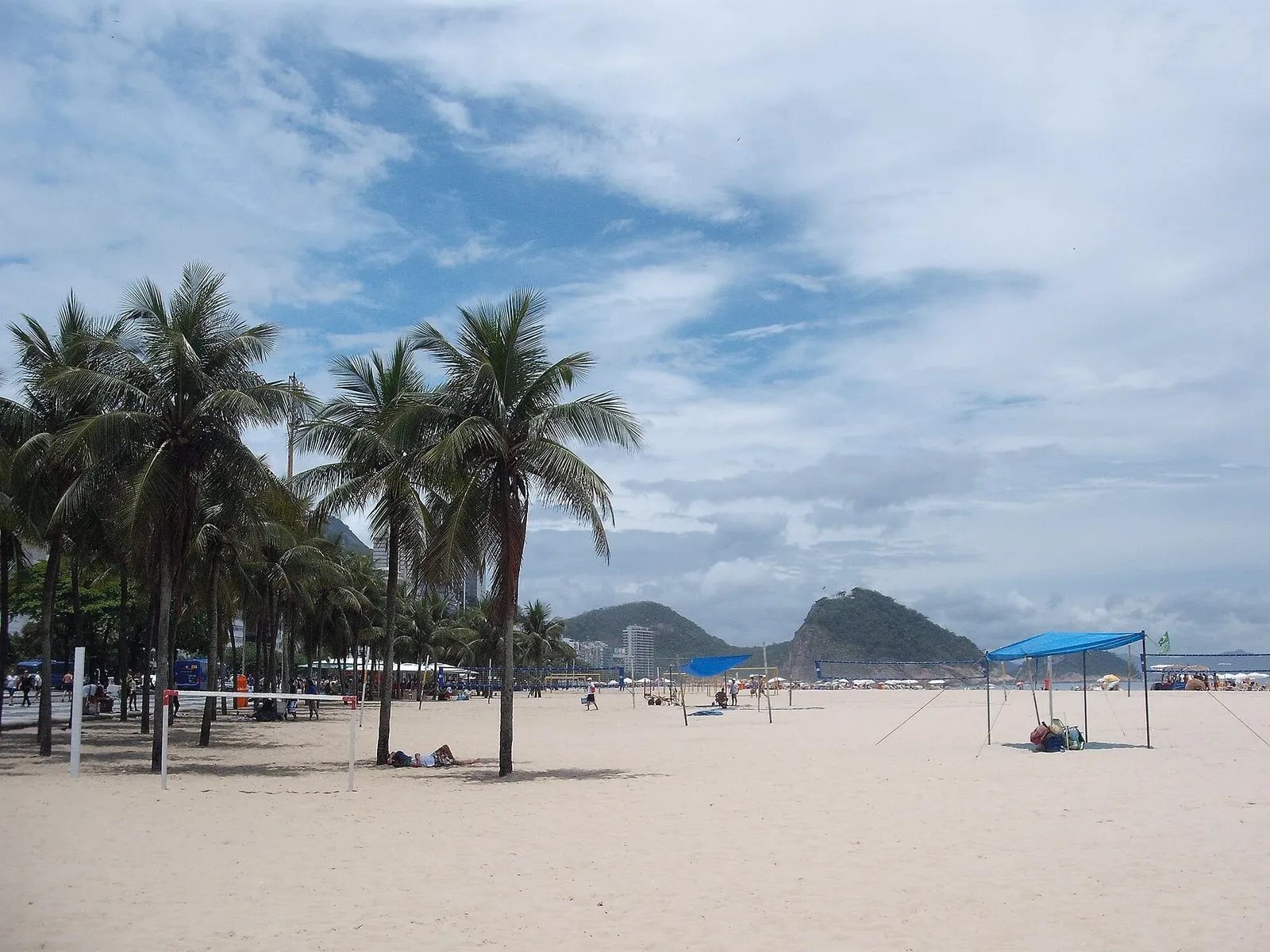
Copacabana Beach under summer skies. Photo: Yas.Iwamoto, Wikimedia Commons, CC BY 3.0.
Shoulder seasons (April to May and September to November): the balanced window
If you want beach afternoons, clear hiking weather in Tijuca National Park and ordinary hotel prices, April, May, September, October and early November strike a balance. Rain drops sharply compared with January and March, and queues at the Corcovado cog train and Sugarloaf cable car are shorter outside holidays.
Winter (June to August): driest skies and cool evenings
Winter in Rio is mild by European or North American standards: afternoons average around 26°C to 27°C and nights around 19°C, though passing cold fronts (frentes frias) can bring two or three overcast, breezy days in a row. June, July and August are the driest months of the year, so they give the best chance of cloud-free views from Christ the Redeemer and Sugarloaf.
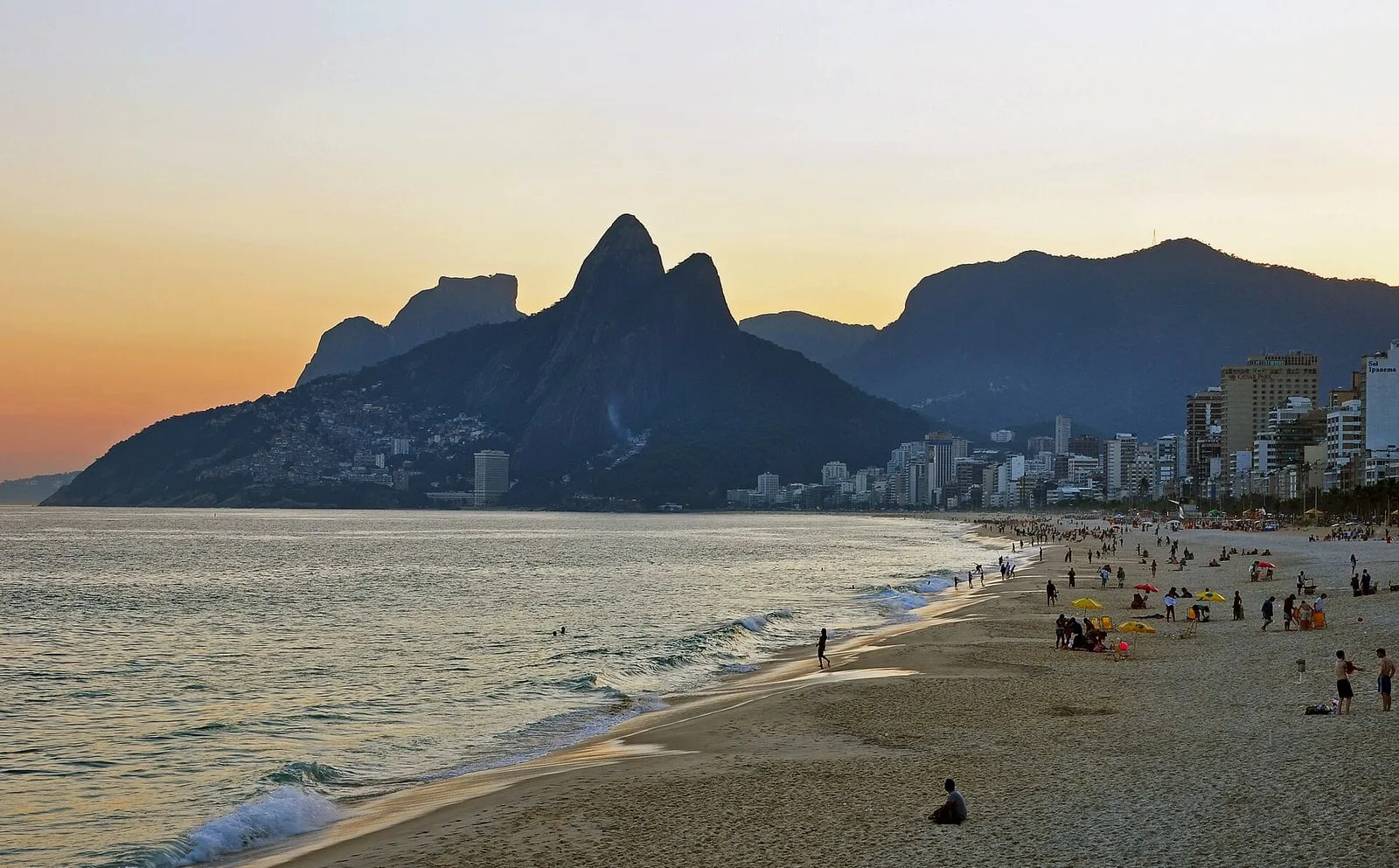
Clear dry-season sunset over Ipanema and Morro Dois Irmãos. Photo: chensiyuan, Wikimedia Commons, CC BY-SA 4.0.
Planning for Rio Carnival
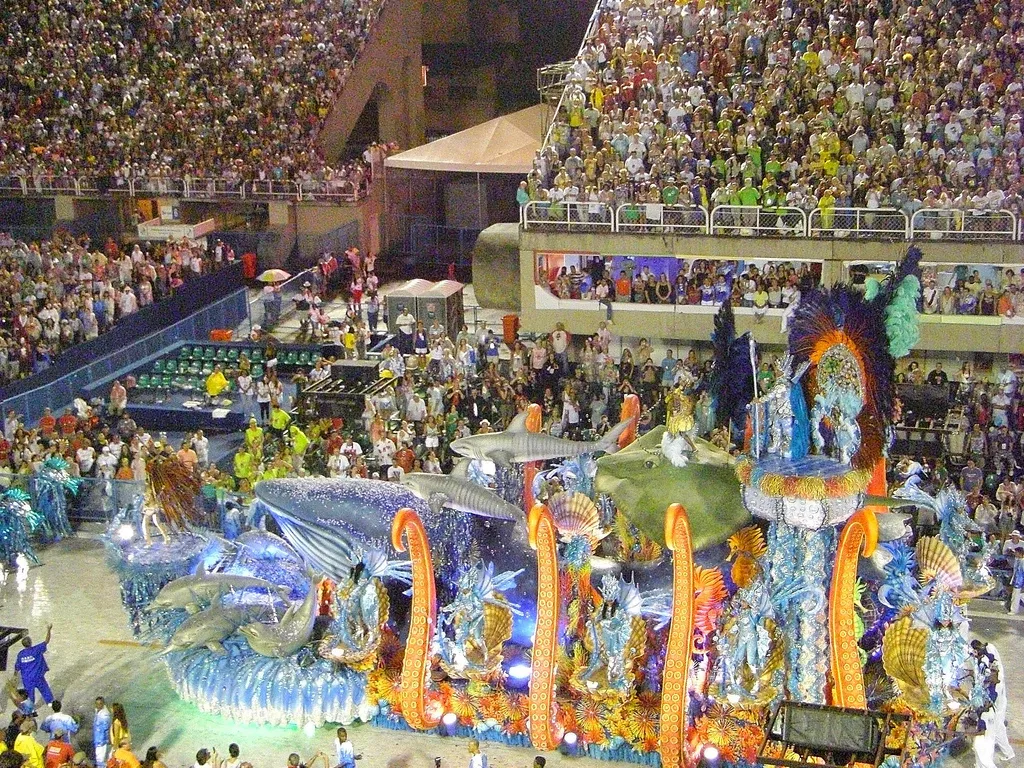
In 2027, Carnival Sunday is 7 February and Ash Wednesday 10 February. The top-tier schools (Grupo Especial) parade on Sunday 7, Monday 8 and Tuesday 9 February, and the six best-placed schools parade again on Saturday 13 February. Street parties start weeks earlier.
Carnival splits into two distinct experiences:
1. The Sambadrome parades (Sambódromo da Marquês de Sapucaí)
The Grupo Especial schools parade down the Sambódromo on the three nights above. Buy only from the official seller: LIESA, the league of samba schools, sells tickets through Ticketmaster. Resale prices are not quoted here.
| Ticket | Official price per night | Notes |
|---|---|---|
| Arquibancada especial (grandstand), sectors 2 to 11 except 9 | BRL 250 full, BRL 125 half | Half price for students, people with disabilities, over-60s and eligible low-income young people. Up to two tickets per ID per parade night, and only one half-price ticket per ID in total |
| Frisa (trackside box for up to six) | BRL 1,835 to BRL 10,200 | Price depends on how close the box is to the track; one box per ID |
| Popular grandstands, sectors 12 and 13 (Praça da Apoteose) | Announced by LIESA | Contact LIESA on +55 21 3190-2100 |
The three-night Passaporte Rio Carnaval (BRL 499) and the Ingresso Sambista have sold out. LIESA has run several sales rounds, and cancelled orders return to sale after each review, so keep checking its official channels.
- Champions’ Parade (Desfile das Campeãs): The top six schools parade again on Saturday 13 February; its tickets are in the same sales.
- Getting there: Take MetrôRio to Praça Onze or Central do Brasil, the stations either side of the Sambódromo. Do not drive; roads around Sapucaí close.
2. Free street blocos
Free neighbourhood street parades (blocos de rua) march across Centro, Santa Teresa, Flamengo, Botafogo, Copacabana and Ipanema. Giant megablocos like Cordão da Bola Preta (Centro) draw hundreds of thousands, while hillside blocos in Santa Teresa feel smaller.
- Carnival street rules: Wear light clothes and closed trainers or secure sandals, and carry only one contactless card, a little cash and your phone in a front pocket. Pickpocketing is a risk in packed blocos; read is Rio de Janeiro safe? before heading out.
- Hotels: Zona Sul hotels fill early and raise rates over Carnival, so book refundable rooms as soon as your dates are fixed (see where to stay in Rio de Janeiro).
Planning for Réveillon (New Year’s Eve, 31 December)
On 31 December, crowds dressed in white (a symbol of peace and renewal, linked to Afro-Brazilian offerings to Iemanjá) pack Copacabana Beach for free live music stages and a midnight fireworks show launched from offshore barges.
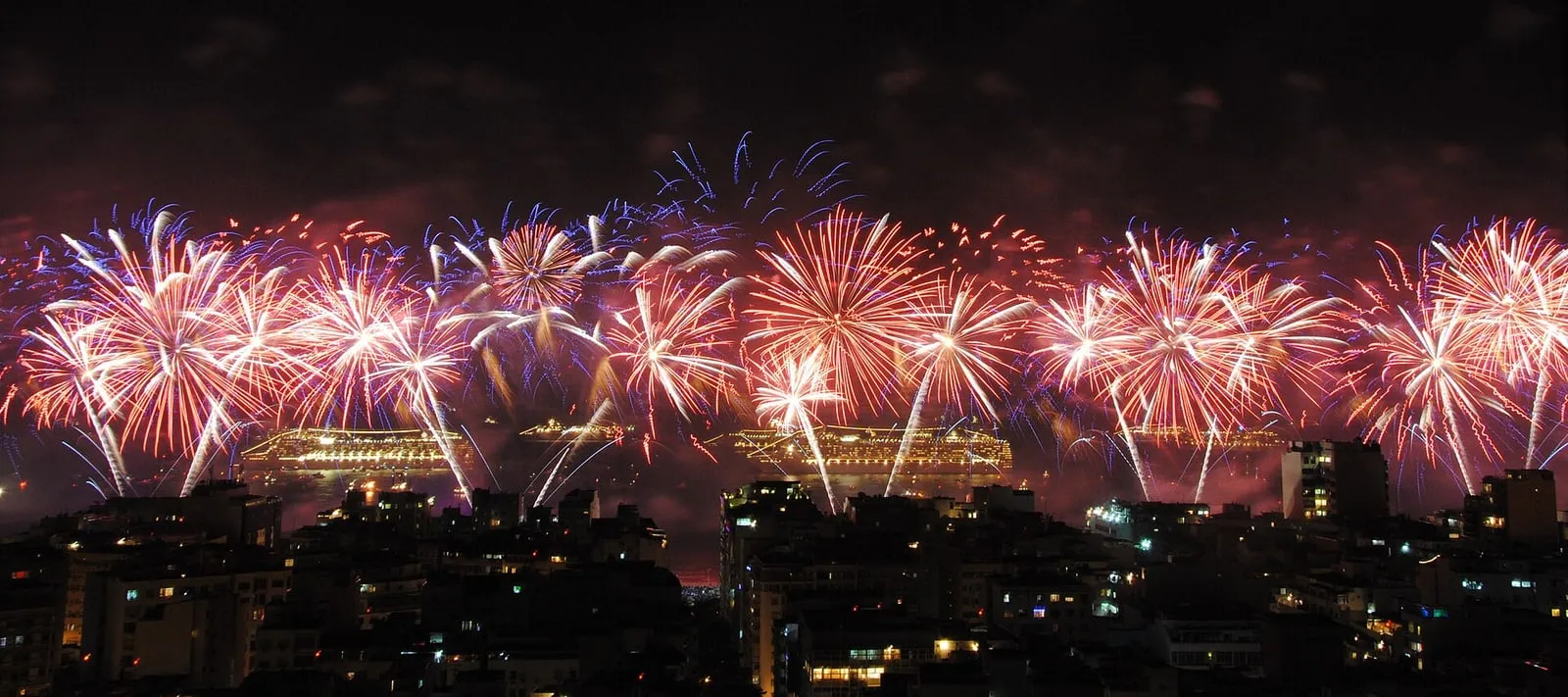
Midnight fireworks over Copacabana Beach during Réveillon. Photo: Leandro Neumann Ciuffo, Wikimedia Commons, CC BY 2.0.
- MetrôRio special pass: For New Year’s Eve 2025 MetrôRio ran a special operation from 19:00 on 31 December to 05:00, with a BRL 15 return passport sold online only from 15 December; it sold out, and ordinary cards were not accepted at the gates. Check metrorio.com.br in December for the 2026 arrangements.
- Road closures: Streets around Copacabana close to cars, so staying within walking distance of Copacabana or Ipanema saves a long walk back after midnight.
- What to bring: Leave valuables in your hotel safe and wear white clothes you do not mind getting sandy.
For budgeting across peak and shoulder months, see money in Rio de Janeiro. To build your daily schedule around the season, read 3 days in Rio de Janeiro, 4 days in Rio de Janeiro and the Rio de Janeiro city hub.
Common questions
When is the weather easiest in Rio de Janeiro?
April, May, September and October bring daytime highs of 27°C to 30°C with less rain than midsummer. June to August is the driest period, with the best chance of clear skies for Christ the Redeemer and Sugarloaf, though nights cool to about 19°C.
When is Rio Carnival and how far ahead should I book?
In 2027 the Grupo Especial schools parade at the Sambódromo on Sunday 7, Monday 8 and Tuesday 9 February, and the top six return on Saturday 13 February. LIESA, the samba schools' league, sells tickets through Ticketmaster and has already released several batches, so check its channels now and book Zona Sul hotels early.
Can you swim at Rio beaches in winter (June to August)?
Yes. Winter afternoons still reach about 26°C on sunny days. Locals find it cool, but visitors from cooler climates regularly sunbathe and swim at Copacabana and Ipanema.
What is Réveillon on Copacabana Beach?
Réveillon is Rio's New Year's Eve celebration on 31 December, when crowds dressed in white gather on Copacabana beach for free live concerts and a midnight fireworks show. MetrôRio has run a special pre-bought passport for the night, and ordinary cards did not work at the gates during that operation.