In this guide
💡 The Short Version: Miami’s Atlantic beaches are public and free, but each stretch feels completely different. Pick South Pointe Park (1st St) for wide sand and cruise-ship views, Lummus Park (5th to 15th St) for Art Deco backdrop and people-watching, Mid-Beach (23rd to 46th St) or Surfside (88th to 96th St) for quieter swimming, and Crandon Park on Key Biscayne ($7 weekday / $10 weekend parking) for calm, shallow family water. Always check the Ocean Rescue warning flags before swimming, leave glass and personal alcohol off Miami Beach sand, and expect sargassum seaweed from May to August.
⚠️ Never ignore a Red or Purple flag. Strong onshore winds create dangerous rip currents along Miami Beach even on sunny days, and Portuguese man-of-war (blue floating stinging tentacles) wash in during winter and spring easterly winds under a Purple flag. Swim only in front of a staffed lifeguard tower.
Miami’s main beaches compared
| Beach | Location | Access & parking | Water & crowd level | Suits |
|---|---|---|---|---|
| South Pointe Park Beach | 1st St, South of Fifth (Miami Beach) | Free South Beach Trolley; metered lots/garages | Wide sand, gentle surf, family-friendly | Families, sunset watchers and cruise-ship spotting |
| South Beach / Lummus Park | 5th to 15th St, Ocean Drive | Free Trolley; city garages at 7th, 12th & 13th St | Lively, dense lounger rows ($25 to $45/chair) | First-time visitors pairing sand with Art Deco walks |
| Mid-Beach | 23rd to 46th St, Collins Ave | Free Middle Beach Trolley; municipal lots at 21st & 46th St | Quieter, backed by resort boardwalk | Swimmers wanting space without leaving Miami Beach |
| North Beach & Surfside | 63rd to 96th St | Free North Beach Trolley; lower-cost municipal lots | Uncrowded, residential, wide dunes | Readers wanting calm sand and free shade pavilions |
| Haulover Beach Park | 10800 Collins Ave (north of Bal Harbour) | County lot ($5 to $7 weekdays; $7 to $10 weekends) | Open ocean swell; north end is clothing-optional | Adults seeking Miami-Dade’s legal clothing-optional stretch |
| Crandon Park Beach | Key Biscayne (Rickenbacker Causeway) | $3.25 SunPass toll + $7 Mon–Thu / $10 Fri–Sun parking | Calm, shallow water behind offshore sandbar | Families with children, picnics and kayaking |
| Bill Baggs Cape Florida | Southern tip of Key Biscayne | $3.25 SunPass toll + $8 per vehicle state park entry | Natural dunes, lighthouse backdrop | Full-day beach and park trip (see Key Biscayne day trip) |
Reading Ocean Rescue beach flags and rip currents
Miami Beach Ocean Rescue (miamibeachfl.gov/city-hall/fire/ocean-rescue/) patrols staffed lifeguard towers daily and flies Florida’s five-colour warning system. Note that the absence of flags does not mean safe water when towers are unstaffed (early morning or after dusk).
| Flag colour | Official meaning | What it means for swimmers |
|---|---|---|
| Green | Low hazard | Calm conditions; exercise normal caution |
| Yellow | Medium hazard | Moderate surf and/or currents; stay within chest depth |
| Red | High hazard | High surf and/or strong rip currents; experienced swimmers only, stay close to shore |
| Double Red | Water closed to public | Do not enter the ocean |
| Purple | Dangerous marine life | Jellyfish, Portuguese man-of-war or stingrays reported; stay out or watch the waterline closely |
Spotting and escaping a rip current: Ocean Rescue highlights four visual clues of a rip current: a narrow channel of darker, deeper water between breaking waves; sandy, discoloured water pulled seaward; a line of foam or seaweed moving steadily out past the surf; and choppy water where waves fail to break cleanly. If a current pulls you away from shore, do not swim straight back against it. Swim sideways (parallel to the beach) until the pull stops, then angle back toward shore with the breaking waves.
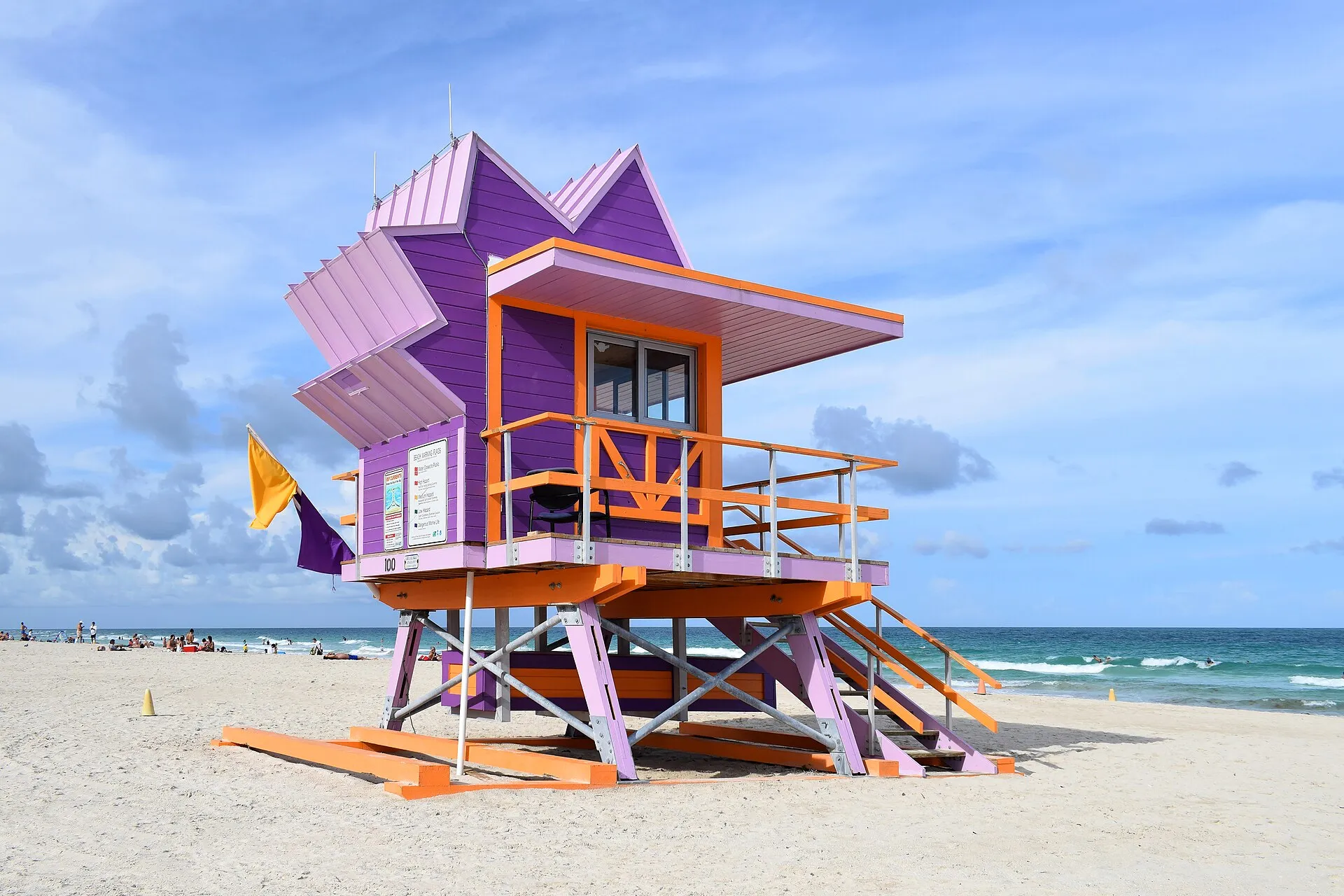
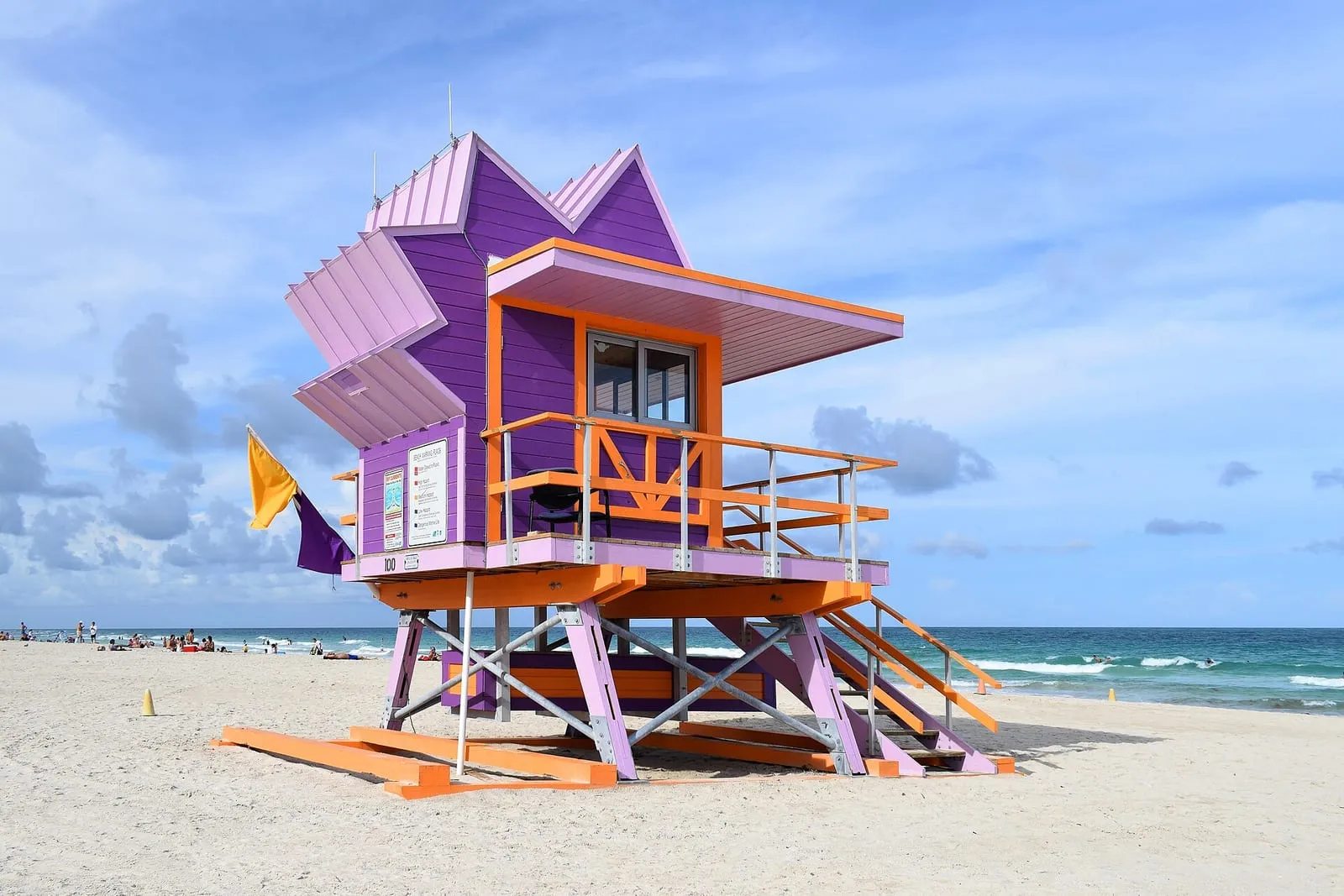
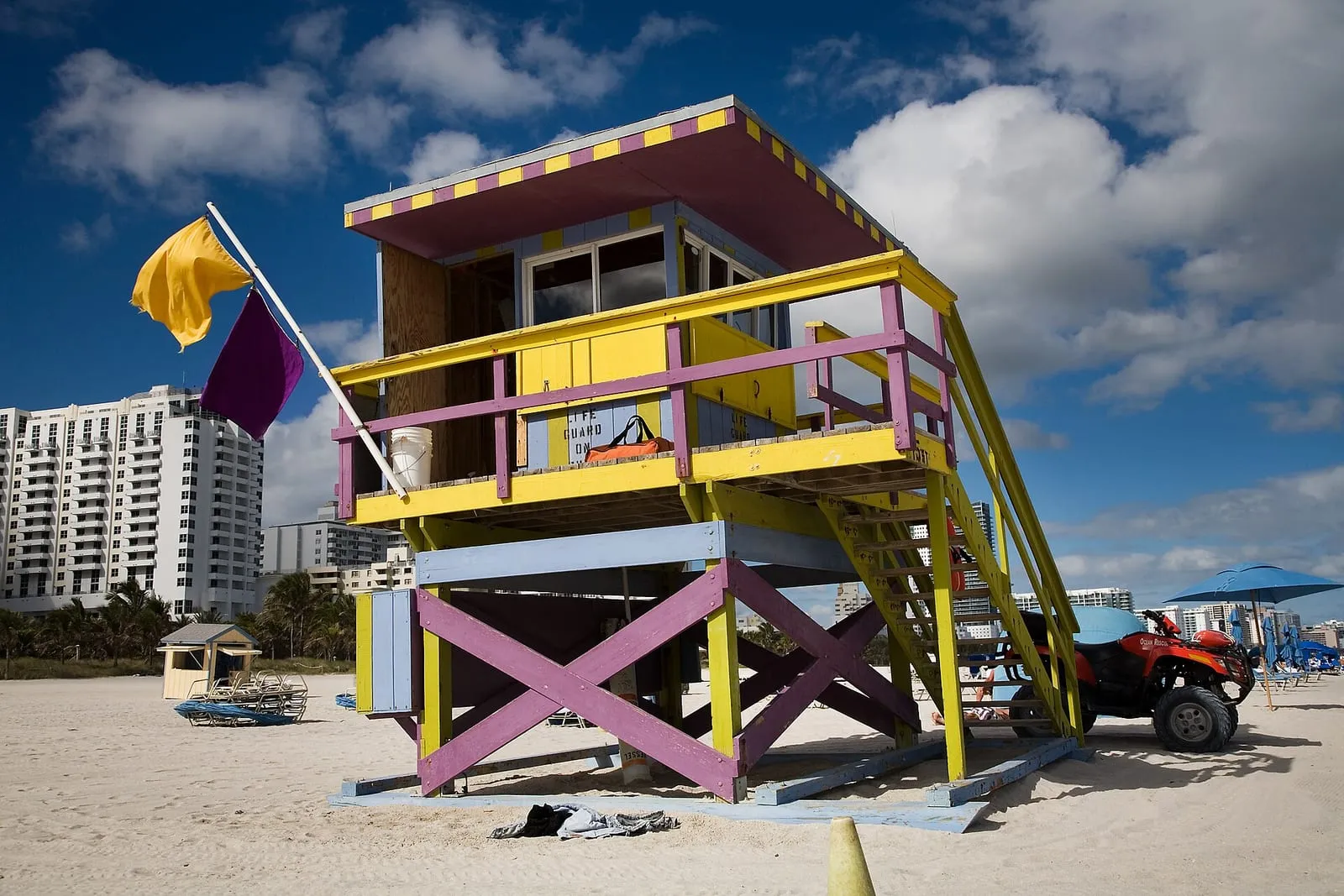 Miami Beach lifeguard stand flying Yellow (moderate surf) and Purple (marine life) warning flags. Photo: Jorge Royan, Wikimedia Commons, CC BY-SA 3.0.
Miami Beach rules vs mainland Miami and Key Biscayne
Visitors often assume all beaches share one rulebook, but Miami Beach is a separate municipality from Miami and Miami-Dade County, with stricter enforcement:
- No glass containers: Strictly banned on all Miami Beach and Miami-Dade County beaches to prevent foot injuries. Fines are steep.
- No personal alcohol on Miami Beach: Bringing your own beer, wine, coolers with alcohol or open containers onto the sand in Miami Beach is illegal and actively patrolled by Miami Beach Police. Only licensed beachfront concessions or permitted hotel beach zones may serve drinks in plastic cups within marked areas.
- Spring break (March): During peak March weekends, the City of Miami Beach imposes heightened police checkpoints, early garage closures, higher flat-rate parking fees and beach access controls around South Beach. Check is Miami safe? and best time to visit Miami if travelling in March.
- Loungers and umbrellas: Every square metre of sand seaward of the vegetation line is public. Hotel beach attendants set up rows of umbrellas and loungers (typically $25 to $45 per chair plus tax and tip for non-guests), but you are legally entitled to lay your own towel on the open sand in front of any hotel.
Sargassum seaweed: what to expect by season
Sargassum is a naturally occurring brown floating algae that drifts from the Atlantic into the Caribbean and South Florida, primarily between April and October (heaviest from May through August). On days with sustained onshore easterly winds, thick mats can pile along the shoreline and release a sulphur smell as they dry in the sun.
- How Miami handles it: Miami-Dade County and Miami Beach crews rake high-traffic stretches (especially South Beach and Mid-Beach) in early mornings during peak arrivals, while leaving some natural wrack on turtle-nesting beaches between 1 May and 31 October.
- Where to go on heavy sargassum days: Check live beach cams before setting out, or head across the Rickenbacker Causeway to Crandon Park or the sheltered west-facing cove inside Bill Baggs Cape Florida State Park, which often remain clearer when open Atlantic strands collect weed.
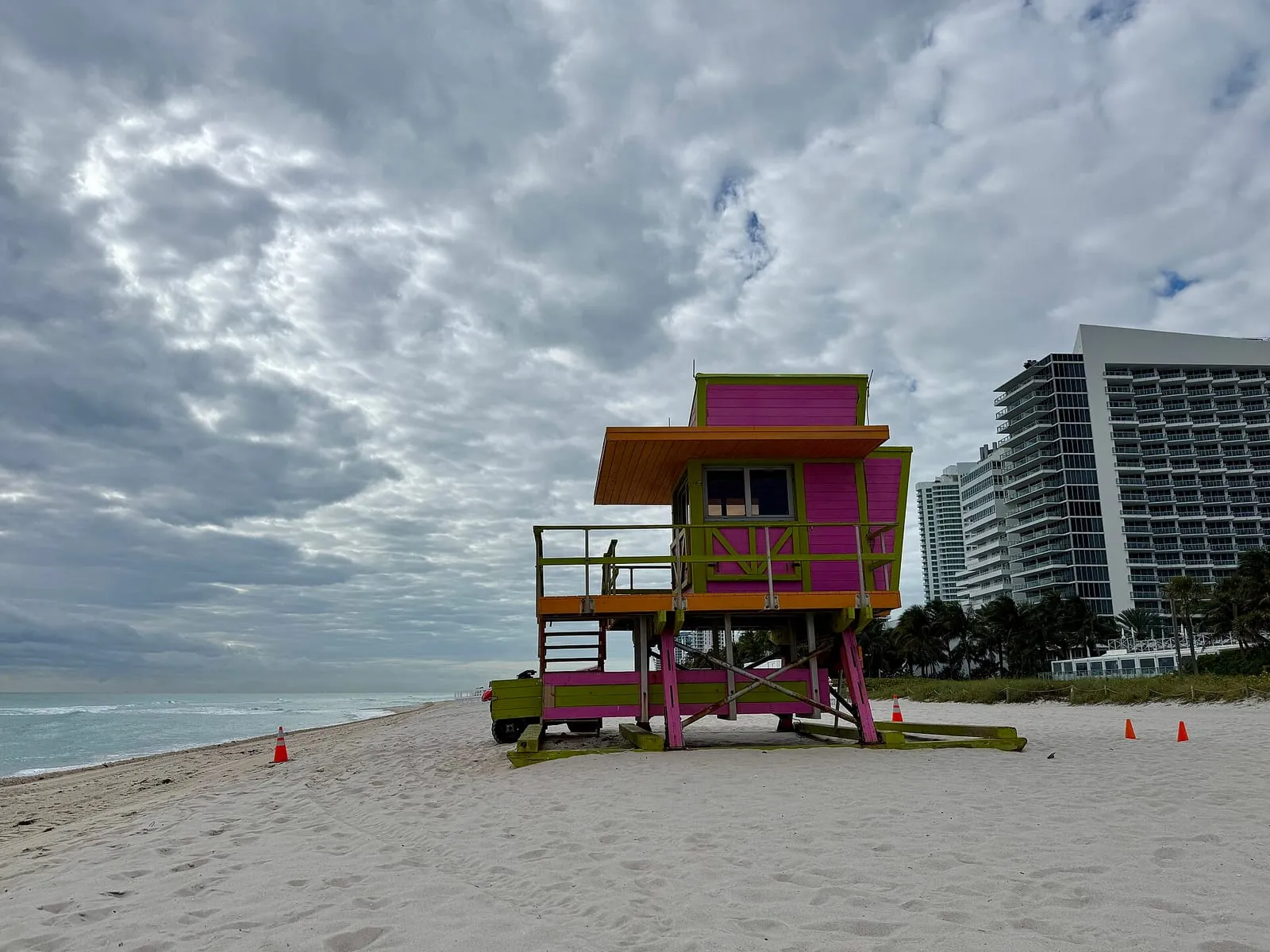 Mid-Beach shoreline and lifeguard tower in Miami Beach. Photo: Dough4872, Wikimedia Commons, CC BY-SA 4.0.
Choosing the right stretch of sand
South Pointe Park and Lummus Park (1st to 15th Streets)
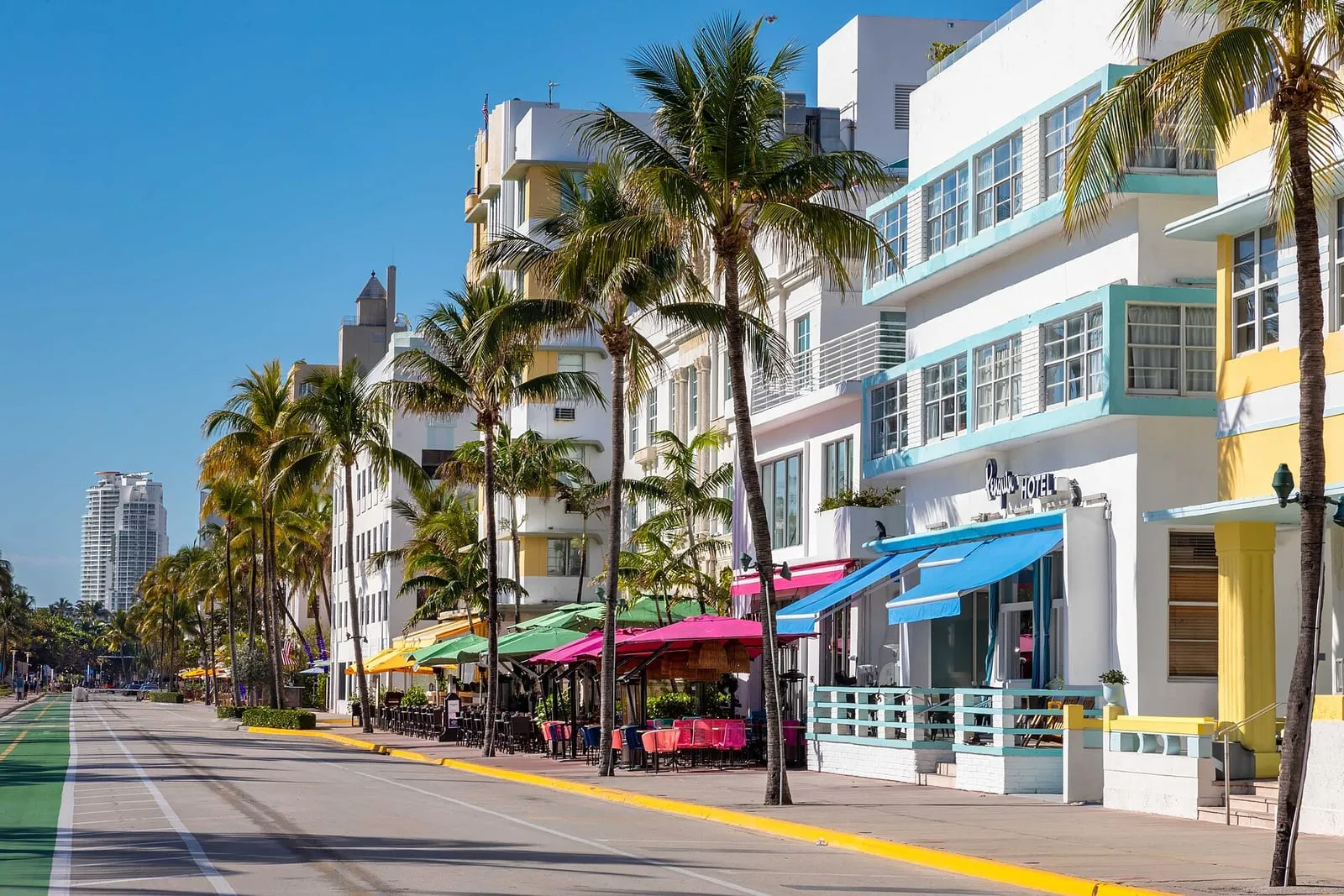
South Pointe Park (1st Street) is the cleanest, widest stretch in South Beach, backed by a grassy park, restrooms, outdoor showers and a pier overlooking Government Cut. Walk north into Lummus Park (5th to 15th Streets) for the classic Art Deco backdrop, beach volleyball courts and William Lane’s brightly painted lifeguard towers. Expect lively crowds and music on weekends.
Mid-Beach and North Beach (23rd to 87th Streets)
Cross Dade Boulevard north of 23rd Street and the density drops immediately. The paved Miami Beachwalk runs behind the dunes all the way past the Fontainebleau and Eden Roc resorts to North Beach Oceanside Park (78th to 87th Streets), where shaded picnic pavilions, sea-grape trees and affordable municipal parking lots make it a local favourite. Reach it free on the Middle Beach and North Beach trolleys.
Crandon Park and Bill Baggs (Key Biscayne)
Drive or take Metrobus Route 26 across the Rickenbacker Causeway ($3.25 SunPass / $6.50 Toll-by-Plate southbound) for Miami’s most palm-lined beaches. Crandon Park ($7 Mon–Thu, $10 Fri–Sun parking plus tax) has a 3-km curving shoreline protected by an offshore sandbar, keeping water knee-deep and calm for young children, plus kayak rentals (Crandon Park Kayak and Paddleboard Rentalad, from $26.75). Further south, Bill Baggs Cape Florida State Park ($8 per vehicle) trades crowds for wild dunes and the 1825 Cape Florida Lighthouse; see our Key Biscayne day trip.
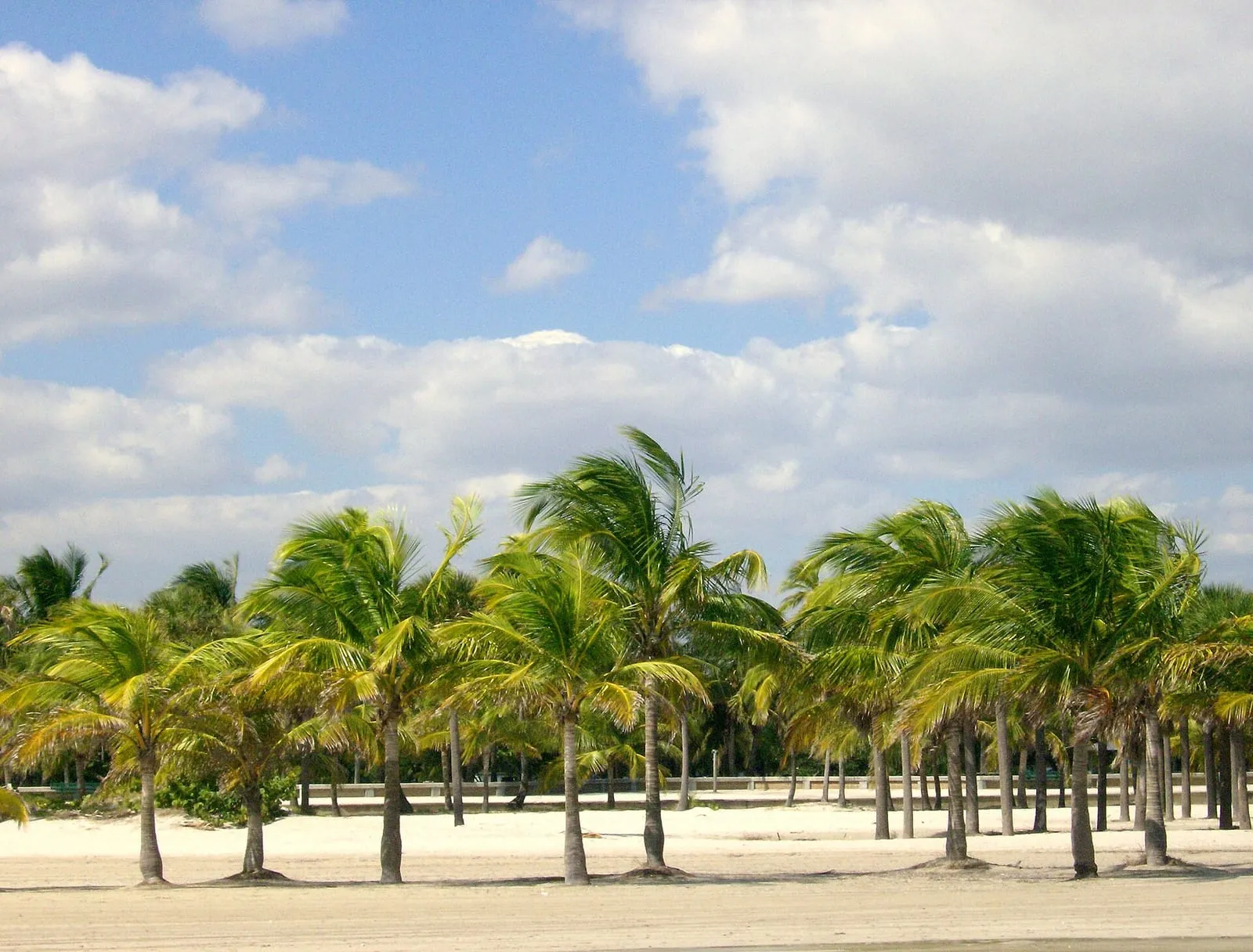 Palm-lined beach at Crandon Park on Key Biscayne. Photo: Paulkondratuk3194 (talk), Wikimedia Commons, CC BY-SA 3.0.
Water temperatures and practical packing
Miami’s Atlantic water stays swimmable all twelve months: roughly 22 to 24 C in January and February, climbing to 29 to 31 C in July and August. Pack reef-safe mineral sunscreen (required in many Florida Keys marine sanctuaries and gentler on coastal reefs), a refillable water bottle, flip-flops for hot midday sand, and a small dry bag if swimming near unguarded stretches. For hotels right on the sand, compare where to stay in South Beach and hotels without resort fees.
Common questions
What do the coloured flags on Miami Beach lifeguard towers mean?
Miami Beach Ocean Rescue flies Florida's statewide flag system when lifeguards are on duty: Green means low hazard (calm conditions); Yellow means medium hazard (moderate surf or currents); Red means high hazard (high surf and strong rip currents); Double Red means the water is closed to the public; and Purple warns of dangerous marine life such as Portuguese man-of-war or jellyfish.
When is sargassum seaweed season in Miami?
Sargassum seaweed washes ashore mainly between April and October, peaking from May through August when easterly winds push floating mats onto Atlantic-facing beaches. Miami-Dade County and Miami Beach rake major stretches in the morning, and bay-facing or Key Biscayne coves often stay clearer.
Are Miami Beach beaches free, and can I bring alcohol or glass?
All public beaches in Miami Beach are free to enter. Glass containers and personal alcohol are strictly banned on Miami Beach sand and enforced by Miami Beach Police with fines. Only licensed beachfront vendors or permitted hotel zones may serve drinks in plastic cups.
Which Miami beach is best for families with young children?
Crandon Park on Key Biscayne has a 3-km sandy shore sheltered by an offshore sandbar that keeps waves calm and shallow, with picnic shelters, showers and lifeguards ($7 weekday / $10 weekend parking plus tax). In Miami Beach, South Pointe Park and Surfside are calmer than Lummus Park.
What should I do if caught in a rip current?
Do not fight the current by swimming straight back toward shore. Miami Beach Ocean Rescue advises swimming parallel (sideways) to the shoreline until you are out of the narrow seaward pull, then letting breaking waves carry you back to the beach.