In this guide
💡 The Short Version: Much of Riga’s sightseeing costs nothing. The free sights are the 1698 Swedish Gate and Jacob’s Barracks, the hourly changing of the guard at the Freedom Monument, the Bastejkalns canal park belt, Mikhail Eisenstein’s Art Nouveau facades on Alberta iela, the five Zeppelin hangars of Central Market, and the free architecture museum inside the Three Brothers. Or book a tour: an Old Town walking tour with a local guidead is sold on GetYourGuide.
⚠️ Free does not cover the Corner House cells. The ground-floor exhibition at the KGB Corner House is free, but the cell tour costs €15 and runs only at set times.
Medieval monuments and Old Town courtyards
The medieval lanes, ramparts and courtyards of Old Riga (Vecrīga) cost nothing to walk:
The Swedish Gate and Jacob’s Barracks
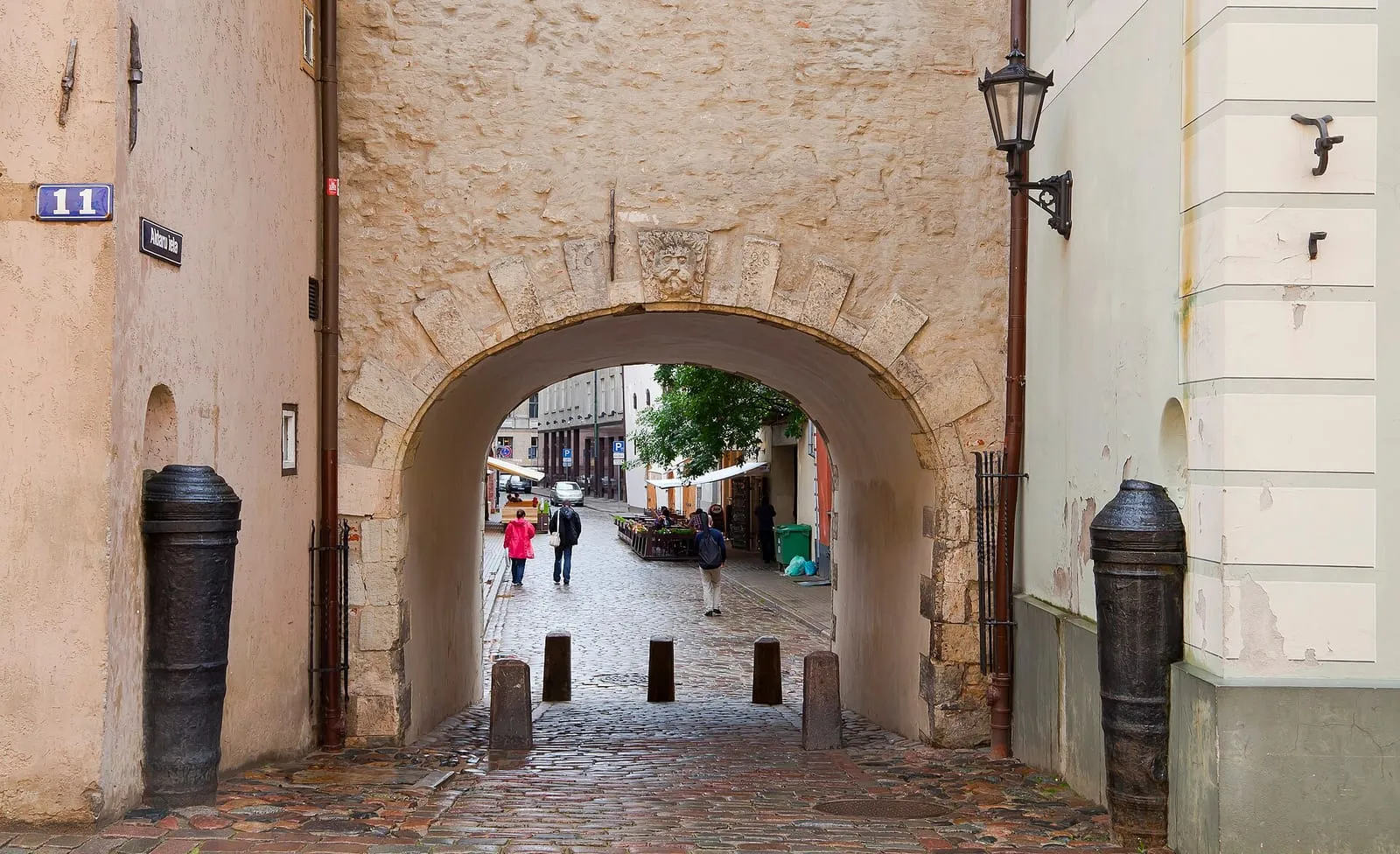
Located along cobblestoned Torņa iela, the Swedish Gate (Zviedru vārti) is the only surviving city gate of medieval Riga:
- History: Built in 1698 under Swedish rule, the gate was made by cutting an arched passage through the ground floor of a merchant townhouse, linking the walled inner city with the garrison outside the walls.
- The legend: A Riga girl who secretly met her Swedish soldier sweetheart outside the gate was caught by the town watch, condemned for treason and, the legend says, walled alive into the archway. Lovers who pass through the gate at midnight are said to hear her whisper “I still love him!”, provided they are truly in love.
- Jacob’s Barracks (Jēkaba kazarmas): The row of yellow 18th-century military barracks along Torņa iela opposite the gate housed Swedish and later Russian garrison troops. Today the arcade holds craft workshops, wine bars and cultural centres.
The Three Brothers courtyard
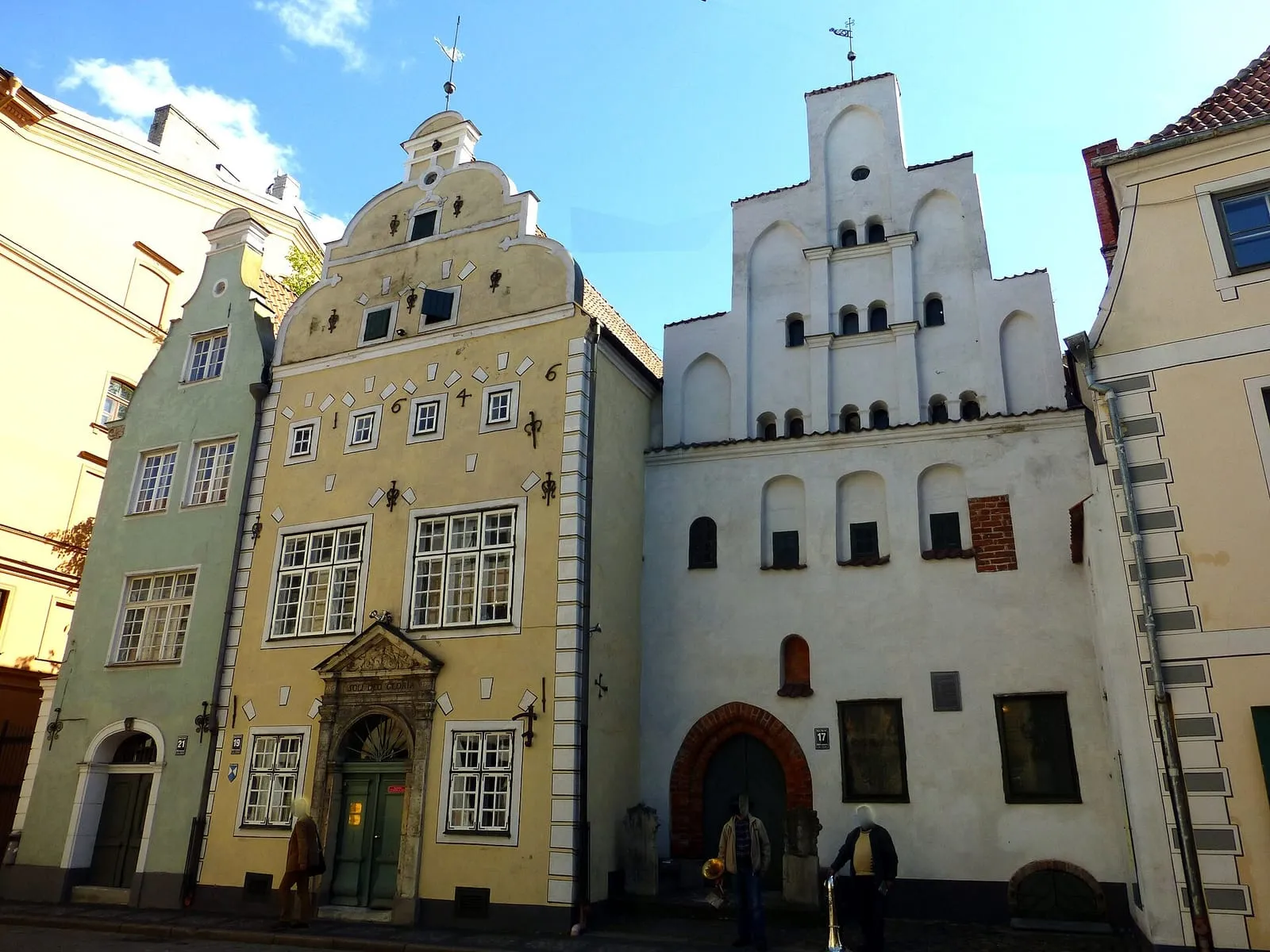
Most of the Three Brothers on Mazā Pils iela is not open to visitors, but Number 19 houses the Latvian Museum of Architecture:
- Free admission: The ground-floor exhibition is free Monday to Friday from 09:00 to 17:00.
- The Lapidarium Courtyard: Go through the corridor into the enclosed rear courtyard for Renaissance stone portals, merchant coats of arms and the 1554 stone arms of Riga.
Town Hall Square and the Roland Statue
Standing in the heart of Town Hall Square, you can see the Dutch Renaissance facade of the House of the Black Heads, the Schwabe House and the granite Statue of Roland, the medieval symbol of judicial independence and free trade, without paying.
Bastion Hill and the City Canal park belt
Riga’s park belt wraps around the Old Town on the site of the former Swedish earthwork ramparts and moats:
Bastejkalns (Bastion Hill)
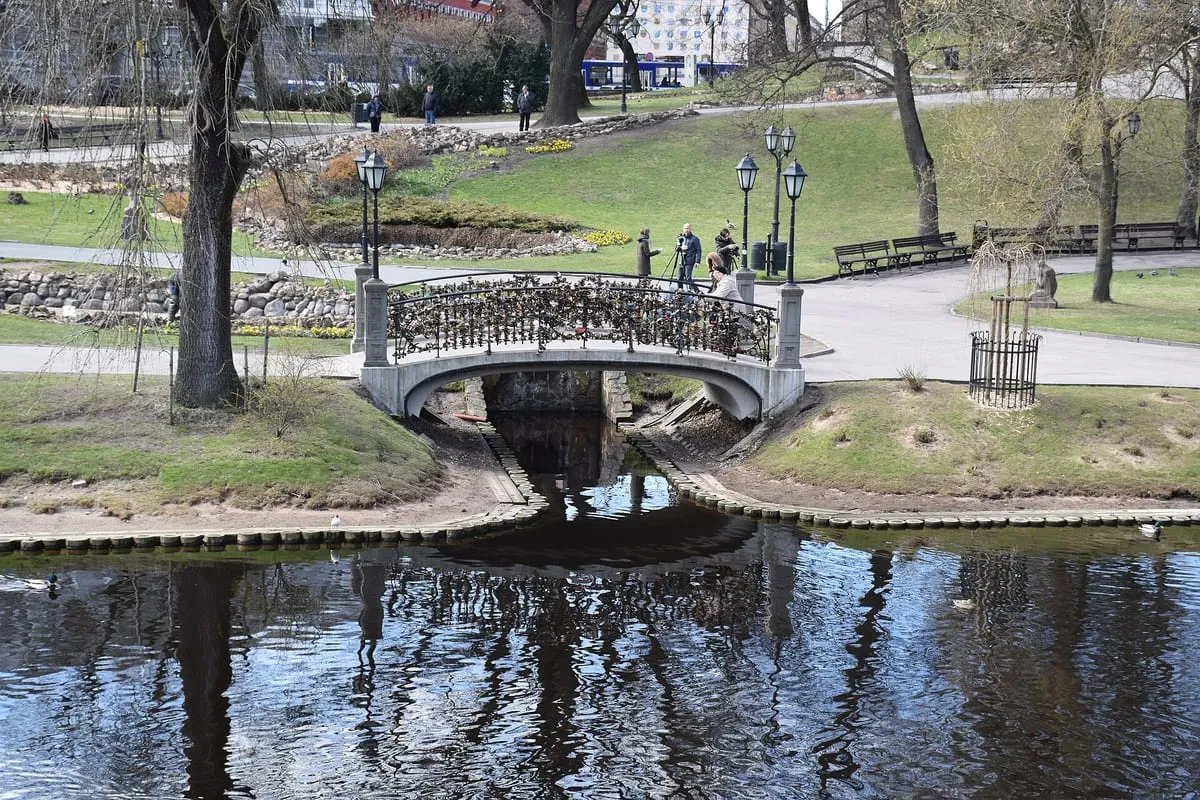
Bastejkalns was made between 1857 and 1863 and redesigned in 1879 by the garden director Georg Kuphaldt as an English-style landscape park:
- Paths and cascades: Gravel paths climb the 15-metre artificial hill past stone rockeries, waterfalls and flowerbeds.
- The love lock bridges: Arched footbridges cross the City Canal (Pilsētas kanāls), where newlyweds fix brass padlocks and throw the keys into the water.
- January 1991 memorial stones: Red granite marker stones near the canal bank honour the five people killed, among them two documentary filmmakers, when Soviet special forces attacked during the 1991 barricades.
The Freedom Monument Guard Change
Standing at the entrance to Bastejkalns on Brīvības bulvāris, the 42.7-metre Freedom Monument (Brīvības piemineklis) is Latvia’s national memorial to its War of Independence:
- Changing of the guard: Soldiers of the Staff Battalion of the National Armed Forces change the guard every hour on the hour between 09:00 and 18:00 daily.
- The 30-minute patrol: Between hourly changes, the sentries march across the granite perimeter every thirty minutes. Watching is free.
Architecture walks in the Quiet Centre and Moscow suburb
Riga’s architecture is free to look at from the pavement.
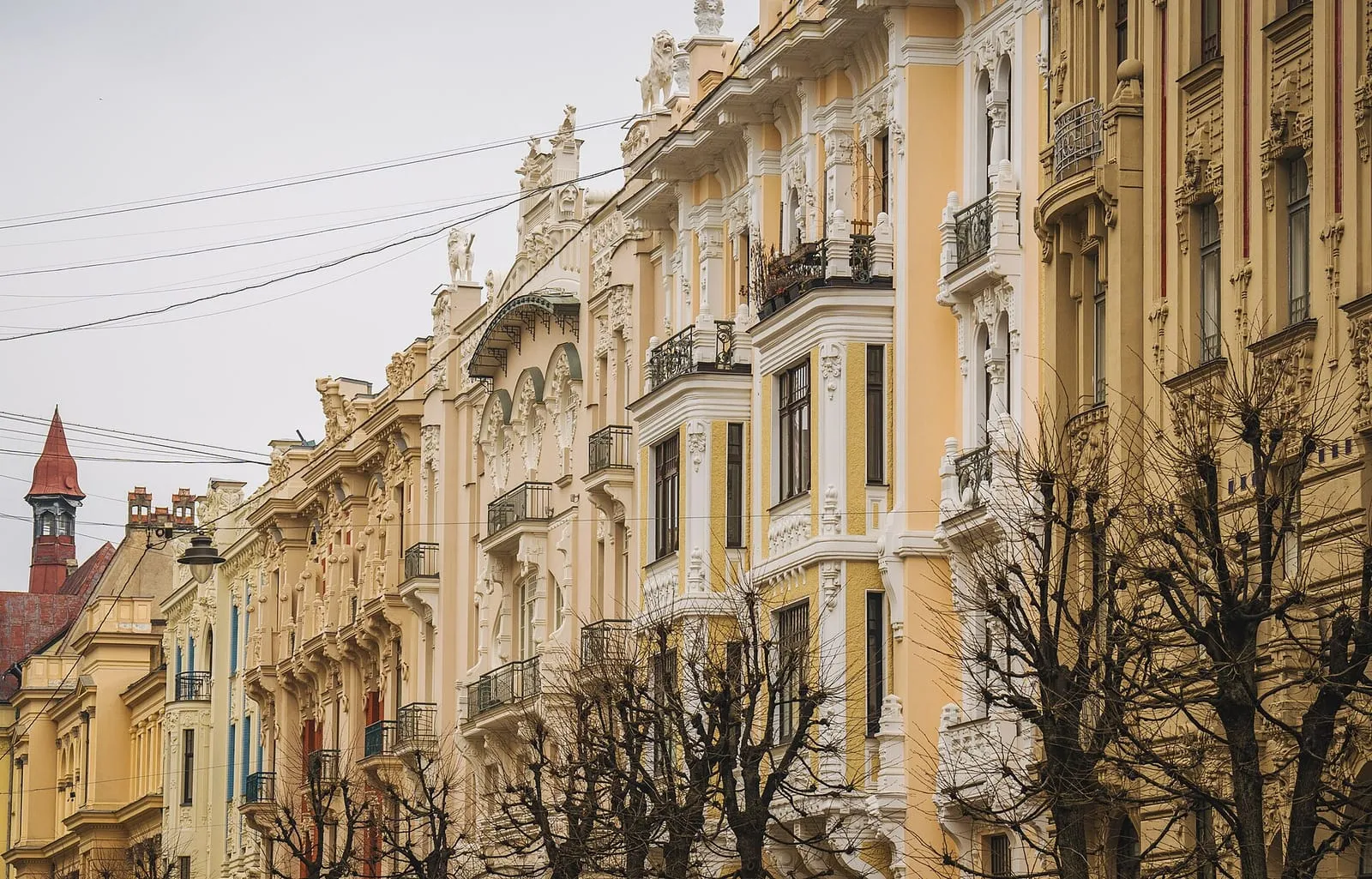
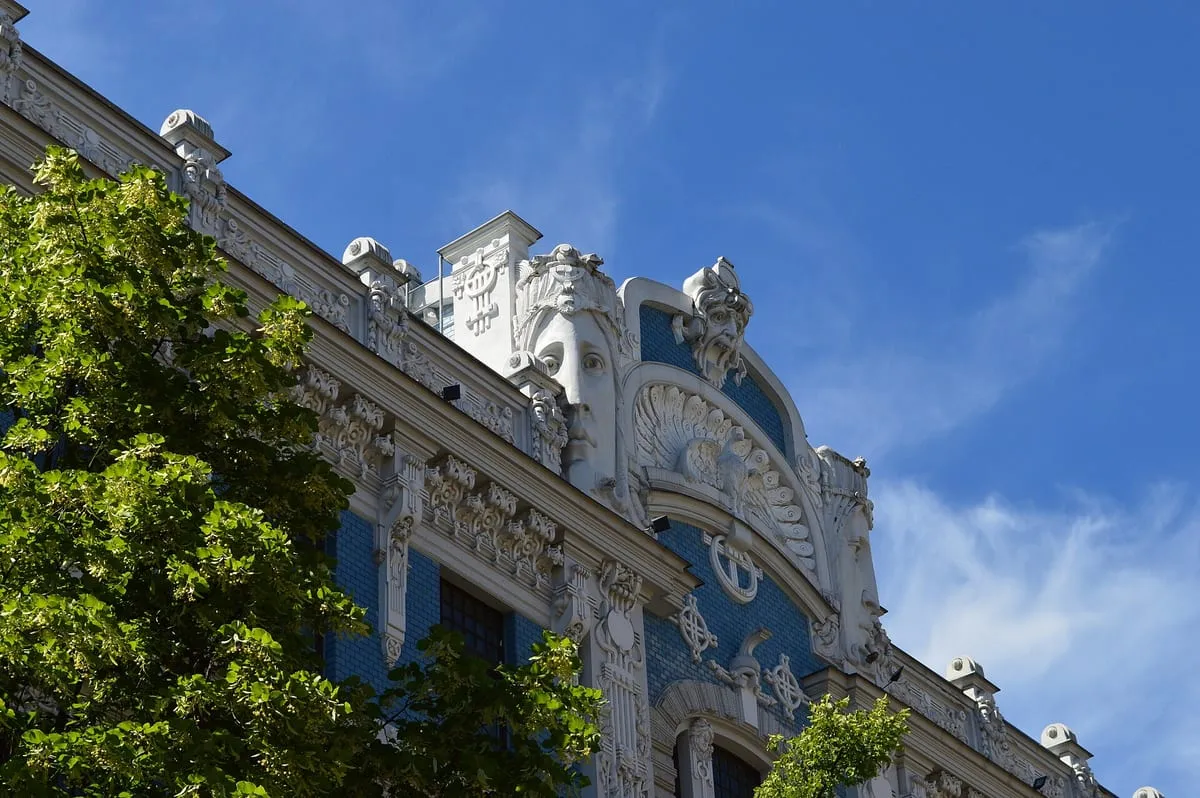
The Art Nouveau Facades of Alberta and Elizabetes Streets
Riga has over 800 Art Nouveau (Jugendstil) buildings:
- Walk the Quiet Centre (Klusais centrs), mainly Alberta iela, Elizabetes iela and Strēlnieku iela.
- Look up at Mikhail Eisenstein’s early-1900s facades, with stone lions, winged sphinxes, Medusa masks, peacock-blue glazed ceramic panels and wrought-iron balconies.
- Our Riga Art Nouveau guide has a self-guided walking route.
The Historic Moscow Suburb (Maskavas forštate)
Walk south-east past Central Market into the Moscow Suburb:
- Latvian Academy of Sciences (Zinātņu akadēmija): A 21-storey Stalinist skyscraper built in the 1950s and nicknamed “Stalin’s Birthday Cake”. Its hammer-and-sickle cornices and spire can be seen from the street.
- Wooden architecture: The neighbourhood has 19th-century two-storey wooden apartment buildings with carved timber shutters.
- Jesus Evangelical Lutheran Church: Built between 1818 and 1822 on Elijas iela, a circular classical wooden church with a 37-metre central octagonal tower (free entry).
- Great Choral Synagogue Memorial: At the corner of Maskavas and Dzirnavu streets, the stone ruins and memorial wall honour the victims of the synagogue destroyed by Nazi forces on 4 July 1941.
Markets, churches and free museum days
Riga Central Market (Rīgas Centrāltirgus)
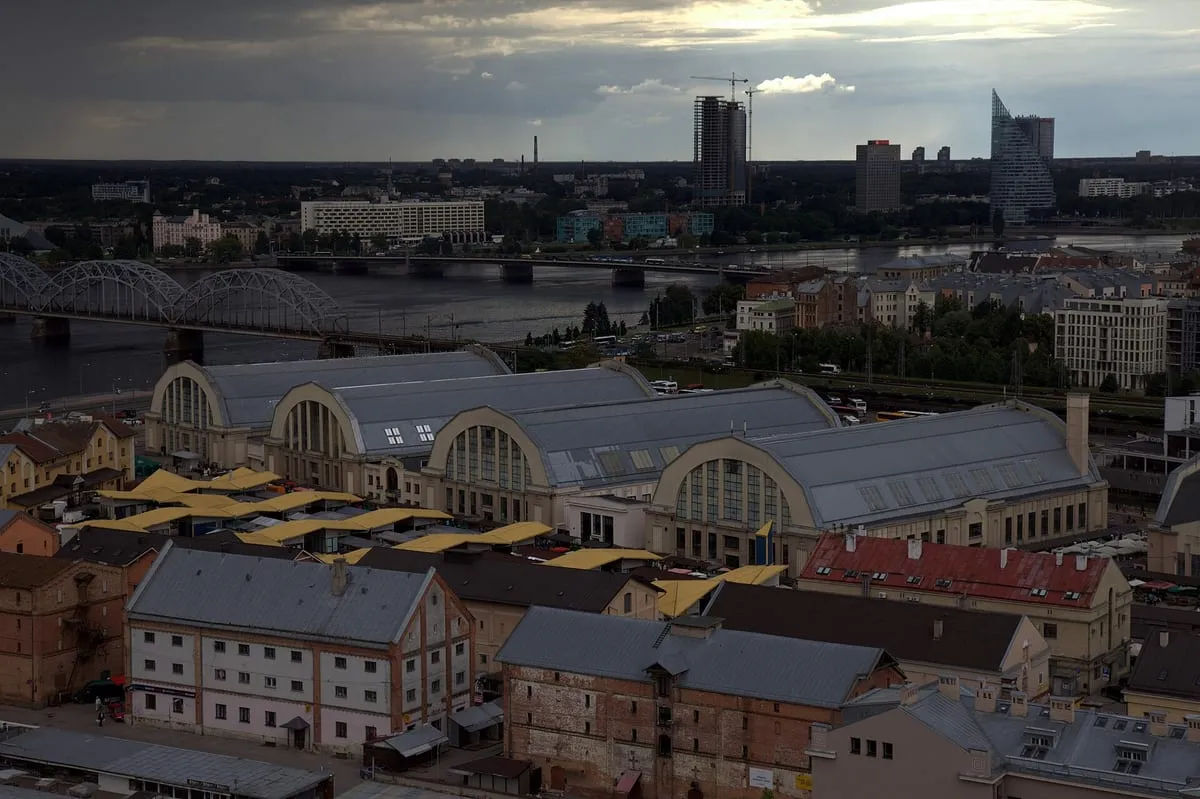
Located behind the central railway station at Nēģu iela 7, Riga Central Market is a covered food market in former airship hangars:
- The Five Zeppelin Hangars: The five steel-trussed pavilions were built from dismantled First World War German military airship hangars. Walking through them is free.
- Along the aisles are hot-smoked Baltic fish, barrels of sour pickles, caraway cheese and wild chanterelles and berries.
KGB Corner House ground floor
At Brīvības iela 61 in Centrs, the ground-floor exhibition on the history of the Soviet secret police is free. The guided tours of the basement cells need a paid ticket; see our KGB Corner House tickets guide.
Nativity of Christ Orthodox Cathedral
On the edge of the Esplanāde park along Brīvības bulvāris, this Neo-Byzantine cathedral was built between 1876 and 1884 under Tsar Alexander II. It has five gilded domes and a large iconostasis, and is free to enter (modest dress is requested; women are asked to cover their heads).
Free scenic viewpoints in Riga
The St Peter’s Church tower is ticketed, but these views are free:
- 11. novembra krastmala (Daugava Riverbank): The wide stone riverside promenade looks across the water to the cable-stayed Vanšu Bridge, the railway bridge and the glass National Library of Latvia.
- Akmens tilts (Stone Bridge) pedestrian walkway: Walk across the Stone Bridge towards the Pārdaugava bank and look back at Old Riga’s church spires over the river.
- Māras dīķis and Arkādijas Parks: Cross the Daugava into Torņakalns to walk around Mara’s Pond and Arkādija Park, which have stone bridges, willows and waterfalls.
What to explore next
- Riga in one or two days: Fit these free sights into a 48-hour walking route.
- Riga Art Nouveau Quarter: The Jugendstil facades street by street.
- Riga Central Market Guide: What to eat in the Zeppelin pavilions.
- St Peter’s Church Tower: The paid 72-metre platform, against the free viewpoints.
- Money and Currency in Riga: Contactless payments, budgeting and bank fees.
Common questions
What are the main free sights in Riga?
The Swedish Gate and Torņa iela, the hourly changing of the guard at the Freedom Monument, Bastejkalns canal park, the Art Nouveau facades along Alberta iela, the five Zeppelin hangars of Central Market, and the Latvian Museum of Architecture at the Three Brothers.
Are any museums in Riga free to enter?
Yes. The Latvian Museum of Architecture (Mazā Pils iela 19) is free Monday to Friday. The ground-floor historical exhibition at the KGB Corner House (Stūra māja) is free.
Is the Freedom Monument guard change free to watch?
Yes. The ceremonial changing of the guard takes place daily every hour on the hour between 09:00 and 18:00 on the plaza at the base of the Freedom Monument, completely free to the public.
Can you visit Riga Central Market without buying anything?
Yes. Walking through all five historic Zeppelin hangar pavilions and the outdoor produce squares is free.
Where can you find free panoramic viewpoints in Riga?
The riverfront promenade along 11. novembra krastmala looks across the Daugava towards the Vanšu and Stone bridges and the National Library. The footbridges across the City Canal in Bastejkalns and the Stone Bridge walkway also give views of the skyline.