In this guide
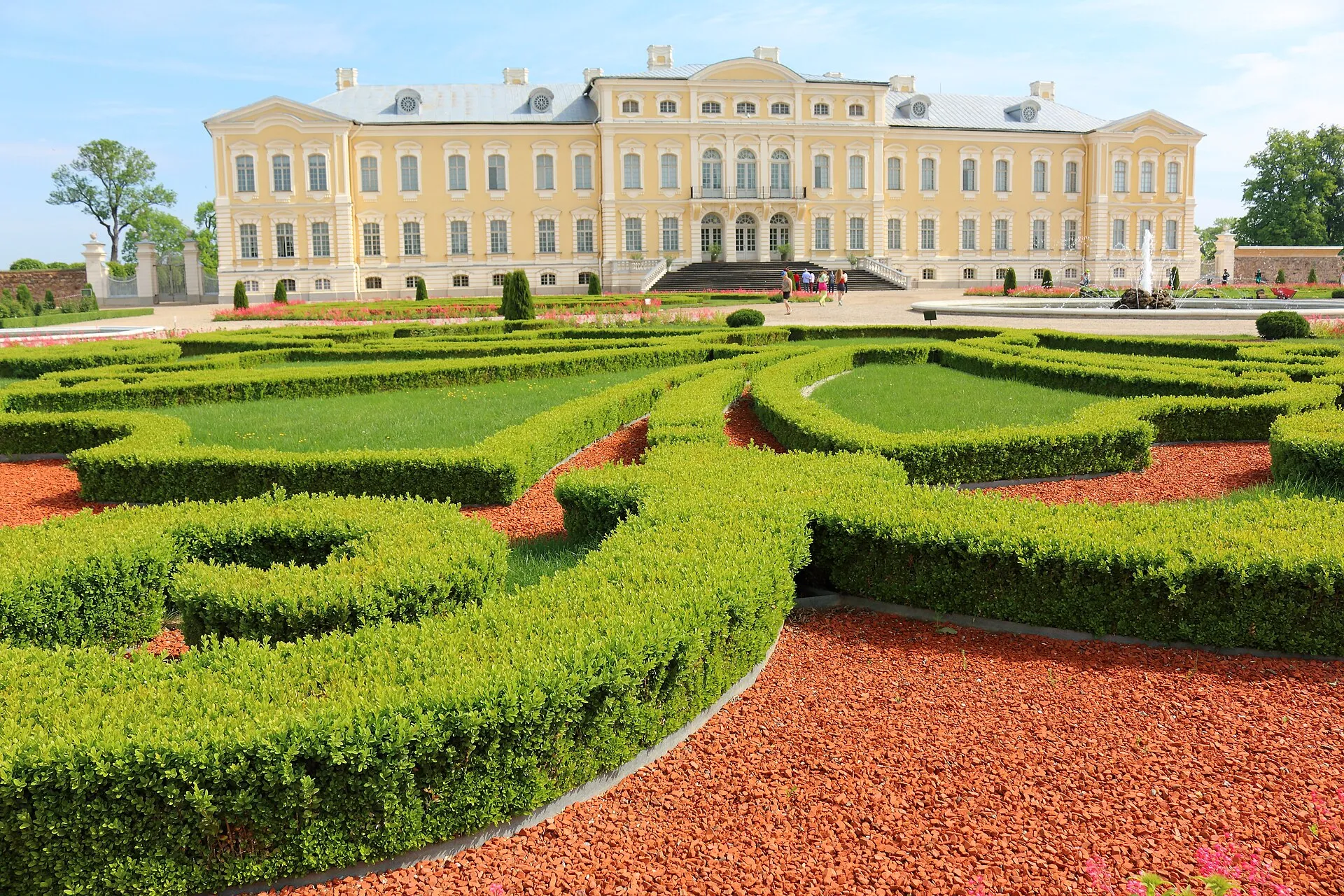
💡 The Short Version: Rundāle Palace (Rundāles pils), sometimes called the “Versailles of the Baltic”, was designed by the Italian court architect Francesco Bartolomeo Rastrelli for the Duke of Courland. It stands 79 kilometres south of Riga and has 138 restored ducal rooms, the gilded Golden Hall, the stucco reliefs of the White Hall, and a 10-hectare French formal garden with roses. A combined palace and garden ticket is €17.00 (€10.50 for full-time students, €5.50 for pupils, per rundale.net’s April to October price list). The estate is open daily 10:00 to 18:00 from May to October (garden until 19:00 from June to September, and 20:00 from Friday to Sunday in June, July and August) and 10:00 to 17:00 from November to April. Reaching the palace by public bus takes 1 hour 45 minutes via Bauska. Or book a tour: a [Rundāle, Bauska and Hill of Crosses day tour](https://www.getyourguide.com/riga-l213/from-riga-hill-of-crosses-guided-visit-to-rundale-palace-bauska-t615837/ad) from €91 or a half-day Bauska and Rundāle tripad from €113 is sold on GetYourGuide; a tour saves the bus change at Bauska.
⚠️ Coordinate your bus transfer at Bauska. Buses between Riga and Bauska run every 20 to 30 minutes from platform 5 or 6 at Riga International Bus Station, but the local buses from Bauska to the palace gates run roughly once an hour. Check connections on
1188.lvor at the Bauska ticket window before you set out.
Ticket prices and opening hours
Tickets are sold at the visitor centre counters in the palace courtyard stables, for cash or card, and can also be booked online on the official site.
| Ticket | Combined (palace and garden) | Palace main exhibition only | French Garden only | Full-day all-access |
|---|---|---|---|---|
| Adult | €17.00 | €12.00 | €6.00 | €23.00 |
| Full-time student | €10.50 | €8.50 | €3.00 | €14.50 |
| Pupil | €5.50 | €3.50 | €3.00 | €7.00 |
Visiting hours:
- May to October: Palace and French Garden open daily 10:00 to 18:00. From June to September the garden stays open until 19:00, and until 20:00 from Friday to Sunday in June, July and August.
- November to April: Palace and French Garden open daily 10:00 to 17:00.
- Closed: 1 January, 24 December and 25 December. On 24 June the palace opens at 13:00.
- Official website:
rundale.net
Guided tours to Rundāle
Tours pick you up in Riga and bring you back, which avoids the bus connection described below. Prices are GetYourGuide’s lowest “from” prices per person.
Rundāle Palace, Bauska and the Hill of Crosses
From €91 · 4.9 stars from 326 reviews · 9 hours · Hill of Crosses is in Lithuania
A full day with transport, guided stops and a guided visit inside Rundāle Palace rather than an audio guide. The Hill of Crosses is over the Lithuanian border, so carry your passport or ID card. Rundāle, Bauska and Hill of Crosses tour on GetYourGuidead
Bauska Castle and Rundāle Palace half-day trip
From €113 · 4.9 stars from 15 reviews · 5 hours · Latvia only
Visits Bauska Castle and its museum, then Rundāle Palace, and stays inside Latvia. Bauska and Rundāle half-day trip on GetYourGuidead
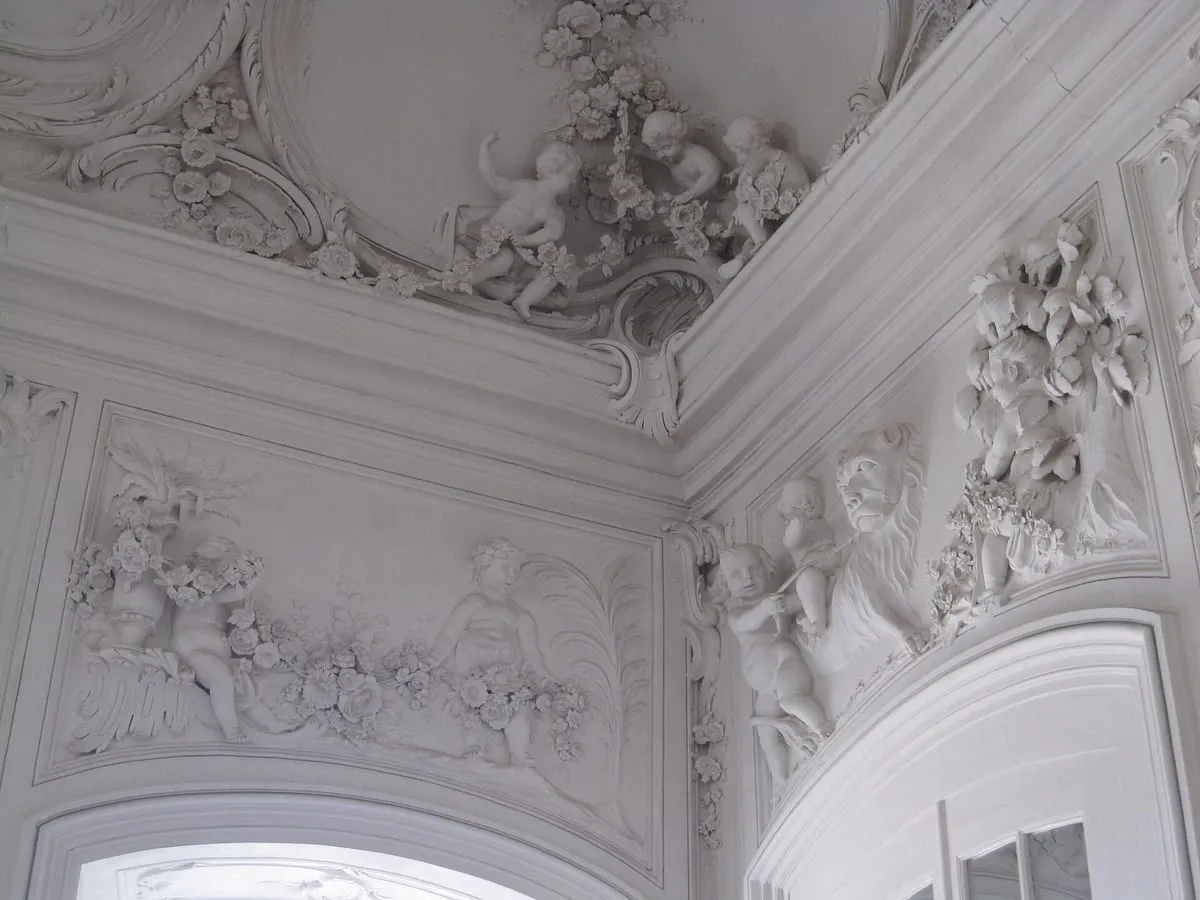
Inside the palace: Golden Hall, White Hall and private apartments
The interior is late baroque and early rococo. Latvian conservators restored it over about half a century, after wartime damage and decades of use as an agricultural store in the Soviet era.
The Golden Hall (Throne Room)
The ceremonial throne room (Zelta zāle) was Ernst Johann von Biron’s public audience chamber:
- Gilded stucco: The walls are covered in gilded carved wood panelling and floral mouldings.
- Ceiling frescoes: The painted ceiling was executed by the Italian painters Francesco Martini and Carlo Zucchi between 1766 and 1768, and depicts allegories of Virtue, Glory and The Prosperity of Courland.
- The ducal throne: A recreated velvet canopy and carved gilded chair mark the spot where the Duke received envoys and petitions.
The White Hall (the ballroom)
In contrast to the gold of the Throne Room, the White Hall (Baltā zāle) is a pale rococo room:
- Stucco bas-reliefs: The Berlin sculptor Johann Michael Graff made the white plaster reliefs on the walls and ceiling. Pastoral scenes show sheep shearing, grape harvesting and hunting, alongside allegories of the four elements and the four seasons.
- Windows: Tall arched windows look out over the French garden parterres, with mirrored glass transoms above them.
The Duke’s private apartments
The western wing holds the living quarters of Duke Ernst Johann and Duchess Benigna Gottlieb:
- The State Bedroom: A reconstructed canopy bed with green silk damask hangings, flanked by hand-painted Dutch tiled stoves.
- The Dressing Room and Bath: 18th-century porcelain bidets, copper basins, and silk wall hangings imported from Lyon.
- The Dutch Room: Seventeenth-century Dutch maritime paintings, oak chests, and blue-and-white Delft chargers.
Architectural history: Rastrelli and the Dukes of Courland
The palace followed the fortunes of Ernst Johann von Biron (1690–1772):
- Rise of Biron: Born to an impoverished Baltic German nobleman in Courland, Biron became the favourite of Grand Duchess Anna Ioannovna. When Anna became Empress of Russia in 1730, he became one of the most influential figures at her court. In 1737 he was elected Duke of the semi-autonomous Duchy of Courland and Semigallia.
- Rastrelli’s commission: In 1735 Biron bought the Rundāle estate as a summer retreat and hired the imperial court architect Francesco Bartolomeo Rastrelli to design the residence.
- Exile and halt (1740): When Empress Anna died in October 1740, Biron was briefly Imperial Regent before a palace coup removed him. He was stripped of his titles, arrested and exiled to Siberia for twenty-two years. Construction at Rundāle stopped, and the unfinished building stood exposed to the weather.
- Completion (1764–1768): In 1762 Catherine the Great pardoned Biron and restored his ducal throne in Courland. The elderly Duke returned to Rundāle, re-engaged Rastrelli, and brought in Italian decorative painters and Berlin plasterers to finish the staterooms in the rococo style.
After the Third Partition of Poland in 1795, Courland was annexed to the Russian Empire, and Catherine gave Rundāle to her favourite, Count Valerian Zubov. The estate later passed to the Shuvalov family before the Republic of Latvia expropriated it in the 1920 land reform.
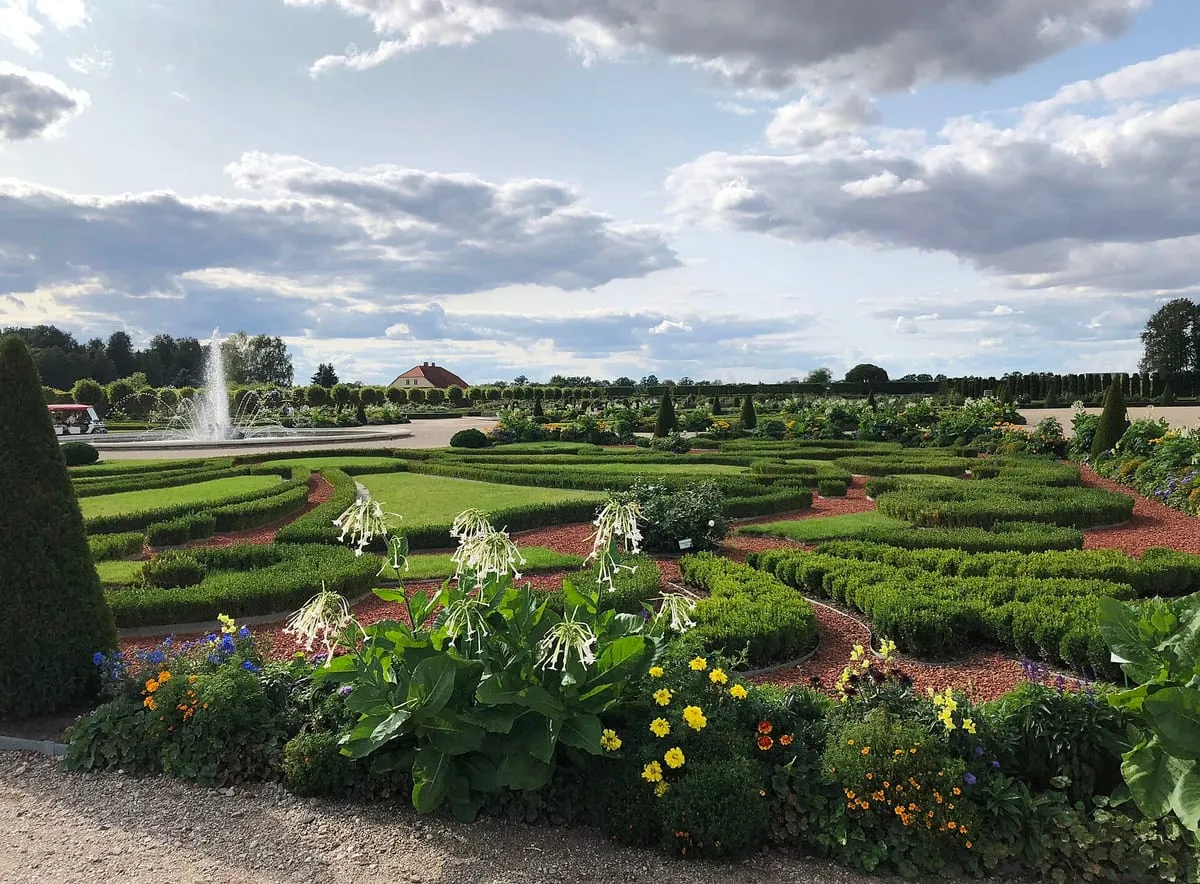
The French Garden and ornamental park
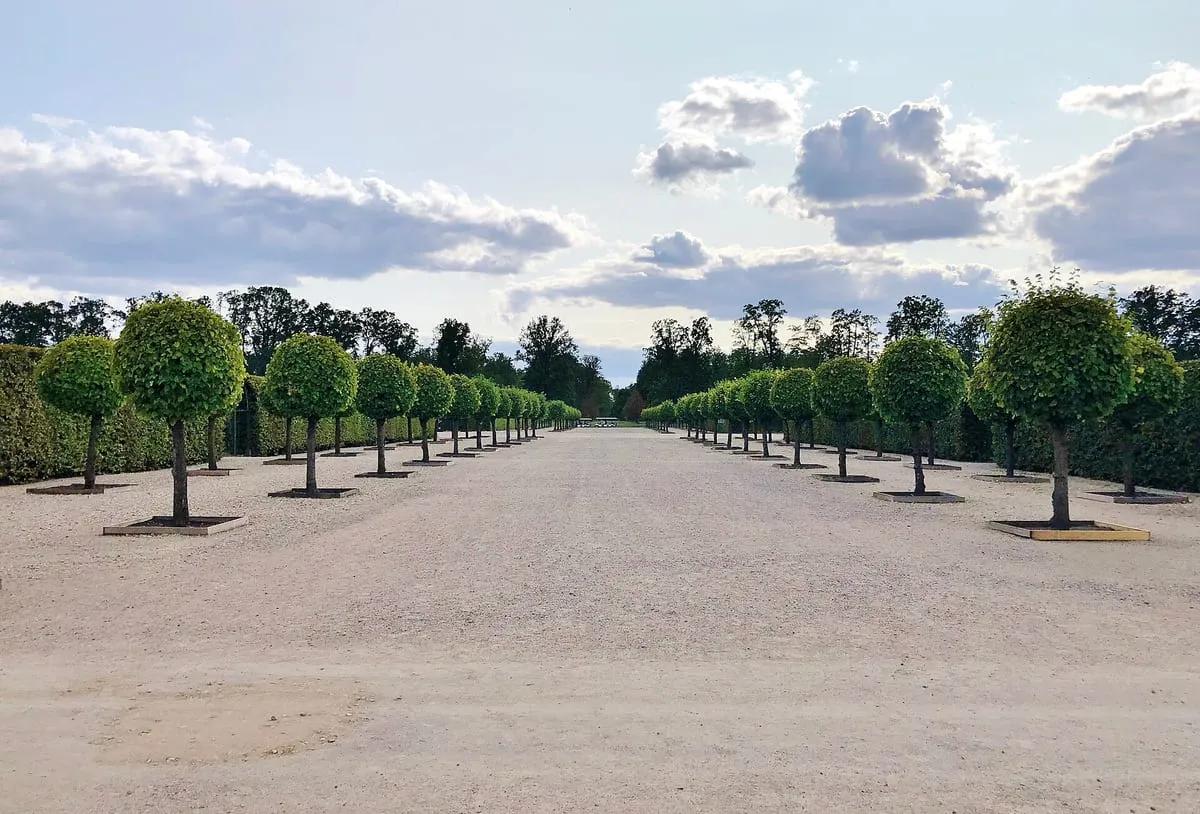
The French formal garden (Franču dārzs) covers ten hectares south of the palace and was laid out to Rastrelli’s design on Versailles principles.
What to look for:
- The central parterre: Geometric patterns of clipped boxwood, crushed red brick and grey gravel, with fountains, aligned on the palace axis.
- The rose garden: Over 2,200 historical and modern rose varieties across nine hectares in the southern park. Roses begin blooming in early June, peak in late June and July, and flower through September.
- The Green Theatre (Zaļais teātris): An open-air amphitheatre with grass-covered tiers and clipped hornbeam hedge wings, used for summer baroque opera.
- Canals: Ornamental canals run round the park perimeter, fed by the Īslīce River.
Combining Rundāle with Bauska Castle
The bus from Riga passes through Bauska, so you can combine Rundāle Palace with Bauska Castle (Bauskas pils - bauskaspils.lv):
- The fortress ruins (15th century): The western half is the stone curtain walls and artillery towers of a Livonian Order frontier stronghold, on a narrow promontory where the Mūsa and Mēmele rivers meet.
- The ducal residence (16th century): The eastern half is a restored Renaissance palace built by Duke Gotthard Kettler, with period armour, furniture, sgraffito wall decoration and costume reconstructions.
- Tickets: Prices are on bauskaspils.lv.
- Getting there: It is a 15-minute walk north of Bauska central bus station.
Public transport directions
To reach Rundāle by public bus:
- Departure from Riga: Head to the Riga International Bus Station (Rīgas Starptautiskā autoosta) at Prāgas iela 1, behind Riga Central Market. Buy a ticket to Bauska at the ticket counter or via
1188.lv. Buses depart every 20 to 30 minutes from platform 5 or 6, and the journey takes 1 hour 10 minutes. - Transfer at Bauska: Disembark at Bauska bus station (Bauskas autoosta). Walk to the local bus platforms and board a local bus bound for Rundāles pils, Bērstele, Jelgava (via Rundāle) or Sviteni.
- Arrival at the palace: The local bus takes 15 to 20 minutes (pay the driver) and stops in front of the palace gates at Rundāles pils.
- Return journey: Check the return times posted at the palace bus shelter when you arrive. Take the local bus back to Bauska, where buses to Riga run until late evening.
What to see next
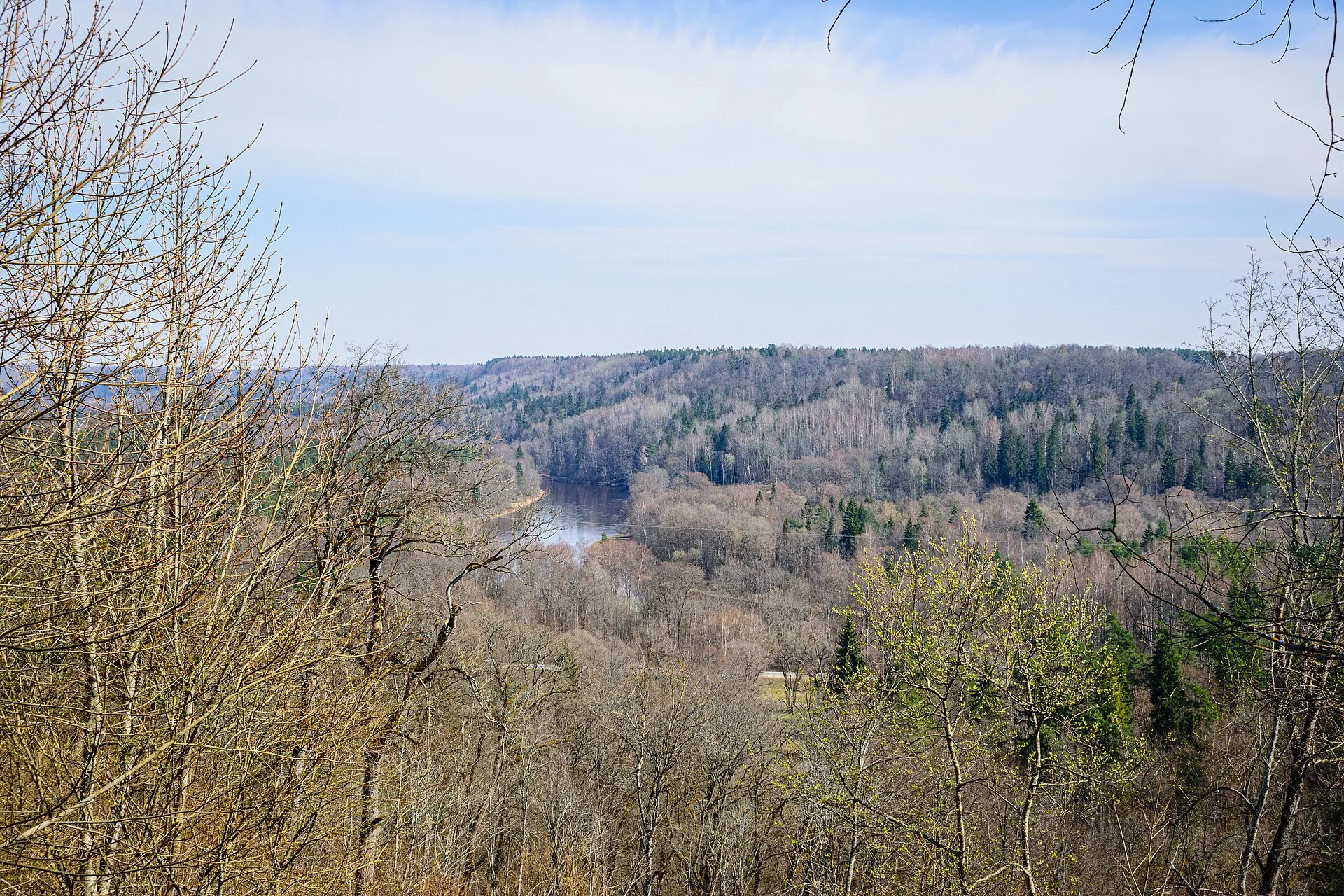
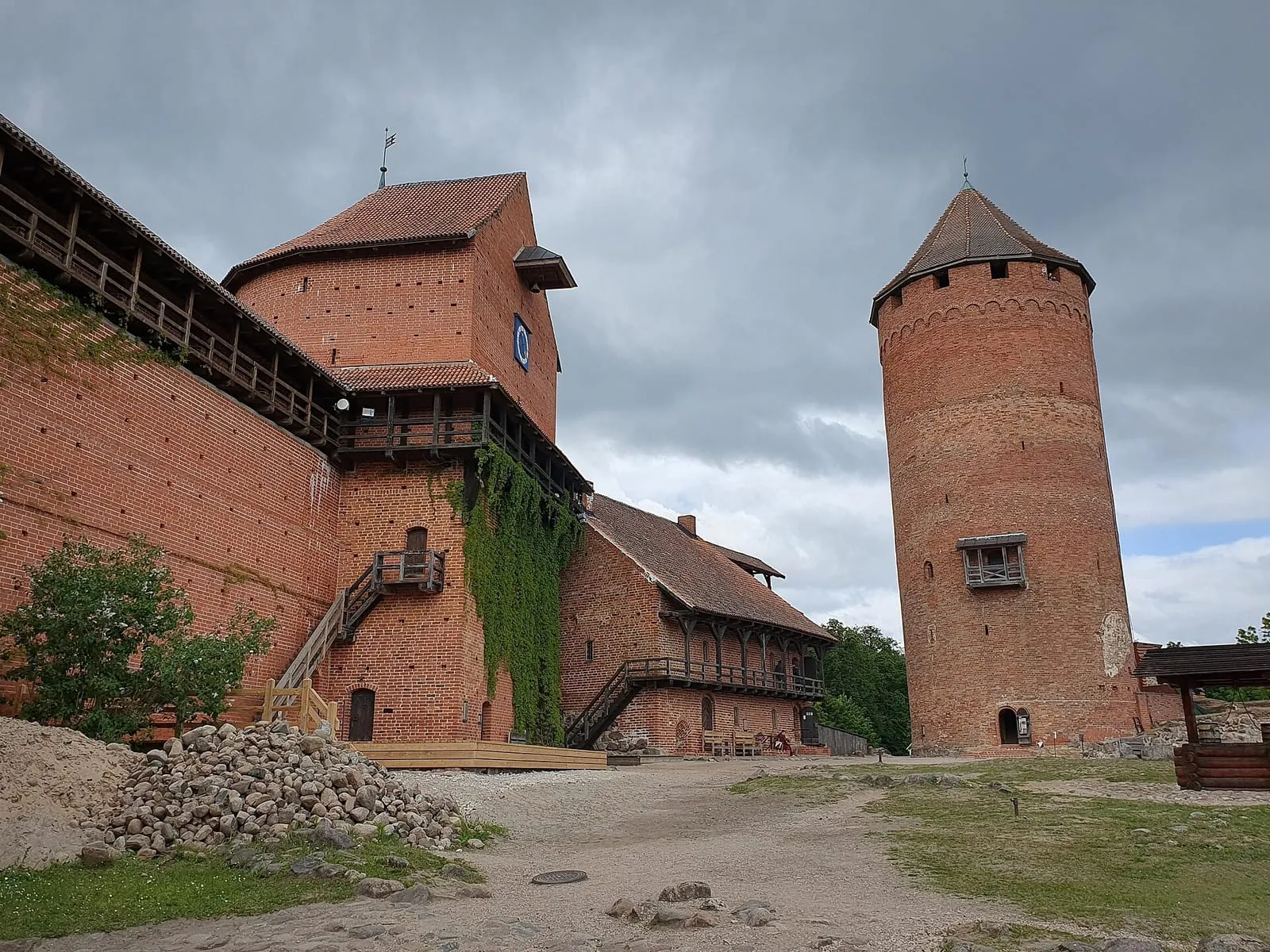
- Sigulda and Gauja National Park: Medieval castles, a cable car and forested river valleys.
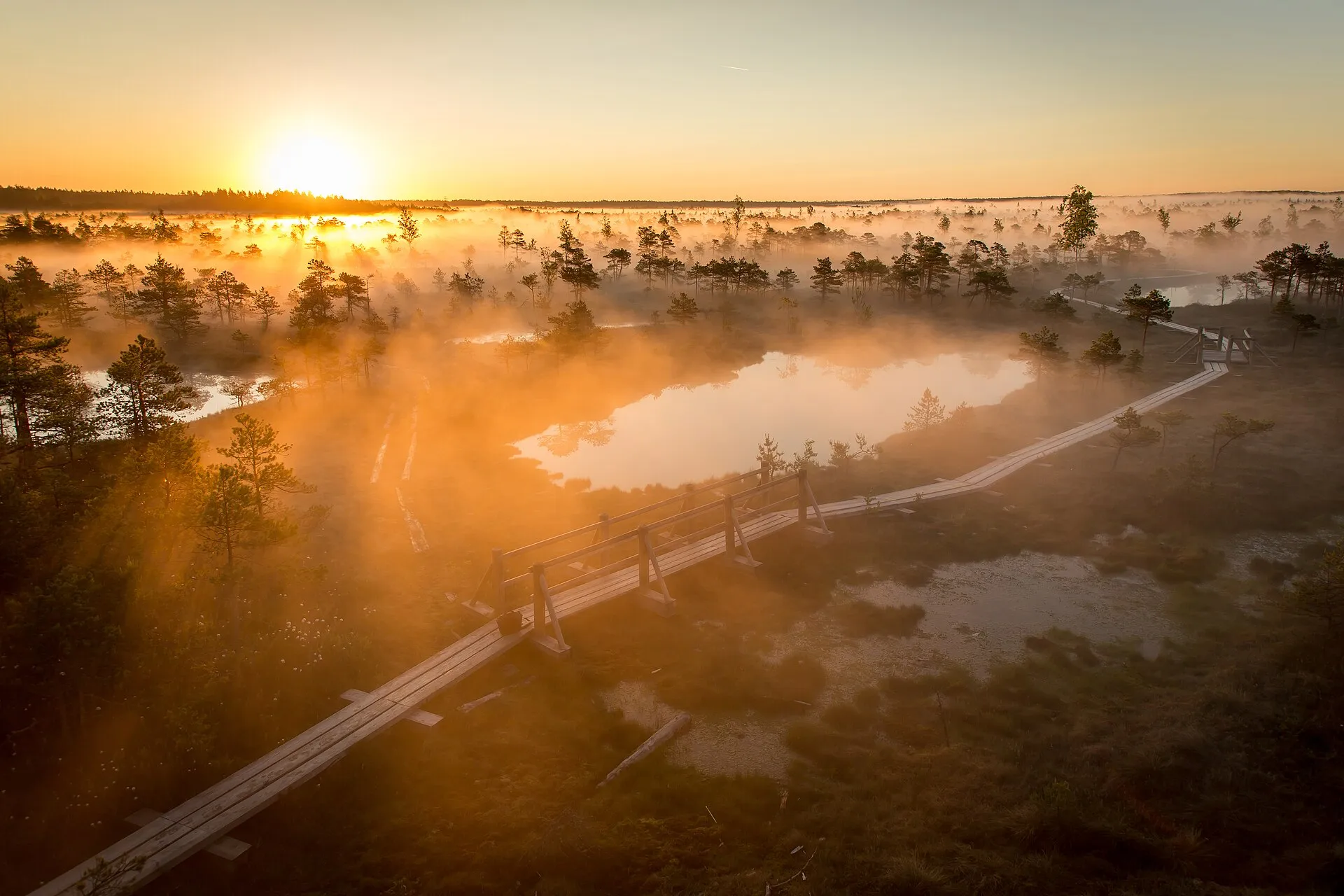
- Ķemeri National Park Bog Boardwalk: Wetland peat pools on wooden walking trails.
- Jūrmala Day Trip from Riga: Sand beaches and wooden resort villas.
- Day trips from Riga: The day trips across Latvia by train, bus and organised tour.
- House of the Black Heads: Riga’s merchant guildhall, for comparison with Rundāle’s ducal rooms.
Common questions
How far is Rundāle Palace from Riga?
Rundāle Palace is in Pilsrundāle, 79 kilometres south of Riga, near Bauska and the Lithuanian border. Driving takes about 75 minutes. The bus takes about 1 hour 45 minutes each way, including the change at Bauska.
How much are tickets to Rundāle Palace?
A combined adult ticket covering the Main Museum Exhibition and the French Garden costs €17.00 (€10.50 for full-time students, €5.50 for pupils). Admission to the main palace interior alone is €12.00 (€8.50 students, €3.50 pupils), while entry to the French Garden alone is €6.00 (€3.00 for students and pupils). These are the April to October prices on rundale.net.
How do you get to Rundāle Palace from Riga by public transport?
Take an intercity bus from Riga International Bus Station to Bauska (1 hour 10 minutes, every 20 to 30 minutes). At Bauska bus station, board a local bus to Rundāles pils (15 to 20 minutes).
Who built Rundāle Palace?
The Italian baroque architect Francesco Bartolomeo Rastrelli, who also designed the Winter Palace in Saint Petersburg, designed it for Ernst Johann von Biron, Duke of Courland and Semigallia. Construction began in 1736 and finished in 1768.
Is Rundāle Palace open in winter?
Yes. Rundāle Palace is open year-round except 1 January, 24 December and 25 December. Winter hours (November to April) are 10:00 to 17:00 for both the palace interior and the French formal garden.