In this guide
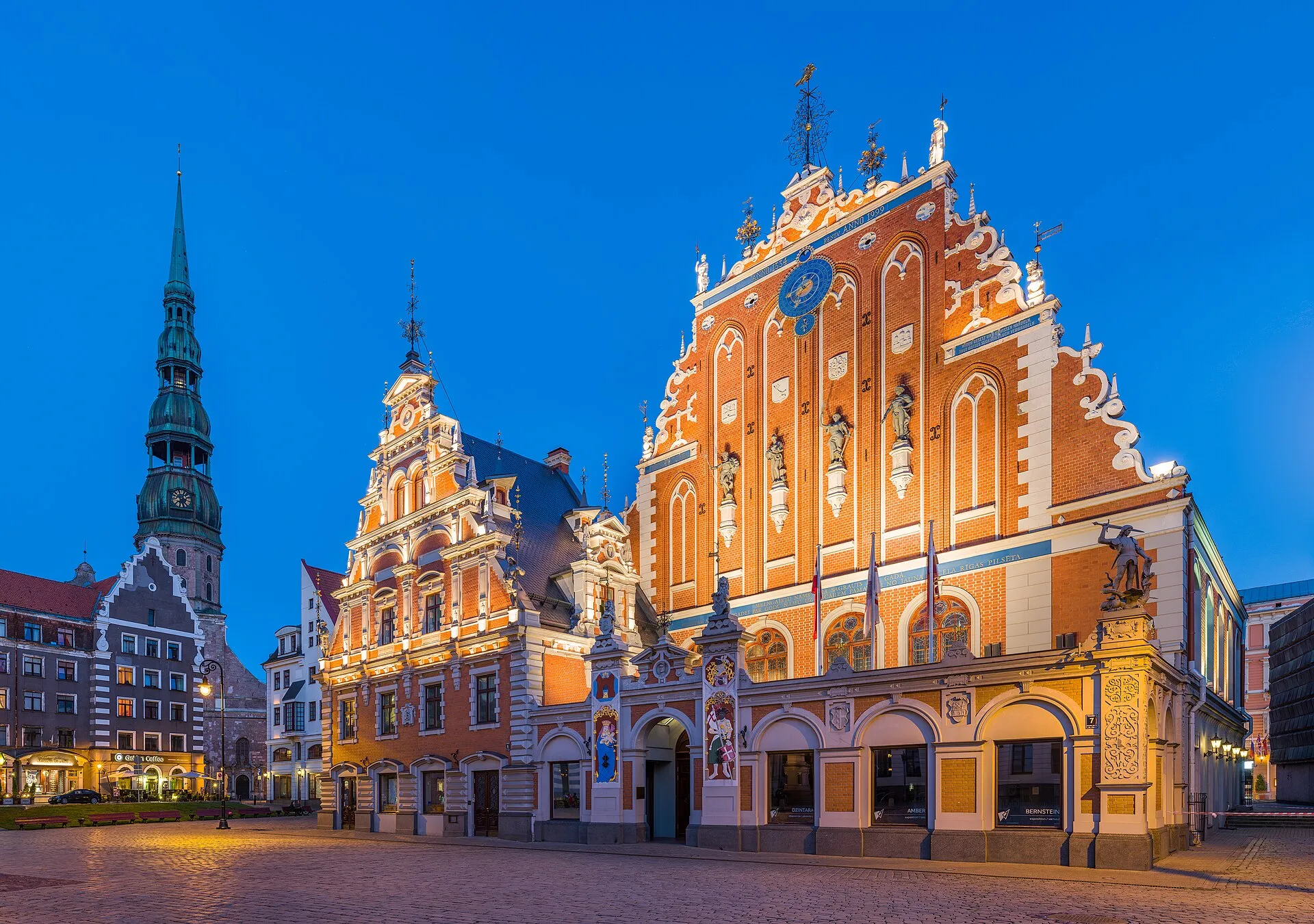
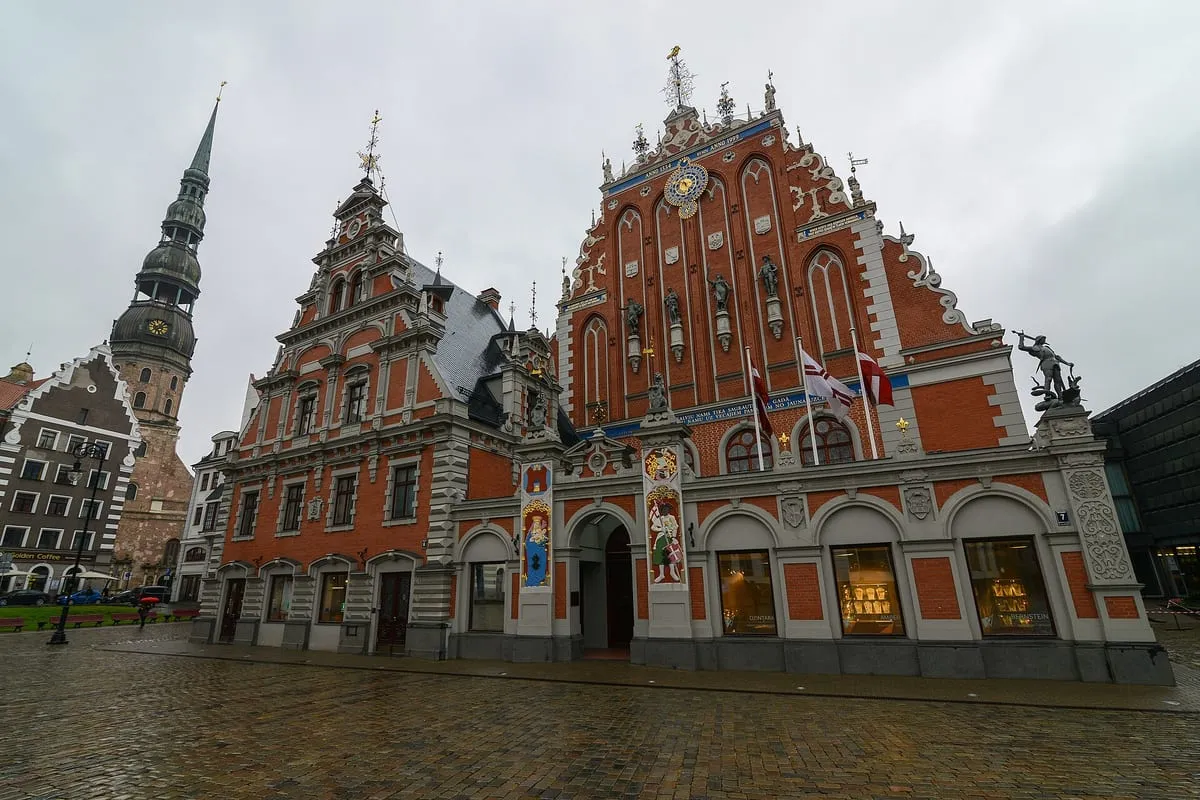
💡 The Short Version: The House of the Black Heads (Melngalvju nams) on Town Hall Square has a Dutch Renaissance gable, a gilded astronomical clock, a crystal-hung Celebration Hall and 14th-century brick cellars. A standard adult entrance ticket is €10 (€6 for students, pupils and seniors; free for under-7s). Upgrades with coffee (€12) or Riga Black Balsam (€13) are available, and audio guides cost €4. The museum is open Tuesday to Sunday from 10:00 to 17:00 (closed Mondays). Or book a tour: the House of the Black Heads entrance ticketad starts at €10, the same as the adult box-office price, and a guided Old Town walking tourad from €15 passes the building; the tour saves you reading the history from signs.
⚠️ Start your route down in the original 1334 cellars. The basement vaults are the only original medieval masonry that survived 1941. After the vaults and the silver room, go upstairs to the historical cabinets and the Grand Celebration Hall on the first floor.
Ticket prices and opening hours
The ticket office is located inside the ground floor vestibule at Rātslaukums 7. Tickets are sold at the door using cash or credit cards, and online vouchers are scanned at the turnstiles.
| Ticket Type | Price | Details |
|---|---|---|
| Standard Adult | €10.00 | Full access to cellars, exhibition halls and Celebration Hall |
| Concession (Students & Seniors) | €6.00 | Valid student card, ISIC or senior citizen ID required |
| Pupil (ages 7–18) | €6.00 | School ID required |
| Pre-school child (under 7) | Free | Must be accompanied by an adult |
| Adult + Coffee | €12.00 | Includes ticket plus hot beverage at the museum cafe |
| Adult + Wine / Black Balsam | €13.00 | Includes ticket plus glass of sparkling wine or Riga Black Balsam |
| Audio Guide | €4.00 | Available in 13 languages (including English, German, French) |
Operating schedule:
- Tuesday to Sunday: 10:00 to 17:00 (ticket counter and admission close at 16:30).
- Monday: Closed all day.
The Celebration Hall sometimes hosts state banquets and diplomatic receptions (it was the President of Latvia’s temporary workplace while Riga Castle was restored), so check melngalvjunams.lv for holiday schedules and private-event closures before you go.
Booking a ticket or a tour
The entrance ticket and a guided walk that passes the building are both bookable. Prices are GetYourGuide’s lowest “from” prices per person.
House of the Black Heads entrance ticket
From €10 · 4.6 stars from 1,350 reviews · entry to the House of the Black Heads
The entrance ticket for the building on Town Hall Square, bookable ahead of the visit. House of the Black Heads ticket on GetYourGuidead
Old Town walking tour
From €15 · 4.7 stars from 1,451 reviews · 2 hours · Town Hall Square, House of the Black Heads, St Peter’s Church
A local guide takes you through the Old Town’s history and its main sights, including the House of the Black Heads. Old Town walking tour on GetYourGuidead
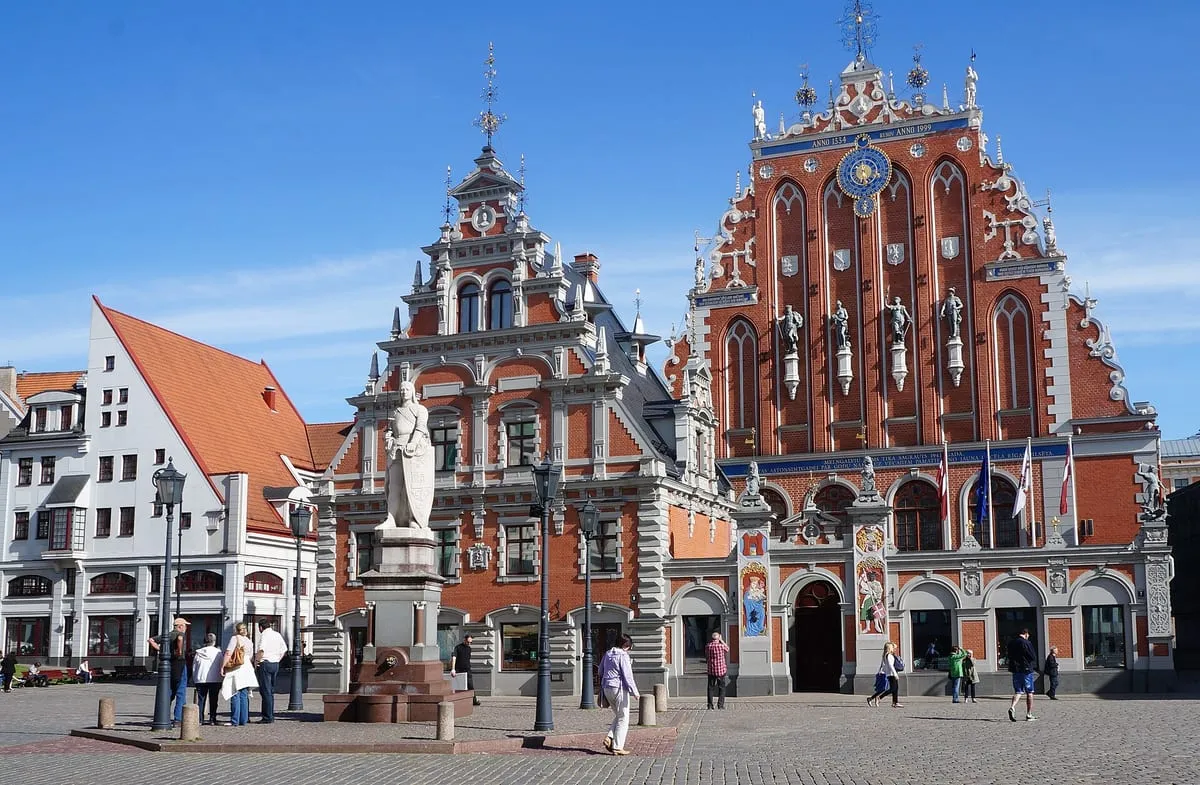
Town Hall Square and the Roland Statue
Town Hall Square (Rātslaukums) has functioned as the civic and commercial heart of Riga since the early 14th century. The square hosted medieval fairs, proclamations, guild oath-takings and court judgments.
In front of the House of the Black Heads stands the Statue of Roland. In medieval Hanseatic cities, Roland was an emblem of judicial independence, free trade and municipal law. The original was carved from sandstone in 1896 by the sculptor August Volz; the figure on the square today is a granite replica erected in 2000, and the weathered original is kept inside St Peter’s Church.
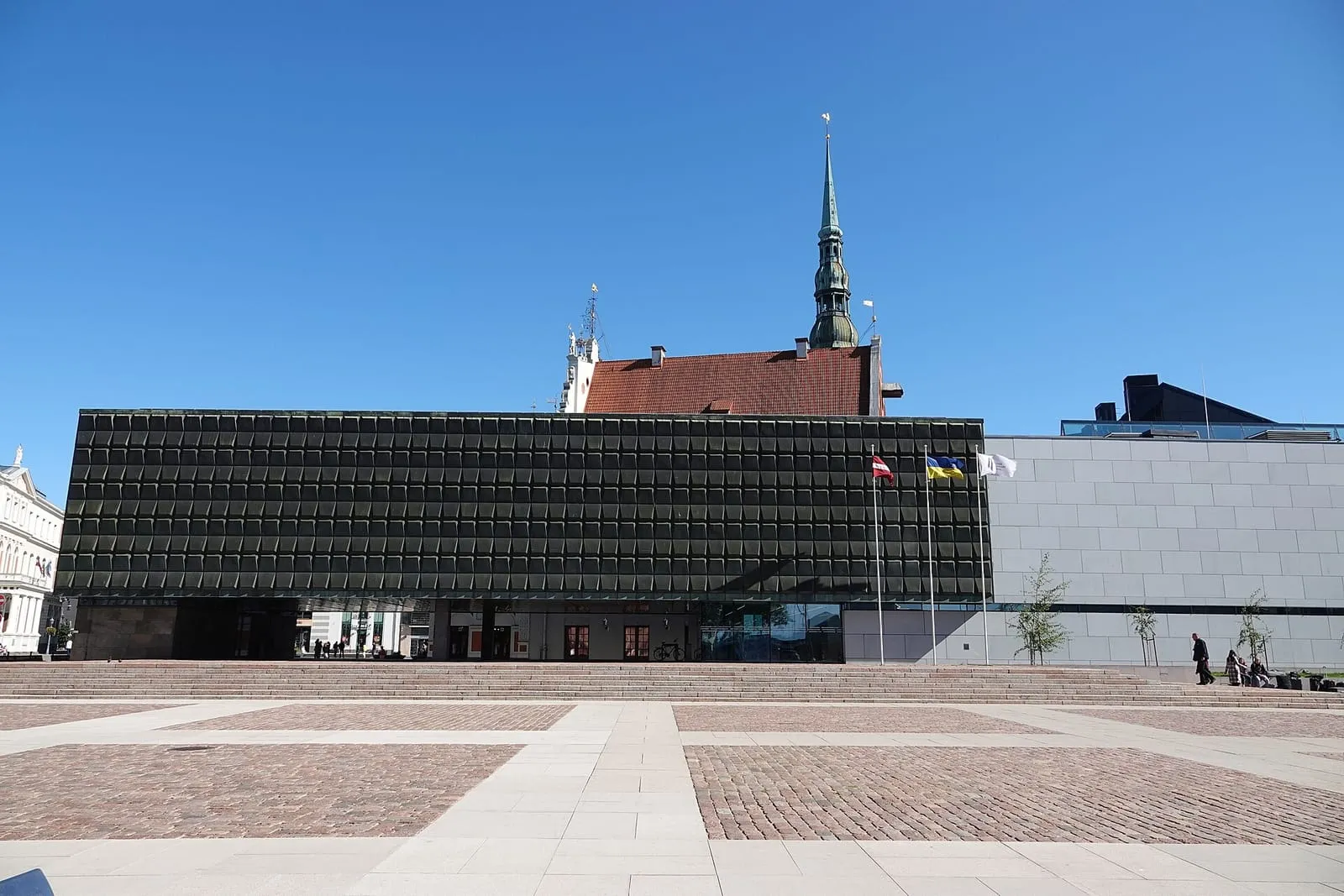
Next to the House of the Black Heads stands the Schwabe House (Švābes nams), rebuilt alongside the guildhall with Renaissance detailing. Across the square is the neoclassical facade of the Riga City Council (Rīgas dome) with its copper clock tower, and the dark pavilion of the Museum of the Occupation of Latvia on the southern side.
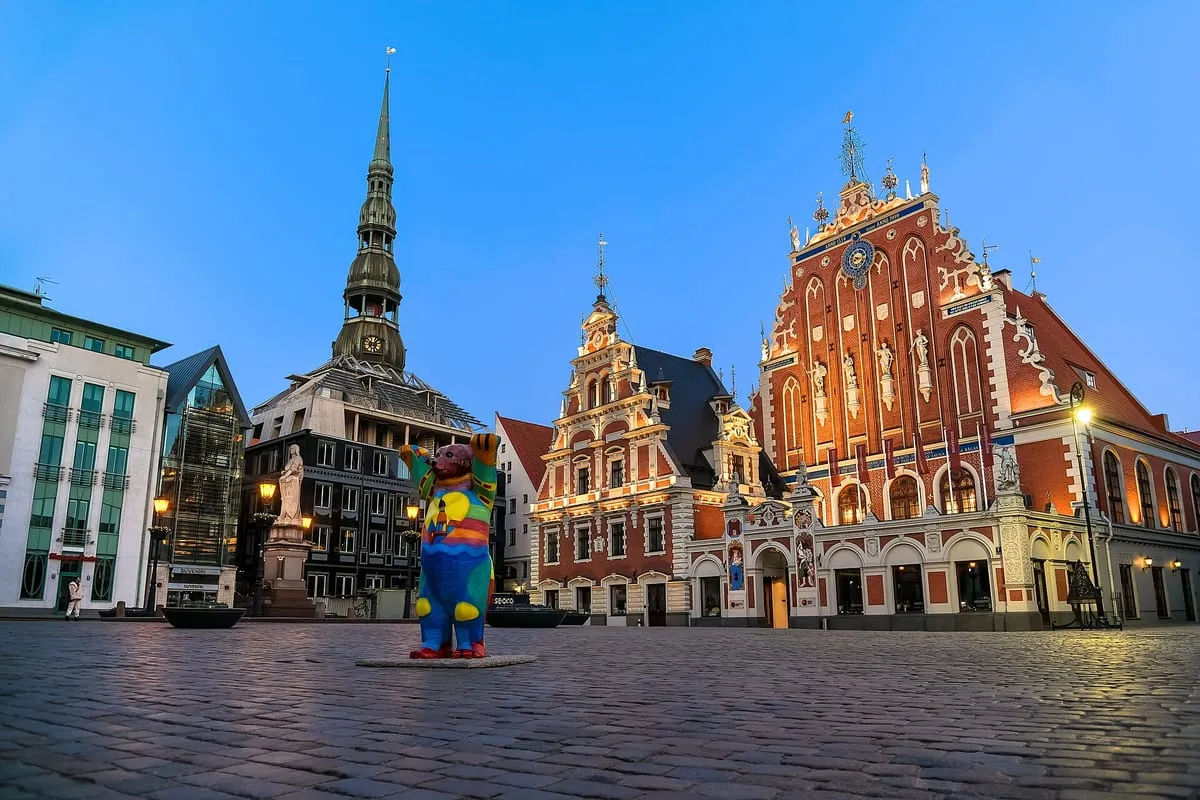
The Guild of the Blackheads: origins and brotherhood
The Brotherhood of Blackheads (Melngalvju brālība) was established in Riga in 1334. Unlike the Great Guild (Lielā ģilde), which represented local married German patricians and resident master craftsmen, the Blackheads were an association of unmarried foreign merchants, captains and travelling commercial agents.
The fraternity chose Saint Maurice as its patron saint. A Roman legion commander from Thebes who converted to Christianity and was martyred in Switzerland in the 3rd century AD, Maurice was traditionally depicted as a dark-skinned Moor in knightly armour. His profile appears on the guild’s crest, wax seals, flagstones and silver drinking horns.
The Blackheads also had a role in urban defence and civic life:
- Military: In a siege, the young unmarried brothers formed a cavalry troop that defended the ramparts and gatehouses.
- Social: The guildhall hosted feasts, masquerades, tournaments and carnival celebrations.
- The Christmas tree: Guild records from 1510 note that Blackhead merchants placed a fir tree in the square, decorated it with paper flowers, danced around it and then set it alight in a midwinter festival. A brass plaque in the cobbles of Town Hall Square marks the site.
The 14th-century medieval cellars
Visitors go down into the cellars first. The upper floors were destroyed in 1941, but the stone and red-brick foundation vaults survived.
The vaults date to 1334:
- Original masonry: Lime-mortar brick vaults, thick piers and oak beam sockets that held merchant storage lofts.
- Storage: In the Hanseatic era the cellars were fireproof warehouses for imported cargoes, including French wine, Spanish salt, Flemish textiles, spices and Baltic wax.
- Archaeological finds: Display cases hold medieval weights and scales, iron chest locks, clay pipes, ceramic beer steins and pottery fragments from the 1990s excavations beneath Town Hall Square.
- Heating system: Sections of the medieval hypocaust, a network of underground warm-air flues, are preserved; it heated the ground-floor assembly rooms in winter.
Inside the state rooms: Celebration Hall and the Silver Collection
The central staircase leads to the first-floor state rooms, where the Blackheads entertained visiting sovereigns and city dignitaries.
The Grand Celebration Hall
The Grand Celebration Hall (Svētku zāle) is a 330-square-metre ballroom restored to its 19th-century appearance:
- Ceiling painting: The ceiling is painted with an allegory titled The Apotheosis of Saint Maurice, framed by gilded rococo stucco.
- Royal portraits: Life-size oil portraits show rulers who granted the Brotherhood commercial privileges or visited as guests, including Tsar Peter I, Empress Catherine II, Tsarina Elizabeth, King Gustav II Adolf of Sweden and King Sigismund II Augustus of Poland-Lithuania.
- Chandeliers: Bronze and Bohemian crystal chandeliers hang over parquet floors patterned in Baltic oak, ash and walnut.
- Piano: A Steinway grand is used for recitals, chamber concerts and civic award ceremonies.
The Historic Silver Collection
The Brotherhood of Blackheads built up a large collection of decorative silverware. Every newly inducted brother, newly elected elder or visiting monarch customarily presented the guild with a silver gift.
During the Second World War, much of the treasury was evacuated or lost, though significant parts survive in museums across Europe. The Silver Room displays:
- Silver-gilt drinking vessels shaped like sailing cogs, roosters and sea monsters.
- Ceremonial snuffboxes set with Baltic amber, diamonds and enamel miniatures.
- Chalices and tankards engraved with the coats of arms of Baltic merchant dynasties.
The 1941 destruction and 1999 rebuilding
On 28 June 1941, retreating Soviet forces and advancing German artillery traded heavy fire across the Daugava River. Incendiary shells hit the House of the Black Heads, and the fire consumed the roof timbers and upper rooms. For seven years the blackened brick facade stood as a ruin on Town Hall Square. In 1948, Soviet planners judged the German guildhall incompatible with socialist architecture and dynamited the remaining walls, clearing the square for parades.
After Latvian independence was restored in 1991, historians, architects and civic leaders launched a fundraising campaign under the motto “Should I ever crumble, build me anew!”, an inscription recorded on the guild’s 17th-century entrance portal.
Reconstruction began in 1996, using measured architectural drawings from the 1930s, old photographs and craftsmen trained in masonry, wood-carving and gilding. The building was unveiled on 9 December 1999, ahead of Riga’s 800-year jubilee in 2001.
Getting there and visiting recommendations
The House of the Black Heads stands at Rātslaukums 7 in central Vecrīga.
- On foot: Five minutes’ walk from the central embankment of the Daugava River, and ten minutes from Riga Central Station.
- Public transit: Trams 1 and 3 stop at 11. novembra krastmala or Grēcinieku iela, two blocks south of the square. See our Riga public transport guide for transit pass information.
- Recommended timing: Allow 60 to 75 minutes for the cellars, silver room and state halls.
What to see next
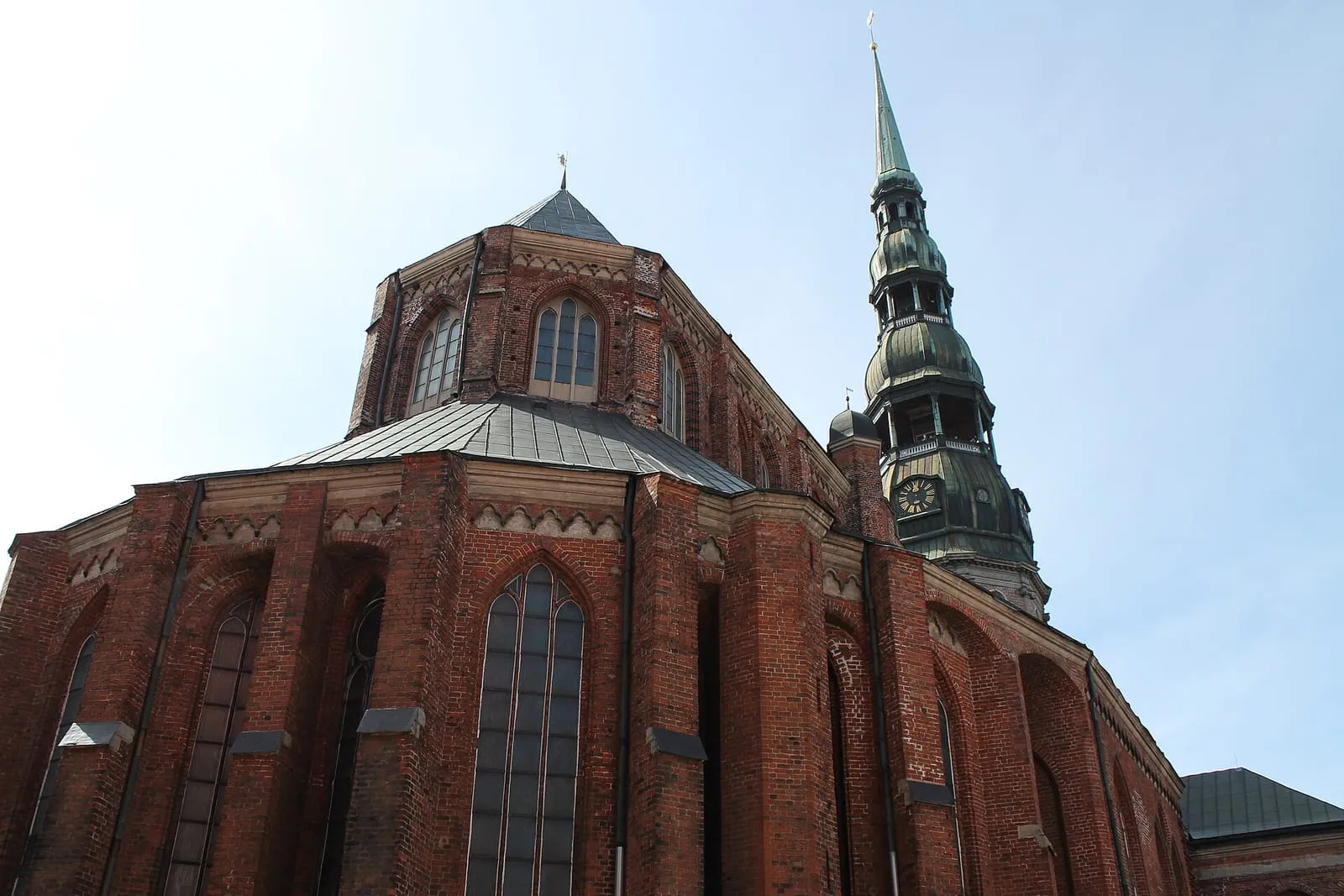
- St Peter’s Church Tower: Walk two minutes east along Skārņu iela to ride the lift 72 metres up the Gothic spire for aerial panoramas over Town Hall Square.
- Museum of the Occupation of Latvia: Step next door into the stark memorial complex documenting Latvia’s twentieth-century history.
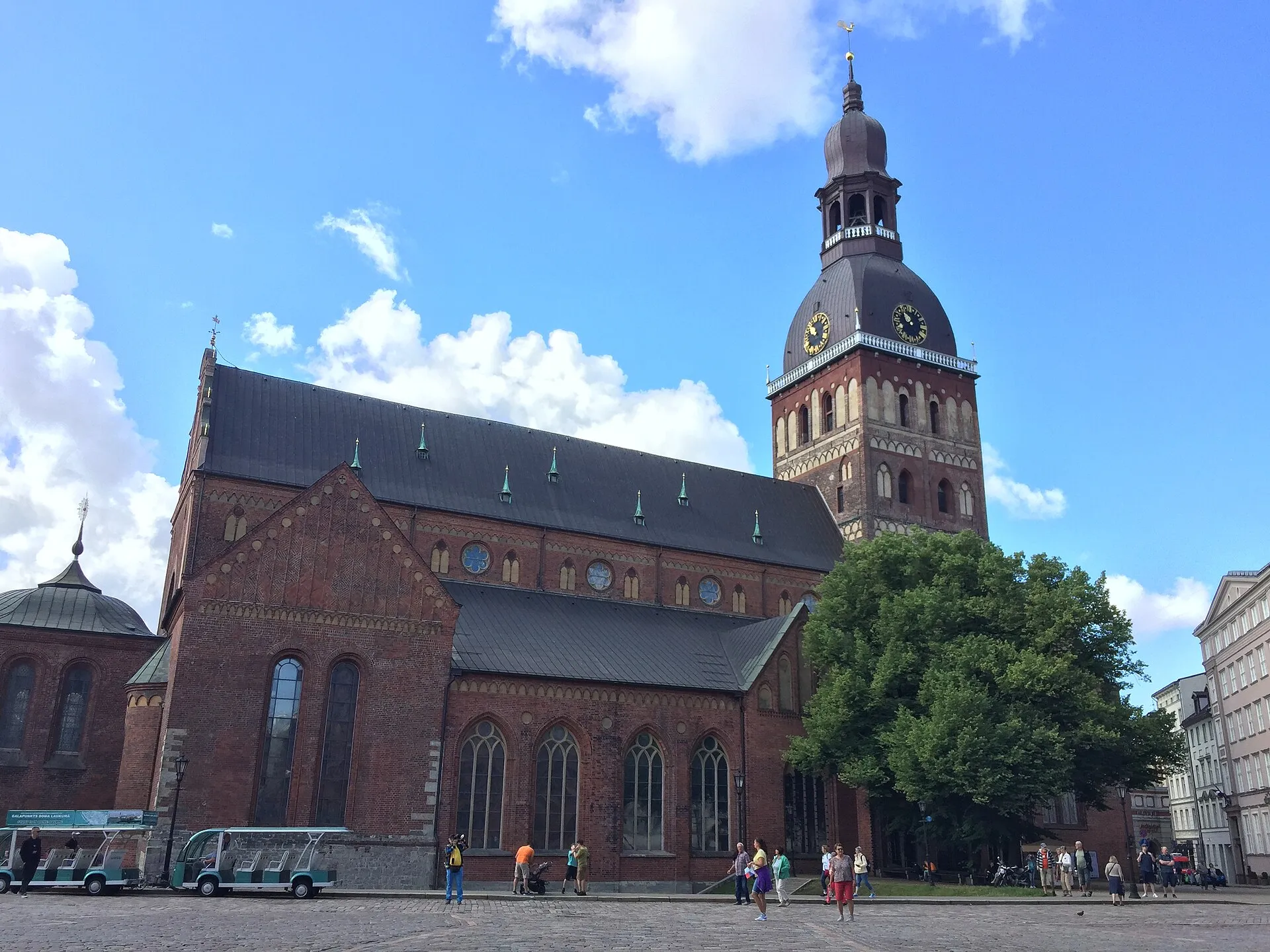
- Riga Dome Cathedral: Head five minutes north through medieval cobblestones to hear the midday organ recital.
- Riga Castle and the Three Brothers: Continue north-west to admire the medieval merchant residences on Mazā Pils iela.
- Free things to do in Riga: Walking routes and monuments across Vecrīga that cost nothing.
Common questions
How much are tickets to the House of the Black Heads?
A standard adult admission ticket is €10. Concession tickets for pupils, university students and seniors are €6. Pre-school children enter free of charge. Optional packages include adult entry with coffee for €12, or entry with a glass of sparkling wine or Riga Black Balsam for €13. Audio guides cost €4.
What are the opening hours of the House of the Black Heads?
The building is open Tuesday to Sunday from 10:00 to 17:00 (last entry at 16:30). The museum is closed on Mondays.
Do you need to book tickets in advance?
Booking in advance is generally not necessary for individual visitors, as tickets can be purchased directly at the entrance desk. However, buying an online ticket or joining a guided tour is practical during peak summer weekends to bypass lines.
Was the House of the Black Heads really destroyed in the Second World War?
Yes. Shelling during the fighting on 28 June 1941 gutted the building, and Soviet authorities dynamited the remaining ruin in 1948. It was rebuilt between 1996 and 1999 from the original drawings, ahead of Riga's 800th anniversary in 2001.
Where is the House of the Black Heads located?
At Rātslaukums 7 (Town Hall Square), in the centre of Old Riga (Vecrīga), directly opposite the Riga City Council building and the Roland Statue.