In this guide
💡 The Short Version: The Museum of the Occupation of Latvia (Latvijas Okupācijas muzejs) documents the fifty-one years of Soviet and Nazi German rule in Latvia between 1940 and 1991. It stands on Town Hall Square beside Gunnar Birkerts’ House of the Future extension, and has a reconstructed Siberian Gulag barrack, declassified KGB files and survivor testimonies. Adult admission is €8.00 (€5.00 for students; free for children up to 18 outside groups, per the museum’s own ticket page); audio guides cost €4.00. The museum is open daily from 10:00 to 18:00. Or book a tour: a two-hour Soviet Riga walking tourad from €60 covers the occupation monuments and the 1991 barricades, and puts the museum’s timeline on the streets where it happened.
⚠️ Rent the €4 audio guide. The exhibition is full of text on touchscreens; the audio guide (English, German, French and seven other languages) adds first-person recordings of deportees, resistance fighters and Gulag survivors.
Ticket prices and opening hours
The ticket counter is situated inside the ground-floor entrance hall facing Latviešu strēlnieku laukums. Payment is accepted by cash, debit cards and credit cards.
| Ticket Category | Price | Conditions |
|---|---|---|
| Standard Adult | €8.00 | Full admission to permanent exhibition |
| Student | €5.00 | Valid student ID or ISIC card required |
| Child or teenager up to 18 | Free | Individual visits only, not groups |
| Audio Guide Rental | €4.00 | Available in 10 languages (including English, German, Ukrainian) |
| Guided tour | €15.00 | Students €9.00, children under 7 free; tours on the hour from 11:00 to 16:00 (per the museum’s price list) |
Visiting hours:
- Every day: 10:00 to 18:00.
- Closed: 1 January, 23 and 24 June (Līgo and Jāņi), and 24, 25, 26 and 31 December.
- Website:
okupacijasmuzejs.lvlists events and lectures.
Free admission days
Admission to the museum is free for all visitors on five days of commemoration:
- 25 March: Day of Commemoration of the Victims of Communist Genocide (marking the 1949 Operation Priboi mass deportations).
- 4 May: Day of the Restoration of the Independence of the Republic of Latvia (marking the 1990 declaration).
- 14 June: Day of Commemoration of the Victims of Communist Terror (marking the 1941 mass deportations).
- 4 July: Remembrance day for the victims of the genocide of the Jews of Latvia.
- 18 November: Proclamation Day of the Republic of Latvia (marking the 1918 founding of the state).
Soviet Riga walking tours
Buy museum tickets at the door. These guided walks cover the same subject. Prices are GetYourGuide’s lowest “from” prices per person.
Soviet Riga walking tour
From €60 · 4.9 stars from 40 reviews · 2 hours · guides who lived under the system
Covers the occupation monuments, the 1991 barricades and the Freedom Monument, told by local guides who lived through the Soviet period. Soviet Riga walking tour on GetYourGuidead
Behind the Iron Curtain communism tour
From €90 · 4.9 stars from 45 reviews · 3.5 hours · Soviet legacy in Latvia
A longer walk through Riga on the Soviet Union’s legacy in Latvia. Behind the Iron Curtain tour on GetYourGuidead
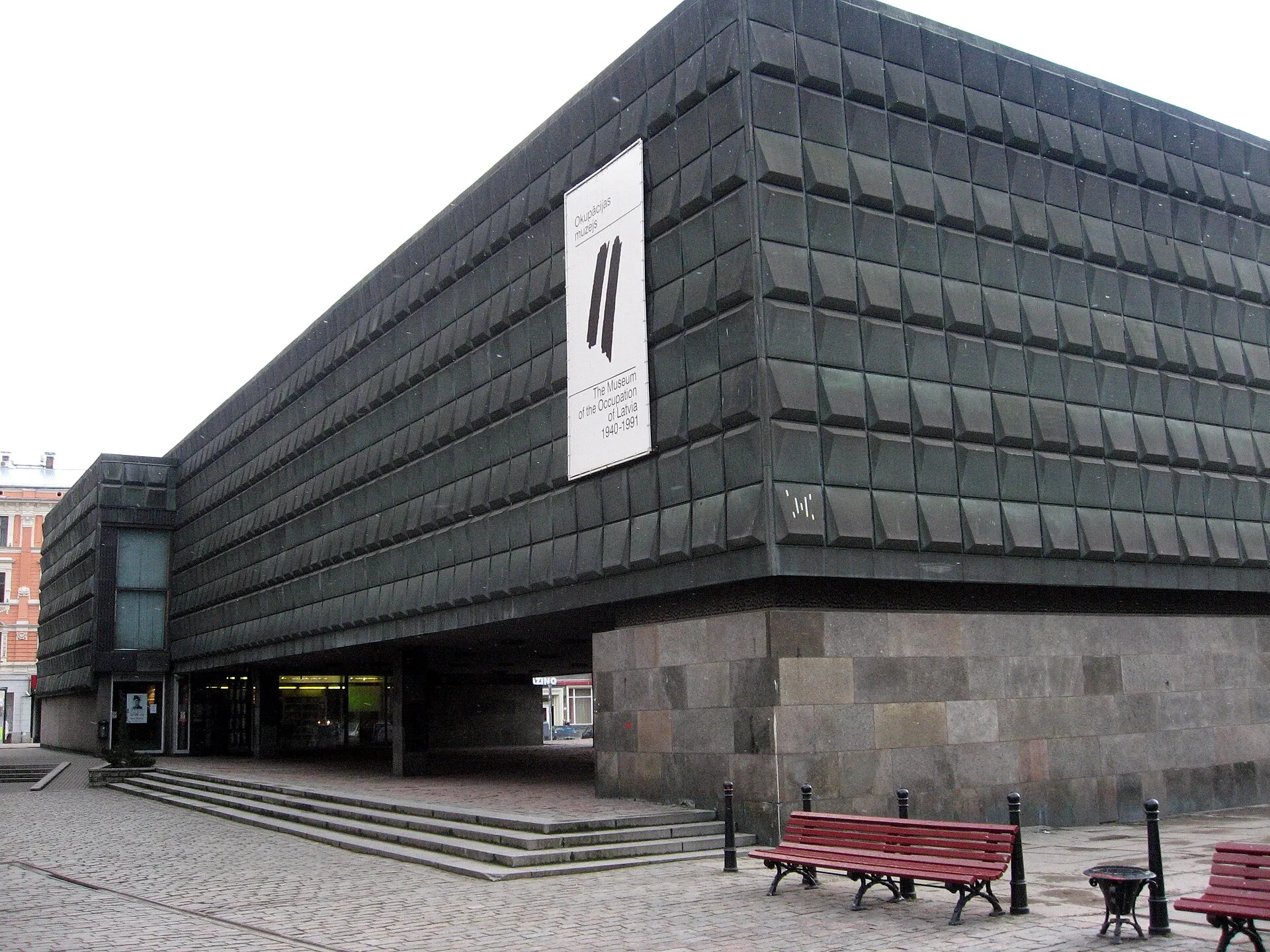
The Black House, White House and Memorial complex
The museum complex sets a Soviet-era building against a modern extension:
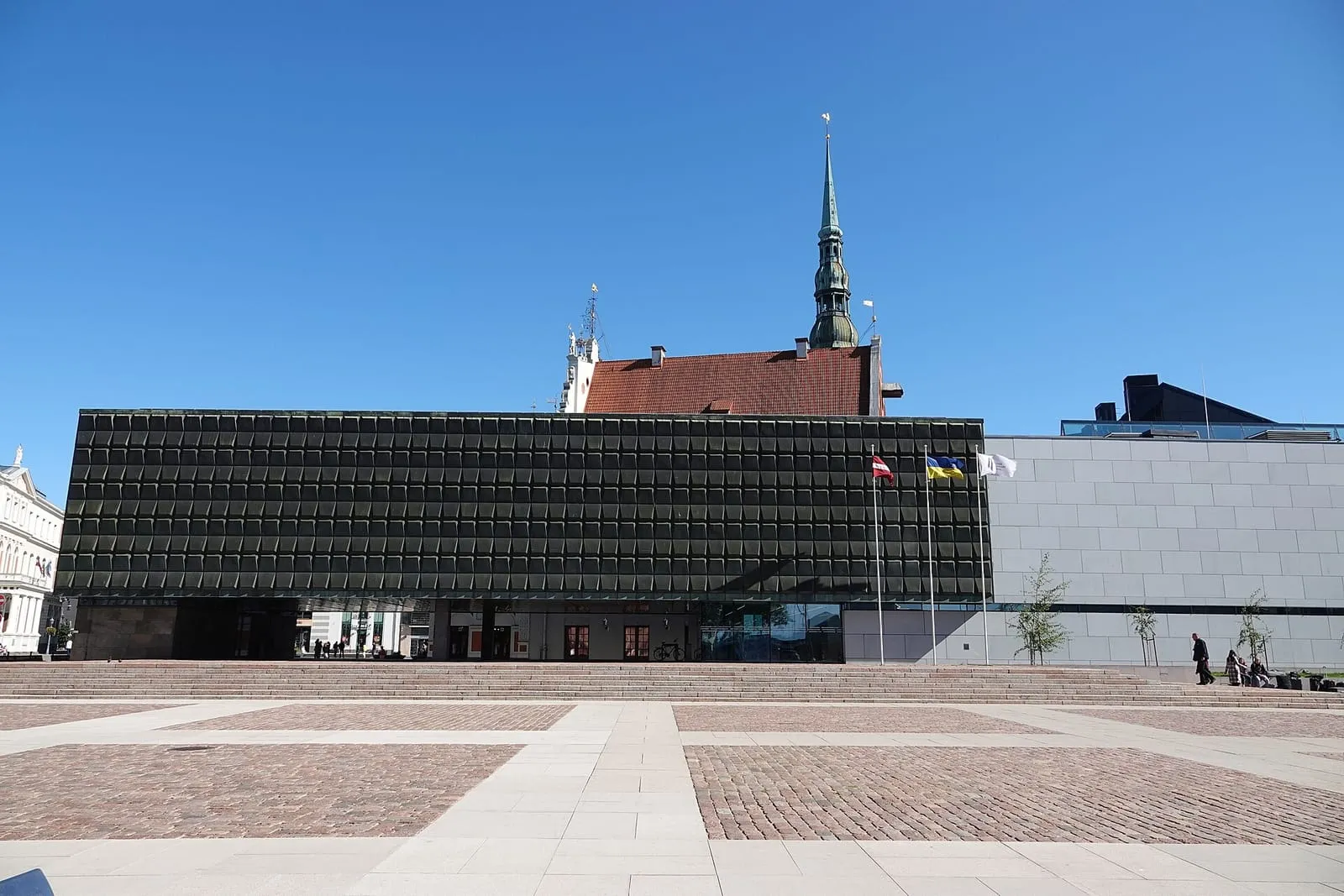
- The Black House: The dark, windowless, copper-clad pavilion was built in 1970 to house the Soviet Memorial Museum of the Red Latvian Riflemen.
- The White House (Nākotnes nams): The Latvian-American architect Gunnar Birkerts (who also designed the National Library of Latvia across the river) designed this white, glass-filled extension to interlock with the dark Soviet pavilion, symbolising Latvia’s move from occupation to democracy.
- The Memorial to the Victims of Soviet Occupation (Vēstures taktīla): Beside the museum stands a 10-metre-high angular steel wall sculpture by artist Kristaps Ģelzis, known as the “Tactile of History”. Its patinated black metal surface carries sound recordings and tactile panels with whispered names and dates of murdered and exiled Latvian citizens.
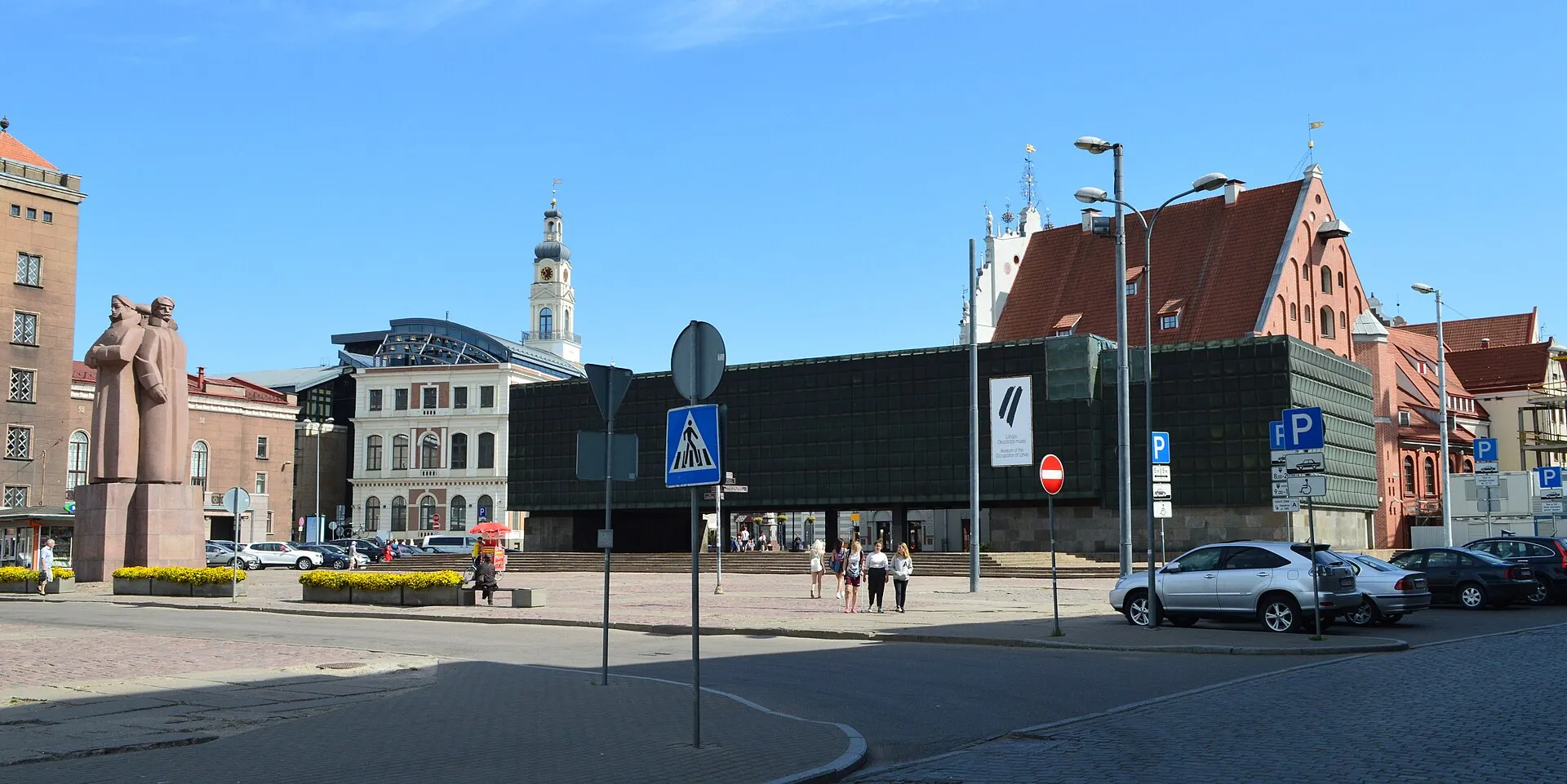
The Latvian Riflemen Monument
In the middle of the square in front of the museum stands the Monument to the Latvian Riflemen (Latviešu strēlnieku piemineklis). Carved in 1971 by sculptor Valdis Albergs from blocks of red Ukrainian granite, the 13-metre sculpture shows three soldiers standing back-to-back in greatcoats and helmets.
The monument commemorates the Latvian Riflemen formations created in 1915 to fight Imperial German armies in the First World War. Soviet authorities dedicated the statue to the Red Riflemen who guarded Lenin during the Bolshevik Revolution; today Latvia honours all the riflemen, who fought on both sides of the front line in the struggle for self-determination.
Three periods of occupation: 1940 to 1991
The core exhibition runs in chronological order.
1. The First Soviet Occupation (1940–1941)
The exhibition opens with the secret deal of August 1939:
- The Molotov-Ribbentrop Pact: Facsimile maps and the declassified secret protocols show how Nazi Germany and the Soviet Union divided northern Europe, placing Latvia, Estonia and Finland in Stalin’s sphere of interest.
- The June 1940 Invasion: Documents chart the arrival of Red Army tanks, the forced resignation of President Kārlis Ulmanis, and sham parliamentary elections where only one approved communist candidate list was permitted on the ballot.
- The “Year of Horror” (Baigais gads): Display cases show how Latvian civic society was dismantled: banks nationalised, independent newspapers shut, scouts and church groups banned, and thousands of political, military and academic leaders executed, many in the basement of the KGB Corner House.
- The 14 June 1941 Deportations: In a single night, a week before Germany attacked the USSR, Soviet NKVD units rounded up 15,424 Latvian citizens, including 3,751 children, and packed them into locked cattle wagons bound for forced labour camps in the Urals and Siberia.
2. The Nazi German Occupation (1941–1944/45)
German armies entered Riga in July 1941 and were welcomed at first by some residents who hoped for restored independence:
- Reichskommissariat Ostland: Nazi authorities set up a civil administration under Hinrich Lohse, making clear that Latvia was to be colonised as German territory, not granted sovereignty.
- The Holocaust in Latvia: The exhibition documents the murder of over 70,000 Latvian Jews (roughly 90% of the pre-war Jewish population) and 20,000 Jews transported from Germany, Austria and Czechoslovakia. Archival exhibits cover the mass shootings in Rumbula and Biķernieki forests, organised by the Nazi Einsatzgruppen with local auxiliaries, the Arājs Commando.
- Forced conscription: Nazi authorities conscripted over 115,000 Latvian men into the Latvian Legion of the Waffen-SS to fight the advancing Red Army on the Eastern Front.
3. The Second Soviet Occupation (1944/45–1991)
The return of the Red Army in autumn 1944 brought nearly half a century of Soviet rule:
- The National Partisans (Forest Brothers): After the war, over 20,000 armed Latvian partisans retreated into the forests and fought Soviet security forces until the late 1950s. The museum displays excavated bunker equipment, underground printing presses, hunting rifles and partisan uniforms.
- Operation Priboi (25 March 1949): To break rural resistance and force collective farming (kolkhozes), Soviet authorities carried out a second mass deportation. In four days, 42,125 Latvians, more than two percent of the population and mostly women, elderly farmers and children, were seized without trial and exiled to settlements in Krasnoyarsk, Omsk and Tomsk.
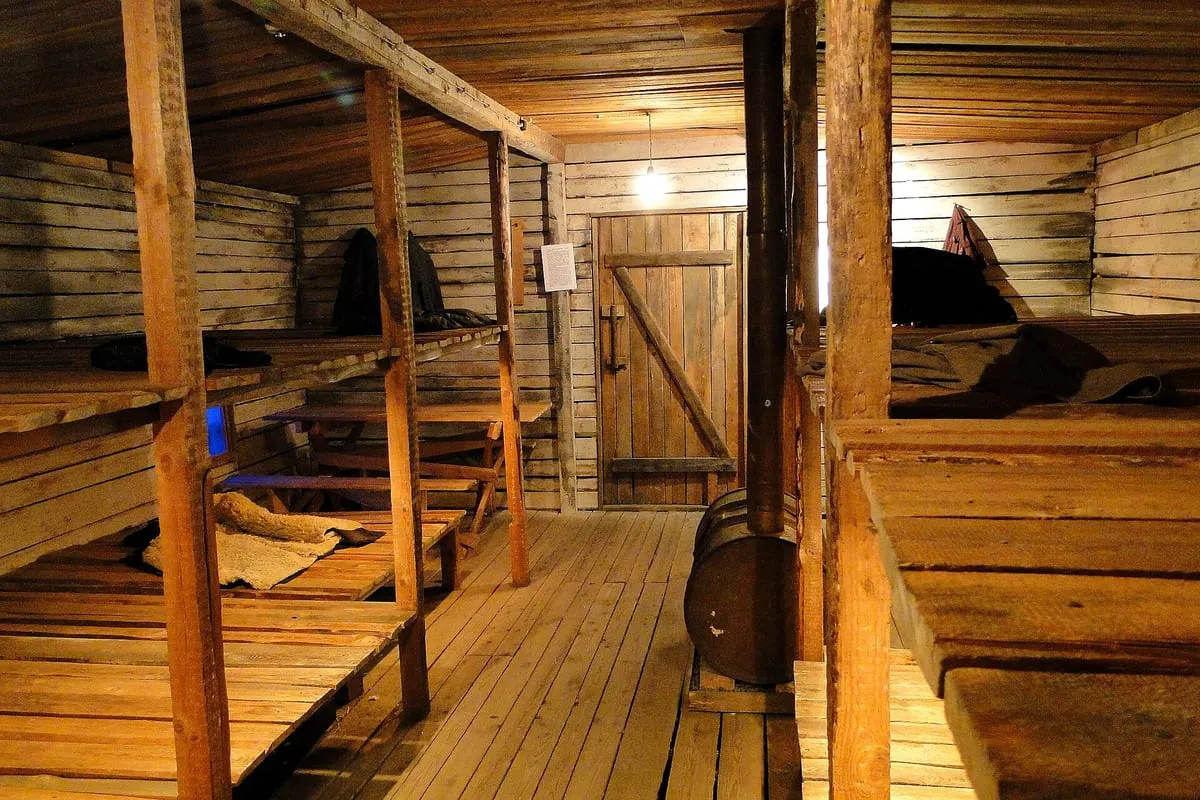
- The reconstructed Siberian Gulag barrack: In the central hall stands a timber prisoner barrack rebuilt from surviving blueprints of forced labour camps in the Kolyma and Vorkuta mining basins. The double-tiered pine bunks hold handmade objects made by Latvian prisoners: aluminium spoons carved with dates of exile, rosaries strung from dried breadcrumbs and farewell letters on strips of birch bark.
The road to restored independence: 1987 to 1991
The final galleries cover the non-violent resistance that led to independence as the Soviet Union collapsed:
- The Helsinki-86 Human Rights Group: In June 1987, a small group of Latvian dissidents publicly laid red-and-white flowers at the base of the Freedom Monument, the first of the mass demonstrations of the Baltic awakening.
- The Baltic Way (23 August 1989): Photographs and news footage show two million people joining hands in a 675-kilometre human chain from Tallinn through Riga to Vilnius, demanding that the Molotov-Ribbentrop Pact be denounced.
- The January 1991 Barricades: Tractors, concrete blocks, sandbags and radio transmitters used by unarmed Latvians to defend the Supreme Council and the TV studios against Soviet military crackdowns, leading to full de facto independence on 21 August 1991.
Practical visiting tips and neighbourhood connections
- Location: Latviešu strēlnieku laukums 1, directly on the southern edge of Town Hall Square in Vecrīga.
- On foot: Two minutes’ walk from the House of the Black Heads, three minutes from St Peter’s Church, and five minutes from the Central Market.
- Public transport: Trams 1 and 3 stop at 11. novembra krastmala or Grēcinieku iela on the river embankment, roughly 150 metres away. Review our Riga public transport guide for transit tickets.
- Duration: Allow 90 to 120 minutes. There is a lot of archival material, video testimony and personal artefacts, including accounts of deportation and execution.
What to see next
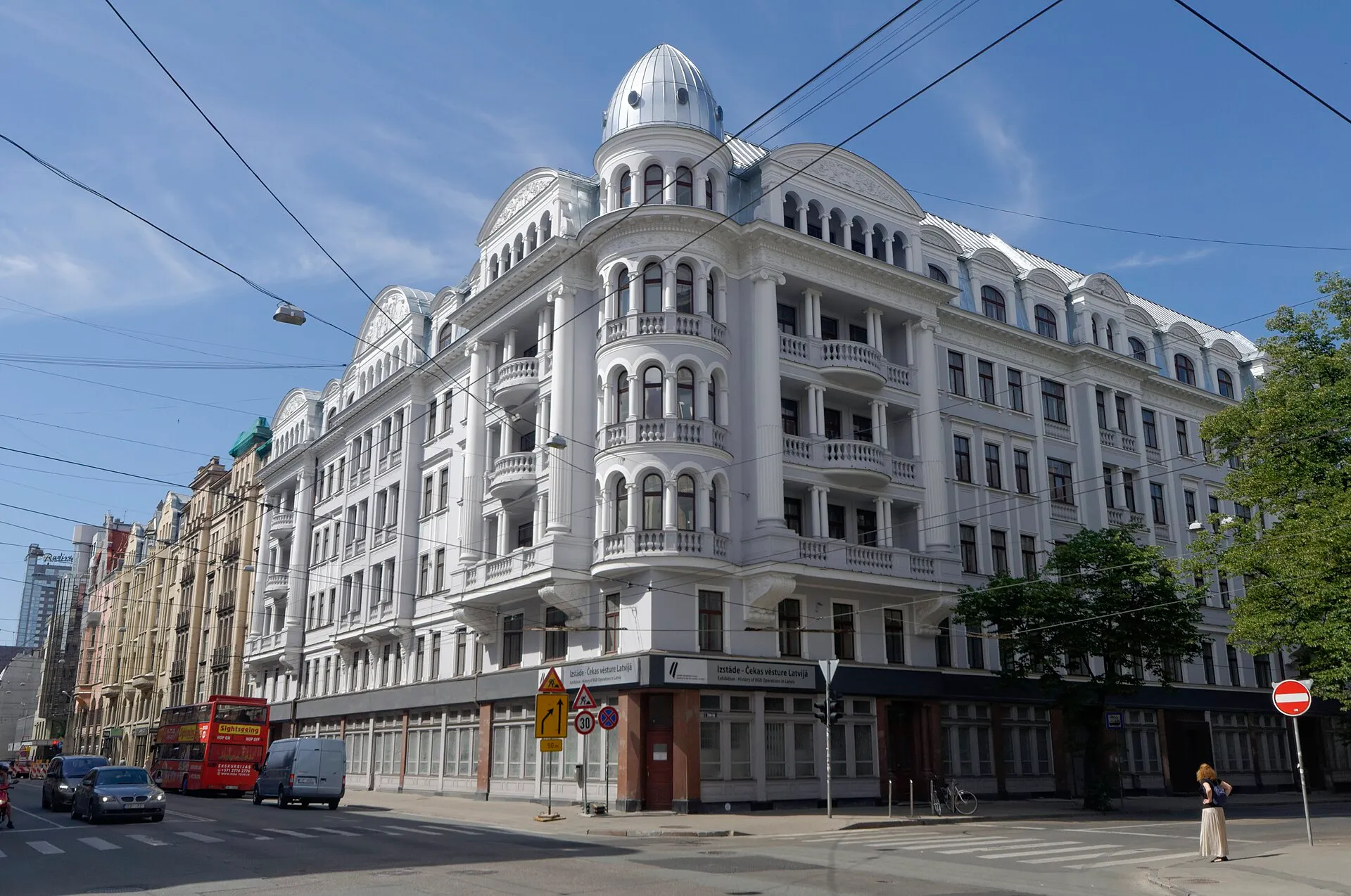
- KGB Corner House (Stūra māja): The museum’s branch in Centrs, with guided tours of the basement interrogation cells and execution room.
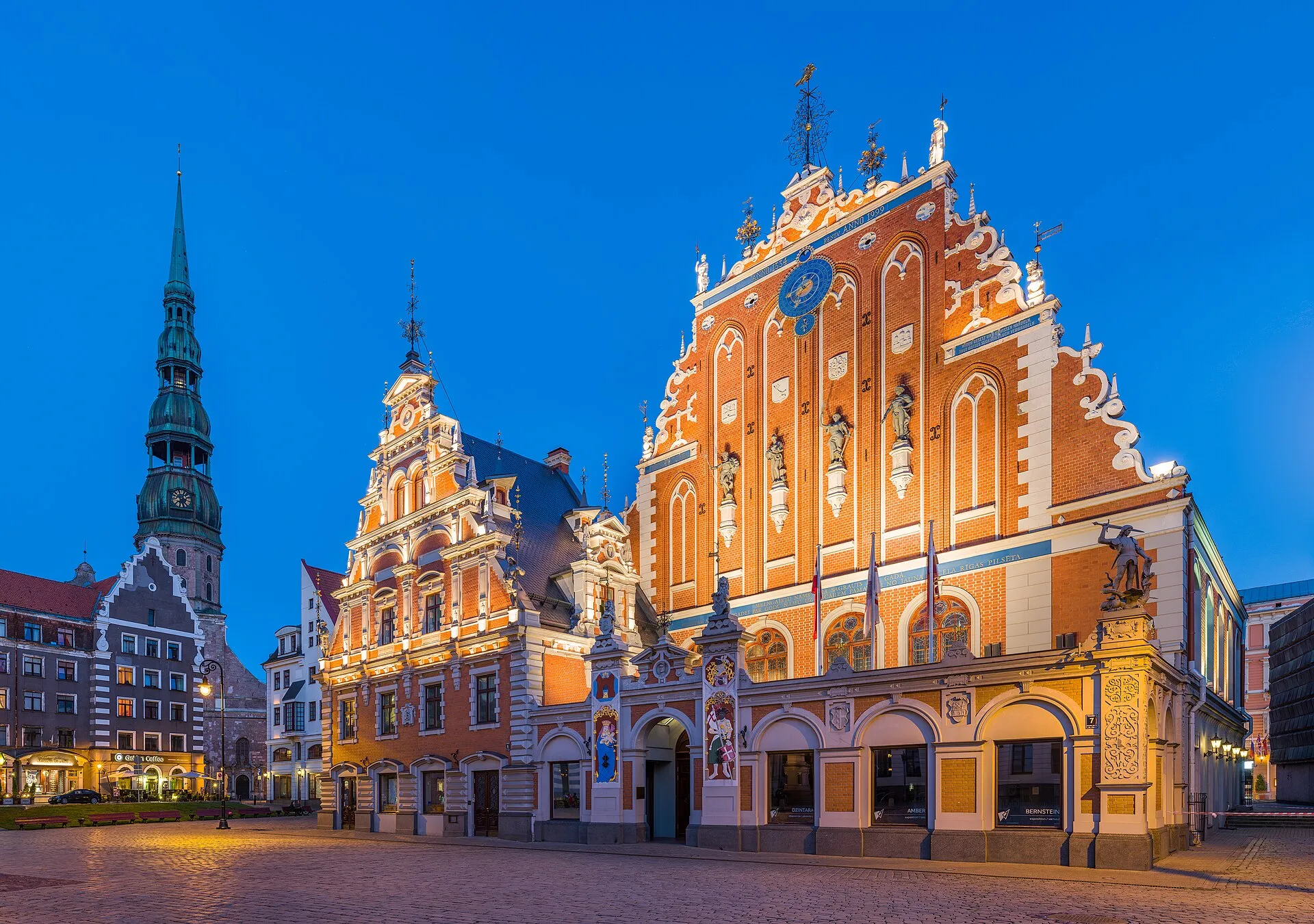
- House of the Black Heads: Across Town Hall Square, the rebuilt merchants’ guildhall of Hanseatic Riga.
- Freedom Monument and Bastejkalns: Where Latvians rallied during the Singing Revolution.
- Riga Central Market: Five minutes’ walk south across the canal, in former zeppelin hangars.
- Free things to do in Riga: Monuments, memorials and walking routes across Old Riga.
Common questions
How much are tickets to the Museum of the Occupation of Latvia?
Standard adult admission is €8.00. Students pay €5.00, and children up to 18 (except in groups) enter free of charge, according to the museum's own ticket page. Audio guides cost €4.00 in ten languages. Admission is free on five national commemoration days each year.
What are the opening hours of the Occupation Museum?
The museum is open daily from 10:00 to 18:00. The museum is closed on 1 January, 23 and 24 June (Midsummer), and 24, 25, 26 and 31 December.
What historical periods does the museum cover?
The permanent exhibition chronicles the three successive foreign occupations of Latvia from 1940 to 1991: the first Soviet occupation (1940–1941), the Nazi German occupation (1941–1944/45), and the second Soviet occupation and totalitarian regime (1944/45–1991).
Is the KGB Corner House part of this museum?
Yes. The Corner House (Stūra māja) at Brīvības iela 61 in the Centrs neighbourhood operates as an official branch of the Museum of the Occupation of Latvia, offering guided tours of the authentic Soviet secret police interrogation cells.
Where is the Museum of the Occupation of Latvia located?
At Latviešu strēlnieku laukums 1 (Latvian Riflemen Square), right on the southern edge of Town Hall Square in Old Riga, between the House of the Black Heads and the Daugava River.