In this guide
💡 The Short Version: Selecting the best time to visit Reykjavik involves choosing between two radically contrasting seasonal worlds. Summer (June to August) delivers up to 21 hours of daylight, mild weather with afternoon highs of 13°C to 15°C, boat tours to offshore puffin colonies, and accessible highland roads. Winter (October to April) transforms the capital into an wonderland of long polar twilights, steaming outdoor geothermal pools, and dark night skies ideal for hunting the Northern Lights. The shoulder months of May and September provide an attractive compromise with lower accommodation prices, fewer tourist crowds, and balanced daylight.
Positioned on south-western Iceland’s coast at latitude 64°08’ N, Reykjavik has a sub-polar oceanic climate (Köppen Cfc). While its high northern latitude brings swings in seasonal daylight—from 21 hours in midsummer to barely four hours in midwinter—its coastal maritime location prevents the extreme sub-zero temperatures experienced in continental Scandinavia or northern Canada.
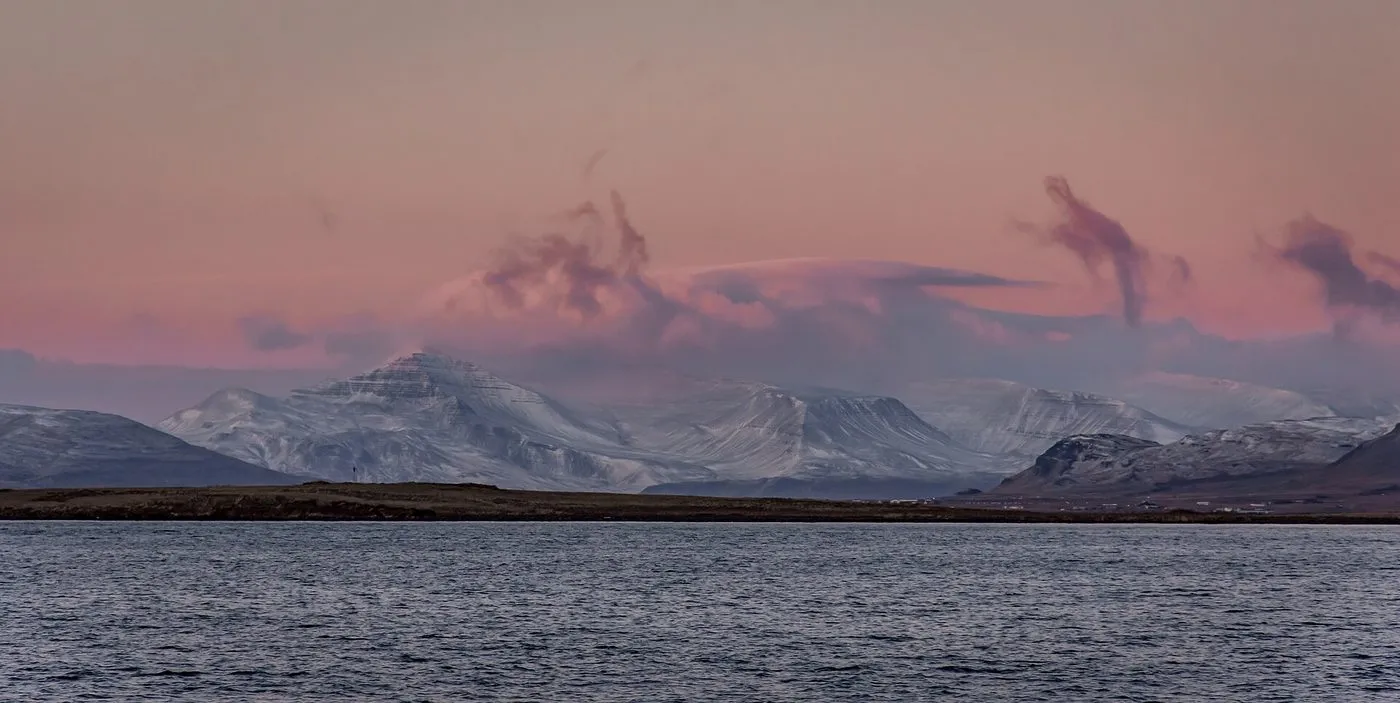 Evening light over Faxaflói bay, with the mountains across the water. Photo: kilgarron, Wikimedia Commons, CC BY 2.0.
Month-by-month climate, daylight and events
The table below compiles long-term 30-year climate averages recorded by the Icelandic Meteorological Office (Veðurstofa Íslands), paired with seasonal wildlife and cultural festivals:
| Month | Mid-month daylight | Average daily high / low | Average rainfall | Northern Lights | Key wildlife & major events |
|---|---|---|---|---|---|
| January | ~5 hours | 3.2°C / -1.7°C | 87 mm | In season (Peak darkness) | Dark Music Days festival; New Year celebrations continue |
| February | ~8.5 hours | 3.3°C / -1.9°C | 91 mm | In season | Winter Lights Festival (Vetranarhátíð); light art installations downtown |
| March | ~11.5 hours | 4.2°C / -1.3°C | 81 mm | In season (Equinox solar peak) | Beer Day (Bjórdagurinn, 1 March); Food and Fun culinary festival |
| April | ~15 hours | 6.9°C / 1.0°C | 59 mm | End of season (Concludes ~15-20 April) | First Day of Summer holiday; puffin tours begin 20 April |
| May | ~18 hours | 10.1°C / 4.0°C | 53 mm | None (Nights too bright) | Whales return to Faxaflói bay; shoulder season hotel pricing |
| June | ~21 hours | 13.0°C / 7.2°C | 43 mm | None (Perpetual twilight) | National Day (17 June); Midnight Sun; F-roads begin opening |
| July | ~20 hours | 14.9°C / 9.1°C | 50 mm | None (Midnight Sun) | Warmest month; peak summer tourism; music and arts festivals |
| August | ~16.5 hours | 14.1°C / 8.6°C | 65 mm | Opens late August (Final week) | Reykjavik Pride; Culture Night (Menningarnótt); puffins depart 20 Aug |
| September | ~13 hours | 11.4°C / 6.2°C | 87 mm | In season (Equinox solar peak) | Autumn colours; sheep and horse roundups (réttir); RIFF film festival |
| October | ~10 hours | 7.6°C / 2.7°C | 80 mm | In season | Imagine Peace Tower lit on Viðey; golden autumn light |
| November | ~6.5 hours | 4.7°C / -0.1°C | 87 mm | In season | Iceland Airwaves music festival; Christmas beer launch |
| December | ~4 hours | 3.3°C / -1.6°C | 95 mm | In season | 13 Yule Lads arrive; festive bonfires and New Year fireworks |
Summer season (June to August): the Midnight Sun
Summer is Iceland’s high travel season, attracting visitors keen to maximize daylight hours and explore regions inaccessible during the winter months.
Daylight and the outdoor lifestyle
Around the summer solstice on 21 June, the sun barely dips below the northern horizon. The sky never becomes dark, casting a golden twilight over the city between midnight and 03:00. This endless light fundamentally alters sightseeing: you can hike around the crater lake of Kerið on the Golden Circle at 22:00 or walk the clifftops of Arnarstapi on Snæfellsnes at midnight in complete daylight without encountering crowds.
Wildlife watching
- Atlantic Puffins: Between late April and 20 August, roughly 60% of the entire global Atlantic puffin population breeds on Icelandic coastal cliffs. Daily express boat and RIB tours depart from Reykjavik Old Harbour to the protected nesting islands of Akurey and Lundey, as outlined in our whale watching guide.
- Whale Watching: Minke whales, humpback whales, white-beaked dolphins, and harbour porpoises feed actively in Faxaflói bay, drawn by summer blooms of krill and capelin.
Highland roads (F-Roads)
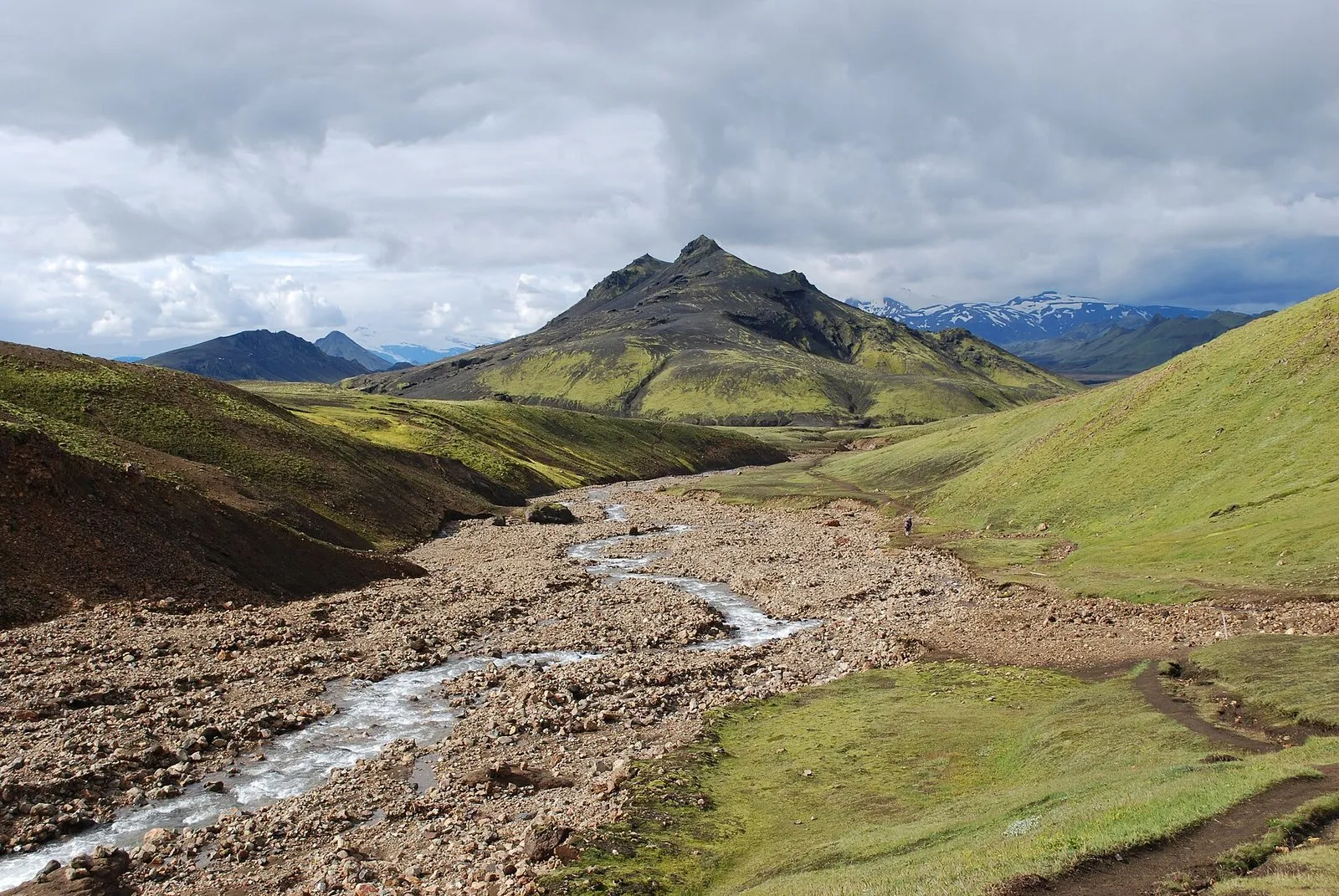
The interior volcanic highlands—including Landmannalaugar, Þórsmörk, and Kerlingarfjöll—are sealed under snow and mud throughout winter and spring. The Icelandic Road and Coastal Administration (Vegagerðin) opens these rugged 4WD tracks progressively between early June and early July as soils dry out.
Drawbacks of summer: Hotel rates and car rental prices reach their annual peaks, popular restaurants require bookings weeks in advance, and downtown streets fill with cruise ship day visitors. Pack an eye mask if your hotel room does not feature heavy blackout curtains.
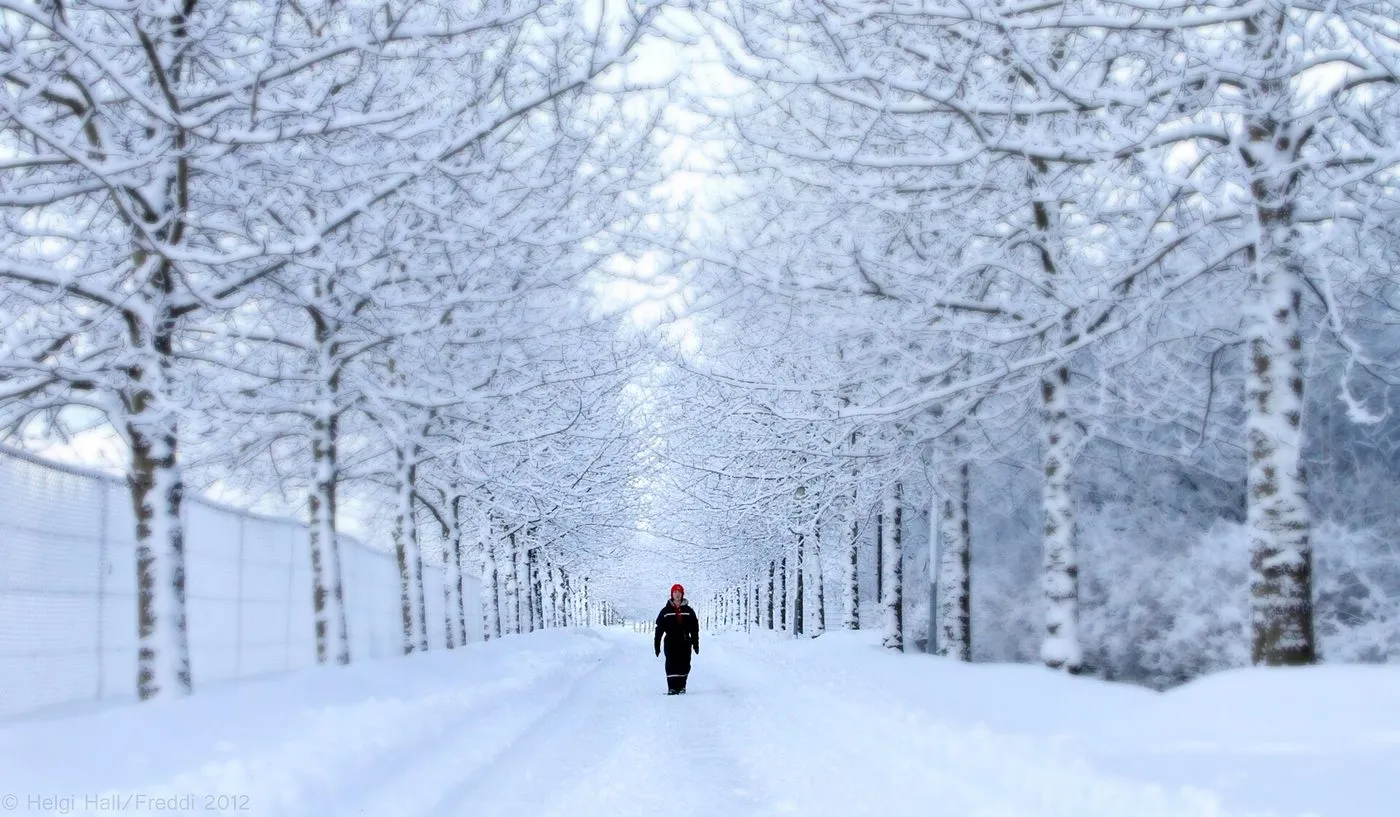 A snow-covered tree-lined path in Reykjavik. Photo: Helgi Halldórsson from Reykjavík, Iceland, Wikimedia Commons, CC BY-SA 2.0.
Winter season (October to April): auroras and snowscapes
Winter in Reykjavik is a season of striking sensory contrasts: sub-arctic blizzards sweeping across Faxaflói bay followed by, crisp sunny days with snow capping Mount Esja.
The Northern Lights (Norðurljós)
Winter’s defining allure is the aurora borealis. Between September and mid-April, complete darkness enables observers to witness solar wind particles colliding with the upper atmosphere to create shimmering curtains of emerald, violet, and crimson luminescence.
While visible from dark corners of the city such as Grótta lighthouse, joining an organized tour out into the rural countryside maximizes your chances of dodging localized cloud banks, as detailed in our guide to the Northern Lights in Reykjavik.
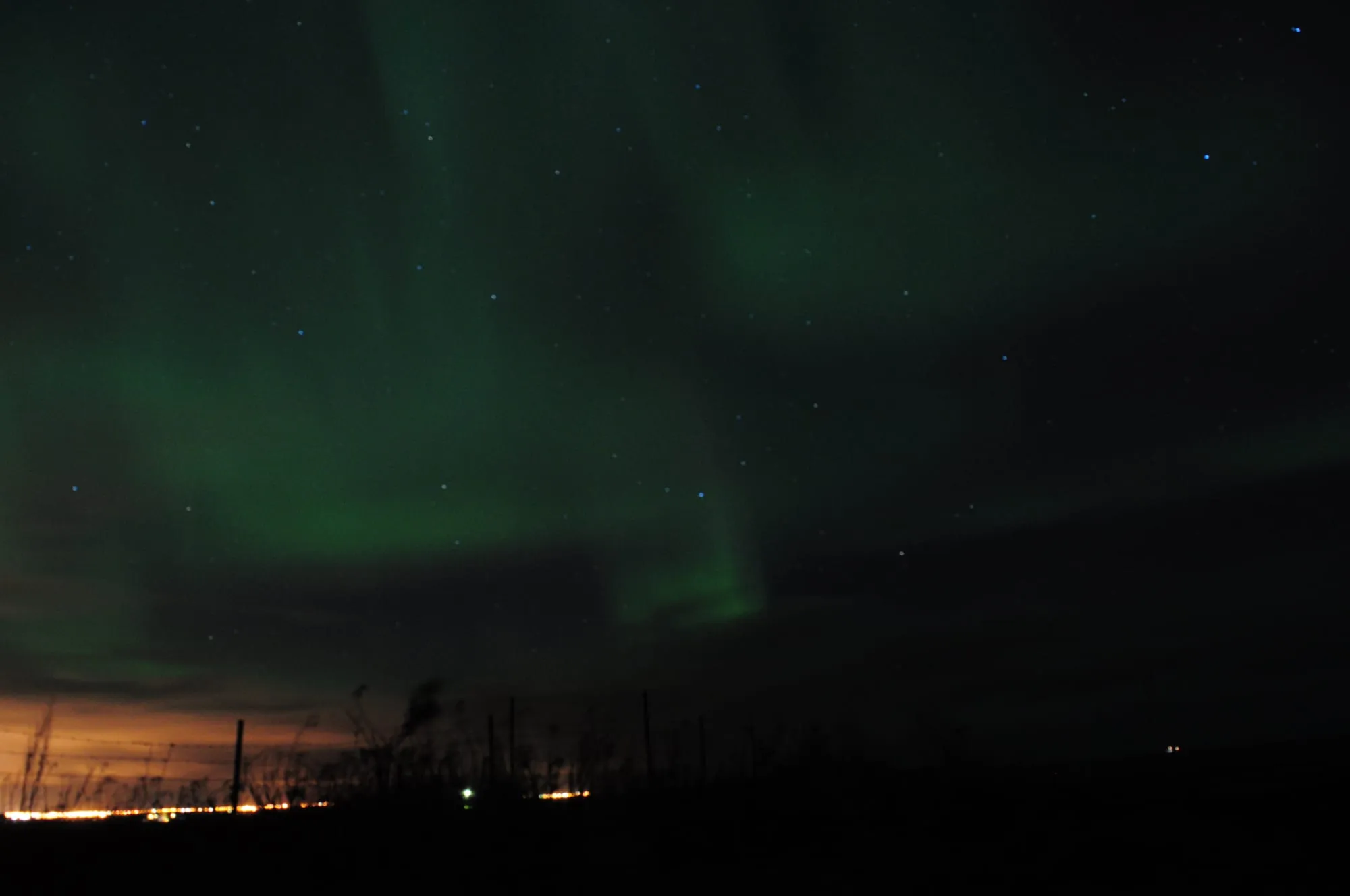 The aurora borealis in the night sky outside Reykjavik. Photo: Beata May, Wikimedia Commons, CC BY-SA 4.0.
Winter thermal bathing
There is no finer winter pleasure in Iceland than sinking into a 40°C geothermal hot pot while fresh snow flakes melt against your face. Reykjavik’s eight municipal thermal pools (such as Sundhöllin and Laugardalslaug) operate outdoors daily year-round, while the oceanfront infinity edge at Sky Lagoon and the silica brine of the Blue Lagoon remain open throughout the winter freeze.
Winter holiday magic
From late November through early January, the city embraces festive customs: the arrival of the folklore 13 Yule Lads, candlelit Advent concerts at Hallgrímskirkja and Harpa, neighbourhood bonfires, and explosive citizen fireworks displays on New Year’s Eve, detailed in our Christmas and New Year guide.
The shoulder months: May and September
Savvy independent travellers frequently identify May and September as the most rewarding months for a city break in Reykjavik:
Why choose May?
- Rapidly lengthening days: Daylight expands from 16.5 hours on 1 May to nearly 20 hours by 31 May, providing ample light for full-day touring.
- Lower costs: Accommodation providers, car hire companies, and airlines operate on shoulder-season tariffs, delivering savings of 20% to 35% compared to peak July rates.
- Dry weather: May is statistically one of Reykjavik’s driest months, averaging just 53 mm of precipitation.
- Trade-off: Nights are too bright for Northern Lights viewing, and highland F-roads remain closed.
Why choose September?
- The best of both worlds: September offers balanced daylight (12 to 14 hours), manageable temperatures (highs around 11°C), and the official opening of the Northern Lights season.
- Autumn foliage: Low-growing sub-arctic birch woodlands, mountain heaths, and mossy lava fields turn brilliant shades of ochre, copper, and crimson across Þingvellir and western Iceland.
- Fewer crowds: Summer family holiday crowds have dispersed, leaving popular sights on the South Coast and Snæfellsnes Peninsula substantially quieter.
Essential clothing advice across the seasons
No matter what calendar month you visit, Icelandic meteorologists share a universal national adage: “If you don’t like the weather, wait five minutes.” Sub-polar low-pressure systems moving off the Atlantic can bring calm sunshine, driving rain, and gale-force sleet within a single four-hour span.
- Summer Packing Essentials: Dress in breathable thermal layers, pack a waterproof and windproof Gore-Tex outer shell, sturdy rubber-soled walking boots, sunglasses (essential against intense low-angle summer glare), and a compact eye mask.
- Winter Packing Essentials: A heavy insulated windproof winter coat, moisture-wicking merino wool thermal base layers, fleece mid-layers, thermal leggings, woollen hat, fleece neck gaiter, insulated waterproof gloves, and rubber clip-on microspikes (hálkugormar) for walking on icy city pavements. Review our complete checklist in packing for Iceland.
For structuring your daily sightseeing plans based on your travel dates, explore our recommended 3-day Reykjavik itinerary and browse our comprehensive Reykjavik travel guide.
Common questions
What is the best month to visit Reykjavik?
The optimal month depends on your travel priorities. June and July offer 20 to 21 hours of daylight, milder temperatures (13°C to 15°C), accessible highland roads, and nesting puffin colonies. September and October bring autumn colours, enough daylight for sightseeing and the start of the Northern Lights season without mid-winter sub-zero storms.
How cold does Reykjavik actually get in the winter?
Due to the warming influence of the North Atlantic Current (Gulf Stream), Reykjavik's winter temperatures are significantly milder than most first-time travellers expect. Official 30-year meteorological records show average winter highs of 2°C to 4°C and lows hovering around -2°C to -1°C. However, fierce coastal winds and driving sleet make ambient air feel substantially colder.
Does Reykjavik experience 24 hours of total darkness in winter or 24 hours of continuous sunshine in summer?
Neither. Around the summer solstice (21 June), the sun dips briefly beneath the horizon between 00:03 and 02:55, creating a luminous perpetual twilight rather than complete darkness. Around the winter solstice (21 December), the sun rises at 11:22 and sets at 15:30, providing roughly four hours and eight minutes of low golden sunlight.
When can you see Atlantic puffins in Reykjavik?
Atlantic puffins arrive from the open ocean in mid-to-late April to breed in cliff burrows on offshore islands in Faxaflói bay (Akurey and Lundey). Daily boat excursions operate from Reykjavik Old Harbour between 20 April and 20 August, after which puffins depart out to the open sea for the winter.