In this guide
💡 The Short Version: Christmas (Jól) and New Year’s Eve in Reykjavik run on folklore and community celebration. The main traditions are the arrival of the 13 Yule Lads from 12 December, the nation pausing as church bells ring at 18:00 on Christmas Eve, and massive community bonfires (brennur) and midnight fireworks on New Year’s Eve. Holiday closures to know: public thermal pools close at 13:00 on Christmas Eve and all day on 25 December, while the Blue Lagoon operates on pre-booked holiday hours. Or book a tour: experience festive folklore or midnight harbour fireworks by booking GetYourGuide’s Reykjavik Christmas Walking Tour with Icelandic Traditionsad or the New Year’s Eve Fireworks Cruisead.
With only four hours of daylight around the winter solstice (sun rising around 11:20 and setting at 15:30), Icelanders compensate for the deep polar gloom by adorning residential windows, balconies, and historic downtown streets with thousands of warm golden string lights, illuminated Advent stars, and festive garlands that remain lit from late November through mid-January.
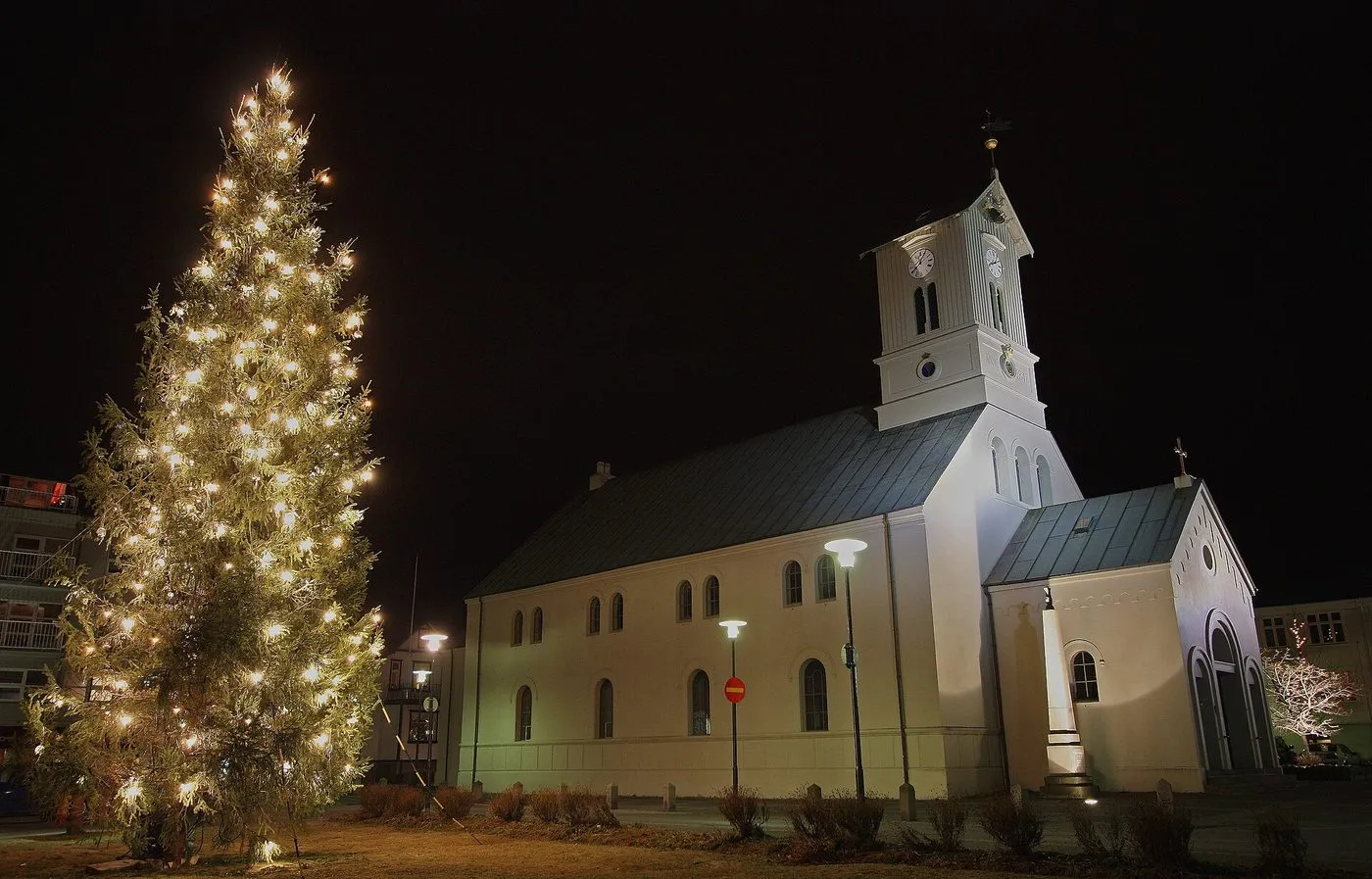 The Oslo Christmas tree beside Dómkirkjan on Austurvöllur. Photo: Helgi Halldórsson from Reykjavík, Iceland, Wikimedia Commons, CC BY-SA 2.0.
Holiday schedule and key dates
The Icelandic holiday calendar features ancient cultural milestones that dictate shop closures and public transport schedules:
| Key date | Cultural occasion | Commercial & municipal operational status |
|---|---|---|
| Late November | First Sunday of Advent | Christmas tree illumination on Austurvöllur; ice rink opens on Ingólfstorg |
| 12 December | Arrival of Stekkjastaur | The first Yule Lad arrives in town; children place shoes on windowsills |
| 23 December | Saint Thorlak’s Day (Þorláksmessa) | Shops open late until 22:00 or 23:00; traditional fermented skate (skata) feasts |
| 24 December | Christmas Eve (Aðfangadagur) | Shops shut by 12:00–13:00; public pools open 08:00–13:00; bells ring at 18:00 |
| 25 December | Christmas Day (Jóladagur) | Statutory holiday; museums, shops and city pools closed; public transport starts 10:00 |
| 26 December | Boxing Day (Annar í jólum) | Public holiday; city pools open 11:00–17:00; selected restaurants reopen |
| 31 December | New Year’s Eve (Gamlársdagur) | Pools open 08:00–13:00; bonfires 20:30; Áramótaskaup TV comedy 22:30; fireworks 23:30 |
| 1 January | New Year’s Day (Nýársdagur) | Public holiday; city pools open 13:00–17:00; evening bars and dining open |
| 6 January | The Thirteenth (Þrettándinn) | Final bonfires, folklore parades; last Yule Lad departs back to the mountains |
The folklore of the 13 Yule Lads and the Yule Cat
Rather than a single benevolent Santa Claus, Icelandic children look forward to the visits of thirteen mischievous brothers known as the Yule Lads (Jólasveinar). Originating as frightening mountain trolls used by parents to scare unruly children into good behaviour, the brothers evolved into quirky, mischievous tricksters during the 19th and 20th centuries.
The lads reside in the volcanic mountains with their mother, the monstrous ogress Grýla—who wanders down in winter carrying a sack to capture and boil disobedient children in a cauldron—and her lazy third husband Leppalúði. The family also keeps the giant, ravenous Yule Cat (Jólakötturinn), who stalks snowy streets on Christmas Eve to devour anyone who failed to receive at least one new item of woollen clothing to wear for the holiday. A massive, glowing sculpture of the Yule Cat is erected annually on Lækjartorg square throughout December.
The 13 Yule Lads arrival schedule
Starting on 12 December, children place a shoe on their bedroom windowsill each evening. If the child behaved well, the visiting lad leaves a small sweet, fruit, or toy; if naughty, they awake to find a cold, rotting raw potato:
| Yule Lad (Icelandic) | Traditional English name | Arrival date | Mischievous trick / personality |
|---|---|---|---|
| 1. Stekkjastaur | Sheep-Cote Clod | 12 December | Harasses sheep inside barns; hampered by stiff wooden peg-legs |
| 2. Giljagaur | Gully Gawk | 13 December | Hides in gullies waiting to sneak into dairy barns to steal milk froth |
| 3. Stúfur | Stubby | 14 December | Abnormally short; steals unwashed frying pans to scrape burnt crusts |
| 4. Þvörusleikir | Spoon Licker | 15 December | Extremely thin; steals long-handled wooden porridge spoons to lick clean |
| 5. Pottasleikir | Pot Licker | 16 December | Snatches pots and cauldrons from kitchen stoves to lick scrapings |
| 6. Askasleikir | Bowl Licker | 17 December | Hides beneath beds waiting for people to set down their wooden lidded food bowls |
| 7. Hurðaskellir | Door Slammer | 18 December | Delights in slamming wooden doors throughout the night to wake the household |
| 8. Skyrgámur | Skyr Gobbler | 19 December | Gorging himself on cultured Icelandic dairy skyr stored in pantry tubs |
| 9. Bjúgnakrækir | Sausage Swiper | 20 December | Hides in kitchen rafters to snatch cured smoked sausages hanging from rafters |
| 10. Gluggagægir | Window Peeper | 21 December | Peeks through frosted window panes looking for objects to steal |
| 11. Gáttaþefur | Door Sniffer | 22 December | Possesses an immense nose to sniff out festive deep-fried leaf bread (laufabrauð) |
| 12. Ketkrókur | Meat Hook | 23 December | Lowers a long wire hook down chimney flues to snag smoked holiday lamb |
| 13. Kertasníkir | Candle Beggar | 24 December | Follows children to beg for candles, which were historically rendered from edible tallow |
Following Christmas, the lads depart back to the volcanic highlands one by one in the exact same sequence, with the final lad, Kertasníkir, leaving on 6 January (Þrettándinn).
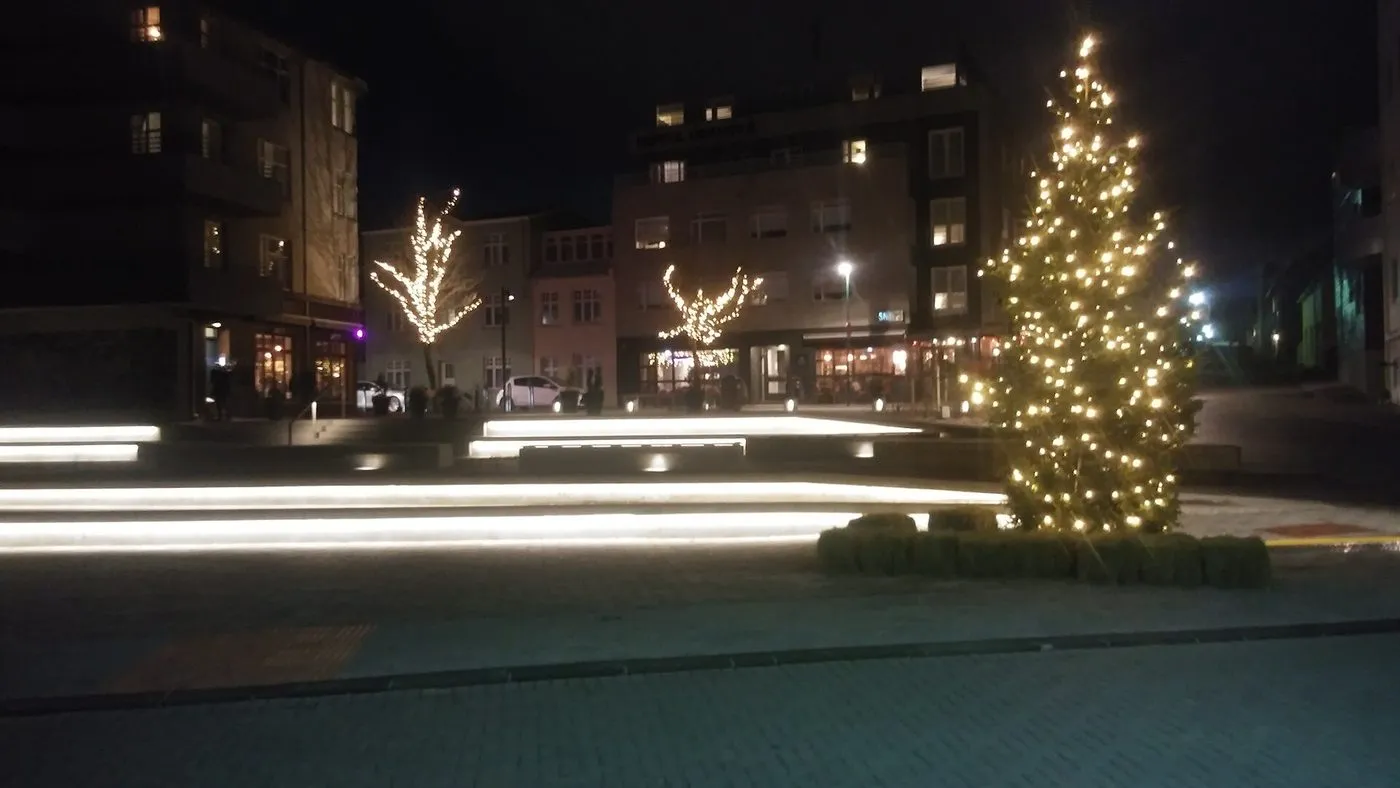 Christmas lights at Óðinstorg. Photo: Akigka, Wikimedia Commons, CC BY-SA 4.0.
Christmas traditions and markets in Reykjavik
Jólabókaflóð: The Christmas Book Flood
One of Iceland’s most cherished national traditions is Jólabókaflóð (“The Christmas Book Flood”). Dating back to the Second World War when paper was one of the few luxury commodities exempt from strict import rations, Icelanders exchange books as Christmas Eve gifts. After finishing dinner at 18:00, family members unwrap new books and spend the remainder of the evening drinking hot cocoa, eating chocolate, and reading quietly in bed.
Festive markets and ice skating
- Ingólfstorg Ice Rink: In central downtown Ingólfstorg, an open-air Christmas market surrounds a temporary ice skating rink illuminated by overhead string lights. Skates and helmets are available to hire on-site.
- Hafnarfjörður Christmas Village: Located in the neighbouring coastal town of Hafnarfjörður (20 minutes on Strætó bus 1), this holiday market features timber chalets selling artisanal crafts, knitwear, roasted almonds, and hot spiced fruit drinks (jólaglögg).
- Heiðmörk Craft Market: On Advent weekends, the Forestry Association hosts an artisan market at Elliðavatn in the Heiðmörk nature reserve, offering campfire storytelling, carol singing, and sustainable pine wreaths.
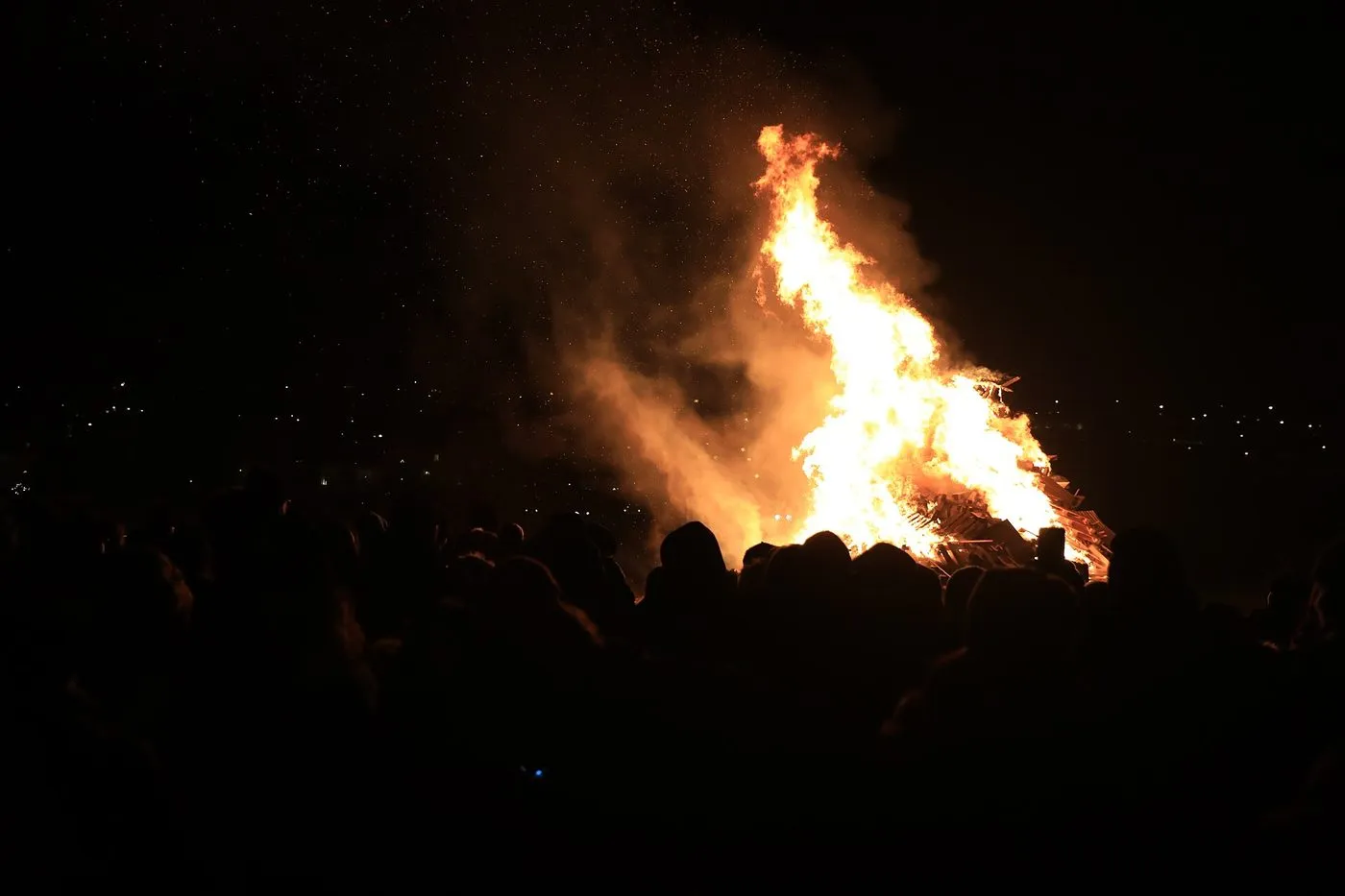 A New Year’s Eve bonfire. Photo: Mark Potocnjak, Wikimedia Commons, CC BY-SA 4.0.
New Year’s Eve: bonfires, Skaup and midnight fireworks
Reykjavik’s New Year’s Eve (Gamlársdagur) celebration is a community celebration with a set order:
1. Neighbourhood bonfires (Brennur, 20:30 to 22:00)
After the family dinner, residents gather around the city’s neighbourhood bonfires in parks and on the coast, including Ægisíða on the west-end shore. The fires burn out the old year while neighbours chat and let off early fireworks.
2. Áramótaskaup: the nationwide television pause (22:30 to 23:35)
At 22:30 the streets empty as most of the country tunes in to the broadcaster RÚV for Áramótaskaup (“The New Year’s Lampoon”), a satirical sketch show on the year’s news.
3. The midnight fireworks explosion (23:35 to 00:30)
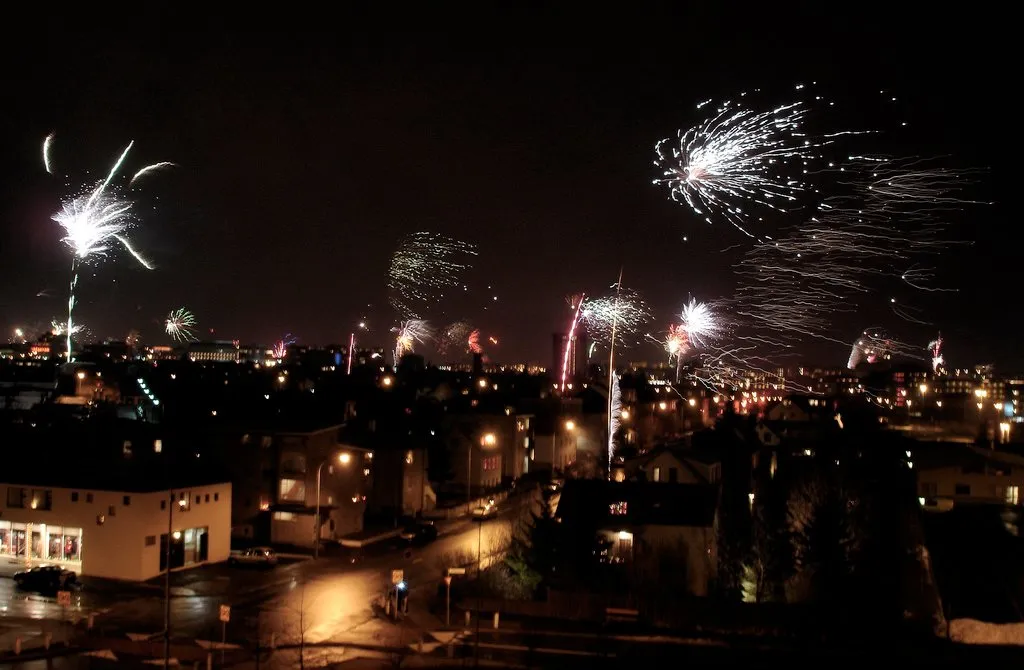
When the broadcast ends, families go out onto balconies, gardens and street corners with rockets and cakes bought from the volunteer rescue teams of ICE-SAR, who fund their work through firework sales. Around midnight the sky over the whole city is full of fireworks, with a good view from the plaza at Hallgrímskirkja church and from Öskjuhlíð hill.
Tour options and bookings
Festive tours cover holiday food traditions and the midnight fireworks from the water.
Reykjavik: Christmas Walking Tour with Icelandic Traditionsad
From 7,600 ISK · 4.7 stars from 8 reviews · 2 hours · Yule Lads folklore
A delightful December walking tour through illuminated downtown streets. Learn the full folklore of the 13 Yule Lads and the monstrous Yule Cat, visit the Oslo Christmas tree on Austurvöllur, discover historic holiday traditions, and sample seasonal holiday treats including leaf bread (laufabrauð) and sweet Christmas pastries.
Reykjavik: Christmas Food Tour with Tastings and Drinksad
From 20,000 ISK · 4.8 stars from 5 reviews · 3 hours · Festive seasonal delicacies
Delve into Iceland’s festive culinary calendar: taste tender holiday smoked lamb (hangikjöt), marinated game pâté, cured salmon gravlax, gingerbread, spiced craft holiday beers, and warm Christmas punch across four top-tier central restaurants.
Reykjavik: New Year’s Eve Fireworks Cruisead
From 21,100 ISK · 4.4 stars from 56 reviews · 2 hours · Champagne toast on the bay
A New Year’s Eve cruise. Sail out from the Old Harbour at 23:00 into the calm waters of Faxaflói bay. From the open observation decks, watch the entire coastline of Reykjavik, Kópavogur, and Seltjarnarnes burst into a continuous panorama of illuminated fireworks, accompanied by a midnight glass of sparkling champagne.
Essential survival advice for holiday travellers
- Book Christmas and New Year Dinners Months Ahead: Almost all independent restaurants close on the evening of 24 December. The few hotel dining rooms and fine-dining restaurants that remain open (such as Kol, Monkeys, and Sjávargrillið) serve expensive multi-course set menus that sell out completely by October or November. If self-catering in an apartment, purchase all groceries and supplies at Bónus or Krónan supermarkets before 12:00 on 24 December.
- Municipal Transport Surcharges: Strætó buses stop running early on Christmas Eve around 15:00 and operate on holiday timetables on 25 December and 1 January. Taxi companies apply a 35% holiday surcharge to all metered fares from midday on 24 December through midnight on 25 December, and on New Year’s Eve, as detailed in our guide on public transport in Reykjavik.
- Dress for Severe Cold: Fireworks watching and bonfire gatherings require standing outdoors in sub-zero coastal winds for two to three hours. Wear thermal base layers, a certified windproof winter coat, balaclava or fleece hat, insulated mittens, and snow boots with clip-on ice spikes.
For broader winter trip planning and weather advice, explore our guides on best time to visit Reykjavik and packing for Iceland.
Common questions
Where is the best place to watch the New Year's Eve fireworks in Reykjavik?
Unlike cities with a single municipal fireworks show, Reykjavik's New Year celebration is entirely citizen-led: residents buy fireworks from the search-and-rescue charity ICE-SAR and set them off across the city around midnight. Good vantage points are the hilltop plaza surrounding Hallgrímskirkja, the rooftop terrace of Perlan atop Öskjuhlíð, and boat cruises in Faxaflói bay.
What attractions and restaurants are open on 24 and 25 December in Reykjavik?
Christmas Eve (24 December) and Christmas Day (25 December) are family holidays with widespread commercial closures. Most shops and museums shut by 12:00 or 13:00 on 24 December and remain closed all day on the 25th. Municipal thermal pools operate reduced morning hours on 24 December (08:00 to 13:00) and close on the 25th. The Blue Lagoon remains open on 24 December (08:00 to 16:00) and 25 December (08:00 to 20:00).
What time does Christmas officially start in Iceland?
Christmas officially begins at precisely 18:00 on 24 December (Aðfangadagur). At that exact minute, church bells toll across the nation, national radio broadcasts the Lutheran cathedral service, and families sit down together for their festive holiday feast.
Who are the 13 Icelandic Yule Lads?
The Yule Lads (Jólasveinar) are thirteen mischievous brothers originating in Norse folklore, sons of the child-eating mountain troll Grýla and her lazy husband Leppalúði. Arriving one by one from the highlands over the thirteen nights leading up to Christmas Eve, each lad possesses a distinct personality and leaves small treats—or a rotting raw potato for disobedient children—in shoes placed on bedroom windowsills.