In this guide
💡 The Short Version: Dressing successfully for Iceland is not about wearing the heaviest down coat you own; it is about mastering the three-layer technical outdoor system. Layer a moisture-wicking merino wool or synthetic base layer, an insulating fleece or wool mid-layer, and a certified waterproof and windproof outer shell jacket with a storm hood. Pair these with waterproof hiking boots with aggressive rubber tread, waterproof overtrousers for spray-soaked waterfall trails, and swimwear for daily thermal pool visits. Between November and April, pack rubber slip-on microspikes (hálkugormar) for icy pavements and trails. Leave fashion trainers and umbrellas at home.
Because Iceland sits exposed in the stormy North Atlantic ocean, weather patterns change with extraordinary speed. Local meteorologists frequently observe that travellers can experience bright sunshine, horizontal gale-force rain, sleet, and calm twilight within a single three-hour excursion. Staying dry and warm depends entirely on choosing functional fabrics that wick perspiration away from the skin while sealing out moisture and wind.
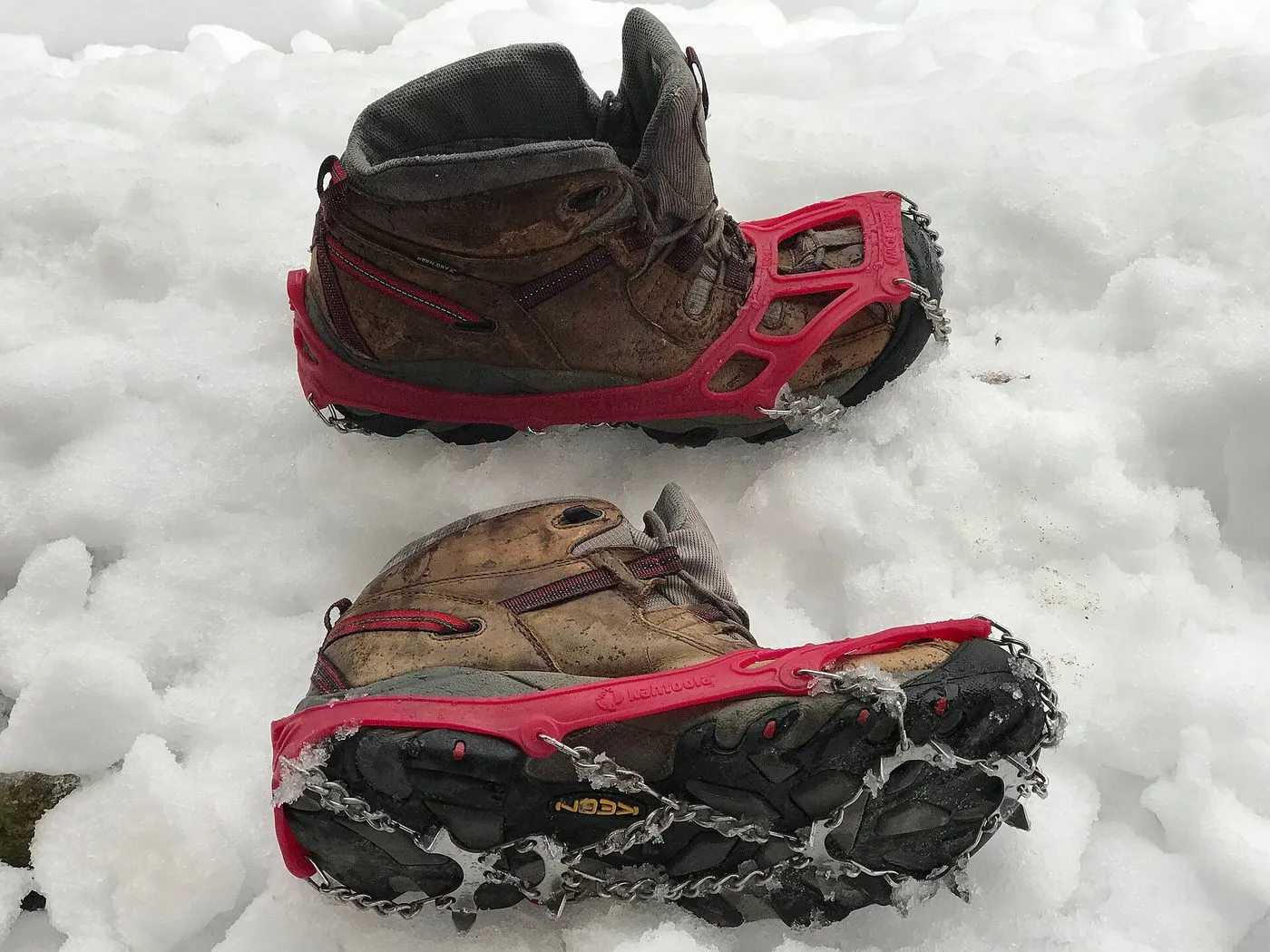 Microspikes fitted to hiking boots. Photo: HopsonRoad, Wikimedia Commons, CC BY-SA 4.0.
Seasonal temperature realities and wind chill
Before packing your suitcase, examine long-term average temperatures recorded by the Icelandic Meteorological Office (Veðurstofa Íslands):
| Season | Typical daytime high | Typical overnight low | Wind and precipitation profile | Key clothing focus |
|---|---|---|---|---|
| Summer (June to August) | 13°C to 15°C | 7°C to 9°C | Moderate rain; frequent coastal breezes; 20–21 hours daylight | Breathable layers; waterproof shell; sleep mask |
| Autumn (September to October) | 7°C to 11°C | 2°C to 6°C | Increasing rainfall; autumn storms; crisp clear nights | Thermal base layers; fleece mid-layer; waterproof trousers |
| Winter (November to March) | 2°C to 4°C | -2°C to -1°C | Snow, sleet, freeze-thaw cycles; high wind chill; 4–8 hours daylight | Insulated parka; thermal leggings; microspikes; warm hat/gloves |
| Spring (April to May) | 6°C to 10°C | 0°C to 4°C | Rapidly changing spring squalls; lengthening daylight | Layered flexibility; sunglasses for snow glare |
The Wind Chill Reality: Thermometers rarely plunge below -10°C in Reykjavik, even in mid-winter. However, a 2°C ambient temperature combined with a 15 m/s (30 knot) coastal wind produces an effective wind chill feeling equivalent to -8°C or colder. Your outer shell must be entirely windproof to prevent moving air from stripping body heat away from your insulating layers.
The three-layer technical system
Outdoor experts and the volunteers of the Icelandic Association for Search and Rescue (ICE-SAR) advocate the classic three-layer strategy:
Layer 1: The wicking base layer
The layer sitting directly against your skin must transport perspiration away from your body.
- Recommended Fabrics: 100% merino wool (200 g/m² weight) or technical polyester/polypropylene synthetics. Merino wool possesses natural antimicrobial properties, allowing you to wear garments repeatedly across a week-long trip without developing odours.
- The Fatal Flaw of Cotton: Avoid cotton underwear, cotton t-shirts, and cotton socks at all costs. Cotton is a hydrophilic fibre that absorbs moisture and retains it against your skin. When exposed to cold winds, damp cotton chills your core rapidly.
Layer 2: The insulating mid-layer
The mid-layer traps air warmed by your body, creating a protective thermal barrier.
- Recommended Garments: Technical Polartec fleece jackets, lightweight packable down or PrimaLoft synthetic jackets, or an authentic Icelandic wool sweater (lopapeysa). The unspun wool of the lopapeysa contains both fine inner fibres that insulate and coarse outer water-repellent guard hairs, making it a functional mid-layer in dry cold weather.
- Adaptability: On active hikes, you can remove this layer and pack it into your daypack to prevent overheating; slip it back on the moment you halt at an exposed waterfall viewpoint.
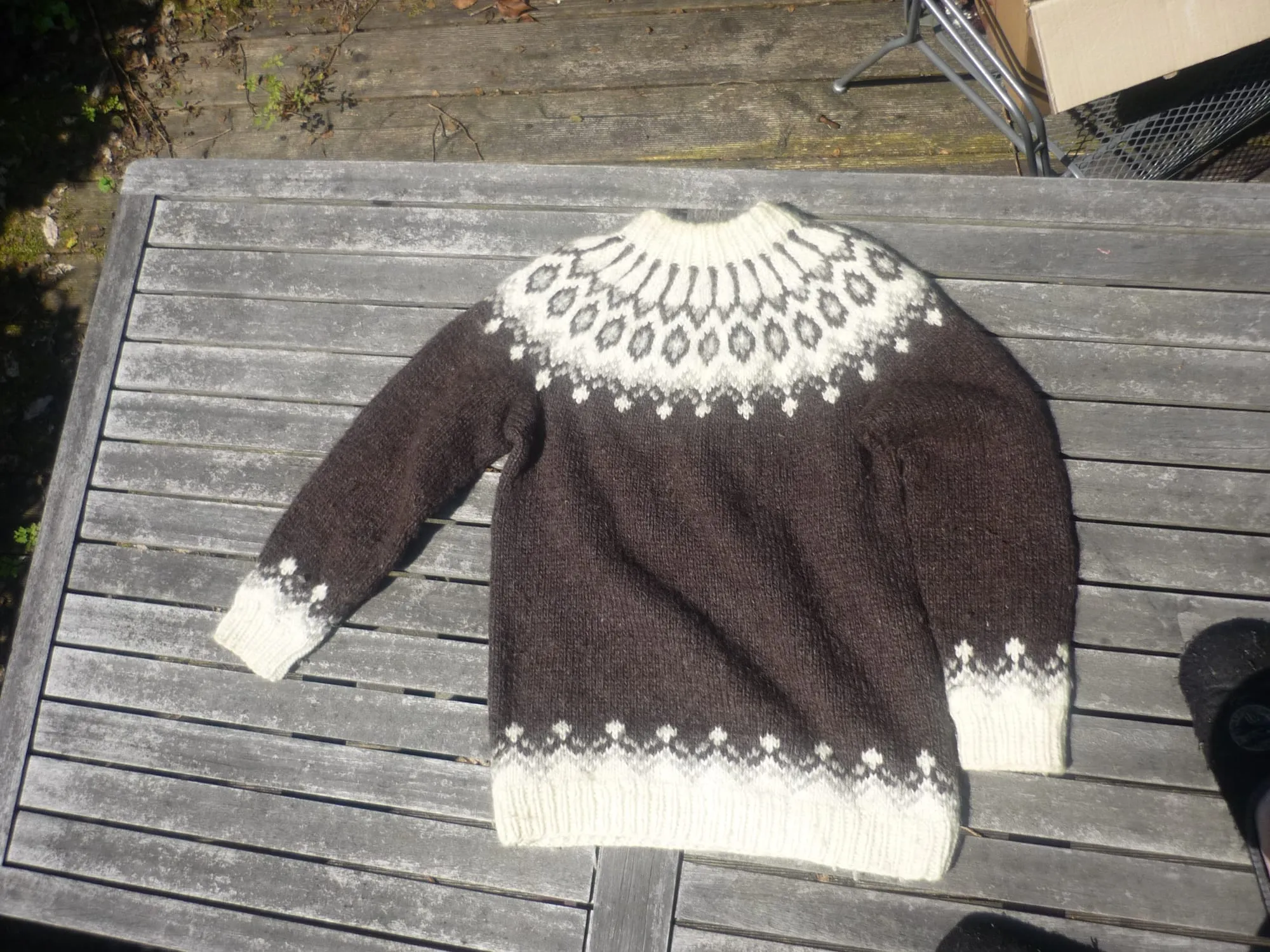 A lopapeysa, the Icelandic yoked wool sweater. Photo: Freimut Bahlo, Wikimedia Commons, CC BY-SA 3.0.
Layer 3: The protective outer shell
Your outer layer must provide an impermeable shield against driving rain, sleet, snow, and gale-force wind.
- Jacket Specifications: Select an uninsulated hardshell jacket made from breathable waterproof membranes such as Gore-Tex, eVent, or Pertex Shield (rated to at least 15,000 to 20,000 mm hydrostatic head). Ensure the jacket features fully taped seams, waterproof storm zips, and an adjustable hood with a stiffened brim that cinches tightly around your face.
- Waterproof Overtrousers: A pair of lightweight waterproof and windproof overtrousers with side leg zips is completely indispensable. You will need them when walking behind the spray-drenched veil of Seljalandsfoss or strolling the wind-blasted black sands of Reynisfjara.
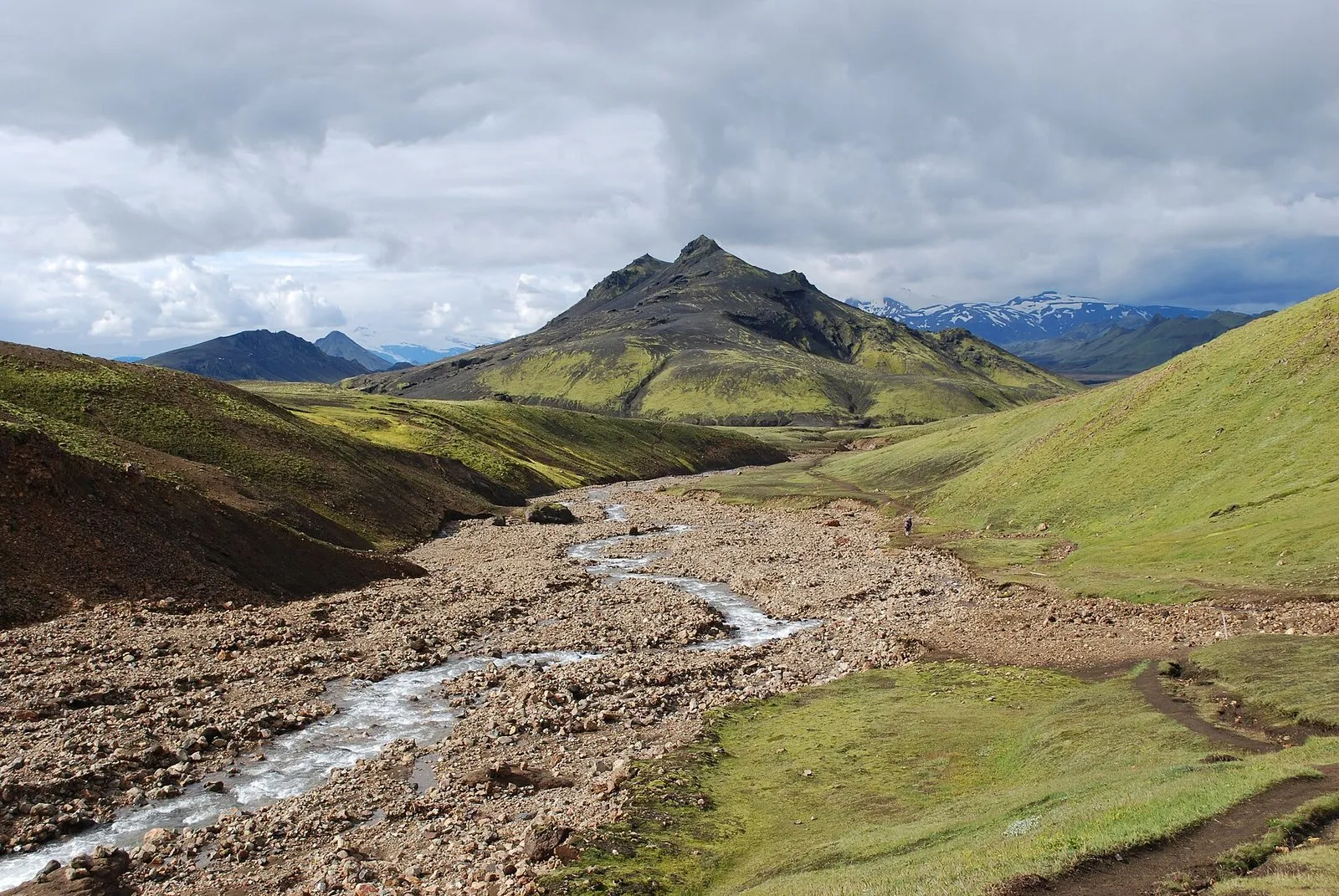
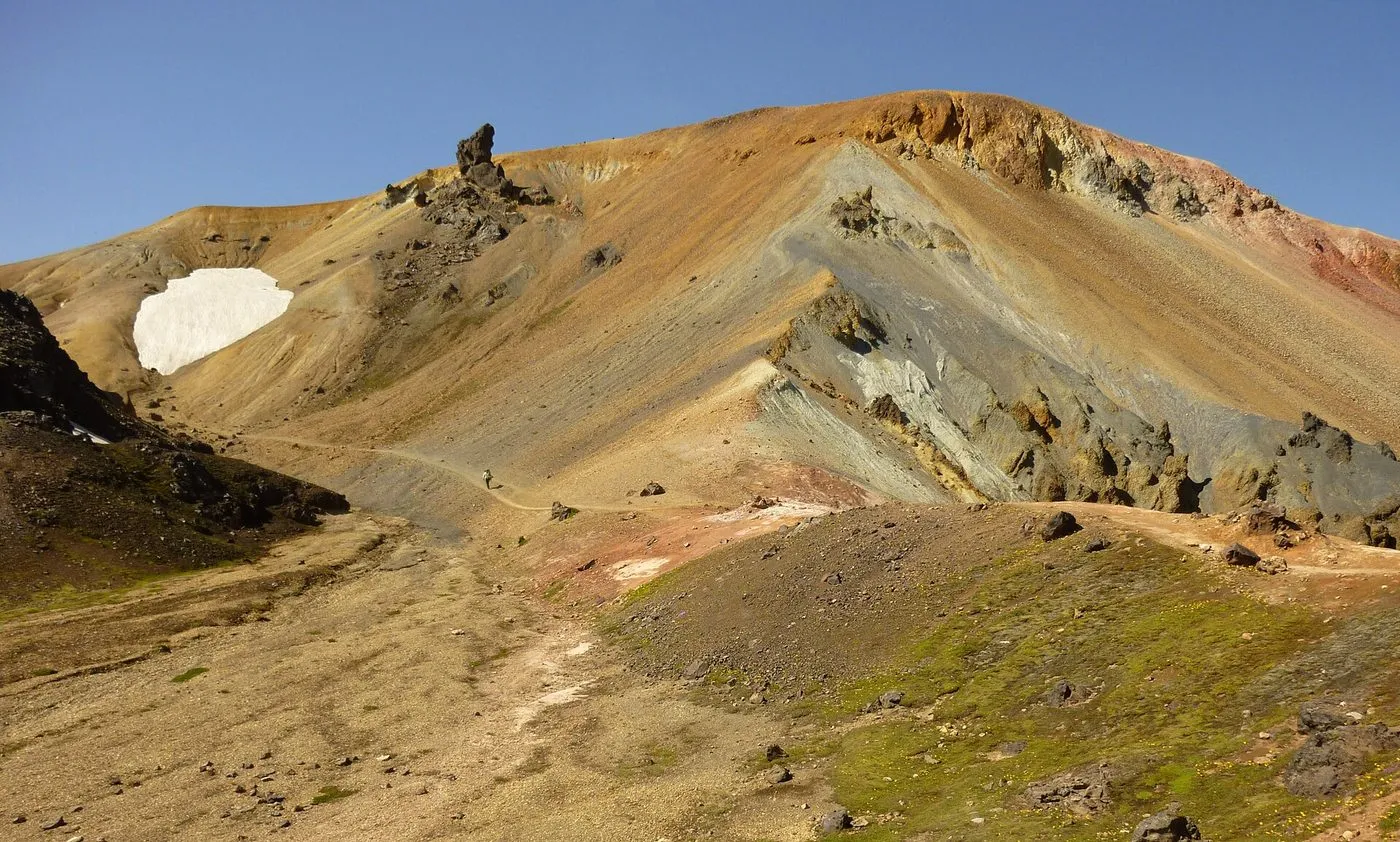 The Laugavegur hiking trail near Brennisteinsalda. Photo: Borvan53, Wikimedia Commons, CC BY-SA 4.0.
Footwear: boots, socks and ice traction
Your footwear choice will define your daily comfort more than any other single packing decision:
1. Waterproof hiking boots
Bring ankle-high waterproof boots treated with a Gore-Tex membrane. Walking across Iceland involves stepping over sharp jagged basalt lava, navigating wet mossy mud, crossing pebble streams, and climbing wet timber stairs. Boots must feature a rigid sole and deep rubber lug treads (Vibram or equivalent) to provide traction on wet volcanic rock.
2. Merino wool hiking socks
Pack three to four pairs of medium to heavy-cushioned merino wool hiking socks. Wool socks cushion your soles, prevent blister-causing friction inside boots, and maintain insulating warmth even if your feet become damp.
3. Rubber slip-on microspikes (Hálkugormar)
Between November and April, freezing rain and melted snow freeze into hard, transparent glaze ice (svell) on pavements and countryside paths. Standard boot rubber has zero grip on glaze ice.
- Pack a pair of flexible elastomer slip-on microspikes featuring small steel chains and spikes that stretch over the soles of your boots.
- Keep them in your coat pocket or daypack so you can slip them on in thirty seconds when walking up to the frozen spray viewing platforms at Gullfoss or navigating the icy streets around Hallgrímskirkja.
Comprehensive seasonal packing checklist
Use this checklist to pack your luggage:
| Category | Recommended items | Seasonal notes |
|---|---|---|
| Base Layers | 2–3 merino wool thermal tops (long-sleeve); 2 pairs merino wool long leggings; 4–5 pairs sports/wool underwear | Essential year-round; choose 150g weight for summer, 200–260g for winter |
| Mid Layers | 1 full-zip technical fleece; 1 packable lightweight down jacket; 1 woollen jumper | Bring both fleece and down in winter; one suffices in July |
| Outer Shells | 1 waterproof/windproof hardshell jacket with hood; 1 pair waterproof overtrousers | Indispensable year-round for waterfall spray and rain |
| Trousers | 1–2 pairs quick-drying synthetic hiking trousers; 1 pair casual trousers/jeans | Save jeans exclusively for city restaurants and cafés |
| Footwear | 1 pair broken-in waterproof hiking boots; 1 pair casual city shoes; 4 pairs wool socks | Wear boots on the flight to save luggage weight |
| Head & Hands | 1 windproof fleece beanie hat; 1 fleece neck gaiter; 1 pair waterproof insulated gloves; 1 pair lightweight liner gloves | Scarves blow loose in gales; tubular neck gaiters are vastly superior |
| Thermal Bathing | 2 swimsuits; 1 compact quick-dry microfibre towel; 1 waterproof phone pouch | Pack for daily visits to public pools and lagoons |
| Accessories | Polarized sunglasses; compact sleep mask (summer); 15–20L daypack with rain cover | Sunglasses are vital against low-angle glare reflecting off ice and water |
| Electronics | Heavy-duty portable power bank (10,000–20,000 mAh); European Type C/F plug adapters; camera tripod | Sub-zero temperatures drain phone and camera batteries rapidly |
Gear for pools, lagoons and hot springs
Communal bathing in geothermal water is an integral part of everyday life in Iceland, whether visiting the Blue Lagoon, Sky Lagoon, or historic municipal baths like Sundhöllin.
- Towel Strategy: Municipal pools charge 860 ISK per towel rental. Packing your own lightweight microfibre towel saves money across multiple pool visits.
- Swimwear: A comfortable swimsuit is required at all facilities. If you forget your swimwear, municipal pools rent standard swimsuits for approximately 1,270 ISK.
- Hair Conditioner: The high silica and mineral content of the Blue Lagoon binds to hair keratin, causing it to become stiff and chalky for days. Coat your hair generously with hair conditioner (supplied free in shower cubicles) before entering the water, and tie long hair into a tight bun.
- Waterproof Smartphone Cases: If you intend to take photographs while floating in thermal lagoons, buy a certified waterproof lanyard pouch that seals your smartphone and hangs around your neck.
For coordinating clothing choices with planned excursions, browse our complete itineraries for 3 days in Reykjavik and the Golden Circle day trip.
Common questions
Can you wear regular denim jeans in Iceland?
Jeans are acceptable for casual dining, museum visits, and shopping in downtown Reykjavik. However, wearing denim on outdoor day trips, waterfall walks, or glacier excursions is strongly discouraged: denim absorbs water rapidly, holds moisture against the skin, offers zero wind resistance, and causes rapid hypothermia when wet. Wear technical synthetic or wool hiking trousers outdoors.
Do you really need ankle-high hiking boots in Iceland?
Yes. Even on standard sightseeing day trips along the Golden Circle or South Coast, walking paths around waterfalls, gravel riverbeds, and volcanic craters consist of uneven, slippery basalt rocks, volcanic mud, and sharp lava scree. Standard fashion trainers get soaked quickly and offer inadequate ankle support and traction.
Should you pack an umbrella for visiting Iceland?
No. Umbrellas are completely useless in Iceland. Precipitation is almost invariably accompanied by high oceanic crosswinds that invert and destroy standard umbrella frames within seconds. Invest instead in a durable, waterproof and windproof technical jacket with an adjustable storm hood.
Do you need slip-on ice grips (microspikes) during winter?
Yes. From November through April, freeze-thaw cycles create slick glaze ice across downtown Reykjavik pavements, pedestrian ramps, and outdoor waterfall viewing platforms at Gullfoss and Skógafoss. Rubber slip-on microspikes (hálkugormar) fit over any standard boot and provide essential traction to prevent dangerous falls.
Do I need to pack my own towel for swimming pools and thermal spas?
Packing a compact, quick-drying microfibre towel is highly recommended. While high-end commercial lagoons include towels in their ticket price, municipal swimming pools in Reykjavik charge approximately 860 ISK per towel rental and 1,270 ISK for swimsuit hire.