In this guide
💡 The Short Version: Navigating money in Reykjavik is remarkably straightforward: Iceland is completely cashless, meaning you can complete your entire holiday without ever touching a paper banknote or metal coin. Credit cards, debit cards, and contactless smartphones (Apple Pay, Google Pay) are accepted everywhere, from rural car park meters to harbourside hot dog stalls. Crucially, whenever an electronic payment terminal asks whether to charge you in local ISK or your home currency, always select ISK to avoid costly merchant exchange markups. Tipping is never expected. Visitors residing outside Iceland can reclaim up to 14% VAT on retail purchases exceeding 12,000 ISK on a single receipt before flying home from Keflavík Airport.
The widespread adoption of electronic payments in Iceland dates back to early banking computerization in the late 1980s. Today, cash transactions represent a negligible fraction of national retail volume. Street buskers, flea-market vendors at Kolaportið, municipal thermal pools, and even automated coin-operated shower stalls at rural campsites accept contactless card taps or mobile phone apps.
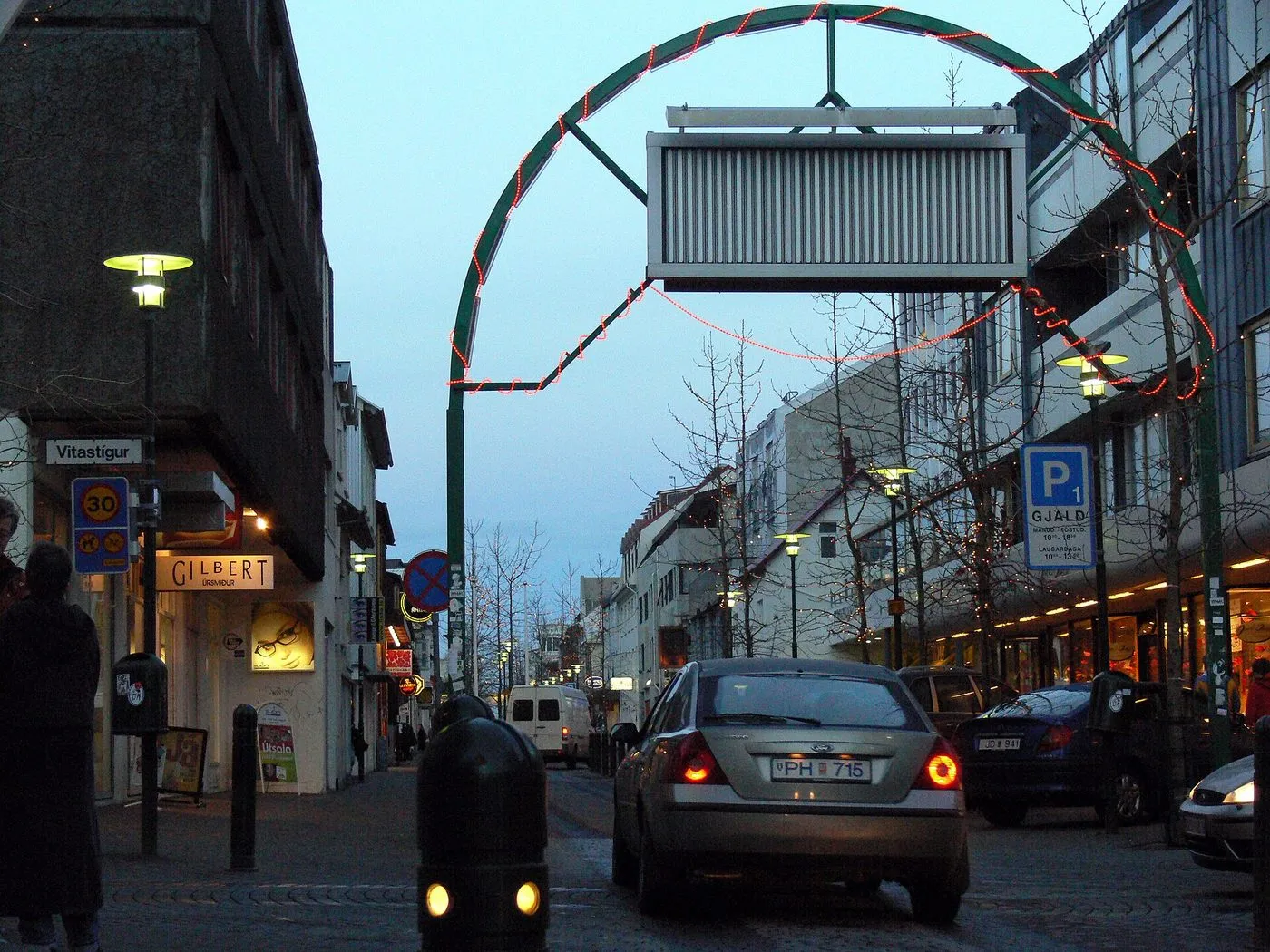 Laugavegur at dusk. Photo: Wikimedia Commons, Wikimedia Commons, Public domain.
Cash versus cards: what to bring
You do not need to exchange foreign currency for Icelandic króna before departure, nor do you need to withdraw cash from airport ATMs upon landing.
Card requirements and 4-digit PINs
- Universal Acceptance: Visa and Mastercard are accepted across every business establishment nationwide without minimum transaction limits. American Express and Diners Club are accepted at major international hotels and car rental desks, but are frequently declined by smaller cafés, independent boutiques, and rural fuel pumps.
- Mandatory 4-Digit Chip & PIN: Ensure your debit or credit card is equipped with a functioning 4-digit PIN. While contactless tapping works for minor day-to-day transactions under 10,000 ISK, automated pay-at-the-pump petrol stations across the countryside (such as N1, Olís, and Orkan) strictly require a physical chip-and-PIN card to authorize fuel dispensing. Cards without a PIN will not function at unattended fuel kiosks.
- Zero Foreign Transaction Fee Cards: Standard bank cards often assess a 2.5% to 3% foreign currency transaction fee on international purchases. Using a specialist travel card with zero foreign exchange fees yields significant cumulative savings over a week of travel.
The Dynamic Currency Conversion (DCC) trap
When tapping or inserting your payment card into a terminal in Reykjavik, the screen will frequently present a prompt:
- Option A: Pay in ISK (Icelandic Króna)
- Option B: Pay in your Home Currency (GBP, USD, EUR)
Always choose ISK.
If you select your home currency, you are agreeing to “Dynamic Currency Conversion” (DCC), where the local merchant’s bank converts the transaction on the spot, adding a hidden exchange rate markup typically ranging between 4% and 7% above the interbank wholesale rate. Selecting ISK ensures that the foreign exchange calculation is handled directly by your home card issuer at standard interbank rates.
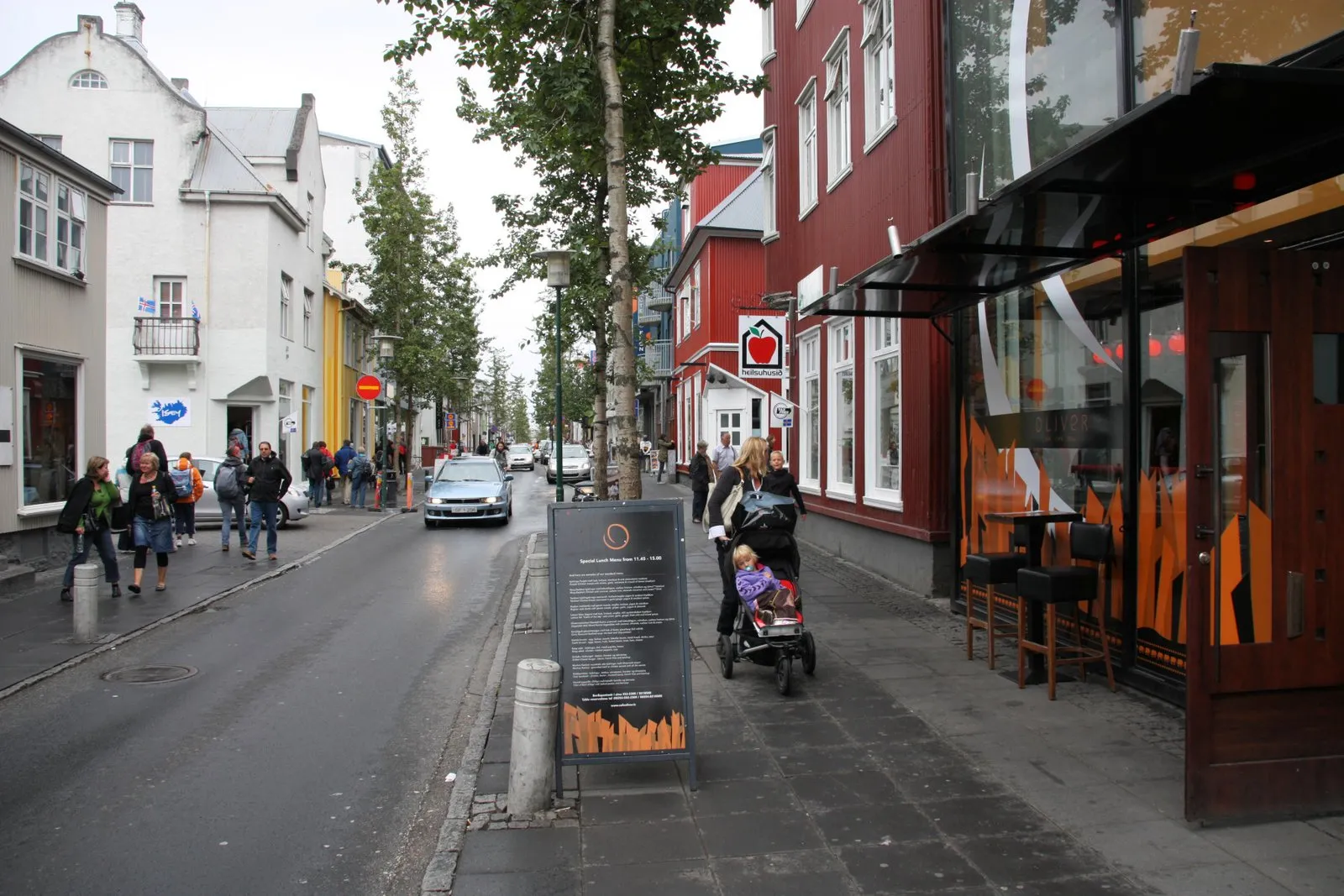
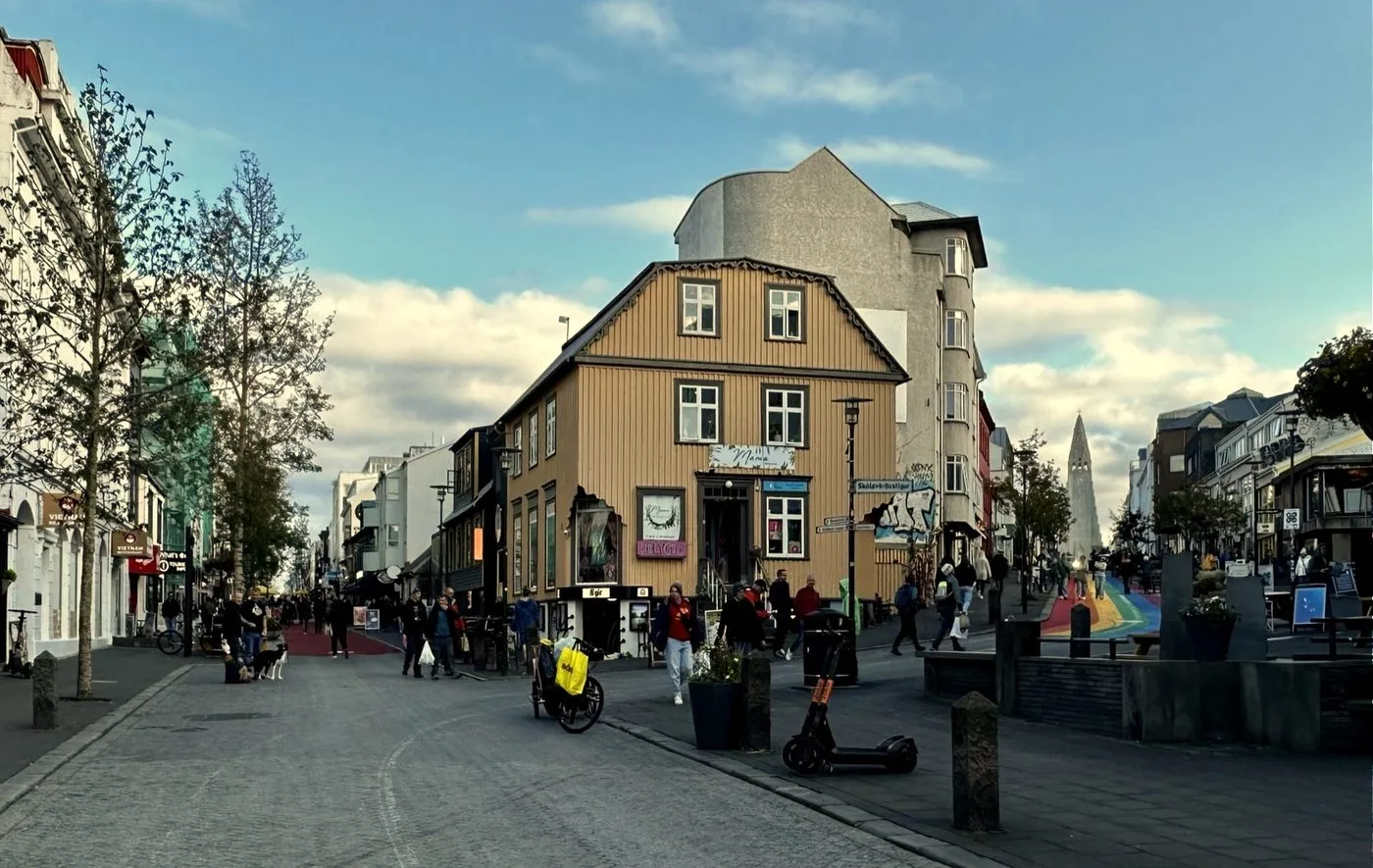 Laugavegur at its junction with Skólavörðustígur, Hallgrímskirkja behind. Photo: APK, Wikimedia Commons, CC BY-SA 4.0.
Typical daily costs in Reykjavik
Fixed prices for the main costs of a visit:
| Travel category | Representative purchase | Typical cost in ISK | Practical advice & savings tips |
|---|---|---|---|
| Street Food | Lamb hot dog (Bæjarins Beztu) | Cheapest hot meal in town | Order ein með öllu |
| Beer | Pint of craft beer | Expensive; high excise duty | Many bars run afternoon happy hours |
| Public Transport | Strætó city bus single fare | 690 ISK | Contactless card or the Klappið app; app tickets last 75 minutes |
| Airport Transit | Flybus express coach (KEF to BSÍ) | 3,999 ISK | Scheduled 45-minute non-stop coach from arrivals |
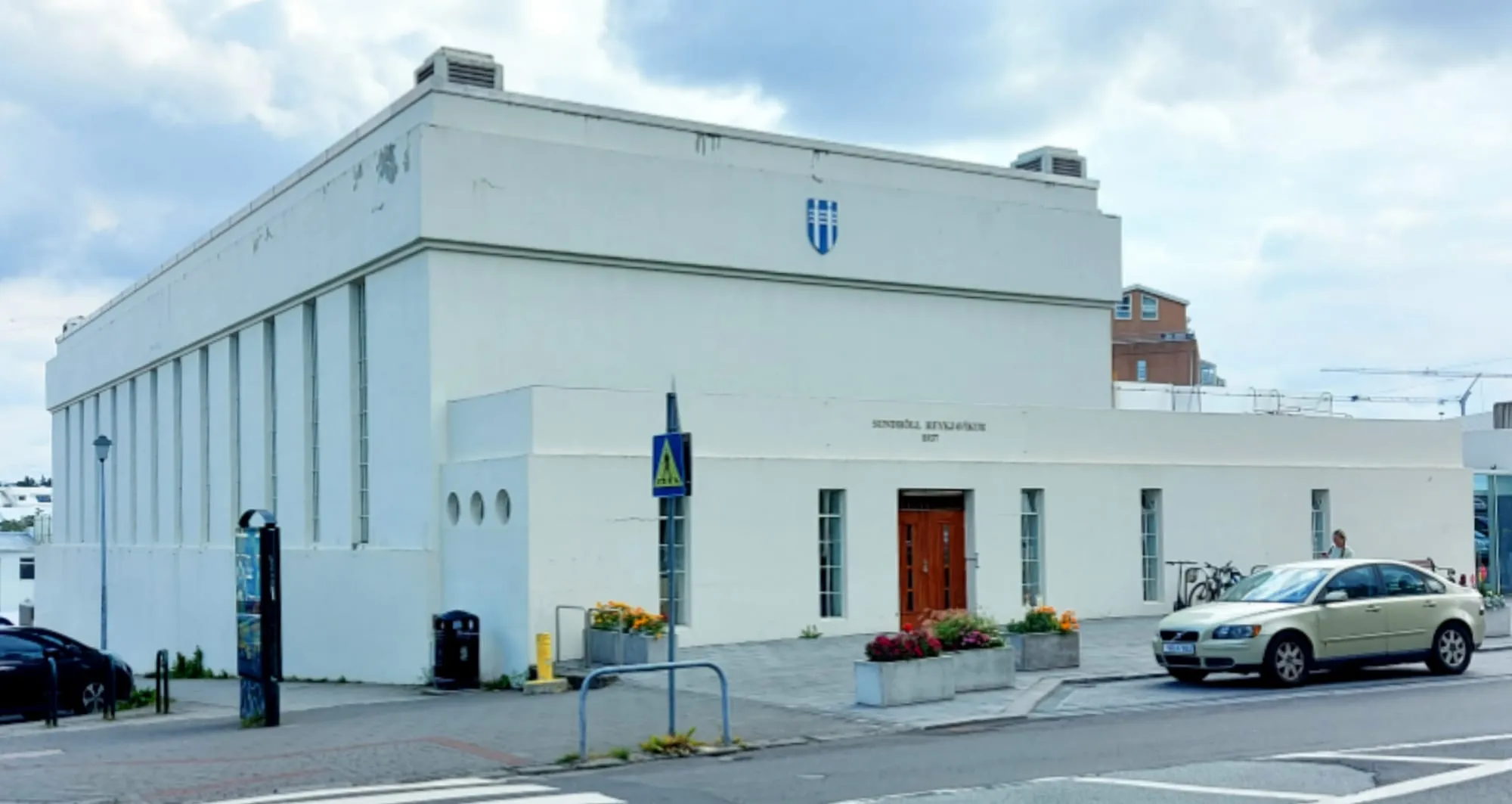
| Thermal Bathing | Municipal pool adult swim (Sundhöllin) | 1,500 ISK | Includes unlimited hot tubs, steam baths, and lane swimming |
| Luxury Spa | Sky Lagoon Saman Pass | Price varies by slot | Includes the seven-step Skjól ritual |
| Cultural Pass | 24-Hour Reykjavik City Card | 6,100 ISK | Covers 17 museums, 8 pools, and unlimited city buses |
Tipping etiquette in Iceland
Tipping is not customary in Iceland.
Unlike the service sector in North America, Icelandic hospitality workers receive standard negotiated national union wages, pension contributions, and paid holiday benefits. Service charges and value-added tax are included by law in every displayed menu price, restaurant bill, bar receipt, and taxi fare.
- Restaurants and Bars: Waiters and bartenders do not expect tips. When presented with a card terminal, you simply tap the total shown on the screen. Rounding up for exceptional service is welcome but never expected.
- Taxis: Taxi drivers charge by the meter or the fixed airport rate, and tipping is not required.
- Tour Guides: On full-day coach excursions or specialized small-group hikes, tipping the driver-guide is up to you.
How to claim a tax-free VAT refund
Iceland levies a standard 24% Value Added Tax (Virðisaukaskattur or VSK) on most consumer goods, with a reduced 11% rate on books, foodstuffs, and restaurant meals.
Non-resident international travellers (anyone whose permanent residence is outside Iceland) are legally entitled to reclaim the VAT paid on retail goods intended for export, resulting in net cash savings of roughly 13% to 14% of the retail purchase price.
Step-by-step tax-free refund procedure
- Meet the Spending Threshold: The total purchase on a single receipt must be at least 12,000 ISK (inclusive of VAT). Multiple minor receipts from different shops cannot be combined.
- Request the Tax-Free Form at Checkout: When purchasing qualifying goods (such as woollen sweaters, outdoor clothing, jewellery, or artisan souvenirs), ask the shop assistant for a Tax Free Worldwide or Global Blue form. The clerk will attach the original cash register receipt and stamp the documentation.
- Keep Items Unused in Packaging: Tax-free regulations require that qualifying goods must leave the country unused in their original retail packaging within three months of purchase.
- Validation at Keflavík Airport (Crucial Step): You must validate your tax-free documents before dropping your checked luggage at airline check-in counters.
- For total refunds under 100,000 ISK: Proceed to the Change Group / Tax Free desk located in the main departure hall on the ground floor of Keflavík Airport to obtain immediate customs validation and claim your refund back to your credit card or in cash.
- For total refunds exceeding 100,000 ISK: You must first present the goods, forms, and airline boarding passes to the official Iceland Customs (Tollurinn) office located in the arrivals hall on the lower level. Customs officers may ask you to open your bags to inspect the physical goods before stamping your forms.
- Refund Processing: Approved refunds are typically credited back to your original credit card within 5 to 10 working days.
Alcohol taxes and duty-free shopping strategy
Alcohol is heavily taxed in Iceland through state excise duties scaled according to alcohol-by-volume (ABV). As a result, beer, wine, and spirits are among the most expensive consumer items in the country:
- Standard supermarkets (such as Bónus, Krónan, and Nettó) are legally prohibited from selling alcoholic beverages containing more than 2.25% ABV. The cans labelled “Bjór” in supermarkets are non-alcoholic near-beers (léttöl).
- Real alcoholic beer, wine, and spirits can only be purchased in licensed bars and restaurants, or from the state-run alcohol monopoly stores called Vínbúðin (operating limited retail hours, typically Monday to Saturday 11:00 to 18:00, closed Sundays).
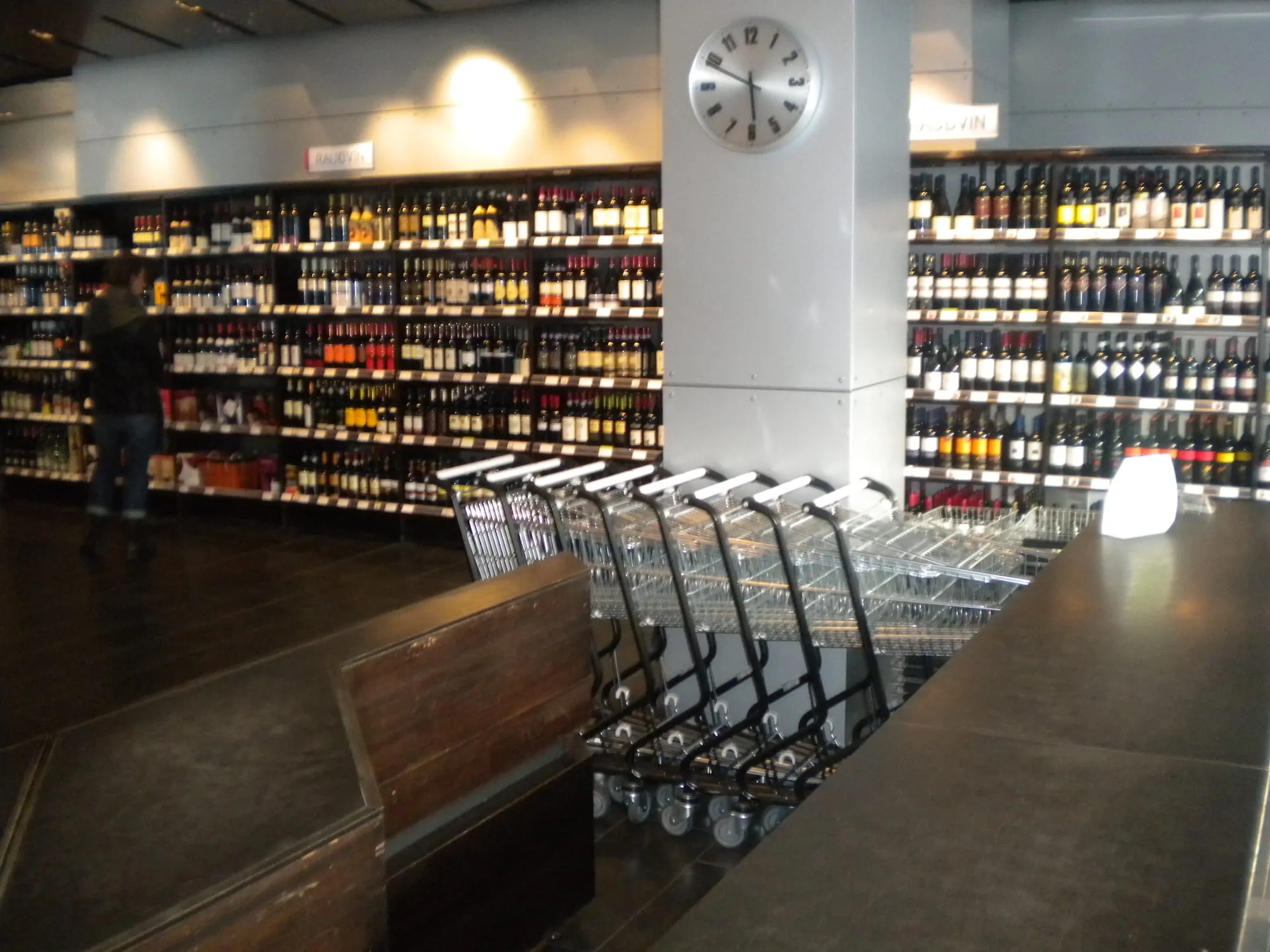 Wine shelves inside a Vínbúðin, Iceland’s state alcohol shop. Photo: Danninja, Wikimedia Commons, CC BY-SA 3.0.
The Essential Airport Arrival Duty-Free Tip
Every seasoned traveller to Iceland takes advantage of the Arrivals Duty-Free Shop at Keflavík Airport, located directly inside the baggage reclaim hall before you clear customs exit doors.
Because duty-free goods bypass domestic state alcohol taxes, prices inside the airport shop are roughly 40% to 50% lower than at Vínbúðin stores downtown. Each incoming passenger can import a duty-free allowance, such as:
- 1 bottle of spirits (up to 1 litre) + 1 bottle of wine (up to 0.75 litres) + 6 cans of beer (up to 2 litres), or
- 1 bottle of wine + 18 cans of beer.
Stock up on wine, gin, or Icelandic craft beers in the arrivals hall before boarding your express transfer coach into town.
For further financial planning, explore our detailed price comparisons for public transport in Reykjavik, calculate entry costs in our Reykjavik City Card analysis, and review our comprehensive Reykjavik city guide.
Common questions
Do you need physical cash when visiting Reykjavik?
No. Iceland is virtually a 100% cashless society. Debit cards, credit cards, and contactless mobile options (Apple Pay, Google Pay) are accepted universally, from major hotels and tour operators down to city street-food kiosks and pay toilets. You do not need to convert physical banknotes before travelling.
What official currency is used in Reykjavik?
The Icelandic króna (plural krónur, abbreviated ISK or kr.). Physical banknotes circulate in denominations of 500, 1,000, 2,000, 5,000, and 10,000 ISK, with coins in 1, 5, 10, 50, and 100 ISK. Foreign banknotes (euros, US dollars, British pounds) are not accepted in everyday retail shops.
Is tipping expected or customary in Reykjavik?
No. Tipping is not part of traditional Icelandic culture. Service charges, labour costs, and national value-added taxes (VAT) are already integrated into all displayed menu prices and taxi meters. Leaving a tip is entirely optional, though rounding up the bill for exceptional restaurant table service is appreciated.
How do you claim a tax-free VAT refund in Iceland?
Non-resident international travellers can claim back value-added tax on retail purchases of clothing, woollens, and souvenirs. The purchase must exceed 12,000 ISK on a single store receipt. Request a Tax Free form at checkout, keep items unused in original packaging, and submit the forms at the Tax Free customs desk at Keflavík Airport prior to checking luggage.
What is Iceland's accommodation lodging tax?
The Icelandic government levies a statutory lodging tax (gistináttaskattur) of 800 ISK per room per night on hotels, guesthouses, and short-term apartment rentals (400 ISK per pitch at commercial campsites).