In this guide
💡 The Short Version: Vigeland Park is free and open 24 hours a day. It covers 80 acres within Frogner Park in western Oslo and holds 212 granite and bronze sculptures made by Gustav Vigeland between 1924 and 1943. Along the central axis are the Bridge with Sinnataggen (the Angry Boy), the Fountain, the Monolith and the Wheel of Life. The Vigeland Museum, across Nobels gate, keeps the sculptor’s full-scale plaster casts: entry is NOK 120 (free with the Oslo Pass) and it is closed on Mondays. Or book a tour: a 1.5-hour guided art walking tour of Vigeland Parkad from NOK 474 covers over 200 sculptures, including the Angry Boy and the central fountain.
⚠️ The Vigeland Museum is closed on Mondays all year and shuts at 16:00 outside summer. Last entry is at 15:45. The park has no gates, so you can see the statues at sunrise or after dark under floodlights whatever the museum hours.
Park admission versus museum tickets
The park and the museum are separate. The park is a public park managed by Oslo’s Agency for Urban Environment; the museum is in Vigeland’s former brick studio across Nobels gate:
| Facility | Admission cost | Opening hours | Oslo Pass access |
|---|---|---|---|
| Vigeland Sculpture Park | Free for all visitors | Open 24/7, 365 days a year | Not required |
| Vigeland Museum (Adult 26+) | NOK 120 | Tue–Sun 12:00–16:00 (10:00–17:00 Jun–Aug); closed Mon | Free entry |
| Vigeland Museum (Senior 67+) | NOK 100 | Tue–Sun 12:00–16:00 (10:00–17:00 Jun–Aug); closed Mon | Free entry |
| Vigeland Museum (Youth 18–25) | NOK 70 | Tue–Sun 12:00–16:00 (10:00–17:00 Jun–Aug); closed Mon | Free entry |
| Vigeland Museum (Child 0–17) | Free | Tue–Sun 12:00–16:00 (10:00–17:00 Jun–Aug); closed Mon | Free entry |
- Museum holiday closures: the indoor museum shuts on 1 January, 1 May, 17 May (Constitution Day), 24 and 25 December, and 31 December.
- Parking: the bays around the park, on Monolittveien, Middelthunsgate (near Frognerbadet) and Halvdan Svartes gate 50, are paid municipal spaces. Tram 12 avoids the parking fees.
The 850-metre central axis
Gustav Vigeland (1869–1943) designed every figure and also the layout, landscaping, balustrades, gates and geometric pavement mosaics. The ensemble follows an 850-metre axis that runs through the stages of human life:
1. The Main Gate and the Bridge
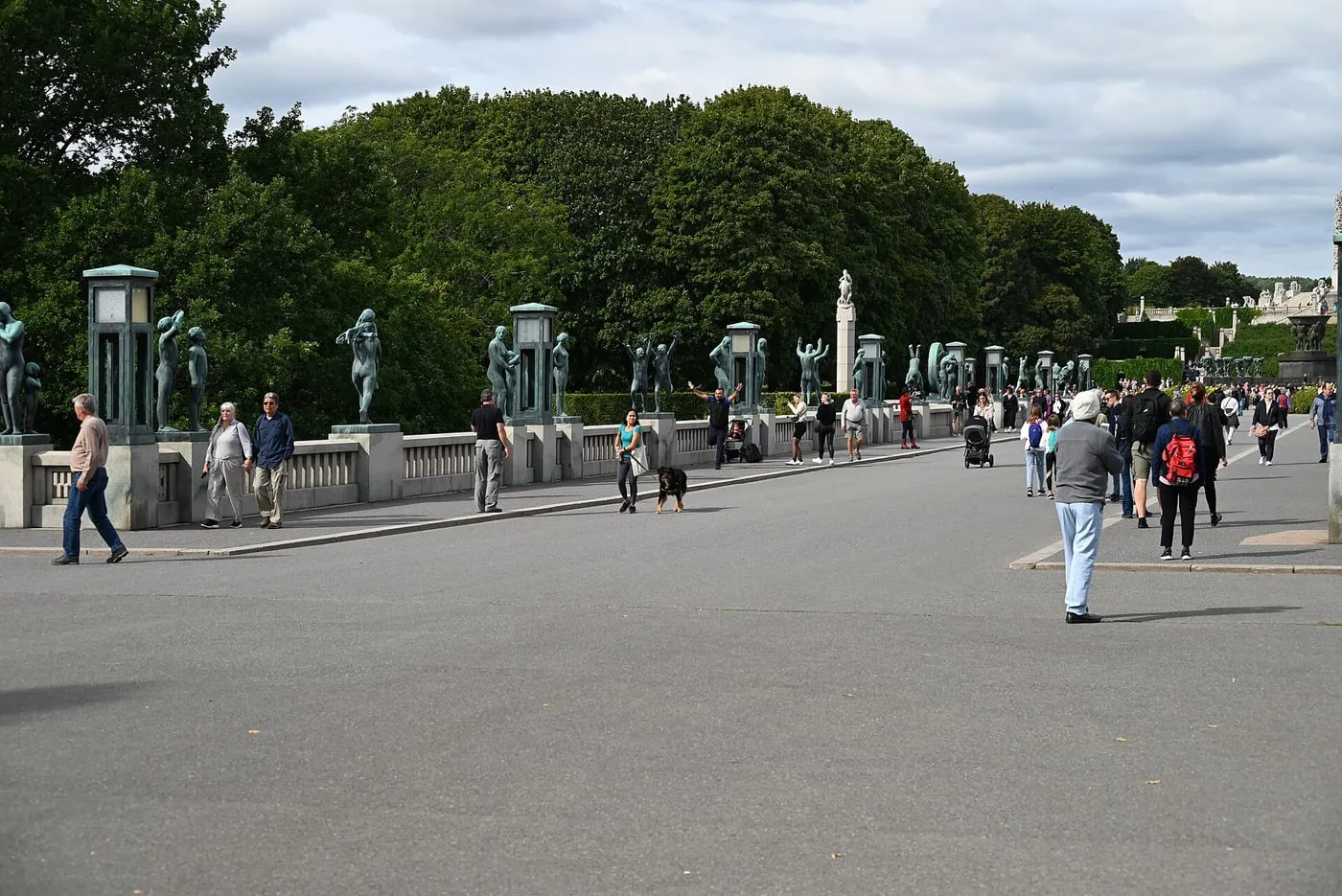
From Kirkeveien, five wrought-iron gates decorated with stylised dragons lead to the 100-metre granite Bridge:
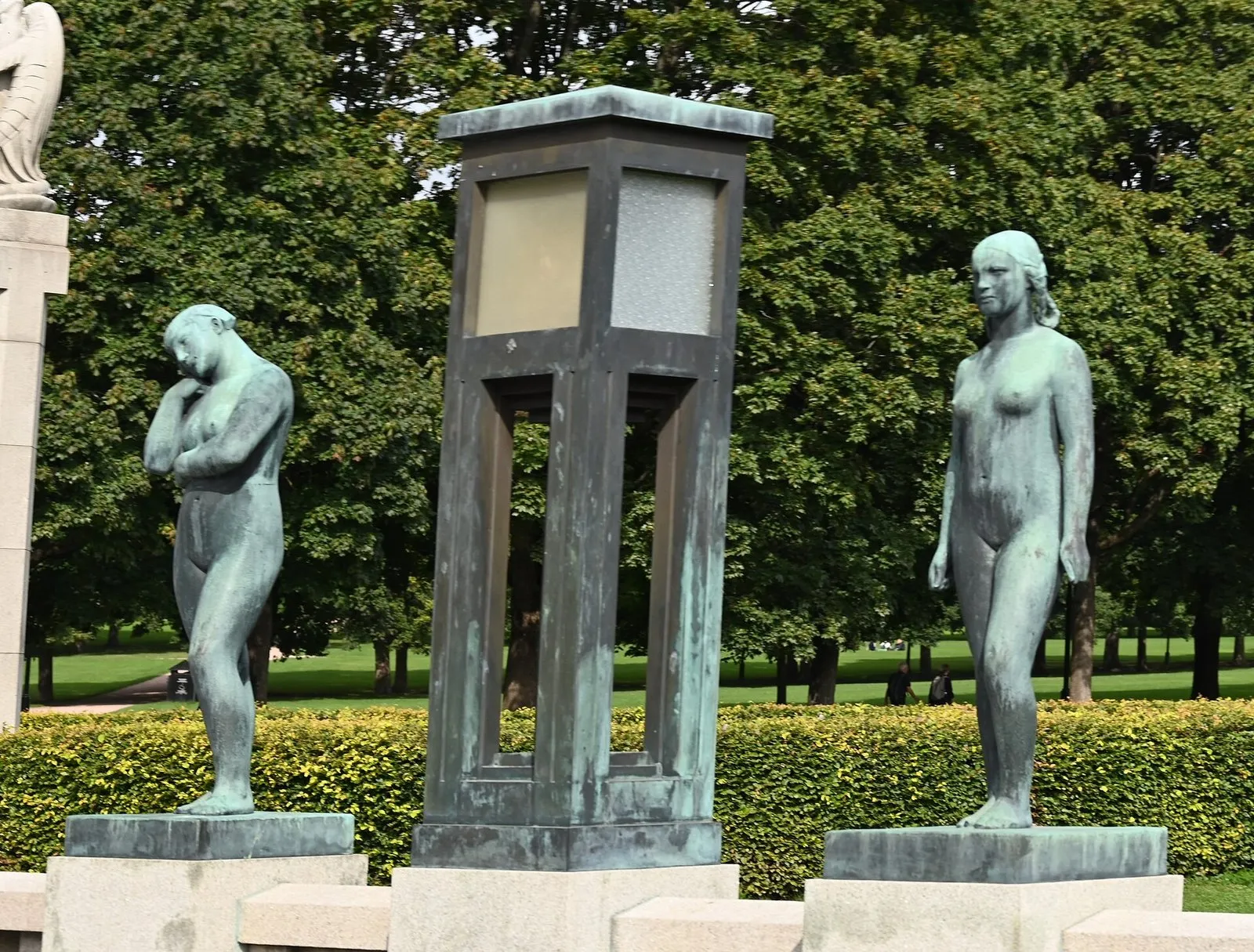
- 58 bronze figures: on the parapets on both sides, children, men and women wrestle, embrace, run and brood.
- Sinnataggen (The Angry Boy): the park’s best-known figure is a toddler stamping his foot with clenched fists. Thieves sawed it off at the left ankle in 1992; it was recovered and re-anchored. Visitors rub its left hand, which has worn from dark patina to bright brass.
- The children’s circle: just below the bridge on the pond shore, eight bronze toddlers play and tumble around a central baby in the foetal position.
2. The Fountain
The Fountain is the earliest part of the park. Vigeland designed it in 1906 for the square outside the Parliament (Stortinget), and the council approved moving it to Frogner Park in 1924:
- The six giants: six bronze men of different ages strain under a saucer-shaped bronze basin, water pouring over their backs, representing humanity under the weight of existence.
- The 20 tree groups: along the parapet around the basin, twenty bronze trees have human figures among their branches and roots. They run from youth in spring foliage through lovers and parents to elderly skeletons in gnarled boughs.
- The labyrinth: the ground around the fountain is a black and white granite mosaic of 1,800 square metres. Followed without crossing lines, its path is almost three kilometres long.
3. The Monolith Plateau (Monolitten)
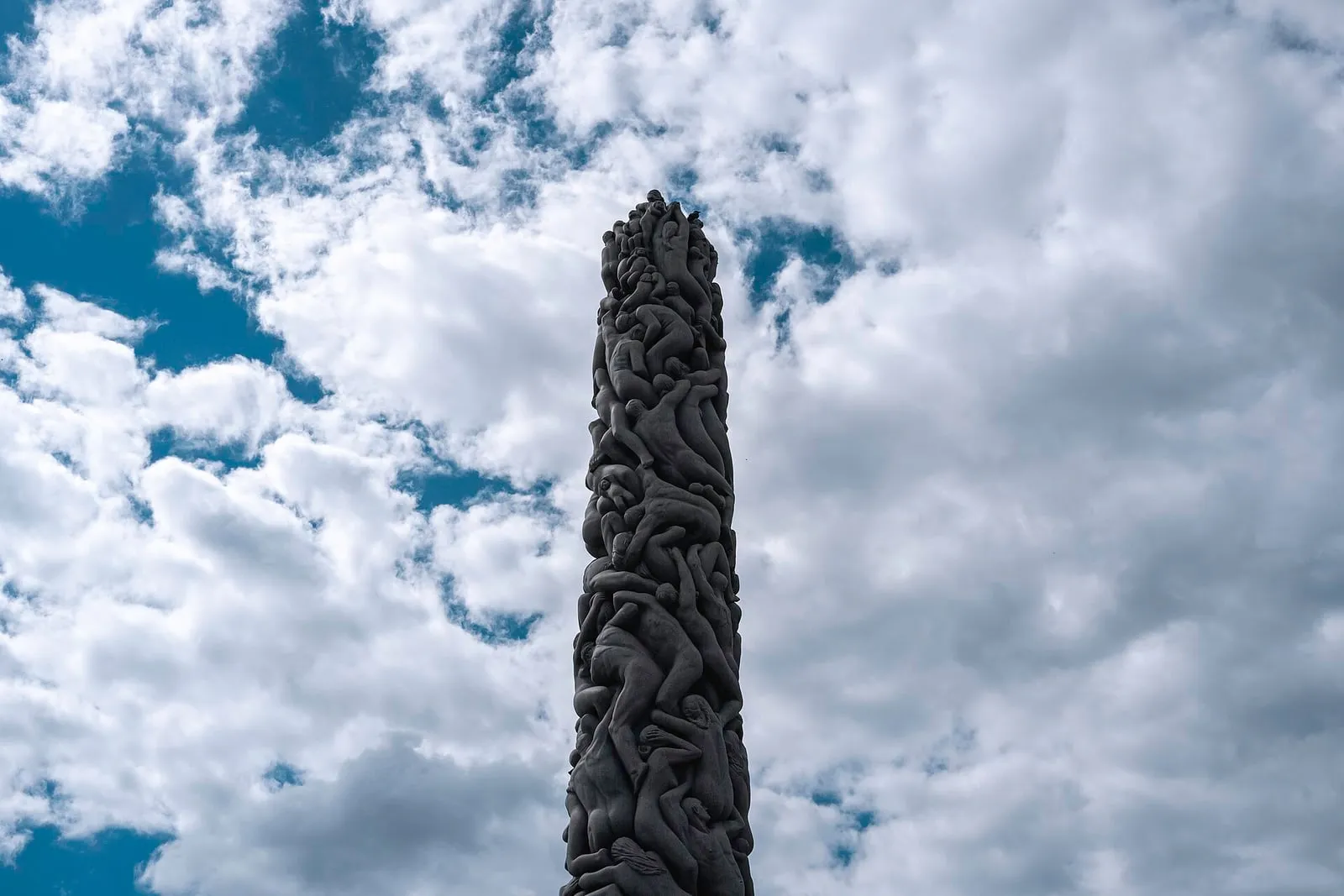
The Monolith stands at the highest point in the park, surrounded by 36 granite groups on twelve stepped tiers:
- The granite column: carved from a single block of Iddefjord granite quarried near Halden, 280 tonnes before carving. The block was raised in Frogner Park in 1928, according to Store norske leksikon.
- The carving: three stonemasons, Ivar Broe, Nils Jønsson and Karl Kjær, worked in a purpose-built wooden shed for fourteen years (1929–1943), transferring Vigeland’s full-scale plaster model into granite with measuring callipers.
- The 121 figures: bodies of all ages claw and surge upwards in a longing for transcendence.
- The surrounding groups: the 36 groups show mothers sheltering toddlers, fathers tossing sons in the air, brothers comforting one another and weary elders embracing.
4. The Wheel of Life (Livshjulet)
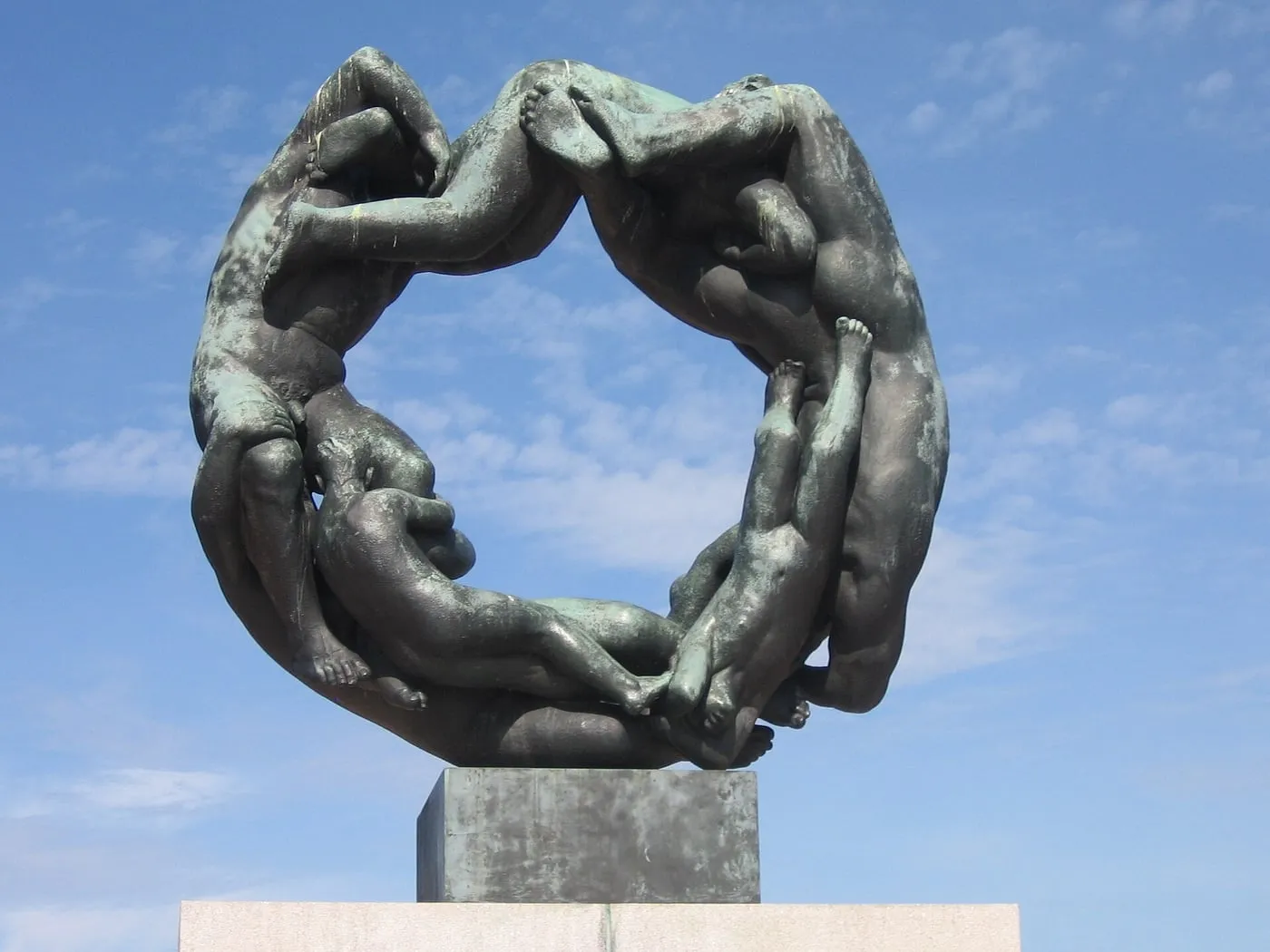
The Wheel of Life (Livshjulet), cast in bronze and erected in 1949, ends the western axis beyond the Monolith plateau:
- The motif: four adults and three children clasp hands and feet in a circle three metres wide.
- The meaning: Vigeland’s last word on the human journey from cradle to grave, and the cycle of life, death and rebirth.
Inside the Vigeland Museum (Nobels gate 32)
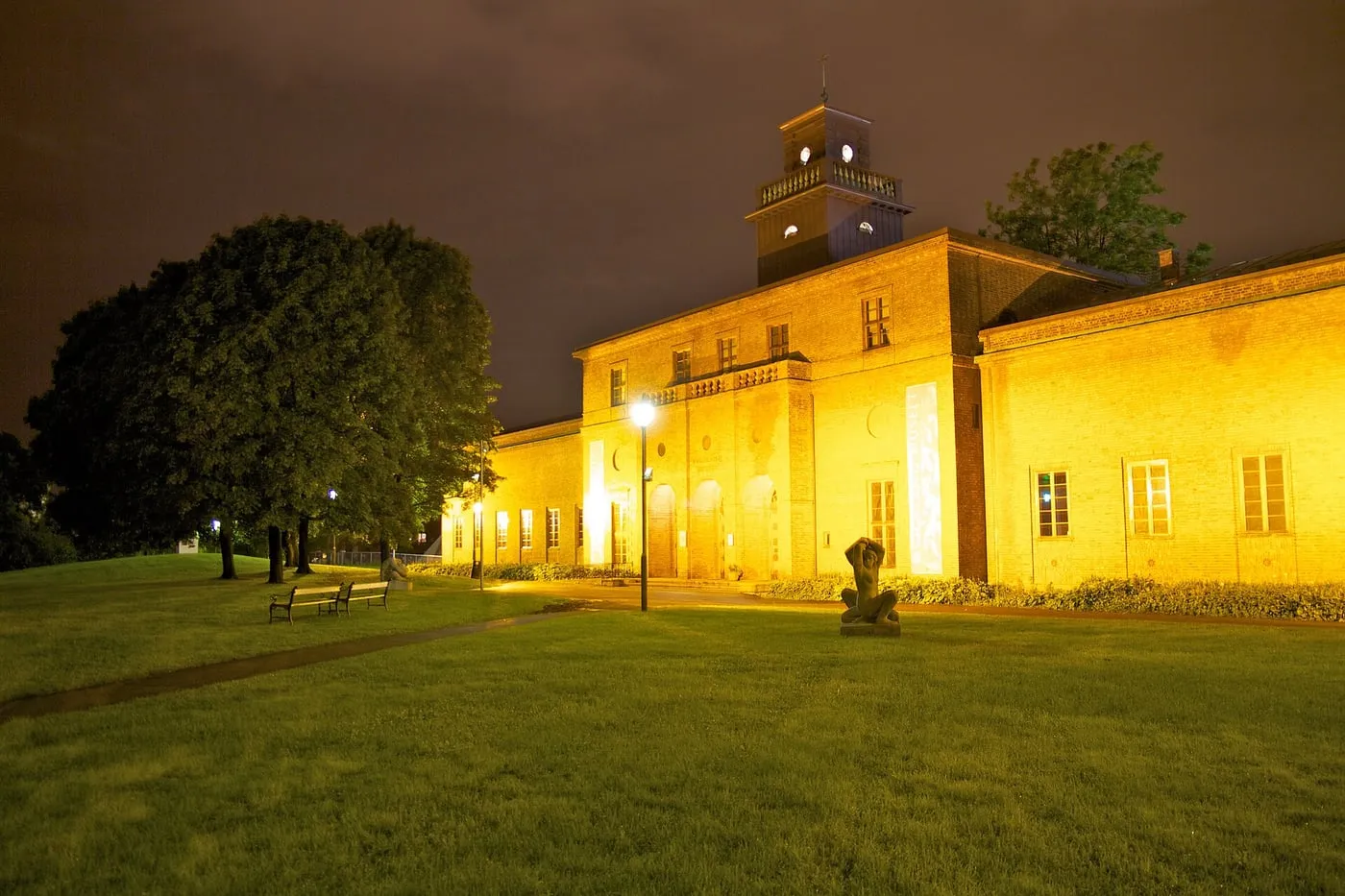
The red-brick Vigeland Museum stands directly south of the park across Nobels gate. In 1921 the City of Oslo signed a contract with Vigeland: the city would build him a studio, workshop and apartment and pay an annual stipend, and he would leave all his past and future work to the city.
Vigeland lived and worked in the building from 1924 until his death in 1943. His ashes are kept in an urn in the central tower:
- Plaster master models: the sky-lit ground-floor halls hold the original full-scale plaster casts from which the Frogner Park statues were carved and cast. At eye level you can see Vigeland’s chisel marks and clay tool impressions.
- Monuments and busts: rooms show his early woodcuts, pencil sketches and public monuments, including likenesses of Henrik Ibsen, Camilla Collett and Niels Henrik Abel.
- The artist’s flat: on the third floor, his 300-square-metre apartment keeps its 1930s functionalist furnishings, hand-woven wool tapestries and lighting fixtures he designed. It can be seen only on guided tours arranged in advance with the museum.
- Accessibility: the ground-floor galleries have ramped thresholds for wheelchairs, but the listed building has no lift to the upper levels.
How to get there and visitor tips
- By tram: line 12 runs from Jernbanetorget (Oslo S), Christiania Torv and Nationaltheatret to Vigelandsparken (10 minutes from the centre). For the museum first, get off one stop earlier at Frogner plass.
- By bus: route 20 stops at Vigelandsparken and Frogner plass.
- By metro: take any T-bane line (1 to 5) to Majorstuen, then walk south down Kirkeveien for 8 minutes to the main gates.
- By bike: Oslo Bysykkel docks are outside the Kirkeveien entrance and along Middelthunsgate. Cycling is allowed on the paved avenues at walking pace.
- Drones: flying drones in Frogner Park or over the Vigeland sculptures is prohibited.
From Frogner plass, walk downhill past the Frogner embassies to the harbour restaurants of Tjuvholmen and Aker Brygge, or take tram 12 on to the National Museum. See also free things to do in Oslo and 3 days in Oslo.
Common questions
Is Vigeland Park free to visit?
Yes. The outdoor sculpture park is free and open 24 hours a day, every day of the year.
How much is entry to the Vigeland Museum?
Standard adult admission is NOK 120, seniors pay NOK 100, and visitors aged 18 to 25 pay NOK 70. Children under 18 and Oslo Pass holders enter free. The museum is closed on Mondays.
When is the Vigeland Museum open?
Tuesday to Sunday from 12:00 to 16:00 (last entry 15:45) from September to May, extending to 10:00 to 17:00 from June to August. It is closed on Mondays and national public holidays.
How do I get to Vigeland Park from central Oslo?
Take tram 12 from central Oslo to the Vigelandsparken stop outside the main gates. Bus route 20 also serves the park. From Nationaltheatret it takes 10 minutes.
What is the Monolith made of?
It was carved from a single block of Iddefjord granite that weighed 280 tonnes before carving, and it shows 121 human figures climbing upwards (Store norske leksikon).