In this guide
💡 The Short Version: Many of Oslo’s main sights are free. You can walk up the Carrara marble roof of the Oslo Opera House, see Gustav Vigeland’s 212 statues at Vigeland Park, walk the ramparts of Akershus Fortress, see the murals inside Oslo City Hall, follow the sculpture trail in Ekebergparken, and watch the Royal Palace guard change at 13:30, all without paying. Or book a tour: a 2-hour guided walking tour of central Osload from NOK 142 passes the Opera House, Akershus Fortress, City Hall, Karl Johans gate and the Royal Palace with a local guide.
⚠️ The big museums charge adults. MUNCH costs NOK 220, the National Museum NOK 220 and the Fram Museum NOK 180. Under-18s enter MUNCH and the National Museum free.
Free sights at a glance
| Landmark / Activity | Location & Transit | Opening Hours | What You See |
|---|---|---|---|
| Vigeland Park | Frogner Park (Tram 12) | Open 24/7 all year | 212 granite and bronze sculptures including The Monolith and Angry Boy |
| Oslo Opera House Roof | Bjørvika (5 min from Oslo S) | Open 24/7 all year | Sloping Italian marble roof, harbour panoramas, modern architecture |
| Akershus Fortress Grounds | Harbour Headland (Pipervika) | Daily 06:00 to 21:00 | Medieval stone ramparts, cannon batteries, sunset views over the fjord |
| Oslo City Hall (Rådhuset) | Rådhusplassen | Daily 09:00 to 16:00 | Fresco murals, the Nobel Peace Prize hall |
| Ekebergparken Sculpture Park | Ekeberghøyden (Tram 13, 19) | Open 24/7 all year | Forest trail with 40+ international sculptures overlooking the Oslofjord |
| Royal Palace Guard Change | Slottsplassen (Palace Park) | Daily at 13:30 | About 30 minutes of ceremony |
| Akerselva River Walk | Grünerløkka / Maridalsvannet | Open 24/7 all year | 8 km river trail, waterfalls at Nedre Foss, old brick factories |
| Deichman Bjørvika Library | Anne-Cath. Vestlys plass | Mon–Fri 08:00–22:00, Sat–Sun 10:00–18:00 | Public library with atrium views, reading pods and free Wi-Fi |
| Botanical Garden (Tøyen) | Sars’ gate 1 (Metro to Tøyen) | Daily 07:00 to 21:00 | 1814 arboretum, rock garden and 5,000 plant species (greenhouses free on select days) |
1. Vigeland Park (Frogner Park)
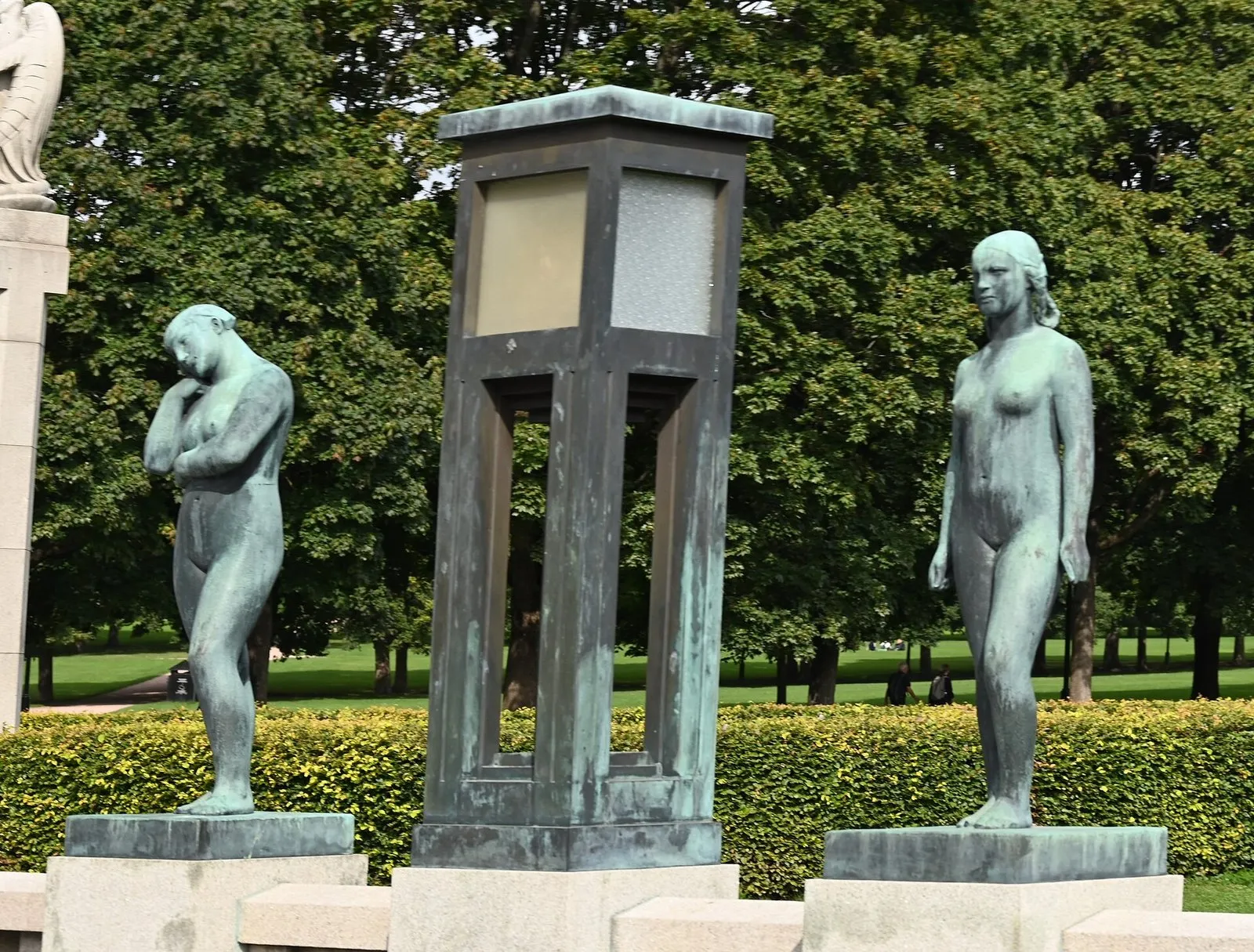
Vigeland Park (Vigelandsparken) covers 80 acres within Frogner Park and holds 212 granite, bronze and wrought-iron sculptures by Gustav Vigeland (1869–1943), all by one artist.
The 850-metre central axis runs from the wrought-iron gates over the bridge with the Angry Boy statue, past the fountain with its tree reliefs and up to the Monolith plateau, ending at the Wheel of Life (Livshjulet).
- The Bridge: Lined with 58 bronze figures of human relationships and childhood. On the eastern parapet stands Vigeland’s best-known bronze, Sinnataggen (The Angry Boy), a toddler stamping his foot in a tantrum.
- The Fountain: Surrounded by 20 bronze tree groups showing life from infancy through adulthood to death.
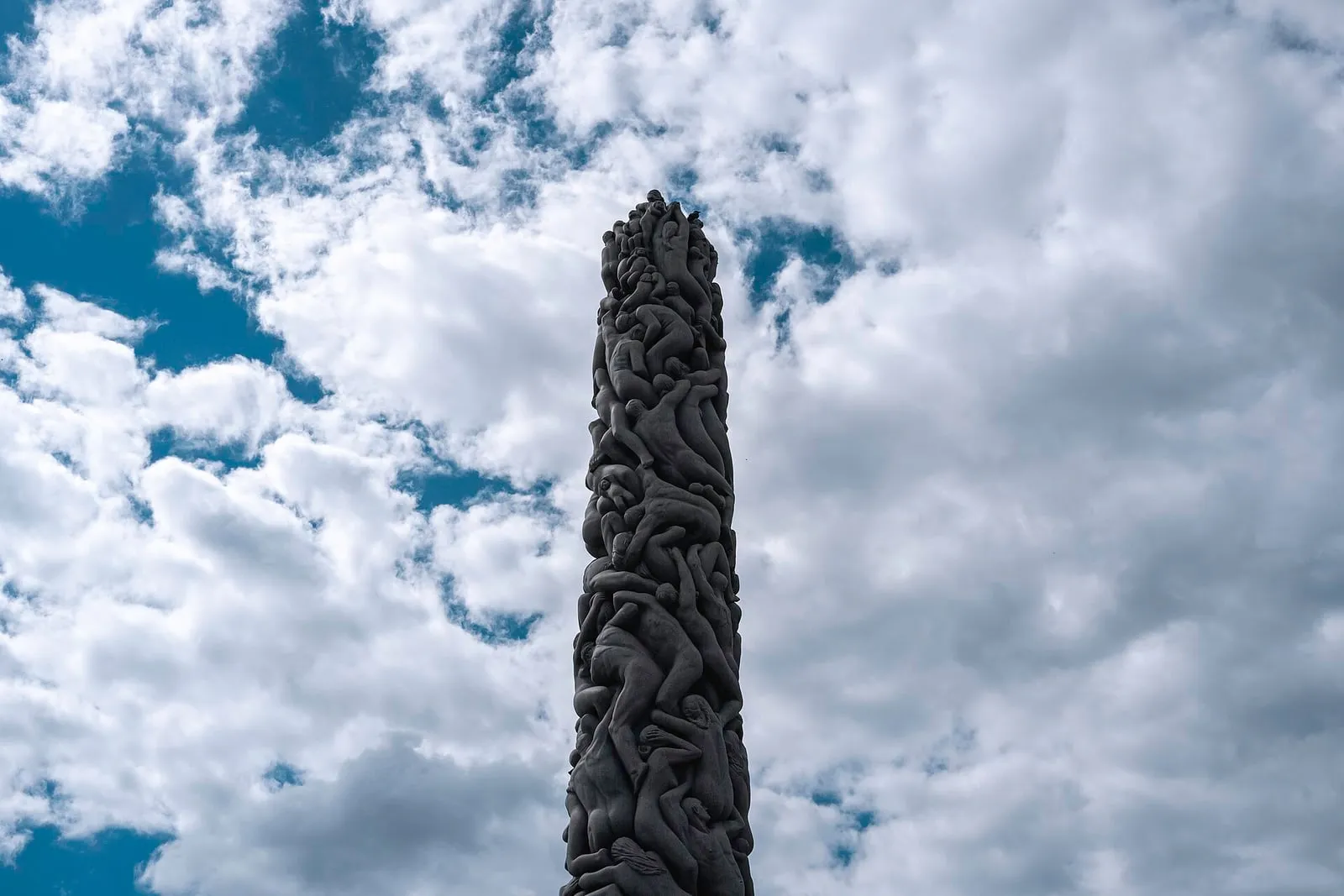
- The Monolith (Monolitten): At the highest point of the park, a granite column carved from 1929 to 1943 from a single 280-tonne block of Iddefjord granite, with 121 human bodies intertwined.
- Practical details: The park is free, never closes and is lit after dark. Take tram 12 from central Oslo to the Vigelandsparken stop.
2. Oslo Opera House roof walk
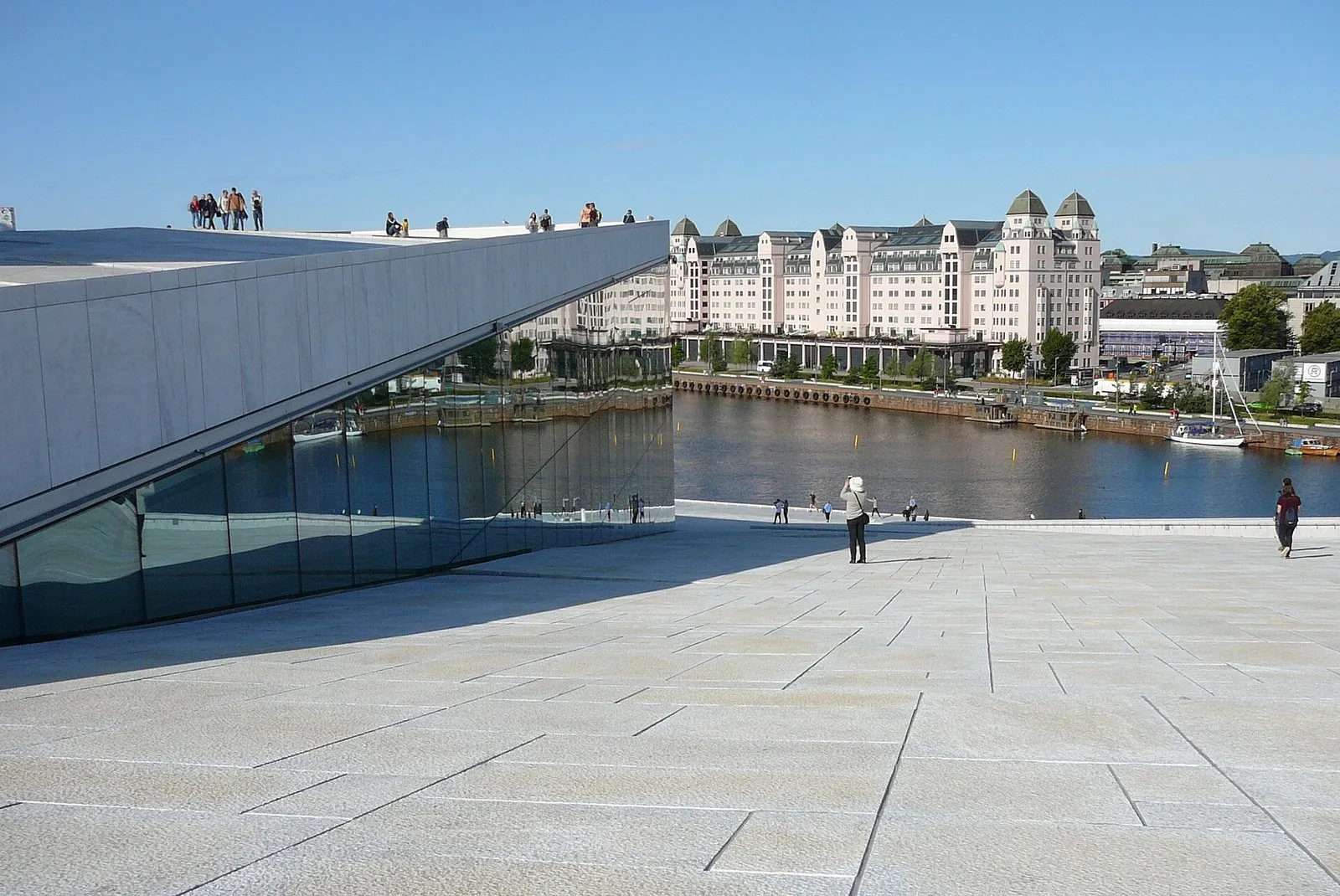
The Oslo Opera House (Operahuset), designed by the Norwegian firm Snøhetta, opened in 2008. Its roof slopes up from the sea so that anyone can walk onto it.
- The surface: 36,000 slabs of Italian Carrara marble and Norwegian granite. Walk straight off the quay and up the broad ramps.
- The views: The flat summit looks over the Oslofjord, the forested hills, the Barcode high-rises and the tilted glass tower of MUNCH.
- Foyer: Walk into the foyer to see the four-storey curved oak wall without an opera ticket. Toilets and free Wi-Fi are inside.
3. Oslo City Hall (Rådhuset)
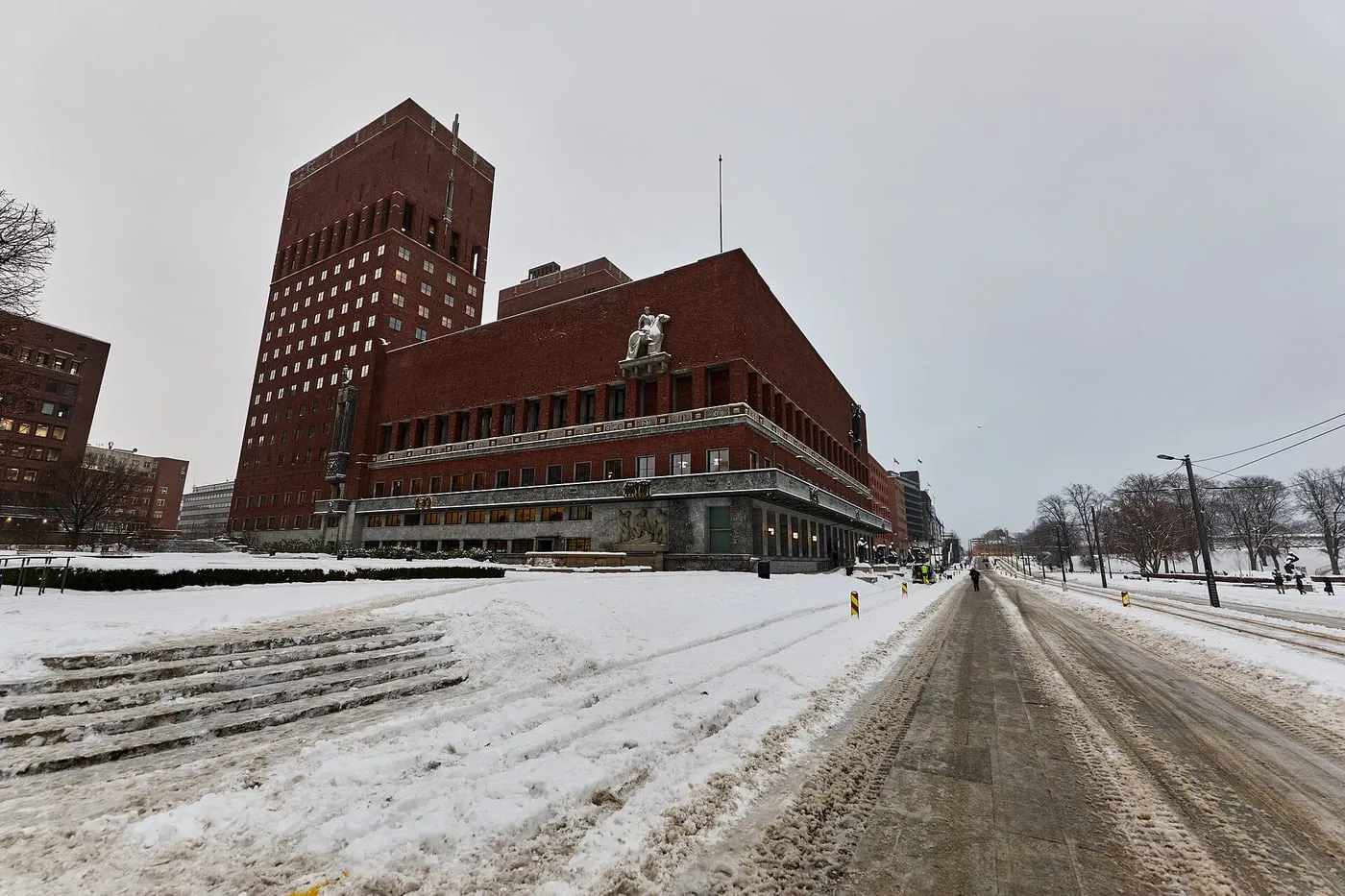
Oslo City Hall stands on Rådhusplassen above Pipervika harbour. It was completed in 1950 for the city’s 900th anniversary.
Highlights of City Hall
- The Central Hall (Sentralhallen): Murals by Henrik Sørensen and Alf Rolfsen cover the walls. Sørensen’s wall painting Work and Celebration measures 31 by 13 metres and shows Norwegian rural, fishing and industrial life.
- Nobel Peace Prize venue: The Nobel Peace Prize is awarded here each year on 10 December in the presence of the royal family.
- The carillon: The eastern tower has a 49-bell carillon that plays tunes across the harbour every hour from 07:00 to midnight.
- Practical details: Open daily 09:00 to 16:00. Entry is free; there is a bag check at the door.
4. Akershus Fortress ramparts
Akershus Fortress (Akershus Festning) stands on the headland between the city centre and the fjord. King Haakon V began its stone construction in 1299.
- Rampart walks: The castle rooms and military museums need a ticket, but the grounds, bastions and battlements are free.
- Viewpoints: The parapets look over Aker Brygge, Tjuvholmen, the Bygdøy peninsula and the island ferries, and face west for sunset.
- Opening hours: The main gates are open daily from 06:00 to 21:00 all year.
5. Ekebergparken sculpture park and viewpoint
Ekebergparken is on the wooded Ekeberg hillside southeast of the centre, with woodland paths between the sculptures.
What to see in Ekebergparken
- Sculptures: Over 40 works sit among the trees, including pieces by Louise Bourgeois, Salvador Dalí, Auguste Rodin, Damien Hirst, Sarah Lucas, Dan Graham and Roni Horn.
- The Scream viewpoint: A signposted platform marks where Edvard Munch stood in 1892 when he felt “a vast, infinite scream pass through nature”, the origin of The Scream.
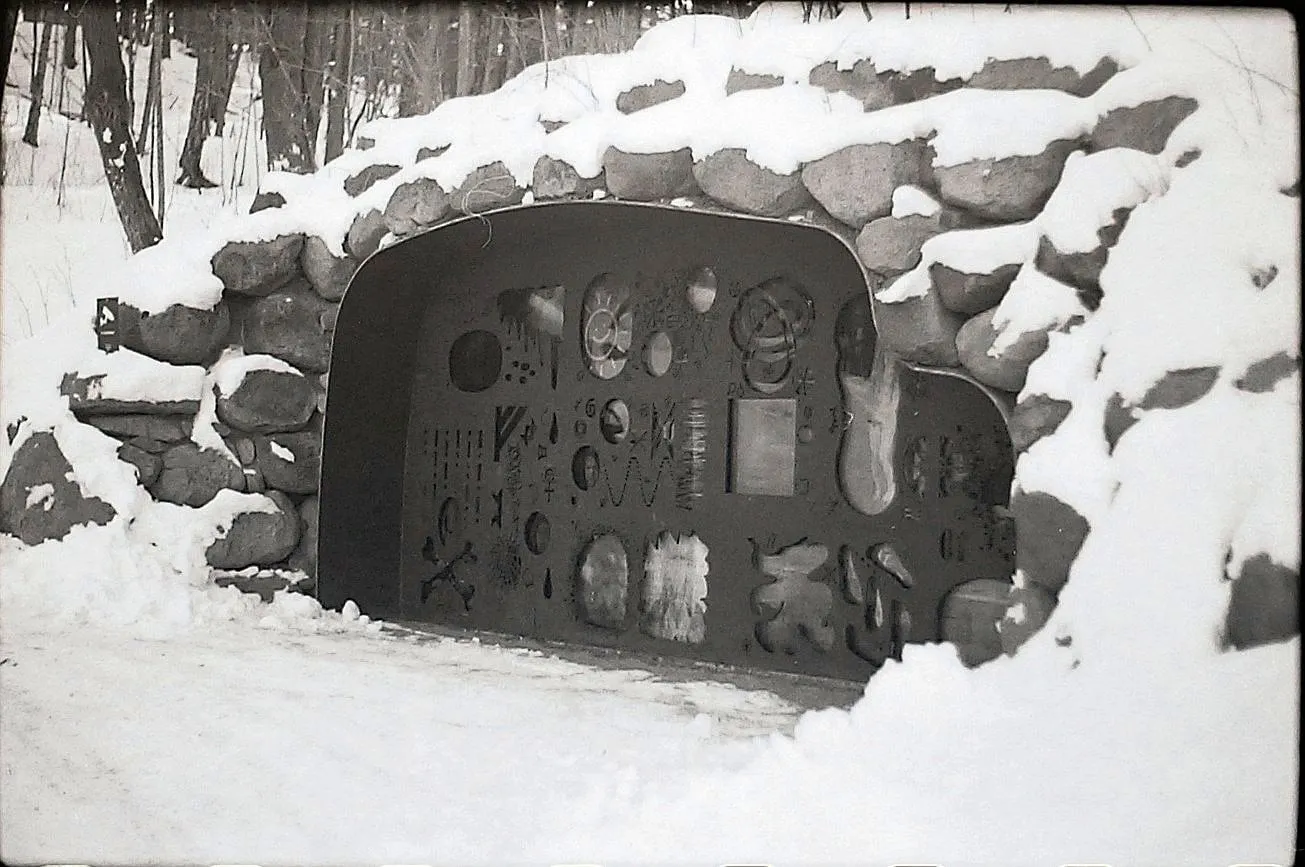
- James Turrell installations: In the park’s old reservoir vault are two light installations by the American artist James Turrell (Ganzfeld: Double Vision and Skyspace). Free drop-in guided viewings run on Sundays from 11:00 to 16:00.
- How to reach it: Take tram 13 or 19 towards Ljabru to the Ekebergparken stop (10 minutes from Oslo S). The outdoor park is free and open 24/7.
6. The Akerselva river path
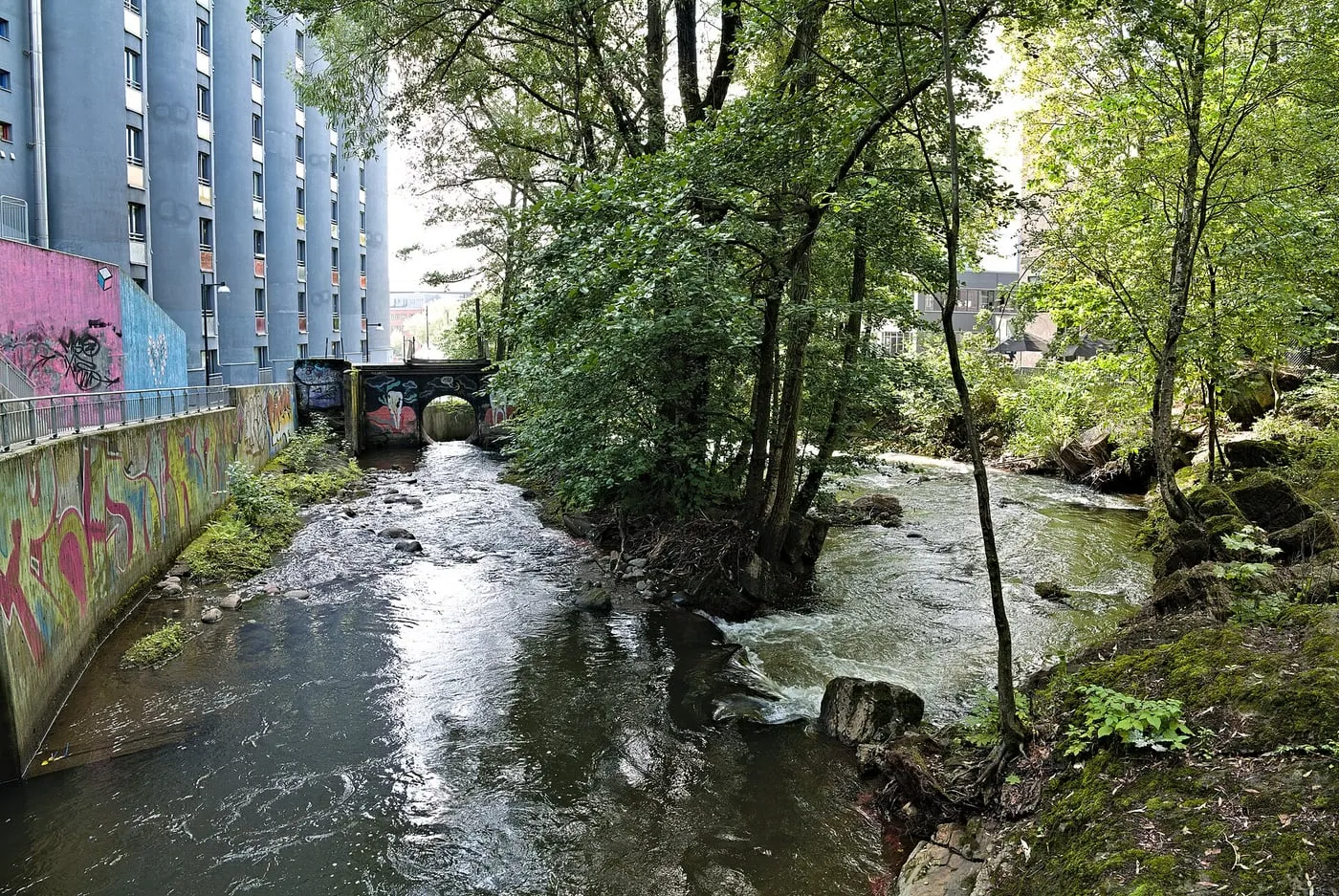
The Akerselva runs eight kilometres through Oslo, from Lake Maridalsvannet in the northern forest down to the Oslofjord at Bjørvika. It once powered the city’s 19th-century textile mills, paper factories and foundries, and is now a riverside footpath.
Highlights along the river
- Nedre Foss waterfall: An urban waterfall below the Mathallen food hall and the Vulkan area, with a restored park and salmon-spawning pools beside the rapids.
- Red-brick factories: Converted 19th-century industrial buildings now hold artist studios, university design departments and cafés.
- Ankerbrua (the Fairy Tale Bridge): A cast-iron bridge with four bronze statues of Norwegian folklore figures by Dyre Vaa, including the White Bear King Valemon and Peer Gynt riding the buck.
- The path: The riverside paths are paved, lit and free.
7. Changing of the Guard at the Royal Palace
Completed in 1849 at the crest of Bellevue Hill, the neoclassical Royal Palace (Det kongelige slott) is the official residence of Norway’s reigning monarch.
- The ceremony: Every day at 13:30 the King’s Guard (Hans Majestet Kongens Garde) changes guard in the gravel forecourt; it lasts about 30 minutes.
- Summer parades: On summer weekends the guard’s drill company and a brass band march along Karl Johans gate from Akershus Fortress to the palace.
- Palace Park (Slottsparken): The 54-acre park around the palace has old trees, ponds and the Queen Sonja Art Stable. It is free and open all year.
8. Deichman Bjørvika public library
The six-storey Deichman Bjørvika, designed by Lundhagem and Atelier Oslo, stands between the Opera House and Oslo Central Station.
- Architecture: It won the 2021 Public Library of the Year award. The glass upper storey cantilevers 20 metres over the street with no support pillars.
- Free to use: Anyone can walk in, seven days a week, without registering. There are reading pods with fjord views, art book galleries, temporary exhibitions and free Wi-Fi.
Suggested free 1-day Oslo itinerary
The free sights link up into one walking day:
| Time | Stop |
|---|---|
| 09:30 | Opera House marble roof |
| 10:30 | Deichman Bjørvika library |
| 11:30 | Akershus Fortress ramparts |
| 12:30 | Oslo City Hall murals |
| 13:30 | Royal Palace guard change |
| 14:30 | Palace Park and Damstredet |
| 16:00 | Akerselva river walk and the Nedre Foss falls |
Tips for keeping food and transit costs low
- Carry a water bottle: Tap water is safe to drink and free at any café or restaurant if you ask for it (springvann).
- Buy picnic food at a discount supermarket: Bread, Jarlsberg cheese, fruit and smoked salmon from Kiwi, Rema 1000 or Coop Extra cost far less than a restaurant meal.
- Walk: The centre between Central Station, the Royal Palace and Grünerløkka is compact, so this day needs no transport tickets.
- Next steps: 1 or 2 days in Oslo, 3 days in Oslo and cheap meals in where to eat in Oslo.
Common questions
What are the best free attractions to visit in Oslo?
Gustav Vigeland's sculpture park in Frogner Park, the marble roof of the Oslo Opera House, the ramparts of Akershus Fortress, the murals inside Oslo City Hall, the sculpture trail in Ekebergparken, the Akerselva riverside path and the daily changing of the guard at the Royal Palace.
Is admission to Oslo City Hall free?
Yes. The Central Hall is open daily from 09:00 to 16:00 at no charge. It has the murals by Henrik Sørensen and Alf Rolfsen and hosts the annual Nobel Peace Prize ceremony.
Are any major art museums free in Oslo?
Not for adults: MUNCH costs NOK 220, the National Museum NOK 220 and the Fram Museum NOK 180. Under-18s enter MUNCH and the National Museum free, and visitors under 25 pay NOK 100 at both.
Can I watch the Changing of the Guard for free?
Yes. The King's Guard (Hans Majestet Kongens Garde) changes guard on the Palace Square outside the Royal Palace every day at 13:30. In summer the guard company marches along Karl Johans gate with a brass band.
Is public transport free for tourists in Oslo?
No. Metro, trams, buses and public island ferries all need a Ruter ticket; a Zone 1 single costs NOK 46 (ruter.no). The historic centre, waterfront and palace are within walking distance of each other.