In this guide
The Short Version: Osaka is Japan’s kitchen (tenka no daidokoro), and joining a food tour saves you from queueing at tourist traps while unlocking hidden neighbourhood eateries. Dotonbori evening tours focus on street food staples like piping-hot takoyaki and teppanyaki okonomiyaki along illuminated canal alleys. Shinsekai tours explore Showa-era nostalgic standing bars (tachinomi) serving crisp kushikatsu skewers. Kuromon Market morning walks target grilled seafood, wagyu beef skewers, and seasonal fruit. Independent grazing is simple with an IC card like ICOCA (Osaka public transport), but guided tours from 9,500 yen on GetYourGuidead include food, drinks, and local cultural context. Remember that street food etiquette requires eating beside the stall rather than walking while eating (Osaka etiquette).
Tour styles and neighbourhoods compared
| Tour Type | Neighbourhood | Duration | Price from | Best for |
|---|---|---|---|---|
| Dotonbori Evening Street Food | Minami / Dotonbori | 3 hours | 11,000 yen | First-time visitors wanting sights and staples |
| Shinsekai Retro Izakaya Crawl | Shinsekai / Tennoji | 3 hours | 9,800 yen | Kushikatsu, retro Showa vibes and back-alley bars |
| Kuromon Market Morning Tasting | Nipponbashi | 2 to 2.5 hours | 9,000 yen | Fresh sashimi, grilled seafood and wagyu skewers |
| Umeda Underground Bar Tour | Kita / Umeda | 3 hours | 12,500 yen | Salaryman standing bars and hidden basement alleys |
| Private Custom Food Tour | Flexible | 3 to 4 hours | 22,000 yen | Families, dietary requirements and tailored itineraries |
Book a food tour
A tour is the quick way into the standing bars and market stalls where a first-time visitor does not know what to order. Guides pick the stops and explain the menu, and the price includes the tastings.
1. Dotonbori evening street food tours
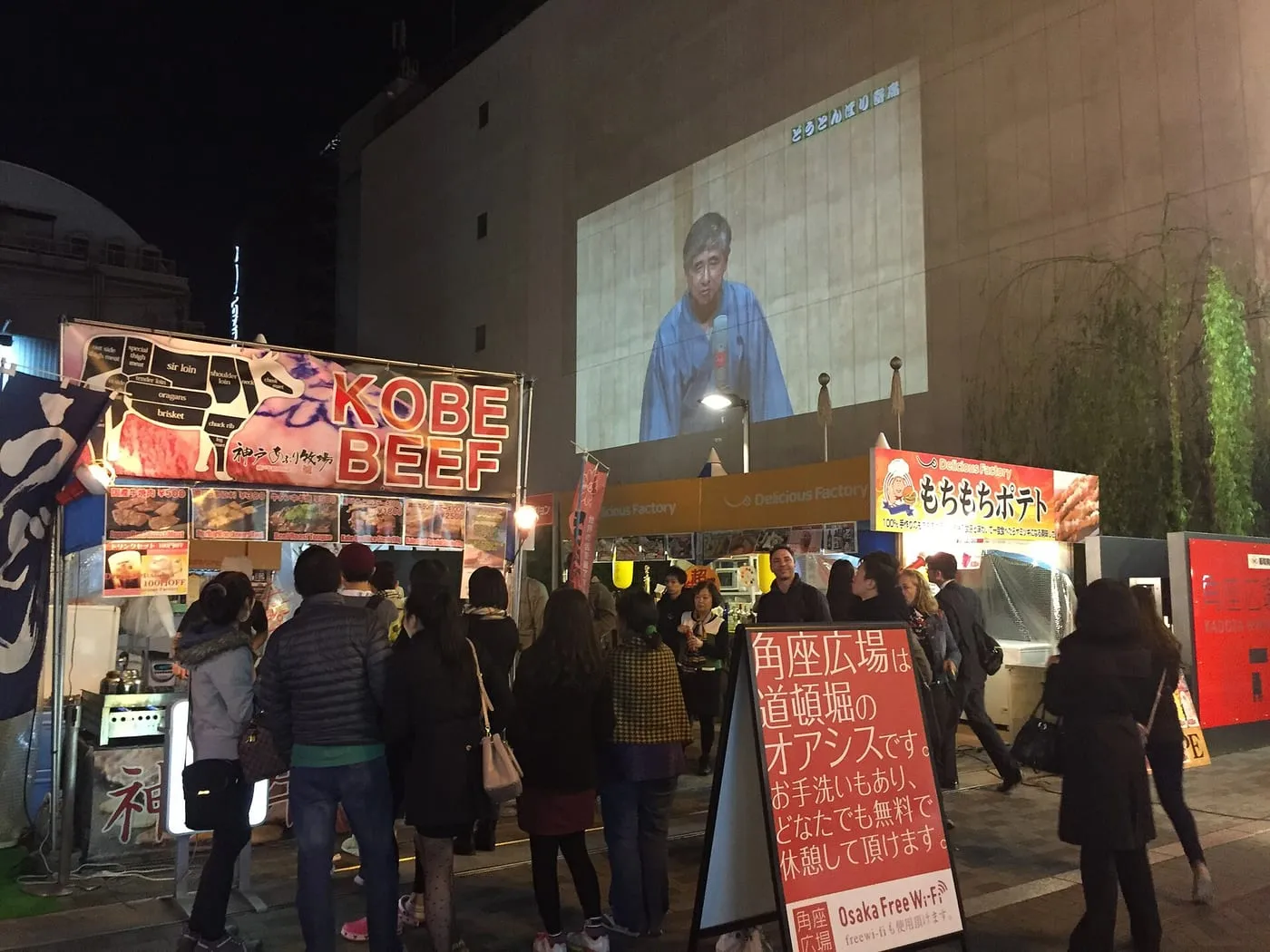
Dotonbori is the epicenter of Osaka food culture, where neon signs reflect on the canal and giant mechanical crabs move above storefronts. An evening tour here navigates the lanes between Ebisu Bridge and Sennichimae.
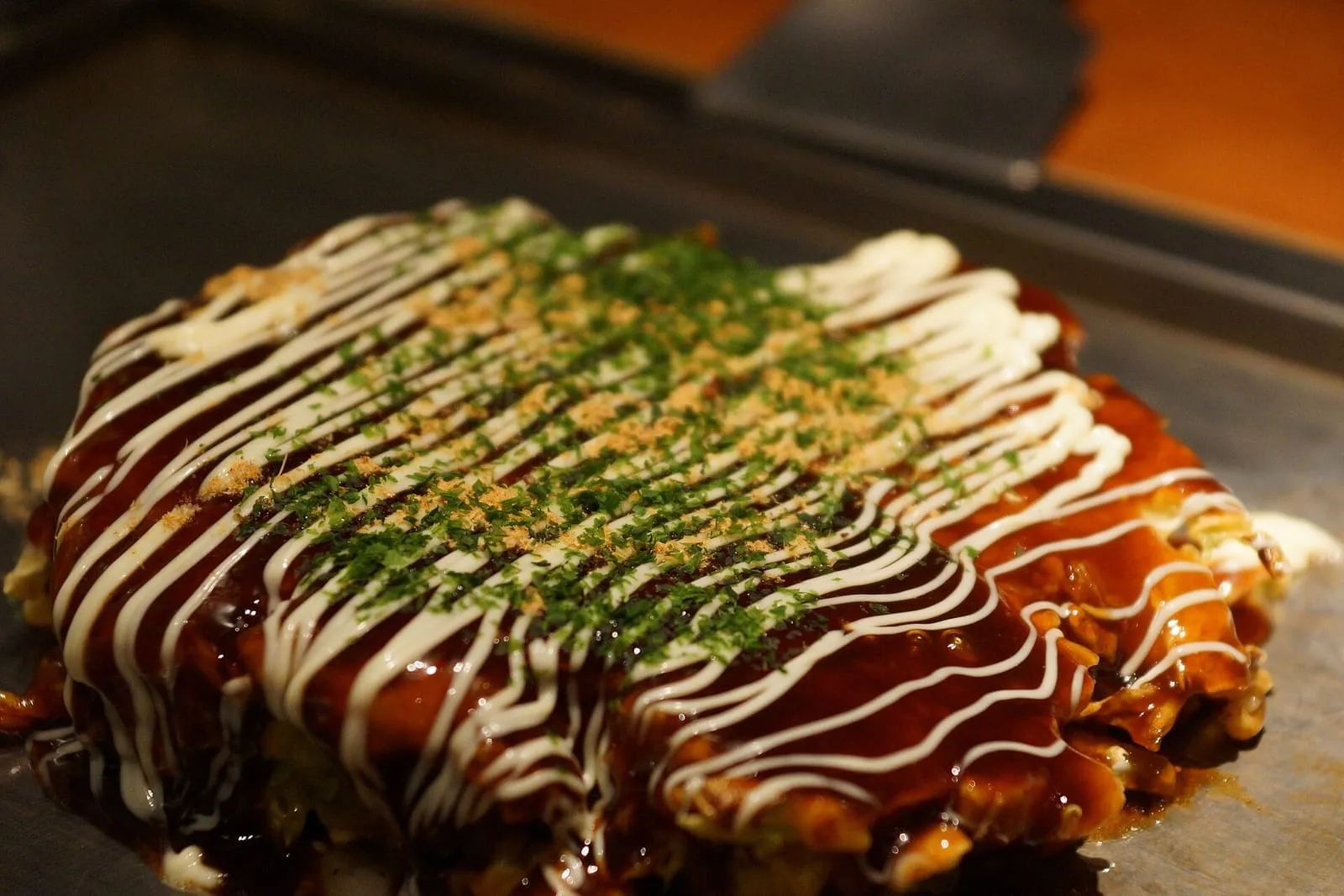
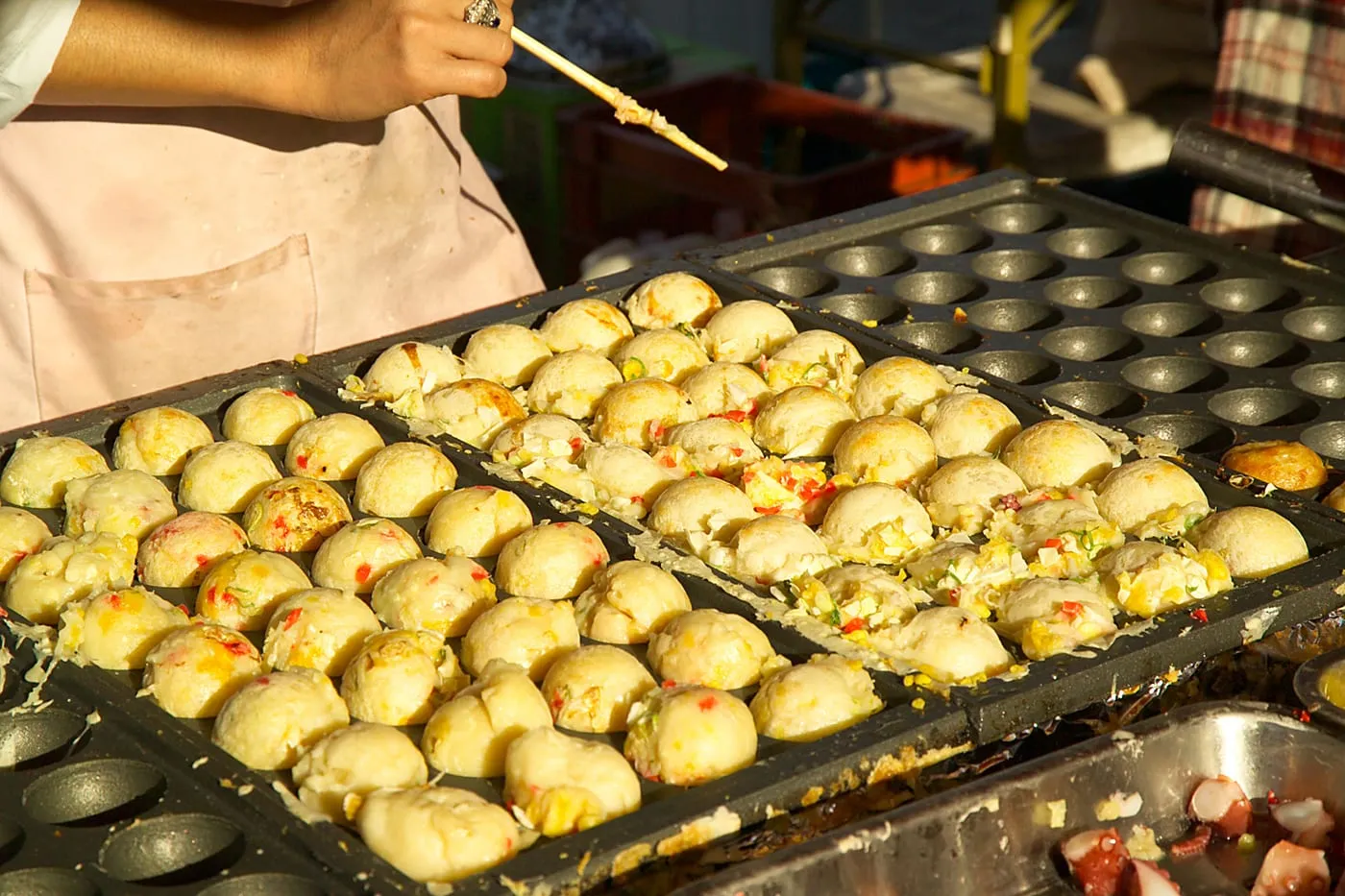
Tours typically stop at four to six venues. You sample freshly poured takoyaki straight from the copper plate, seasoned with sweet brown sauce, Japanese mayonnaise, seaweed flakes (aonori), and dancing bonito flakes (katsuobushi). You also sit at an okonomiyaki counter where chefs press savoury cabbage-and-pork batter onto a flat iron grill plate. Guides explain the philosophy of kuidaore (eating until you drop), steer you away from frozen tourist stalls, and lead you into quiet lantern-lit stone alleys like Hozenji Yokocho.
- Meeting point: Ebisu Bridge or Namba Station.
- What is covered: Takoyaki, okonomiyaki, gyoza or yakisoba, local craft beer or soft drink.
- Timing: Usually 17:30 to 20:30.
- Practical note: Bring cash for small drink additions, as explained in our guide to money in Osaka.
2. Shinsekai kushikatsu and retro bar walks
South of Namba sits Shinsekai, a historic neighbourhood developed in 1912 around Tsutenkaku Tower. It remains a retro district, packed with colourful shopfronts, shogi parlours, and narrow izakaya alleys such as Janjan Yokocho.
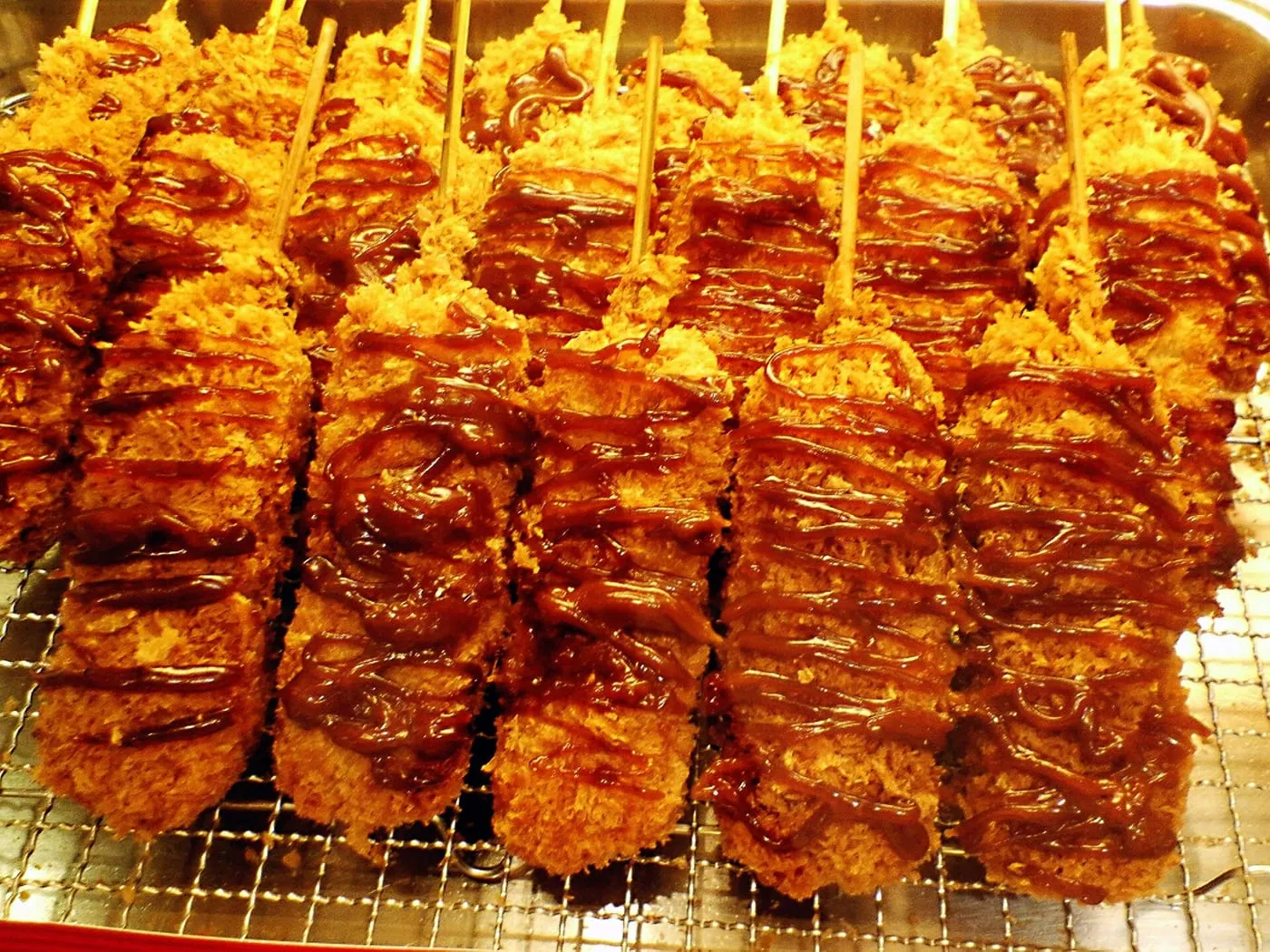
Food tours in Shinsekai centre on kushikatsu: bamboo skewers of beef, lotus root, quail eggs, pumpkin, and prawns rolled in panko breadcrumbs and deep-fried until crisp. Guides teach you the strict golden rule of kushikatsu dining: never double-dip your skewer into the communal sauce tub. Shinsekai tours often include a stop at a traditional standing bar (tachinomi) for doteyaki (beef tendon simmered gently in sweet white miso) paired with Japanese draft beer or highballs.
- Meeting point: Shin-Imamiya Station or Dobutsuen-mae Station on the Midosuji line.
- What is covered: Assorted kushikatsu skewers, doteyaki, cabbage leaves, two drinks.
- Timing: 17:00 to 20:00.
- Vibe: Unpretentious, working-class charm with Showa-era character.
3. Kuromon Ichiba Market morning tastings
Known locally as Osaka no Daidokoro (Osaka’s Kitchen), Kuromon Market is a 580-metre covered market arcade operating since the Edo period. Over 150 stalls supply professional chefs and home cooks with prime seafood, seasonal produce, and meats.
Morning food tours run between 9:30 and 12:30 when vendors slice sashimi and fire up butane blowtorches. Tastings include fresh oysters opened to order, grilled king crab legs, seared scallops with butter and soy sauce, marbled A5 wagyu beef cubes on wooden skewers, and seasonal sweet fruits such as white strawberries or sweet persimmons.
- Meeting point: Nipponbashi Station Exit 10.
- What is covered: Four to five market tastings ranging from sashimi to wagyu skewers and sweet tamagoyaki.
- Timing: Morning only (stalls start packing up around 15:00).
- Good to know: The market gets crowded by 11:00; morning tours beat the midday surge.
4. Umeda underground and hidden alley tours
While southern Osaka (Minami) gets the spotlight for street snacks, northern Osaka (Kita) around Umeda holds an intricate network of underground station dining concourses and historic drinking streets like Hankyu Higashi-dori and Ohatsu Tenjin Urasando.
A guided tour in Umeda takes you through the multi-level basements of the Osaka Ekimae Buildings, where hundreds of tiny eateries serve office workers. These spots rarely provide English menus and offer a look at Japanese izakaya culture, featuring skewered yakitori, simmered oden, and regional Kansai sake flights. If you stay in the northern business district (hotels near Osaka Station and Umeda), this tour is convenient for walking back to your room.
Street food rules to follow
Dining manners in Osaka are straightforward but strictly observed:
- Eat where you buy: Do not walk along the street while eating takoyaki or skewers. Stand beside the vendor or eat in their designated stall seating area.
- Dispose of skewers safely: Hand your empty wooden skewers and paper trays back to the stall vendor where you purchased them. Public rubbish bins are scarce on city streets (Osaka etiquette).
- Sauce dipping etiquette: At kushikatsu counters with communal sauce tins, dip your skewer once before taking a bite. If you need more sauce later, use a fresh raw cabbage leaf as a ladle.
- No tipping: Tipping is not customary in Japan and is not expected on food tours, though leaving a positive review online is appreciated.
If you are planning the rest of your trip, compare this with Tokyo food tours or check our neighbourhood overview in where to stay in Osaka.
Common questions
Is a guided food tour in Osaka worth booking?
Yes for first-time visitors who want to navigate back-alley izakayas and standing bars without Japanese language barriers. While Dotonbori street counters are easy to visit independently, a guided tour takes you into residential tachinomi bars in Shinsekai or Umeda that lack English menus.
What dishes are included on an Osaka food tour?
Most evening food tours feature Osaka's three signature staples: takoyaki (octopus batter balls), okonomiyaki (cabbage pancake grilled on an iron teppan), and kushikatsu (deep-fried skewers dipped in savoury sauce), accompanied by draft beer or highballs.
How much does an Osaka food tour cost?
Small-group walking tours run between 9,000 yen and 18,000 yen per person, covering four to eight tastings and two drinks. Private or market tours with premium seafood at Kuromon run from 15,000 yen to 25,000 yen.
When should I take a food tour in Osaka?
Book an evening tour starting around 17:00 or 18:00 for Dotonbori or Shinsekai to catch the neon lights and lively izakaya atmosphere. Morning tours around 10:00 suit Kuromon Market when fishmongers slice fresh tuna and grill scallops.