One of 2 self-guided walks in Kuala Lumpur. See every walk.
In this guide
The Short Version: This 2.5-kilometre self-guided heritage walk takes 2.5 to 3 hours, guiding you through the historical heart of Kuala Lumpur from British imperial administration to lively Chinese commercial trading life. Begin at the historic independence lawn of Merdeka Square, admire the copper domes of the Sultan Abdul Samad Building, marvel at the historic confluence at Masjid Jamek and the River of Life, explore the Art Deco artisan stalls of Central Market (free), marvel at the ornate deity towers of Sri Mahamariamman Temple, photograph restored 1960s alley murals at Kwai Chai Hong, and finish with street snacks on Petaling Street. Or book a tour: follow an expert guide through the historic quarter on a half-day heritage trail walking tourad (from RM 207, 4.5 stars) covering Merdeka Square and Chinatown.
The route
Map of the walk numbered stops in walking order
Open the whole route in Google Maps — all seven stops in walking order on your phone.
Kuala Lumpur began in the 1850s as a muddy river confluence where prospectors landed to prospect for tin ore. This walking route traces that rapid transformation: from the formal colonial parade grounds of British Malaya across the river to the boisterous Cantonese shophouse avenues that drove the early commercial economy.
| Stop | Entry | Opening hours | Highlights & walking advice |
|---|---|---|---|
| 1. Merdeka Square (Dataran Merdeka) | Free | Open 24 hours | 95m independence flagpole and historic colonial cricket pitch |
| 2. Sultan Abdul Samad Building | Free (exterior) | Open 24 hours | 1897 Indo-Saracenic architectural landmark with copper cupolas |
| 3. River of Life & Masjid Jamek | Free | Mosque open daily outside prayers; mist shows after dusk | River confluence boardwalk, blue mist fountains, and Moorish minarets |
| 4. Central Market (Pasar Seni) | Free | Daily 10:00 to 22:00 | 1937 Art Deco market building with Malaysian handicraft ateliers |
| 5. Sri Mahamariamman Temple | Free (shoe care RM0.50) | Daily 06:00 to 20:30 | 23m sculpted Raja Gopuram tower with 228 South Indian deities |
| 6. Kwai Chai Hong (Ghost Lane) | Free | Daily 09:00 to midnight | Restored shophouse alleyway with interactive 1960s heritage murals |
| 7. Petaling Street Chinatown | Free | Daily 10:00 to 23:00 | “Green Dragon” covered pedestrian mall, street food, and herbal teas |
1. Merdeka Square (Dataran Merdeka)
Jalan Raja, City Centre · Open 24 hours · Nearest transit: Masjid Jamek LRT (Exit 3)
Start your walk at the wide expanse of Merdeka Square (Dataran Merdeka). Originally known as the Padang (“field”) during British colonial rule, this manicured lawn hosted cricket matches and social gatherings for colonial administrators stationed in Selangor.
On the southern edge stands the 95-metre flagpole, one of the tallest in the world. It was here, precisely at midnight on 31 August 1957, that the British Union flag was lowered and the flag of independent Malaya was hoisted for the first time, accompanied by cries of “Merdeka!” (“Freedom!”). A circular black marble plaque set into the stone pavement marks the exact flag-raising location.
Walk along the perimeter to admire the surrounding architecture:
- To the west sits the Royal Selangor Club, established in 1884 with its distinctive Tudor-revival timber framing and wide verandahs.
- To the north stands the Cathedral of St Mary the Virgin, an 1894 Early English Gothic Anglican church featuring beautiful stained glass and a pipe organ built by Henry Willis.
- Beneath the square lies the underground Plaza Dataran Merdeka, containing parking and public restrooms.
2. Sultan Abdul Samad Building
Jalan Raja, facing Merdeka Square · Free exterior viewing · Open 24 hours
Turn directly eastward to face the monumental Sultan Abdul Samad Building, the crown jewel of British Malayan civic architecture. Completed in 1897 to house the Federated Malay States administration, this 137-metre-long brick edifice was designed by architects A.C. Norman, R.A.J. Bidwell, and A.B. Hubback.
The building is constructed in the Indo-Saracenic (Moorish) style, combining key architectural elements:
- Horseshoe-shaped arches framing open-air verandahs designed to capture cross-breezes.
- Alternating bands of red clay brick and white plaster.
- Three gleaming copper-clad onion domes that shine under equatorial sunlight.
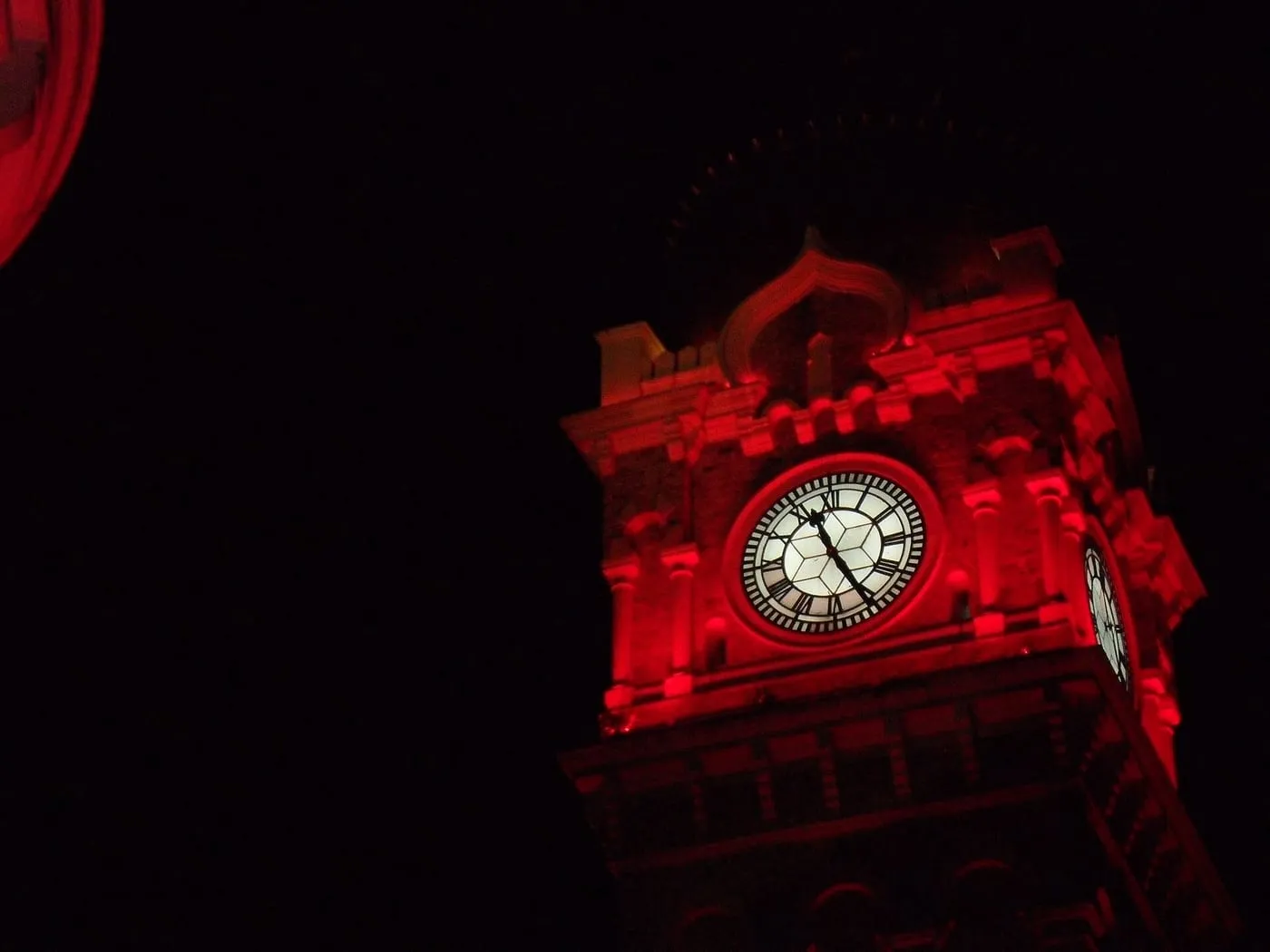
- A central 41-metre clock tower, modelled on London’s Big Ben, which chimed for the first time in 1897 to commemorate Queen Victoria’s Diamond Jubilee.
Today, the building houses the Ministry of Tourism, Arts and Culture. The exterior provides notable photography opportunities in the early morning when the sun illuminates the facade, and again after nightfall when the entire frontage is bathed in golden architectural illumination.
3. River of Life & Masjid Jamek
Confluence of Klang and Gombak Rivers · Open 24 hours · Free access
Walk around the northern wing of the Sultan Abdul Samad Building to reach the pedestrian boardwalk at the River of Life. This was the literal birthplace of Kuala Lumpur in 1857, when a party of 87 Chinese tin miners sailed up the Klang River and landed at this muddy confluence (Kuala Lumpur translates from Malay as “muddy confluence”).
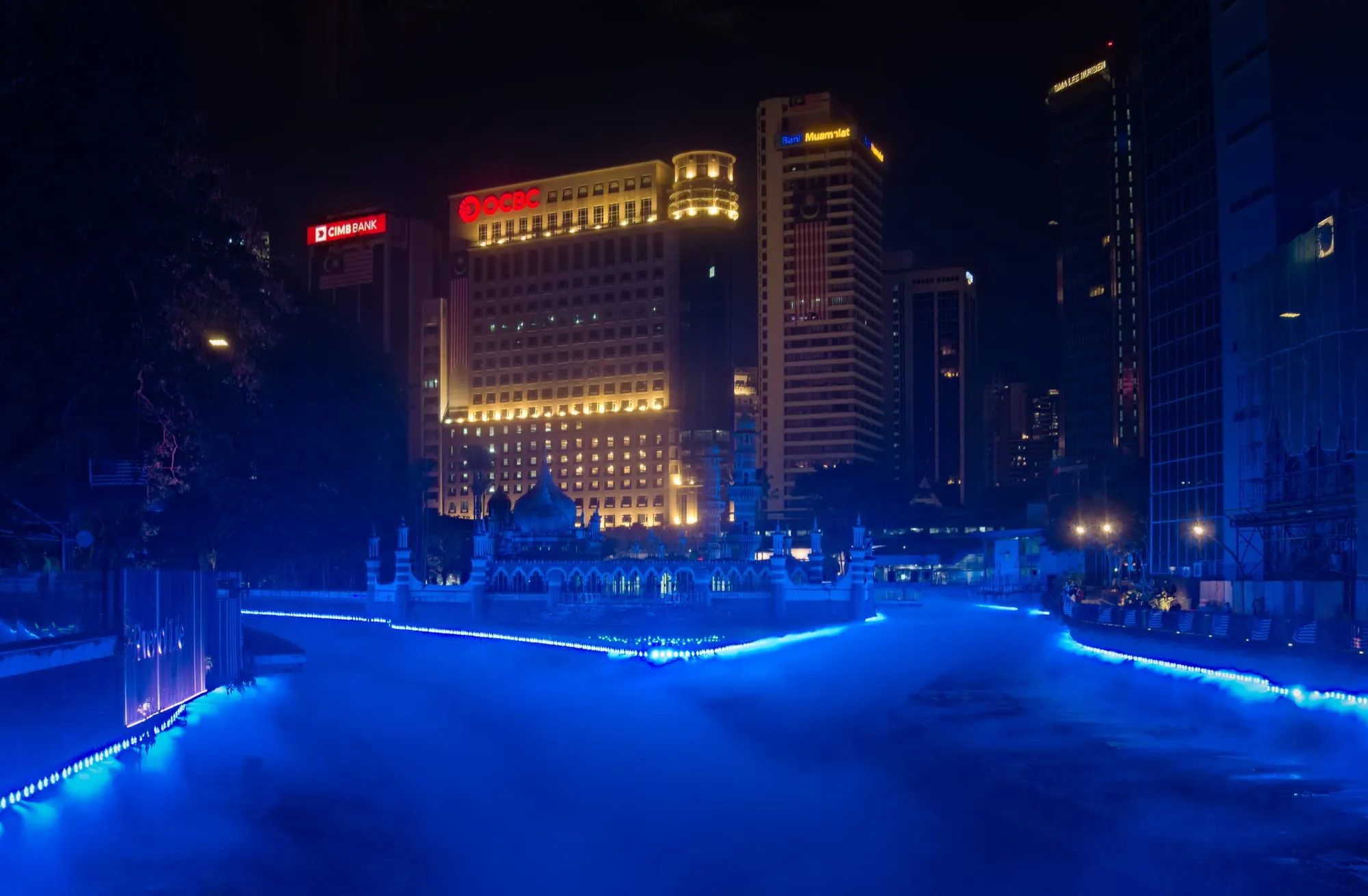
Framed between royal palm trees right on the river wedge stands Masjid Jamek Sultan Abdul Samad. Opened in 1909 and designed by Arthur Benison Hubback, it was the principal mosque of Kuala Lumpur until the construction of the National Mosque in 1965. Its design draws direct inspiration from Mogul mosques in northern India, featuring pink-and-white banded brickwork, three arched cupolas, and two 26.8-metre minarets topped with cupolas.
A modern pedestrian bridge spans the confluence, providing a view down the river channel. High-pressure mist nozzles embedded along the riverwalls erupt periodically to create a cooling vapor cloud over the water. If you revisit in the evening, the entire riverbank is illuminated by dynamic blue LED fixtures.
4. Central Market (Pasar Seni)
Jalan Hang Kasturi · Daily 10:00 to 22:00 · Free entry
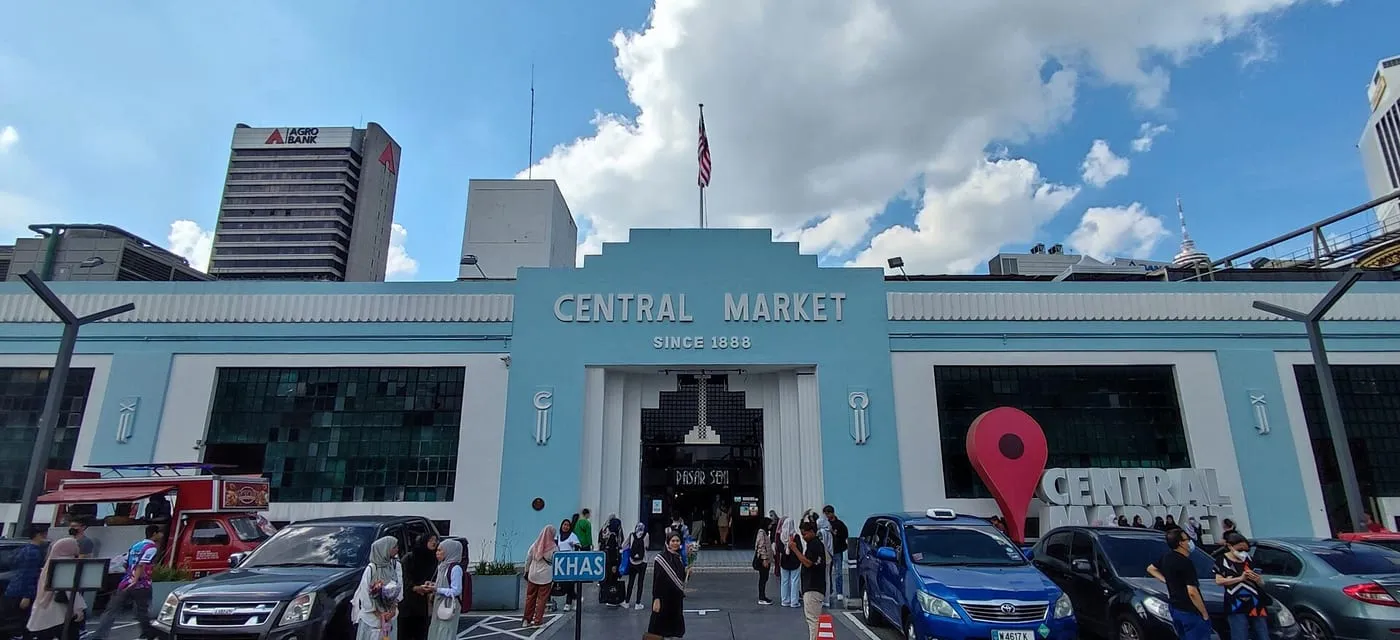
Cross the river via the pedestrian footbridge and walk two minutes south along Jalan Hang Kasturi to reach Central Market (Pasar Seni). First founded in 1888 as an open-air wet market by Yap Ah Loy, the third Kapitan Cina of Kuala Lumpur, the current structure was completed in 1937 in an understated Art Deco style with pale blue and cream rendered walls.
Saved from demolition in the 1980s through conservation efforts, Central Market is now Malaysia’s primary centre for indigenous handicrafts, folk arts, and cultural souvenirs:
- Zoned Alleys: The ground floor is organised into themed corridors reflecting Malaysia’s cultural communities—Lorong Melayu, Lorong Cina, and Lorong India—offering hand-drawn batik silk scarves, pewter cups, wau kites, and wood carvings from Sarawak.
- Kasturi Walk: An open-air pedestrian lane alongside the building shielded by a steel butterfly-kite (wau bulan) awning, lined with fruit vendors, cold drinks, and snack stalls.
- Food Court (Level 1): An air-conditioned dining area serving affordable Malaysian hawker staples such as laksa, claypot chicken rice, and cendol.
Take 45 minutes here to cool off in the air conditioning, use the clean facilities, and browse artisan workshops before heading into the religious core of Chinatown.
Tours and guided options
You can walk this heritage trail self-guided for free using our turn-by-turn directions. Joining a guided heritage walk adds expert historical storytelling on British colonial administrators, Chinese tin-mining guilds, and hidden clan associations.
Kuala Lumpur half-day heritage trail guided walking tour
From RM 207 · 4 hours · Merdeka Square, Sultan Abdul Samad & Chinatown
Kuala Lumpur half-day heritage trail guided walking tourad: Discover the rich history and culture of Kuala Lumpur on a walking tour. Visit the Sin Sze Si Ya Temple, the Sri Maha Mariamman Temple, the Central Market, and the Buddhist Maha Vihara Temple.
Private historic city centre walking tour with local historian
From RM 338 · 2 - 3 hours · focused architectural and colonial route
Private historic city centre walking tour with local historianad: Walk from the square where Malaysia declared independence to hidden colonial alleys and ancient temples in the heart of KL. Explore with a private licensed guide. Flexible options included.
Chinatown and historic centre food and culture tour
From RM 231 · 5 stars from 9 reviews · 3 hours · heritage streets with 12 food tastings
Chinatown and historic centre food and culture tourad: Discover the flavours of Kuala Lumpur on our guided food tour. Explore Chinatown and the colonial district, and taste over 12 authentic dishes that reflect Malaysia’s cultural blend !
5. Sri Mahamariamman Temple
Jalan Tun H.S. Lee · Daily 06:00 to 20:30 · Free entry (shoe minding RM0.50)
Exit Central Market through the eastern doors onto Jalan Tun H.S. Lee (historically known as High Street). Walking 100 metres south brings you to the grand gateway of Sri Mahamariamman Temple.
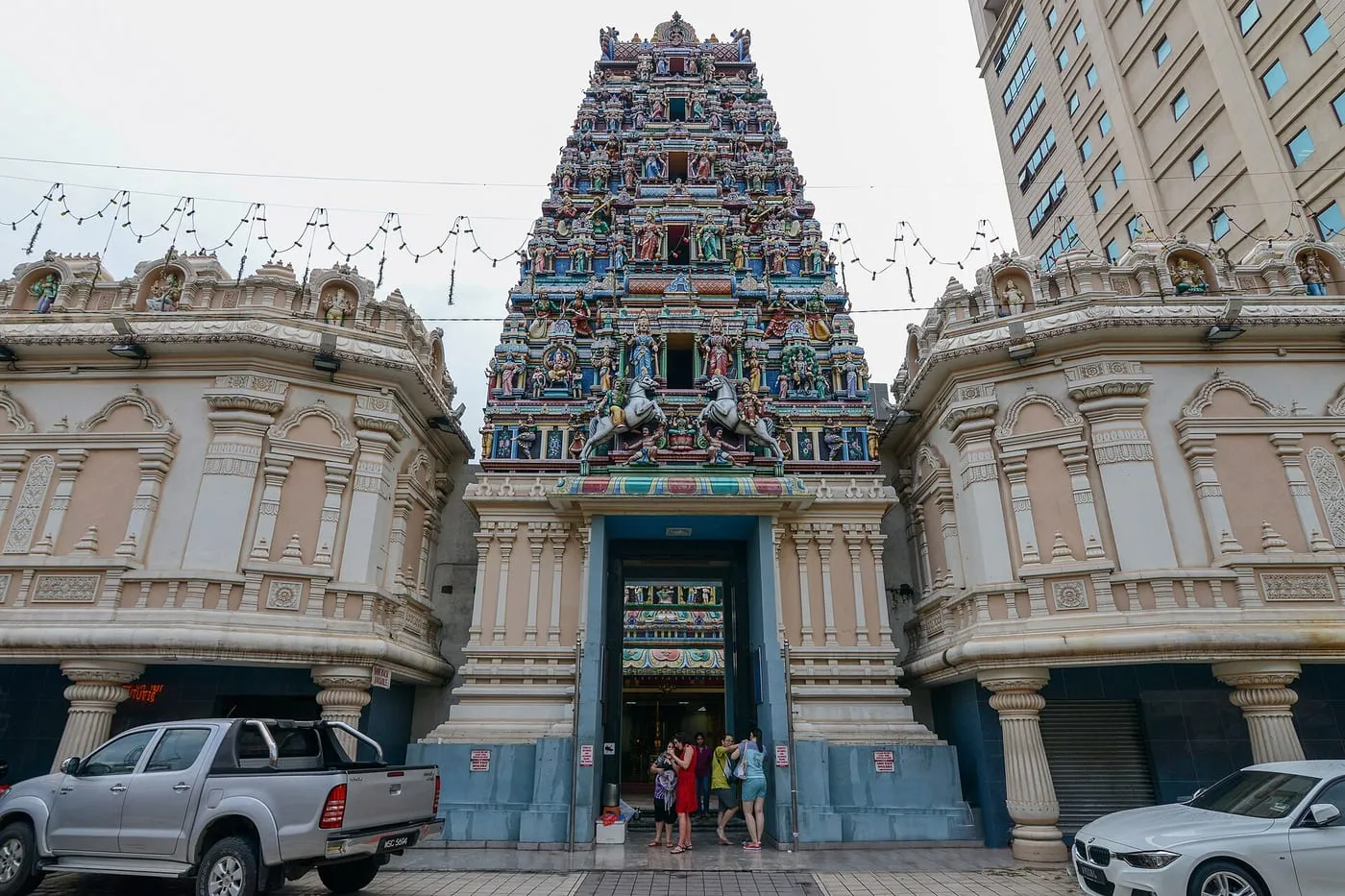
Founded in 1873 by K. Thamboosamy Pillai, a prominent Tamil community leader, this is the oldest operational Hindu temple in Kuala Lumpur. Originally established as a private sanctuary for early South Indian immigrant workers, the temple opened its doors to the wider public in the 1920s.
The focal point of the facade is the magnificent 22.9-metre Raja Gopuram (entrance tower), constructed in 1972 by master sculptors from Tamil Nadu. The five-tier pyramid is adorned with 228 vividly painted statues of Hindu deities depicting episodes from the Ramayana.
Before entering:
- Remove shoes and leave them with the attendant at the entrance counter (a nominal RM0.50 token fee).
- Ensure knees and shoulders are covered; sarongs are provided if needed.
- Walk clockwise around the central sanctum to view shrines dedicated to Mariamman, Ganesha, and Lord Murugan.
Each year, Sri Mahamariamman Temple serves as the starting point for the silver chariot procession during Thaipusam at Batu Caves.
Directly opposite the street stands Guan Di Temple, a 1888 Taoist shrine dedicated to the God of War and Literature, recognisable by its green ceramic roof dragons and massive bronze halberd.
6. Kwai Chai Hong (Ghost Lane)
Lorong Panggung, Chinatown · Daily 09:00 to midnight · Free entry
Continue south down Jalan Tun H.S. Lee for two blocks, turning left into Lorong Panggung to enter Kwai Chai Hong.
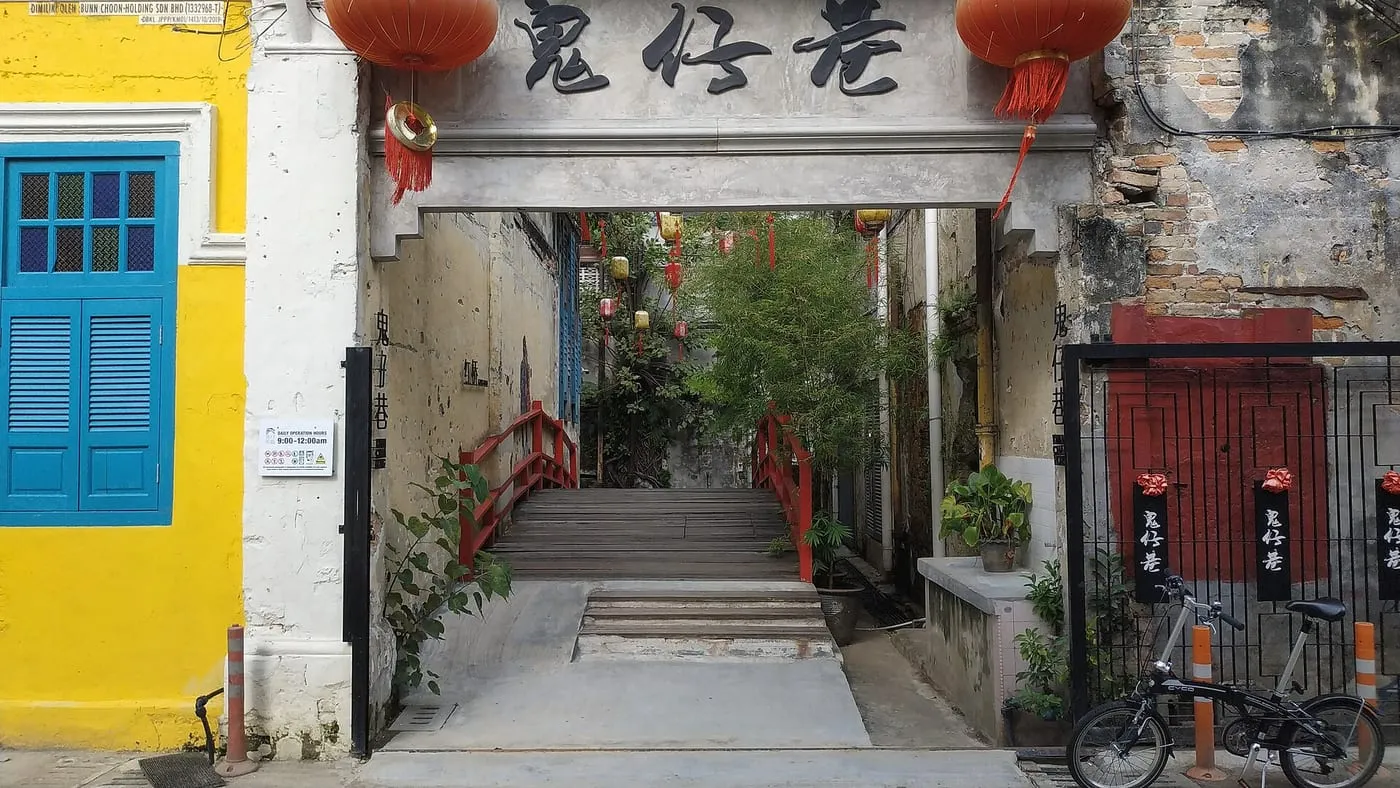
The Cantonese name literally translates as “Little Ghost Lane” or “Ghost Alley”, referring either to street urchins who once ran through these back alleys in the 1920s or to covert gambling dens that operated here. In 2019, a heritage restoration project revived this neglected lane, preserving 10 historic shophouse facades dating from the early 20th century.
Wander down the cobbled alley over the wooden arch bridge to discover six interactive wall murals created by local artists:
- A calligrapher drafting red spring festival couplets.
- An elderly barber shaving a customer with a straight razor.
- Two children reaching for an egg tart on a windowsill.
- A pair of lovers leaning over a traditional wooden balcony.
Each mural features a QR code that plays ambient audio clips recreating the banter, street cries, and music of 1960s Chinatown. The surrounding courtyard houses charming artisanal cafes and craft cocktail speakeasies tucked behind discrete shophouse entrances.
7. Petaling Street Chinatown
Jalan Petaling · Stalls operate roughly 10:00 to 23:00 · Free access
Turn north onto Petaling Street (Chee Cheong Kai), the historic spine of Kuala Lumpur’s Chinese merchant community. In Cantonese, Chee Cheong Kai means “Starch Factory Street”, commemorating the tapioca mill established here by Yap Ah Loy in the 1870s to employ workers during periods of tin-mining depression.
Today, the 400-metre pedestrian boulevard is sheltered beneath the “Green Dragon”, a massive curved steel-and-glass roof canopy installed to protect shoppers from tropical rain.
Stroll past market stalls selling textiles, watches, souvenirs, and bags. Beyond commercial goods, Petaling Street remains a sanctuary for heritage culinary traditions:
- Kim Soya Bean: Operating for over 70 years at the junction of Jalan Petaling and Jalan Hang Lekir, serving silky warm bean curd (tau foo fah) sweetened with ginger or brown sugar syrup (roughly RM3.50).
- Madam Tang Muah Chee: Fresh steamed glutinous rice dough tossed to order in toasted crushed peanuts and sugar.
- Air Mata Kucing (Mou Tak Teng): A renowned street drinks stall brewing traditional iced monk fruit, dried longan, and winter melon tea (approx RM3.00 per cup).
From here, you are only a two-minute walk from Pasar Seni MRT and LRT station. Take the MRT Kajang Line (heading towards Kajang) just two stops directly to Bukit Bintang to connect immediately with our companion modern skyline route: the Bukit Bintang to KLCC Walk. Alternatively, continue your culinary journey right around the corner along Jalan Alor Night Food Street.
For more inspiration on structuring your days in the city, consult our 3 Days in Kuala Lumpur Itinerary and our guide to Free Things to Do in Kuala Lumpur.
Common questions
How long does the Colonial District and Chinatown walk take?
The walking route covers 2.5 kilometres and takes roughly 40 minutes of continuous walking time. Allowing time to photograph colonial facades, browse Central Market handicrafts, visit Hindu shrines, and enjoy coffee in Kwai Chai Hong, plan for 2.5 to 3 hours.
What is the best time of day to do this walk?
Start around 08:30 or 09:00 to explore Merdeka Square and the River of Life in comfortable morning light before the tropical heat peaks. This paces your arrival at Central Market around 11:00 for air-conditioned exploration and a hawker lunch.
Do you need to pay admission for the stops on this walk?
All outdoor architectural sights, Merdeka Square, the River of Life, Central Market, Kwai Chai Hong, and Petaling Street are free to access. Sri Mahamariamman Temple has free entry, with a nominal RM0.50 shoe-minding fee at the door.
Where does the walk start and finish?
The walk begins at Merdeka Square (reached via Masjid Jamek LRT Station, Exit 3) and concludes on Petaling Street near Pasar Seni MRT/LRT Station, providing seamless onward transit across the city.