In this guide
The Short Version: Stretching for 500 metres in the heart of Bukit Bintang, Jalan Alor is Kuala Lumpur’s most energetic open-air night food market, packed with glowing Chinese lanterns, sizzling woks, and outdoor aluminium tables. The undisputed culinary anchor is Wong Ah Wah (Restoran WAW) at the northern end, renowned for its sticky, charcoal-caramelised barbecued chicken wings (around 4.20 MYR per wing) and smoky Hokkien mee. Other signature dishes include sambal stingray (ikan bakar) grilled over banana leaves, crispy oyster omelette (or-luak), fresh coconut ice cream, and pungent Musang King durian from specialist roadside fruit stalls. Arrive between 18:30 and 20:00 to secure prime pavement seating before peak evening crowds. For seamless arrival, set ride-hailing drop-offs to Changkat Bukit Bintang rather than Jalan Alor itself to bypass gridlocked traffic. Or book a tour: discover the street’s finest stalls with a local foodie on the local street food night tourad (from RM 278, 4.6 stars from 164 reviews).
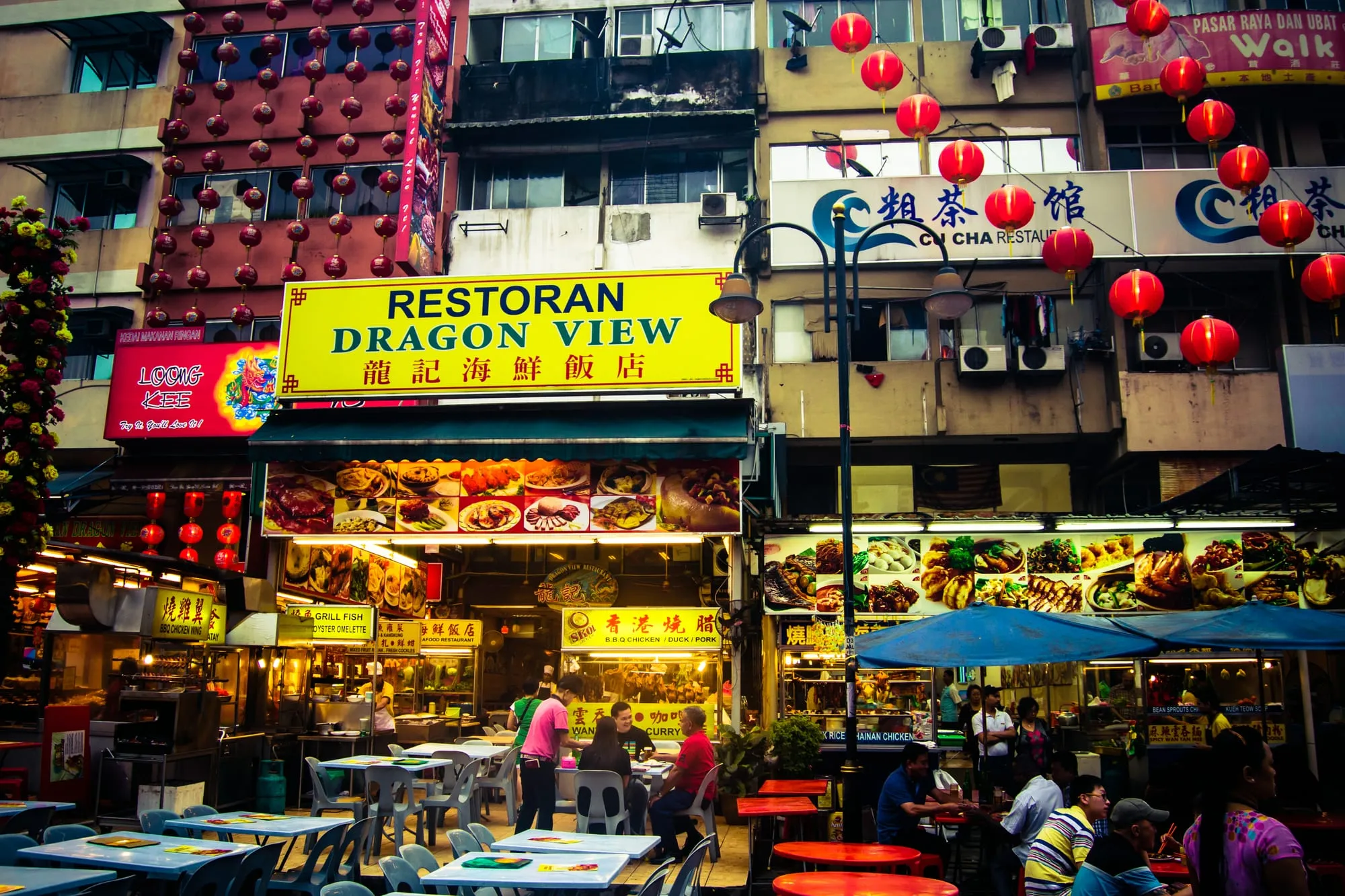
Evening dining on Jalan Alor. Photo: Azreey, Wikimedia Commons, CC BY-SA 3.0.
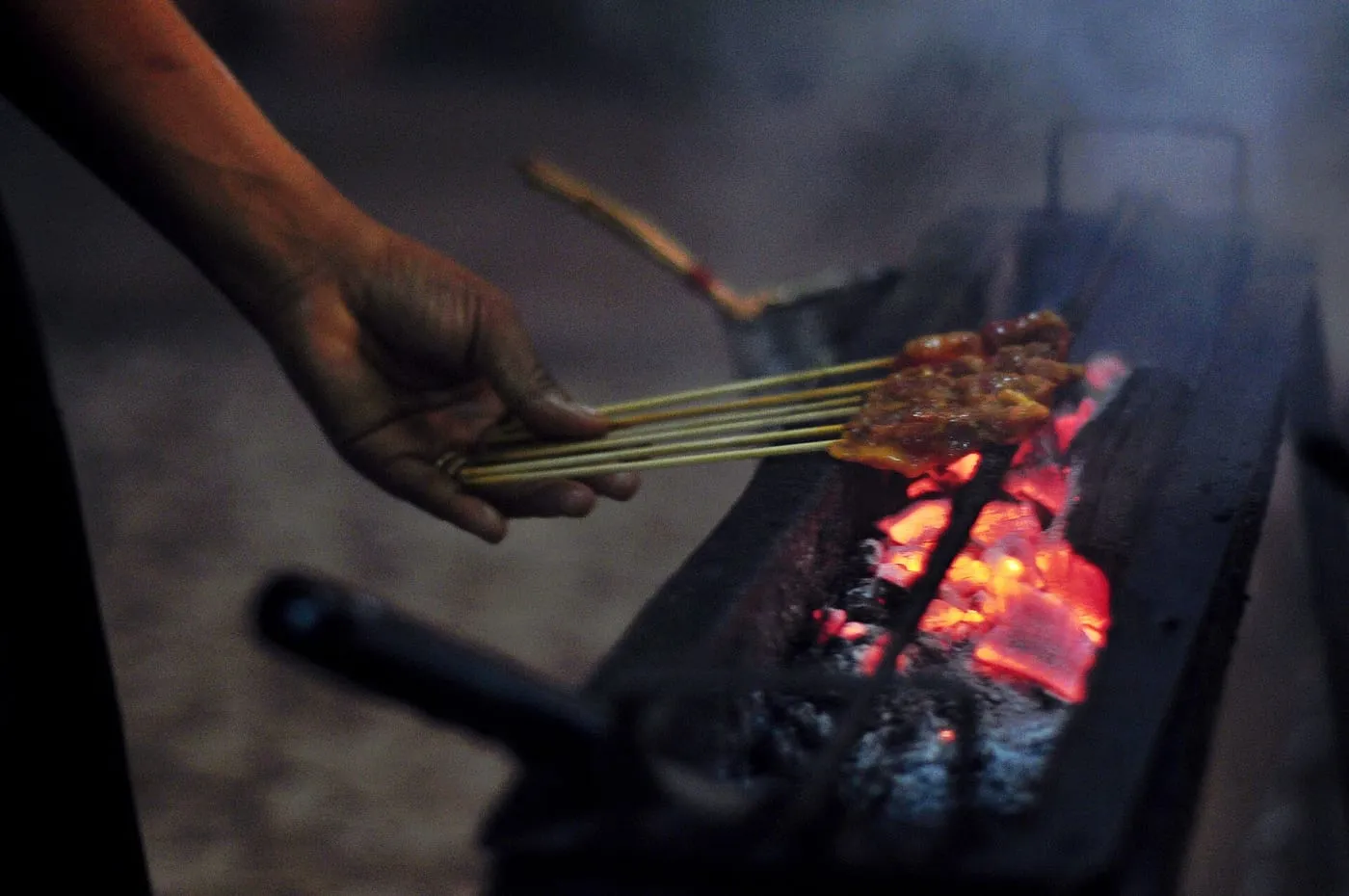
Satay grilling over charcoal. Photo: Dcubillas, Wikimedia Commons, CC BY-SA 3.0.
The character of Jalan Alor
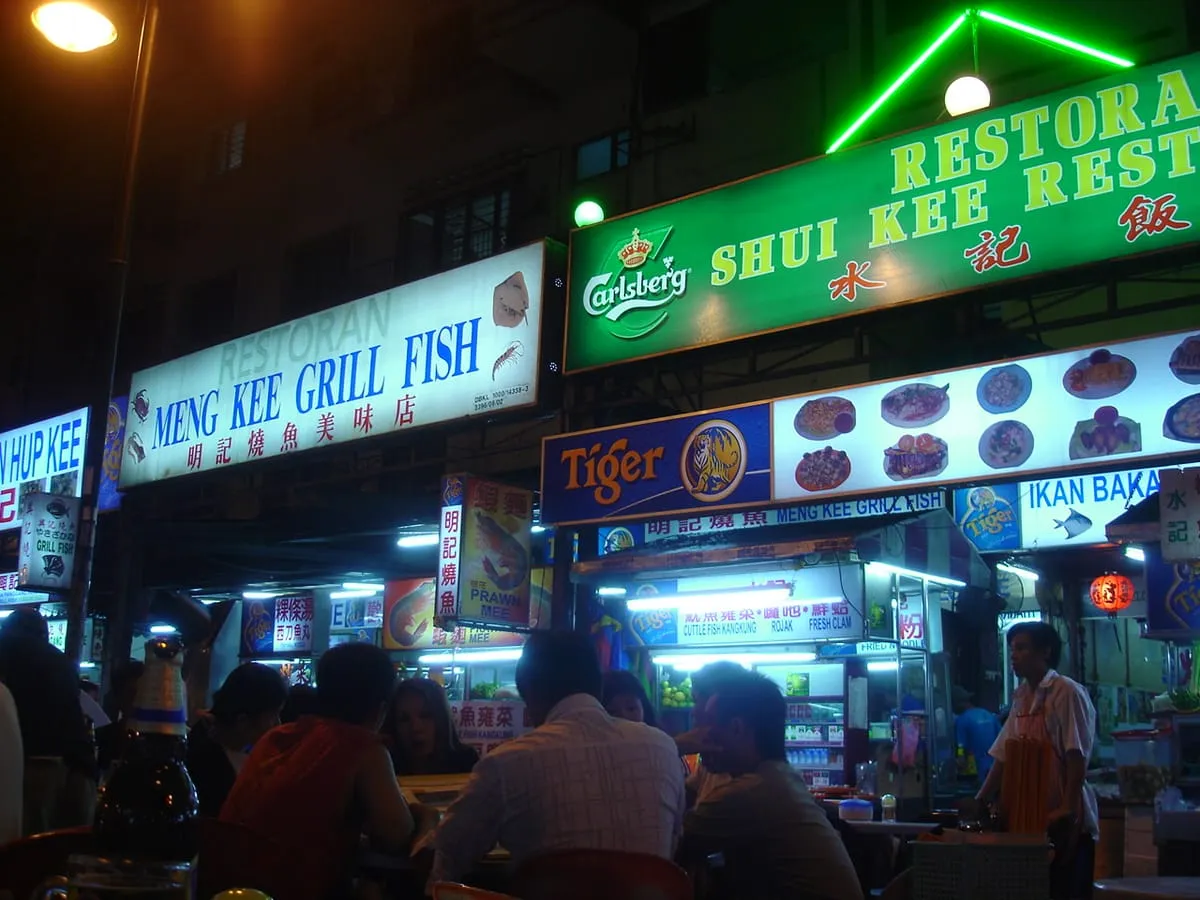
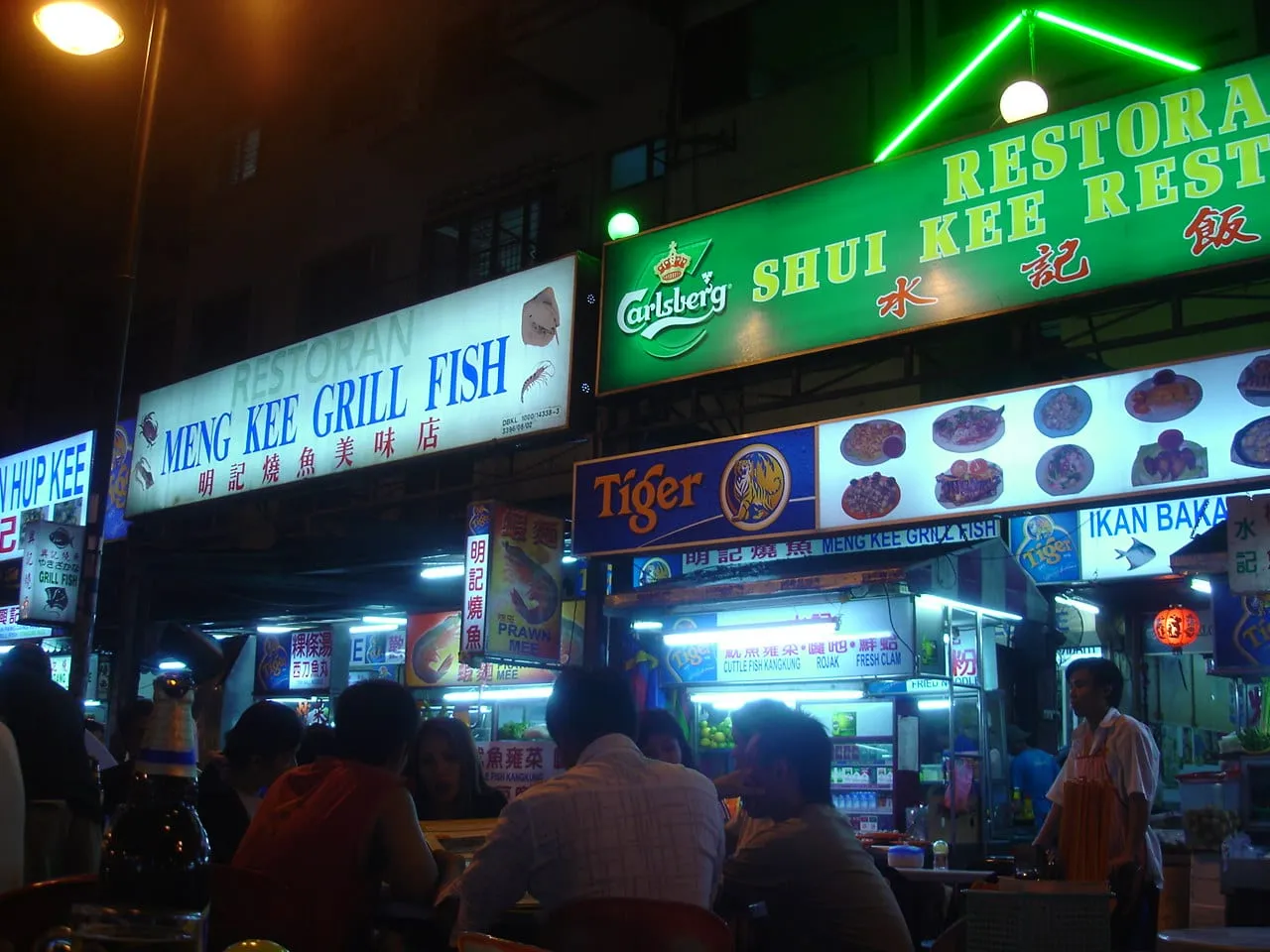
Located parallel to Jalan Bukit Bintang, Jalan Alor transformed during the late twentieth century from a notorious red-light district into one of Southeast Asia’s most celebrated street food avenues. Today, the street is an unceasing assault on the senses: clouds of aromatic smoke rise from charcoal satay braziers, fluorescent strip lights illuminate tanks of live marine fish, and servers balance trays of ice-cold beers and claypots between tight rows of red plastic chairs.
While daytime sees moderate activity with several fruit vendors and coffee shops operating quietly, the street undergoes a complete transformation starting at 17:00 when vehicular traffic slows to a crawl and restaurant dining areas spill directly onto the road.
| Metric | Detail | Practical advice |
|---|---|---|
| Length & Setting | 500-metre pedestrian corridor | Flanked by open-air restaurants and street carts under red lanterns |
| Operating Hours | 16:30 until 03:00 daily | Primary dining buzz runs from 18:30 to 23:00 every evening |
| Sweet-Spot Arrival | 18:30–19:30 | Arriving before 20:00 secures prime outdoor tables before peak crowds arrive |
| Nearest Transit | MRT Bukit Bintang (Exit A) | 3-minute walk (250 metres) down Changkat Bukit Bintang |
Because of its central location, Jalan Alor serves as a natural evening gathering point for visitors staying in nearby Bukit Bintang accommodations or walking from the city centre via the Bukit Bintang to KLCC pedestrian walkway.
Must-try dishes and standout stalls
Jalan Alor brings together predominantly Chinese-Malaysian seafood cookery, Thai street food stalls, and pan-Asian dessert carts. Focusing your meal around several classic specialities delivers the best culinary experience.
| Dish name | Notable vendor | Key ingredients | Typical price range |
|---|---|---|---|
| Barbecued chicken wings | Wong Ah Wah (Restoran WAW) | Honey, soy, ginger, charcoal grill | 4.20 MYR to 4.50 MYR per wing (min 2) |
| Sambal stingray (ikan bakar) | Meng Kee Grill Fish | Fresh stingray, sambal paste, banana leaf | 28.00 MYR to 50.00 MYR (by weight) |
| Oyster omelette (or-luak) | Restoran Cu Cha | Tapioca starch, duck eggs, fresh oysters | 18.00 MYR to 26.00 MYR |
| Charcoal satay skewers | Restoran Alor Corner Satay | Chicken or beef, peanut gravy, cucumber | 1.80 MYR to 2.20 MYR per skewer |
| Coconut ice cream | Sangkaya / Mobile carts | Coconut husk, toasted peanuts, sweetcorn | 10.00 MYR to 14.00 MYR |
| Musang King durian | Street fruit stalls (northern end) | Fresh durian fruit opened to order | 45.00 MYR to 90.00 MYR per kg |
Barbecued chicken wings at Wong Ah Wah (Restoran WAW)
Occupying three contiguous shophouses at the northern end of Jalan Alor (easily identified by its retro Mickey Mouse cartoon signage), Wong Ah Wah is the most celebrated culinary destination on the street. Outside the entrance, long custom charcoal grills are tended by cooks turning dozens of skewered chicken wings simultaneously over glowing wood embers.
The wings are marinated in a mixture of dark soy sauce, honey, ginger, and garlic before receiving repeated bastings during grilling. The result is glistening mahogany skin charred at the edges with a pronounced smoky aroma, while the meat beneath remains tender and juicy. They are served with a sharp, tangy calamansi-lime and red chilli dipping sauce. Note that there is typically a minimum order of two wings per person, and during peak hours (20:00–22:00) the wait for fresh batches from the grill can stretch to 25 minutes.
Wong Ah Wah also excels at classic stir-fried dishes to accompany the chicken:
- KL Hokkien Mee: Thick yellow noodles braised in dark caramel soy sauce with crunchy pork lard cubes and sliced pork liver (16 MYR to 24 MYR).
- Stir-Fried Clams (Lala): Fresh carpet clams flashed in a scorching wok with shredded ginger, garlic, bird’s-eye chillies, and Chinese rice wine (20 MYR to 30 MYR).
- Salted Egg Squid: Crispy battered squid rings tossed in a rich, buttery emulsion of mashed salted duck egg yolks, curry leaves, and bird’s-eye chillies (24 MYR to 35 MYR).
Sambal stingray (Ikan Bakar)
Stingray (ikan pari) is prized across coastal Malaysia for its firm, fibrous texture and absence of small bones. At Jalan Alor’s seafood stalls—such as Meng Kee Grill Fish—whole wings of fresh stingray are seasoned with thick, fragrant sambal paste (made from dried chillies, lemongrass, shallots, and shrimp paste), wrapped tightly in green banana leaves, and placed over an iron hotplate or charcoal rack.
The banana leaf steams the fish in its own juices while scorching against the heat, imparting a delicate smoky flavour. When unwrapped at your table, the aromatic steam releases, revealing meltingly soft fish coated in caramelised red chilli gravy. It is served with a dipping saucer of sweet-and-sour calamansi lime juice, diced shallots, and cincalok (fermented krill).
Oyster omelette (Or-Luak)
A beloved Fujianese and Teochew classic, the oyster omelette on Jalan Alor is prepared on enormous cast-iron flat-top griddles. The cook pours a batter of tapioca and sweet potato starch onto the sizzling oiled surface, creating a gooey, translucent base that develops crispy golden edges. Eggs are cracked directly across the mixture, followed by a handful of plump, briny raw oysters, chopped garlic chives, and white pepper.
The resulting omelette balances crispy edges with a delightfully chewy, stretchy interior studded with warm, juicy oysters. A sharp garlic-chilli vinegar dip cuts through the richness of the fried egg.
Fresh satay skewers
Satay carts along Jalan Alor grill over long, narrow metal troughs packed with smouldering coconut-husk charcoal. Skewered pieces of chicken, beef, or lamb are brushed with lemongrass and turmeric oil using a brush fashioned from bruised lemongrass stalks. The skewers are turned continuously by hand until the fat sizzles and chars.
Orders are served on plates alongside cubed steamed rice cakes (ketupat), raw red onions, crisp cucumber slices, and a deep bowl of warm, coarse peanut sauce finished with a dollop of spicy sambal oil. Orders generally require a minimum of 10 skewers (which can usually be split between chicken and beef).
The durian tasting experience
At both ends of Jalan Alor, dedicated fruit stalls display pyramids of thorny durian fruit under bright spotlight canopies. Known throughout Southeast Asia as the “King of Fruits”, durian is famous for its powerful, pungent aroma and custard-like golden flesh.
| Durian cultivar | Flavour profile | Texture & characteristics | Typical price per kg |
|---|---|---|---|
| Musang King (D197) | Rich, buttery, bittersweet with deep alcoholic notes | Creamy golden-yellow flesh; the gold standard Malaysian variety | 45–75 MYR |
| Black Thorn (D200) | Complex wine-like sweetness with gentle bitter undercurrent | Dense, fiery orange-red flesh with silky custard mouthfeel | 70–110 MYR |
| D24 (Sultan) | Mild, sweet, milky, gentle vanilla profile | Pale yellow, creamy flesh; ideal entry point for first-time tasters | 25–40 MYR |
| Red Prawn (D175) | Sweet, fruity, floral berry undertones | Bright pinkish-orange hue with sticky, fibre-free texture | 35–55 MYR |
The vendor selects a whole fruit, makes a shallow incision with a sharp cleaver along the natural seams, and pries the fruit open before your eyes. You are provided with disposable plastic gloves to pick up the creamy arils directly from the husk.
[!IMPORTANT] Durian fruit has an exceptionally potent and lingering sulphur aroma. It is strictly forbidden inside all Kuala Lumpur hotels, rapid transit trains (MRT, LRT, Monorail), buses, and commercial aviation terminals. Fines for bringing fresh durian into hotel rooms can exceed 300 MYR to cover specialist deep-cleaning costs. Always consume your durian directly at the street stalls on Jalan Alor where seating and washing facilities are provided.
Coconut ice cream and street desserts
To conclude a spicy meal, look for dessert vendors scooping fresh coconut ice cream into halved fresh young coconut husks. The bottom of the shell is scraped with fresh tender coconut meat, layered with two to three scoops of dairy-free coconut ice cream, and finished with your choice of free self-serve toppings: toasted crushed peanuts, sweet corn kernels, chewy palm seeds (attap chee), and sticky glutinous rice. A single husk costs approximately 12.00 MYR.
Practical tips for dining on Jalan Alor
Dining smoothly along this busy thoroughfare is straightforward with a few sensible habits.
1. Optimal timing and crowd navigation
- 18:30 to 20:00: The sweet spot. The evening air begins to cool, all stalls are fully operational, and you can comfortably inspect menus and choose outdoor tables without waiting.
- 20:30 to 23:30: Peak rush hour. Pavements become tightly packed, street performers draw large clusters of onlookers, and waits for signature dishes at famous venues like Wong Ah Wah can reach 20 to 30 minutes.
- After 23:30: Crowds thin out, though major seafood joints remain open serving drinks and late-night supper until 02:00 or 03:00.
2. Handling street touts and seating
As you walk down the central roadway, aggressive restaurant staff will step into your path waving laminated menus, shouting greetings, and urging you to sit at their tables.
- Keep walking confidently until you have surveyed the entire street.
- Select your restaurant based on active turnover: look for stalls where local Malaysian diners and families are seated rather than entirely empty dining rooms.
- Inspect the physical menu and check listed prices before sitting down.
3. Pricing and seafood ordering etiquette
Unlike markets in some parts of Southeast Asia, standard cooked dishes on Jalan Alor (fried rice, noodles, chicken wings, satay) have fixed prices printed plainly on the menus. Bargaining for standard dishes is not customary.
However, when ordering live seafood sold by weight (such as whole fish, crabs, river prawns, or lobster):
-
Clarify whether the quoted price on the menu is per 100 grams or per whole fish.
-
Request the server to weigh the specific animal in front of you on a kitchen scale.
-
Confirm the final total cost in Malaysian ringgit before consenting to have it cooked.
-
Always verify seafood pricing: Seafood like crab, lobster, and whole fish is often priced by weight (e.g. per 100 grams) rather than as a fixed portion. Always confirm the total weight and final price with the server before the kitchen begins cooking.
-
Cash remains king for small carts: While larger sit-down restaurants accept Visa and Mastercard (sometimes with a 3% card surcharge), fruit carts, juice vendors, and satay stalls operate on cash or local QR payments.
-
Seat assignment rule: Street tables belong strictly to the restaurant whose storefront they face. You cannot sit at one restaurant’s table and order primary food from a rival eatery next door.
-
Durian hotel ban: Durians emit a pungent sulphur aroma that permeates air-conditioning filters. Carrying durian into hotels, RapidKL trains, or Grab vehicles is strictly prohibited and subject to hefty cleaning fines.
4. Transport and ride-hailing arrival points
Jalan Alor is officially a one-way street, but in the evenings it becomes completely clogged with delivery scooters, slow-moving tourist crowds, and delivery vans.
- By rail: The easiest way to arrive is via the MRT Kajang Line or KL Monorail to Bukit Bintang station. Walk 250 metres from Exit A.
- By Grab / ride-hailing: Never set your destination directly to “Jalan Alor”. Your driver will get stuck in a 20-minute traffic crawl trying to enter the narrow street. Instead, set your drop-off pin to Changkat Bukit Bintang (at the northern mouth of the street) or to Jalan Tong Shin (at the southern end), and walk two minutes directly into the food stalls.
For wider culinary context across the capital, explore our complete overview of where to eat in Kuala Lumpur and our recommendations for Kuala Lumpur food tours.
Tours and guided options
Jalan Alor is an open public street lined with dozens of hawker restaurants. Guided food tours curate the best stalls, order hard-to-choose seafood specialities, and protect you from overpriced tourist traps.
Kuala Lumpur local street food night tour
From RM 278 · 4.6 stars from 164 reviews · 2.5 hours · Jalan Alor satay, wings & noodles
Kuala Lumpur local street food night tourad: Experience the street food of Malaysia on a night tour of Kuala Lumpur, and follow in the footsteps of the locals at a lively night market and more. Taste typical flavours and delicious bites, such as chicken curry puff, dim sum and satay sticks.
Nightlife street food tour with 6 tastings
From RM 205 · 4.6 stars from 107 reviews · 4 hours · evening street dining and dessert stops
Nightlife street food tour with 6 tastingsad: Experience Kuala Lumpur’s delectable culture with this guided evening food tour. Sample delicious local culinary creations as you explore the city’s diverse neighbourhoods.
Sambal Streets food tour with 15+ tastings
From RM 226 · 4.9 stars from 2,176 reviews · 4 hours · comprehensive multi-quarter food walk
Sambal Streets food tour with 15+ tastingsad: Join a guided walking tour in Kuala Lumpur and get to grips with Malaysian cuisine with the help of a local foodie. Savor more than 15 tastings and discover Malaysia’s culinary story along the way.
Common questions
What is the best time to visit Jalan Alor?
The ideal window to arrive is between 18:30 and 20:00. Stalls begin firing up their charcoal griddles around 17:00, but the full festive street atmosphere peaks once darkness falls. Arriving before 20:00 helps you secure outdoor tables without waiting, before peak crowds arrive between 20:30 and 23:00.
Is Jalan Alor expensive compared to local hawker centres?
Prices on Jalan Alor carry a modest tourist premium of roughly 15% to 30% compared to neighbourhood hawker stalls in residential districts. Standard noodle and rice dishes cost between 12 MYR and 22 MYR, satay skewers run 1.80 MYR to 2.20 MYR each, and whole grilled fish or sambal stingray ranges from 28 MYR to 55 MYR.
How do I get to Jalan Alor by public transport?
Take the MRT Kajang Line or KL Monorail to Bukit Bintang station. Use MRT Exit A, turn right, and walk 250 metres west down Changkat Bukit Bintang; turn left into Jalan Alor. The entire walk takes less than four minutes from the ticket barriers.
Can you bargain on prices at Jalan Alor food stalls?
Prices for standard menu items (noodles, satay, rice dishes, and drinks) are fixed and printed on laminated menus. For live fresh seafood sold by weight (such as mud crabs, lobsters, or large prawns), always confirm the exact weight and total calculated price in Malaysian ringgit before the cook places the seafood on the grill.