In this guide
💡 The Short Version: Croatia has used the euro (€) as its sole legal currency since 1 January 2023. Visa and Mastercard are accepted at hotels, restaurants, supermarkets and ferry counters, but carry euro cash for the green market, fish market stalls, small bakeries and tips. Avoid independent ATMs such as Euronet, which charge high fees and add Dynamic Currency Conversion; use Croatian bank ATMs (ZABA, PBZ, Erste) and always select “Debit in EUR / Without Conversion”. Or book a tour: the Split: Diocletian’s Palace & Old Town Small Group Tourad covers the Roman palace with a licensed guide for €15, prepaid.
⚠️ Always withdraw cash in local currency without conversion. An ATM or card terminal will ask whether to bill a foreign card in your home currency or in EUR. Always choose EUR (without conversion) so your own bank does the exchange.
| Pay with | Where |
|---|---|
| Cards (Visa, Mastercard) | Hotels, restaurants, ferries and Promet bus taps |
| Euro cash | Stari Pazar, Peškarija, bakeries, tips and toilets |
| ATM advice | Why |
|---|---|
| Use bank branches: Zagrebačka banka (ZABA), PBZ, Erste, OTP | Fewer fees than independent machines |
| Avoid Euronet, MoneyGet and other non-bank terminals | Poor conversion rates |
| Always select “Without conversion / In EUR” | Stops your home bank converting at its own rate |
The Euro in Croatia and cash vs card rules
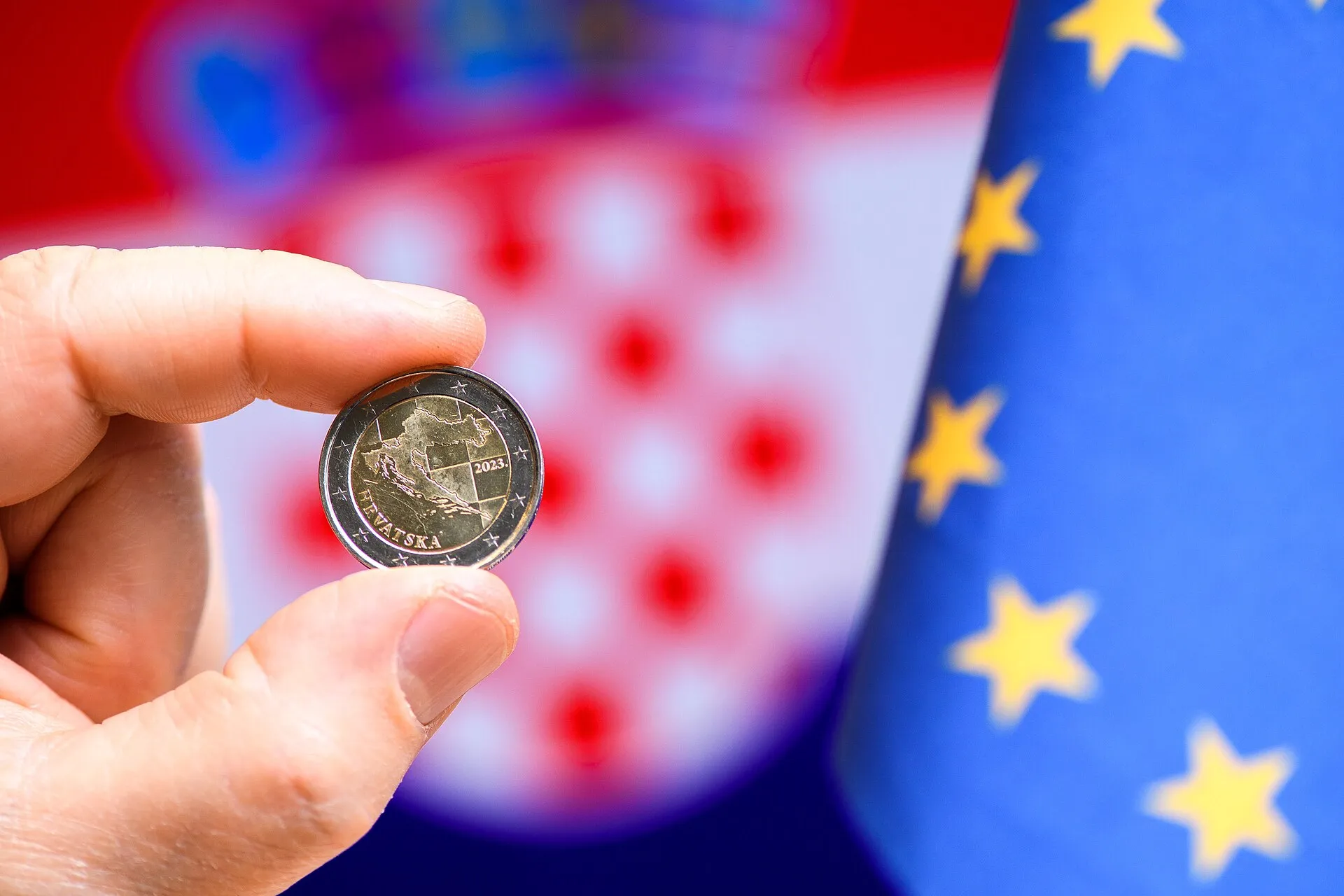
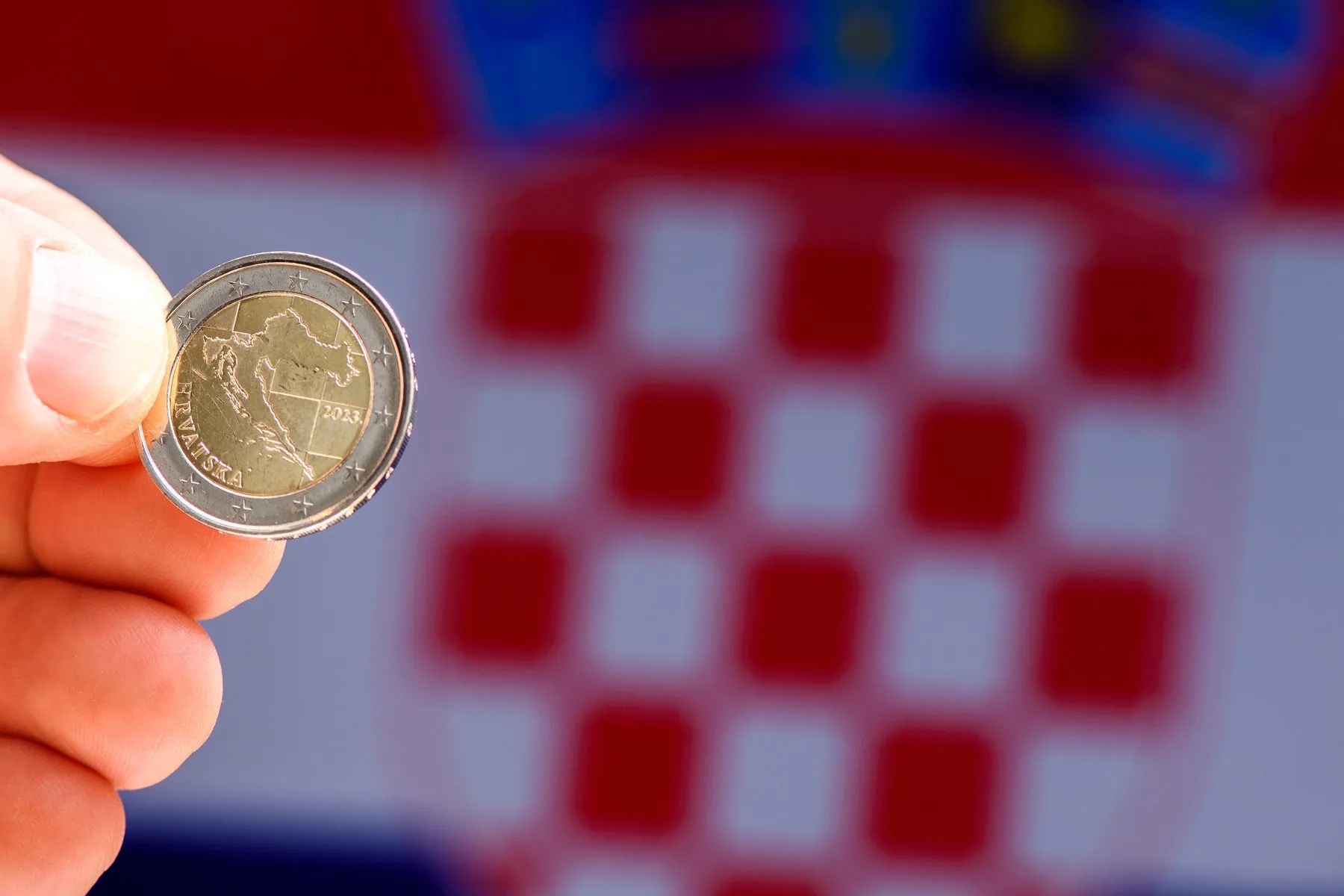
Croatia joined the Eurozone on 1 January 2023 and retired the Croatian kuna (HRK). Its euro coins carry national motifs: a map of Croatia on the 2-euro coin, a marten (kuna, for the old currency) on the 1-euro coin, Nikola Tesla on the 50-, 20- and 10-cent coins, and the Glagolitic ligature for “HR” on the 5-, 2- and 1-cent coins. Euro coins and banknotes from any Eurozone country are legal tender in Split.
 Croatian euro coin series featuring regional national motifs. Photo: European Commission, Wikimedia Commons, CC BY 4.0.
When cards work and when cash is mandatory
Contactless card readers (kartično plaćanje) are standard in shops and restaurants, and Apple Pay, Google Wallet and contactless cards work across the city.
- Pay by card:
- Hotels, guesthouses, and registered private apartments.
- Sit-down restaurants, modern bistros, wine bars, and craft beer taprooms.
- Supermarkets (Konzum, Tommy, Spar, Plodine) and pharmacies (ljekarne).
- Ferry ticket offices (Jadrolinija, Krilo, TP Line) and railway ticket counters.
- Promet Split city buses: the validators at the doors take contactless cards for €1.50 single rides.
- Pay by cash in euros:
- Stari Pazar (Green Market): The stallholders selling fruit, olive oil and cured meats have no card readers.
- Peškarija (Fish Market): The fish stalls on Obrov street take cash only.
- Bakeries (pekare): Burek and pastry kiosks often take cash only or set a minimum for cards.
- Beach rentals: Sun loungers, umbrellas and pedalos at Kašjuni, Firule or Žnjan.
- Public toilets: Coin-operated turnstiles at the bus station, ferry terminal and public beaches.
- Tips: For restaurant servers, baristas and tour guides.
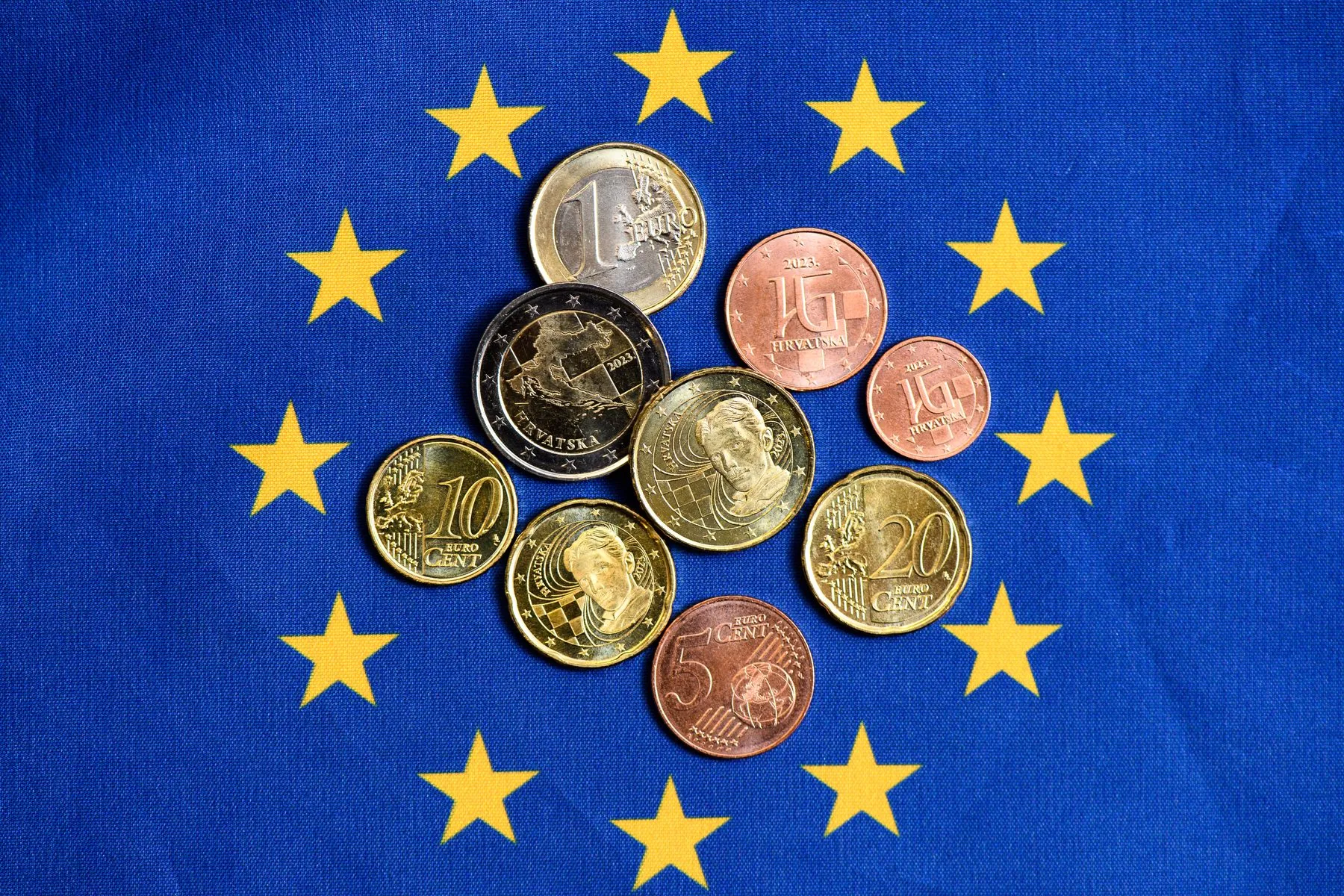 Euro coinage circulating across Split and the Dalmatian coast. Photo: European Commission, Wikimedia Commons, CC BY 4.0.
ATM withdrawals and avoiding dynamic conversion traps
Third-party ATM operators in Split charge high fees and use Dynamic Currency Conversion (DCC), which converts the withdrawal at their rate instead of your bank’s.
Identifying safe bank ATMs
Avoid the yellow-and-blue Euronet machines, MoneyGet and generic ATMs labelled “ATM / Bankomat” bolted onto souvenir shop fronts along the Riva and around Diocletian’s Palace. They often charge an access fee and prompt you to accept DCC markups of 10% to 18% above the European Central Bank rate.
Instead use an ATM built into a Croatian bank branch, in a lit vestibule with CCTV. The main banks in Split are:
- Zagrebačka banka (ZABA - UniCredit Group): Major branches on Marmontova street and near the Riva.
- Privredna banka Zagreb (PBZ - Intesa Sanpaolo): Branches on Trg braće Radić (Fruit Square) and Domovinskog rata.
- Erste Bank: Branches on Ulica kralja Tomislava and near the main bus terminal.
- OTP Banka: Branches along Zagrebačka and near the ferry port.
- Hrvatska poštanska banka (HPB): Located at the main post office on Ulica kralja Tomislava 9.
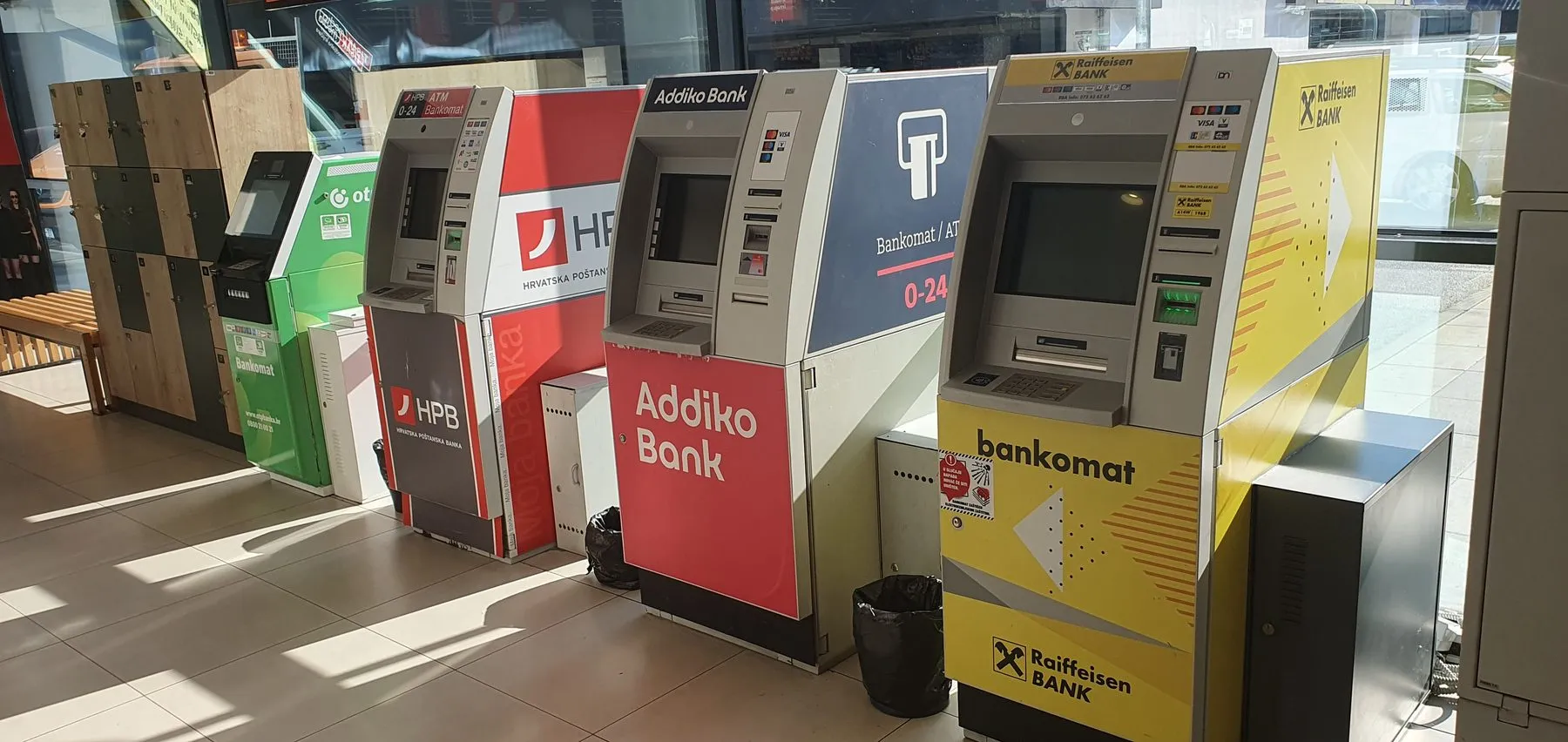 An ATM terminal in Croatia. Photo: Gewild, Wikimedia Commons, CC0.
The ATM prompt rule: “Without Conversion”
When you withdraw cash or pay at a restaurant terminal with a foreign card (issued in the UK, US, Canada, Australia or elsewhere), the terminal detects your home currency and offers two options:
- “Charge in your home currency (with conversion / guaranteed rate)”: Never select this. It activates Dynamic Currency Conversion, and the ATM operator sets an inflated exchange rate.
- “Charge in local currency (EUR) / Without conversion / Decline conversion”: Always select this. Your own bank or card provider (Monzo, Revolut, Chase or your high-street bank) then converts at its rate, with no third-party markup.
The Split tourist tax (Turistička pristojba)
Every adult staying overnight in Split pays the tourist tax (turistička pristojba). The Split-Dalmatia County rates for 2026 (county decision) are:
- €2.65 per adult per night from 1 April to 30 September.
- €1.86 per adult per night for the rest of 2026.
You pay it to your hotel, hostel or Airbnb or Booking.com host, usually as a line on the final invoice at check-in or check-out. Check whether it is already in your prepayment.
Tipping customs in Split
Tipping (napojnica) is voluntary in Croatia.
| Venue / service | Tipping practice |
|---|---|
| Cafes and coffee bars | Round up the bill to the next euro, or leave a coin |
| Casual taverns and konobas | 5% to 10% in cash for good service |
| Fine dining restaurants | About 10% in cash |
| Pubs and craft beer bars | Loose change in the tip jar |
| Taxis and ride-hailing | Round up to the next euro |
| Guided walking tours | Cash, at your discretion |
Card machines in Croatian restaurants generally have no tipping prompt. If you pay by card, tell your server before they enter the total that you want to add a tip, or leave coins or a banknote on the table.
Admission costs for Split sights
Adult prices for the main sights, each from the operator named on its own page.
| Sight | Adult ticket | Operator |
|---|---|---|
| Diocletian’s Palace Cellars | €10 | Split City Museum |
| Cathedral | €5 (treasury €5, bell tower €7, all sights €15) | Split Tourist Board |
| Ivan Meštrović Gallery | €12, including Crikvine - Kaštilac | Meštrović Museums |
| Archaeological Museum of Split | €8 (€10 combined with Salona) | armus.hr |
| Klis Fortress | €12 | tvrdavaklis.com |
| Krka National Park | €7 (January to March, November, December), €20 (April, May, October), €40 (June to September) | np-krka.hr |
Guided tours and budget value
A small-group tour costs less than a private guide and gives the palace’s sights some context.
Split: Diocletian’s Palace & Old Town Small Group Tour
From €15 · 4.9 stars from 1,034 reviews · 1.5 - 5.5 hours · free cancellation
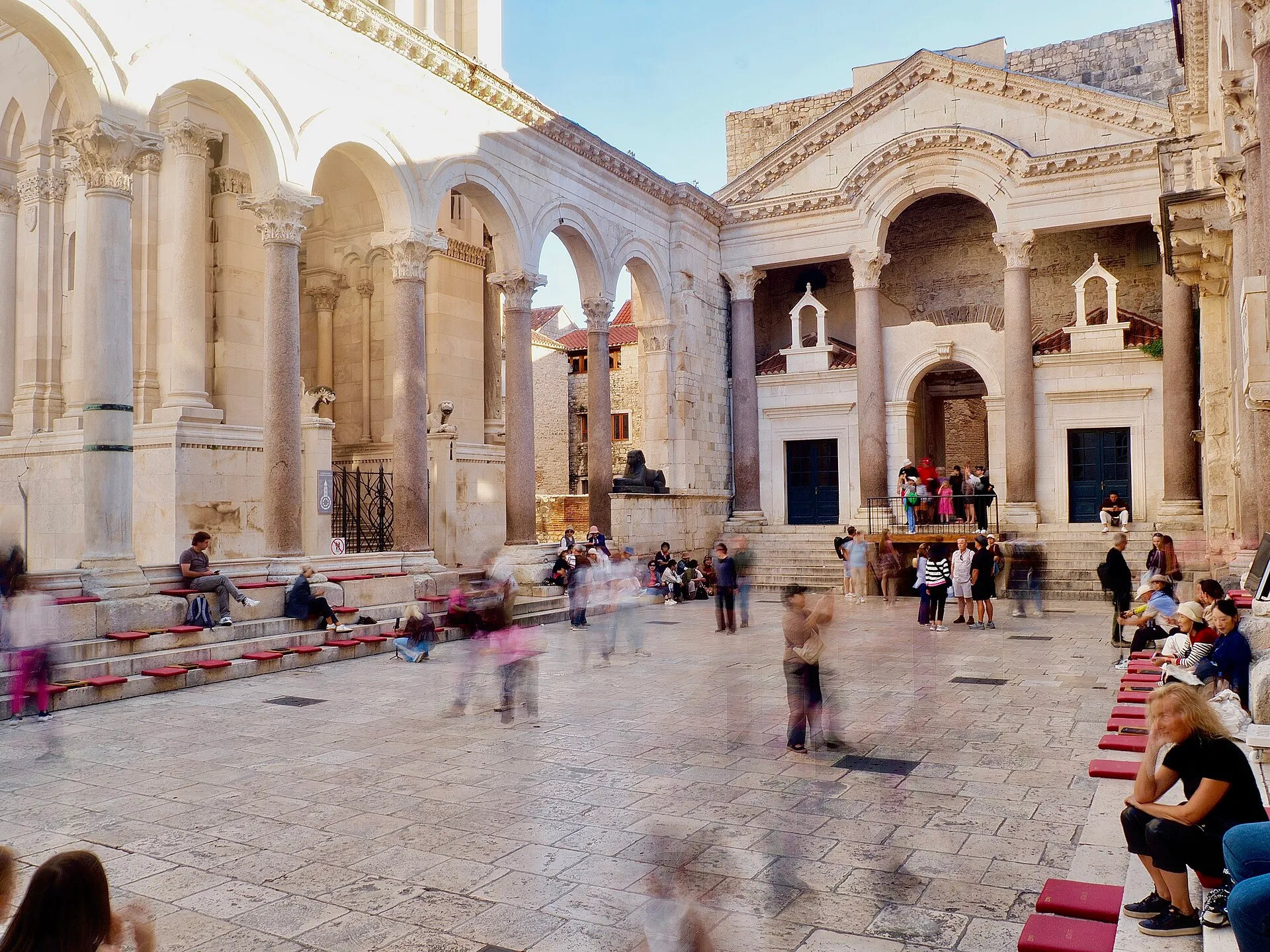
Split: Diocletian’s Palace & Old Town Small Group Tourad: An accredited local guide takes you through the four Roman gates, the Peristyle and the side courtyards, explaining Roman building techniques and local legends.
Diocletian’s Palace & Split Old Town Guided Tour – Since 2007
From €15 · 4.8 stars from 868 reviews · 1.5 - 5 hours · free cancellation
Diocletian’s Palace & Split Old Town Guided Tour – Since 2007ad: A classic 150-minute historical walk covering Diocletian’s Palace, the morning Fish Market, Pjaca, Marmontova, and the historic fishermen’s quarter of Varoš.
Split: Diocletian Palace, Marjan Hill Viewpoint & Local Eats
From €29 · 4.9 stars from 81 reviews · 1.5 - 2.5 hours · free cancellation
Split: Diocletian Palace, Marjan Hill Viewpoint & Local Eatsad: Combine a guided Roman palace walk with an easy climb up the stone stairs of Marjan to Prva Vidilica, finishing with local food tastings.
Budget comparison: DIY vs guided tour
| Sightseeing item | Independent budget visit | Small group tour (e.g. t862564) |
|---|---|---|
| Palace streets & gates | Free | Included |
| Peristyle & Vestibule | Free | Included, with commentary |
| Historical explanation | Plaques or a mobile guide | Licensed guide, with questions |
| Cost per person | Free | €15 |
| Duration | Your own pace | 1.5 to 5.5 hours |
Practical money-saving tips for Split
- Download the Promet Split app: A single bought in the app or by card tap costs €1.50, half the €3.00 cash fare from the driver.
- Carry small euro coins: Keep €0.50, €1.00 and €2.00 coins for beach showers, public toilets and market stalls.
- Expect a couvert: A cover charge (couvert) for bread and olive oil is common in sit-down restaurants. It is not an error on your bill.
- Visit Krka outside summer: Entry costs €20 in April, May and October and €7 from November to March, against €40 in June to September.
- Drink the tap water: Split’s tap water comes from the Jadro River spring that supplied Emperor Diocletian, and it is safe to drink. Carry a bottle and refill it at the public fountains in the palace and on Marjan.
What to see next
- Free Things to Do in Split: The palace, viewpoints and beaches at no cost.
- Getting Around Split: Bus lines, ferry piers and ticketing apps.
- Where to Eat in Split: Konoba prices, daily marenda specials and Michelin recommendations.
- Where to Stay in Split: Neighbourhoods by convenience and budget.
- Is Split Safe?: Petty crime, emergency numbers and precautions.
- Split City Break Hub: Every Split guide in one place.
Common questions
What currency does Split use?
Split and the whole of Croatia use the euro (€ / EUR). Croatia adopted the euro on 1 January 2023, replacing the former Croatian Kuna (HRK). Kuna can no longer be used for purchases.
How much is the municipal tourist tax in Split?
Under the Split-Dalmatia County decision for 2026, visitors staying overnight pay the tourist tax (turistička pristojba): €2.65 per adult per night from 1 April to 30 September and €1.86 for the rest of 2026, added to the bill by your accommodation (Split-Dalmatia County decision).
Which ATMs should you use to withdraw cash in Split?
Use ATMs attached to Croatian bank branches: Zagrebačka banka (ZABA), Privredna banka Zagreb (PBZ), Erste Bank or OTP Banka. Avoid the freestanding yellow-and-blue Euronet machines and generic 'ATM' machines along tourist streets, which charge high fees and add dynamic currency conversion.
Are credit cards widely accepted in Split?
Yes. Visa and Mastercard are accepted at hotels, sit-down restaurants, supermarkets, pharmacies, ferry offices and on Promet Split city buses. You still need euro cash for the Stari Pazar green market, the Peškarija fish market, small bakeries, public toilets and tips.
What are standard tipping customs in Split?
Tipping is voluntary in Croatia. In cafes and bars, round up the bill or leave €0.50 to €1.00 in coins. In sit-down restaurants and konobas, a 5% to 10% cash tip for good service is customary.