In this guide
💡 The Short Version: Founded in 1905, Gwangjang Market is Korea’s oldest continuous daily market. Food stalls trade daily from 09:00 to 23:00, including Sundays per Visit Korea (when fabric merchants close). Four essential dishes are Bindaetteok (₩5,000–₩6,000), Mayak Gimbap (₩3,000–₩4,000), Yukhoe beef tartare on Yukhoe Alley (₩19,000–₩21,000), and hand-cut Kalguksu noodles (₩6,000–₩7,000). Bring cash banknotes in Korean won for central aisle food counters, as T-money cards and credit cards are rarely accepted at open stalls. Arrive via Seoul Metro Jongno 5-ga Station (Line 1, Exit 8). Or book ahead: a guided Gwangjang Market food tour on GetYourGuidead{rel=“sponsored nofollow noopener”} takes you straight to the most authentic stalls and handles Korean ordering. Or book ahead: a guided Gwangjang Market food tour on GetYourGuidead{rel=“sponsored nofollow noopener”} takes you straight to the most authentic stalls and handles Korean ordering.
Overview and history of Gwangjang Market
Established in 1905 by the Gwangjang Corporation, Gwangjang Market was South Korea’s first privately owned, permanent daily trading market. Created during a period when Japanese commercial influence was expanding, Korean merchants pooled funds to establish an independent trading post for textiles, agricultural produce, and handicrafts.
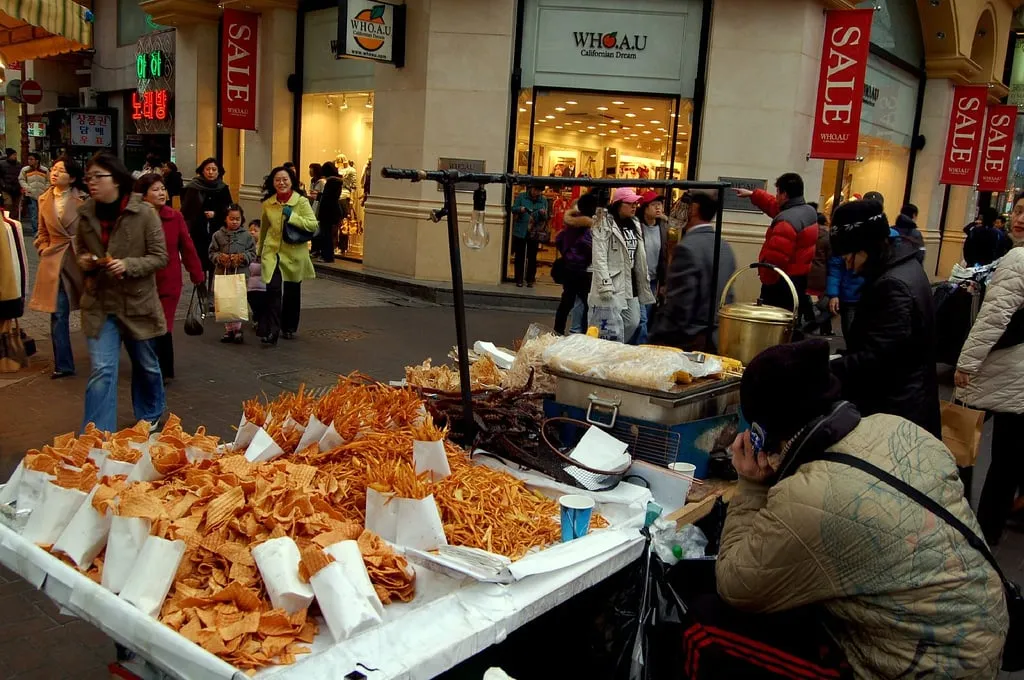
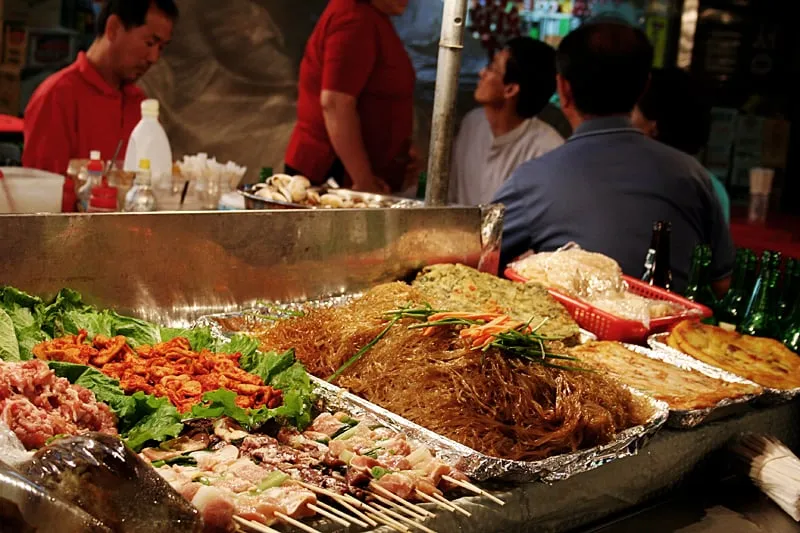
Today, while the upper floors and side arcades retain extensive wholesale fabrics, traditional silk clothing (hanbok), and vintage garments, the ground-floor central crossroads (meokja golmok) has evolved into one of Asia’s most celebrated street food destinations. Heated benches, hanging red-and-blue paper lanterns, and steam billowing from iron pots create an intense culinary theatre from morning until late at night.
The core dishes and where to eat them
| Speciality | Typical price | Signature venue | Ingredients and flavours |
|---|---|---|---|
| Bindaetteok (Mung bean pancake) | ₩5,000 to ₩6,000 | Sunhee’s Bindaetteok (Sunhee-ne) | Ground mung bean batter fried in oil with pork, kimchi, and bean sprouts |
| Mayak Gimbap (Mini rice rolls) | ₩3,000 to ₩4,000 | Wonjo Mayak Gimbap (Stall 30) | Seaweed-wrapped rice with pickled radish and carrot, dipped in piquant mustard soy |
| Yukhoe (Beef tartare) | ₩19,000 to ₩21,000 | Buchon Yukhoe (Michelin Bib Gourmand) | Fresh raw beef tossed in toasted sesame oil and garlic, topped with raw egg yolk and pear |
| Kalguksu (Knife-cut noodle soup) | ₩6,000 to ₩7,000 | Gohyang Son-kalguksu (Stall 70) | Fresh wheat noodles hand-sliced and boiled in rich dried anchovy and kelp stock |
| Boribap (Barley bibimbap) | ₩7,000 to ₩8,000 | Central produce row counters | Steamed barley and rice layered with mountain herbs, bean sprouts, and red pepper paste |
| King Sundae (Blood sausage) | ₩8,000 to ₩10,000 | Halmoni Sundae counters | Thick steamed sausage packed with pig’s blood, glutinous rice, glass noodles, and offal |
1. Bindaetteok (Crispy mung bean pancakes)
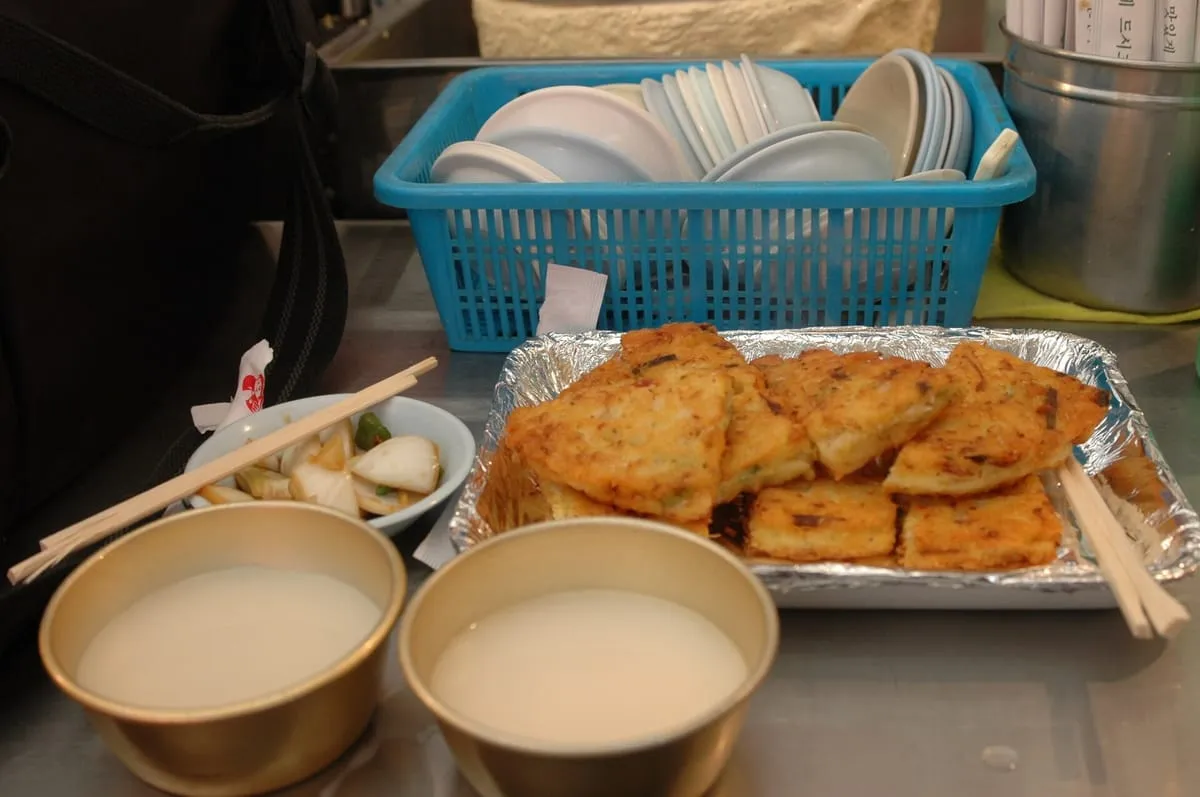
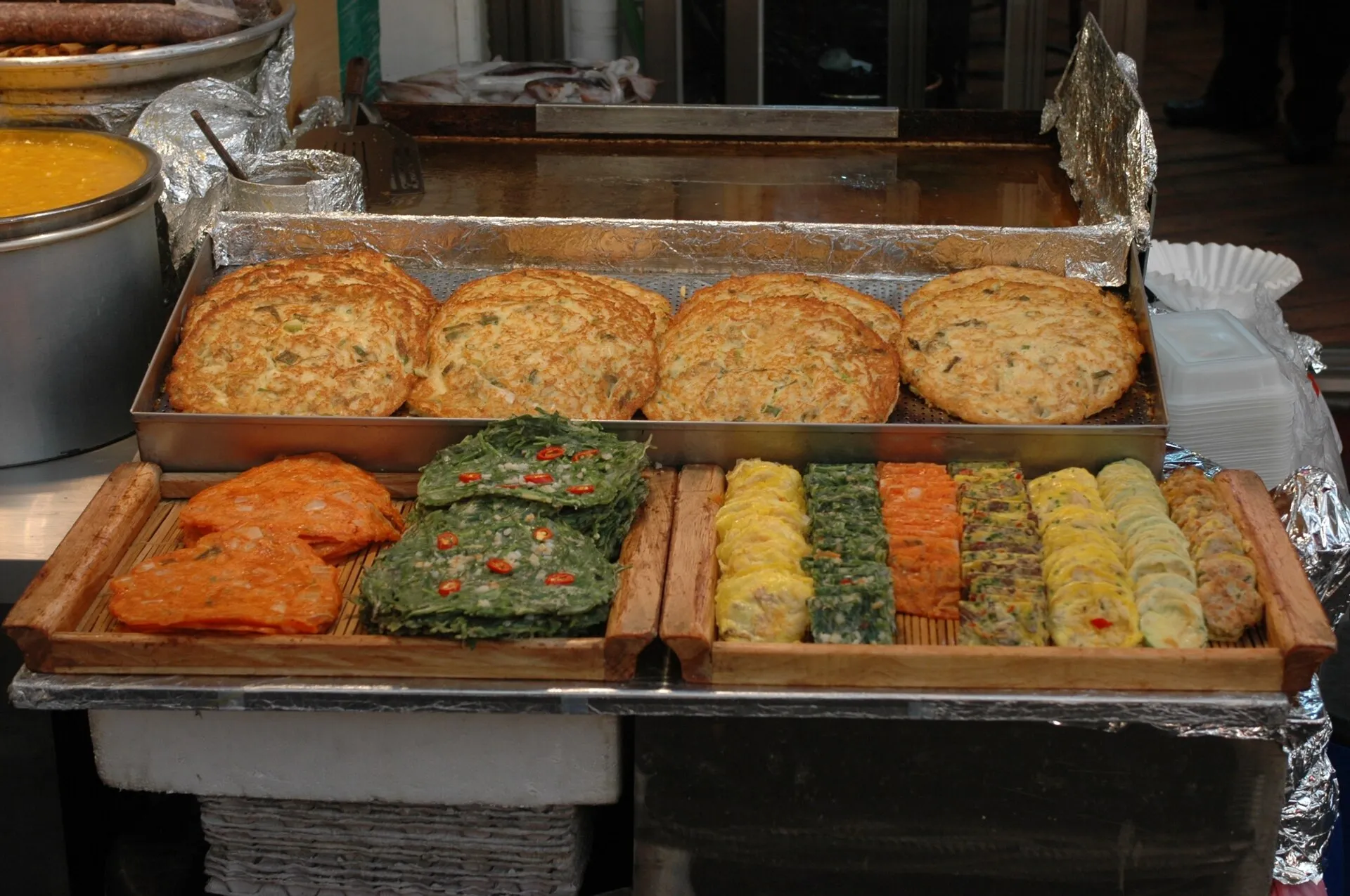
Bindaetteok is the definitive culinary emblem of Gwangjang Market. The stall counters feature pairs of mechanical rotary stone millstones continuously grinding soaked green mung beans into a pale, thick batter.
The batter is combined with shredded pork, fermented kimchi, chopped scallions, and mung bean sprouts, then ladled into massive circular pools of oil bubbling on thick cast-iron flat-top griddles. The pancakes fry until the exterior crust turns deep golden and shatteringly crisp, while the interior remains moist and tender.
- Where to eat: The undisputed authority is Sunhee’s Bindaetteok (Sunhee-ne), which operates multiple open stalls at the central intersection as well as a sit-down restaurant branch nearby on the market perimeter.
- How to eat: Cut the pancake into quarters using your chopsticks. Dip each morsel into the accompanying bowl of raw chopped white onions steeped in tart soy vinegar. The acidic crunch of the onions cuts cleanly through the richness of the fried bean batter.
- Drink pairing: A round tin bowl of chilled Makgeolli (cloudy, sparkling Korean rice wine, ₩4,000 per bottle) is the traditional accompaniment.
2. Mayak Gimbap (‘Narcotic’ mini rice rolls)
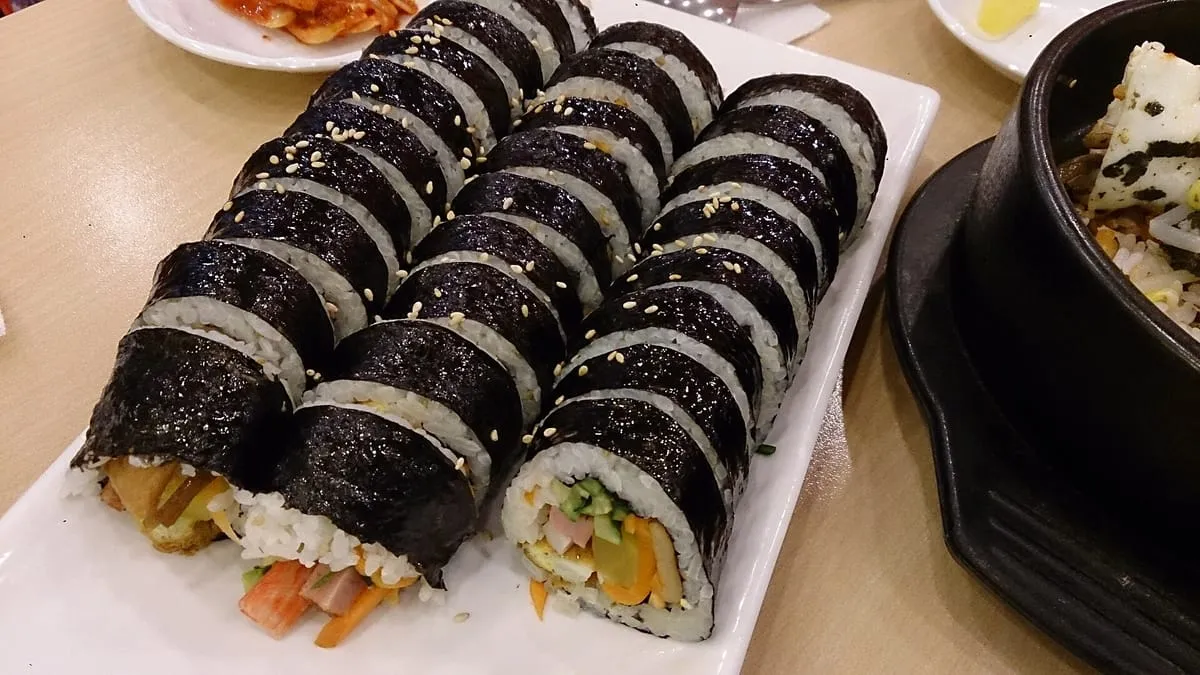
Mayak translates literally to ‘narcotics’ or ‘drugs’—a tongue-in-cheek colloquialism highlighting the snack’s addictive nature. Unlike standard thick gimbap rolls sliced into thick rounds, Mayak Gimbap are slender, finger-sized rolls served whole or halved.
Short-grain white rice is seasoned with salt and toasted sesame oil, rolled in roasted laver seaweed (gim) with simple fillings: julienned pickled yellow radish (danmuji), seasoned carrots, and parboiled spinach. The exterior is brushed generously with sesame oil and dusted with toasted sesame seeds.
- Where to eat: Wonjo Mayak Gimbap (operating at Stall 30 and branded takeaway kiosks throughout the market) has prepared these rolls since the 1970s.
- The secret: What elevates the roll is the accompanying dipping sauce: a fiery emulsion of yellow hot mustard (yeogyeoja), soy sauce, and sweet vinegar. Dunk each mini roll directly into the mustard sauce before eating.
3. Yukhoe (Fresh Korean beef tartare)
Tucked away along a narrow pedestrian alley running parallel to the north end of the market sits Yukhoe Alley (Yukhoe Golmok), a dedicated corridor of refrigerated butchery-restaurants specialising in raw beef.
Korean beef tartare uses lean, tender cuts of fresh domestic beef finely julienned into delicate ruby-red ribbons. The beef is tossed with toasted sesame oil, minced garlic, soy sauce, and a pinch of sugar, then mounded on a bed of crisp, matchstick-cut sweet Korean pear (bae). It is crowned with a raw yellow egg yolk.
- Where to eat: Buchon Yukhoe has earned consecutive Michelin Bib Gourmand recognitions since 2017. Because of its popularity, arrive outside peak meal hours to pull a ticket from the automated touchscreen queue kiosk outside the doorway. If the main queue is excessive, Yukhoe Jamaejip (Sisters Yukhoe) located two doors away serves an equally immaculate plate.
- How to eat: Break the raw egg yolk with your chopsticks and fold it thoroughly through the seasoned beef and chilled pear matchsticks. Wrap small portions in sheets of dried seaweed or enjoy directly with chopsticks, accompanied by complimentary bowls of steaming beef radish soup (muguk). Plates cost ₩19,000 to ₩21,000.
4. Kalguksu (Knife-cut noodle soup) and Mandu
Kalguksu (literally ‘knife noodles’) stalls occupy the central pedestrian spine. Huge wooden cutting boards sit surrounded by colourful mounds of handmade pork and kimchi dumplings (mandu).
Cooks knead wheat flour dough by hand, roll it out into broad sheets with long wooden rolling pins, fold the dough in layers, and slice it rapidly into ribbon-like noodles using massive steel cleavers. The noodles are boiled to order in a rolling cauldron of dried anchovy, kelp, and radish stock, then ladled into wide stainless-steel bowls garnished with shredded courgette, dried seaweed flakes (gim-garu), and seasoned perilla seeds.
- Where to eat: Look for Gohyang Son-kalguksu (Stall 70), made famous globally by Netflix’s Street Food series. Head cook Cho Yon-soon presides over the counter in a signature patterned apron, slicing noodles at lightning speed.
- Cost: A steaming bowl of noodle soup costs ₩6,000 to ₩7,000; a combined bowl containing both knife-cut noodles and handmade pork-and-kimchi dumplings (kalkuksu-mandu) costs ₩8,000.
5. Boribap (Market barley bibimbap)
For a nutrient-rich vegetable feast, seek out the Boribap stalls along the eastern food alley. Here, counter surfaces are arranged with up to 15 gleaming stainless-steel bowls filled with fresh mountain greens (namul), seasoned radish strips, bean sprouts, wild garlic chives, lettuce, crown daisy greens, and roasted barley.
When you sit down, the cook ladles warm steamed barley and rice into a wide brass bowl, layers generous handfuls of every vegetable across the grain, adds a dollop of savoury red pepper paste (gochujang), and drizzles fragrant toasted sesame oil across the top. Stir vigorously with your metal spoon until every grain of barley is coated. A bowl costs ₩7,000 to ₩8,000 and includes a bowl of hot fermented soybean paste soup (doenjang-guk).
Guided market food tours
Navigating Gwangjang Market’s central food intersection during peak evening hours can be intimidating. Guided walks secure stall bench seating and decode vendor specialities.
Seoul: Gwangjang Market Food Tour with Local Insider
From ₩83,851 · 5 stars from 34 reviews · 2 hours · bindaetteok & mayak gimbap
Seoul: Gwangjang Market Food Tour (2 Hours) with Insiderad: An English-speaking culinary guide walks you through the market’s history, secures seating at top-rated stalls, and orders freshly fried bindaetteok, dumplings, and kalguksu noodles.
Seoul: Guided Food Market Tour with 8 Tastings
From ₩131,093 · 4.9 stars from 531 reviews · 3 hours · street food & makgeolli
Seoul: Guided Food & Market Tour with 8+ Tastingsad: Combines Gwangjang Market delicacies with tastings in nearby traditional alleys and craft rice wine taverns.
Moonlight Seoul Night Tour: Cheonggyecheon & Gwangjang
From ₩80,464 · 4.9 stars from 345 reviews · 5 hours · evening market & stream
Seoul Han River Night Ferry: 63 Building & Gwangjang Marketad: Pairs dinner at Gwangjang Market with an illuminated evening walking tour along Cheonggyecheon Stream and Dongdaemun.
Official ticket or tour: the prices side by side
Independent dining versus guided market walks.
| Option | Official admission | Tour cost | What it covers |
|---|---|---|---|
| Independent street stall eating | ₩12,000–₩20,000 | — | Self-service eating at market benches; pay cash or T-money at stalls |
| Gwangjang Market insider tour | All food included | From ₩83,882 | 2-hour guided food walk with a local insider |
| Guided food and market tour | All food included | From ₩131,157 | 3-hour tasting walk with 8+ tastings |
Practical visitor tips
Cash vs cards
- Open central food counters: Operate primarily on cash. While some stalls display QR payment codes for local Korean apps (KakaoPay and Toss), foreign credit and debit cards cannot scan these. Keep ₩20,000 to ₩30,000 in small 1,000, 5,000, and ₩10,000 banknotes in your pocket.
- T-money cards: The T-money transit card is not accepted at food stalls or carts anywhere in Gwangjang Market.
- Brick-and-mortar restaurants: Permanent shophouse restaurants along Yukhoe Alley and the outer perimeter arcades accept Visa and Mastercard.
Opening hours and avoiding crowds
Food stalls open at 09:00 and serve continuously until 23:00 daily.
- Weekday mornings (10:00 to 11:30): The ideal window to visit. Counters have ample seating, lines at Buchon Yukhoe and Stall 70 are short, and cooks have time to chat.
- Lunch rush (12:00 to 14:00): Heavy with office workers from nearby Jongno and Euljiro.
- Evening rush (18:30 to 21:00): Energetic, loud, and atmospheric, but finding empty seats on the heated wooden benches requires patience and spotting departing diners.
Getting there
- Subway Line 1: Travel to Jongno 5-ga Station and take Exit 8. Walk straight 30 metres into the main north gate of the market.
- Subway Lines 2 and 5: Travel to Euljiro 4-ga Station and take Exit 4. Walk two minutes north across the Baeogae Bridge over the Cheonggyecheon Stream into the south gate.
Combine a morning or afternoon of eating at Gwangjang with a historic walk: the trail along the Seoul City Wall and Naksan Park begins two subway stops east at Dongdaemun, while the Bukchon Hanok Village and Insadong walk lies just one stop west at Jongno 3-ga.
Common questions
What are the opening hours for Gwangjang Market food stalls?
Food stalls trade daily from 09:00 to 23:00 seven days a week. While the market's traditional silk, clothing, and vintage textile stalls close on Sundays, the central food alleyways remain open and active with diners.
Do stalls at Gwangjang Market accept credit cards?
Counter stalls along the central crossroads prefer cash in South Korean won or Korean bank transfers (KakaoPay/Toss). T-money transit cards are not accepted at market carts. Permanent sit-down eateries along the perimeter (such as Buchon Yukhoe and Sunhee's Bindaetteok's permanent restaurant annex) accept international credit cards.
What are the most famous dishes to eat at Gwangjang Market?
Four essential specialities are Bindaetteok (crispy fried mung bean pancakes), Mayak Gimbap (mini seasoned seaweed rice rolls with hot mustard dip), Yukhoe (sesame beef tartare with raw egg yolk and pear), and Kalguksu (hand-rolled, knife-cut noodle soup).
How do you reach Gwangjang Market by subway?
Take Seoul Subway Line 1 to Jongno 5-ga Station and leave via Exit 7, 8, or 9 for immediate access to the east and north market gates. Alternatively, take Subway Line 2 or Line 5 to Euljiro 4-ga Station (Exit 4) and walk two minutes north across the Cheonggyecheon Stream.
Is Gwangjang Market heated in winter?
The wooden counter benches at food stalls feature electric under-seat heating elements covered in plush blankets, keeping diners warm during freezing winter weather while eating hot noodle soups and drinking broth.