In this guide
The Short Version: Osaka is an exceptionally safe destination with remarkably low violent crime, making it welcoming for solo travellers, couples, and families alike. You can comfortably explore central districts like Dotonbori, Namba, and Umeda late into the night. Local neighbourhood police boxes (koban) are stationed near major intersections to assist with directions, lost items, and medical emergencies. The main pitfalls to avoid are nightlife touts (kyakuhiki) in entertainment alleys, who lure tourists into hidden bars with inflated bills, and taking photographs in the Tobita Shinchi entertainment quarter. If an emergency arises, dial 110 for police and 119 for ambulance and fire services.
Safety by neighbourhood
| District | Safety Rating | Night Atmosphere | What to Watch For |
|---|---|---|---|
| Dotonbori & Namba | Very High | Packed, bright neon, lively until 01:00 | Street touts offering bar deals; crowded bottlenecks |
| Umeda / Kita | Exceptional | Modern, busy corporate and shopping hub | Navigating sprawling underground station corridors |
| Shinsaibashi | Very High | Fashion shopping by day, bar dining by night | Ame-mura side streets late at night |
| Shinsekai | High | Retro, bustling izakayas around Tsutenkaku | Narrow alleys quieten down significantly after 22:00 |
| Shin-Imamiya / Airin-chiku | Moderate | Grittier streetscape, elderly day-labourers | Visible poverty and litter; harmless but rougher |
| Tobita Shinchi | High (with rules) | Historic red-light quarter | Strictly NO cameras or smartphone filming permitted |
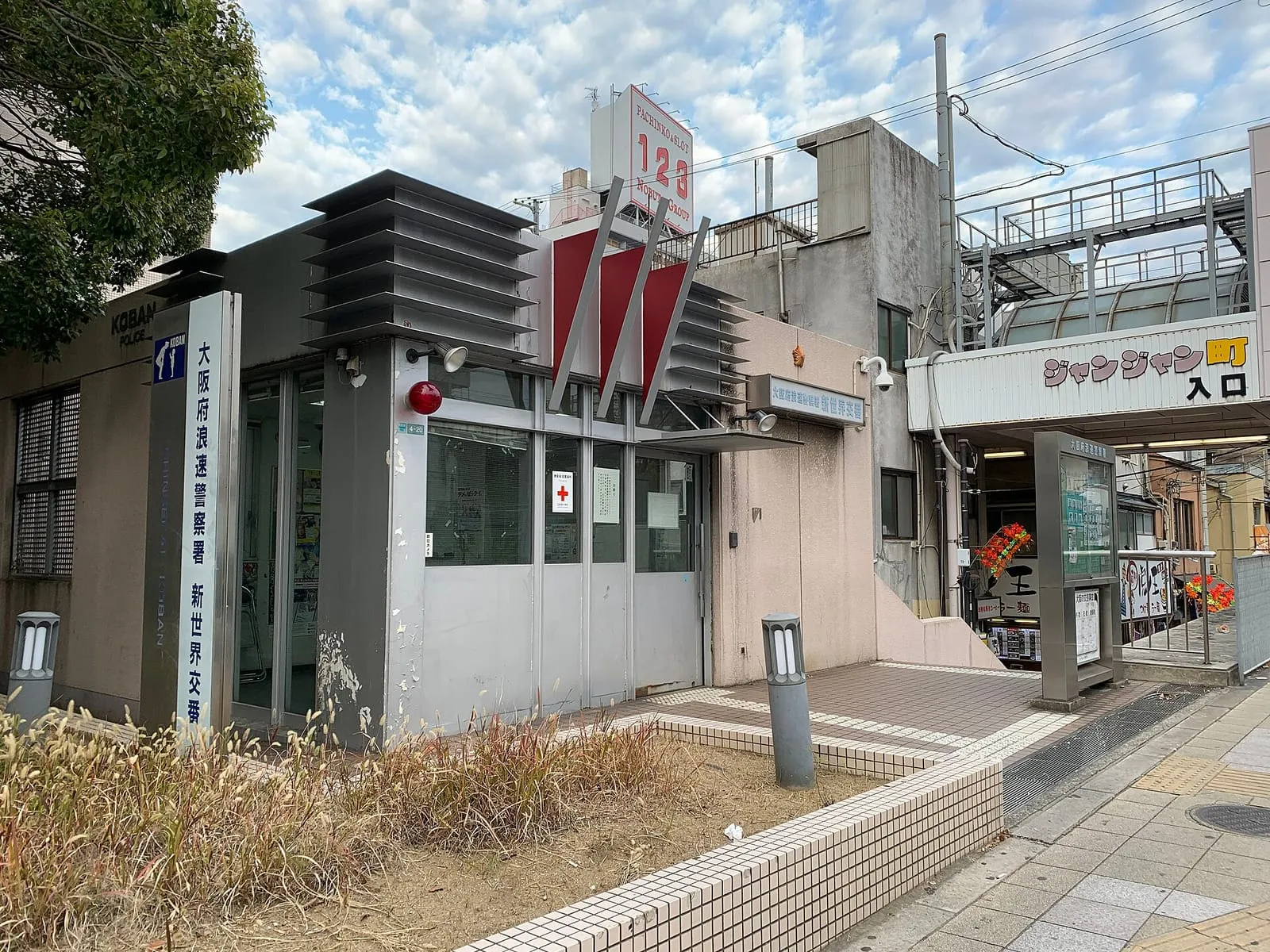
A koban police box beside the Janjan Yokocho entrance in Shinsekai. Photo: inunami, Wikimedia Commons, CC BY 2.0.
General safety and crime overview
Japan consistently ranks among the most peaceful countries globally on the Global Peace Index, and Osaka shares this standard of public safety. Violent street crime such as muggings, armed robberies, or assaults are exceptionally rare. Visitors routinely experience lost wallets or smartphones being handed into the nearest police desk untouched with all cash and credit cards intact.
Petty theft is also uncommon. However, basic travel precautions apply:
- Do not leave valuable bags unattended on cafe chairs or bicycle baskets.
- Keep your wallet zipped in an inner pocket when navigating dense crowds on Ebisu Bridge in Dotonbori (Osaka food tours).
- When using shared dormitory hostels, use the provided luggage lockers for passports and electronics.
Solo female travel
Osaka is an excellent city for solo women travellers. Street lighting is thorough, public transport is clean and monitored by station attendants, and walking home from train stations late at night is standard practice for residents.
- Women-only subway cars: On the Osaka Metro Midosuji Line, designated cars marked with pink floor signs are reserved exclusively for women throughout weekday mornings until 9:00.
- Hotel security: Many modern hotels (where to stay in Osaka) feature security gates requiring room keycards to operate the lifts and access specific bedroom floors. Capsule hotels often offer dedicated women-only levels or separate entrances.
Specific areas and etiquette to know
While Osaka has no “no-go” zones in the Western sense, three specific districts require understanding:
1. Nightlife touts in Minami (kyakuhiki)
In the narrow pedestrian alleys off Dotonbori and Sennichimae, you will encounter street promoters holding laminated drink menus. They promise all-you-can-drink (nomihoudai) deals for 1,500 yen to 2,000 yen. Following them into hidden second-floor or basement bars often results in extortionate table fees, compulsory snack charges, and aggressive bouncers demanding 20,000 yen or more.
- Rule: Never follow street touts into any bar, club, or massage parlour. Only enter street-level venues with clearly displayed, transparent pricing.
2. Tobita Shinchi (Historic Red-Light District)
Located south of Tennoji and Shinsekai, Tobita Shinchi is a preserved red-light quarter, dating back to the Taisho era. It features traditional wooden two-storey teahouse (ryotei) architecture.
- Photography is strictly prohibited: Local shop owners and neighbourhood associations enforce a zero-tolerance policy against cameras and smartphone filming. Pointing a camera down the street will lead to immediate confrontation. If you walk through out of architectural curiosity, keep your phone firmly in your pocket.
3. Kamagasaki (Airin-chiku / Shin-Imamiya)
Situated immediately south of Shin-Imamiya Station, this neighbourhood has historically housed day labourers and has a higher proportion of elderly homeless men and budget flophouse lodgings. It is not dangerous, but the streets look visibly neglected, with more litter and rough sleepers than anywhere else in Osaka. Modern developments, including luxury hotels near Shin-Imamiya, are steadily transforming the precinct.
The Japanese Koban (Police Box)
Every neighbourhood has a koban—a small, brightly illuminated street-corner police station staffed by local uniformed officers (omawari-san).
You can approach a koban for:
- Asking for directions: Officers keep detailed street map binders of the immediate neighbourhood and will guide you.
- Reporting lost property: Fill out a simple lost-item form (ishitsubutsu todoke). If someone hands your item in anywhere in the prefecture, police will contact your hotel.
- Minor medical assistance or emergency shelter.
Emergency contacts in Osaka
Save these emergency phone numbers in your phone before you travel:
- Police Emergency: Dial 110 (free from public payphones, English operators available).
- Fire & Medical Ambulance: Dial 119 (specify “Kyu-kyu-sha” for ambulance or “Ka-ji” for fire).
- Japan Helpline (24/7 English Assistance): 0570-000-911.
- Kansai Airport Lost & Found: Located on the 2nd floor of Terminal 1.
For neighbourhood transport information, see Osaka public transport and compare safety standards with our guide to is Tokyo safe.
Common questions
Is Osaka safe to walk around at night?
Yes. Osaka is one of the safest major cities in the world. Busy entertainment districts like Dotonbori, Namba, and Umeda remain well lit, crowded, and heavily policed well past midnight. Even quiet residential backstreets are generally peaceful and secure for walking.
Is Osaka safe for solo female travellers?
Extremely safe. Violent crime against visitors is remarkably low. Women frequently travel alone on late-night public transport. Osaka Metro operates designated women-only subway cars during morning rush hours, and hotels offer women-only floors with secure keycard access.
What areas in Osaka should visitors be cautious in?
Exercise normal street awareness in Kamagasaki (Airin-chiku, south of Shin-Imamiya), an older day-labourer neighbourhood that feels grittier than the rest of Japan. In Tobita Shinchi, Osaka's historic red-light district, taking photographs is strictly forbidden and actively enforced by local shopkeepers.
What scams happen in Osaka?
The most common issue involves aggressive nightlife touts (kyakuhiki) in Dotonbori, Shinsaibashi, and Kitashinchi who offer cheap all-you-can-drink deals to lure tourists into upstairs bars, only to present inflated bills with hidden seating fees. Never follow street touts into unlisted venues.