In this guide
The Short Version: Osaka is filled with sights that cost nothing to explore. You can marvel at the giant 12-metre lion head stage at Namba Yasaka Shrine, walk the ancient vermilion drum bridge at Sumiyoshi Taisha, and roam the massive stone moats and gardens of Osaka Castle Park (the grounds are free 24 hours; only the keep museum is 1,200 yen). Free panoramic skyline perspectives can be enjoyed from open-air terraces atop Osaka Station City instead of paying for observation decks, while the neon spectacles of Dotonbori and retro Showa alleys of Shinsekai provide atmospheric evening walking routes at zero cost. Prices are in yen.
Top free sights compared
| Sight | Highlights | Opening hours | Nearest station | Best time to visit |
|---|---|---|---|---|
| Namba Yasaka Shrine | 12-metre carved lion head stage (Shishi-den) | 06:00 to 17:00 | Namba Station | Early morning for empty photos |
| Osaka Castle Park Grounds | Giant stone moats, turrets, cherry orchards | Open 24 hours | Osakajokoen / Tanimachi 4-chome | Morning or twilight stroll |
| Sumiyoshi Taisha Shrine | Arched Sorihashi drum bridge, ancient architecture | 06:00 to 17:00 (06:30 in winter) | Sumiyoshitaisha | Mid-morning on weekdays |
| Shitennoji Outer Precinct | Historic temple gates, turtle pond, Rokujido | 08:30 to 16:30 (summer) / 16:00 (winter) | Shitennoji-mae Yuhigaoka | Peaceful morning reflection |
| Osaka Station City Terraces | Open-air city panoramas from 11F and 14F | 07:00 to 23:00 | Osaka / Umeda | Sunset and night skyline views |
| Dotonbori River Walk | Glico sign, canal reflections, giant shop displays | Open 24 hours | Namba | Twilight when neon lights switch on |
| Shinsekai & Janjan Yokocho | Retro Showa signage, Tsutenkaku views, shogi halls | Open 24 hours | Ebisucho / Shin-Imamiya | Late afternoon into dusk |
| Minoh Park & Waterfall Trail | 2.8 km paved forest hike ending at a 33-metre falls | Open 24 hours (daylight recommended) | Minoh Station (Hankyu Line) | Autumn foliage or spring green |
| Nakanoshima Park | Riverside walkways, Central Public Hall, rose garden | Open 24 hours | Yodoyabashi / Kitahama | Sunny afternoons |
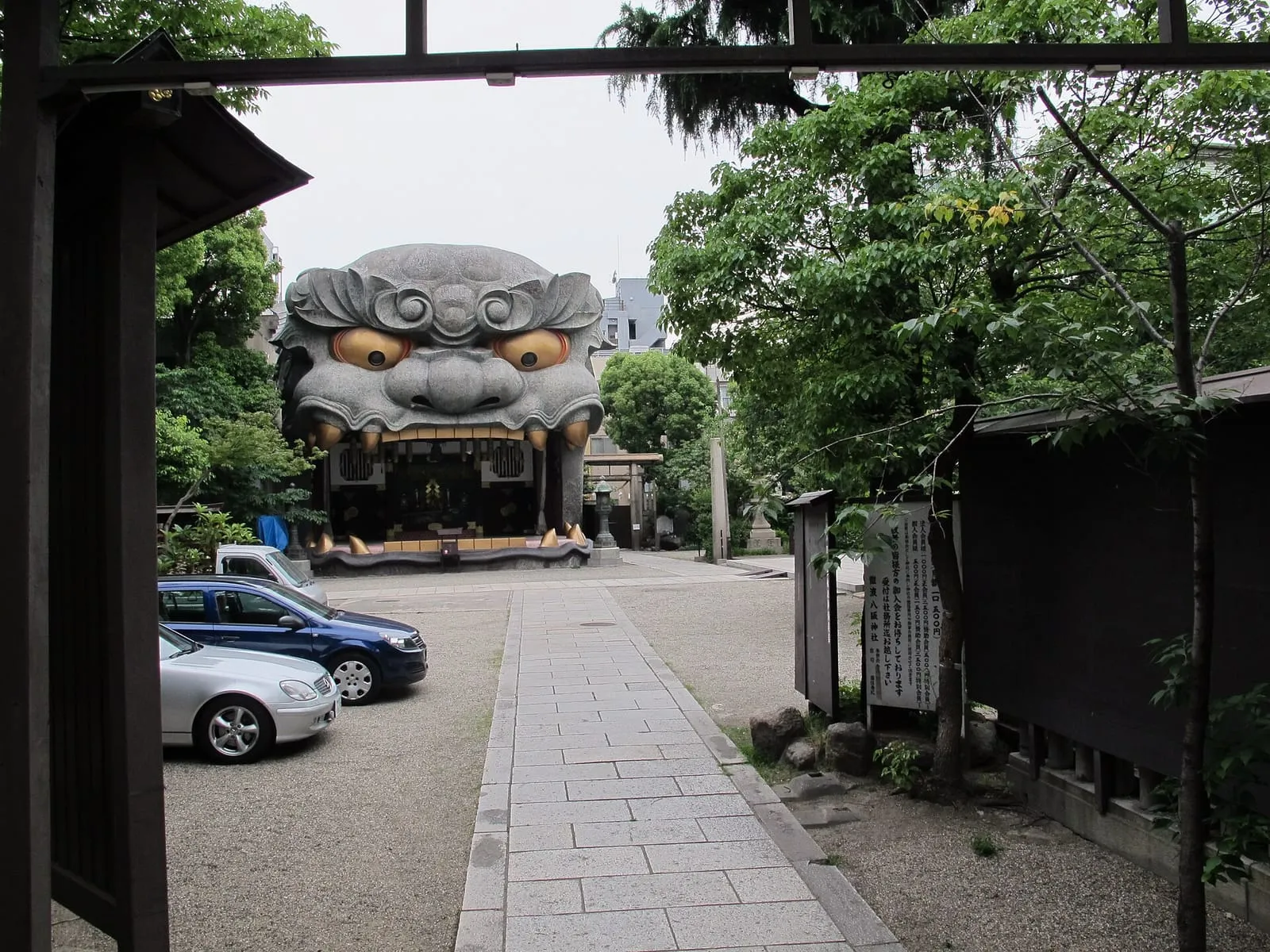
The lion-head stage at Namba Yasaka Shrine. Photo: sailko, Wikimedia Commons, CC BY-SA 3.0.
1. Namba Yasaka Shrine
Located eight minutes south of Namba Station in a peaceful residential pocket, Namba Yasaka Shrine is a Shinto site.
The focal point is the extraordinary Shishi-den, an enormous stage carved in the shape of a roaring lion’s head standing 12 metres tall, 11 metres wide, and 10 metres deep. Its eyes house electric lighting, and its snout contains large speakers used during major festivals. Folk tradition holds that the lion’s gaping jaws swallow evil spirits, leaving worshippers blessed with good fortune, academic success, and thriving businesses.
Admission to the shrine grounds is entirely free, open daily from 06:00 to 17:00. Visiting before 09:00 provides peaceful photographic opportunities before tour groups arrive.
2. Osaka Castle Park and megalith ramparts
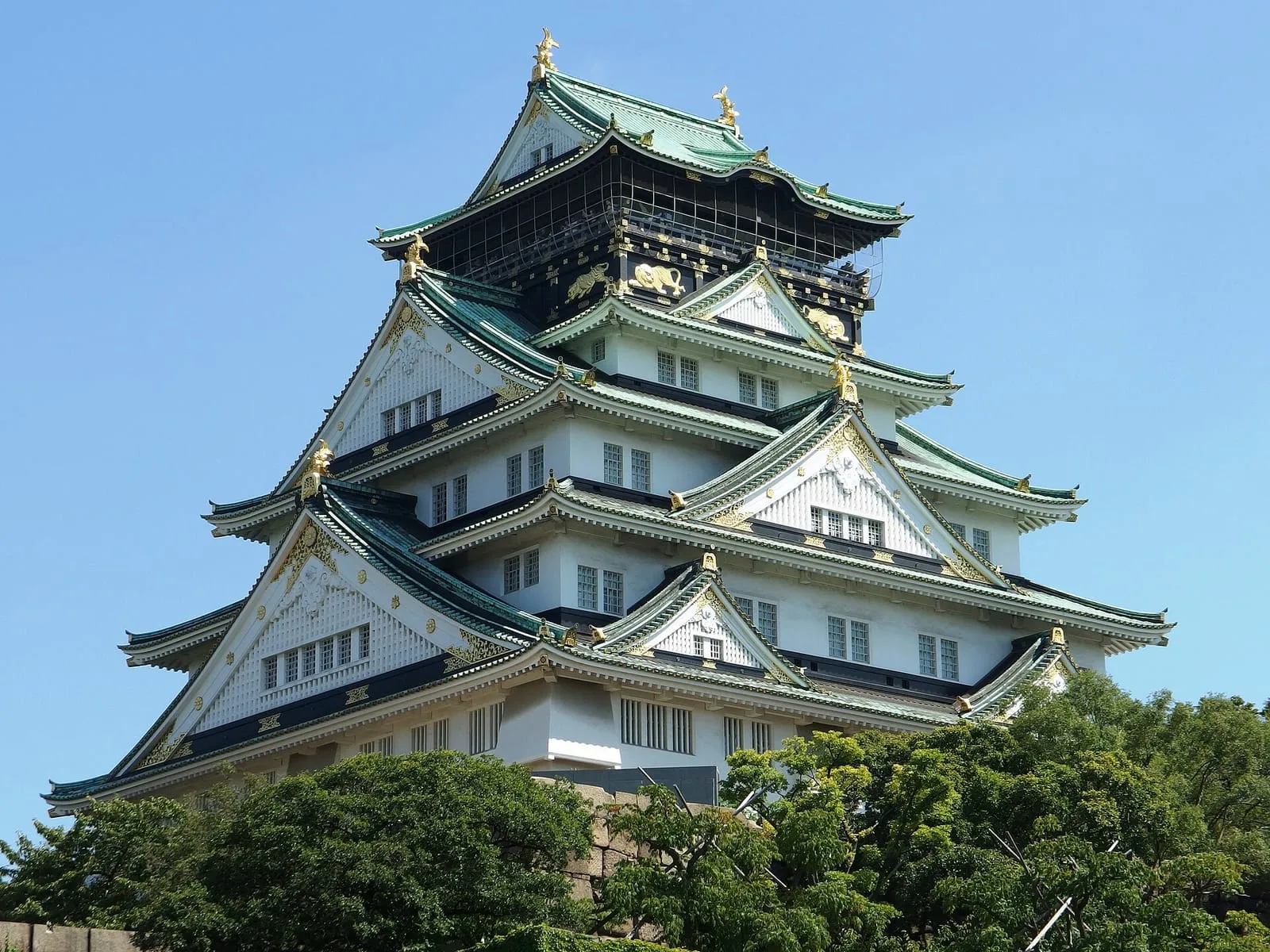
While entering the interior museum of Osaka Castle keep costs 1,200 yen (free for children under 15; open 09:00 to 18:00, last entry 17:30), the immense 106-hectare surrounding park is public and free to access around the clock.
Visitors can walk past the soaring granite moats, which were engineered to repel siege armies using some of the largest building stones in Japan. Examine the Higo-ishi megalith near the Otemon Gate, a single flat granite block weighing approximately 108 tonnes that was transported across the Inland Sea in the 17th century.
The park houses roughly 3,000 cherry trees, 1,200 plum trees in the Plum Grove (Bairin), and extensive walking trails encircling the inner and outer moats. At night, the castle keep is illuminated until 23:00, creating a majestic backdrop visible from across the moat bridges.
3. Sumiyoshi Taisha and the Sorihashi Bridge
Situated in southern Osaka, Sumiyoshi Taisha is a major Shinto shrine, serving as the head shrine for over 2,000 locations dedicated to sea deities protecting sailors and travellers.
Unlike many Japanese religious sites influenced by Asian mainland Buddhist architecture, Sumiyoshi Taisha’s four main halls (Honden) represent Sumiyoshi-zukuri, a purely indigenous architectural style dating to 211 AD. The halls feature straight gabled bark roofs adorned with crossed finials (chigi) and horizontal logs (katsuogi).
A prominent feature is the Sorihashi Bridge (also known as the Taiko-bashi or drum bridge), which arches steeply over a reflective pond. Walking across its curved wooden steps is traditionally believed to cleanse visitors of impurities before approaching the gods. The shrine grounds are open from 06:00 to 17:00 (from 06:30 October to March) with free admission.
4. Shitennoji Temple outer precinct
Founded in 593 AD by Prince Shotoku, Shitennoji is Japan’s first state-administered Buddhist temple. The grounds reflect an ancient Asuka-period symmetrical layout where temple structures align along a straight north-south meridian.
While tickets are required for the inner pagoda precinct (300 yen) and treasure hall (500 yen), the expansive outer grounds are completely open and free to the public. You can view the majestic Great South Gate (Nandaimon), watch hundreds of Japanese pond turtles sunning themselves in the stone turtle pond (Kame-no-ike), and observe locals burning incense at the Rokujido hall. On the 21st and 22nd of each month, the free outer temple grounds host a flea market featuring antique ceramics, textiles, and street snacks.
5. Free skyline views from Osaka Station City
You do not need to spend 2,000 yen at a commercial observation deck like Umeda Sky Building or Harukas 300 to see panoramic vistas of Osaka.
The Osaka Station City complex in Kita ward features several public outdoor terraces:
- Toki-no-hiroba Plaza (5th Floor): A glass-canopied pedestrian bridge suspended directly above the railway tracks of JR Osaka Station, offering grand perspectives of arriving bullet-style express trains and surrounding skyscrapers.
- Kaze-no-hiroba (Wind Plaza, 11th Floor): An open-air wooden deck garden on the North Gate Building with benches, water features, and expansive views looking north toward the Yodo River and Umeda Sky Building.
- Tenku-no-noen (Sky Farm, 14th Floor): Ascend the outdoor staircase from the 11th floor to this peaceful rooftop vegetable and herb garden, providing quiet elevated skyline perspectives free of charge. Open 07:00 to 23:00 daily.
6. Dotonbori neon walk and Shinsekai Showa atmosphere
Experiencing Osaka’s two most famous entertainment districts costs nothing:
- Dotonbori: Walk along Ebisu Bridge and the Tonbori River Walk at dusk when the canal turns into a sea of reflected neon light. Take photos with the Glico Running Man sign and admire the moving mechanical giant crab at Kani Doraku.
- Shinsekai: Walk through the Janjan Yokocho arcade to experience pre-war Showa-era street life. Admire retro shop signs, giant blowfish lanterns, and views looking up at Tsutenkaku Tower.
7. Minoh Park and waterfall trail
If you want a nature excursion, take the Hankyu Takarazuka Line from Osaka-Umeda Station to Ishibashi Handai-mae, transfer to the Hankyu Minoh Line, and disembark at Minoh Station (a 30-minute train ride costing 280 yen each way).
Minoh Park is a lush forested valley along the edge of Osaka prefecture. A gentle, paved 2.8 km walking path winds alongside the Minoh River through maple forests, passing historic tea houses and Ryuanji Temple, ending at the 33-metre Minoh Waterfall. Entry to the entire national park is free. In autumn (particularly November), local vendors along the path sell momiji tempura—real maple leaves preserved in salt, battered in sweet flour, and fried crisp.
8. Nakanoshima waterfront and rose gardens
Nakanoshima is a narrow, 3 km-long sandbar island nestled between the Dojima and Tosabori rivers in central Osaka.
Stroll through Nakanoshima Park to view historic Western-influenced red-brick architecture, including the Osaka Central Public Hall (built in 1918) and the Bank of Japan Osaka branch. The park features an extensive public rose garden containing over 3,700 rose bushes of 310 varieties, which bloom vibrantly in May and October. Shaded benches, wide stone riverbanks, and pedestrian bridges make it a spot for an afternoon picnic.
Free travel tips in Osaka
- Drink the tap water: Tap water across Osaka is safe, clean, and delicious. Carry a refillable water bottle to save money at vending machines.
- Free Wi-Fi: “Osaka Free Wi-Fi” and “Osaka Free Wi-Fi Lite” are available across subway stations, major sightseeing landmarks, and tourist information centres without registration fees.
- Pair with Tokyo: If you are travelling between Japan’s two greatest cities, review our companion guide to free things to do in Tokyo and check the comprehensive Osaka city hub for transport options.
- Itinerary integration: Combine these free sights with structured routes in our 3 days in Osaka or Osaka in one or two days itineraries.
Common questions
Is Osaka Castle free to visit?
The expansive 106-hectare Osaka Castle Park, outer moats, Otemon Gate, and stone fortifications are completely free and open 24 hours daily. Only entering the interior museum of the reconstructed main keep tower requires a ticket (1,200 yen for adults, free for children under 15).
Are Shinto shrines and Buddhist temples in Osaka free of charge?
Most shrines, including Namba Yasaka Shrine and Sumiyoshi Taisha, are entirely free to enter. Historic Buddhist temples like Shitennoji offer free access to their extensive outer temple precincts, while charging an admission fee (500 yen) only if you enter the inner pagoda enclosure or private garden.
Where can you find free skyline views in Osaka?
Osaka Station City features multiple public open-air observation terraces. The Toki-no-hiroba Plaza (5th floor) and Kaze-no-hiroba (14th floor) of the North Gate Building provide sweeping views across Kita and the train tracks without paying for an observation deck.
Can you walk along Dotonbori and Shinsekai without paying an entry fee?
Yes. Dotonbori and Shinsekai are public city streets and canal promenades accessible 24 hours a day with zero admission charge. You only spend money if you choose to purchase street food or enter paid attractions like Tsutenkaku Tower.