One of 4 self-guided walks in Osaka. See every walk.
In this guide
The Short Version: This 3.2 km self-guided walk explores the culinary soul and quirky architecture of Namba. Starting at the dramatic Namba Yasaka Shrine with its colossal 12-metre lion head stage, you stroll through the terraced rooftop canyon of Namba Parks, browse hand-forged Japanese knives along Sennichimae Doguyasuji Kitchenware Street, and finish sampling grilled scallops and wagyu beef in Kuromon Ichiba Market. Start around 10:00 in the morning for peak market energy.
Namba is the commercial nexus of southern Osaka, where high-speed airport express trains arrive alongside historic comedy playhouses, wholesale chef supply arcades, and food markets. While visitors often rush straight toward Dotonbori’s neon canal, Namba’s southern backstreets reward those exploring on foot with some of the city’s most distinctive sights.
The route
Map of the walk numbered stops in walking order
Open the route in Google Maps — all stops ordered for walking navigation.
| Stop | Admission | Opening hours |
|---|---|---|
| 1. Namba Yasaka Shrine | Free | Grounds open daily 6:00 to 17:00 |
| 2. Namba Parks Canyon Gardens | Free | Rooftop park 10:00 to 24:00; shops 11:00 to 21:00 |
| 3. Sennichimae Doguyasuji Kitchenware Street | Free | Shops typically open 10:00 to 18:00 daily |
| 4. Namba Grand Kagetsu | Free entry to plaza; theatre ticketed | Plaza open daily 9:00 to 22:00 |
| 5. Kuromon Ichiba Market | Free | Stalls open 9:00 to 17:00 (peak 10:30 to 14:00) |
1. Namba Yasaka Shrine
Begin your walk at Namba Station on the Osaka Metro Midosuji Line or Yotsubashi Line. Take Exit 32 and walk five minutes southwest through quiet residential streets to Namba Yasaka Shrine.
Tucked among modern apartment blocks, this ancient Shinto shrine dates back to the Nintoku era. Its defining feature is the Shishiden, a colossal 12-metre-high and 11-metre-wide carved stage shaped like the roaring head of a mythical lion. Built in 1974, the lion’s gaping mouth—with large fangs, brass eyes, and a nose that houses audio speakers—is believed to swallow evil spirits and bad fortune, while breathing in good luck and victory for worshippers.
The shrine is particularly popular among entrepreneurs and students praying for success in business and examinations. Stand in front of the lion’s mouth to clap twice, bow, and take photographs before continuing northeast toward Namba station complex.
2. Namba Parks Canyon Gardens
Walk six minutes east to Namba Parks, a mixed-use commercial complex designed by American architect Jon Jerde on the former grounds of the Osaka baseball stadium.
Rather than building a standard shopping mall, Jerde carved an eight-level canyon of undulating sand-coloured stone slabs flanked by flowing water features. The building culminates in an astonishing terraced rooftop garden (Parks Garden) populated with over 70,000 trees, shrubs, and flowering plants spanning hundreds of species.
Wander up the outdoor walkways from the 2nd to the 8th floor to take in views of the surrounding cityscape and quiet bamboo groves. Access to the rooftop park is completely free and provides a tranquil green escape.
3. Sennichimae Doguyasuji Kitchenware Street
Exit Namba Parks to the north, cross the avenue, and enter Sennichimae Doguyasuji, a 150-metre covered shopping arcade dedicated entirely to kitchenware, restaurant equipment, and chef supplies.
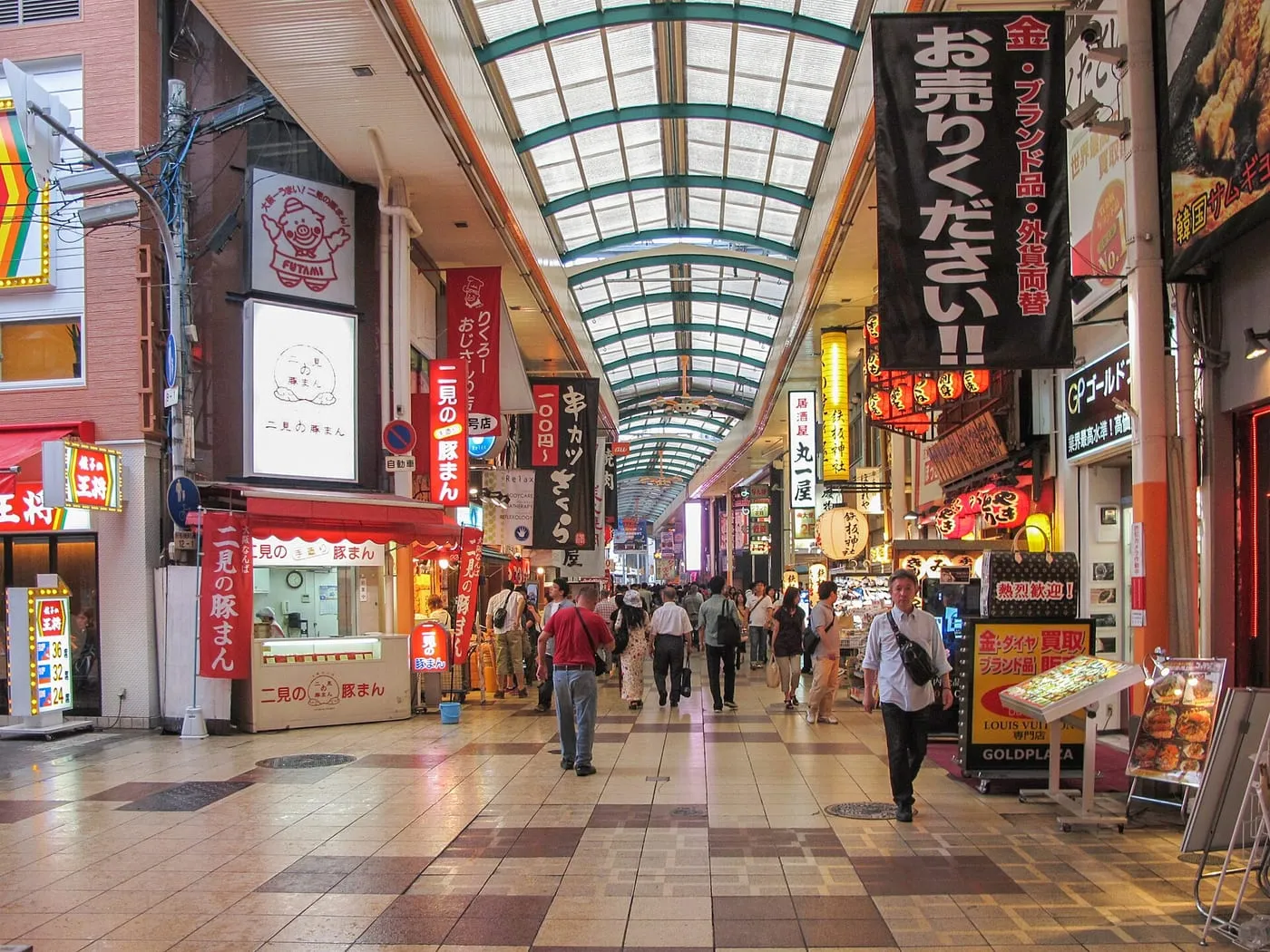
The covered Sennichimae shopping arcade in Namba, with food shops and signs. Photo: Wpcpey, Wikimedia Commons, CC BY-SA 4.0.
Known as Osaka’s version of Tokyo’s Kappabashi street, Doguyasuji arose during the Meiji period to supply local food vendors, teahouses, and izakayas. Today, its tightly packed open-fronted shops offer an incredible range of culinary tools:
- Japanese chef knives: Hand-forged carbon steel and Damascus gyuto, santoku, and debakouchou knives from Sakai (Osaka’s neighbouring knife-making capital). Many shops offer on-the-spot name engraving in Japanese kanji.
- Takoyaki plates: Heavy cast-iron dimpled grill pans made specifically for baking octopus balls on domestic gas stoves (from 2,500 yen).
- Food models (sampuru): Hyper-realistic PVC plastic display food models used in Japanese restaurant windows, including sushi keychains, beer mugs with faux foam, and bowls of ramen with levitating chopsticks.
- Noren and lanterns: Split fabric doorway curtains (noren), wooden menu plaques, and glowing red vinyl izakaya lanterns.
4. Namba Grand Kagetsu
At the northern exit of Doguyasuji, step into the plaza of Namba Grand Kagetsu (often called NGK). Operated by Yoshimoto Kogyo, this theatre is the undisputed headquarters of Japanese comedy.
Osaka is celebrated throughout Japan as the nation’s capital of humour, having birthed the rapid-fire double-act comedic style known as Manzai, as well as slapstick Yoshimoto Shinkigeki stage plays. While performances are held in Japanese, the lively plaza outside features costumed performers, comic mascot merchandise, and souvenir shops selling comedic snacks.
Right next door is Takoyaki Doraku Wanaka Sennichimae (11-19 Nanbasennichimae · 10:00 to 21:00 daily), a takoyaki specialist. Order the Oiri sampler (8 pieces, 700 yen) to taste four distinct toppings: classic sweet sauce, soy sauce with spring onion, spicy salt, and seasonal chef’s choice.
5. Kuromon Ichiba Market
Cross Sakaisuji boulevard eastward into Kuromon Ichiba Market, a 580-metre covered market with approximately 150 independent stalls.
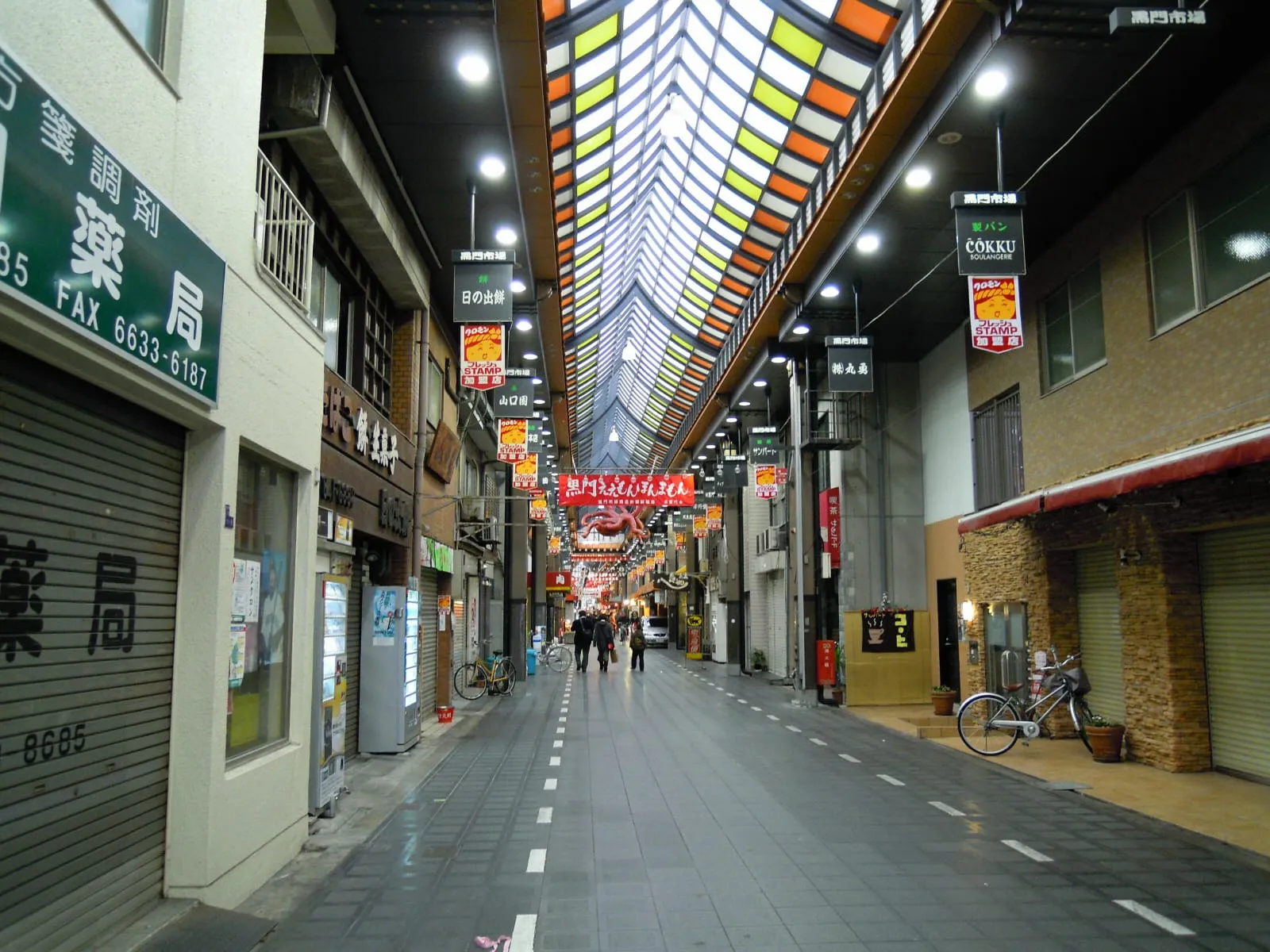
The glazed roof over a Kuromon Ichiba Market arcade at night, with the shops shuttered. Photo: DVMG, Wikimedia Commons, CC BY 3.0.
Nicknamed “Osaka’s Kitchen” (Osaka no Daidokoro), Kuromon has fed local restaurateurs and residents since the Edo period. Today, it is famous for grilled street food prepared directly before your eyes:
- Fresh seafood skewers: Whole grilled scallops basted in butter and soy sauce (800 yen to 1,200 yen), giant red king crab legs grilled over charcoal, and fresh sea urchin (uni) served raw in its spiny shell.
- Maguro (Tuna): Stop at Maguroya Kurogin, a tuna specialist cutting ultra-fatty otoro and chutoro sashimi slices and fresh tuna rice bowls to order.
- A5 Wagyu beef skewers: Marbled Kobe and Matsusaka beef seared with blowtorches on small iron griddles (from 1,500 yen per skewer).
- Seasonal fruit: Skewered giant Shine Muscat green grapes and rare Japanese white strawberries (Shiroi Houseki).
⚠️ Market dining tip: Walking while eating (aruki-gui) is discouraged in Japanese markets to avoid spills. Eat your purchases at the small counter seating provided behind each stall or head to the free Kuromon Information Center in the middle of the market, which provides tables, restrooms, and drink vending machines.
For a full breakdown of stalls, prices, and vendor histories, see our comprehensive Kuromon Ichiba Market guide.
From the eastern end of Kuromon Market, Nipponbashi Station (Sakaisuji Line) is just two minutes away. Alternatively, walk 10 minutes north to Ebisu Bridge to join the Dotonbori and Shinsaibashi walk, or explore our full guide to where to eat in Osaka. If planning a visit to market stalls in the capital, see our guide to Tsukiji and Toyosu markets in Tokyo.
From Kuromon Market, Nipponbashi is one stop on the Sakaisuji Line from Ebisucho, where the Shinsekai and Tennoji walk begins.
Common questions
How long is the Namba and Kuromon Market walk?
The walking route is roughly 3.2 km and takes 2.5 to 3.5 hours, including time to browse the kitchenware shops and sample street food in Kuromon Market.
What is the best time of day to start this walk?
Start around 9:30 or 10:00 in the morning. Kuromon Market stalls and Sennichimae Doguyasuji shops are fully open by mid-morning, ensuring you catch market stalls at their freshest.
Are Kuromon Market and Doguyasuji open on Sundays?
Kuromon Market is open daily, though some fishmongers take Sundays off. Sennichimae Doguyasuji is open seven days a week, but a few individual knife craftsmen and wholesale shops close on Sundays.
Is Namba Yasaka Shrine free to enter?
Yes. Admission to Namba Yasaka Shrine is completely free. The grounds are open daily from 6:00 to 17:00.