One of 4 self-guided walks in Osaka. See every walk.
In this guide
The Short Version: This 3.8 km self-guided walk highlights the dramatic transformation of Osaka’s Kita (North) district. You start amid futuristic high-rise engineering at the Umeda Sky Building and the open-air Kuchu Teien Observatory, traverse the monumental glass atrium and roof plaza of Osaka Station City, stroll through fashionable Chayamachi, and end in the peaceful, pre-war wooden alleys of Nakazakicho, packed with independent cafes and artisan boutiques. Allow three to four hours in the afternoon.
While southern Osaka (Minami) is celebrated for its brash neon signs and canal-side food stalls, northern Osaka (Kita) revolves around high design, sleek commercial towers, and architectural innovation. Yet just a ten-minute stroll east of Osaka Station’s soaring steel girders lies Nakazakicho, an atmospheric residential pocket of preserved Showa-era wooden rowhouses that feels worlds away from the glass skyscrapers of Umeda.
The route
Map of the walk numbered stops in walking order
Open the route in Google Maps — all five stops ordered for walking directions directly on your smartphone.
| Stop | Admission | Opening hours |
|---|---|---|
| 1. Umeda Sky Building and Kuchu Teien | 2,000 yen | 9:30 to 22:30 daily (last entry 22:00) |
| 2. Grand Front Osaka and Umekita Park | Free | Park open 24 hours; malls 11:00 to 21:00 |
| 3. Osaka Station City and Toki no Hiroba | Free | Plaza open daily 7:00 to 23:00 |
| 4. Hankyu Umeda and Chayamachi | Free | Shops 10:00 to 20:00; restaurants 11:00 to 23:00 |
| 5. Nakazakicho Pre-War Townhouses | Free to wander | Boutiques and cafes generally 12:00 to 19:00 |
1. Umeda Sky Building and Kuchu Teien Observatory
Begin your walk at the Umeda Sky Building, situated in Shin Umeda City, about an 8-minute walk northwest of JR Osaka Station.
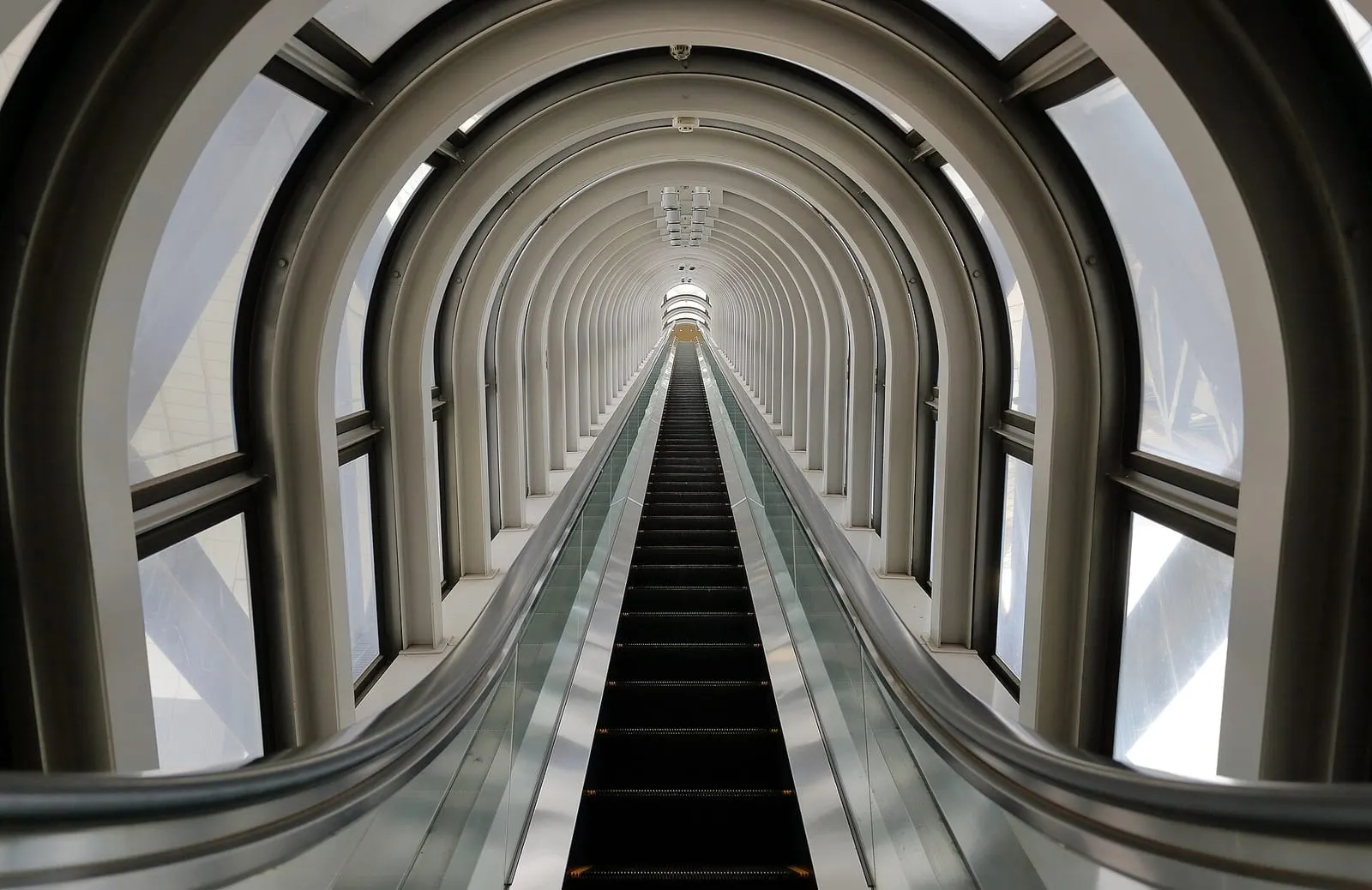
The glass-roofed escalator tube rising to the Kuchu Teien Observatory. Photo: Martin Falbisoner, Wikimedia Commons, CC BY-SA 4.0.
Designed by visionary architect Hiroshi Hara and completed in 1993, this 173-metre landmark consists of two 40-storey towers joined at their summits by a circular bridge surrounding an open central aperture. Ride the high-speed glass lift to the 39th floor, and transfer into the dramatic glass-sided escalator tubes that span open air between the towers.
At the summit sits the Kuchu Teien Observatory (Floating Garden Observatory):
- Admission: 2,000 yen for adults, 500 yen for children aged 4 to 12.
- Hours: 9:30 to 22:30 daily (last admission 22:00).
- The Sky Walk: The uppermost level features a 360-degree open-air circular roof promenade, allowing visitors to feel the wind and view the Yodo River, Osaka Bay, and the Roppongi-like high-rise density of Kita without glass reflection. At night, phosphorescent stones embedded in the roof walkway glow softly under ultraviolet light.
In the basement concourse (B1), explore Takimi-koji, an indoor gourmet street authentically styled as a 1920s Showa-era Osaka neighbourhood with replica stone wells, vintage motor tricycles, and traditional eateries.
For further visiting details, consult our Umeda Sky Building and Kuchu Teien guide.
2. Grand Front Osaka and Umekita Park
Walk east toward Osaka Station via the pedestrian concourses to enter Grand Front Osaka, a vast multi-building commercial and urban development flanking the northern side of the rail tracks.
Grand Front features wide pedestrian walkways, cascading water stepped terraces, and the expansive lawns of Umekita Park. The development houses Panasonic Centre Osaka, lifestyle flagships, Japanese interior design showrooms, and open-air cafes. It provides a striking example of modern transit-oriented architecture, integrating greenery and public seating directly into the city centre.
3. Osaka Station City and Toki no Hiroba
Cross the elevated glass skybridge south into Osaka Station City, the monumental redevelopment enclosing JR Osaka Station.
Take the central escalators up to the 5th floor to reach Toki no Hiroba (Time and Space Plaza). This vast pedestrian bridge spans directly over the active train tracks below, sheltered beneath a colossal diagonal glass roof measuring 180 metres wide and 100 metres long.
Take a seat at the open-air cafe tables on the plaza to watch express trains and local commuter lines pull in and out below. Large gold and silver public clocks mark the ends of the plaza, making it one of the city’s most impressive meeting spots.
If you have an appetite for classic Osaka comfort food, walk down into Shin Umeda Shokudogai, a food maze squeezed under the railway tracks housing over 100 tiny bars and eateries, including the famous Kiji Okonomiyaki (see our guide on where to eat in Osaka).
4. Hankyu Umeda and Chayamachi
Exit Osaka Station City eastward, passing the grand marble portals of Hankyu Umeda Department Store, and walk north into Chayamachi.
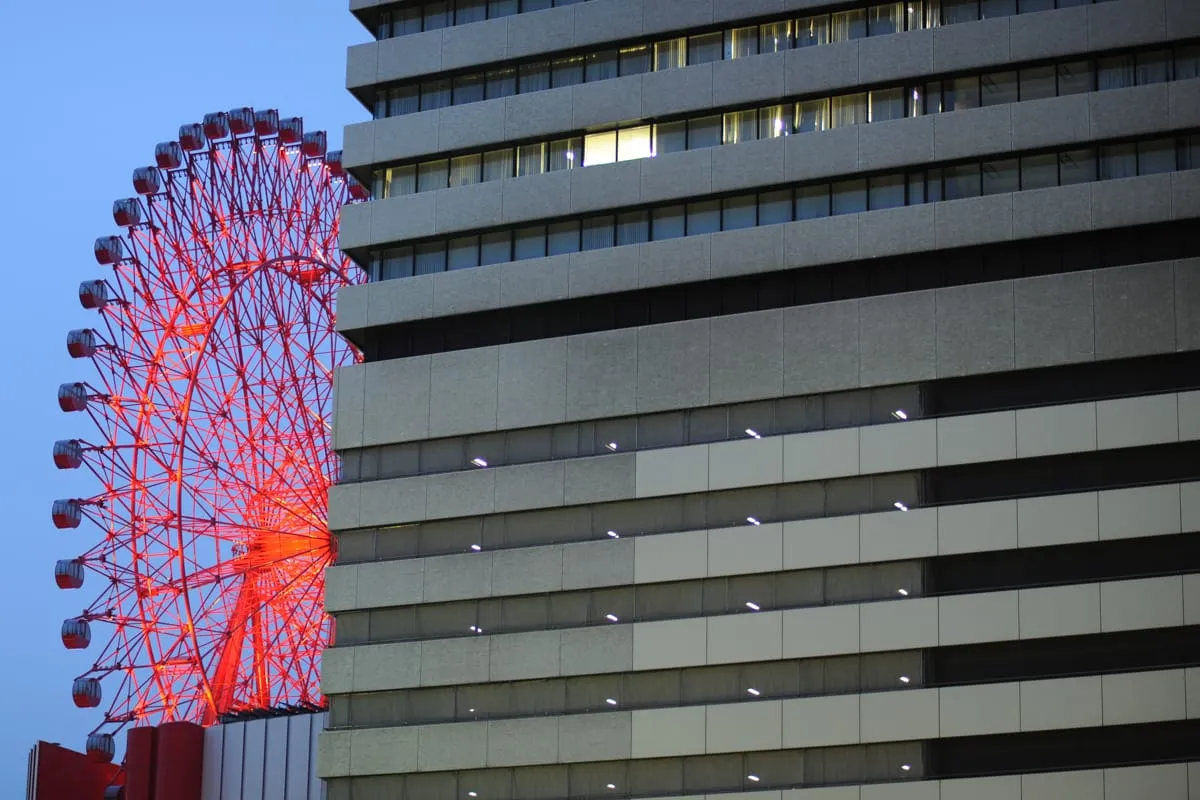
The red HEP Five Ferris wheel beside a grey office block in Umeda. Photo: Mstyslav Chernov, Wikimedia Commons, CC BY-SA 3.0.
Historically a stop along the ancient carriage route to Kyoto lined with teahouses (chaya), Chayamachi was redeveloped into a trendy lifestyle and entertainment district. The tree-lined streets feature the flagship MBS (Mainichi Broadcasting System) building, the dramatic red-brick facade of the Umeda Arts Theater, and multi-storey lifestyle bookshops like Maruzen & Junkudo, one of the largest bookstores in western Japan spanning seven floors.
The neighbourhood has a relaxed pedestrian feel, dotted with independent specialty coffee roasters and fashion boutiques.
5. Nakazakicho Pre-War Townhouses and Cafes
Cross the eastern boundary of Chayamachi beneath the elevated tracks of the JR Tokaido line and enter the residential maze of Nakazakicho.
While over 70% of Osaka was reduced to ash during Second World War bombings in 1945, Nakazakicho miraculously escaped destruction. The neighbourhood retains its dense network of narrow flagstone lanes, wooden telegraph poles, and historic nagaya—two-storey wooden tenement townhouses dating from the late Meiji, Taisho, and early Showa periods.
Beginning in the late 1990s, young local artists, craftspeople, and baristas began renovating these vacant timber shophouses, breathing new life into the historic fabric without destroying its architectural heritage:
- Artisan Cafes: Drop into Salon de AManTo, a celebrated bohemian cafe housed in a 120-year-old wooden house draped in ivy and wisteria vines, where antique furniture, vintage film projectors, and wooden floorboards create a warm retreat. Order matcha lattes or hand-drip single-origin coffee.
- Vintage and Craft Boutiques: Wander the labyrinthine alleyways to discover independent vintage clothing boutiques selling American and European garments, handmade leather workshops, bespoke ceramic galleries, and retro Japanese stationery stores.
- Atmosphere: Unlike the hyper-commercial pace of Umeda, Nakazakicho is quiet, with potted plants lining residential doorsteps and cats resting on wooden sills. Remember that this remains a living residential neighbourhood: speak quietly and avoid photographing residents or open home windows.
From Nakazakicho, you can take the Tanimachi Line from Nakazakicho Station directly south to Tennoji, or stroll 10 minutes west back to Osaka Station. For dining recommendations nearby, see our guide on where to eat in Osaka. For a similar preserved historic neighbourhood in the capital, explore the Asakusa, Ueno and Yanaka walk in Tokyo.
From Umeda, the Midosuji Line runs south to Shinsaibashi, where the Dotonbori and Shinsaibashi walk starts.
Common questions
How long does the Umeda and Nakazakicho walk take?
The walking route covers about 3.8 km and takes 3 to 4 hours, allowing time to visit the Umeda Sky Building observatory, walk through Grand Front Osaka, and browse the indie shops in Nakazakicho.
What makes Nakazakicho unique in Osaka?
Nakazakicho is one of the very few central Osaka neighbourhoods that survived Second World War bombing. Its network of pre-war wooden nagaya rowhouses has been repurposed into bohemian cafes, craft galleries, and vintage clothing boutiques.
When is the best time to visit Nakazakicho?
Afternoon is best: most independent cafes, vintage boutiques, and artisan shops in Nakazakicho open around 12:00 or 13:00 and close by 19:00. Many small owner-operated shops close on Mondays or Tuesdays.
Is the Umeda Sky Building included in the Osaka Amazing Pass?
Yes. The Osaka Amazing Pass provides free admission to the Kuchu Teien Observatory for entry before 15:00. From 15:00 pass holders receive a 10 percent discount on the standard 2,000 yen admission.