In this guide
The Short Version: Perched along the Red River dike just 15 km southeast of Hanoi, Bat Trang is a 700-year-old artisan craft settlement that has produced fine porcelain and pottery since the Ly Dynasty. A half-day trip lets you shape your own bowl or vase on a potter’s wheel in hands-on pottery workshops (50,000 VND to 80,000 VND), admire the canyon-like terracotta architecture of the Bat Trang Ceramic Museum (50,000 VND), and browse hundreds of family-run stalls in the wholesale market. The village is easily reached independently via public Bus 47A from Long Bien (9,000 VND) or a 35-minute Grab ride (160,000 VND). Compare all regional excursions in our master day trips from Hanoi guide. A tour with a pottery workshop can be booked below instead of travelling on your own.
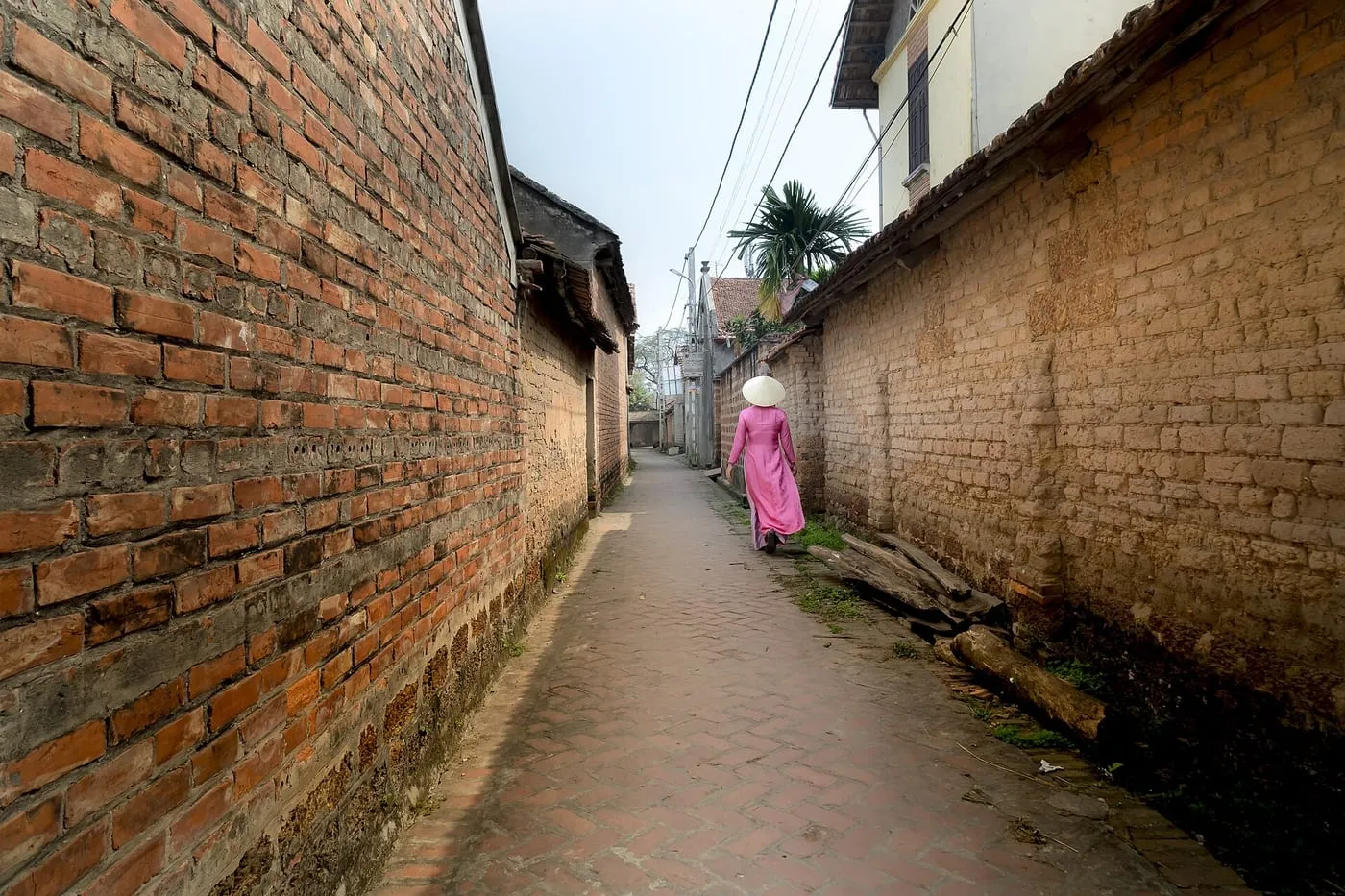
While many of Hanoi’s rural craft hamlets have gradually disappeared under suburban expansion, Bat Trang remains a thriving centre of ceramic manufacture. Historical kilns here have supplied imperial palaces, royal courts across Asia, and European traders since the 14th century.
Today, Bat Trang blends ancestral pottery methods with contemporary design, making it one of northern Vietnam’s most accessible and rewarding half-day trips from the Old Quarter.
How to get to Bat Trang from Hanoi
Thanks to its proximity to the city centre, Bat Trang requires no expensive tour package and is simple to visit independently.
| Transport mode | One-way cost | Travel time | Practical details |
|---|---|---|---|
| Public Bus 47A | 9,000 VND | 35–45 minutes | Departs every 15–20 minutes from Long Bien bus interchange; terminates directly outside Bat Trang market. |
| Grab car / taxi | 140,000–180,000 VND | 30 minutes | Direct door-to-door from your Hanoi hotel; easy to book for the return journey via the Grab app. |
| Grab motorbike | 65,000–85,000 VND | 25 minutes | Ideal for solo travellers; rides along the scenic Red River dike road. |
| Bicycle rental | 100,000–150,000 VND per day | 1 hour 15 min | Cycle south along the quiet river dike path; best during cool autumn months. |
Riding Bus 47A (Recommended budget route)
Head to the Long Bien Bus Interchange (just north of the Old Quarter near Long Bien Bridge). Board Bus 47A (Long Bien – Bat Trang). Buses are modern, air-conditioned, and display automated stop announcements. Pay the conductor 9,000 VND in cash. The bus crosses Chuong Duong Bridge and follows the eastern bank of the Red River dike directly to the terminal turnaround point, steps from the ceramic market entrance.
Book a tour instead
Book the From Hanoi: Bat Trang Pottery Village Tour with Workshopad{rel=“sponsored nofollow noopener”} to include round-trip transfers and a hands-on wheel-throwing session with a master potter.
Hands-on pottery workshops: throwing your own clay
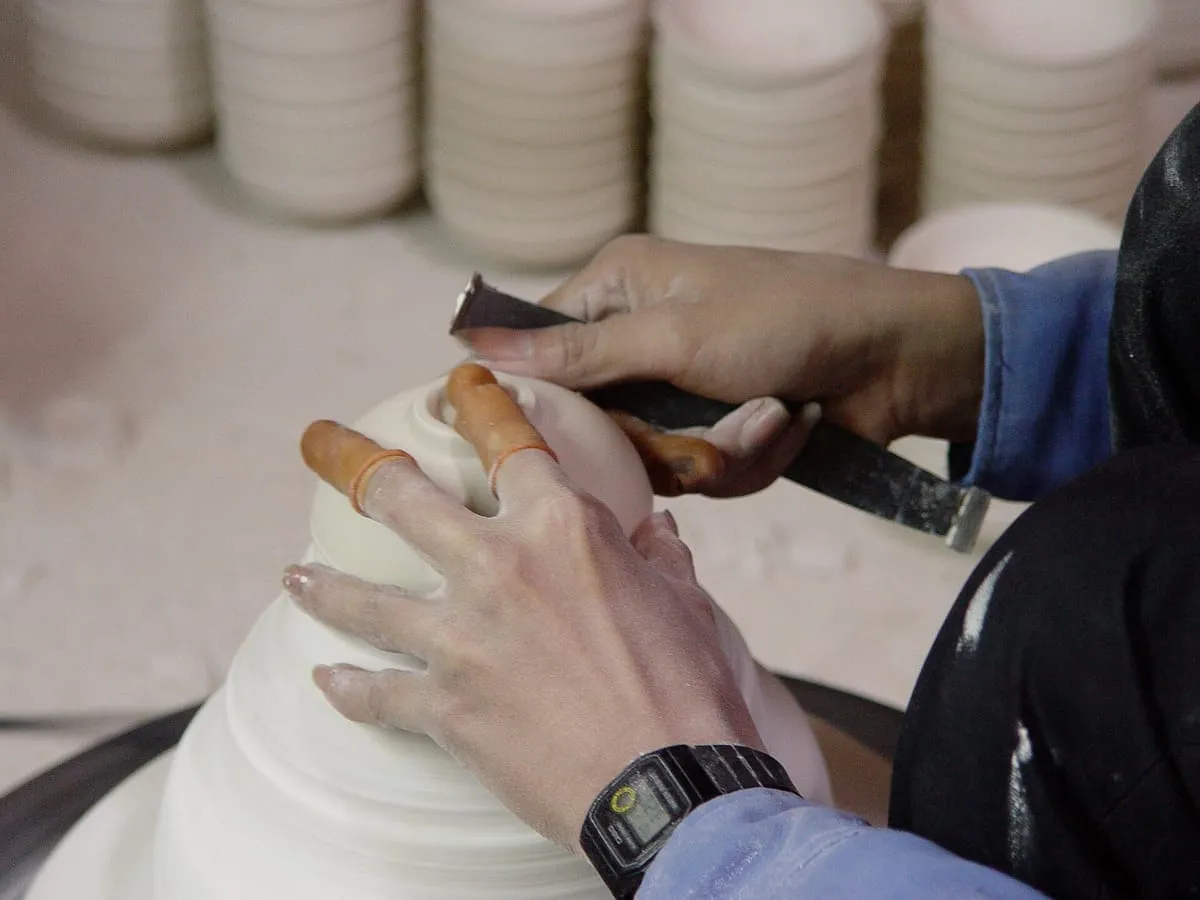
Trying your hand at the potter’s wheel is Bat Trang’s most popular activity for visitors. Dozens of family-run ateliers and workshops line the main street and village alleys, welcoming walk-ins without reservations.
How the workshop works
- The Setup (50,000–80,000 VND): You are provided with a protective apron, a personal manual or electric potter’s wheel, a bucket of water, and a generous lump of damp grey river clay.
- Master Guidance: An artisan potter demonstrates how to centre the clay, cup your palms, and use gentle thumb pressure to draw up the hollow centre and shape the vessel walls into a bowl, cup, vase, or teapot.
- Detailing & Carving: Once your piece is formed, you use wooden bamboo scrapers to carve decorative patterns, lotus leaves, or personal inscriptions into the soft exterior.
- Glazing & Painting: You are given paintbrushes and small jars of liquid mineral pigments (cobalt blue, jade green, crimson) to paint freehand patterns onto the clay surface.
- Firing the Piece (30,000–50,000 VND optional): If you wish to take your ceramic home as a permanent souvenir, the workshop places your piece into an electric kiln for rapid drying and baking. Firing takes roughly 60 to 90 minutes, during which you can explore the museum or ceramic market. If you cannot wait, you can take your air-dried unbaked creation with you immediately.
Bat Trang Ceramic Museum (Trung Tam Tinh Hoa Lang Nghe Viet)
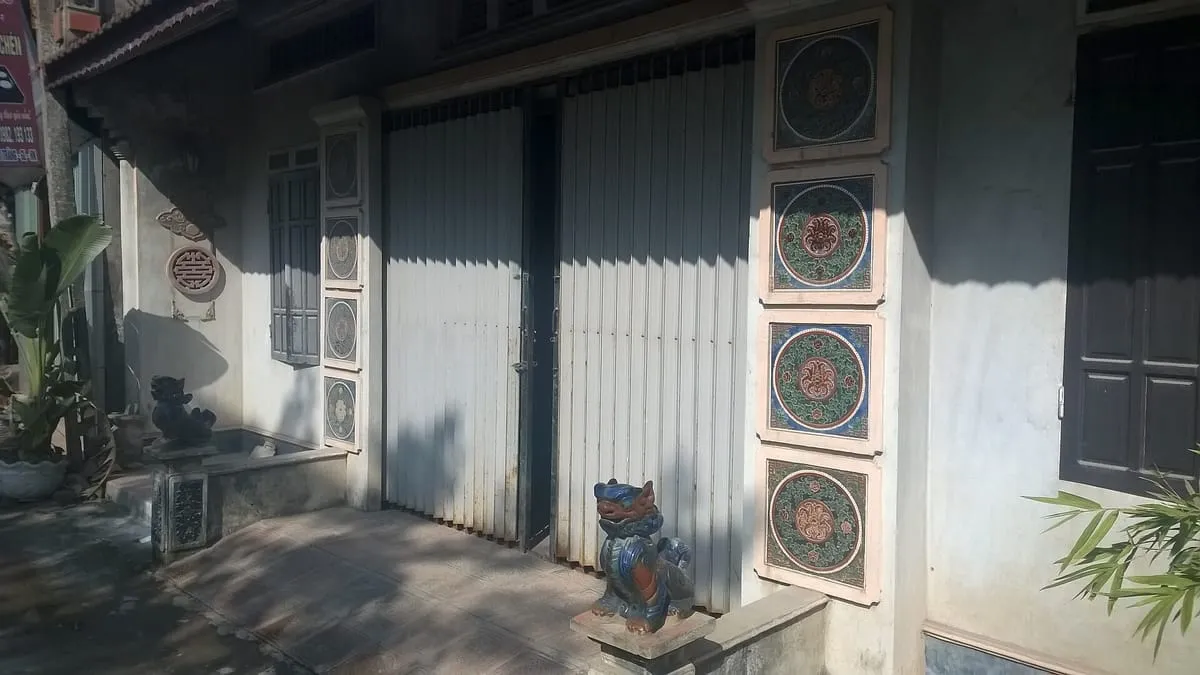
Opened to celebrate Vietnamese craft heritage, the Bat Trang Ceramic Museum is an architectural masterpiece designed by architect Hoang Thuc Hao.
Architectural design
The museum’s exterior is constructed from smooth, spiralling layers of reinforced terracotta-coloured fibre-concrete that curve inward like seven interlocking canyon-like pottery wheels. The central open-air atrium floods the lower exhibition halls with natural skylight.
What to see inside
-
Ground Floor: Welcoming hall, contemporary art installations, and traditional tea tasting tables.
-
First & Second Floors (Heritage Galleries): Displays detailing the 700-year evolution of Bat Trang kilns, showcasing ancient celadon ware, cracked glaze (men ran), cobalt blue imperial porcelain, and historical kiln models (from ancient toad kilns to modern gas tunnel kilns).
-
Third Floor (Master Craftsmen Hall): Limited-edition works created by Vietnam’s recognised national People’s Artisans.
-
Rooftop Terrace: A shaded open-air cafe offering panoramic views across the tiled rooftops of Bat Trang village and the Red River.
-
Basement Workshop: An expansive, air-conditioned pottery throwing studio with dozens of wheels for visitors.
-
Admission: 50,000 VND for general admission; 70,000–90,000 VND for combined exhibition tickets.
Exploring the kiln alleys and ceramic market
Beyond the modern museum, the heart of traditional Bat Trang lies in its labyrinth of narrow residential alleys (ngo) that weave between brick houses.
The old kiln alleys
Wander away from the river into the village interior along Giang Cao Street and Bat Trang Lane. Here you will see:
- Walls adorned with drying circular clay briquettes historically used for kiln fuel.
- Family courtyards packed with hundreds of unfired white slip-cast vases basking in the sun.
- Historic communal houses such as Bat Trang Communal House (Dinh Bat Trang), built in 1720 facing the river.
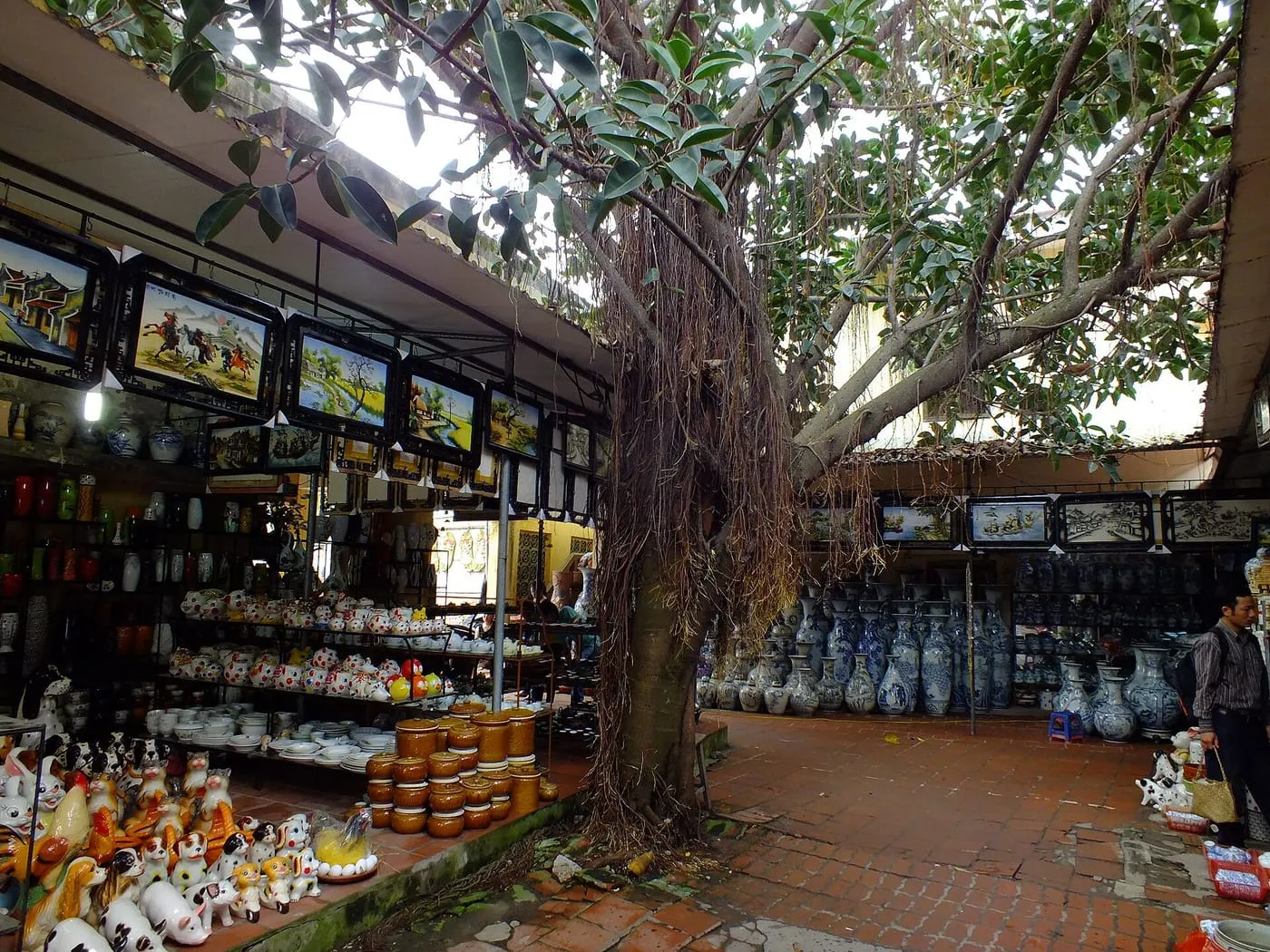
Bat Trang Ceramic Market (Cho Gom Bat Trang)
The covered market complex covers over 6,000 square metres, divided into hundreds of distinct vendor stalls:
- Everyday tableware: Hand-painted ceramic ramen bowls, rice bowls, chopstick rests, and soy dishes (15,000 to 50,000 VND each).
- Tea sets: Elaborate ceramic and stoneware Gongfu tea sets complete with tea pots, fairness pitchers, and six tasting cups (180,000 to 450,000 VND).
- Decorative items: Celadon garden stools, decorative wall tiles, ceramic wind chimes, and glazed animal figurines.
- Bargaining: Prices are generally quoted reasonably, but polite negotiation is customary if purchasing multiple pieces (a 10% to 15% discount for bulk sets is standard).
Glazed ceramics on display in a Bat Trang village workshop. Photo: Steven C. Price, Wikimedia Commons, CC BY-SA 4.0.
Packing and international shipping
Purchasing delicate ceramics requires careful packing for your journey home:
- Standard purchases: Market vendors wrap bowls and tea sets in layers of corrugated cardboard, bubble wrap, and heavy packing tape. This is generally sturdy enough to place inside checked airline luggage surrounded by clothing.
- Large items and bulk orders: If you purchase large garden planters, decorative pedestals, or dinner services for 12, shops can arrange international wooden crating and air or sea freight via DHL or Vietnam Post directly to your home address overseas. Obtain an itemised receipt, packing slip, and shipment tracking number before departing.
Guided craft and workshop tours to Bat Trang
Organised tours provide private transport, an expert local translator, and hands-on guidance from master ceramic artisans:
Hanoi: Bat Trang Pottery Village with Workshop Experience
From VND 1,750,000 · 5.0 stars from 1 review · 6 hours · Hands-on pottery masterclass
Book the Bat Trang Pottery Village Workshop Tourad for an immersive half-day craft experience. Includes round-trip hotel transfers, guided exploration of ancient brick kilns, and a private pottery-making class with an artisan to mould and paint your own ceramic bowl.
Hanoi: Vintage Jeep Tour & Bat Trang Pottery Village
From VND 1,803,000 · 4.6 stars from 3 reviews · 4.5 hours · Open-top military jeep
Book the Vintage Jeep & Bat Trang Tourad to ride through rural Red River guava orchards and ancient village gates aboard an open-air vintage Soviet jeep, pairing pottery exploration with countryside sightseeing.
Hanoi: Bat Trang Pottery Village Mosaic Workshop
From VND 1,400,000 · 4.8 stars from 3 reviews · 4 hours · Creative craft workshop
Book the Bat Trang Mosaic Workshopad to learn traditional ceramic mosaic inlay techniques alongside village craftsmen, creating a personalised ceramic coaster or plaque to bring home.
Half-day itinerary and planning
| Time | Activity | Location |
|---|---|---|
| 08:30–09:15 | Bus 47A from Long Bien or Grab car | Hanoi to Bat Trang |
| 09:15–10:30 | Explore architecture and heritage galleries | Bat Trang Ceramic Museum |
| 10:30–11:45 | Throw and glaze your own pottery piece | Village pottery workshop |
| 11:45–12:30 | Local lunch: pigeon soup (canh mang muc) or bun cha | Village eatery along the main street |
| 12:30–13:30 | Browse and shop for souvenirs | Bat Trang Ceramic Market |
| 13:30–14:15 | Return to Hanoi via Bus 47A or Grab | Return to Old Quarter |
Combine your excursion with an afternoon stroll across the French Quarter or explore the top things to do in Hanoi. For other regional travel options, consult our master day trips from Hanoi guide.
Common questions
How far is Bat Trang from Hanoi and how do you get there?
Bat Trang is located roughly 15 km southeast of Hanoi Old Quarter along the Red River dike in Gia Lam district. The cheapest option is public Bus 47A from Long Bien bus interchange (9,000 VND, 40 minutes). A Grab taxi or car ride takes roughly 30 to 35 minutes and costs 140,000 to 180,000 VND each way.
How much does a pottery-making workshop cost in Bat Trang?
Hands-on pottery throwing on a manual wheel costs between 50,000 and 80,000 VND per person, which includes lump clay, apron, instructor guidance, and painting your creation with liquid glazes. If you want your piece kiln-fired to take home, there is an additional firing fee of 30,000 to 50,000 VND, requiring roughly 60 to 90 minutes of kiln baking.
How much is admission to the Bat Trang Ceramic Museum?
Standard admission to the Bat Trang Ceramic Museum (Trung Tam Tinh Hoa Lang Nghe Viet) is 50,000 VND per adult. Combined tickets including access to upper artistic exhibition galleries, the rooftop cafe, and the basement pottery workshop cost between 70,000 and 90,000 VND.
Can ceramic purchases be shipped internationally from Bat Trang?
Yes. Major shops in the Bat Trang ceramic market and independent artisan ateliers work directly with international freight handlers (such as DHL, FedEx, and Vietnam Post) to crate, insure, and ship large vases, decorative garden urns, and dinnerware sets overseas.
How much time do you need for a visit to Bat Trang?
A standard visit requires roughly 3 to 4 hours, making it an ideal half-day excursion. You can spend 1 hour in the Ceramic Museum, 1 hour at a pottery wheel workshop, and 1 to 2 hours browsing the covered ceramic market and narrow kiln alleys.