In this guide
💡 The Short Version: In San Francisco, the sticker price on a shop shelf, menu or hotel listing is never the final total. Retail shopping and restaurants add 8.625% San Francisco sales tax (per the California Department of Tax and Fee Administration). Many sit-down restaurants also add a 4% to 6% “SF Mandate” or health-care surcharge on top of menu prices, and some include an automatic 18% to 20% service charge; check every receipt before tipping. Hotel rooms add 14% Transient Occupancy Tax (TOT) plus local tourism assessments (roughly 16.31% to 17.50% combined, per the San Francisco Treasurer and Tax Collector), often plus a $25 to $50 nightly urban fee. Cards and contactless wallets work almost everywhere; keep $40 to $60 in small bills for Chinatown bakeries, taquerias and tips.
⚠️ Check every San Francisco restaurant bill for two separate add-ons before tapping a tip button. Look first for an SF Mandate / Healthy SF surcharge (4% to 6%, which is a business cost, not a tip) and second for any automatic 18% to 20% service charge or gratuity. If 20% service is already included, leave the extra tip line at $0.
Sales tax and hotel taxes explained
In the United States, sales and lodging taxes are excluded from display prices and added when you pay. In San Francisco, two separate tax agencies set the rates:
| Category | Official rate | Authority | How it hits your bill |
|---|---|---|---|
| Retail goods, souvenirs & prepared food | 8.625% (7.25% California state + 1.375% SF district taxes) | California Department of Tax and Fee Administration (cdtfa.ca.gov) | Added at the till to clothes, souvenirs, restaurant meals and bar drinks; cold groceries from supermarkets are generally exempt |
| Hotel rooms (stays under 30 days) | 14% TOT + TID / MED assessments (typically 16.31% to 17.50% total, plus ~0.195% CA Tourism Assessment) | San Francisco Office of the Treasurer & Tax Collector (sftreasurer.org) | Applied to the base room rate and typically to mandatory urban/destination fees too |
A hotel room advertised at $240 per night with a $35 urban fee and ~16.5% combined lodging taxes and assessments works out to roughly $320 per night before any valet parking. For properties that skip mandatory nightly fees altogether, read hotels without resort fees in San Francisco and where to stay in San Francisco.
The SF Mandate surcharge on restaurant bills
Visitors from outside California are routinely surprised by an extra line printed above the tax on San Francisco restaurant receipts, labelled “SF Mandate”, “Healthy SF”, “SF Employer Mandate” or “Employee Health & Wellness”, usually between 4% and 6% of the food and drink total.
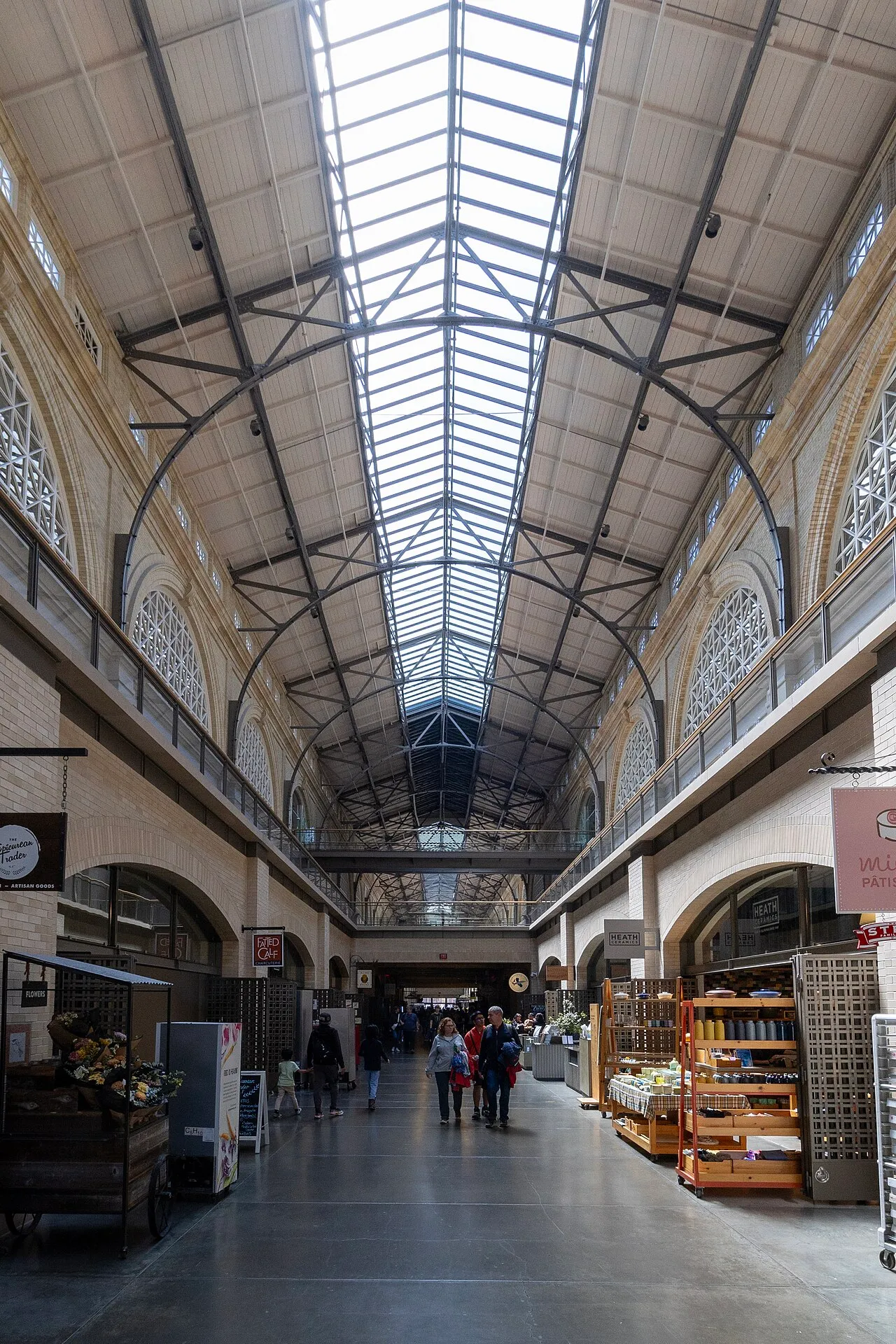 San Francisco Ferry Building Marketplace along the Embarcadero. Photo: The wub, Wikimedia Commons, CC BY-SA 4.0.
Here is what you need to know at the table:
- What it is: San Francisco’s Health Care Security Ordinance requires employers with 20 or more workers to spend a set hourly amount on employee healthcare. Rather than raising menu prices by 5%, many restaurants itemise the cost as a percentage surcharge on the receipt (California law requires restaurants to disclose mandatory surcharges clearly on the menu).
- It is not a tip: The SF Mandate surcharge goes to the restaurant to cover statutory employer obligations, not into your server’s tip pool.
- Check for automatic service charges too: Separately from the 4% to 6% SF Mandate, a growing number of San Francisco fine-dining rooms and cocktail bars add an automatic 18% to 20% service charge (sometimes labelled “Hospitality Fee” or “Service Included”) to every table regardless of size. Read the itemised receipt carefully:
- If you see 4% to 6% SF Mandate only, standard tipping (18% to 20% on the pre-tax subtotal) still applies.
- If you see 18% to 20% Service Charge / Auto-Gratuity, service is already covered and you do not need to add another 20%.
Notice how fast dining add-ons stack on a $100 dinner subtotal without an automatic gratuity: $100 food + $5 SF Mandate (5%) + $9.06 sales tax (8.625% on food and surcharge) + $18 to $20 tip = $132 to $134 total.
Standard tipping guide in San Francisco
Where no automatic service charge is printed on the bill, standard US dollar tipping across San Francisco runs as follows:
| Situation | Typical tip (USD) | Practical note |
|---|---|---|
| Sit-down restaurant (no auto-service) | 18% to 20% of pre-tax food & drink | Calculate on subtotal before the 8.625% sales tax |
| Bar drinks | $1 to $2 per beer/wine; 18% to 20% on cocktail tabs | Check rooftop and hotel bars for automatic 18% to 20% service charges |
| Counter-service cafes & bakeries | $0 to $1 or 10% | Handheld tablets often prompt 15%, 20% or 25% for handing over a pastry; tapping “No Tip” or $1 is normal |
| Taxis, Uber & Lyft | 15% to 20% | Added in-app for rideshares, or on the meter card screen in taxis |
| Hotel bell staff | $2 to $5 per bag | Small cash bills are easiest |
| Hotel housekeeping | $3 to $5 per night | Leave daily in cash, as housekeepers rotate shifts |
| Valet parking | $3 to $5 on vehicle return | Tip when the car is brought back to you |
| Guided tours & walking guides | $5 to $10 (half-day); $10 to $20 (full-day) per person | Cash or digital tip where accepted |
Cards, contactless wallets and avoiding exchange markups
San Francisco is one of the most card-centric cities in the United States. Visa, Mastercard and American Express are accepted at hotels, restaurants, museums, supermarkets, rideshares and directly at BART, Muni and Golden Gate Ferry contactless readers (public transport in San Francisco). Many newer cafes, bakeries and all three major sports venues (Oracle Park, Chase Center and Levi’s Stadium) are 100% cashless.
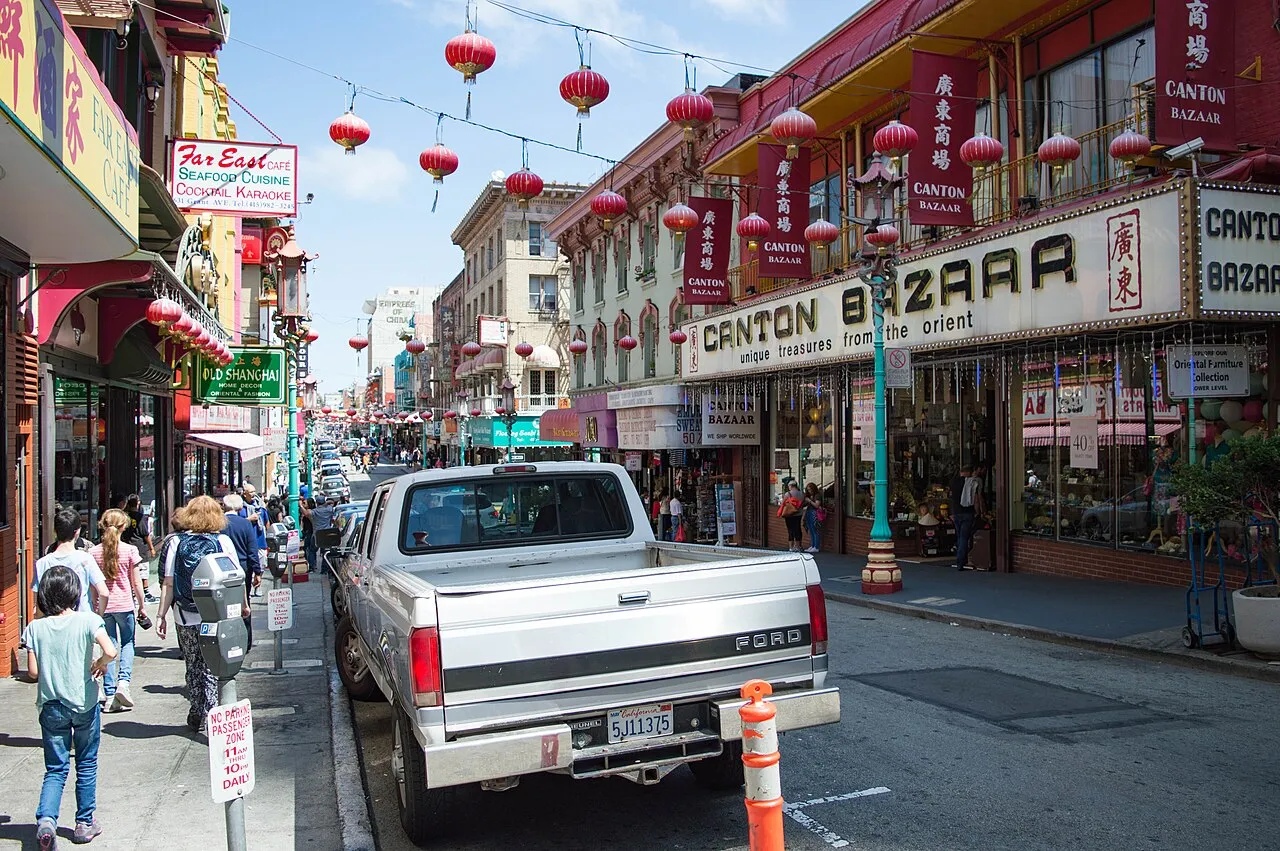 Grant Avenue in Chinatown, where several traditional bakeries and dim sum counters still prefer cash. Photo: Supercarwaar, Wikimedia Commons, CC BY-SA 4.0.
Three rules protect your budget when paying by card from abroad:
- Always pay in US dollars (USD): If a card machine or ATM offers to convert the charge into your home currency (dynamic currency conversion), press Decline / Pay in USD. Terminal conversion rates commonly add a 4% to 10% hidden markup over your own bank’s rate.
- Use a zero-foreign-transaction-fee card: Standard home-country bank cards frequently charge 2.5% to 3% on every USD purchase. Bringing a travel debit or credit card with zero foreign transaction fees saves $60 to $90 on a $3,000 trip.
- Carry a credit card for hotel holds: Downtown and Fisherman’s Wharf hotels routinely place a $100 to $250 per night pre-authorisation hold on your card at check-in for incidentals. Putting that hold on a credit card keeps your current-account cash free until the hold drops off three to seven business days after checkout.
Cash, ATMs and where notes still matter
You do not need large amounts of cash in San Francisco. Carrying $40 to $60 in small bills ($1, $5 and $10 notes) handles the few places where cash is faster or required:
- Chinatown bakeries and dim sum counters: Several long-running bakeries and takeaway dim sum windows along Stockton Street and Grant Avenue are cash-only or enforce a $10 card minimum (see cheap eats in San Francisco).
- Mission District taquerias and street vendors: Some classic burrito counters prefer cash or charge a small card fee.
- Tips for hotel housekeeping, bell staff and valets.
Avoiding high ATM fees
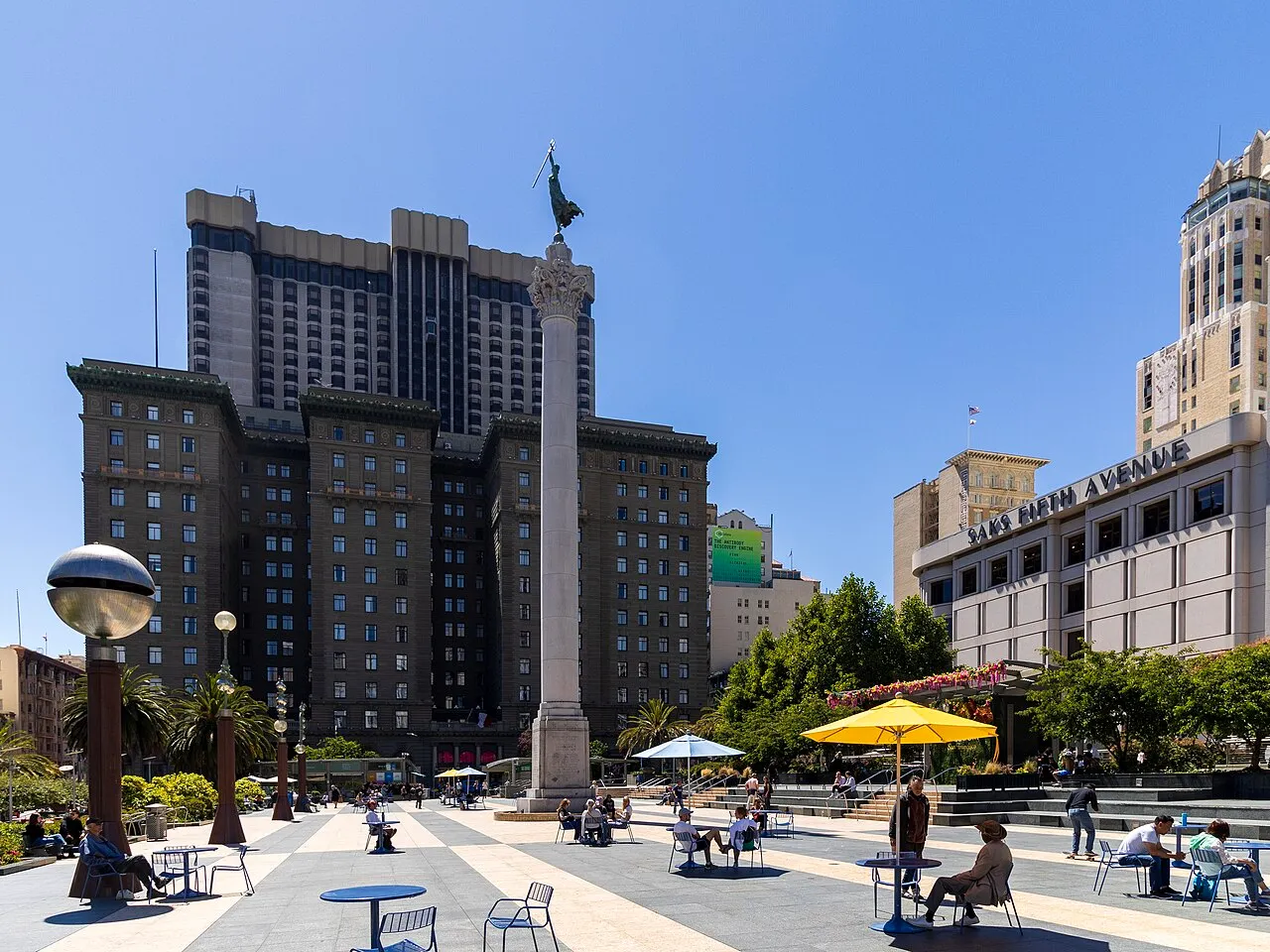
Skip standalone white-label ATMs inside corner shops, bars and Fisherman’s Wharf souvenir stores, which routinely charge $4 to $7 per withdrawal on top of your home bank’s fee. Withdraw once from a major bank-branch ATM (Chase, Bank of America, Wells Fargo or Citibank), densely clustered around Union Square, Market Street and the Financial District.
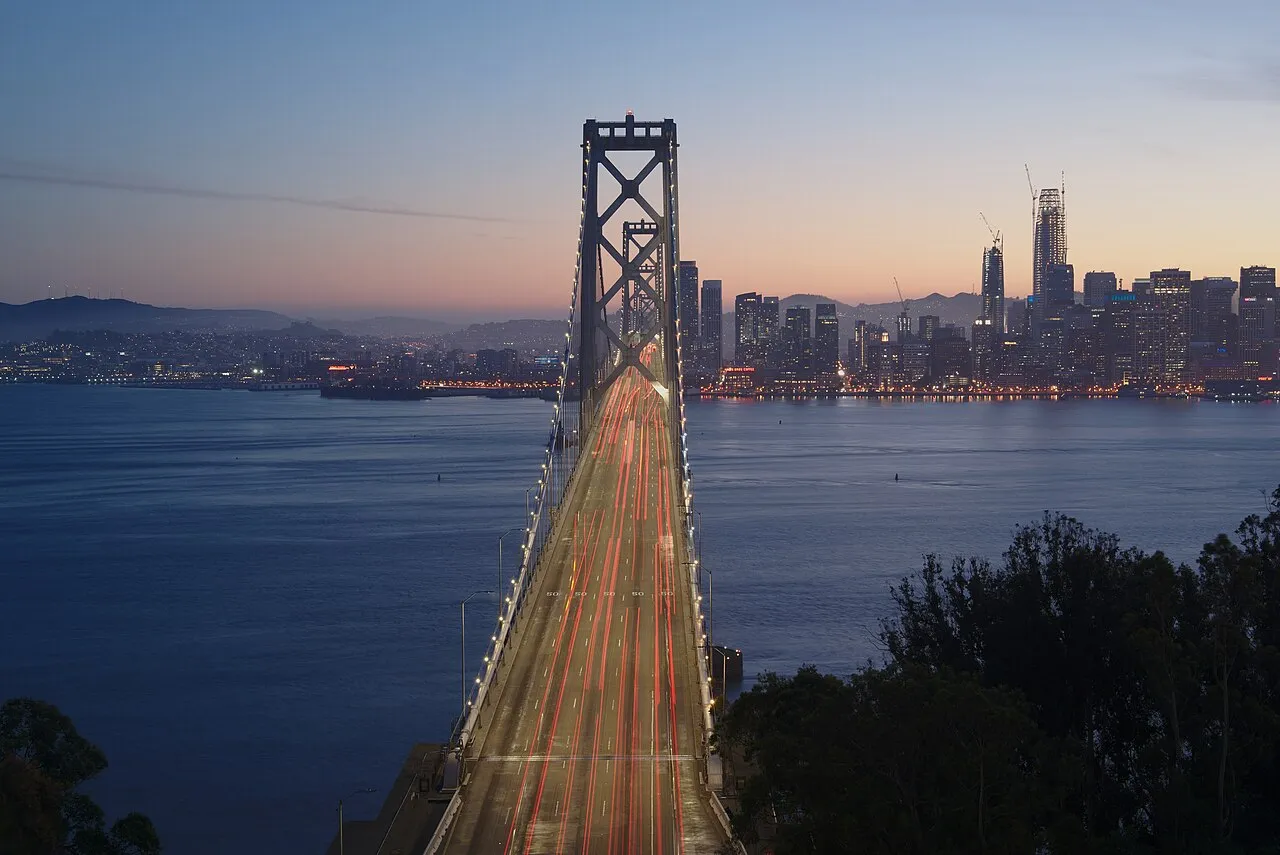
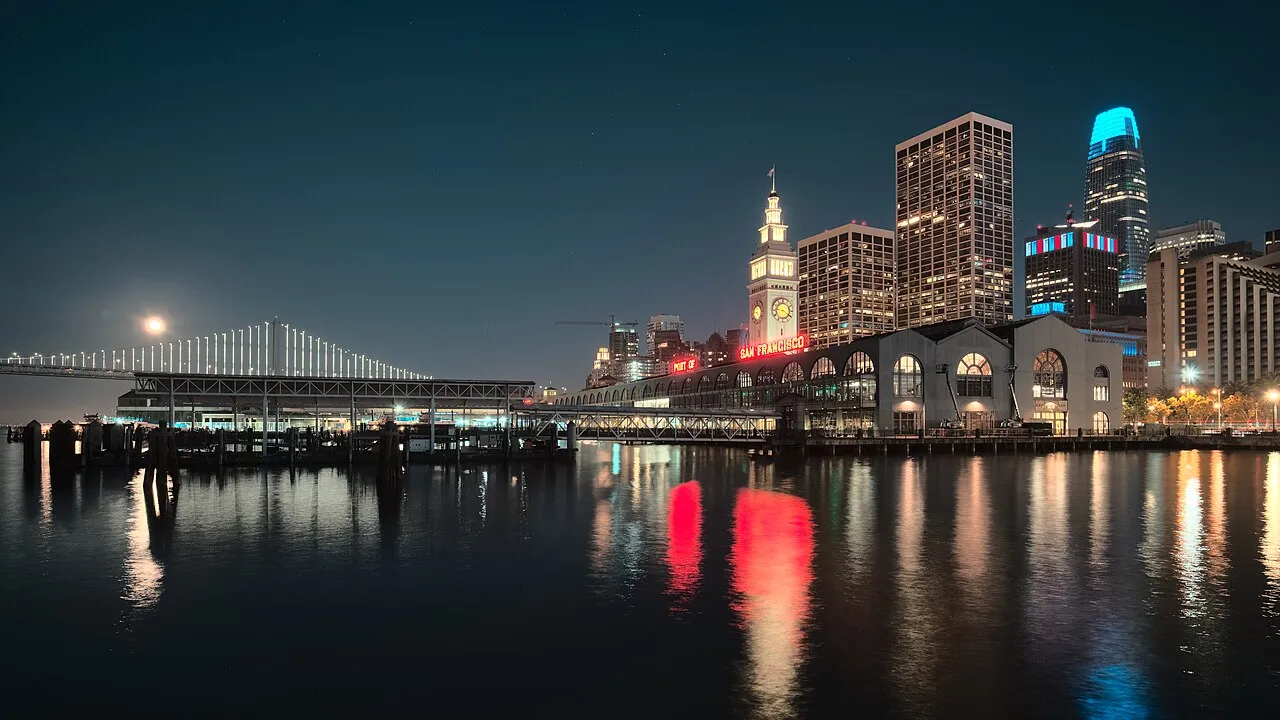 The Ferry Building and Financial District skyline along the Embarcadero. Photo: Dllu, Wikimedia Commons, CC BY-SA 4.0.
Realistic daily budget ranges in San Francisco
San Francisco is an expensive city for hotels and sit-down dining, though many top sights (Golden Gate Bridge, Golden Gate Park, Chinatown, Alamo Square and waterfront walks) are completely free (see free things to do in San Francisco). Excluding flights and accommodation, realistic per-person daily spending in USD looks like this:
- Budget ($65 to $110 per day): Chinatown bakery breakfast ($6 to $10), Mission burrito or dim sum lunch ($12 to $16), $5.70 Muni-Only Day Pass or walking, free sights, and a casual North Beach slice or noodle dinner ($25 to $38 after tax and tip).
- Mid-range ($140 to $230 per day): Cafe breakfast ($18 to $25), one major paid ticket such as Alcatraz, SFMOMA or the Exploratorium ($30 to $50), $15.00 1-Day Muni Visitor Passport (including cable cars) plus one rideshare ($20), one cocktail ($18 to $22 after tax and tip), and a neighbourhood sit-down dinner ($55 to $85).
- Splurge ($300+ per day): Michelin-starred or Chronicle Top 100 dinner from where to eat in San Francisco ($150+ with wine), rooftop cocktails, Napa Valley winery tastings and private rideshares.
To keep accommodation totals predictable, compare cheap hotels in San Francisco and hotels without resort fees, and check best time to visit San Francisco for convention-driven price spikes.
Common questions
What is the sales tax in San Francisco?
Per the California Department of Tax and Fee Administration (CDTFA), San Francisco's combined sales and use tax rate is 8.625% (7.25% California state base plus 1.375% local district taxes). It is added at checkout to retail goods, souvenirs and restaurant bills.
What is the SF Mandate or health-care surcharge on San Francisco restaurant bills?
Under San Francisco's Health Care Security Ordinance, employers with 20 or more staff must fund employee healthcare. Many San Francisco restaurants recover this cost by adding a separate 4% to 6% surcharge (labelled SF Mandate, Healthy SF or Employee Benefits) on top of menu prices. It is not a tip for your server.
How much tax is added to San Francisco hotel rooms?
The San Francisco Treasurer & Tax Collector levies a 14% Transient Occupancy Tax (TOT) on stays under 30 days, plus Tourism Improvement District (TID) and Moscone Expansion District (MED) assessments that bring total lodging taxes and assessments to roughly 16.31% to 17.50% before any nightly urban or destination fee.
How much should I tip in San Francisco restaurants?
Standard tipping for sit-down table service is 18% to 20% of the pre-tax food and drink subtotal. Always check the bottom of the receipt first: some San Francisco restaurants already include an 18% to 20% automatic service charge, in which case you do not need to tip a second time.
Do I need cash in San Francisco?
Cards and Apple Pay or Google Pay work almost everywhere, including BART, Muni, cable cars and rideshares. Carrying $40 to $60 in small bills ($1, $5 and $10 notes) is useful for older Chinatown bakeries and dim sum counters, Mission taquerias, hotel bell staff and housekeeping tips.