In this guide
💡 The Short Version: San Francisco is a safe city for visitors who take two specific precautions: leave zero belongings in a parked car, and know the exact blocks of the Tenderloin and 6th Street corridor before walking at night. Official San Francisco Police Department (SFPD) data shows citywide larceny-theft dropped 21.8% in 2025 (to 16,492 incidents) with auto burglaries reaching a 22-year low, yet rental cars with luggage inside remain prime targets at scenic stops. Violent crime against tourists is rare. Outside the streets, respect San Francisco’s coastal hazards: summer fog drops temperatures rapidly and Ocean Beach and Baker Beach have dangerous rip currents year round.
Official crime data in plain terms
Headlines about San Francisco often lump two very different realities together: violent crime (which is low for a major US city and rarely affects visitors) and property crime (specifically car break-ins, locally called “bipping”).
According to annual San Francisco Police Department figures published via sanfranciscopolice.org and the city’s open data portal (sf.gov), property crime fell sharply across 2024 and 2025 following targeted auto-burglary operations, bait cars and automated licence-plate readers:
- Larceny-theft (including thefts from vehicles): Down 21.8% in 2025 to 16,492 reported incidents citywide.
- Auto burglaries (car break-ins): Fell to a 22-year low compared with the 2017 to 2022 peaks.
- Motor vehicle theft: Down roughly 24% in 2025 to 3,011 incidents.
That downward trend makes a noticeable difference on the street, but it does not mean you can treat a parked hire car like a luggage locker. One broken rear quarter-glass window takes thieves under ten seconds and ruins a holiday afternoon.
Car break-ins: the one rule that prevents 90% of visitor trouble
If you hire a car only when leaving San Francisco for Napa Valley, Yosemite or Monterey, you avoid parking risks entirely during your city stay (see public transport in San Francisco). If you do drive inside the city, follow these rules without exception:
- Leave nothing inside the vehicle: Not in the footwell, not on the back seat, not under a jacket and not in the boot (trunk). Thieves watch viewpoints for visitors opening boots to stow suitcases and break the small rear triangle window to pull down the rear seatback.
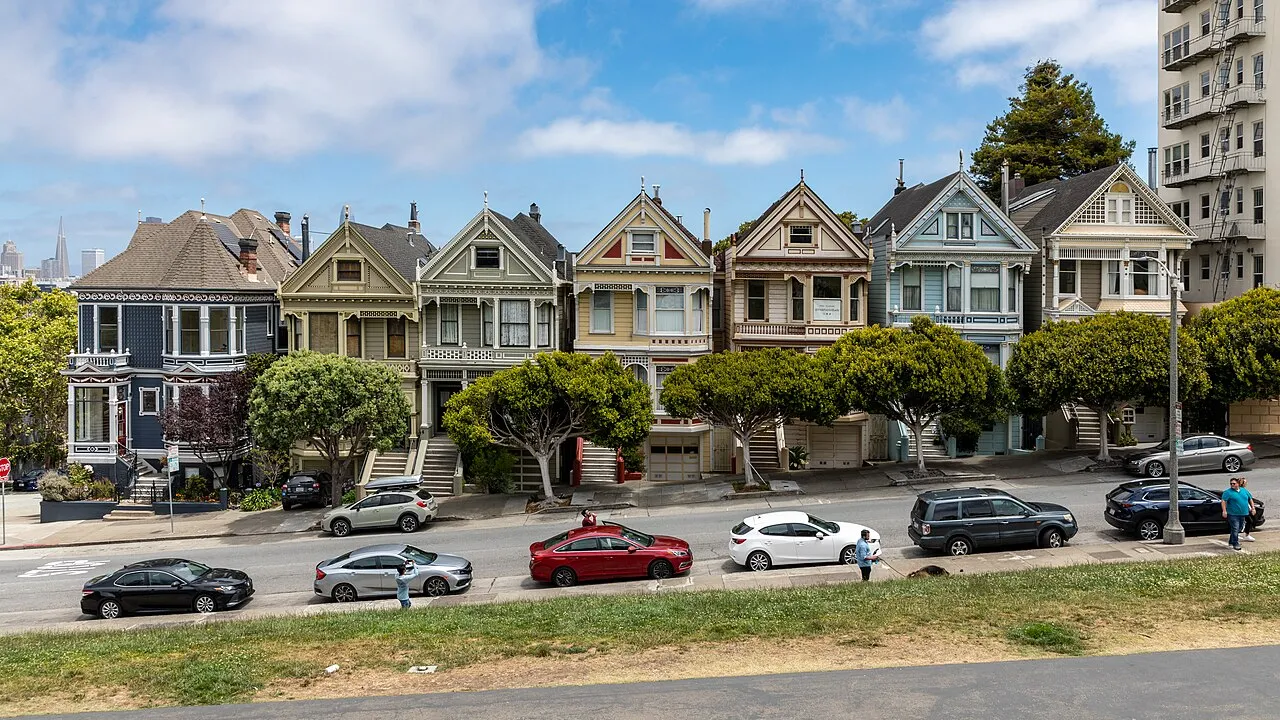
- High-risk parking zones: Viewpoints where tourists stop for 15 minutes with airport luggage on board, specifically Alamo Square (Painted Ladies), Twin Peaks, Palace of Fine Arts, Fisherman’s Wharf street meters, Lombard Street and Golden Gate Bridge vista lots.
- Never stop at a sight on the way to or from SFO with luggage in the car: Check bags at your hotel desk or use a staffed left-luggage service before sightseeing.
- Skip visible electronics: Unplug phone mounts, charging cables and GPS cradles before locking up.
Neighbourhood-by-neighbourhood street realities
San Francisco is a city of sharp block-by-block contrasts. Two streets apart can feel like entirely different cities, so knowing the street boundaries saves you from wandering into uncomfortable blocks by accident.
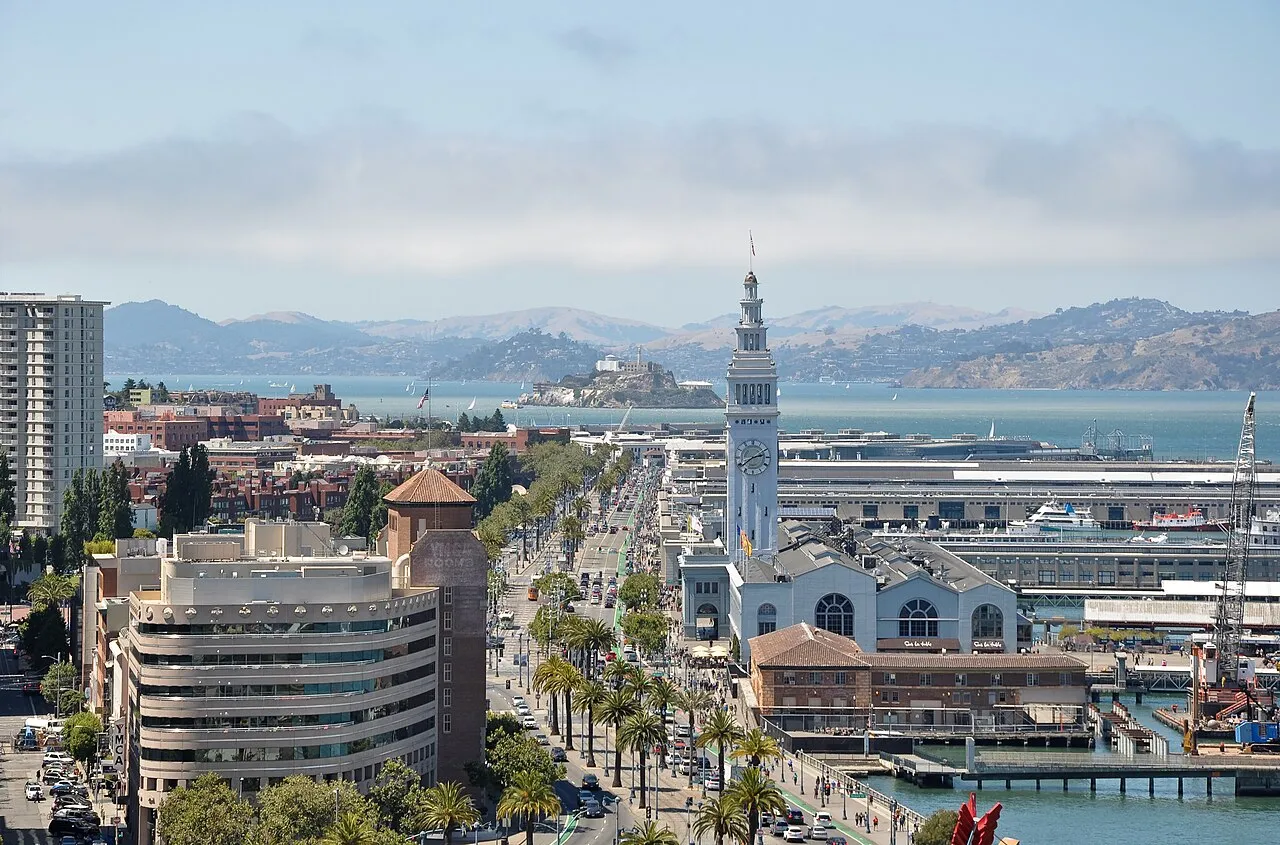 The Embarcadero waterfront and Ferry Building, busy with walkers, commuters and streetcars throughout the day. Photo: Bob Collowan, Wikimedia Commons, CC BY-SA 4.0.
| Area | Street reality for visitors | Practical advice |
|---|---|---|
| Fisherman’s Wharf, Embarcadero, North Beach, Marina, Pacific Heights, Nob Hill | Busy, well-lit visitor and residential corridors | Normal city awareness; watch belongings on crowded cable cars and Pier 39 walkways |
| Union Square & Financial District | Major hotel, transit and shopping core; busy by day, quieter in office blocks after 20:00 | Stay on or east of Mason Street and north of O’Farrell Street when walking at night (see where to stay in Union Square) |
| The Tenderloin | Bounded roughly by O’Farrell St (north), Mason St (east), Market St (south) and Larkin St (west) | Concentrated street homelessness, open substance use and sidewalk encampments; bypass by walking along Post, Sutter or Geary Streets instead |
| Mid-Market & 6th Street (SoMa) | Stretches of Market Street between 6th and 8th Streets and 6th Street south to Howard Street | Quiet storefronts and visible street distress; if visiting Civic Center or Asian Art Museum, exit BART at Civic Center on the plaza side or take a rideshare at night |
| Mission District (Valencia St & 24th St) | Lively restaurant, bar and mural corridors packed on evenings and weekends | Valencia Street and 24th Street are busy and social; the immediate plazas outside 16th St Mission and 24th St Mission BART stations are rougher, so walk straight through onto Valencia |
A plain note on street homelessness
You will encounter visible poverty and unhoused people in parts of downtown San Francisco, Civic Center and SoMa. The vast majority of people on the street are not looking to interact with passers-by. Walk purposefully, give people space, avoid photographing anyone on the street and step around crowded doorways without stopping.
Transit, night-time walking and personal belongings
- Muni and BART: Daytime rides on BART, Muni Metro, historic F-line streetcars and buses are routine and safe. At night, ride in the front carriage of BART or Muni Metro (closest to the operator) and avoid holding an unlocked phone right beside opening train doors, where grab-and-run thefts occasionally happen.
- Rideshares and Waymo: Uber, Lyft, licensed taxis and Waymo autonomous vehicles operate across the city 24 hours a day. If a late-night walk crosses unfamiliar blocks between the Mission, SoMa and Union Square, a $12 to $18 rideshare removes any doubt.
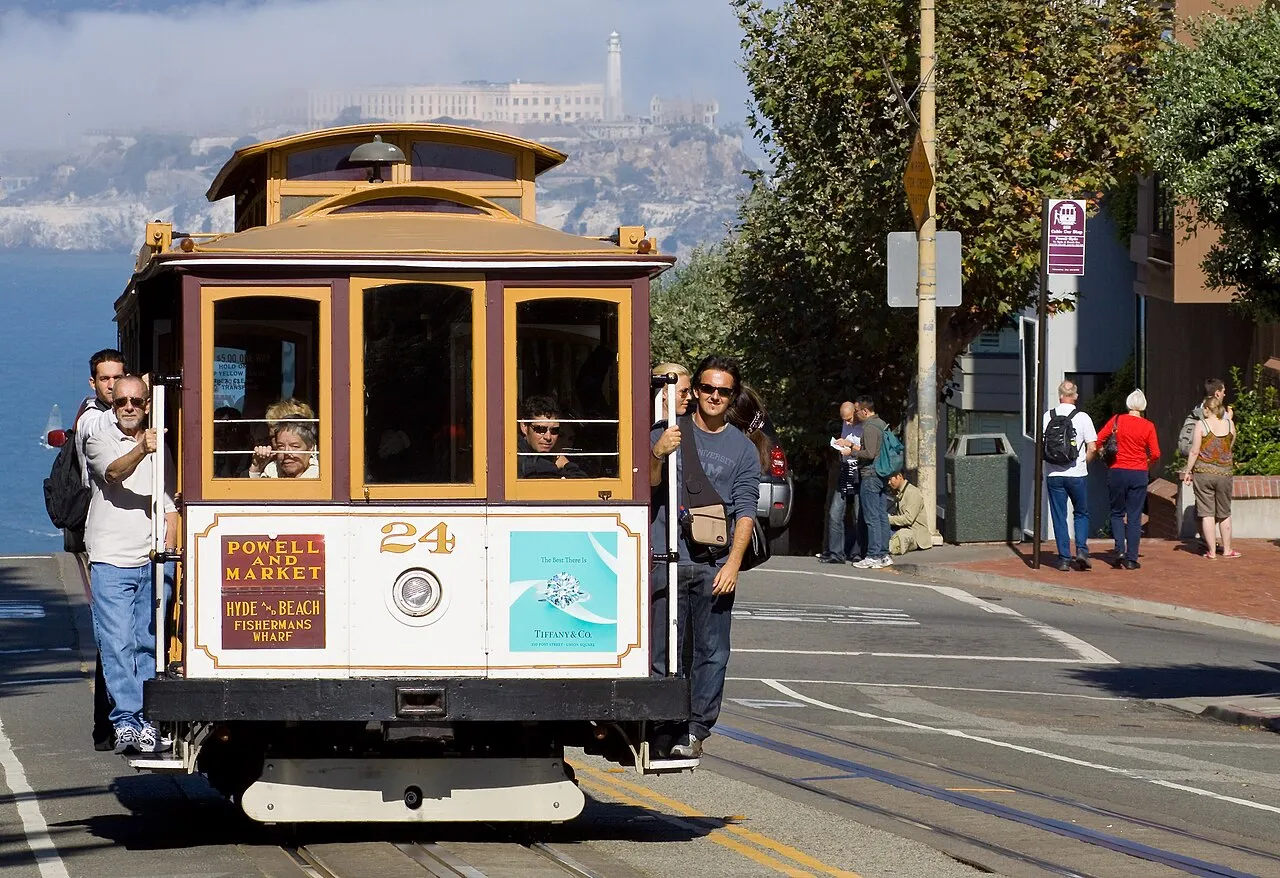
- Pickpocketing: Less prevalent than in major European capitals, though crowded Powell-Hyde cable cars, Chinatown pavements and Pier 39 still reward zipped front pockets and crossbody bags worn in front.
Coastal, weather and earthquake hazards
Physical environment risks catch out more San Francisco visitors than street crime.
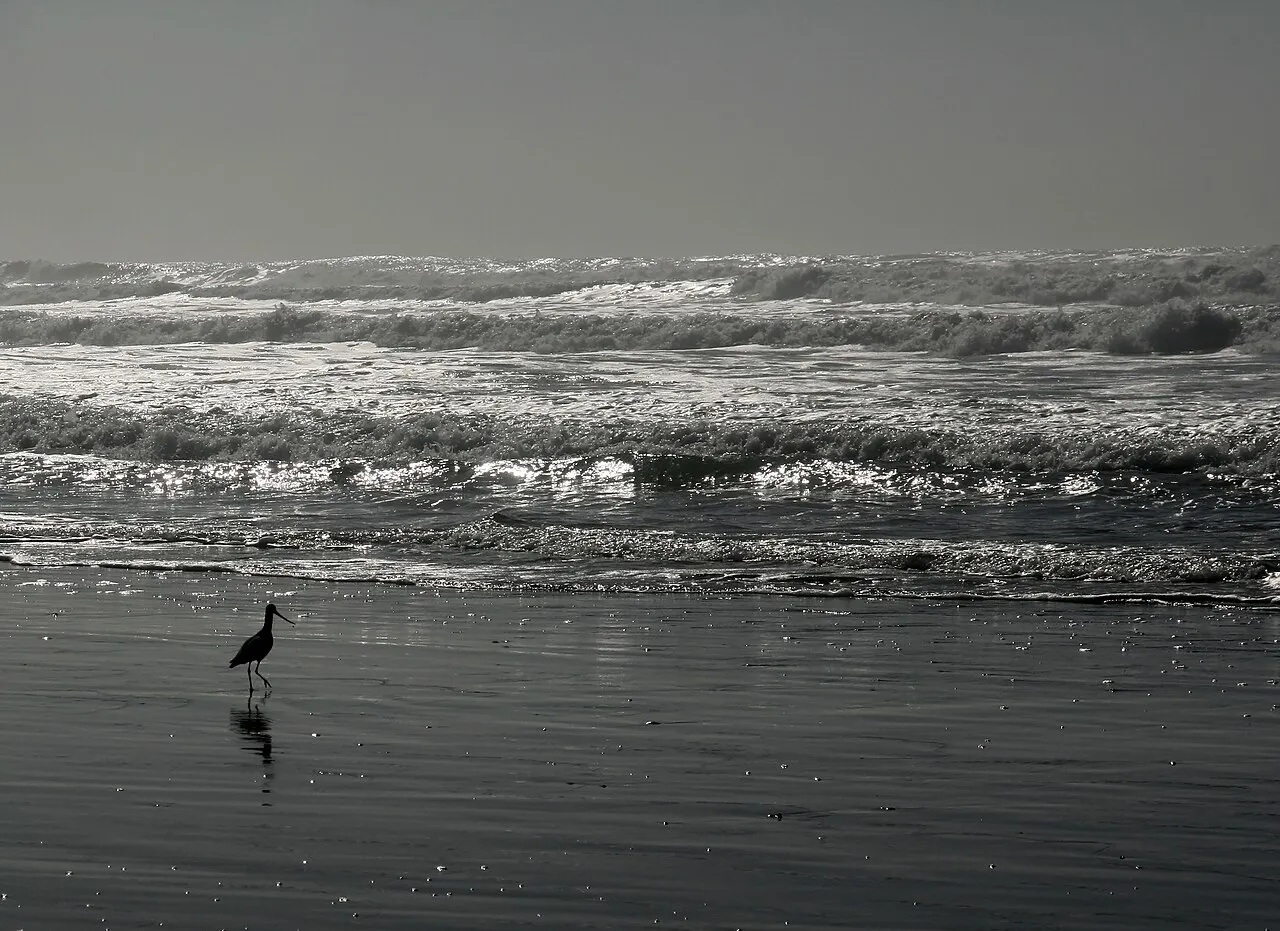 Ocean Beach on the Pacific edge of Golden Gate Park, where cold water and rip currents make swimming dangerous. Photo: Brocken Inaglory, Wikimedia Commons, CC BY-SA 3.0.
Pacific Ocean surf and rip currents
Ocean Beach (west edge of Golden Gate Park) and Baker Beach (in the Presidio) look wide and inviting on sunny afternoons, yet the National Park Service (nps.gov/goga) warns that neither beach is safe for swimming. Water temperatures hover around 11 to 14 degrees Celsius (52 to 57 degrees Fahrenheit) year round, underwater sandbars shift constantly, rip currents pull swimmers seaward within seconds, and sudden “sneaker waves” surge far up the dry sand. Walk the shoreline, stay well back from the surf line and never turn your back on the Pacific.
Summer fog and rapid temperature drops
San Francisco sits at the mouth of the Golden Gate strait, where cold Pacific air pours inland every summer afternoon. A sunny 22 degrees Celsius morning in the Mission can drop to 13 degrees Celsius with 35 km/h wind on the Golden Gate Bridge or an open-deck Alcatraz ferry in under an hour. Carry a windproof jacket and a mid-layer even in July and August (see best time to visit San Francisco).
Earthquakes
San Francisco sits near the San Andreas and Hayward faults. Serious earthquakes are rare during a short trip, but knowing the standard US Geological Survey response takes ten seconds: Drop, Cover and Hold On under a sturdy table away from windows and exterior brick facades until shaking stops. Do not run outside into falling glass.
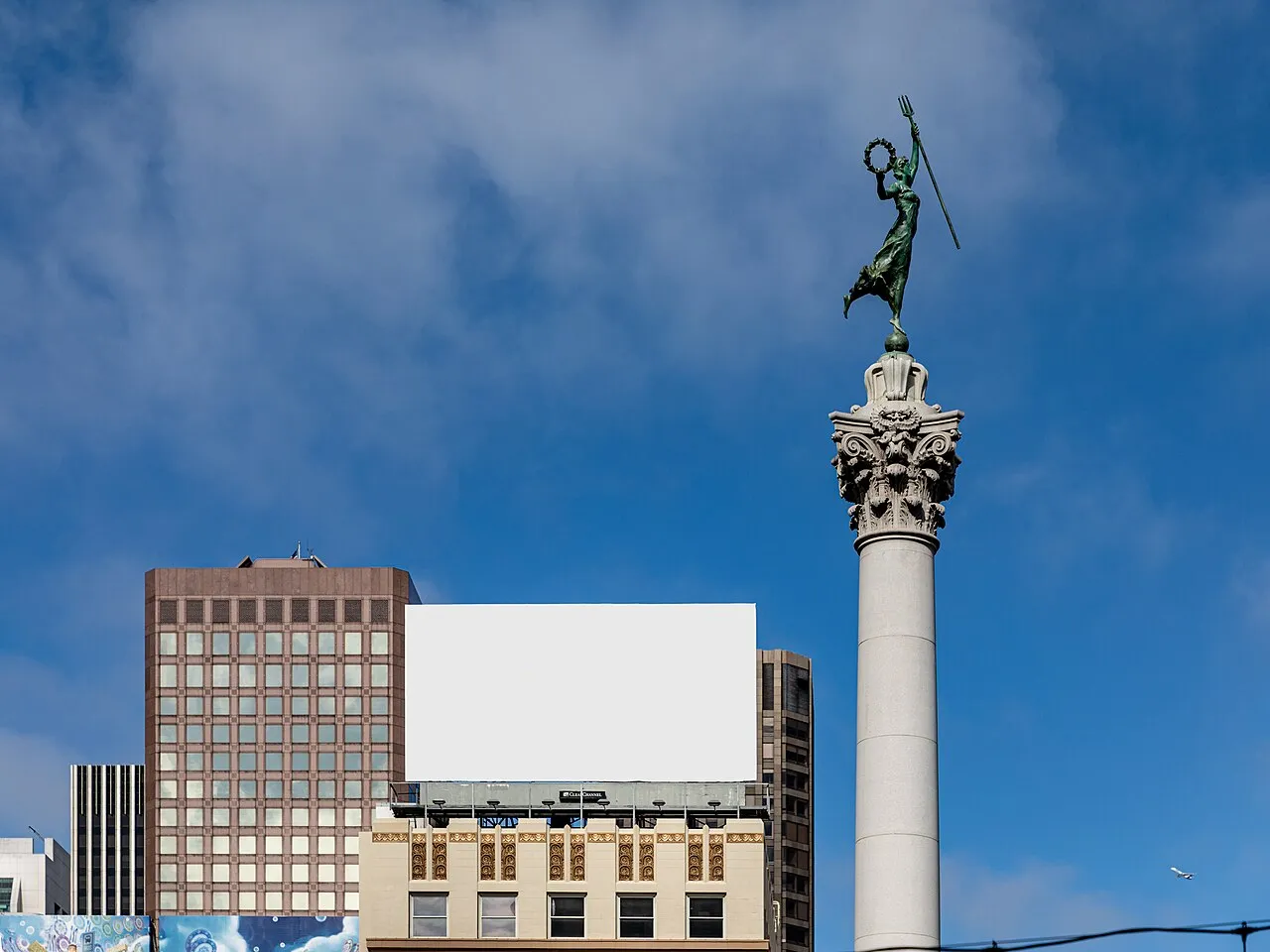 Union Square’s Dewey Monument in central San Francisco. Photo: Dietmar Rabich, Wikimedia Commons, CC BY-SA 4.0.
Official travel advice and emergency numbers
Before travelling to the United States, review current government travel advisories alongside your own country’s guidance:
- UK Foreign, Commonwealth & Development Office (FCDO): gov.uk/foreign-travel-advice/usa
- US Department of State & local emergency info: travel.state.gov and sf.gov
- Emergency (Police, Fire, Ambulance): Dial 911 (free from any phone, including mobile phones without a US voice plan).
- San Francisco Police non-emergency: +1 415-553-0123 (for reporting a theft or car break-in after the fact).
- San Francisco 311: Dial 311 (or +1 415-701-2311 from outside the city) for non-emergency city services and street issues.
Make sure you have live mobile data for maps and rideshares from the moment you land with our eSIM for the USA guide, and choose a well-located hotel base with where to stay in San Francisco.
Common questions
What is the biggest safety risk for visitors in San Francisco?
Smash-and-grab thefts from parked cars remain the main crime affecting tourists, especially rental cars parked near viewpoints such as Alamo Square, Twin Peaks, Fisherman's Wharf and Palace of Fine Arts. Never leave bags, luggage, coats or charging cables anywhere inside a parked vehicle, including the boot.
Are San Francisco car break-ins increasing or decreasing?
According to San Francisco Police Department (SFPD) annual data for 2025, citywide larceny-theft (which includes thefts from vehicles) fell 21.8% to 16,492 incidents, and auto burglaries dropped to a 22-year low. Even with the sharp decline, leaving anything visible in a rental car still invites a broken window.
Which neighbourhoods should visitors be aware of after dark?
The Tenderloin (roughly between O'Farrell Street, Market Street, Mason Street and Larkin Street), the 6th Street corridor in SoMa and stretches of Mid-Market around Civic Center have visible street homelessness, open drug use and fewer late-night pedestrians. Walking a few blocks north onto Geary or Post Street toward Union Square or Nob Hill changes the street environment completely.
Can I swim at Ocean Beach or Baker Beach in San Francisco?
The National Park Service warns strongly against swimming at Ocean Beach and Baker Beach. Cold North Pacific water (around 11 to 14 degrees Celsius year round), steep beach drop-offs, powerful rip currents and sudden sneaker waves make the surf hazardous even on calm sunny days.
Is San Francisco public transport safe to use?
BART, Muni buses, Muni Metro, historic F-line streetcars and cable cars carry hundreds of thousands of riders daily and are safe to use with normal urban awareness. Keep your phone held firmly near doors, sit near the driver on late-night buses and use Uber, Lyft or a taxi after midnight if you prefer door-to-door travel.