In this guide
💡 The Short Version: For a first meal in central Seoul, queue at Myeongdong Kyoja for knife-cut noodles in rich chicken broth (kalguksu ₩11,000, open daily, Michelin Bib Gourmand) or visit Tosokchon Samgyetang near Gyeongbokgung for whole ginseng chicken soup (₩20,000). Historic soup houses require no booking: Imun Seolnongtang (Korea’s oldest registered restaurant, est. 1904) serves milky ox-bone soup for ₩14,000, and Hadongkwan serves clear beef gomtang for ₩16,000 from 07:00 until sold out. For Korean BBQ, reserve through waiting tablets at Geumdwaeji Sikdang or Mongtan (see best Korean BBQ in Seoul). Or book a guided food tour: the Seoul: Gwangjang Market Food Tour (2 Hours) with Insiderad is a two-hour tasting walk through the market with a local guide (see Seoul food tours compared).
📊 The evidence behind this guide. Venues in this guide are independently confirmed and cross-referenced against the Michelin Guide Seoul 2026, Blue Ribbon Survey (South Korea’s leading restaurant guide), City of Seoul municipal heritage listings (Seoul Future Heritage), Korean food media (tvN Wednesday Food Talk), and international food publications. Each listing specifies exact dishes, current prices in won, operating hours, subway station exits, and payment methods.
How to eat in Seoul without losing a meal
- Table call buttons. Most casual restaurants do not hover around tables. Look for an electric call button mounted on the corner of the wooden tabletop or on the napkin dispenser. Press it once to summon waitstaff. If there is no button, call out politely: “Jeogiyo!” (‘Excuse me!’).
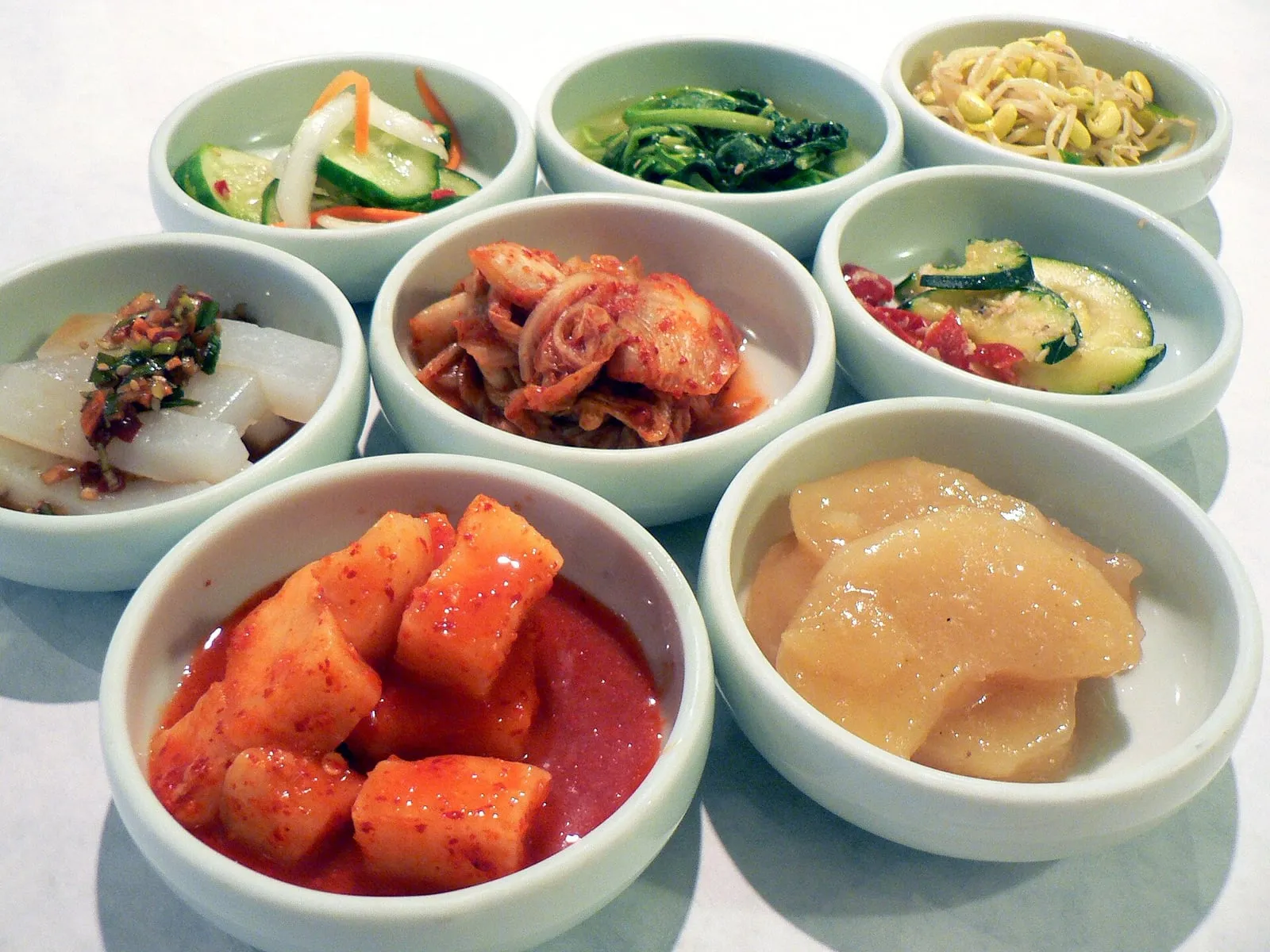
- Free and unlimited banchan. Every sit-down Korean meal arrives with complimentary side dishes (banchan), including fermented cabbage kimchi, pickled radish, seasoned bean sprouts, and fish cakes. Refills are free. In casual restaurants, take your empty dish to the self-service refill bar (self-ba).
- Water is self-service (Mul-eun self). If a sign reads 물은 셀프, walk to the stainless-steel steriliser cabinet, pull down a metal cup, and press the water dispenser paddle. In barbecue and soup houses, staff bring a chilled stainless-steel carafe to the table.
- Table cutlery drawers. Spoons and flat metal chopsticks (sujeo) are stored in a pull-out slide drawer built into the side of the table beneath your seat, alongside napkins and bottle openers.
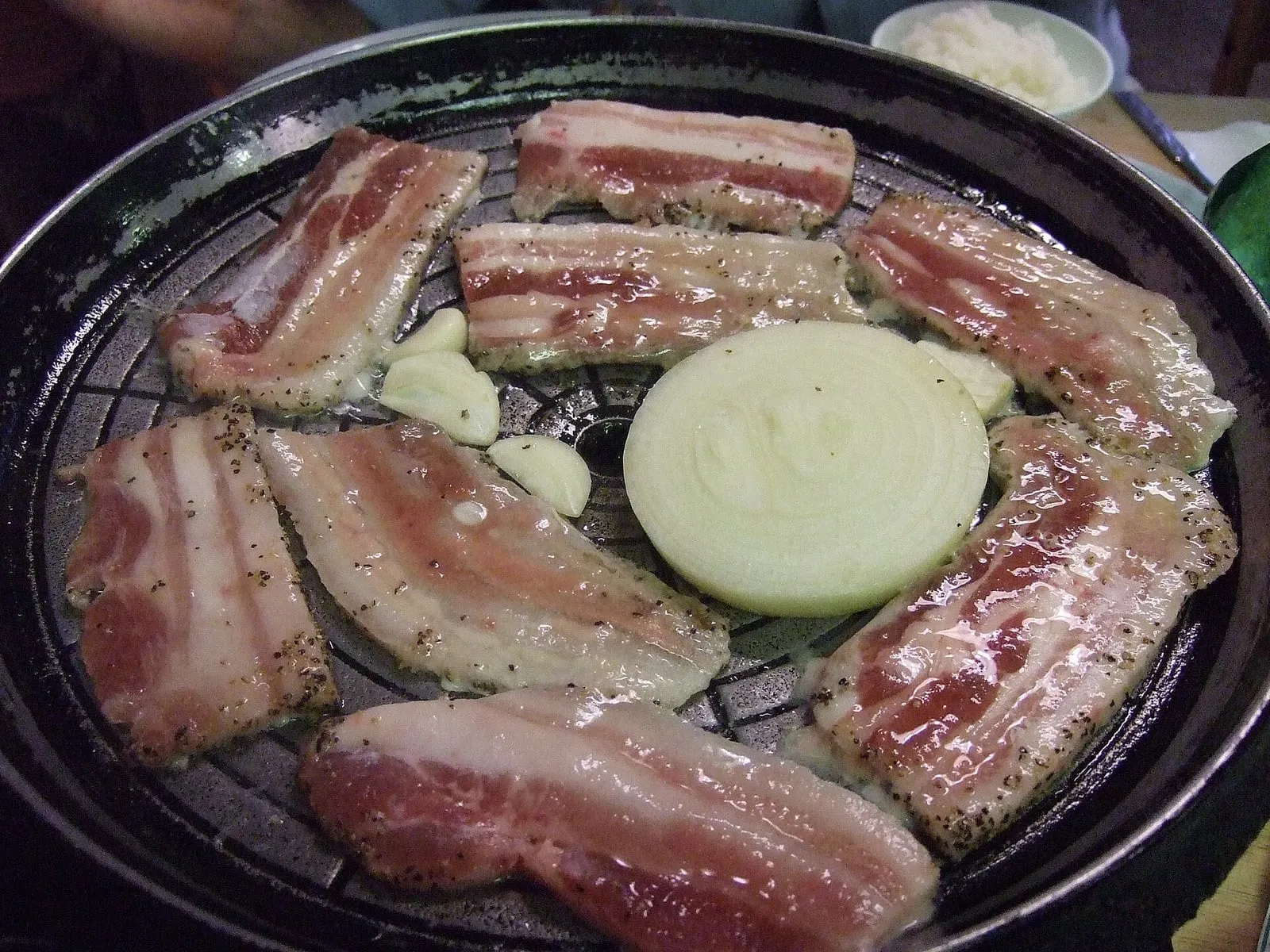
- Kitchen scissors on the table. Waitstaff provide kitchen scissors (gawi) and tongs (jipge) to snip long noodles, whole chicken, cabbage kimchi, and barbecue cuts into bite-sized pieces.
- No tipping. Tipping is not practised anywhere in South Korea. Bills are paid at the cashier counter by the front entrance on your way out, not at the table.
- Cash. Almost all restaurants take foreign Visa and Mastercard. Carry cash in won banknotes for street carts (pojangmacha) and market stalls in Gwangjang Market.
How to book, in one minute
- Advance online booking or telephone: High-end temple cuisine at Balwoo Gongyang requires booking days to weeks ahead via CatchTable or telephone.
- Digital tablet waitlist on arrival: Popular hotspots like Wooraeok and Jin Ok-hwa Original Chicken use touchscreen tablets (CatchTable or Kakao) at the entrance. Enter an international mobile number to receive text updates while waiting nearby.
- Walk in and queue: Casual noodle shops, market stalls, and soup joints—including Myeongdong Kyoja, Tosokchon, Hadongkwan, and Imun Seolnongtang—seat guests by queue on arrival. Queues move quickly because turnover is rapid.
⚠️ Check the closed day before you go. Hadongkwan, Pildong Myeonok, Bongsan Ok, and Balwoo Gongyang close on Sundays. Wooraeok and Gaeseong Mandu Koong close on Mondays. Mabongnim Halmeoni Tteokbokki closes on the second and fourth Monday of each month.
Noodles & Soups
Noodles and hot broths form the foundation of everyday Seoul dining. Kalguksu is knife-cut wheat flour noodles served in anchovy, chicken, or beef bone broth. Seolleongtang is ox-bone soup simmered for 12 to 18 hours until milky white and cloudy, served unsalted so diners season their own bowl with sea salt, ground black pepper, and chopped scallions. Gomtang uses beef meat and marrow simmered to a clear amber broth. Naengmyeon features chewy buckwheat noodles in chilled, tangy beef broth (mul-naengmyeon) or tossed with spicy red pepper sauce (bibim-naengmyeon).
Myeongdong Kyoja
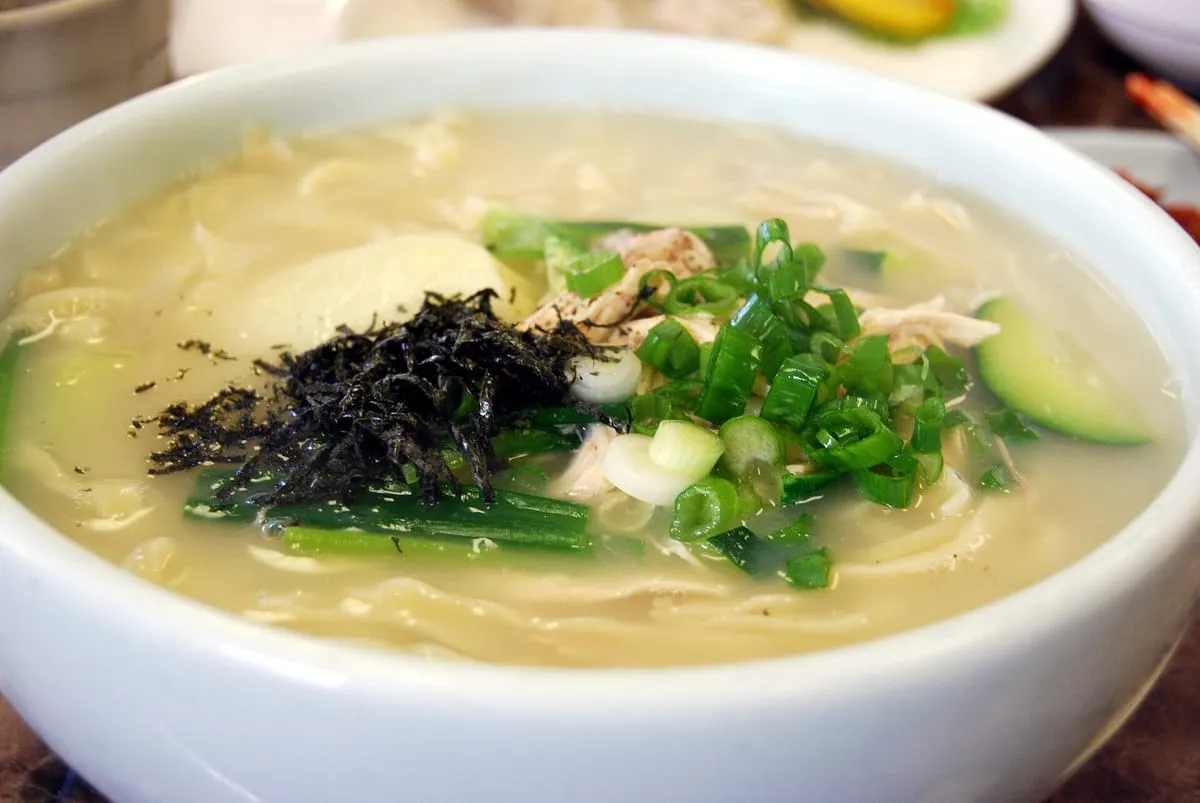
Myeongdong · 29 Myeongdong 10-gil, Jung-gu, Myeongdong Stn Exit 8 · 10:30-21:00 daily · cards and cash · Cited by 10 sources (8 English, 2 Korean) · Michelin page
Operating in Myeongdong since 1966, this Bib Gourmand establishment is Seoul’s most famous knife-cut noodle house. The menu contains four items: hand-cut kalguksu (₩11,000), steamed pork dumplings (mandu, ₩12,000 for 10 pieces), spicy cold noodles (bibim guksu, ₩11,000), and seasonal soybean noodle soup (kongguksu, ₩12,000). The kalguksu features silky noodles swimming in a rich, smoky chicken broth crowned with seasoned minced pork and four wafer-thin wontons. The house garlic kimchi is notoriously pungent and heavily spiced; staff circulate with refill bowls continuously. Solo diners are seated at partitioned individual counter seats. Payment is made at the table when ordering. Expect a 10- to 20-minute queue during lunch and dinner, though service is remarkably fast.
Tosokchon Samgyetang
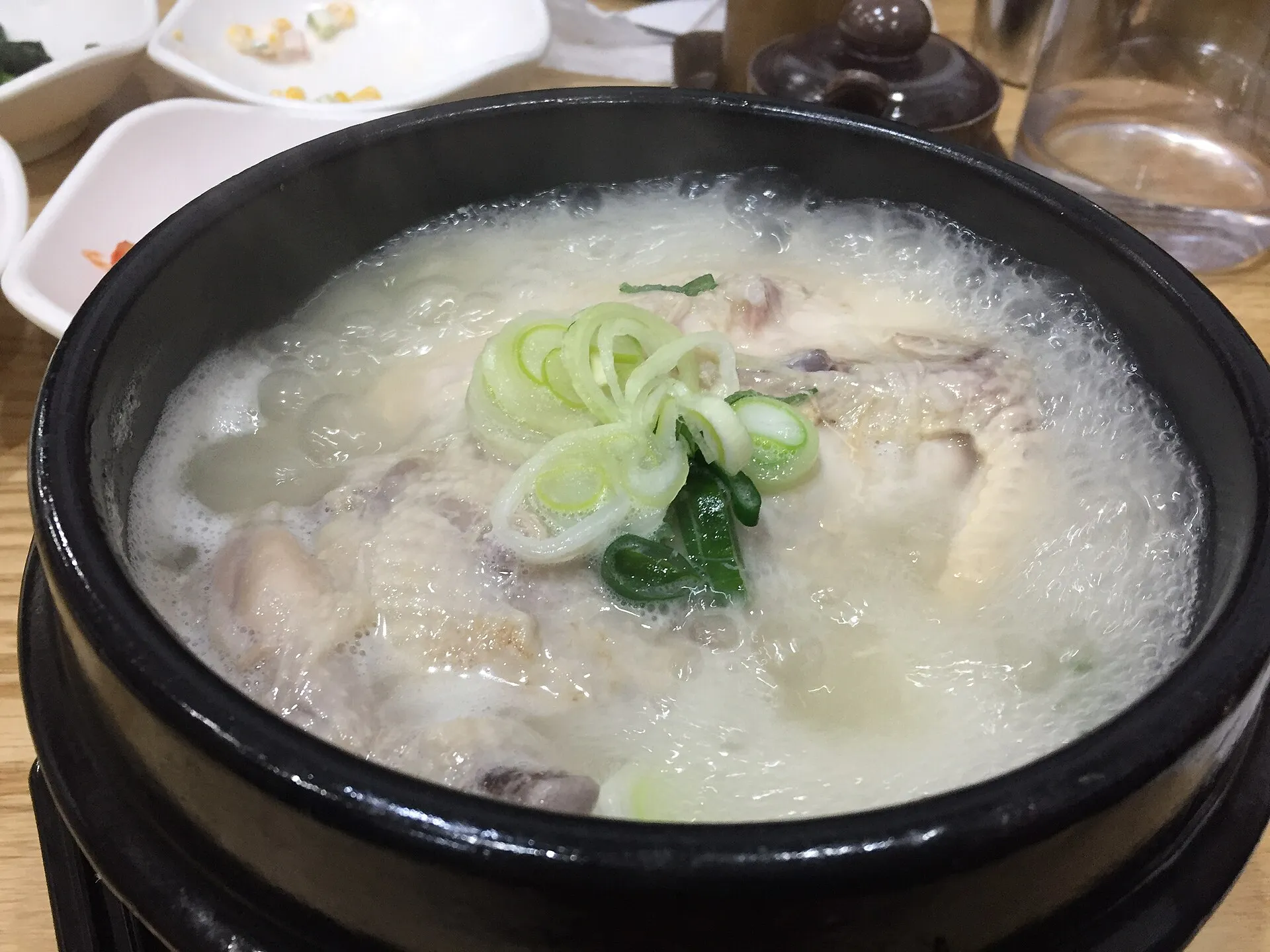
Jongno · 5 Jahamun-ro 5-gil, Jongno-gu, Gyeongbokgung Stn Exit 2 · 10:00-21:30 daily · cards and cash · Cited by 9 sources (7 English, 2 Korean) · official site
Located in a traditional hanok compound a short walk west of Gyeongbokgung Palace, Tosokchon is Seoul’s benchmark for samgyetang (ginseng chicken soup). The signature dish (₩20,000) consists of an entire young spring chicken stuffed with glutinous sticky rice, ginseng root, jujube red dates, gingko nuts, and garlic, simmered in a thick, nutty broth enriched with ground sunflower seeds and pumpkin seeds. A black-bone silkie chicken version (ogolgye samgyetang) is available for ₩26,000. Each bowl arrives with a complimentary small glass of insam-ju (ginseng liquor); drink it as an aperitif or pour it directly into the bubbling soup. Seatings are across multiple hanok rooms with heated floor seating (ondol) and standard tables.
Imun Seolnongtang
Jongno · 38-13 Ujeongguk-ro, Jongno-gu, Jonggak Stn Exit 3-1 · 08:00-21:00 (Sundays to 20:00) · cards and cash · Cited by 8 sources (6 English, 2 Korean) · Michelin page
Established in 1904, Imun Seolnongtang holds Korean Government Business Licence No. 1, officially designating it as South Korea’s oldest registered restaurant. The broth is simmered for 17 hours using ox leg bones, brisket, and beef organs until completely milky and velvety. Order the standard seolleongtang (₩14,000) or the special bowl with extra meat cuts (₩17,000), which includes tender beef brisket and flank. Bowls arrive unsalted with cooked rice and wheat noodles submerged inside; add coarse sea salt, ground black pepper, and handfuls of freshly sliced spring onions from the tabletop jars. The house kkakdugi (radish kimchi) provides essential acidity to balance the rich broth.
Hadongkwan
Myeongdong · 12 Myeongdong 9-gil, Jung-gu, Euljiro 1-ga Stn Exit 5 · 07:00-16:00, closed Sunday · cards and cash · Cited by 7 sources (5 English, 2 Korean) · Michelin page
Founded in 1939, Hadongkwan specialises exclusively in traditional Hanwoo beef gomtang. Unlike cloudy seolleongtang, gomtang is simmered purely from beef brisket, flank, and radishes, producing a pale golden, crystal-clear broth with clean, concentrated beef sweetness. The standard bowl costs ₩16,000, while the special (₩19,000) and 25-piece (yeoseot) bowls include prized cuts of beef tripe and honeycomb. Pay at the entrance counter upon arrival, take your metal ticket token to a table, and your brass bowl arrives within two minutes with cooked white rice already steeped in the soup. Hadongkwan opens at 07:00 for breakfast and closes at 16:00, or earlier whenever the daily broth runs out.
Wooraeok
Jung-gu · 62-29 Changgyeonggung-ro, Jung-gu, Euljiro 4-ga Stn Exit 4 · 11:30-21:00, closed Monday · cards and cash · Cited by 8 sources (6 English, 2 Korean) · Michelin page
Operating continuously since 1946, Wooraeok is Seoul’s most historic specialist in Pyongyang-style cold buckwheat noodles (mul-naengmyeon, ₩16,000). While many naengmyeon broths rely on pickled radish water (dongchimi), Wooraeok uses 100% pure Hanwoo beef stock, creating a savoury, deeply beefy chilled soup served with firm, hand-pressed buckwheat noodles and beef slices. Diners also order traditional copper-dome beef bulgogi (₩37,000 per portion), grilled over charcoal at the table. Register your name and phone number on the CatchTable tablet inside the lobby; weekend lunch queues routinely exceed 45 minutes.
Pildong Myeonok
Chungmuro · 26 Seoaer-ro, Jung-gu, Chungmuro Stn Exit 1 · 11:00-20:30, closed Sunday · cards and cash · Cited by 6 sources (4 English, 2 Korean) · Michelin page
A long-standing Michelin Bib Gourmand fixture run by the daughters of the Uijeongbu Pyeongyang Myeonok family. The Pyongyang cold noodles (₩14,000) feature a remarkably translucent, delicate beef-and-pork broth seasoned with a pinch of red chilli powder and toasted sesame seeds. Pair the noodles with a plate of lukewarm boiled pork belly (jeyuk, ₩30,000) or North Korean style steamed pork dumplings (₩14,000), dipped in salted shrimp sauce. The broth is subtle and clean; locals drink the bowl dry before touching condiments.
Gaeseong Mandu Koong
Insadong · 11-3 Insadong 10-gil, Jongno-gu, Anguk Stn Exit 5 · 11:30-20:00, closed Monday · cards and cash · Cited by 6 sources (4 English, 2 Korean) · Michelin page
Tucked away in an atmospheric stone alleyway off Insadong’s main street, this third-generation family restaurant has hand-crafted dumplings in the culinary tradition of Gaeseong (now in North Korea) since 1970. Through the glass window in the front dining room, elderly cooks can be seen rolling paper-thin dough circles and packing them with minced pork, Napa cabbage, tofu, and bean sprouts. Order the Gaeseong manduguk (dumpling soup in beef bone broth, ₩15,000) or the bubbling dumpling hot pot (mandu jeongol, ₩23,000 per person). The dumplings are fist-sized with delicate, non-greasy fillings.
Mugyodong Bugeokukjib
City Hall · 38 Eulji-ro 1-gil, Jung-gu, City Hall Stn Exit 4 · 07:00-20:00, Sat/Sun to 15:00 · cards and cash · Cited by 6 sources (4 English, 2 Korean) · Michelin page
Operating since 1968 behind Seoul City Hall, this breakfast and lunch institution serves only one dish: bugeoguk (dried pollock soup, ₩10,000). Dried yellow pollock (hwangtae) is sauteed in toasted sesame oil and simmered with beef bone broth, silky silken tofu, fluffy scrambled eggs, and spring onions. The soup is light, deeply restorative, and revered across Seoul as the ultimate morning hangover cure. Rice and soup refills are free and unlimited upon request. The restaurant fills with government and office workers from 07:30 to 09:00, but tables turn around rapidly.
Jin Ok-hwa Original Chicken
Dongdaemun · 8 Jong-ro 40ga-gil, Jongno-gu, Dongdaemun Stn Exit 9 · 10:30-01:00 daily · cards and cash · Cited by 7 sources (5 English, 2 Korean) · official listing
Situated in Dongdaemun’s Dakhanmari Alley, Jin Ok-hwa has served dakhanmari (literally ‘a whole chicken’) since 1978. A raw, whole young chicken arrives submerged in clear garlic-infused broth inside a wide aluminium basin over a tabletop gas burner (₩28,000 for two diners). Staff use kitchen shears to cut the chicken into pieces at the boil. Diners mix their own dipping sauce from red pepper paste, crushed garlic, dark soy sauce, mustard, and vinegar. Add chewy wheat rice cakes (tteok, ₩2,000) early on, and finish the meal by boiling fresh knife-cut noodles (kalguksu sari, ₩3,000) in the concentrated chicken broth.
Hwangsaengga Kalguksu
Bukchon · 78 Bukchon-ro 5-gil, Jongno-gu, Anguk Stn Exit 1 · 11:00-21:30 daily · cards and cash · Cited by 6 sources (4 English, 2 Korean) · Michelin page
Located directly opposite the National Museum of Modern and Contemporary Art (MMCA) near Gyeongbokgung, Hwangsaengga holds Michelin Bib Gourmand status for its ox-bone kalguksu (sagol kalguksu, ₩11,000). Unlike the lighter anchovy broths common elsewhere, the soup base here is brewed from beef marrow bones, resulting in a rich, velvety texture reminiscent of seolleongtang. The hand-cut noodles are thick and springy, accompanied by freshly steamed royal pork dumplings (wangmandu, ₩11,000) and a crunchy, sweet baechu kimchi.
Bongsan Ok
Seocho · 29 Banpo-daero 8-gil, Seocho-gu, Nambu Bus Terminal Stn Exit 5 · 11:00-21:20, closed Sunday · cards and cash · Cited by 5 sources (3 English, 2 Korean) · Michelin page
A celebrated North Korean dumpling specialist in southern Seoul near the Seoul Arts Center. The signature Bongsan manduguk (₩13,000) features delicate dumplings stuffed with cabbage, minced pork, and bean sprouts, served in a clean beef broth spiced with shredded flank steak seasoned with chilli and sesame oil. The flavours are restrained, soothing, and distinct from heavier southern Korean stews. It closes on Sundays, with a daily afternoon break between 14:30 and 17:00.
Oreno Ramen Main Branch
Hapjeong · 14 Dongmak-ro 6-gil, Mapo-gu, Sangsu Stn Exit 1 · 11:00-20:30 daily · cards and cash · Cited by 5 sources (3 English, 2 Korean) · Michelin page
The only Japanese-style ramen restaurant in Seoul to hold continuous Michelin Bib Gourmand recognition. Oreno specialises in toripaitan ramen (₩12,000), brewed from chicken carcasses simmered for hours and frothed with an immersion blender into an aerated, cappuccino-like white foam broth. Options include the signature Tori Paitan (mild, creamy) and Kara Paitan (spicy chicken broth). Order and pay via the automated ticket kiosk by the entrance. Extra noodles, broth refills, and bowls of white rice are completely free upon request.
Myeongdong Halmeoni Guksu
Myeongdong · 42-43 Myeongdong 1-ga, Jung-gu, Euljiro 1-ga Stn Exit 5 · 06:00-20:30 daily · cards and cash · Cited by 5 sources (3 English, 2 Korean) · official listing
Tucked down an alleyway in northern Myeongdong since 1958, this no-frills noodle counter serves traditional banquet noodles (janchi guksu, ₩6,000) and tofu noodles (dubu guksu, ₩6,500) in an anchovy-kelp broth. The thin wheat flour somyeon noodles are topped with fried tofu cubes, seaweed strips, and crushed toasted sesame. It opens at 06:00, making it one of Myeongdong’s best budget breakfast stops.
Hanjeongsik & Royal Cuisine
Hanjeongsik is the formal Korean full-course meal developed from Joseon dynasty palace banquet traditions and noble family feasts (yangban dining). Dishes are served in brass tableware (bangjja yugi) and progress from mild porridges to grilled meats, seasonal fish, stews, and a dozen side dishes. Temple cuisine (sachal eumsik), rooted in Korean Buddhist monasteries, uses zero meat, fish, or allium pungent bulbs (garlic, spring onions, leeks, chives), relying instead on wild mountain herbs and years-aged fermented pastes.
Hanilkwan
Apgujeong / Jongno · 14 Apgujeong-ro 38-gil, Gangnam-gu, Apgujeong Stn Exit 2 · 11:30-21:30 daily · cards and cash · Cited by 6 sources (4 English, 2 Korean) · official site
Founded in 1939 in Jongno and now operating its flagship in Apgujeong, Hanilkwan has served Korean presidents, cultural dignitaries, and multi-generational families for over eight decades. Hanilkwan pioneered the individual tabletop brass burner for traditional bulgogi (₩35,000 per portion), marinated thinly sliced beef ribeye cooked in sweet soy broth with enoki mushrooms. The restaurant is equally celebrated for its Royal Dolsot Bibimbap (₩18,000), served in sizzling granite stone bowls with wild mountain root vegetables, and its rich short-rib soup (galbitang, ₩20,000). Multi-course royal meal sets range from ₩45,000 to ₩85,000 per person.
Balwoo Gongyang
Jogyesa · 56 Ujeongguk-ro, Jongno-gu, Anguk Stn Exit 6 · 11:30-15:00, 18:00-21:30, closed Sunday · cards and cash · Cited by 7 sources (5 English, 2 Korean) · official site
Operated directly by the Jogye Order of Korean Buddhism opposite Jogyesa Temple, Balwoo Gongyang is the only temple food restaurant in Seoul awarded a Michelin star. Dining takes place in private tatami rooms. Tasting courses (ranging from ₩38,000 for the lunch course to ₩95,000 for the grand dinner course) follow the seasons, using ingredients harvested from mountain temples: dried mushrooms, pine needle infusions, lotus root, dehydrated seasonal greens, and fermented soybean pastes aged for more than five years. Dishes strictly omit meat, seafood, and the five pungent roots (o-sin-chae). Advance booking via their website or telephone is mandatory.
Street Food & Markets
Seoul’s historic covered markets and street vendors provide rapid, counter-side dining in front of smoking griddles and bubbling cauldrons.
Buchon Yukhoe
Gwangjang Market · 200-12 Jong-ro, Jongno-gu, Jongno 5-ga Stn Exit 8 · 10:00-21:30 (break 16:00-17:00), closed Tuesday · cards and cash · Cited by 8 sources (6 English, 2 Korean) · Michelin page
Situated in Gwangjang Market’s dedicated Yukhoe Alley since 1965, Buchon Yukhoe has earned Michelin Bib Gourmand status every year since 2017. The signature yukhoe (₩19,000) consists of fresh, lean raw beef julienned to order, tossed in toasted sesame oil, minced garlic, and sugar, served atop crisp matchsticks of Korean sweet pear with a raw egg yolk in the centre. Mix the yolk thoroughly into the meat and dip into salt-and-sesame oil. Diners can also order yukhoe bibimbap (₩10,000) or live octopus tossed with raw beef (yukhoe tangtangi, ₩35,000). Register at the tablet queue at the door.
Gohyang Son Kalguksu
Gwangjang Market stall · Jongno 5-ga Stn Exit 8 · 09:00-21:00 daily · cash preferred, cards accepted · Cited by 6 sources (5 English, 1 Korean) · official listing
Gained global renown after appearing on Netflix’s Street Food: Asia, this central market counter is operated by owner Cho Yon-soon. Sit on the heated vinyl bench while the cook kneads dough by hand, slices it into ribbons with a cleaver, and boils it in a bubbling cauldron of anchovy and kelp stock. A steaming bowl of knife-cut noodles with dumplings (kalguksu mandu) costs ₩7,000, served with freshly made kimchi. Service is warm and direct; cash or Korean bank transfer is preferred at the counter.
Sunhee’s Bindaetteok
Gwangjang Market · 5 Jong-ro 32-gil, Jongno-gu, Jongno 5-ga Stn Exit 8 · 09:00-21:00 daily · cards and cash · Cited by 8 sources (6 English, 2 Korean) · official listing
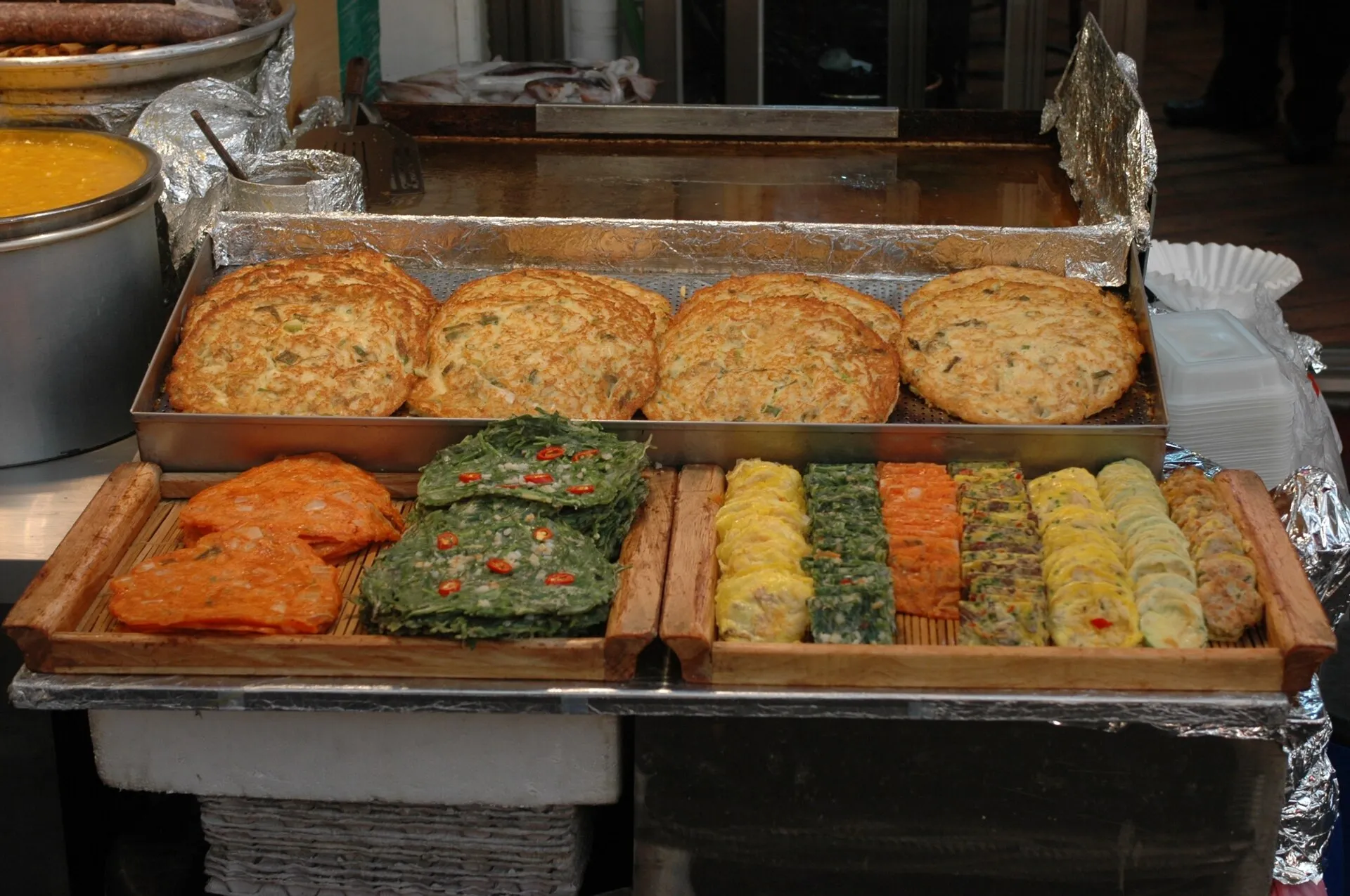
The market’s benchmark for bindaetteok (crisp savoury mung bean pancakes). Bounded by piles of golden pancakes, stone millstones grind soaked yellow mung beans into thick batter right in front of the counter. The batter is combined with bean sprouts and spring onions, then shallow-fried in bubbling oil. A thick pancake costs ₩5,000; a minced pork pancake (wanja) costs ₩3,000. Dip pieces into dark soy sauce loaded with pickled raw onions to cut the richness, paired with a plastic bowl of chilled rice wine (makgeolli).
Mabongnim Halmeoni Tteokbokki
Sindang-dong · 5 Dasan-ro 35-gil, Jung-gu, Sindang Stn Exit 8 · 09:00-23:00, closed 2nd/4th Mon · cards and cash · Cited by 7 sources (5 English, 2 Korean) · official listing
Founded in 1953 by grandmother Ma Bong-nim, this is the historic birthplace of modern jeukseok tteokbokki (tabletop hot-pot rice cakes) and the anchor of Sindang-dong Tteokbokki Town. A 2-person set (₩17,000) includes rice cakes, fish cakes, ramen noodles, chewy jjolmyeon noodles, fried dumplings, and hard-boiled eggs in a sauce combining fermented red pepper paste (gochujang) and sweet black bean paste (chunjang). The pot simmers and thickens on your table burner.
Noryangjin Fisheries Wholesale Market
Noryangjin · 674 Nodeul-ro, Dongjak-gu, Noryangjin Stn Exit 9 · 24 hours daily · cards and cash · Cited by 8 sources (6 English, 2 Korean) · official site
Covering several modern storeys, Noryangjin is Seoul’s primary marine seafood market. Hundreds of ground-floor stalls display live king crab, snow crab, flatfish, sea bream, abalone, and live octopus (sannakji). Select and purchase raw seafood directly from vendors on floor 1, then carry your haul to the second-floor cooking restaurants (chirim-jip). The restaurant prepares your items to order—steamed crab, grilled fish, or sashimi—for a standard table setting fee (approx 4,000–₩6,000 per person) plus preparation charges.
Guided food tours and market walks
Navigating Seoul’s traditional dining culture—from tabletop charcoal BBQ etiquette to market stall ordering—is made effortless on a curated food tour.
Seoul: Guided Food Market Tour with 8 Tastings
From ₩131,093 · 4.9 stars from 531 reviews · 3 hours · street food & makgeolli
Seoul: Guided Food & Market Tour with 8+ Tastingsad: An English-speaking local guide leads you through traditional markets to sample authentic delicacies and local craft rice wine.
Seoul: Gwangjang Market Food Tour with Local Insider
From ₩83,851 · 5 stars from 34 reviews · 2 hours · market food walk
Seoul: Gwangjang Market Food Tour (2 Hours) with Insiderad: Sample bindaetteok, kalguksu, and mayak gimbap at South Korea’s most historic food market.
Seoul: Korean Cooking Class with Market Tour
From ₩130,000 · 5 stars from 51 reviews · 2.5 hours · hands-on cooking class
Seoul: Korean Cooking Class with Local Grocery Shoppingad: Shop for fresh market ingredients before learning to prepare authentic Korean dishes with a professional chef.
Fried Chicken & Modern Dining
Korean fried chicken (chimaek, chicken plus maekju beer) is distinguished by a ultra-thin, potato-starch crust fried twice to render out subcutaneous fat, resulting in a glass-shattering crunch that stays crisp even when coated in sweet garlic-soy or spicy gochujang glazes.
Kyochon Chicken Dongdaemun Branch
Dongdaemun · 294 Jong-ro, Jongno-gu, Dongdaemun Stn Exit 6 · Open 24 hours daily · cards and cash · Cited by 6 sources (5 English, 1 Korean) · official site
Kyochon is South Korea’s benchmark fried chicken brand, and this two-storey branch directly outside Dongdaemun Station operates 24 hours a day. The signature order is the Half & Half Series (₩23,000), featuring half Soy Garlic series (crisp chicken brushed by hand with garlic soy glaze) and half Red Series (spicy glaze made from Korean red pepper, honey, and garlic). Orders are served with complimentary cubes of pickled daikon radish to refresh the palate, alongside draught draft beer.
Hanchu
Sinsa-dong · 68 Apgujeong-ro 4-gil, Gangnam-gu, Sinsa Stn Exit 8 · 16:00-02:00, closed Sunday · cards and cash · Cited by 7 sources (6 English, 1 Korean) · official listing
A beloved neighbourhood hof (drinking tavern) in Garosu-gil operating for over two decades. Hanchu’s signature fried chicken (₩22,000) mixes finely chopped green hot peppers (cheongyang gochu) into the batter, infusing the chicken with a bright herbal warmth without overt sweetness. Pair it with the restaurant’s famous gochu-twigim (₩20,000), giant green chilli peppers stuffed with minced pork and glass noodles, battered and deep-fried until crisp. Wash it down with chilled Korean draught beer.
For deeper dives into Seoul’s distinctive culinary specialities, explore our companion guides:
- Best Korean BBQ in Seoul: cuts, etiquette and top restaurants
- Gwangjang Market street food guide: bindaetteok, yukhoe and kalguksu
- Myeongdong night market food guide
- Korean convenience store food guide and hacks
- Top Seoul food tours and cooking classes
Common questions
What should you eat first in Seoul?
Start with hand-cut noodles at Myeongdong Kyoja (kalguksu ₩11,000), whole-chicken ginseng soup at Tosokchon Samgyetang (₩20,000), or ox-bone broth at Imun Seolnongtang (₩14,000), Korea's oldest registered restaurant.
Do you tip in restaurants in Seoul?
No. Tipping is not customary anywhere in South Korea. Service charge is included in the food prices, and leaving cash on a table will cause confusion or staff running down the pavement to return forgotten change.
Do Seoul restaurants take credit cards or cash only?
Almost all sit-down restaurants take international credit and debit cards. Cash in won is only required at outdoor street carts (pojangmacha) and small market food stalls in Gwangjang Market or Namdaemun.
Do you need to book restaurants in Seoul?
Casual noodle, soup, and street food spots operate on walk-in queues. Popular spots use on-site digital waiting tablets (such as CatchTable or Kakao) where you input a mobile number. High-end dining such as Balwoo Gongyang requires advance booking.
Is a food tour worth doing in Seoul?
A guided food tour removes language barriers, navigates market alleyways, and introduces banchan etiquette without queuing. Guided market and street food tours run through Gwangjang Market and central Seoul.