In this guide
💡 The Short Version: Booking a guided food tour in Seoul unlocks hidden alleyway eateries that lack English menus and lets you sample dishes requiring multi-portion minimums. Core formats include Gwangjang Market evening tasting walks (from ₩55,000), Mapo pork BBQ and pub crawls (from ₩75,000), Makgeolli artisan rice wine tastings (from ₩60,000), and hands-on Kimchi cooking classes in Bukchon (from ₩65,000). Vegetarians should head to Buddhist temple cuisine like Balwoo Gongyang, promoted by the Korean Food Promotion Institute, while Muslim travellers will find certified halal dining along Usadan-ro in Itaewon. Or book a tour: an English-language Seoul guided food market tour with 8 tastingsad starts from ₩110,000 on GetYourGuide.
The four best culinary tour formats
Exploring Seoul’s culinary terrain with an English-speaking food guide eliminates the language barrier at counter stalls and demystifies complex table customs.
| Tour format | Typical duration | Price from | Best for |
|---|---|---|---|
| Night market street food walks | 2.5 to 3 hours | ₩55,000 | Sampling varied small bites across Gwangjang and Euljiro alleyways |
| KBBQ and Korean pub crawls | 3.5 to 4 hours | ₩75,000 | Mastering meat grilling, soju-and-beer cocktails (somaek), and evening social rituals |
| Traditional Makgeolli tastings | 2.5 hours | ₩60,000 | Pairing unpasteurised sparkling rice wines with savoury seafood pancakes in hanok alleys |
| Hanok Kimchi and cooking classes | 3 to 3.5 hours | ₩65,000 | Hands-on cabbage fermentation, knife skills, and authentic homestyle recipes |
1. Night market street food walks
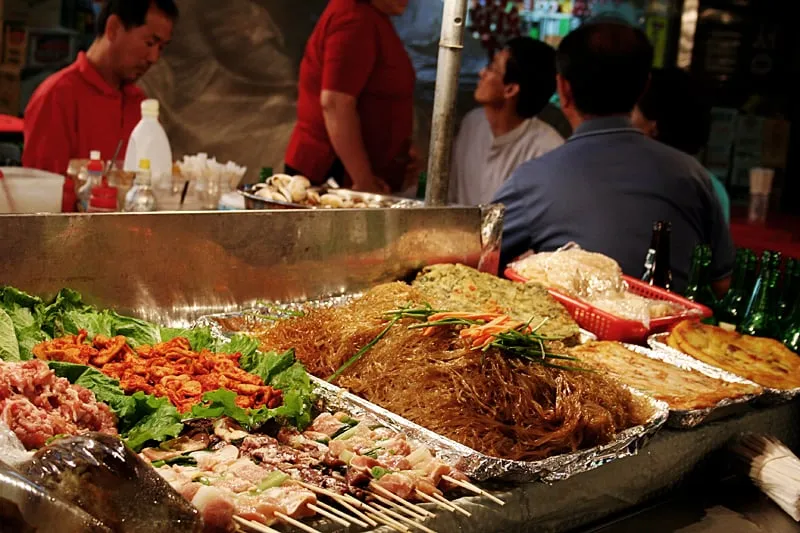
Market walks typically convene at dusk near Jongno or Dongdaemun, guiding small groups through the maze of Gwangjang Market and into the industrial printing alleys of Euljiro (affectionately called ‘Hipjiro’).
A knowledgeable guide navigates crowded counter benches, secures immediate seating at signature stalls, and orders tasting flights:
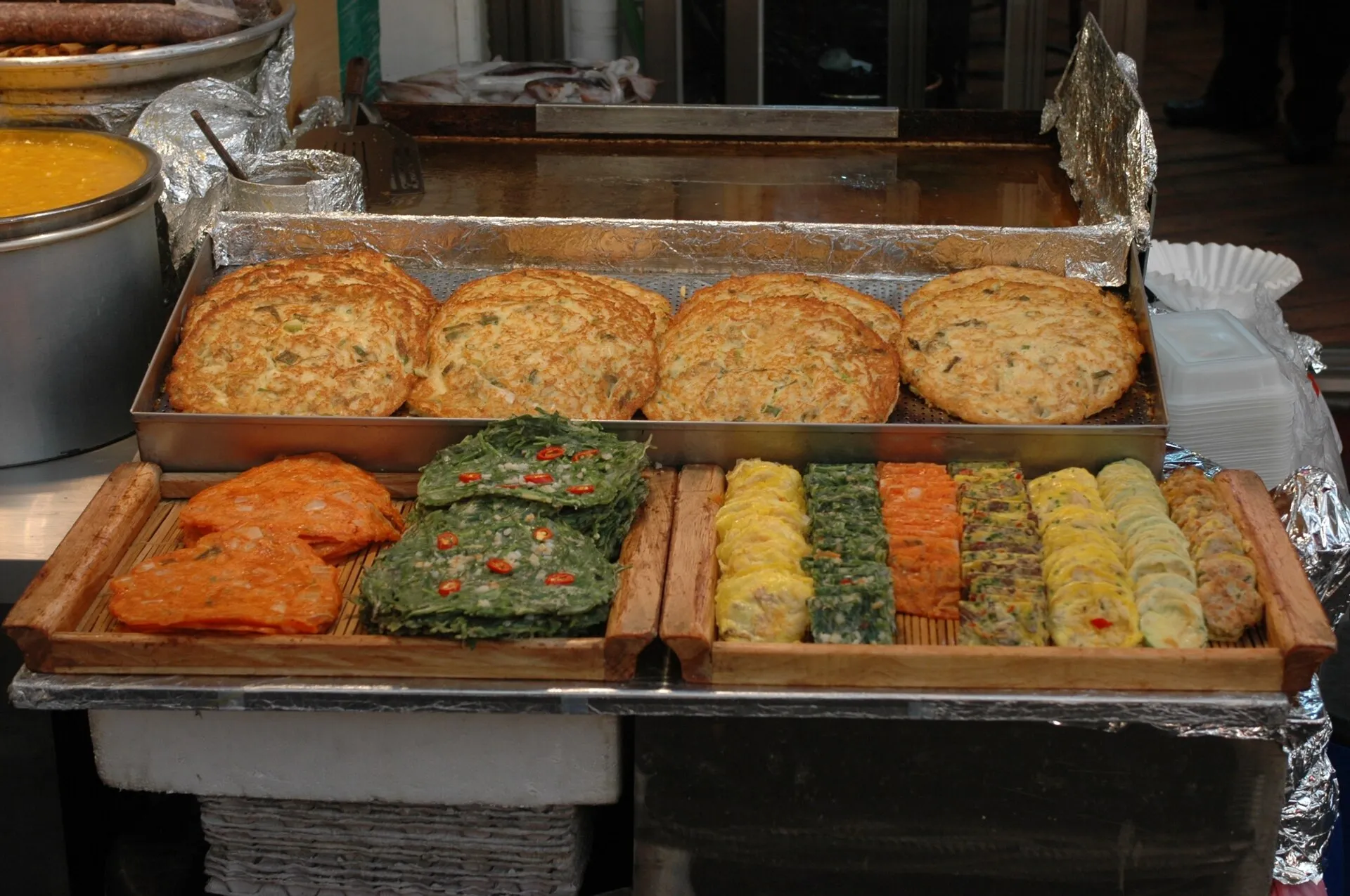
- Freshly fried mung bean pancakes (bindaetteok) with onion vinegar dip.
- Slender seaweed rolls (mayak gimbap) with piquant mustard soy.
- Hand-cut knife noodles (kalguksu) in rich anchovy broth.
- Fresh beef tartare (yukhoe) tossed in sesame oil and raw egg yolk along Yukhoe Alley.
Tours finish with traditional sweet street desserts like brown sugar stuffed pancakes (hotteok) or twisted sugar doughnuts (kkwabaegi). Browse options on GetYourGuide’s Seoul food toursad and Klook’s Seoul experiencesad.
2. Mapo BBQ and pub crawls (Hoesik experience)
Korean dining culture reaches its energetic peak after office hours during a hoesik (company dinner and drinks gathering). Because standard barbecue establishments require a strict two-portion minimum per meat cut, solo travellers frequently struggle to sample diverse barbecue cuts alone.
A dedicated barbecue crawl solves this by bringing groups together across three distinct stops:
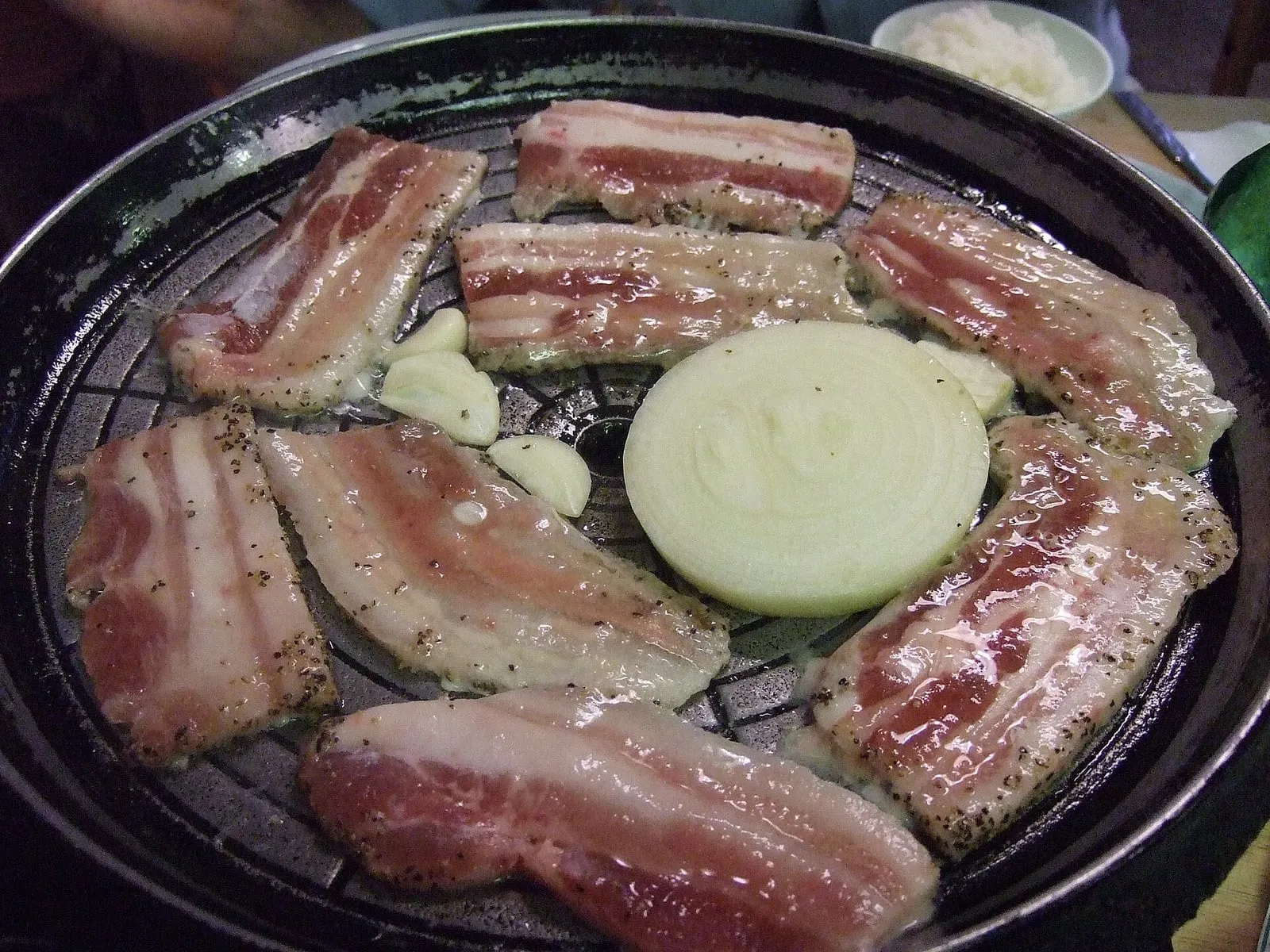
- First round (Il-cha): A traditional pork barbecue shophouse along Mapo BBQ Street or in Mullae-dong, grilling thick slices of unmarinated pork belly (samgyeopsal) and skirt meat (galmaegisal), accompanied by bubbling kimchi stew and cold lager.
- Second round (I-cha): A lively pojangmacha (tented street pub) or chimaek joint for crispy Korean fried chicken paired with draft beer. Your guide demonstrates the art of pouring somaek (a golden cocktail of soju and draft beer mixed with a spoon tap that creates a foaming volcanic head).
- Third round (Sam-cha): A late-night soup joint or dried pollack pub (nogari-hoppeu) in Euljiro.
3. Traditional Makgeolli and teahouse tastings

Makgeolli is South Korea’s oldest alcoholic beverage: an unfiltered, milky, and gently effervescent fermented rice wine with an alcohol content of 6% to 8%. While mass-produced commercial brands use artificial sweeteners and pasteurisation, Seoul has experienced a renaissance of micro-breweries crafting unpasteurised, artisanal makgeolli using heritage yeast cultures (nuruk) and regional Korean rice.
Guided tastings take place in heritage hanok neighbourhoods such as Insadong and Ikseon-dong. Flights compare dry, crisp sparkling rice wines against rich, fruity vintage brews, paired with traditional drinking snacks (anju):
- Crispy seafood and green scallion pancakes (haemul pajeon).
- Steamed pork belly slices wrapped in salted napa cabbage with spicy radish salad (bossam).
- Pan-fried tofu with warm stir-fried kimchi (dubu kimchi).
Reserve artisan brewery tastings through the GetYourGuide Seoul listingsad.
4. Hands-on Kimchi and home cooking classes
For travellers wanting practical skills to take home, cooking classes in Insadong and Bukchon provide hands-on tuition inside historic wooden hanok courtyards.
Under the instruction of certified Korean culinary masters, participants prepare two to three classic dishes:
- Kimchi making: Learn the complete fermentation science: salting raw napa cabbage leaves, blending the spicy paste (yangnyeom) using coarse Korean red pepper powder (gochugaru), minced garlic, fresh grated ginger, radish matchsticks, and salted anchovy or plant-based sauce, and packing the leaves into jars to take with you.
- Classic mains: Preparing stone-pot Bibimbap with seasonal namul vegetables, or marinating sliced beef short ribs (Bulgogi) with sweet pear juice and soy.
Sessions conclude with a sit-down communal banquet where you eat your creations alongside steamed short-grain rice and traditional temple banchan.
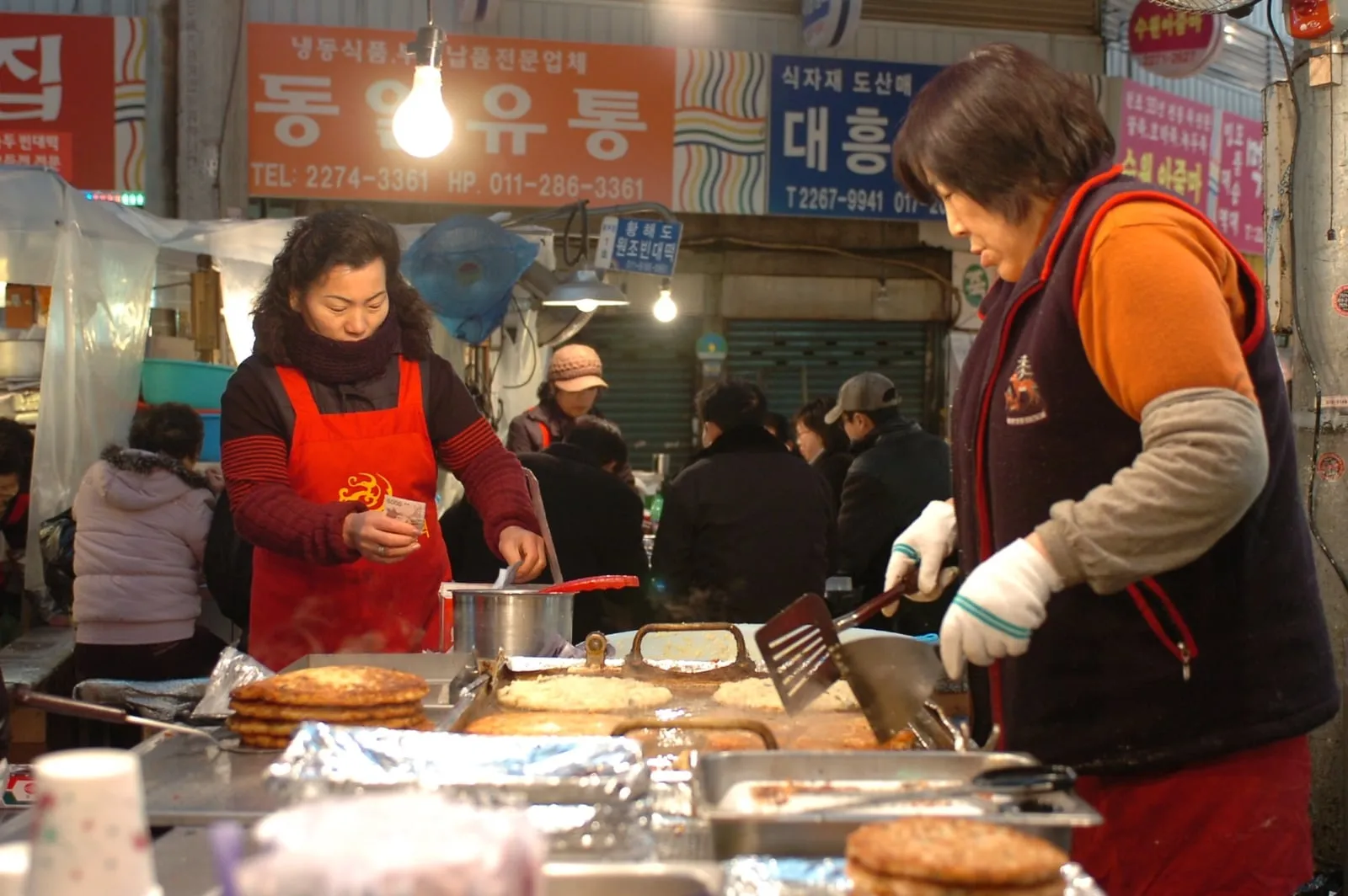
Women pan-frying Korean pancakes at a market stall. Photo: Pfc. Bo Park, 2ID PAO, US Army, Wikimedia Commons, Public domain.
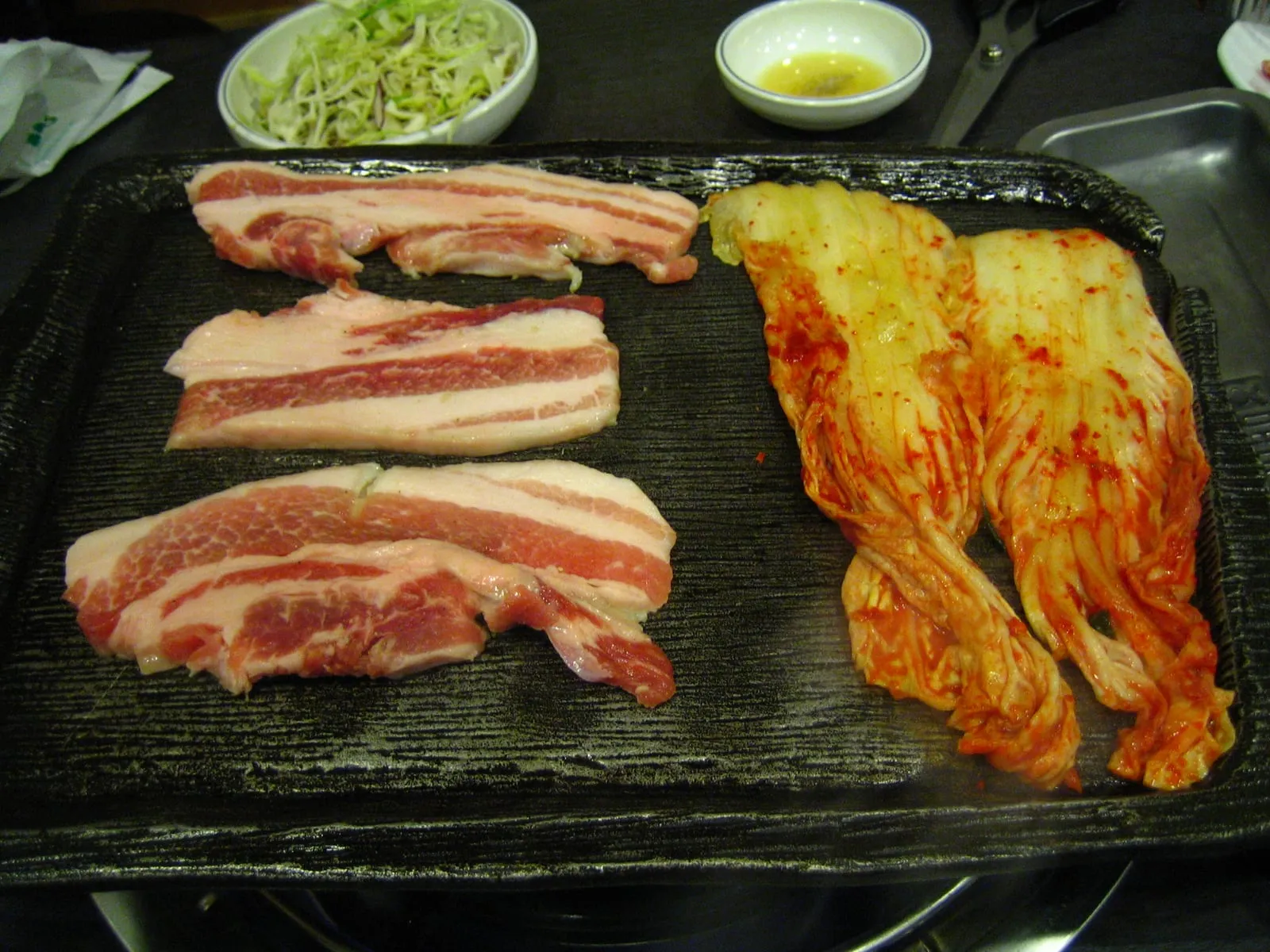
Samgyeopsal pork belly and kimchi grilling on a tabletop barbecue. Photo: by ayustety (flickr), Wikimedia Commons, CC BY-SA 2.0.
Guided food tours and cooking classes
While anyone can eat street food independently, food tours decode unfamiliar ingredients, navigate market seating etiquette, and take you to heritage stalls that do not cater to casual tourists.
Seoul: Guided Food Market Tour with 8 Tastings
From ₩131,093 · 4.9 stars from 531 reviews · 3 hours · street food & makgeolli
Seoul: Guided Food & Market Tour with 8+ Tastingsad: An English-speaking local foodie leads you through busy market corridors to sample bindaetteok, mayak gimbap, tteokbokki, and traditional Korean rice wine.
Seoul: Gwangjang Market Food Tour with Local Insider
From ₩83,851 · 5 stars from 34 reviews · 2 hours · heritage market stalls
Seoul: Gwangjang Market Food Tour (2 Hours) with Insiderad: A 2.5-hour deep dive into South Korea’s oldest continuously operating food market, including history, vendor stories, and 6 curated tastings.
Seoul: Korean Cooking Class with Local Grocery Market Tour
From ₩130,000 · 5 stars from 51 reviews · 2.5 hours · hands-on cooking & market shopping
Seoul: Korean Cooking Class with Local Grocery Shoppingad: Tour a local neighbourhood grocery market to select fresh produce, then prepare three classic Korean dishes—such as bulgogi, seafood pancakes, and kimchi—in a professional kitchen.
Seoul: Namdaemun & Myeongdong Food Crawl with 10 Tastings
From ₩177,294 · 4.8 stars from 10 reviews · 3 hours · evening street food crawl
Seoul: Food Tour with 11+ Tastings in the Heart of the Cityad: Explores the sprawling alleys of Namdaemun Market and Myeongdong, sampling 10 distinct savoury and sweet street foods.
Official ticket or tour: the prices side by side
Food tour formats compared.
| Option | Official admission | Tour cost | What it covers |
|---|---|---|---|
| Independent market grazing | ₩15,000–₩25,000 per person | — | Cash purchases stall by stall; self-guided menu selection |
| Gwangjang Market insider tour | All tastings included | From ₩83,882 | 2-hour guided food walk, vendor history, queue navigation |
| Guided market tour with 8+ tastings | All food & drinks included | From ₩131,157 | 3-hour tasting walk through Seoul’s markets |
| Korean cooking class with grocery shopping | Ingredients & meal included | From ₩130,000 | 2.5-hour hands-on class with a local grocery shop first |
Navigating dietary restrictions in Seoul
Vegetarian and vegan dining
Travelling as a strict vegetarian or vegan in South Korea requires careful navigation. Korean cuisine features abundant vegetable side dishes (namul), but traditional cooking almost universally incorporates dried anchovy stock (myeolchi yuksu), beef bone broth (sagol), fish sauce (aekjeot), and tiny fermented salted shrimp (saeujeot) into kimchi, stews, and noodle soups.
Practical vegetarian strategies:
- Buddhist Temple Cuisine (Sachal Eumsik): Korea’s Buddhist culinary tradition is 100% vegetarian (and frequently completely vegan). Following strict Seon Buddhist monastic precepts, temple food avoids all animal flesh as well as the five pungent allium roots (o-shin-chae: garlic, spring onions, wild chives, leeks, and onions), focusing on pure seasonal foraging, wild mountain roots, lotus leaf rice, and fermented soybean broths.
- Where to eat: Book a multi-course tasting lunch at Balwoo Gongyang (located in Insa-dong, directly opposite Jogyesa Temple). Operated directly by the Jogye Order of Korean Buddhism, it has earned Michelin recognition for its seasonal temple banquets (tasting menus from ₩35,000 to ₩95,000).
- Naturally vegetarian dishes:
- Yachae Gimbap (request without ham, fishcake, and imitation crab: “Ham, eomuk, matsal ppae-juseyo”).
- Dolsot Bibimbap (request without beef and egg: “Gogi-rang gyeran ppae-juseyo”).
- Memil Makguksu (cold buckwheat noodles; confirm the broth is seasoned dongchimi radish water rather than beef stock).
- Useful Korean phrase card:
- 저는 채식주의자입니다. 고기와 해산물, 생선 소스를 먹지 않습니다. (“I am a vegetarian. I do not eat meat, seafood, or fish sauce.”)
Halal dining in Seoul
Seoul is home to a growing halal culinary scene, supported by certification from the Korea Muslim Federation (KMF).
The Itaewon halal corridor:
The central congregation point for halal dining is Itaewon, specifically the hillside neighbourhood along Usadan-ro 10-gil surrounding the Seoul Central Mosque (Subway Line 6 to Itaewon Station, Exit 3).
Here you will find certified halal Korean eateries serving classics normally off-limits:
- Halal Korean BBQ: Restaurants like Eid Halal Korean Food and Makan Halal Korean Restaurant serve certified halal beef Bulgogi, Samgyetang (ginseng chicken soup), and spicy stir-fried chicken (Dakgalbi).
- International halal dining: Middle Eastern kebab houses, Uzbek bakeries, Turkish lokum confectioners, and Malaysian restaurants line the streets leading up to the mosque gates.
- Look for official blue-and-gold KMF Certified Halal or green Muslim Friendly stickers displayed in restaurant doorways.
To integrate a culinary tour into your wider itinerary, see our master guide to where to eat in Seoul and practical transit instructions in public transport in Seoul.
Common questions
Are food tours in Seoul worth taking?
Guided culinary tours unlock hidden alleyway eateries, handle translations at counters with no English menus, and explain complex dining customs like barbecue grilling, making wraps (ssam), and drinking etiquette. They also help solo travellers access multi-portion dishes.
How easy is it to find vegetarian and vegan food in Seoul?
Standard Korean restaurants heavily rely on dried anchovy broth, fish sauce in kimchi, and beef stocks, even in vegetable dishes. Vegetarians should seek out Buddhist temple cuisine (such as Balwoo Gongyang), dedicated vegan cafes in Insadong and Hongdae, or communicate dietary requirements via bilingual flashcards.
Where can you find certified halal food in Seoul?
The primary hub for halal dining is Itaewon, centred along Usadan-ro surrounding the Seoul Central Mosque. The neighbourhood features certified halal Korean barbecue restaurants, Middle Eastern eateries, and Malaysian restaurants.
What should you expect at a Korean cooking class?
Classes typically run 2.5 to 3.5 hours and take place in a traditional hanok or modern culinary studio in Insadong or Bukchon. Students learn to make authentic napa cabbage kimchi from scratch, prepare a seasonal main dish like Bulgogi or Bibimbap, and finish by dining together.
Which platforms offer the best Seoul food tours?
GetYourGuide and Klook list night market walks, craft brewery tours and hands-on cooking classes, with customer reviews and, on most, free cancellation.