In this guide
💡 The Short Version: Seeing Seoul’s cultural landmarks does not require a large budget. The National Museum of Korea houses national treasures with zero admission fee for its permanent galleries. Strolling the sunken waterside paths of Cheonggyecheon Stream, hiking the illuminated ramparts of the Seoul City Wall, and watching the Banpo Bridge Rainbow Fountain music shows cost nothing. Wearing Hanbok waives the entry fee at all four imperial palaces, while major spiritual sanctuaries like Jogyesa and Bongeunsa welcome respectful visitors daily for free.
Master table: top zero-cost sights in Seoul
Here is how Seoul’s leading zero-KRW attractions compare in location, operating times, and access rules.
| Attraction | Admission fee | Nearest transit station | Operating hours | Highlights and tips |
|---|---|---|---|---|
| National Museum of Korea | Free permanent galleries | Ichon Station (Line 4 & Gyeongui-Jungang, Exit 2) | Mon–Sun 10:00–18:00 (until 21:00 Wed & Sat) | Monumental cultural complex; view two ancient Pensive Bodhisattvas in the Room of Quiet Contemplation. |
| Cheonggyecheon Stream | Free | Gwanghwamun Station (Line 5, Exit 5) | Open 24 hours daily | 11 km urban waterway with stepping stones, waterfalls, and illuminated footpaths beneath downtown towers. |
| Seoul City Wall (Naksan Section) | Free | Hyehwa Station (Line 4) or Dongdaemun (Line 1 & 4) | Open 24 hours daily | Gentle stone rampart walk with panoramic twilight views across old Seoul and floodlit fortifications. |
| Seoul City Wall (Inwangsan Section) | Free | Dongnimmun Station (Line 3, Exit 2) | Open 24 hours (hiking recommended during daylight) | Granite ridgeline trail offering elevated vistas over Gyeongbokgung Palace, the Blue House, and N Seoul Tower. |
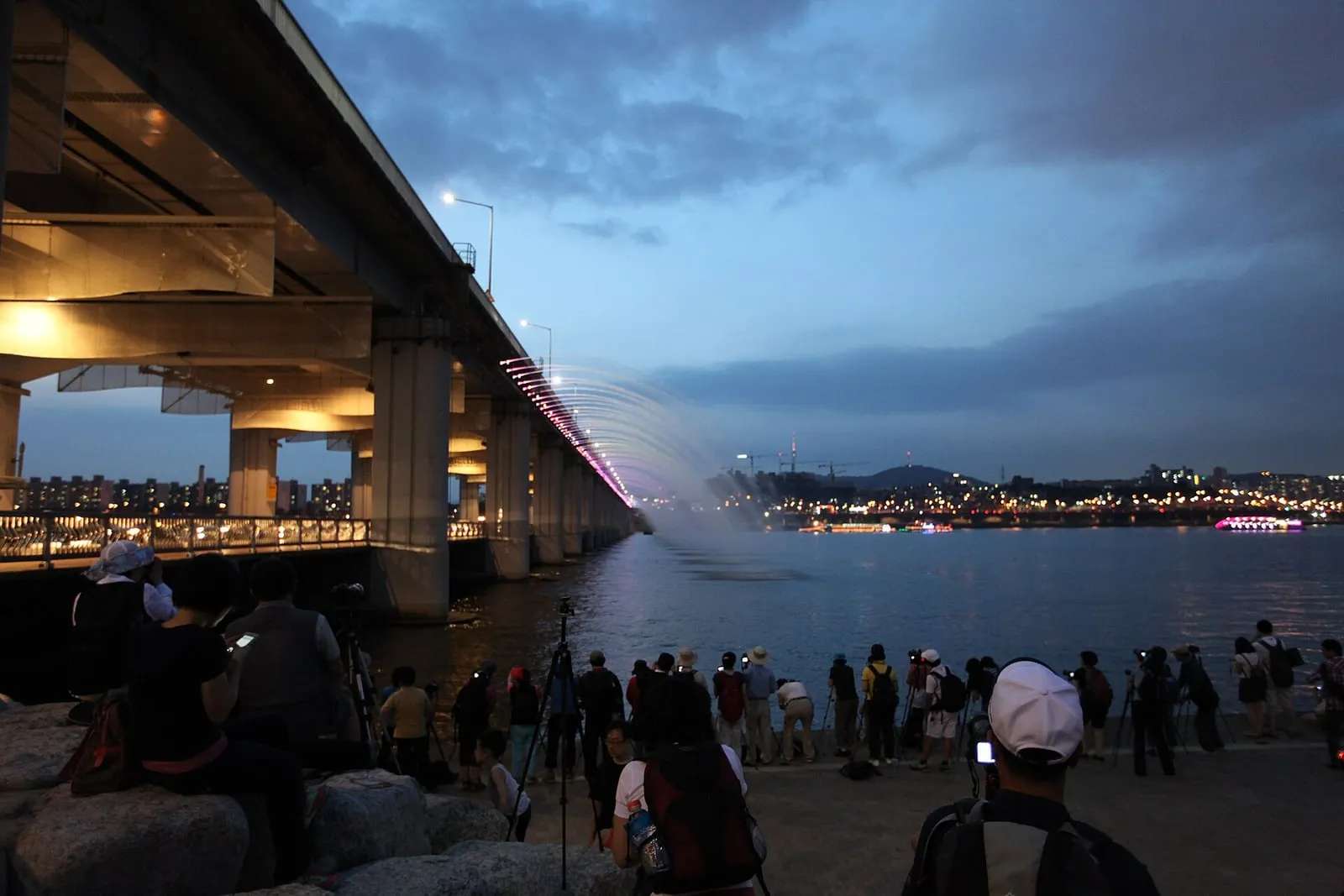
| Banpo Bridge Moonlight Rainbow Fountain | Free | Express Bus Terminal (Lines 3, 7, 9) or Sinbanpo | April–October: 19:30, 20:00, 20:30, 21:00 | World’s longest bridge fountain with 380 nozzles firing multicoloured water arches synchronised to music. |
| Hangang Parks (Yeouido & Ttukseom) | Free | Yeouinaru (Line 5) or Ttukseom Park (Line 7) | Open 24 hours daily | Expansive grassy riverbanks, cycling paths, and open-air riverside ramyeon cookers at convenience stores. |
| Royal Palace Entry in Hanbok | Free (standard entry 1,000–₩3,000) | Gyeongbokgung (Line 3) or Anguk (Line 3) | 09:00–17:00 or 18:00 (varies by palace) | Palace entry is free at Gyeongbokgung, Changdeokgung, Deoksugung, and Changgyeonggung when wearing Hanbok. |
| Jogyesa Temple | Free | Anguk Station (Line 3, Exit 6) | Main grounds open 24 hours daily | Chief temple of the Jogye Order of Korean Buddhism; features ancient pine trees and hundreds of lotus lanterns. |
| Bongeunsa Temple | Free | Bongeunsa Station (Line 9, Exit 1) | Daily 05:00–22:00 | Silla-era Buddhist temple in Gangnam housing a 23-metre stone Maitreya Buddha against glass skyscrapers. |
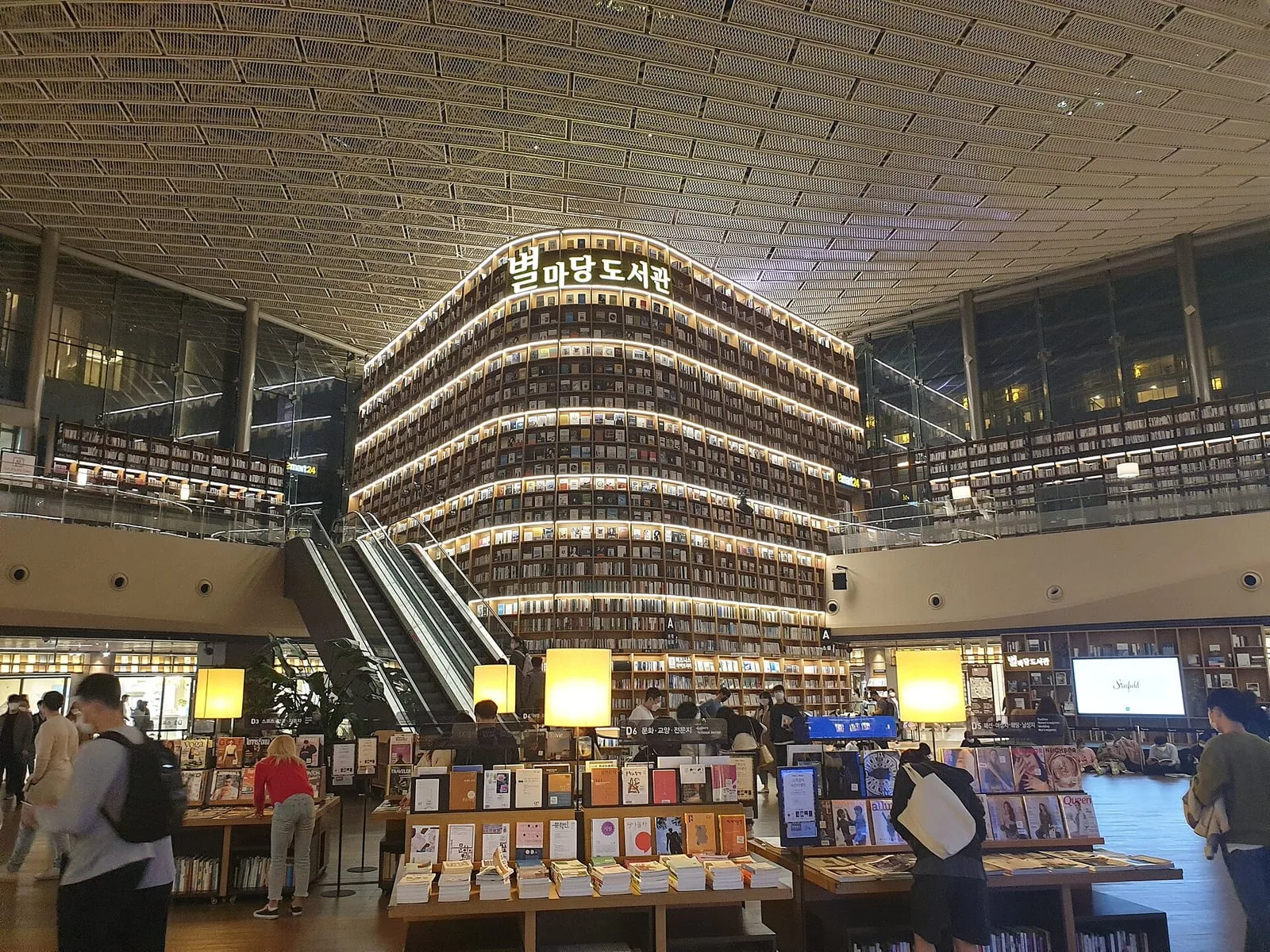
| Starfield Library at COEX | Free | Samseong Station (Line 2) or Bongeunsa (Line 9) | Daily 10:30–22:00 | Towering 13-metre illuminated wooden bookshelves holding over 50,000 volumes in an open public mall atrium. |
| Seoul Museum of History | Free | Seodaemun Station (Line 5, Exit 4) | Tue–Sun 09:00–18:00 (closed Mon) | Interactive exhibits tracing Seoul’s transition from the prehistoric era through the Joseon dynasty to modern times. |
| Oil Tank Culture Park | Free | World Cup Stadium Station (Line 6, Exit 2) | Outdoor park 24/7; pavilions Tue–Sun 10:00–18:00 | Five massive industrial oil storage tanks converted into eco-friendly exhibition halls, amphitheatres, and parks. |
1. National Museum of Korea
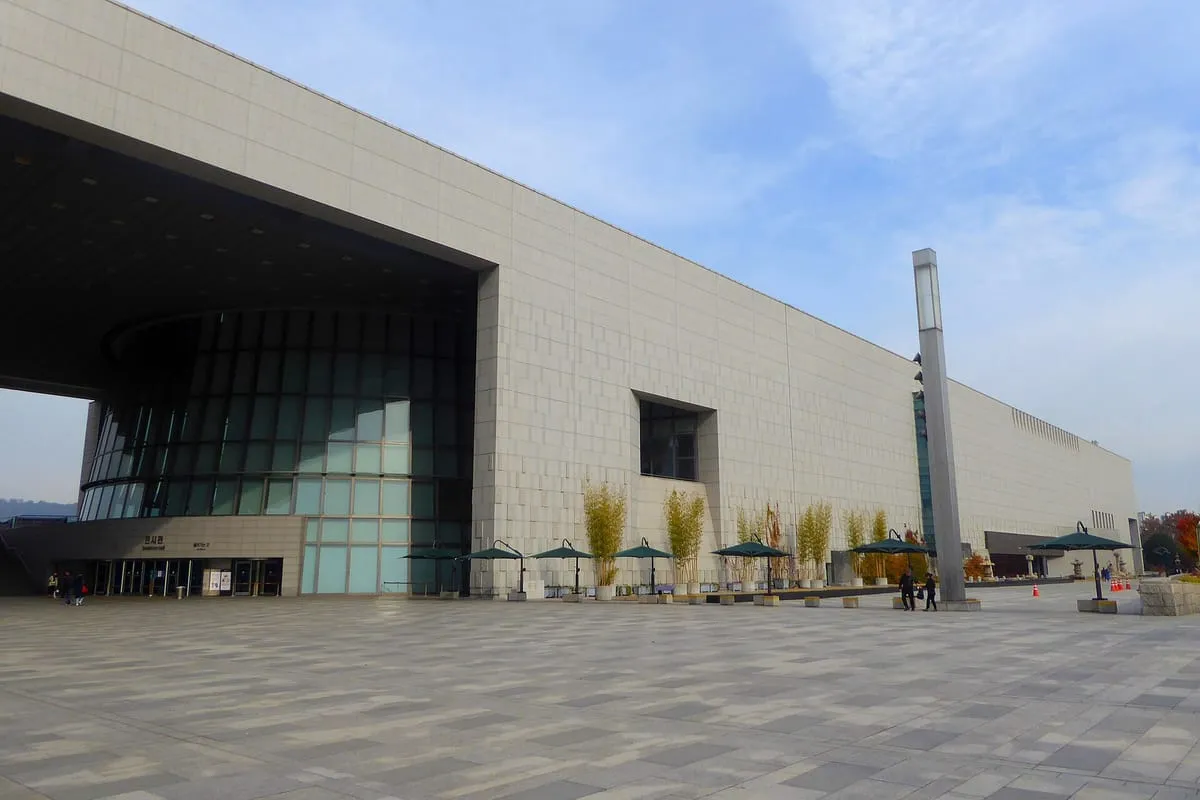
Situated in Yongsan-gu, the National Museum of Korea ranks among the largest cultural institutions in Asia, housing more than 400,000 historical artifacts and displaying roughly 12,000 relics at any time.
Gallery Organisation by Floor:
- Ground Floor (1F): Prehistory, ancient kingdoms (Goguryeo, Baekje, Silla), and Joseon royal archives
- Second Floor (2F): Calligraphy, paintings, donated private collections, and the Room of Quiet Contemplation
- Third Floor (3F): Buddhist sculpture, metal crafts, Asian art galleries, and Goryeo celadon ceramics
Admission to the permanent exhibition halls is completely free for everyone. Key masterworks include:
- The Room of Quiet Contemplation: A dimly lit, contemplative gallery displaying two gilded bronze Pensive Bodhisattva statues (National Treasures No. 78 and No. 83) dating from the late 6th and 7th centuries.
- Ten-Storey Stone Pagoda of Gyeongcheonsa Temple: A 13.5-metre marble pagoda carved with intricate Buddhist motifs in 1348, erected inside the museum’s light-filled central path.
- Goryeo Celadon and Joseon Porcelain: Galleries filled with jade-green incised celadon wares and minimalist white porcelain moon jars.
Practical information: Located at Ichon Station (Line 4 and Gyeongui-Jungang Line, Exit 2). Free lockers are provided near the main lobby. The permanent collection stays open late until 21:00 on Wednesdays and Saturdays.
2. Cheonggyecheon Stream
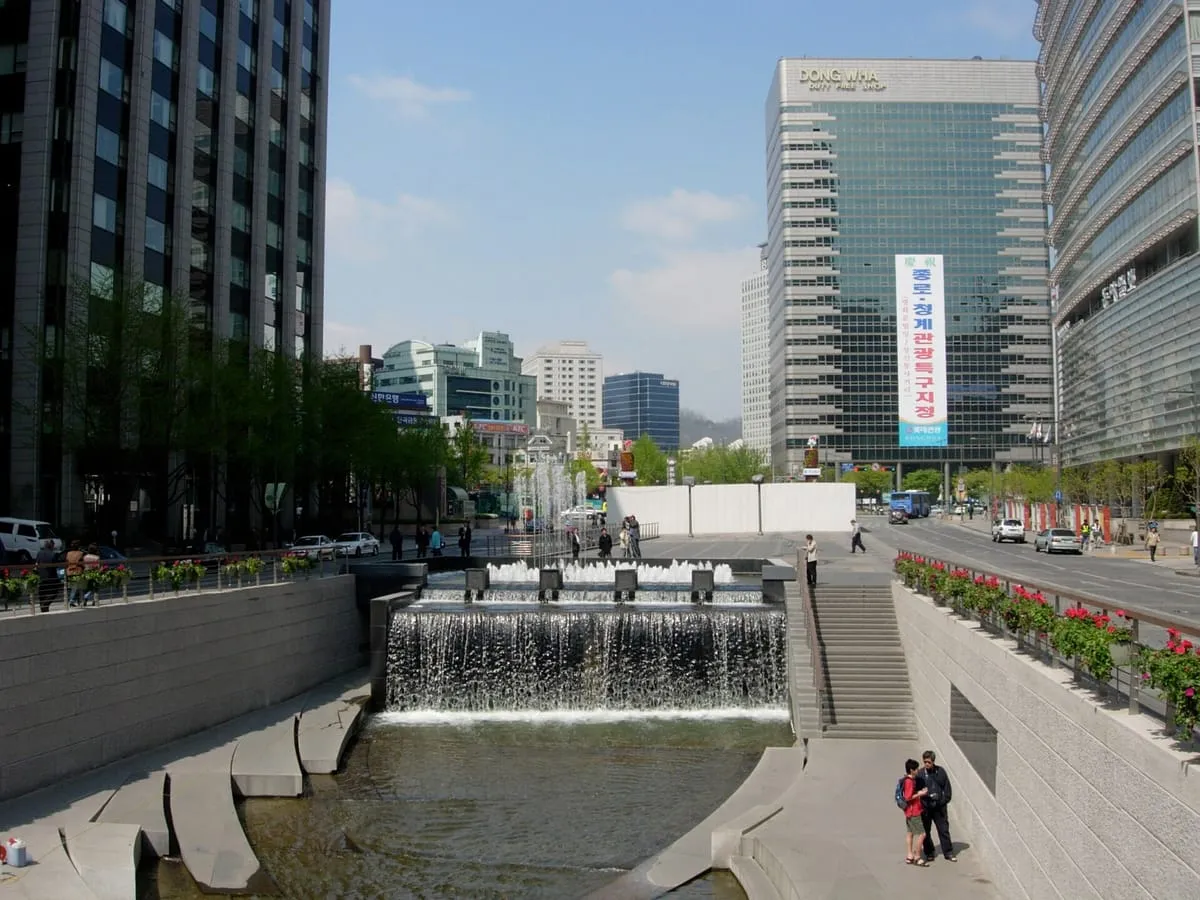
Running 11 kilometres straight through central Seoul, Cheonggyecheon is a prominent urban renewal project. Formerly concealed beneath a concrete expressway, the daylighted waterway was restored in 2005.
Cheonggyecheon Stream Walking Route (West to East):
- Cheonggye Plaza: Sunken stone plaza and two-tiered urban waterfall at Gwanghwamun
- Gwangtonggyo Bridge: Historic 15th-century Joseon stone bridge masonry
- Sewoon Plaza: 1960s elevated electronics structure spanning the stream
- Gwangjang Market: Covered traditional street food and textile market hub
Beginning at Cheonggye Plaza near Gwanghwamun Station (Line 5), the stream descends via a two-tiered stone waterfall into a sunken pedestrian canyon. The riverside promenade is lined with reeds, wild carp, and herons, with continuous walkways beneath 22 bridges. Stepping stones allow pedestrians to criss-cross between banks. At night, decorative bridge lighting and water fountains create a tranquil urban walk away from street-level traffic.
3. Seoul City Wall (Hanyangdoseong) trails
Constructed in 1396 to defend the Joseon capital, the Hanyangdoseong stone fortress originally spanned 18.6 kilometres along the ridges of Seoul’s four inner mountains: Baegaksan (Bugaksan), Naksan, Namsan, and Inwangsan. Today, over 70 percent of the wall is restored with publicly accessible trails that cost zero KRW to hike.
The Naksan Trail (Gentle evening stroll)
- Route: From Dongdaemun Gate (Heunginjimun) uphill through Naksan Park to Hyehwamun Gate.
- Distance: 2.1 km (approx 1 hour).
- Highlights: Low-gradient paved stone pathways lined with warm golden floodlights after sunset. The lookout platforms atop Naksan provide clear night vistas across the roofs of Daehangno and downtown Dongdaemun.
The Inwangsan Trail (Scenic granite hike)
- Route: From Sajik Park or Dongnimmun Station (Line 3) up the granite spine of Mount Inwangsan (338 m) to Changuimun Gate.
- Distance: 2.5 km (approx 1.5 to 2 hours).
- Highlights: Exposed granite trails fitted with wooden staircases. The mountain ridge provides unobstructed aerial views directly down onto the courtyards of Gyeongbokgung Palace, the Blue House, and the central skyline.
4. Banpo Bridge Moonlight Rainbow Fountain
Installed along both sides of Banpo Bridge, the Moonlight Rainbow Fountain holds the Guinness World Record as the longest bridge fountain on earth, measuring 1,140 metres in length.
Moonlight Rainbow Fountain Performance Schedule:
- Operating Season: Daily from April to October
- Evening Show Times: 19:30, 20:00, 20:30, and 21:00 (plus an extra 21:30 performance during peak summer in July and August)
- Show Duration: 20 minutes per performance
- Viewing Hub: Banpo Hangang Park waterside amphitheatre
A total of 380 submerged nozzles pump 190 tonnes of water per minute directly from the Han River, casting arches of water 43 metres across the surface. During evening shows, hundreds of colour-changing LED fixtures illuminate the water streams in synchronisation with a soundtrack of classical, pop, and traditional Korean music.
Getting there: Take Subway Lines 3, 7, or 9 to Express Bus Terminal Station (Exit 8-1 or 8-2) and walk 15 minutes south through the pedestrian tunnel to Banpo Hangang Park.
5. Hangang Parks and riverside culture
Seoul’s 11 riverside parks provide expansive open green corridors that cost nothing to access. They form the bedrock of local leisure culture, especially in spring and autumn.
- Yeouido Hangang Park: Situated in Seoul’s financial district (Yeouinaru Station, Line 5, Exit 2), this park features expansive manicured lawns, piano fountains, and sweeping sunset views over Mapo Bridge.
- Ttukseom Hangang Park: Located in eastern Seoul (Ttukseom Park Station, Line 7, Exit 2 or 3), known for windsurfing centres, riverside climbing walls, and the J-Bug cultural complex.
- Riverside Convenience Store Experience: While park entry is free, visitors regularly buy an instant ramyeon bowl (3,500–₩4,500) from on-site convenience stores (CU, GS25). The stores provide aluminium foil pans and automated induction machines that dispense boiling water and cook noodles in exactly three minutes to eat by the water.
6. Free royal palace entry with Hanbok
South Korea’s Cultural Heritage Administration encourages traditional dress by offering 100% free admission to any visitor wearing complete traditional Hanbok.
| Palace or historic site | Standard adult entry | Entry fee wearing full Hanbok |
|---|---|---|
| Gyeongbokgung Palace | ₩3,000 | ₩0 (Free) |
| Changdeokgung Palace (General Grounds) | ₩3,000 | ₩0 (Free) |
| Deoksugung Palace | ₩1,000 | ₩0 (Free) |
| Changgyeonggung Palace | ₩1,000 | ₩0 (Free) |
| Jongmyo Royal Shrine | ₩1,000 | ₩0 (Free) |
The Dress Code Rules: To qualify for free entry, both top (jeogori) and bottom garments (chima for women, baji for men) must be traditional Korean attire. Modern fusion hanbok with floral prints and lace are accepted at ticket gates. Numerous independent rental shops around Anguk and Gyeongbokgung stations rent outfits for ₩15,000 to ₩25,000 for two to four hours; while the rental has a fee, entering three palaces in a day offsets a noticeable portion of the hire.
Guided historical walking tours
While Seoul’s public parks, streams, and temples are completely free to enter, joining an expert walking tour adds deep historical context.
Seoul: Small Group History Walking Tour to Palaces & More
From ₩120,014 · 4.8 stars from 198 reviews · 3 hours · expert historian guide
Seoul: Gyeongbok Palace and Bukchon Hanok Walking Tourad: A 3-hour walking seminar decoding the history behind Seoul’s public landmarks and royal courtyards.
Seoul: Bukchon Tour with Local Storyteller
From ₩70,000 · 5 stars from 6 reviews · 2 hours · hanok alleyways & heritage
Bukchon Hanok Village: A Storytelling Walk with a Nativead: Walk through preserved traditional hanok residential lanes with a local storyteller.
Moonlight Seoul Night Tour
From ₩80,464 · 4.9 stars from 345 reviews · 5 hours · illuminated city landmarks
Seoul Han River Night Ferry: 63 Building & Gwangjang Marketad: Guided evening walking tour covering Cheonggyecheon Stream and the Naksan mountain ramparts.
7. Historic Buddhist temples and cultural centres
Two prominent Buddhist sanctuaries in central Seoul welcome international travellers to explore their grounds free of charge.
Jogyesa Temple
Located near Insadong (Subway Line 3, Anguk Station, Exit 6), Jogyesa is the chief administrative temple of Korean Seon (Zen) Buddhism.
Step quietly into the Daeungjeon (Main Hall) to admire three immense golden Buddhas illuminated by natural light. The courtyard features a 500-year-old lacebark pine tree (baeksong) and a seven-storey stone pagoda containing Buddhist relics brought from Sri Lanka. Thousands of colourful lotus paper lanterns are suspended in a geometric canopy overhead throughout the year.
Bongeunsa Temple
Located in the centre of Gangnam directly across from COEX Mall (Subway Line 9, Bongeunsa Station, Exit 1), Bongeunsa dates to 794 AD.
Its standout monument is the Maitreya Buddha, a towering 23-metre stone sculpture carved in 1996 that presides over an open hillside terrace. From this viewpoint, the serene ancient statue stands in striking visual contrast to the steel-and-glass towers of the modern business district behind it.
Starfield Library at COEX
Located on the lower ground level of Starfield COEX Mall (Samseong Station, Line 2), this public reading room is completely free to enter. Three 13-metre-tall illuminated wooden book towers house over 50,000 books and international periodicals. Visitors are welcome to sit at the communal reading tables, use free charging outlets, or attend weekend literary lectures and cultural performances.
For more planning advice and step-by-step route ideas, see our 3-day Seoul itinerary, explore the full list of things to do in Seoul, or discover our recommendations for visiting Seoul with kids.
Common questions
What major attractions in Seoul are completely free to enter?
The permanent collection of the National Museum of Korea, Cheonggyecheon Stream, the Seoul City Wall trails, Jogyesa Temple, Bongeunsa Temple, and Starfield Library at COEX Mall are entirely free of charge every operating day.
How do you get free admission to royal palaces in Seoul?
Any visitor dressed in traditional Korean Hanbok (traditional top and bottom garments) receives free admission to Gyeongbokgung, Changdeokgung (excluding Secret Garden tours), Deoksugung, Changgyeonggung, and Jongmyo Shrine.
When does the Banpo Bridge Rainbow Fountain show run?
The Moonlight Rainbow Fountain operates daily from April to October. Evening shows run at 19:30, 20:00, 20:30, and 21:00, with an additional 21:30 performance during peak summer months of July and August.
Is the Seoul City Wall hike free?
All sections of the 18.6-kilometre Seoul City Wall (Hanyangdoseong), including the Naksan mountain trail and Inwangsan ridge path, are open to the public free of charge without permits.