In this guide
💡 The Short Version: South Korean social etiquette is anchored in mutual civic consideration, hierarchy, and respect. In daily travel, the golden rules are simple: never sit in designated subway priority seats (even if empty), use two hands when handing over payment cards, cash, or drinks, remove your footwear before stepping onto raised wooden floors or entering homes, and never pour your own alcoholic drink when dining in company. Takeaway drinks are banned on municipal city buses. Tipping does not exist in Seoul; all prices quoted on menus and taximeters are completely final.
Core cultural concepts in South Korea
Everyday social behaviour in Seoul is influenced by deep-seated Neo-Confucian customs and traditional civic norms:
- Hierarchy and age: South Korean society places substantial weight on social seniority. Age and professional seniority determine speech formality and dining sequence. When in doubt, default to polite, respectful gestures with older residents.
- Two-handed respect (Duson): Whenever you give or receive an object—such as a credit card at a supermarket till, a business card, a gift, or a beverage—use both hands. If one hand must remain free, support your right forearm lightly with your left hand. Extending an item with a single, limp hand is viewed as dismissive.
- Civic space consideration (Nunchi): Public spaces in Seoul—especially mass transit—are shared with high communal consideration. Loud telephone conversations, playing audio without headphones, and intrusive public behaviour are socially sanctioned.
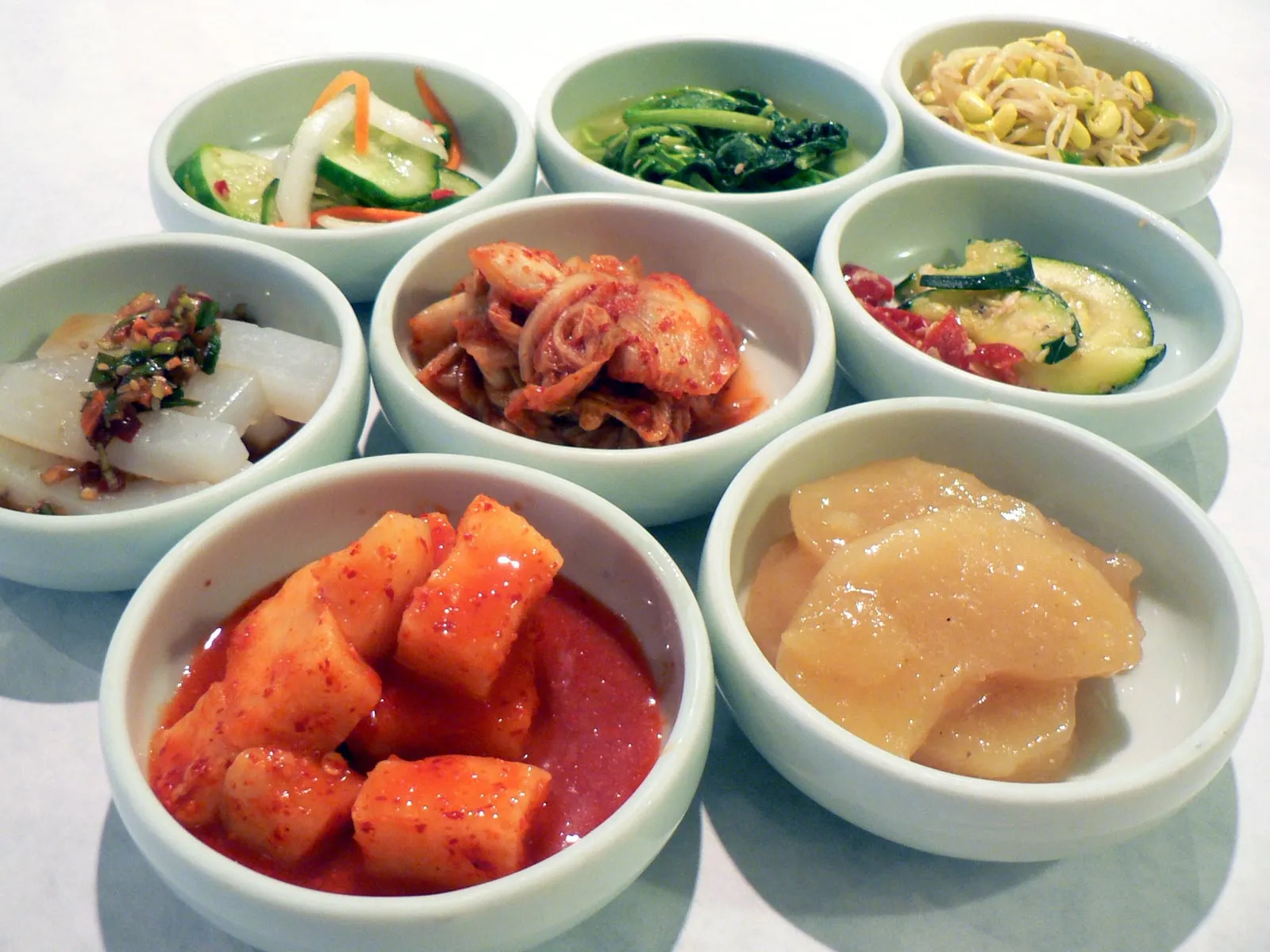
Banchan side dishes in small bowls. Photo: Korea.net, Wikimedia Commons, CC BY-SA 2.0.
Public transport manners
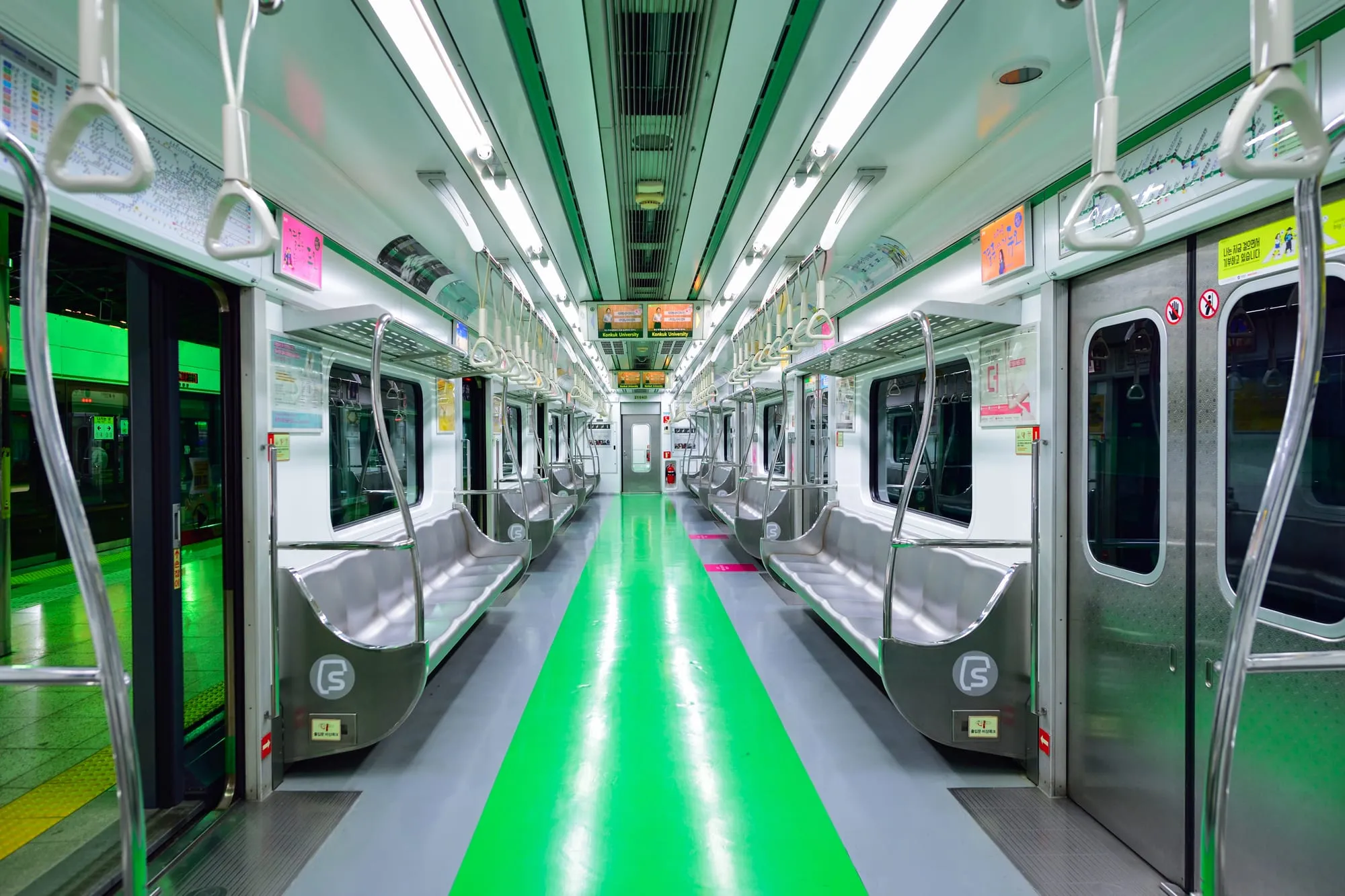
The Seoul Metropolitan Subway and municipal bus networks carry millions of daily commuters. Strict unwritten and statutory rules govern carriage etiquette:
| Transit situation | The correct behaviour | What to avoid |
|---|---|---|
| Priority seating (No-yak-ja-seok) | Leave end-of-carriage seats vacant for elderly, disabled, and injured passengers | Never sit here, even in an entirely empty train |
| Pink seats (Im-san-bu-seok) | Keep seats marked with bright pink badges vacant for expectant mothers | Sitting down and feigning sleep |
| Escalators | Stand on the right-hand side; walk on the left | Blocking the left passing lane with luggage |
| Backpacks & luggage | Place large backpacks between your feet on the floor or on overhead racks | Wearing bulky rucksacks that bump commuters |
| Food and beverages | Keep drinks sealed in bags; finish coffee before boarding | Carrying open takeaway cups onto city buses (drivers will reject boarding) |
| Phone conversations | Switch ringtones to silent (Manner Mode); keep urgent calls brief and hushed | Taking speakerphone calls or playing video aloud |
- Designated priority seats: Every subway car features sets of three seats at each carriage end marked with icons depicting elderly, pregnant, or disabled commuters. Do not sit in these seats, even if the entire carriage is empty. Locals consider occupying priority seats a major social infraction, and older passengers will verbally reprimand anyone who sits there inappropriately.
- The take-away cup ban on buses: Under Seoul municipal bylaws enforced by the Seoul Metropolitan Government, bus drivers are legally empowered and required to refuse entry to passengers carrying open cups containing hot coffee, iced lattes, bubble tea, or food items. Only drinks sealed in secure screw-top thermoses or packaged retail containers in shopping bags are permitted.
Dining etiquette and table manners
Dining in Seoul is communal, lively, and ritualised, especially when enjoying meals like Korean BBQ or stew (jjigae).
Cutlery and chopsticks
Traditional Korean cutlery consists of a flat, stainless steel spoon (sujeo) and a pair of matching metal flat chopsticks (jeotgarak):
- Role of the spoon: In Korea, unlike in Japan or China, rice and soups are eaten strictly with the spoon, while side dishes (banchan) and grilled meats are handled with chopsticks. Never use chopsticks to scoop rice into your mouth.
- Never stick chopsticks vertically into rice: Sticking metal chopsticks upright into a bowl of white rice mimics incense burners at ancestral memorial ceremonies (Jesa) and funeral rites. It is a severe cultural taboo. Rest cutlery flat across the ceramic holder or tabletop.
- Do not lift your rice bowl: Do not pick up your ceramic rice or soup bowl to bring it closer to your face while eating. Keep the bowl resting on the table and bring the spoon to your mouth.
Communal side dishes (banchan)
Korean dining tables are covered in a multitude of complimentary refillable side dishes (banchan), including kimchi, pickled radish, and seasoned vegetables:
- Free refills: When a side dish runs out, ask the staff for more by saying “deo juseyo” (more please). Banchan refills are complimentary across practically all authentic Korean dining establishments.
- Table service bells: Most Korean dining tables feature a small electronic call button affixed to the tabletop or wall. Press it once when you are ready to order, request water, or ask for the bill. Do not yell across the dining room if a call button is present.
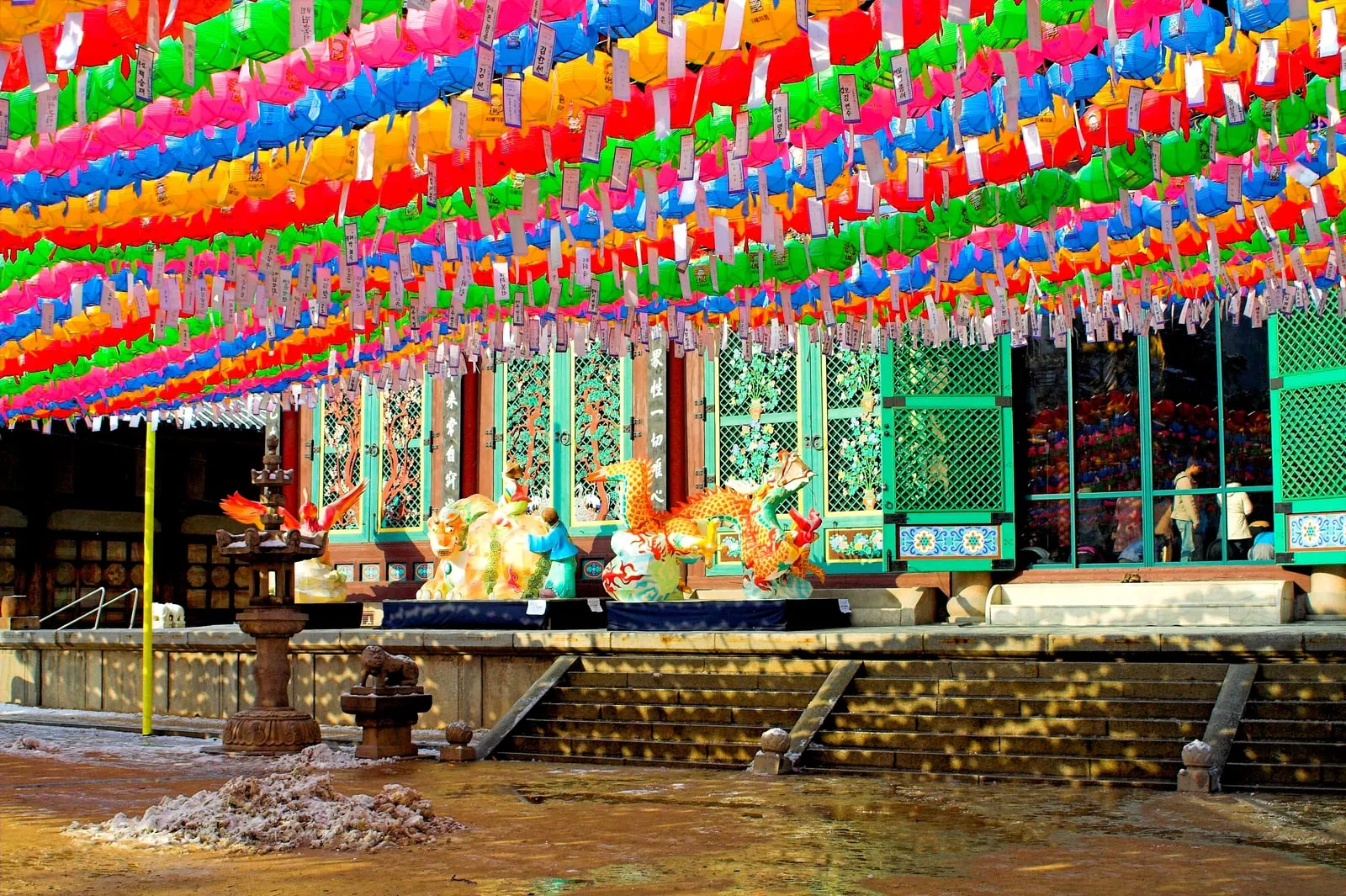
Lanterns and dancheong-painted eaves at Jogyesa Temple. Photo: Daderot, Wikimedia Commons, CC0 1.0.
Drinking culture and alcohol etiquette
Social drinking—primarily of soju and chilled beer (maekju)—plays an enormous role in South Korean business and personal relationships. Several foundational rituals apply:
- Never pour your own drink: It is customary to pour drinks for others at the table, and to allow dining companions to pour yours. Pouring your own alcohol is thought to bring bad luck or suggest inattention from table partners.
- Receiving a drink: When someone senior or of equal status pours for you, hold your shot glass or beer cup with both hands (or with your right hand, left hand supporting the wrist). Nod gently in appreciation.
- Pouring for others: When pouring alcohol for a companion, grasp the bottle with your right hand while resting your left palm against your right wrist, forearm, or chest.
- Turning away to drink: If drinking in the company of someone visibly older or senior in status, turn your head and torso discreetly to the side—away from their direct line of sight—while taking a sip, shielding the glass lightly with your free hand. Gulping alcohol directly face-to-face with an elder is considered disrespectful.
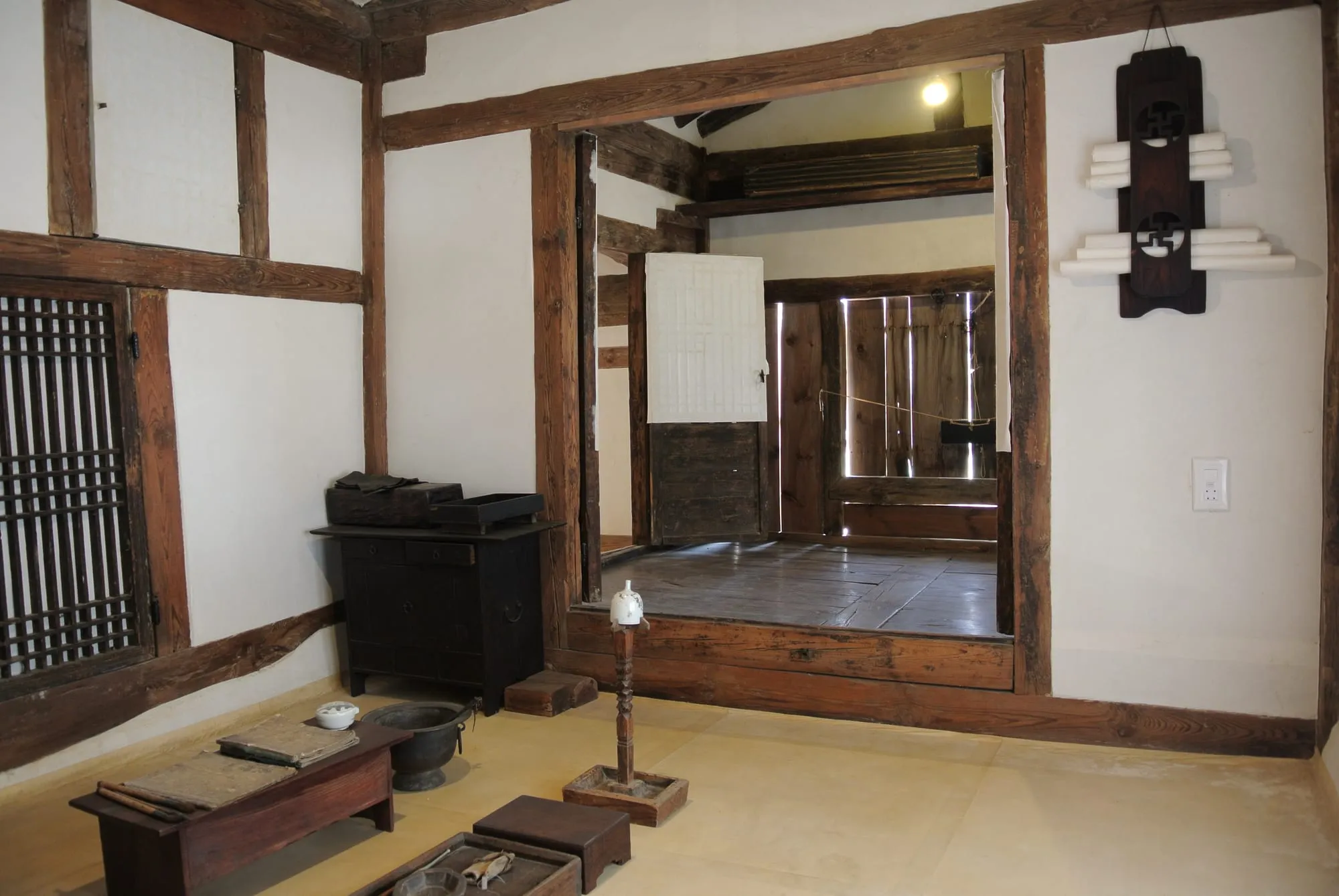
Shoe removal and indoor footwear
Taking off your outdoor shoes is mandatory before crossing the threshold of many Korean spaces:
- Where to remove shoes:
- Private residences and hanok guesthouses.
- Temple accommodation, meditation halls, and living quarters.
- Traditional restaurants featuring raised wooden flooring platforms with low tables (ondol).
- Martial arts studios and traditional tea houses.
- How to manage footwear: Step onto the sunken stone entryway (hyeon-gwan), unlace or slip off your shoes, and step directly up onto the raised clean floorboards without letting your socks touch the dirty sunken stone floor. Turn your shoes around so the toes point outward toward the door.
- Wear clean socks: Since footwear is removed frequently, always ensure you wear clean, matching socks without holes or worn heels.
- Bathroom slippers: In Korean homes and guesthouses, private bathrooms feature a wet floor design. You must step into the dedicated rubber bathroom slippers kept inside the bathroom door, and remove them immediately when stepping back into the living room.
Temple and palace respect
When visiting spiritual and historic heritage sites such as Jogyesa Temple, Bongeunsa, or royal Joseon palaces like Gyeongbokgung:
- Temple main halls (Daeungjeon): Enter through side doors rather than the central front doorway, which is traditionally reserved for monastics. Step over the raised wooden door sill (muntteok); never step directly onto the threshold beam itself.
- Dress modestly: While casual attire is fine in courtyards, avoid bare shoulders and short shorts when entering prayer sanctuaries. Remove hats and sunglasses before bowing or inspecting Buddha statues.
- Photography inside shrines: Photography of active prayer halls and monastics during chanting ceremonies is strictly forbidden. Look for posted signage or ask permission before raising cameras.
Recycling and waste disposal (Jongnyangje)
Seoul operates one of the strictest municipal waste sorting and volume-rate garbage systems in the world, governed under the Ministry of Environment:
- Lack of public street bins: Street litter bins are rare across Seoul’s pavements. Pedestrians are expected to carry their waste until they find a subway station disposal point or return to their accommodation.
- Four-tier separation:
- Plastics, glass, and cans: Rinsed and deposited into marked recycling bins.
- Food waste (Eumsik-mul): Separated strictly from general trash; discarded in designated yellow food disposal containers.
- General waste (Ilban Sseuregi): Discarded only in prepaid, colour-coded district waste bags (jongnyangje bongtu) purchased at convenience stores.
- Paper and cardboard: Flattened and stacked separately.
Common questions
Where do you have to take off your shoes in Seoul?
You must remove your shoes when entering private homes, traditional Korean guesthouses (hanok), temple accommodation, and restaurants that feature raised wooden ondol dining platforms with floor cushions.
Can you drink and eat on the subway in Seoul?
No. Eating food or drinking open beverages is strictly forbidden on Seoul municipal buses (drivers will refuse boarding with takeaway coffee cups), and strongly discouraged on Seoul Metro trains and station platforms.
How do you accept or give items politely in Korea?
Always use two hands—or support your right wrist/forearm lightly with your left hand—when handing over or receiving payment cards, cash, business cards, or pouring drinks for others.
Is tipping expected anywhere in Seoul?
No. Tipping is not part of South Korean culture. Restaurant bills, taxi meters, and bar tabs represent the complete, final amount, inclusive of all taxes and service charges.