In this guide
💡 The Short Version: A visit to a traditional Korean bathhouse (jjimjilbang) combines therapeutic hot mineral soaking, full-body exfoliation, and relaxing communal sauna culture. Standard daytime admission costs between ₩12,000 and ₩18,000, rising to ₩16,000–₩25,000 for overnight stays. The facility is divided into two distinct zones: strictly gender-separated, fully naked hot and cold soaking pools (mogyoktang), and a large unisex communal lounge (jjimjilbang) where all visitors wear cotton shorts and shirts provided at entry. Essential experiences include getting a professional exfoliating body scrub (seshin, ₩30,000–₩40,000) and sampling baked kiln eggs (maekbanseok gyeran) with sweet fermented rice punch (sikhye) on heated ondol floorboards.
What is a jjimjilbang?
In South Korean culture, a bathhouse facility operates on two distinct functional tiers:
- Mogyoktang (The Bathhouse): Strictly segregated by gender. Contains multiple mineral soaking pools heated to varying temperatures (ranging from lukewarm 38°C to steaming 44°C, alongside chilled 14°C plunge pools), dry and steam herbal saunas, sit-down shower washing cubicles, and scrub treatment tables. Complete nudity is mandatory here; swimwear and underwear are strictly prohibited.
- Jjimjilbang (The Communal Lounge): A sprawling co-ed relaxation and social complex shared by families, couples, and friends. After bathing and drying off, visitors change into a matching set of loose-fitting cotton t-shirts and shorts (jjimjilbang-bok) provided at the reception desk. This area houses heated mineral kilns, sleeping areas, snack cafes, massage chairs, and entertainment rooms.
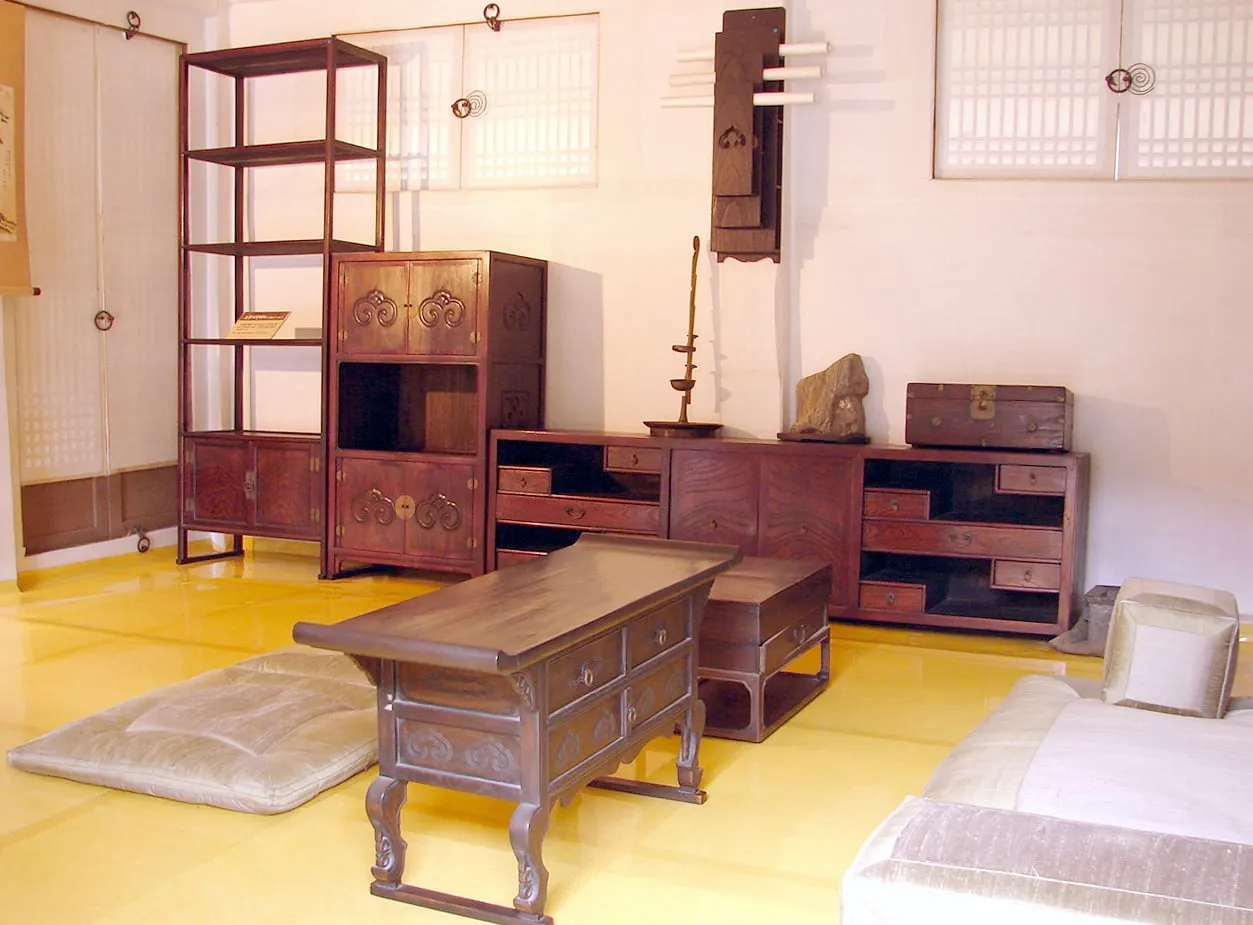
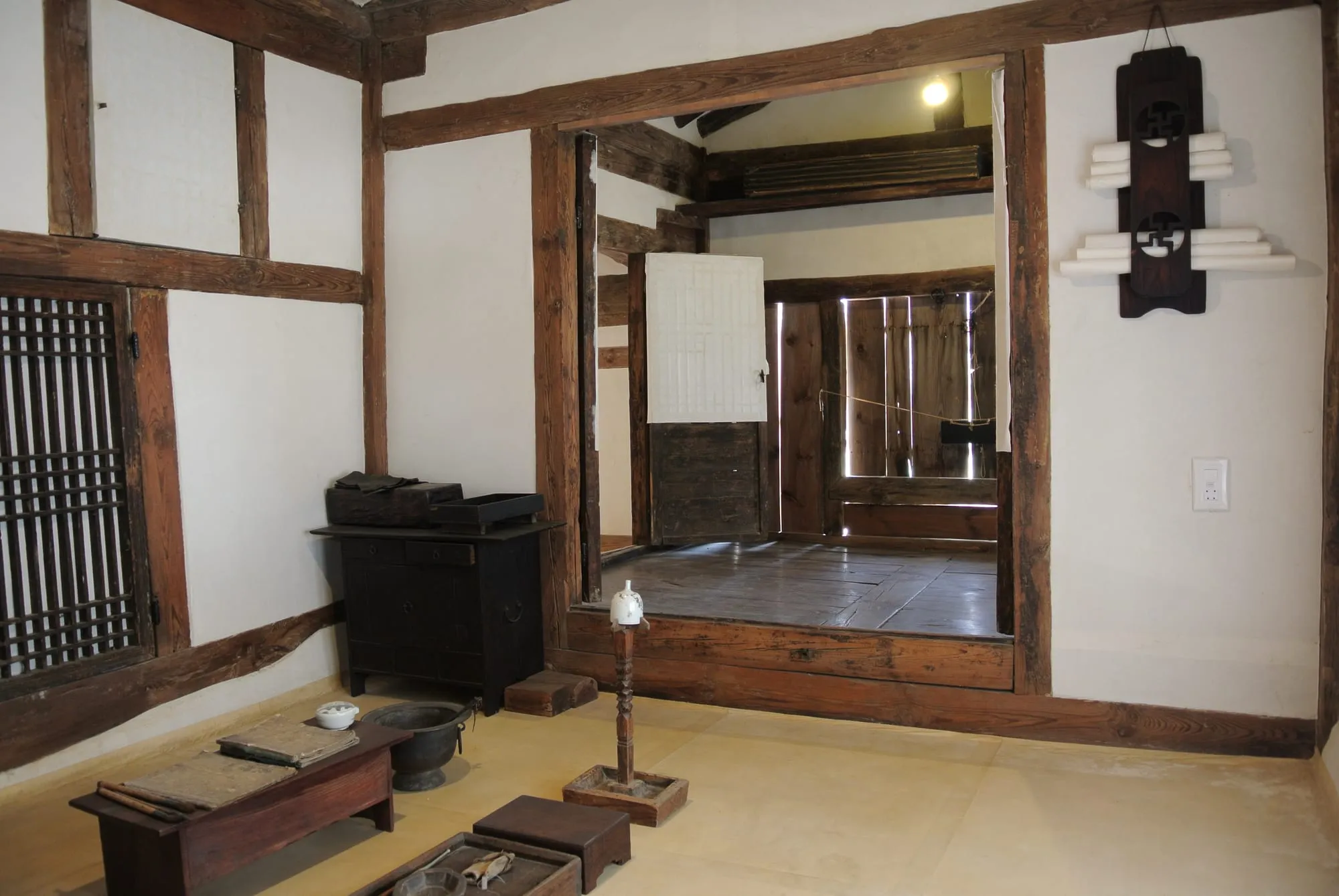
A hanok room with an oiled-paper ondol floor at Namsangol Hanok Village. Photo: Korea.net, Wikimedia Commons, CC BY-SA 2.0.
Step-by-step visit walkthrough
Visiting a Korean bathhouse follows a structured sequence:
1. Reception and locker entry
Pay the admission charge at the front counter. You will receive:
- Two small cotton face towels (in women’s sections, towels are often handed out in pairs; men’s locker rooms typically stock unlimited towels inside).
- A two-piece set of cotton clothing (shorts and a short-sleeved t-shirt).
- An electronic wristband key (key-ring). This key number corresponds to both your shoe locker at the entrance and your main clothing locker inside the changing room. The wristband also acts as a digital charge wallet for snack purchases and scrub treatments; accumulated charges are settled at the front desk when leaving.
2. Locker room and washing protocol
Remove your footwear and lock them in your numbered shoe locker before proceeding past the gender curtain. Inside the main changing room, locate your full-height locker, strip off all clothing and jewellery, and place your belongings inside. Carry only your locker wristband and a small face towel into the bathing hall.
Crucial rule: Wash thoroughly before entering any pool. Walk directly to the open washing stalls, which feature individual plastic stools, mirrors, and handheld shower heads. Sit on a stool and wash your body and hair entirely using soap and shampoo before stepping into any communal bath. Entering a soaking pool unwashed is considered a major breach of etiquette.
3. Soaking and sauna therapy
Begin soaking in the warm pool (typically 38°C to 40°C) for 10 to 15 minutes to open pores and soften the skin. Rotate between hotter herbal baths (infused with ginseng, mugwort, or green tea) and the cold plunge pool (14°C to 18°C) to stimulate circulation. Keep your head above water at all times; do not submerge your hair into the soaking pools, and place your damp hand towel on your head or beside the pool edge rather than letting it float in the water.
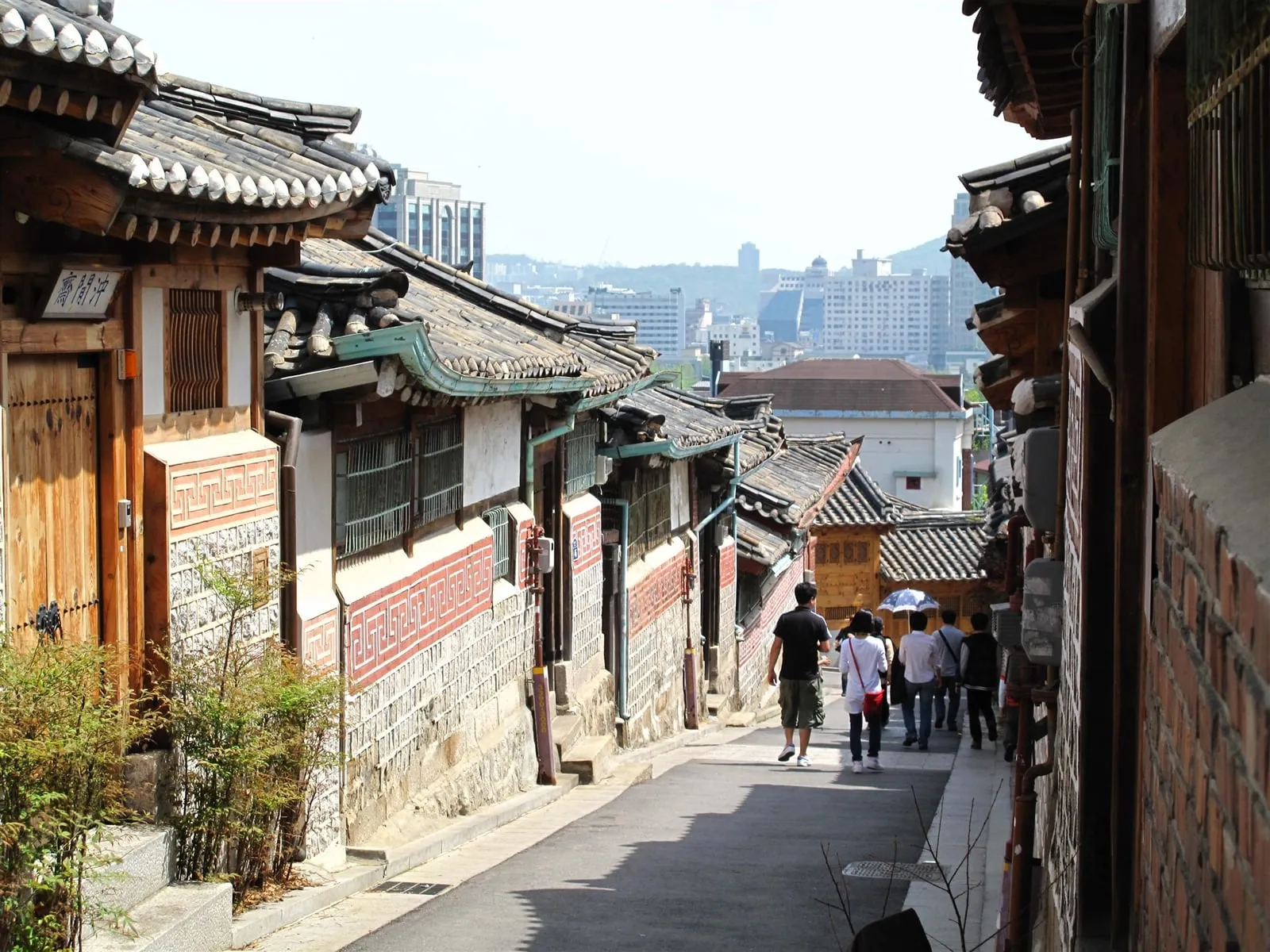
Tiled hanok rooftops along a lane near Insadong. Photo: Daderot, Wikimedia Commons, CC0 1.0.
The Korean body scrub (seshin)
The signature therapeutic treatment in a Korean bathhouse is seshin—an invigorating, clinical-grade full-body exfoliation administered by licensed professional scrub practitioners (known as ajumma in the female section and ajusshi in the male section).
- How it works: After soaking in hot pools for at least 20 to 30 minutes to thoroughly soften dead skin cells, approach the scrub tables located in the corner of the wet bath area. Write your locker number on the booking whiteboard or speak directly with the attendants.
- The experience: You lie naked on an impermeable vinyl table. The practitioner uses abrasive, textured viscose scrubbing mitts (known as ‘Italy towels’, Itaelli tawol) to rub every centimetre of your body with methodical, firm pressure. Rolls of grey, dead exfoliated skin (ttae) accumulate on the table surface as dead dermal layers are stripped away.
- Treatment options and pricing:
- Standard full-body scrub (30 to 40 minutes): ₩30,000 to ₩40,000
- Scrub plus oil massage and shampoo (50 to 60 minutes): ₩50,000 to ₩65,000
- Deluxe scrub with cucumber or seaweed facial mask: ₩70,000 to ₩90,000
- Aftercare: The attendant finishes by rinsing you down with warm water. Your skin will feel remarkably smooth and soft. Moisturise thoroughly in the powder room afterwards.
Communal sauna kilns and relaxation zones
Once bathed, dry off completely in the locker room, put on your provided cotton uniform, and proceed to the communal jjimjilbang lounge.
The communal area features a variety of themed therapeutic heated rooms:
- Bulgama (Traditional Charcoal Kilns): Dome-shaped brick ovens heated by burning pine wood to blistering temperatures between 70°C and 100°C. Visitors wrap themselves in heavy cotton hessian blankets before sitting inside to induce intense, detoxifying perspiration.
- Hwangto-bang (Red Clay Rooms): Lined with Korean red clay bricks heated to 50°C–60°C, emitting far-infrared radiation said to soothe muscular aches.
- Salt and Jade Rooms: Walls paved with natural Himalayan pink salt crystals or cold Gangwon jade tiles, held at gentle warmth (45°C–55°C).
- Ice Rooms (Eoleum-bang): Refrigerated chambers chilled to 5°C–10°C, designed to close pores and rapidly drop core body temperature after intense kiln sessions.
Bathhouse snack culture
No jjimjilbang visit is complete without eating at the internal communal cafeteria. Two items are cultural institutions:
| Snack / Drink | Korean name | Approximate price | Description |
|---|---|---|---|
| Baked Sauna Eggs | Maekbanseok Gyeran | ₩2,500–₩3,500 (set of 3) | Eggs baked inside heated mineral kilns for up to 7 hours until shells turn brown, whites become rubbery and nutty, and yolks stay creamy. Crack them against your forehead or the floor. |
| Sweet Rice Punch | Sikhye | ₩3,500–₩4,500 | Chilled traditional beverage brewed from malt water and cooked rice, served with floating rice grains and pine nuts in a large plastic canteen with a straw. |
| Cold Buckwheat Noodles | Mul-naengmyeon | ₩8,000–₩10,000 | Chewy buckwheat noodles served in an icy, tangy beef broth; the classic post-sauna cooling meal. |
| Seaweed Soup | Miyeok-guk | ₩7,000–₩9,000 | Nutrient-dense traditional seaweed broth with beef, historically consumed by new mothers and eaten after baths to replenish minerals. |
Staying overnight: practical rules
Jjimjilbangs operate 24 hours a day and represent South Korea’s ultimate budget overnight stay option.
- Admission structure: Standard daytime tickets allow stays of up to 10 or 12 hours. Arriving or remaining past the overnight cutoff threshold (typically 21:00 or 22:00) incurs an overnight surcharge of ₩4,000 to ₩7,000, bringing total admission to approximately ₩18,000–₩25,000.
- Sleeping arrangements: Sleeping takes place directly on the shared ondol (underfloor-heated) linoleum floorboards in the communal hall or designated quiet sleeping chambers (surim-sil), which are frequently segregated by gender. Guests collect thin vinyl sleeping mats (yo) and firm wooden or leather-covered neck blocks from storage stacks.
- Noise and comfort: Eye masks and foam earplugs are essential, as communal rooms experience frequent snoring, ambient foot traffic, and early-morning light.
- Luggage storage: Carry-on rucksacks and day bags fit easily into standard personal changing lockers. Large international check-in suitcases must be deposited with front reception staff, who store them in secure luggage bays behind the counter for a modest fee (often ₩2,000–₩5,000 or included with admission).
Bathhouses in Seoul
While several mega-complexes closed during pandemic redevelopment, high-quality, authentic bathhouses operate across key neighbourhoods:
| Venue | Neighbourhood | Nearest subway station | Notable features |
|---|---|---|---|
| Spa Lei | Sinsa-dong (Seocho-gu) | Seoul Metro Sinsa Station (Line 3, Exit 5) | Women-only luxury facility; features mineral mud baths, rooftop sundeck, and exceptional scrub practitioners. |
| Club K Seoul | Yeoksam-dong (Gangnam) | Seoul Metro Seolleung Station (Line 2 & Suin-Bundang, Exit 8) | Modern, design-forward underground wellness lounge combining books, artisan cafe, and quiet stone saunas. |
| Sparex Dongdaemun | Dongdaemun (Jung-gu) | Seoul Metro Dongdaemun History & Culture Park Station (Lines 2, 4, 5, Exit 14) | Located on basement levels B3/B4 of Good Morning City shopping mall; convenient location with traditional hanok-style communal pavilions. |
| Forest Hanbang Land | Bongwon-dong (Seodaemun-gu) | Seoul Metro Sinchon Station (Line 2); transfer to Bus 7024 | Famous outdoor wood-fired pine charcoal kilns (charcoal bulgama) located on the hillside below Ansan Mountain; rustic and highly authentic. |
For travellers visiting Sparex Dongdaemun, the complex sits directly across from the illuminated curves of Dongdaemun Design Plaza (DDP), making it an ideal stop after exploring night markets. Before visiting any bathhouse, familiarise yourself with social customs in our Seoul etiquette guide, and check late-night bus schedules in our Seoul public transport guide if travelling after the subways close. If you prefer conventional accommodation over sleeping on an ondol floor, browse our recommendations on where to stay in Seoul.
Common questions
Are you completely naked in a Korean bathhouse?
Yes, inside the gender-segregated wet bath areas (mogyoktang). You must remove all clothing, including swimwear, before entering the baths. In the unisex communal sauna and relaxation zones (jjimjilbang), everyone wears the matching cotton shirt and shorts provided at check-in.
How much does a jjimjilbang in Seoul cost?
Daytime admission (typically up to 12 hours) ranges from ₩12,000 to ₩18,000 for adults, including rental of the cotton uniform and towels. Overnight admission (staying past 21:00 or 22:00) costs between ₩16,000 and ₩25,000.
Can foreigners stay overnight at a jjimjilbang?
Yes. Many budget travellers and late-night arrivals use jjimjilbangs as inexpensive overnight accommodation. You sleep on communal heated ondol floors or in sleep capsules with padded mats and wooden pillows.
What is a Korean body scrub (seshin)?
Seshin is an invigorating full-body exfoliating treatment performed by a professional scrubber (known as an ajumma for women or ajusshi for men) using textured viscose mitts to strip away dead skin cells after soaking.