In this guide
💡 The Short Version: While Iceland is often perceived as an expensive sub-arctic destination, central Reykjavik offers a rich collection of architectural landmarks, open-air sculptures, and coastal walks that cost absolutely nothing. The essential free highlights include stepping inside the soaring concrete nave of Hallgrímskirkja, admiring the harbour light reflections through the glass honeycomb facade of Harpa, photographing the Sun Voyager against Mount Esja, inspecting the massive 3D relief map of Iceland in City Hall, strolling the mythological Einar Jónsson Sculpture Garden, and exploring the tidal tombolo at Grótta lighthouse. If you plan to visit ticketed museums and public pools, compare their gate fees with the Reykjavik City Card.
Reykjavik’s compact, pedestrian-friendly layout makes it exceptionally easy to construct an inspiring cultural walking tour that requires zero spending. Because Icelandic public philosophy emphasizes accessible civic architecture and open public spaces, travellers can explore modern concert halls, heritage gardens, and coastal nature reserves without purchasing expensive tickets.
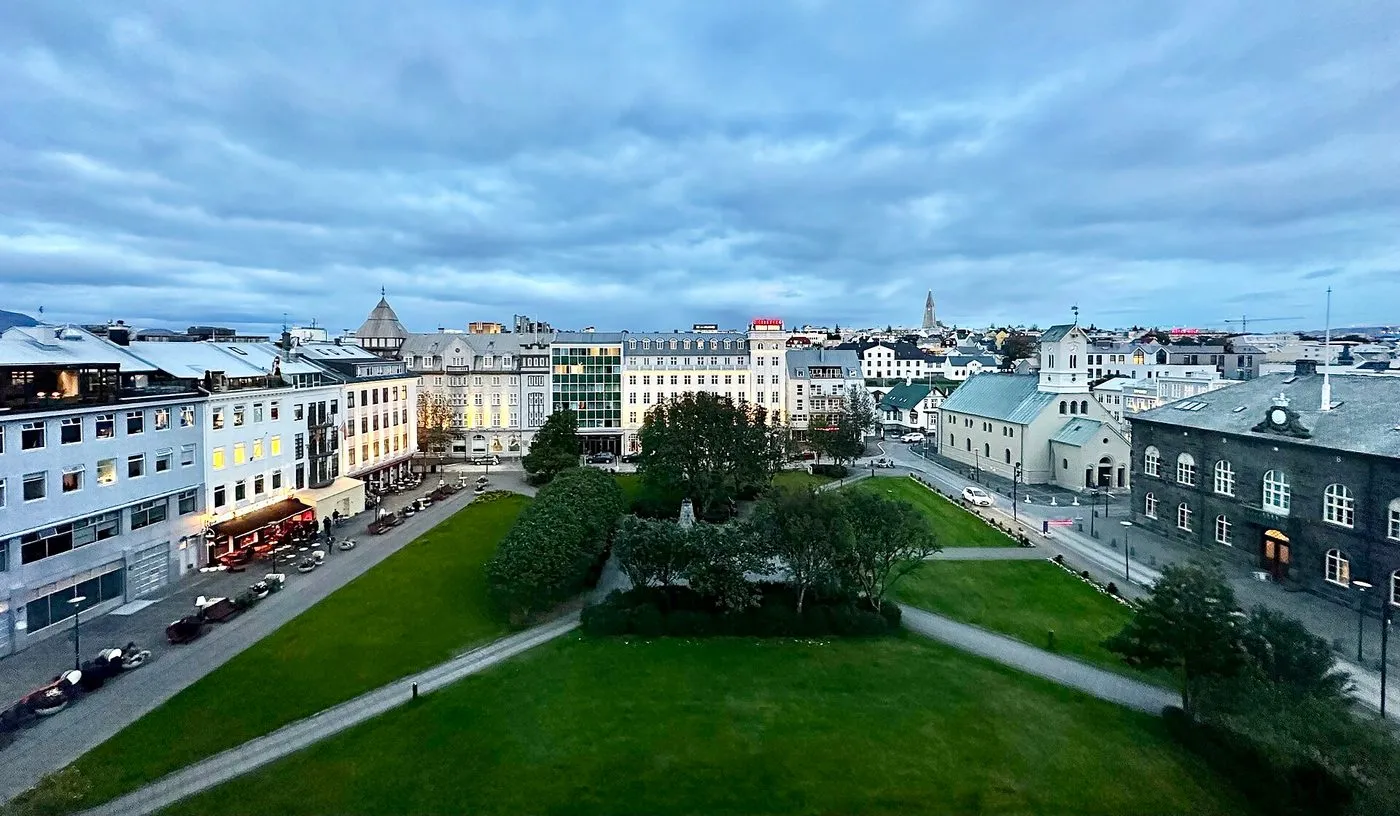 Austurvöllur square, with the cathedral beyond. Photo: APK, Wikimedia Commons, CC BY-SA 4.0.
Top free sights and attractions at a glance
| Free attraction | Location / neighbourhood | Opening hours | Highlights & features | Visiting tips |
|---|---|---|---|---|
| Hallgrímskirkja Nave | Hallgrímstorg (Top of 101) | Winter 10:00 to 17:00, longer in summer | Soaring concrete Gothic vault, 5,275-pipe Klais organ | Church nave is free; optional tower lift ticket costs 1,500 ISK |
| Harpa Public Foyers | Austurbakki 2 (Old Harbour) | Sun–Tue 10:00 to 18:00, Wed–Sat 10:00 to 20:00 | Glass facade designed by Ólafur Elíasson | Free entry to all public levels and harbour viewing balconies |
| The Sun Voyager (Sólfar) | Sæbraut seaside promenade | Accessible 24/7 | Stainless-steel Viking-inspired tribute to the sun | Backdrops at sunrise, sunset and under auroras |
| City Hall 3D Relief Map | Tjarnargata 11 (Lake Tjörnin) | Mon–Fri 08:00–18:00, Sat 10:00–18:00, Sun 12:00–18:00 | 76.4 $m^2$ topographical 3D model of Iceland (scale 1:50,000) | Located in Tjarnarsalur hall; occasionally closed during private events |
| Einar Jónsson Sculpture Garden | Eiríksgata (Behind Hallgrímskirkja) | Open 24/7 year-round | 26 monumental bronze sculptures set in landscaped gardens | Museum inside is ticketed; the rear outdoor garden is always free |
| Lake Tjörnin & Austurvöllur | Central Old Town | Accessible 24/7 | Bird sanctuary, swans, ducks, Parliament House facade | Feeders prohibited in summer to protect ducklings from gulls |
| Grótta Nature Reserve & Footbath | Seltjarnarnes Peninsula | Low tide only; closed 1 May to 15 July | Historic lighthouse, coastal birdlife, free Kvika hot footbath | Check tide tables; time your crossing before the causeway floods |
| Reykjavik Botanic Garden | Laugardalur Valley | Open daily dawn to dusk | Over 5,000 sub-arctic and alpine plant species | Adjoins free walking paths in Laugardalur park |
1. Hallgrímskirkja: the church nave and plaza
While ascending the 73-metre bell tower requires an admission ticket (1,500 ISK adult), walking into the vast main sanctuary of Hallgrímskirkja is completely free of charge.
Commissioned in 1937 and designed by state architect Guðjón Samúelsson, the church draws architectural inspiration from the volcanic geology of Iceland, specifically the cooling hexagonal columns of basalt found at Svartifoss and Reynisfjara.
Inside, the light-filled nave exhibits a soaring, minimalist concrete Gothic vault stripped of ornate gilded ornamentation, directing all attention toward natural northern light and acoustics. At the rear of the nave stands Iceland’s largest musical instrument: a monumental 15-metre-tall pipe organ constructed by Johannes Klais Orgelbau of Bonn, Germany. Boasting 5,275 pipes, four manuals, and 72 stops, the organ produces reverberations throughout the concrete hall.
Outside on the public plaza, inspect the imposing bronze statue of Norse explorer Leif Erikson (Leifur Eiríksson), sculpted by Alexander Stirling Calder and presented to the people of Iceland by the United States Congress in 1930 to commemorate the millennium of the founding of Alþingi.
Opening hours: 10:00 to 17:00 in winter, longer in summer; closed to sightseers during services, weddings and rehearsals.
2. Harpa Concert Hall: the Olafur Eliasson glass facade
Perched directly over the harbour water, Harpa Concert Hall is one of Scandinavia’s most celebrated architectural achievements. The building’s geometric southern facade—a shimmering matrix of steel and twelve-sided glass bricks known as quasi-bricks—was engineered in collaboration with Danish-Icelandic artist Ólafur Elíasson.
Visitors are entirely free to enter the main revolving doors, walk the sweeping geometric black concrete staircases, and wander the multi-level viewing walkways overlooking the busy trawlers in the Old Harbour and the snow-dusted slopes of Mount Esja. During daylight hours, the dichroic glass panes fracture external sunlight into brilliant multi-coloured crystalline shadows across the interior floors. After dark, hundreds of integrated LED lighting strips built into the facade produce shifting patterns of coloured light across the exterior skin.
Opening Hours: Daily from 10:00 to 22:00. Restrooms, seating areas, and design shops on the ground floor are freely accessible.
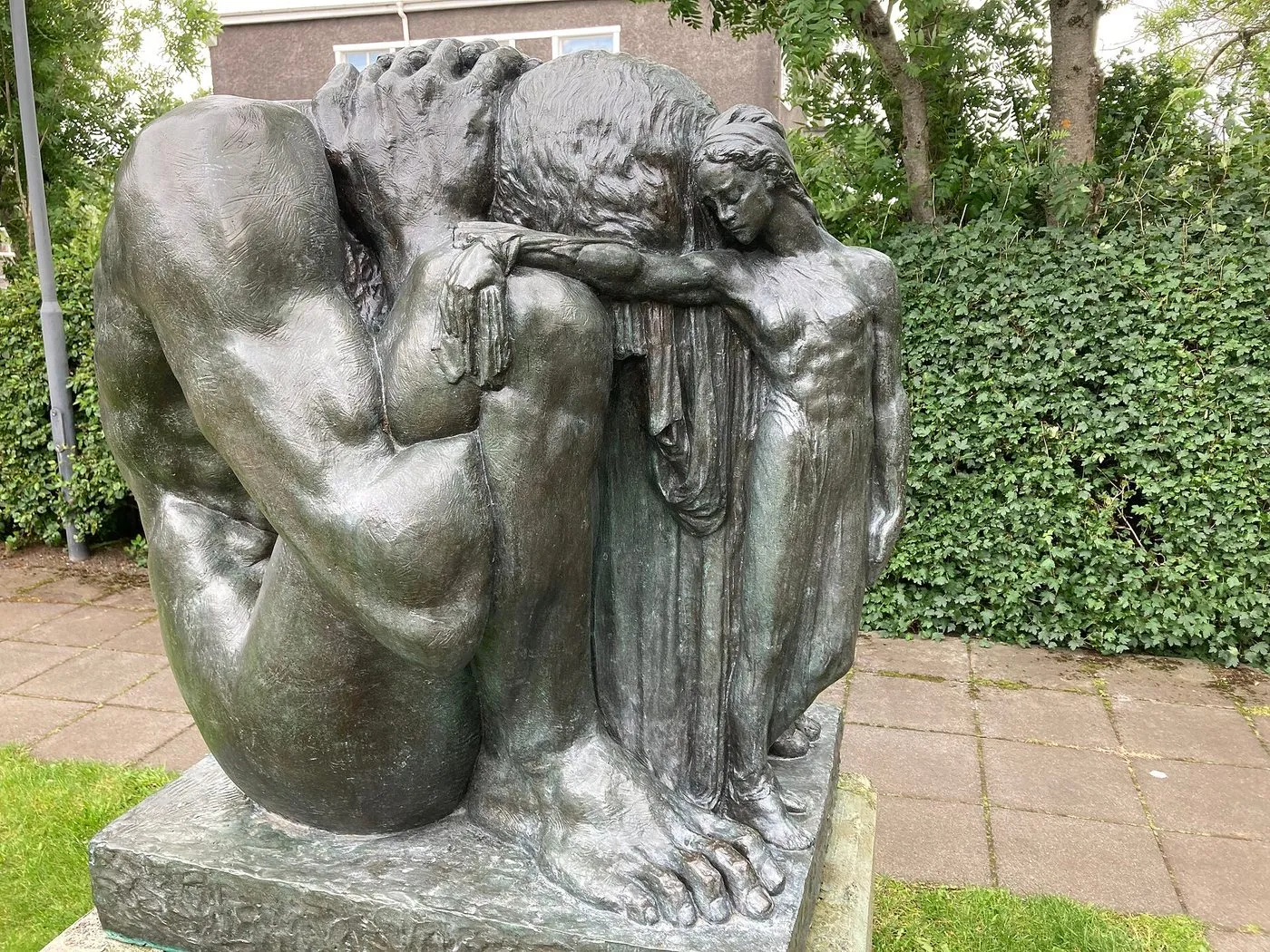 A bronze sculpture by Einar Jónsson in his sculpture garden. Photo: Schokifaktor, Wikimedia Commons, CC BY-SA 4.0.
3. The Einar Jónsson Sculpture Garden
Tucked directly behind Hallgrímskirkja on Eiríksgata lies the peaceful, walled sculpture garden of the Einar Jónsson Museum (Hnitbjörg). Einar Jónsson (1874–1954) was Iceland’s first recognized modern sculptor, who gifted his entire personal body of work to the nation.
While the interior museum galleries require an admission ticket, the beautifully landscaped rear sculpture park is open to the public free of charge, 24 hours a day, 365 days a year.
Meandering gravel pathways wind beneath mature mountain ash and pine trees, passing 26 monumental bronze statues cast from Jónsson’s original plaster models. His work combines Norse mythology, Christian mysticism, and sub-arctic folklore into powerful allegorical figures:
- The Outlaw (Útlaginn): A tragic 1901 bronze depicting an exiled medieval Icelandic outlaw carrying his deceased wife over his shoulder while holding their infant child.
- The Wave of the Ages: Depicting human souls swept forward across time upon an undulating ocean crest.
- Thor Wrestles with Old Age: Capturing the mythical Norse wrestling match between the thunder god Thor and the personification of aging (Elli).
4. The Sun Voyager (Sólfar) sculpture
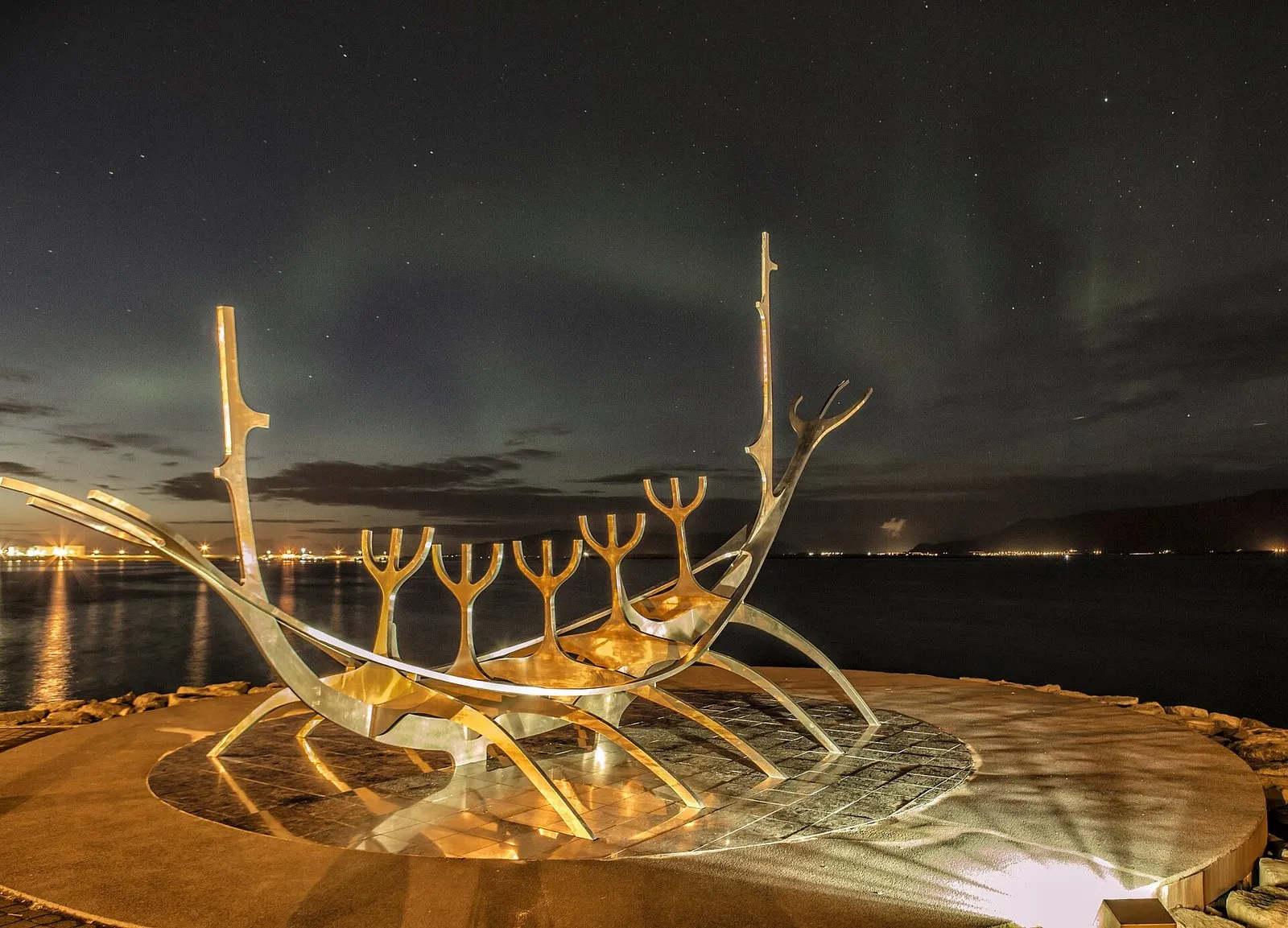
Positioned along the paved seaside promenade on Sæbraut, the Sun Voyager is Reykjavik’s most photographed outdoor artwork. Created by Icelandic sculptor Jón Gunnar Árnason, the artwork was selected in a 1986 municipal competition to celebrate the 200th anniversary of the founding of the City of Reykjavik.
Crafted from marine-grade polished stainless steel resting upon a circular granite plinth, the sculpture is frequently mistaken for a traditional Viking warship. However, Árnason explicitly conceived the work as a dream boat: an ode to the sun symbolizing unchartered discovery, hope, and the human drive to journey beyond known horizons. The sweeping metal ribs frame Mount Esja across the bay, making it an extraordinary foreground for photographing sunrise, golden afternoon twilights, and winter displays of the Northern Lights.
5. City Hall and the 3D relief map of Iceland
Positioned on the northern shore of Lake Tjörnin on Tjarnargata, Reykjavik City Hall (Ráðhús Reykjavíkur) is an impressive modernist building designed by Studio Granda in 1992, standing on robust concrete pillars sunk directly into the lake bed.
Step into the expansive Tjarnarsalur exhibition hall on the ground floor to inspect the 3D Relief Map of Iceland. Covering 76.4 square metres at a scale of 1:50,000, with vertical elevations magnified twofold, this monumental plaster model was meticulously hand-sculpted over several years beginning in 1985.
Walking around the raised perimeter allows you to trace the exact topography of the island: peering into the depths of volcanic calderas such as Askja and Kerið, examining the rugged dendritic fjord networks of the Westfjords, and appreciating the colossal ice sheets of Vatnajökull and Langjökull. It provides a clear visual overview before embarking on day trips from Reykjavik.
Opening Hours: Monday to Friday 08:00 to 18:00, Saturday 10:00 to 18:00, Sunday 12:00 to 18:00 (admission is free; occasionally closed for civic receptions).
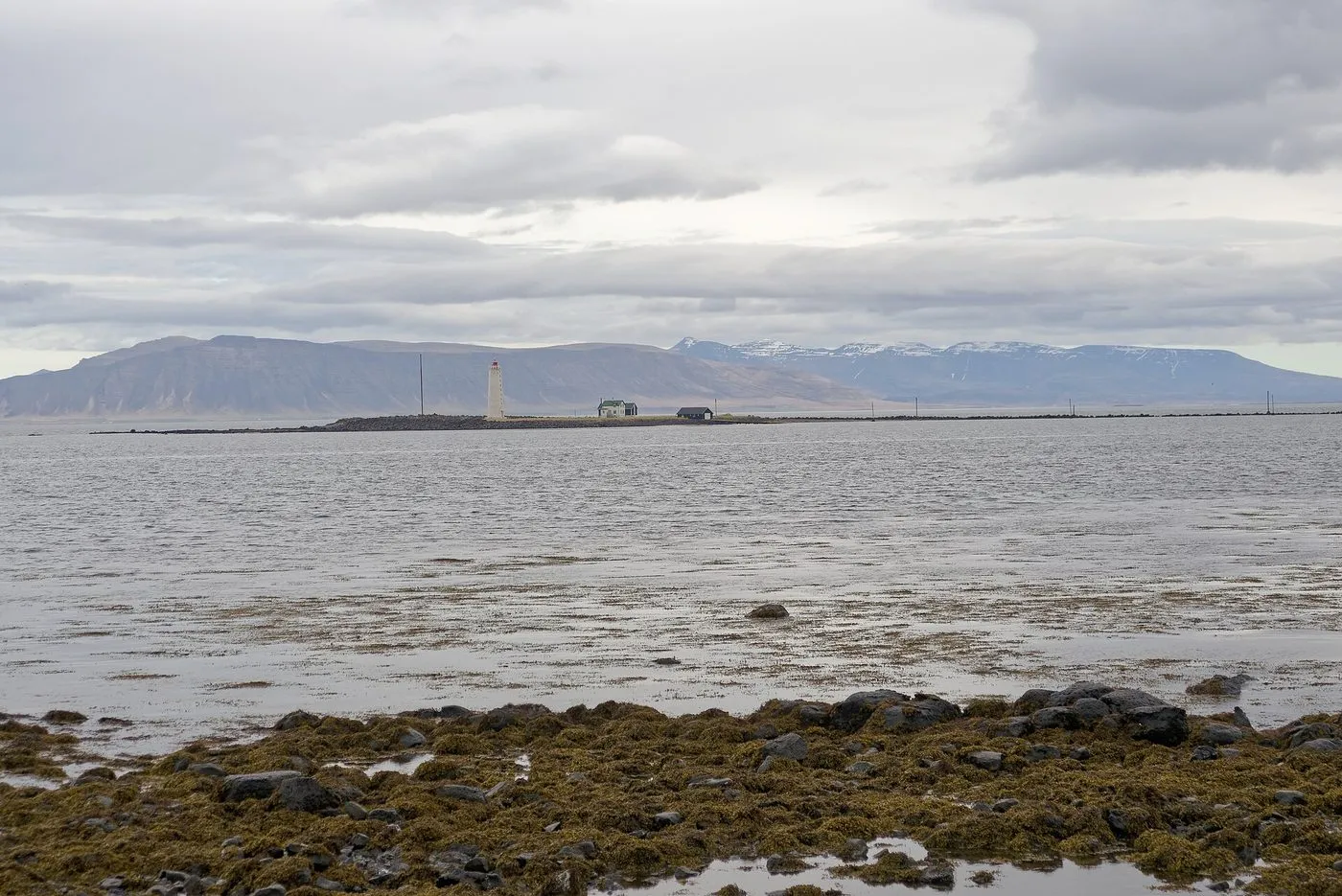 Grótta lighthouse at the tip of Seltjarnarnes. Photo: Jakub Hałun, Wikimedia Commons, CC BY-SA 4.0.
6. Grótta Lighthouse and the Kvika geothermal footbath
Situated at the westernmost tip of the Seltjarnarnes peninsula, roughly 5 kilometres west of downtown Reykjavik, Grótta is a serene coastal nature reserve. The white concrete lighthouse, erected in 1947, stands upon a tidal tombolo connected to the mainland by a narrow rocky sandspit.
Planning your tidal crossing
At low tide, visitors can walk across the pebbled causeway to inspect the lighthouse base, explore coastal rock pools, and watch diving seabirds. However, during high tide, the spit is completely submerged beneath freezing ocean swells. Always consult municipal tide tables before setting off and ensure you return to the mainland at least one hour before high tide.
Critical wildlife closure: The entire island of Grótta is strictly closed to all visitors from 1 May to 15 July each year to safeguard nesting colonies of Arctic terns (kría) and common eiders.
The Kvika geothermal footbath
Near the mainland car park beside the golf course sits Kvika, an intimate circular geothermal footbath carved into a basalt boulder by artist Ólöf Nordal. Fed by warm underground borehole water at roughly 39°C, it is open to the public free of charge. Roll up your trousers, sit on the timber deck, and soak your feet in therapeutic thermal water while gazing across the bay toward the Snæfellsjökull glacier.
7. Lake Tjörnin and Austurvöllur Square
At the centre of the capital lies Lake Tjörnin, a tranquil freshwater pond teeming with Arctic terns, whooper swans, greylag geese, and mallard ducks. A flat, paved 2.5-kilometre walking path circles the water, flanked by weeping willows and colourful 19th-century timber townhouses.
A short walk north brings you to Austurvöllur Square, the focal point of Icelandic civic life. The grassy square is presided over by a statue of Jón Sigurðsson, the revered 19th-century leader of Iceland’s independence movement. Surrounding the square stand the Parliament House (Alþingishúsið), built in 1881 from dark native volcanic basalt, and the white timber Dómkirkjan cathedral, the historic seat of the Lutheran Bishop of Iceland. On sunny summer afternoons, locals gather on the lawns to drink coffee and socialize.
8. Laugardalur Valley and the Botanic Garden
Located 3 kilometres east of downtown (easily accessible via Strætó bus route 14), Laugardalur (“Hot Spring Valley”) is the city’s primary recreational expanse.
Within the park lies the Reykjavik Botanic Garden (Grasagarður Reykjavíkur), established in 1961. The 2.5-hectare garden houses over 5,000 sub-arctic, alpine, and temperate plant species, meticulously organized into taxonomic sections, a rock garden, and an arboretum. Entrance is free year-round. Adjoining the gardens are the historic wash springs (Þvottalaugarnar), where 19th-century women boiled and scrubbed laundry in boiling geothermal water flowing straight from the ground.
Practical money-saving tips for budget travellers
- Free Public Tap Water: Never purchase commercial bottled water in Iceland. Tap water is, untreated sub-arctic spring water drawn from volcanic basalt aquifers. Bring a reusable water bottle and fill it from any tap across the city.
- Flea Market Browsing at Kolaportið: Located on Tryggvagata across from the harbour, the covered Kolaportið flea market operates on Saturdays and Sundays (11:00 to 17:00). Strolling among stalls of vintage books, vinyl records, knitted woollen garments, and food counters offering samples of dried fish is completely free.
- Save on Transport: Downtown Reykjavik is entirely walkable. Skip taxi fares and public bus passes for central sightseeing by basing yourself in Miðborg, as detailed in our guide on where to stay in Reykjavik.
To combine these free highlights with paid thermal spas and dining, consult our 3 days in Reykjavik itinerary and explore the comprehensive Reykjavik city guide.
Common questions
What are the best free sights to see in Reykjavik?
Headline free attractions include the soaring concrete nave of Hallgrímskirkja church, the crystalline geometric glass foyers of Harpa Concert Hall, the stainless-steel Sun Voyager sculpture along Sæbraut, the colossal 76-square-metre 3D relief map of Iceland inside City Hall, the open-air Einar Jónsson Sculpture Garden, and the tidal island of Grótta lighthouse.
Is Harpa Concert Hall free to enter and explore?
Yes. The vast multi-storey interior foyers, grand staircases, and upper viewing walkways of Harpa are open to the general public daily free of charge. You only purchase tickets if attending an evening musical concert or visiting ticketed commercial exhibits such as the Volcano Express film.
Can you walk out to Grótta lighthouse at any time?
No. Grótta is a tidal tombolo connected to the mainland by a low-lying sandy spit that is submerged during high tide. Visitors must consult local tide charts and cross only during low tide windows. Additionally, the island nature reserve is completely closed to all public access from 1 May to 15 July to protect nesting colonies of Arctic terns.
When is the Reykjavik Botanic Garden open and is there an admission fee?
The Reykjavik Botanic Garden (Grasagarður Reykjavíkur) in the Laugardalur recreational valley is completely free to enter and open year-round from dawn to dusk. The display greenhouses and outdoor floral collections are maintained by the municipal parks department.