In this guide
The Short Version: Osaka is Japan’s culinary and commercial engine, offering a vivid contrast between feudal history and futuristic entertainment. Top sights require targeted advance planning: Universal Studios Japan requires a dated Studio Pass and timed entry for Super Nintendo World, and Kaiyukan Aquarium (priced by date) uses timed entry slots. Meanwhile, Osaka Castle keep (1,200 yen) admits visitors daily from 09:00 to 18:00 (last entry 17:30) with free surrounding parklands. Cityscape views can be enjoyed from the open-air Umeda Sky Building (2,000 yen, open until 22:30) or the soaring 300-metre glass deck at Harukas 300 (2,000 yen). Prices are in yen.
Sights comparison
| Attraction | Adult admission | Standard hours | Nearest station | Booking advice |
|---|---|---|---|---|
| Osaka Castle Main Keep | 1,200 yen (under 15 free) | 09:00 to 18:00 (last entry 17:30) | Osakajokoen / Tanimachi 4-chome | Buy online to bypass ticket window lines; grounds are free 24/7 |
| Universal Studios Japan | Set by date | 08:30 to 21:00 (varies seasonally) | Universal-City | Buy Studio Pass and Express Pass weeks ahead for Nintendo World |
| Osaka Aquarium Kaiyukan | Set by date | 10:00 to 20:00 (from 09:00 on weekends) | Osakako | Reserve 15-minute timed entry window online before arrival |
| Umeda Sky Building Kuchu Teien | 2,000 yen | 09:30 to 22:30 (last entry 22:00) | Osaka / Umeda | Open-air roof deck; open daily throughout the year |
| Harukas 300 Observatory | 2,000 yen | 09:00 to 22:00 (last entry 21:30) | Tennoji / Osaka-Abenobashi | 60th-floor enclosed deck atop Japan’s 300-metre skyscraper |
| Dotonbori Street Food | Free to walk | Shops typically open 11:00 to 23:00 | Namba | Stroll around twilight for illuminated neon billboards |
| Shinsekai & Tsutenkaku Tower | Street free; Tower 1,500 yen | Alleys 24/7; Tower 09:00 to 21:45 | Shin-Imamiya / Dobutsuen-mae | Famous for deep-fried kushikatsu skewers and retro gaming |
| Kuromon Ichiba Market | Free to walk | 09:00 to 18:00 (varies by stall) | Kintetsu-Nippombashi | Historic market with grilled seafood and wagyu beef skewers |
| Shitennoji Temple | Grounds free; Central Hall 500 yen | 08:30 to 16:30 (summer) / 16:00 (winter) | Shitennoji-mae Yuhigaoka | Japan’s oldest official Buddhist temple founded in 593 AD |
| Sumiyoshi Taisha Shrine | Free | 06:00 to 17:00 (summer) / 06:30 (winter) | Sumiyoshitaisha | Distinctive Japanese architectural style and red arched drum bridge |
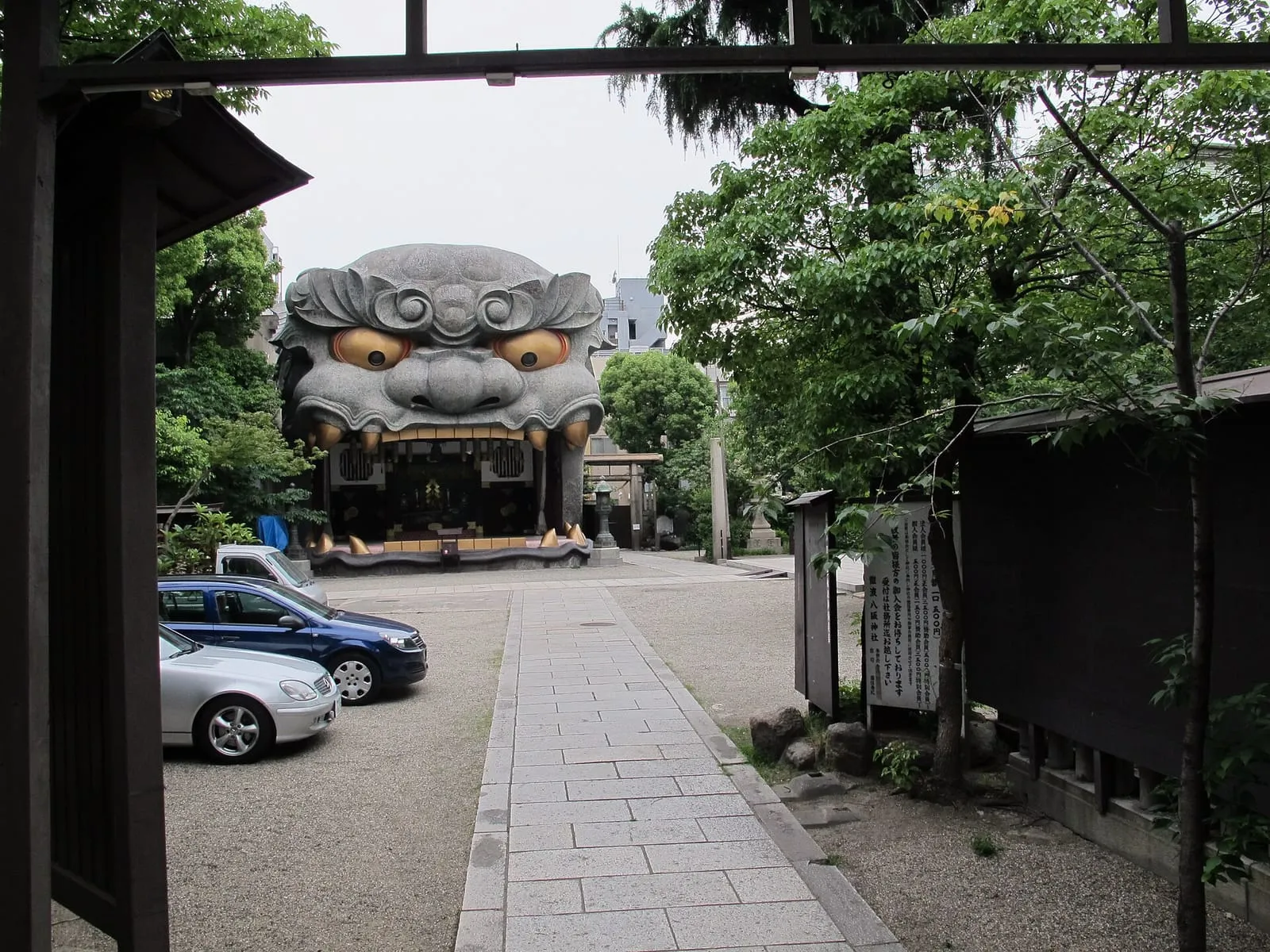
| Namba Yasaka Shrine | Free | 06:00 to 17:00 | Namba | Gigantic 12-metre carved lion head stage swallowing evil spirits |
| Tempozan Giant Ferris Wheel | Paid ride; free with the Osaka Amazing Pass | 10:00 to 21:00 (to 22:00 at weekends) | Osakako | 112-metre observation wheel offering Osaka Bay harbour panoramas |
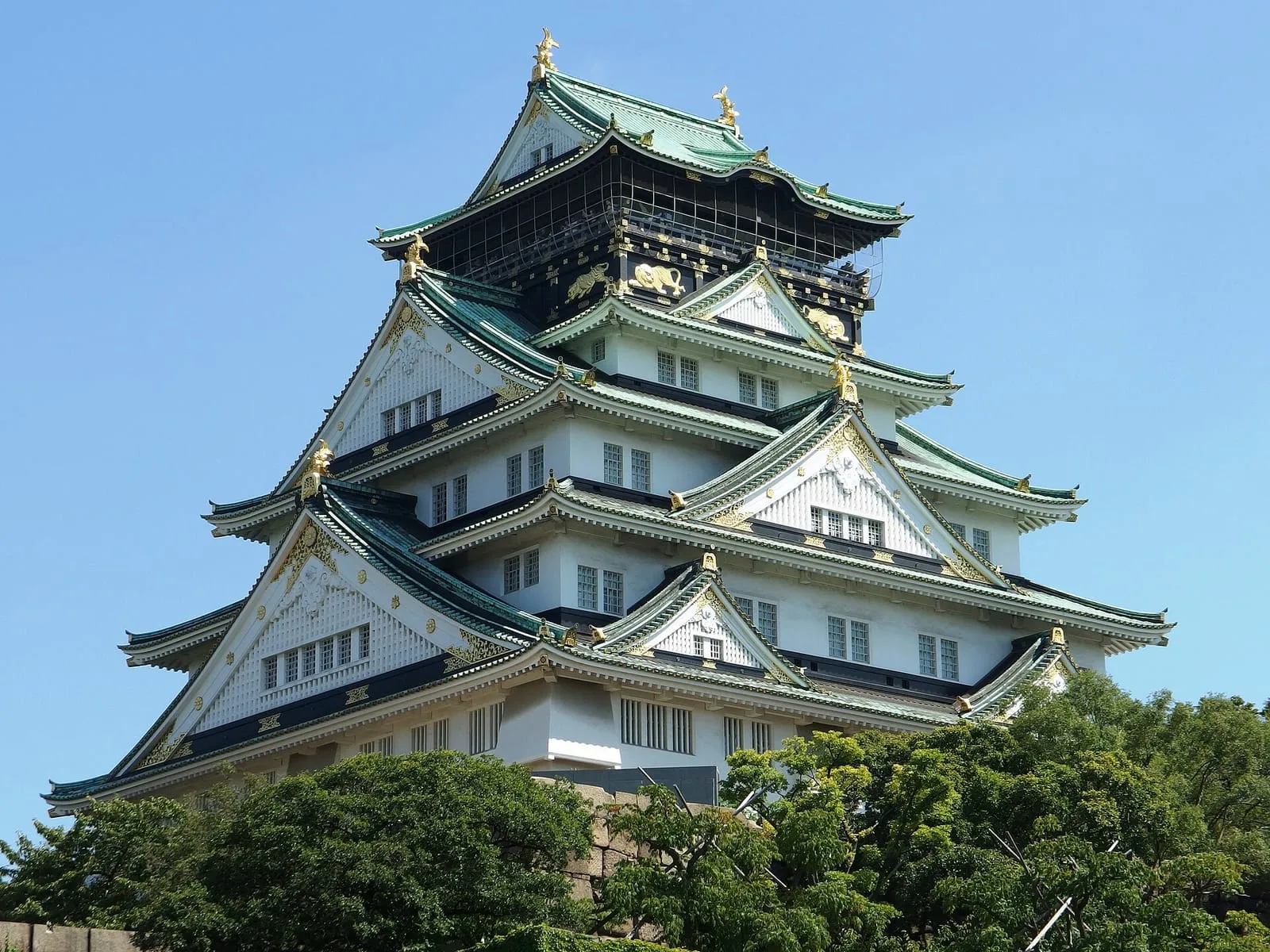
Osaka Castle’s main keep seen from below. Photo: Mc681, Wikimedia Commons, CC BY-SA 4.0.
1. Osaka Castle (Tenshukaku)
Rising above granite moats and wide defensive walls, Osaka Castle is the city’s foremost historic landmark. First erected in 1583 by Toyotomi Hideyoshi, the fortress was reconstructed in concrete in 1931 with exterior details based on historic folding screens.
Admission to the main keep is 1,200 yen for adults, while children under 15 enter free of charge. The keep is open from 09:00 to 18:00 daily, with final admission at 17:30 (closed 28 December to 1 January). The interior functions as an eight-storey museum charting the Siege of Osaka, featuring samurai swords, battle armours, and dioramas. The eighth-floor observation deck offers 360-degree vistas across Osaka Castle Park. The surrounding park, moats, and massive stone walls (such as the 108-tonne Higo-ishi megalith) are completely free to explore. Detailed ticket logistics can be found in our Osaka Castle tickets guide.
2. Universal Studios Japan and Super Nintendo World
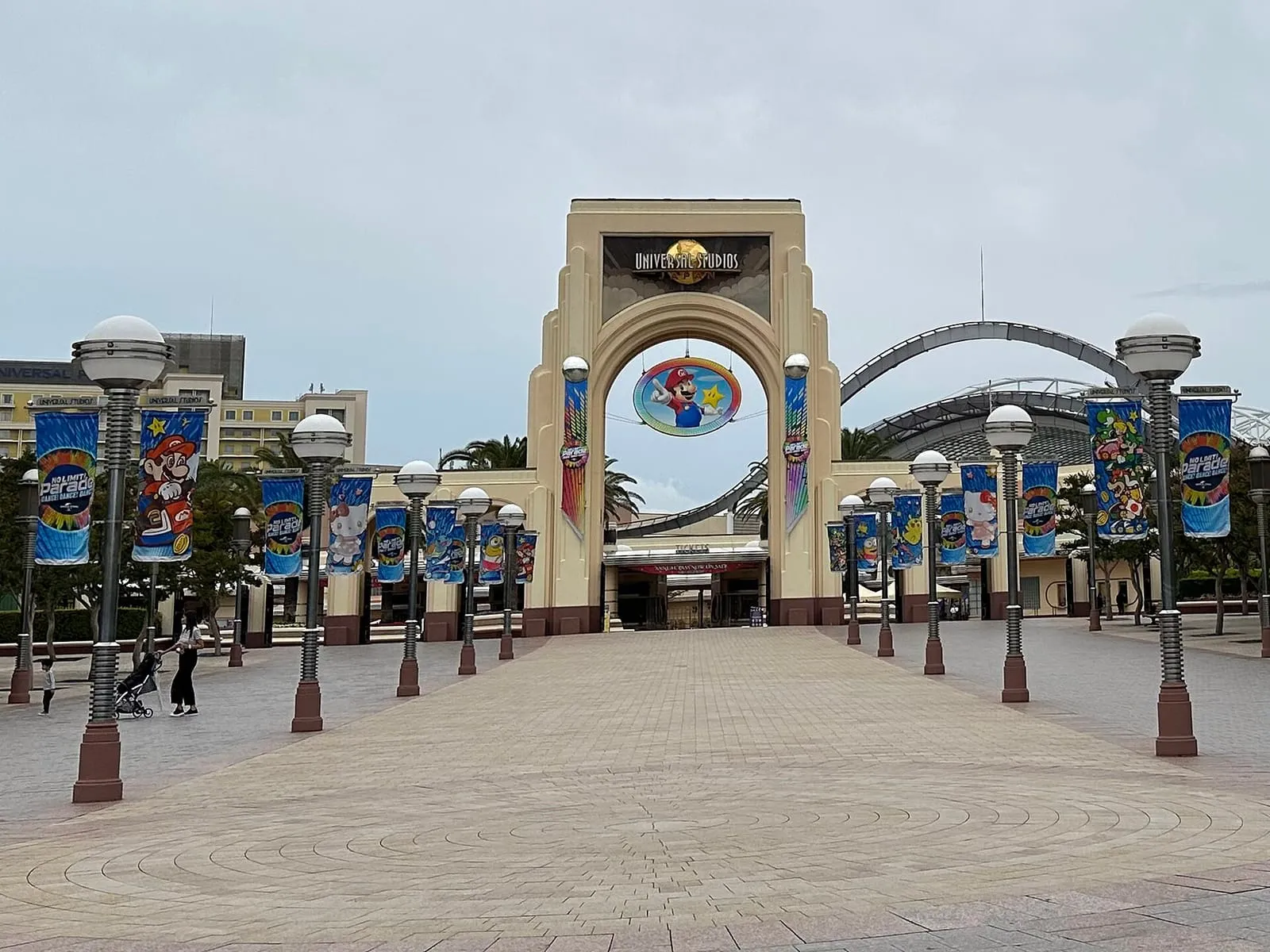
Located along the waterfront in Konohana ward, Universal Studios Japan (USJ) attracts millions of visitors annually. Signature attractions include Super Nintendo World, The Wizarding World of Harry Potter, and Minion Park.
Park admission requires a dated 1-Day Studio Pass (priced by date, with the cheapest days on quiet weekdays). Crucially, entering Super Nintendo World requires a timed entry ticket once the area reaches capacity. Travellers can guarantee admission in advance by buying an Express Pass bundled with a designated timed entry slot, or by securing a free electronic Area-Timed Entry Ticket through the official Universal Studios Japan mobile app immediately after entering the park gates in the morning. Complete booking rules are explained in our Universal Studios Japan tickets guide.
3. Osaka Aquarium Kaiyukan
Situated at Tempozan Harbor Village in Osaka Bay, Osaka Aquarium Kaiyukan is among the largest public aquariums in the world. Visitors ascend to the eighth floor and descend along a continuous spiral ramp around a 5,400-tonne central tank representing the Pacific Ocean.
The central tank holds two whale sharks, pelagic manta rays, and hammerhead sharks, while side exhibits showcase California sea lions, ringed seals, and Antarctic penguins. Adult admission is set by date on the aquarium’s ticket calendar, and children pay less. Admission is managed through 15-minute timed entry windows online, which frequently sell out on weekends and Japanese public holidays.
4. Dotonbori street food and canal promenade
Dotonbori is Osaka’s entertainment nucleus, stretching alongside the historic canal excavated in 1612. Known across Japan as the capital of kuidaore (“eat until you drop”), the district is packed with flashing neon signs, giant mechanical crabs at Kani Doraku, and the famous Glico Running Man billboard at Ebisu Bridge.
Stroll along the pedestrianised Tonbori River Walk to taste local dishes:
- Takoyaki: spherical batter balls containing tender octopus chunks, topped with sweet brown takoyaki sauce, Japanese mayonnaise, powdered seaweed, and dancing bonito flakes (600 yen to 800 yen for a tray of eight).
- Okonomiyaki: thick, savoury cabbage-based pancakes grilled on iron teppan griddles and packed with pork belly, squid, or prawns (1,200 yen to 2,000 yen).
- Kushikatsu: skewered, panko-crusted morsels of beef, lotus root, quail eggs, and asparagus deep-fried in hot oil (120 yen to 250 yen per skewer).
5. Harukas 300 Observatory
Topping the 300-metre Abeno Harukas complex in Tennoji, Harukas 300 occupies the 58th, 59th, and 60th floors of the tower, which was Japan’s tallest skyscraper when it opened. High-speed elevators whisk visitors to the 60th floor in under 50 seconds.
The 60th-floor observation gallery (Tenjo Kairou) features floor-to-ceiling glass corridors offering unobstructed panoramic views encompassing Osaka Bay, Mount Ikoma, and on clear days, the Akashi Kaikyo Bridge and Wakayama prefecture. Floor 58 includes an open-air timber courtyard with an atrium cafe. Tickets cost 2,000 yen for adults, and the deck operates from 09:00 to 22:00 (last entry 21:30) every day of the year.
6. Umeda Sky Building and Kuchu Teien Observatory
Located in Kita ward northwest of Osaka Station, the Umeda Sky Building is an architectural landmark designed by Hiroshi Hara. The complex consists of two 40-storey towers connected at their upper levels by the circular Kuchu Teien Floating Garden Observatory at a height of 173 metres.
Visitors ride glass elevators and an open-air glass escalator tube spanning the central void. The open-air circular rooftop deck provides sweeping 360-degree vistas across the Yodo River, Hanshin expressway, and Osaka skyline. Admission is 2,000 yen for adults and 500 yen for children aged 4 to 11. The observatory operates from 09:30 to 22:30 (last entry 22:00) 365 days a year.
7. Shinsekai and Tsutenkaku Tower
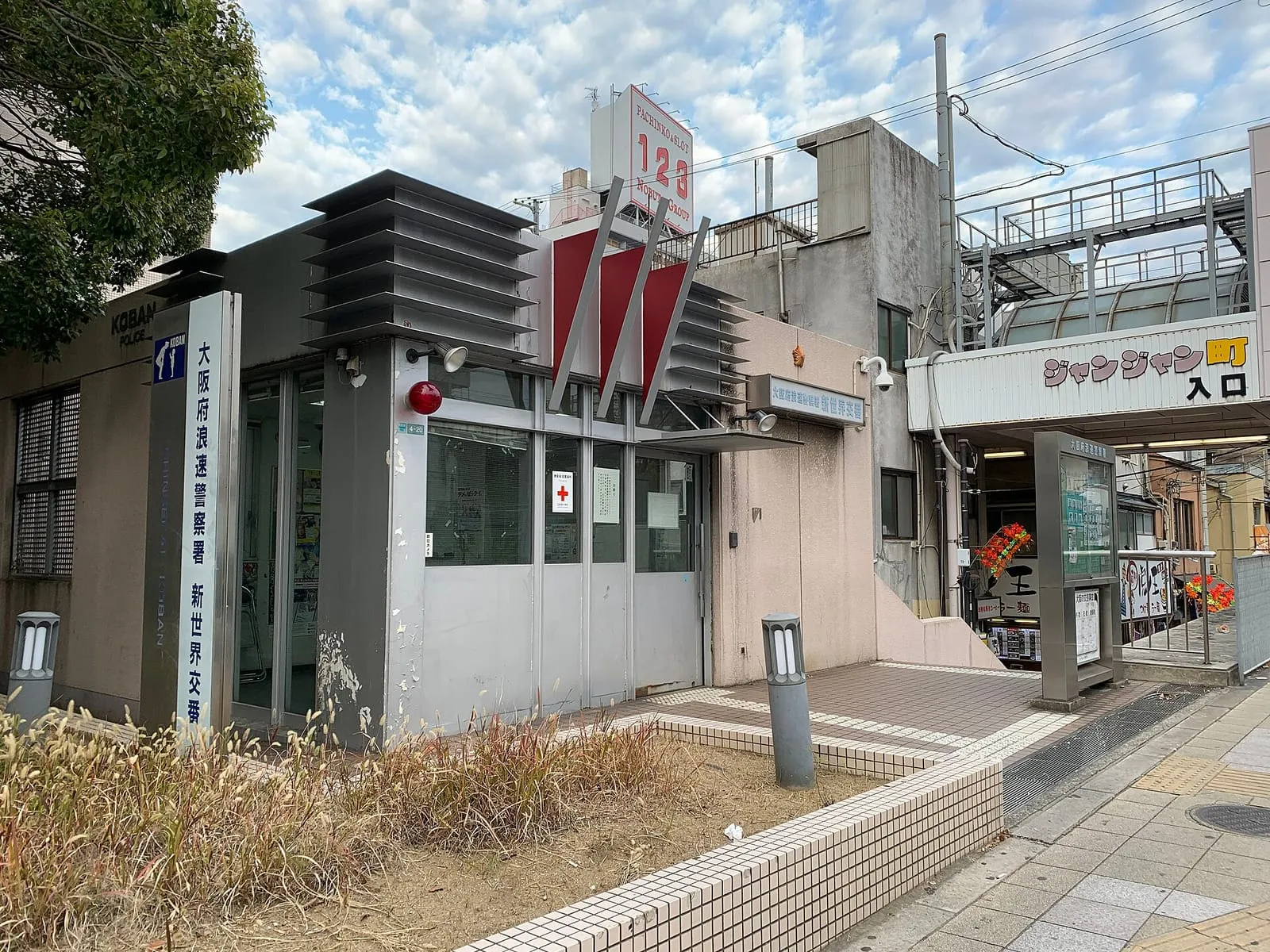
Created in 1912 as an amusement and retail district, Shinsekai (“New World”) preserves an unvarnished Showa-era ambience. The area is anchored by Tsutenkaku Tower, a 108-metre steel lattice tower rebuilt in 1956.
Visitors can browse narrow covered shopping arcades like Janjan Yokocho, play vintage pinball and smartball games for 100 yen, and enjoy deep-fried kushikatsu at round-the-clock counters such as Kushikatsu Daruma. Admission to Tsutenkaku Tower’s observation deck is 1,500 yen for adults, featuring a golden statue of Billiken, the local “God of Things as They Ought to Be.”
8. Kuromon Ichiba Market
Known historically as “Osaka’s Kitchen,” Kuromon Ichiba is a covered market in Minami dating back to the Edo period. Spanning approximately 580 metres with over 150 independent stalls, it supplies local restaurateurs with fresh fish, meat, and seasonal produce.
Visitors can sample delicacies prepared on the spot: grilled scallop skewers, sea urchin served in the shell, freshly torched A5 Miyazaki wagyu beef skewers (typically 2,000 yen to 3,500 yen), and seasonal white strawberries. Most stalls trade between 09:00 and 18:00, making it an ideal late-morning food crawl destination.
9. Shitennoji Temple
Founded in 593 AD by Prince Shotoku, Shitennoji is Japan’s first state-sponsored Buddhist temple. Built in an ancient layout where the southern gate, middle gate, five-storey pagoda, and main golden hall (Kondo) align along a straight north-south axis, the complex is a peaceful sanctuary in Tennoji.
The outer temple precinct, turtle pond, and bell towers are free to visit. Entry to the inner central precinct with its pagoda costs 500 yen (free on the 21st and 22nd of each month), and the traditional Gokurakujodo stroll garden costs 300 yen. The grounds are open from 08:30 to 16:30 (April to September) and 08:30 to 16:00 (October to March).
10. Sumiyoshi Taisha Shrine
Located in southern Osaka along the Hankai Tramway, Sumiyoshi Taisha is the head shrine of more than 2,000 Sumiyoshi shrines nationwide. Founded in 211 AD, its four main halls are constructed in Sumiyoshi-zukuri, a purely indigenous Japanese architectural style pre-dating Buddhist influence, characterized by straight gabled roofs topped with crossbeams.
The shrine grounds are famous for the Sorihashi Bridge, a steeply arched red wooden drum bridge whose steep curve spans the sacred pond. Entry to the entire shrine grounds is free, open from 06:00 (06:30 in winter) until 17:00 daily.
11. Namba Yasaka Shrine
Tucked away in the quiet backstreets south of Namba Station, Namba Yasaka Shrine is famous for its 12-metre-high, 11-metre-wide lion head stage (Shishi-den). Constructed in 1974 from concrete and resin, the massive lion’s mouth forms an open performance stage used during festivals.
In local belief, the lion’s gaping jaws swallow bad spirits, leaving only good luck and success for worshippers, students, and local business owners. The shrine grounds are open daily from 06:00 to 17:00 and admission is completely free. Additional zero-cost attractions are detailed in our free things to do in Osaka guide.
12. Tempozan Giant Ferris Wheel
Towering 112 metres above Osaka Bay adjacent to Kaiyukan Aquarium, the Tempozan Giant Ferris Wheel was once the world’s tallest Ferris wheel. Each 15-minute rotation offers panoramic views of the port of Osaka, the industrial waterfront, and across the bay toward Mount Rokko.
The wheel features 60 cabins, including several special transparent glass-bottomed cabins available for no extra fee. It runs from 10:00 to 21:00 on weekdays and to 22:00 at weekends and on holidays.
Planning your itinerary
To organize these twelve sights efficiently, see our structured guides:
- For a comprehensive three-day trip combining theme parks, history, and food, follow the 3 days in Osaka itinerary.
- If visiting on a short stopover from eastern Japan, read Osaka in one or two days and compare with our 3 days in Tokyo guide.
- For family travel logistics, consult Osaka with kids.
- Check seasonal crowd conditions and festivals in our best time to visit Osaka guide.
- For evening digital art in Nagai Park, explore teamLab Botanical Garden Osaka.
- For overall entry rules and practical trip advice, consult the Osaka city hub.
Common questions
What are the three most popular attractions in Osaka?
The three most popular attractions are Osaka Castle for history and panoramic views, Universal Studios Japan for theme park rides and Super Nintendo World, and Dotonbori for its illuminated canal signboards and street food culture.
Is Osaka Castle worth going inside?
Yes. Admission to the main keep is 600 yen (free for children aged 15 and under). The interior contains an eight-storey historical museum displaying samurai armour, folding screens, and weapons, culminating in an observation gallery at the top.
Which observation deck is better: Umeda Sky Building or Harukas 300?
Harukas 300 is significantly taller at 300 metres, offering indoor glass galleries across floors 58 to 60 in Tennoji. Umeda Sky Building stands at 173 metres in Kita and features an open-air circular rooftop bridge (*Kuchu Teien*) where visitors can feel the outdoor breeze.
Where can you find the best street food in Osaka?
Dotonbori is famous for takoyaki and okonomiyaki along its canal walkways. Shinsekai is known for deep-fried kushikatsu skewers, and Kuromon Ichiba Market offers fresh grilled seafood, Kobe beef skewers, and seasonal fruit stalls.