In this guide
💡 The Short Version: Mexico City’s public transport runs on one smartcard, the Tarjeta de Movilidad Integrada (MI Card), which the Metro sells for MXN 15. The Metro costs MXN 5, Metrobús MXN 6 (the airport service on Line 4 is MXN 30) and Cablebús MXN 7. The Metro and Metrobús also take contactless bank cards and phones at the turnstile. Use Uber or DiDi after dark or when carrying luggage.
⚠️ Paper Metro tickets have gone. The Metro stopped selling them in February 2024. Tap an MI Card or a contactless bank card or phone at the turnstile.
Fares across Mexico City transit
| Mode | Fare (MXN) | Payment | Main use for visitors |
|---|---|---|---|
| MI Card (one-time card price) | MXN 15 | Cash at Metro ticket windows; cash or contactless bank card at machines | Works across the system; holds up to MXN 500 |
| Metro (12 lines) | MXN 5 per trip | MI Card or contactless bank card | Centro, Chapultepec, Coyoacán and the airport |
| Metrobús | MXN 6 (Line 4 airport service: MXN 30) | MI Card or contactless bank card | Insurgentes (Line 1) and Reforma (Line 7) |
| Cablebús (Line 3 in Chapultepec) | MXN 7 | MI Card | Aerial ride above Bosque de Chapultepec |
| Tren Ligero (light rail) | MXN 3 | MI Card | Tasqueña south to Xochimilco |
| Trolebús | MXN 4 (lines 1 to 9 and 12); MXN 7 (lines 10 and 11) | MI Card | Electric buses on fixed corridors |
| Ecobici (bike share) | Day, 3-day, 7-day and annual plans; separate prices for foreign visitors | Ecobici app | Rides of up to 45 minutes around Roma, Condesa, Reforma and Polanco |
| Uber / DiDi | Price shown in the app before you book | In-app card | Night travel, airport runs, groups of two to four, Coyoacán and Xochimilco |
How to buy and top up an MI Card
The Metro sells the MI Card (Tarjeta de Movilidad Integrada) for MXN 15 at its ticket windows and self-service machines. Metrobús sells the card from machines at its stops, including the Line 4 stops outside AICM Terminals 1 and 2. The Metro’s own rules cap the balance at MXN 500, deduct one fare (MXN 5) each time you pass a turnstile and let you top up before the balance runs out.
- Cash and cards at the machines: The Metro’s automated ticket windows take cash, credit and debit cards and contactless devices. The machine in the photo below lists MXN 20, 50 and 100 notes and MXN 1, 2 and 5 coins.
- Digital top-ups: You can also top up a card with the App CDMX or Mercado Pago.
- Care of the card: The Metro asks you not to bend, pierce, laminate, scratch, wet or heat it.
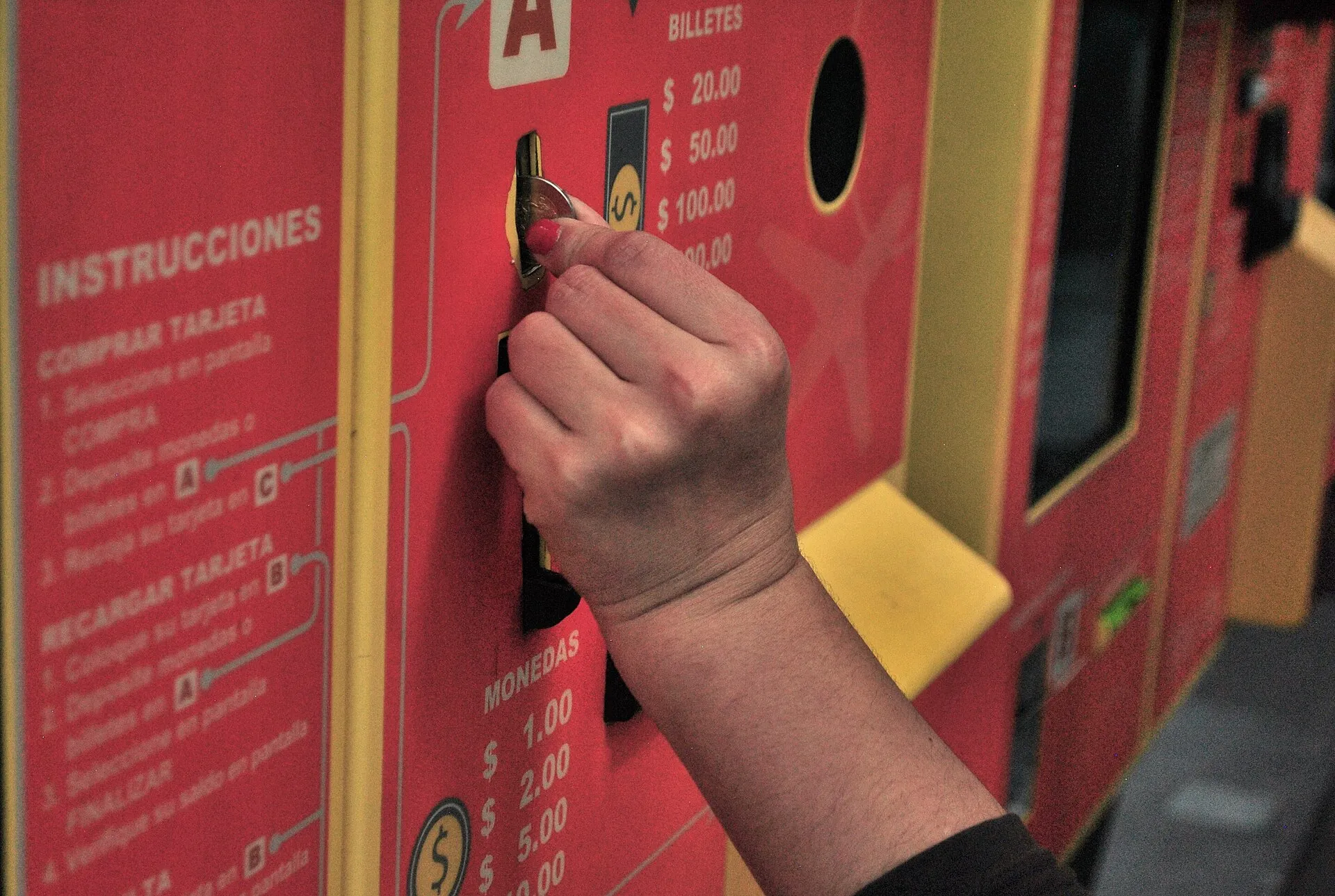 Coin slot on a Metrobús card machine. Photo: ProtoplasmaKid, Wikimedia Commons, CC BY-SA 4.0.
Riding the Mexico City Metro
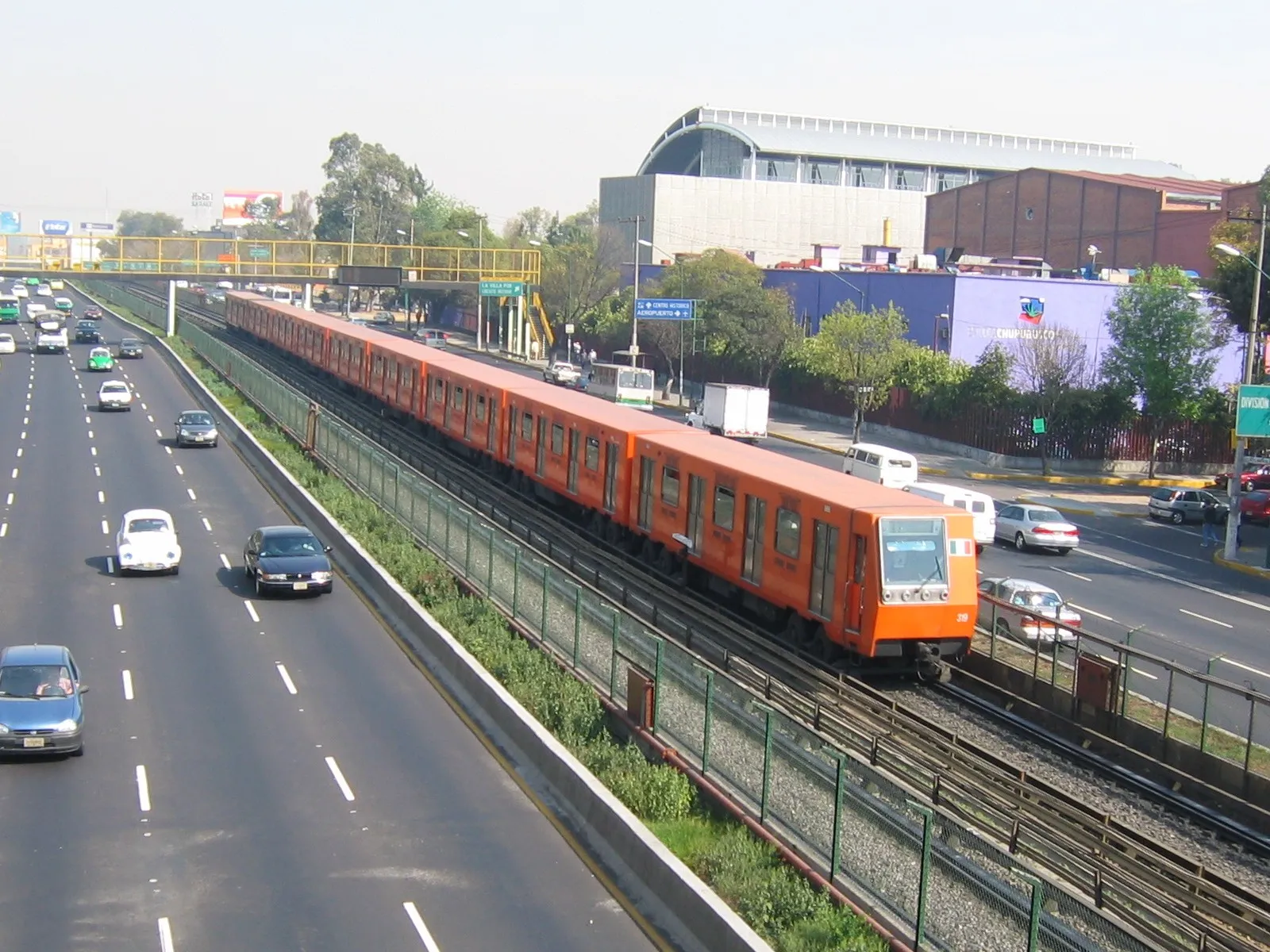
The Metro has 12 lines and 195 stations. For visitors, Line 1 (pink) links Chapultepec, Insurgentes and Pino Suárez, Line 2 (blue) runs through Bellas Artes, Allende, Zócalo and Pino Suárez to Tasqueña, and Line 3 (olive) heads south towards Coyoacán and the university.
- Station pictograms: Every station has a symbol, such as the grasshopper for Chapultepec. Lance Wyman designed the system’s graphic identity for the first lines, which opened in 1969, so riders could find stations without reading Spanish. Follow the line colour and the terminus name on the platform (Dirección Pantitlán, Dirección Observatorio).
- Operating hours: The Metro lists Monday to Friday 05:00 to 00:00, Saturday 06:00 to 00:00, and Sunday and public holidays 07:00 to 00:00.
- Women-and-children carriages: The front carriages of every train are reserved for women and children under 12 at all hours, every day. Solo women often choose them at busy times.
- Peak hours: Interchange stations such as Pantitlán, Pino Suárez, Hidalgo, Tacubaya and Chabacano are dense on weekday mornings and evenings. A café stop before the evening peak saves a crush.
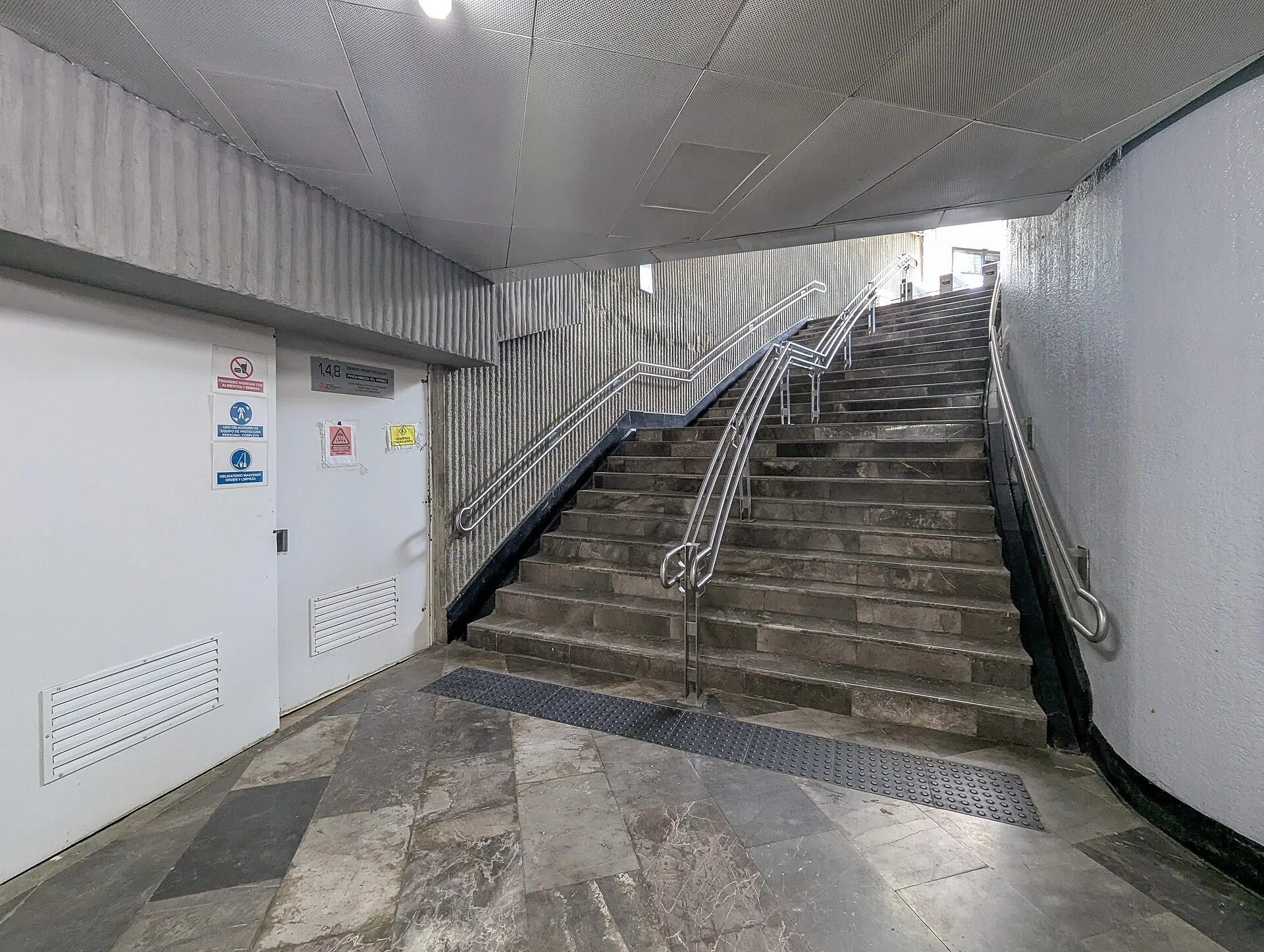 Entrance staircase at Insurgentes Metro station. Photo: ProtoplasmaKid, Wikimedia Commons, CC BY-SA 4.0.
Metrobús: key lines for visitors
Metrobús articulated buses run in dedicated centre-lane corridors with glass boarding platforms, and the fare is MXN 6. Pay at the platform turnstile before the bus arrives. Two lines are useful:
- Line 1 (red, Avenida Insurgentes): Runs north–south from Indios Verdes past Buenavista, Reforma, Insurgentes, the Roma and Condesa stops (Álvaro Obregón and the stops south of it), WTC and San Ángel, and on to El Caminero.
- Line 7 (dark green, Paseo de la Reforma): The only Metrobús line that uses double-decker buses, running between Campo Marte and Indios Verdes along Reforma. Stops include Auditorio (for the Anthropology Museum), Reforma, Hidalgo (for Alameda Central) and, in the north, Garrido and Hospital Infantil La Villa near the Basilica of Our Lady of Guadalupe.
Cablebús Line 3, Tren Ligero and Ecobici
Cablebús Line 3 (Chapultepec aerial ride)
Cablebús Line 3 opened on 24 September 2024 and connects Los Pinos / Constituyentes with Vasco de Quiroga through the four sections of Bosque de Chapultepec, with stops at Panteón Dolores, Charrería, Parcur / Colegio de Arquitectos and Cineteca Nacional / Bodega de Arte. A trip costs MXN 7 on an MI Card.
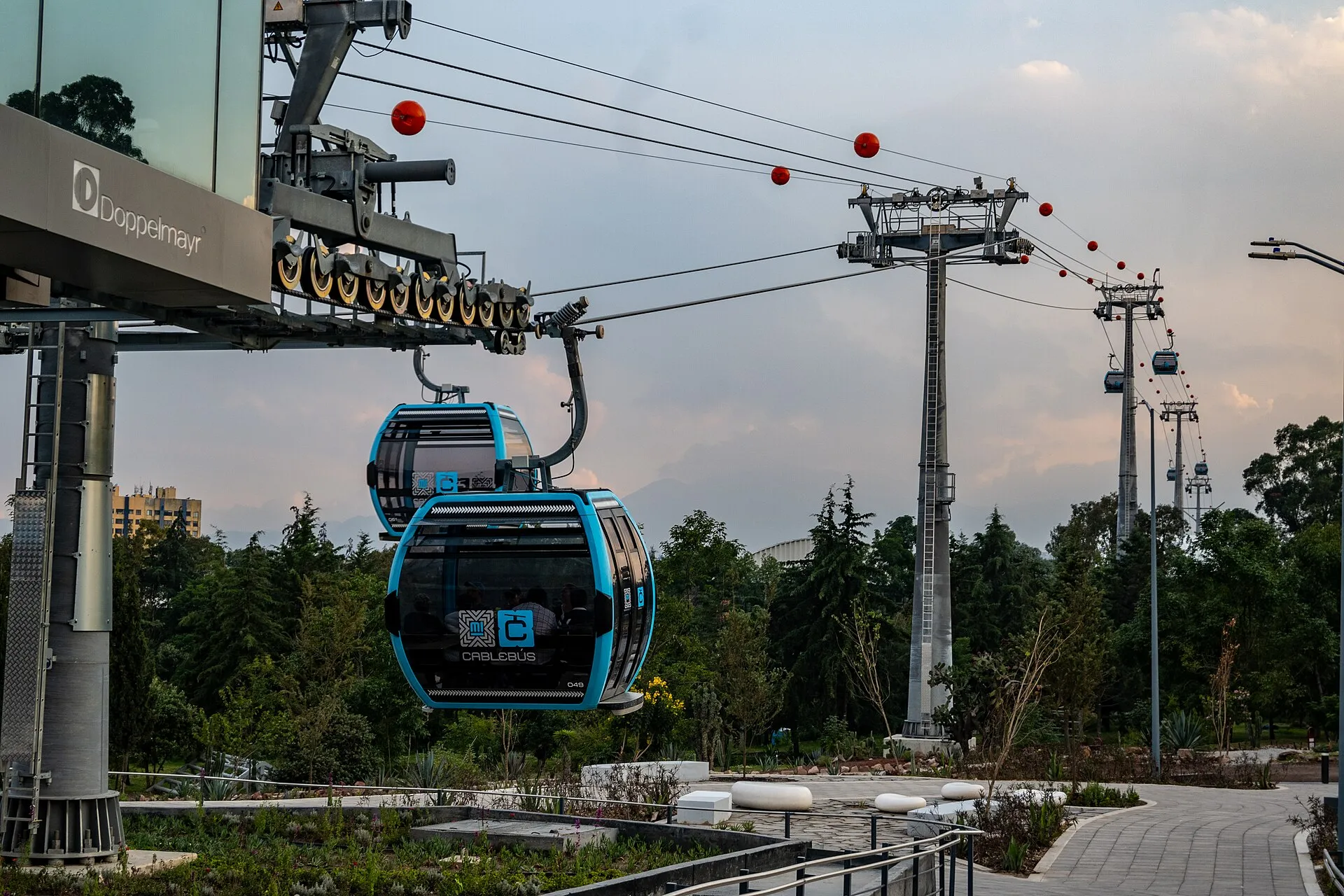 Cablebús Line 3 at Cineteca Nacional station. Photo: ProtoplasmaKid, Wikimedia Commons, CC BY-SA 4.0.
Tren Ligero to Xochimilco
To reach Xochimilco on a budget, take Metro Line 2 south to Tasqueña, follow the signs to the Tren Ligero (MXN 3, MI Card only) and ride to the end of the line at Xochimilco. The piers are a short walk or ride from there.
Ecobici bike share and Sunday Muévete en Bici
Ecobici docking stations cover Roma, Condesa, Juárez, Polanco, Reforma and Centro Histórico. Ecobici’s plans and rates page lists 1-day, 3-day, 7-day and annual plans, each allowing unlimited rides of 45 minutes, and a separate price list for foreign visitors; registration needs valid ID and a Visa or Mastercard credit or debit card. Rides over 45 minutes are charged extra. Every Sunday from 08:00 to 14:00, the city closes Paseo de la Reforma and other main avenues to cars for Muévete en Bici, so cyclists, skaters and walkers can use the roadway.
Uber, DiDi and street taxis
- Uber and DiDi: Both operate across central Mexico City and show the price in the app before you book. Check the licence plate and driver photo before getting in, and sit in the back seat.
- Street-hailed taxis (taxis libres): These are the cabs you wave down in the street. Ask a hotel or restaurant to call a registered sitio taxi instead, particularly outside a museum or late at night.
- Traffic: Weekday evenings and heavy afternoon rain in the wet season slow every road and raise app prices, so Metrobús Line 1 or 7 is often quicker. Pair this guide with Mexico City airport to city and is Mexico City safe? before heading out.
The Turibus hop-on hop-off bus is the tourist alternative to the Metro, and the Mexico City Grand Prix page gives the Metro Line 9 route to the Autódromo.
Common questions
How much does the Mexico City Metro cost?
A single trip on the Mexico City Metro costs MXN 5, whatever the distance. The Metro's own rules for its rechargeable card describe the fare as MXN 5 per turnstile entry, and a transfer between lines inside the network does not cost extra.
Do I need an MI Card to use public transport in Mexico City?
Not for the Metro or Metrobús. The Metro announced in September 2024 that its turnstiles accept contactless Visa, Mastercard and American Express cards, phones and watches on Lines 1 to 9, A and B (Line 12 was still being fitted at the time), and Metrobús also takes contactless bank cards. You do need an MI Card for Cablebús, the Tren Ligero and trolleybuses. The Metro sells the card for MXN 15 and it holds up to MXN 500.
Is the Mexico City Metro safe for tourists?
Yes if you follow basic city-transit habits: wear backpacks on your front, keep phones and wallets in zipped inner pockets, and avoid the weekday morning and evening peaks, when carriages are packed shoulder to shoulder.
How do the women-only carriages on the Metro work?
The Metro reserves the front carriages of every train for women and children under 12, at all hours on every day of the week. The platforms mark where they stop. Metrobús also keeps a section of each bus for women.
What is Cablebús Line 3 in Chapultepec?
Cablebús Line 3 is a gondola line that links Los Pinos / Constituyentes with Vasco de Quiroga through the four sections of Bosque de Chapultepec. It opened on 24 September 2024 and costs MXN 7 per trip on an MI Card.
Should I use Uber or street taxis in Mexico City?
Choose Uber, DiDi or a taxi called by your hotel or restaurant over hailing a cab in the street. Ride-hailing apps show the price before you book, track the route and take cashless payment.