In this guide
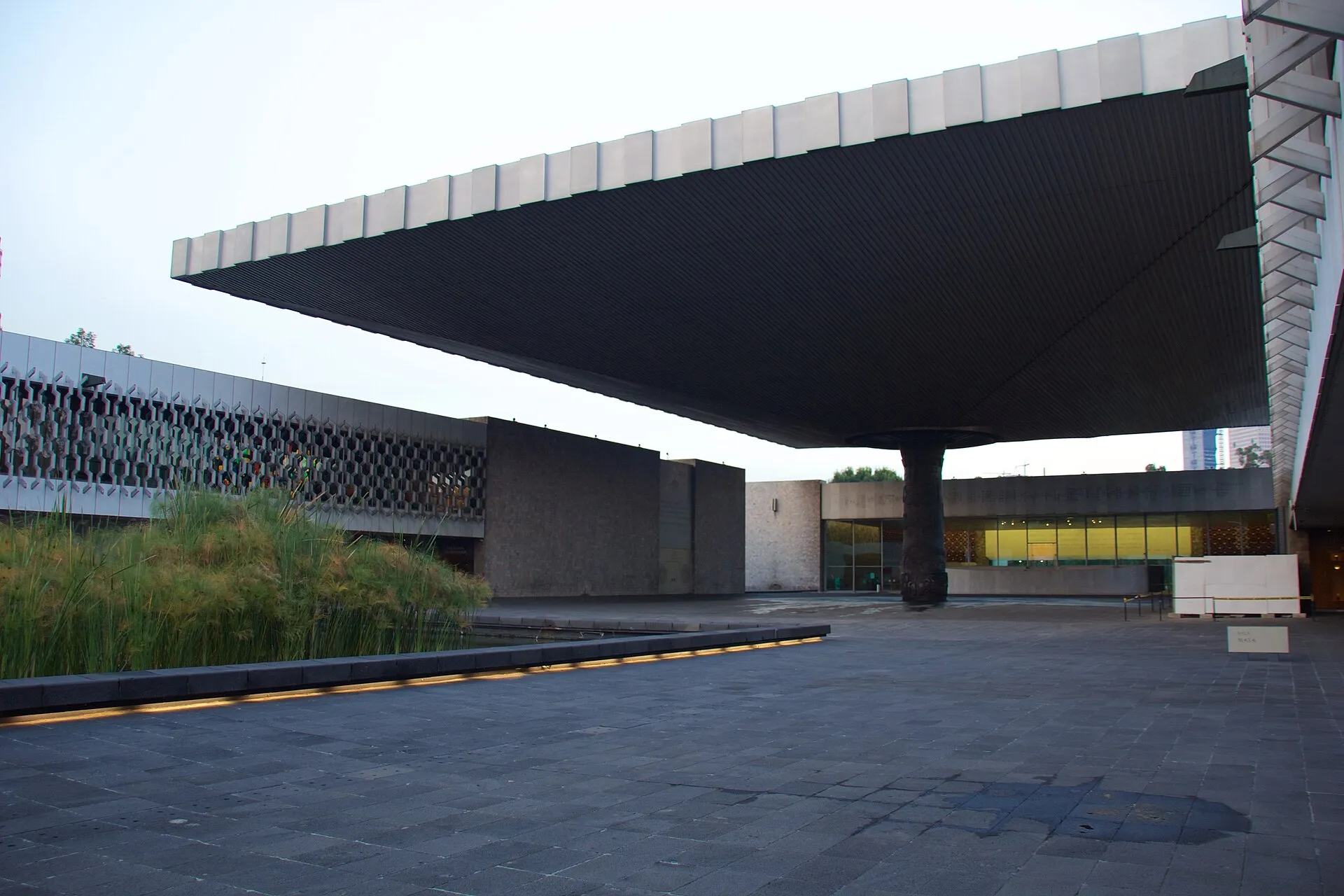
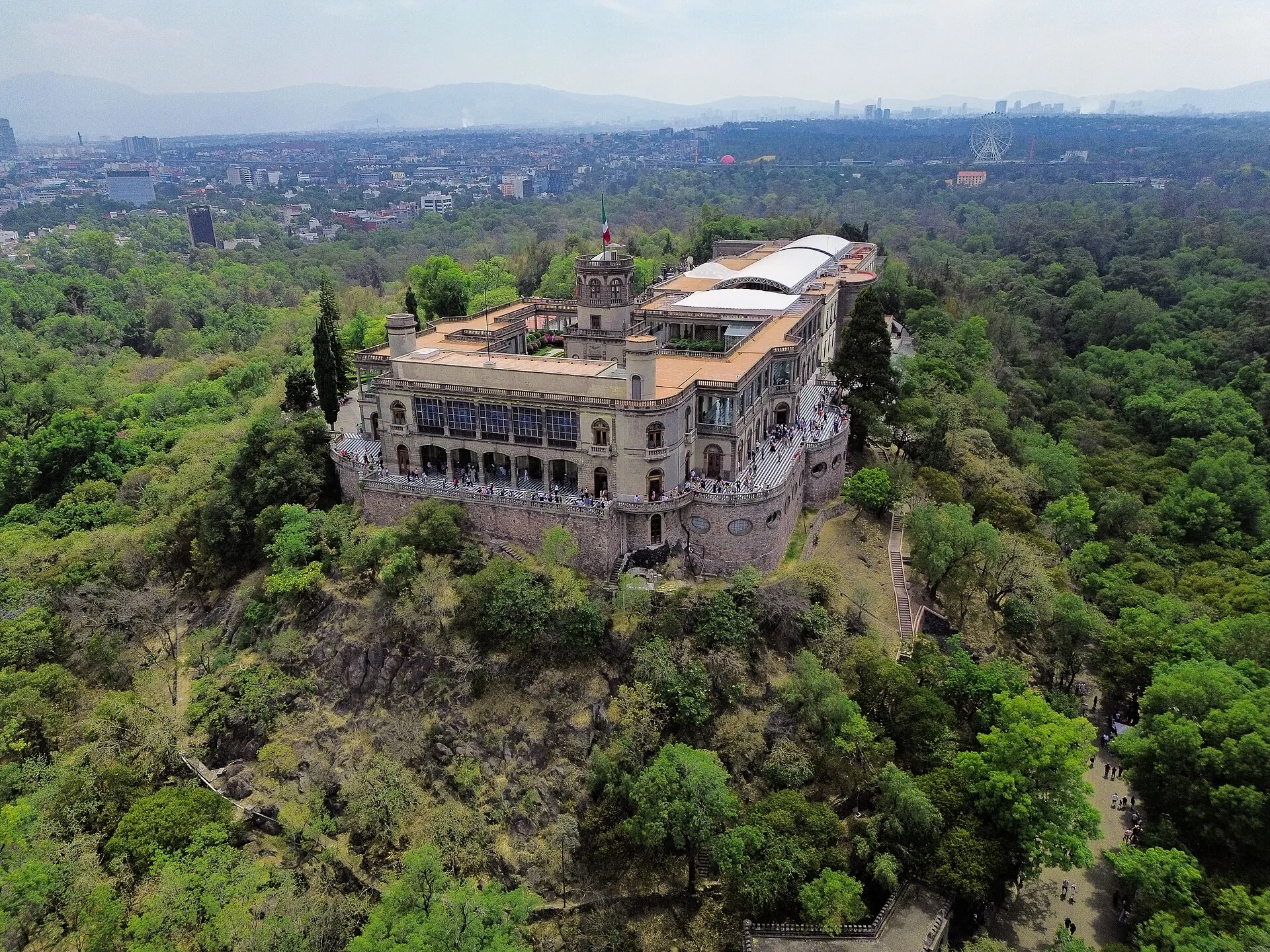
💡 The Short Version: Chapultepec Castle (Castillo de Chapultepec) sits on a rocky hill inside Chapultepec Park, with views straight down Paseo de la Reforma. It was the home of Emperor Maximilian and Empress Carlota from 1864 to 1867 and the summer residence of President Porfirio Díaz, and it houses the National History Museum. General admission is MXN 210 (MXN 105 for Mexican nationals and residents; under-13s free), as listed by the museum on 23 November 2026. It is closed Mondays and open Tue–Sun 09:00–17:00, an hour earlier than the Anthropology Museum closes. Or book a tour: the Mexico City: Chapultepec Castle and Anthropology Museum Tourad covers both park landmarks in 5 hours.
⚠️ Visit Chapultepec Castle first if you are pairing it with the Anthropology Museum. The castle closes at 17:00, an hour before the Anthropology Museum’s 18:00 closing, and the museum is shut every Monday of the year.
Ticket prices, hours and entry rules
Chapultepec Castle houses Mexico’s National History Museum (Museo Nacional de Historia), run by INAH. The prices below are from the museum’s own information page.
| Visitor category | Price (MXN) | Opening hours | Notes |
|---|---|---|---|
| General admission | MXN 210 | Tue–Sun 09:00–17:00 | Same price on Sundays for non-residents |
| Mexican nationals and residents of Mexico | MXN 105 | Tue–Sun 09:00–17:00 | Proof of nationality or residence required; free on Sundays |
| Children under 13; over-60s; teachers and students with valid ID; people with a disability | Free | Tue–Sun 09:00–17:00 | Teachers and students show a valid card |
| Mondays | Closed | Closed all day | Hours do not change on public holidays |
Gate and bag rules
- Official ticket points: the museum’s site names the booth at the start of the ramp and the INAH online sales site (ventadeboletosenlinea.inah.gob.mx) as the only official routes.
- No food or water bottles: the museum’s site says neither is allowed in. Drink before you start the climb.
- No tripods or selfie sticks: the site bans photo sessions, selfie sticks, stabilisers, tripods, monopods, flash, professional equipment and action cameras. It also says the museum is not responsible for unofficial services sold outside it.
- Getting up the hill: from the ticket booth at the start of the ramp, a paved ramp climbs through the trees to the castle. The same entrance area is by the Altar a la Patria (Niños Héroes monument).
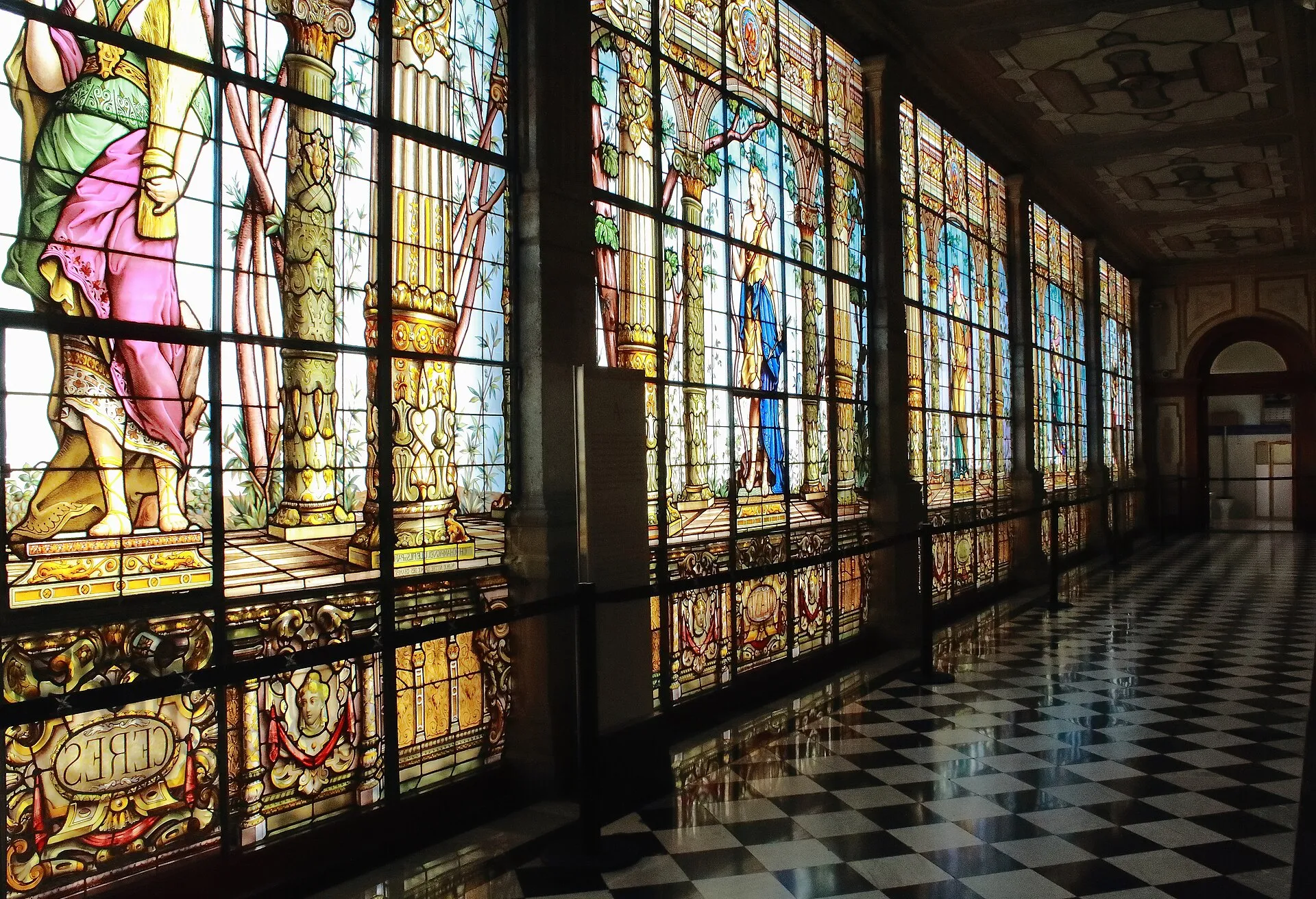 The Parisian stained-glass gallery in the Alcázar. Photo: Andy García García, Wikimedia Commons, CC BY-SA 4.0.
Guided tours combining Chapultepec Castle and Anthropology
The castle covers more than two centuries of Mexican history, from the viceregal palace begun in 1785 to the 1847 battle against US forces, Maximilian’s empire and the Revolution. The wall murals in particular reward having someone explain them.
Mexico City: Chapultepec Castle and Anthropology Museum Tour
From MXN 1,586 · 4.7 stars from 846 reviews · 5 hours
The Mexico City: Chapultepec Castle and Anthropology Museum Tourad visits the National Museum of Anthropology to learn about Mexico’s ethnic groups, then Chapultepec Castle, where its listing describes rooms full of classical European ornamentation.
Mexico City: Visit to Chapultepec Castle and the Anthropology Museum
From MXN 1,437 · 4.9 stars from 23 reviews · 5 hours
The Mexico City: Visit to Chapultepec Castle and the Anthropology Museumad is a half-day tour of the same two sights. Its listing mentions murals and views of the city.
Inside Chapultepec Castle: the two wings explained
The museum’s own history says work on the hilltop palace began in 1785 under Viceroy Bernardo de Gálvez. The building later became the Military Academy (the site of the 1847 defence by the Niños Héroes cadets during the Mexican–American War), the residence of Maximilian of Habsburg and Carlota in the 1860s, and a presidential residence until 1939, when President Lázaro Cárdenas ordered it turned into the National History Museum.
The summit complex splits into two sections. The museum says a visit takes at least an hour and a half; allow longer to see both.
1. The National History Museum (the history halls)
The numbered history halls cover Mexican history from the 1492 encounter between Europe and the Americas, through the viceroyalty, the 1810–1821 War of Independence, the Reform and Maximilian’s empire, and the Porfirio Díaz years, to the Revolution and the 1917 Constitution. The big wall paintings are the reason many visitors come:
- Juan O’Gorman’s Retablo de la Independencia (1960–61, Hall 6): a 15.7-metre allegory of the independence struggle in four acts, beginning with the unjust social order of New Spain.
- David Alfaro Siqueiros’s Del Porfirismo a la Revolución (1957–66, Sala Siqueiros): a mural about 77 metres wide on the Porfirio Díaz era and the Revolution, painted in acrylic and pyroxylin.
- José Clemente Orozco’s La Reforma y la caída del Imperio (1948, Hall 8): a monumental portrait of Benito Juárez, which the museum compares to great Olmec sculpture, above scenes of the fall of Maximilian’s empire.
- Jorge González Camarena: La fusión de dos culturas in Hall 2 and La Constitución de 1917, which shows Venustiano Carranza writing the constitution.
- Gabriel Flores’s La intervención norteamericana (1970): painted in the dome over the main entrance, it shows Juan Escutia, one of the Niños Héroes, falling with the Mexican flag during the 1847 battle.
2. The Alcázar (imperial and presidential apartments)
The Alcázar rooms are furnished to show the castle as Maximilian and Carlota lived in it (1864–1867) on the ground floor and as Porfirio Díaz and his wife Carmen Romero Rubio used it as a summer house (1883–1910) upstairs.
- Stained-glass gallery (Galería de Emplomados): five Paris-made windows commissioned by Porfirio Díaz around 1900, showing the goddesses Pomona, Flora, Hebe, Diana and Ceres, according to the museum.
- State rooms: the Alcázar rooms include a billiard room, a smoking room and a dining room, which the museum’s room texts trace through the Maximilian, Díaz and later presidential periods.
- Alcázar garden: formal hedges and flower beds on the terrace, designed from descriptions of the garden in Maximilian’s time.
- The Caballero Alto: the tower at the top of the hill that gave the building its fortress profile and its name, “castle”. In the 1870s it carried the main telescope of the national observatory.
- Carriages: the museum shows the ceremonial coach of Maximilian and Carlota, and notes that their everyday carriage was later used by President Benito Juárez.
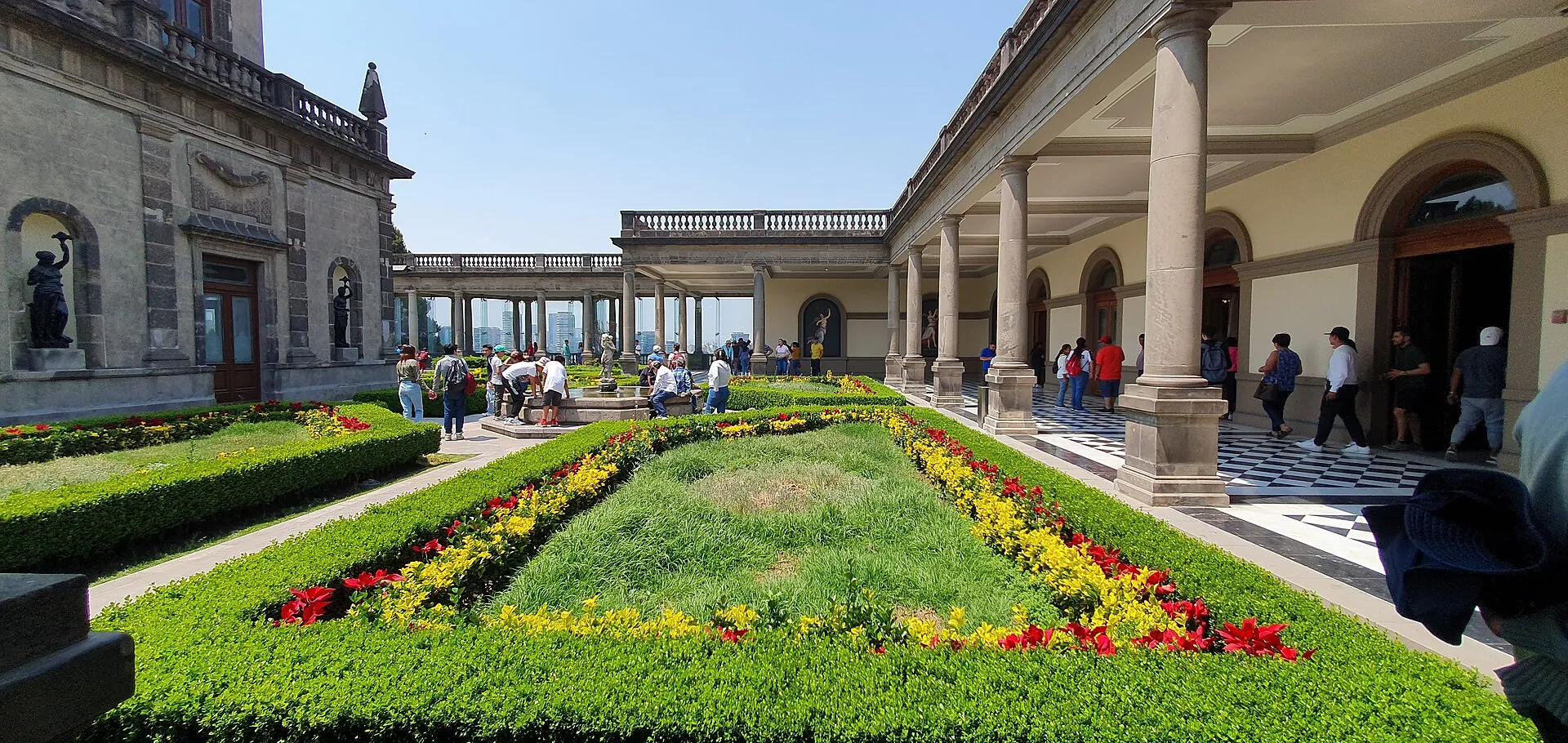 The Alcázar garden at Chapultepec Castle. Photo: Jbribeiro1, Wikimedia Commons, CC BY-SA 4.0.
The Paseo de la Reforma view
Maximilian ordered a broad avenue, first called Paseo de la Emperatriz, cut from the foot of Chapultepec Hill towards the historic centre so he could ride between his hilltop palace and the National Palace on the Zócalo. It is now Paseo de la Reforma.
From the castle’s terraces you look down that straight line of trees and towers, with the skyscrapers rising over the park canopy and the six marble columns of the Altar a la Patria below.
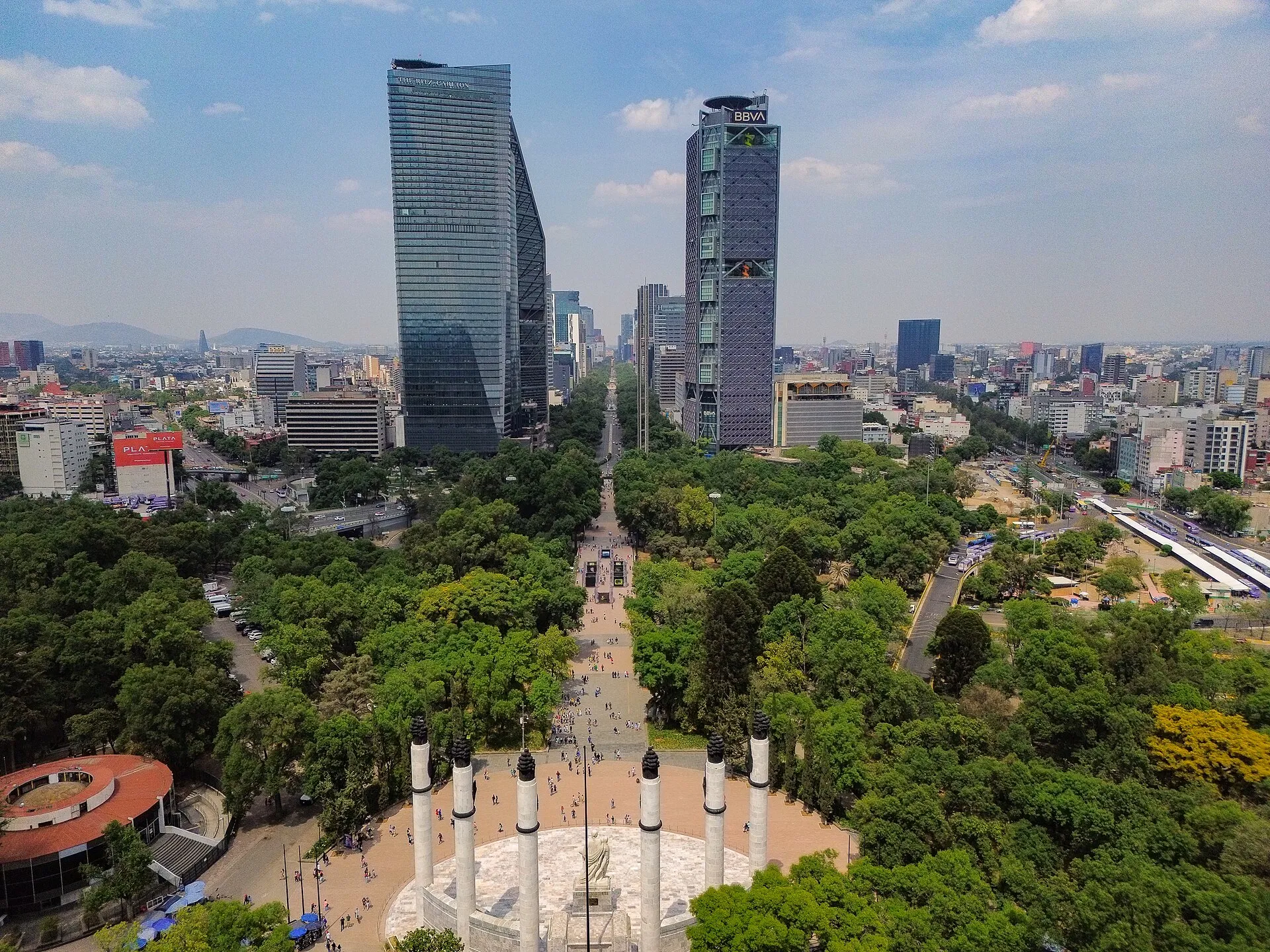 Paseo de la Reforma seen from Chapultepec Castle. Photo: ProtoplasmaKid, Wikimedia Commons, CC BY 4.0.
Exploring Chapultepec Park Section 1 after the castle
The castle crowns the First Section of the Bosque de Chapultepec, so there is plenty to see at ground level before or after your climb.
- Altar a la Patria (Niños Héroes Monument): at the foot of the castle hill stand six tall marble columns honouring the young military cadets who died defending Chapultepec Hill against US forces on 13 September 1847.
- Lago Mayor and Calzada de los Poetas: a walk west of the castle hill brings you past ahuehuete trees to the boating lake and shaded footpaths.
- Museo del Caracol (Galería de Historia): on the castle hill ramp, a spiral modernist building designed by Pedro Ramírez Vázquez, a compact museum that traces Mexican history from Independence to the 1917 Constitution with dioramas, and works well with children.
How to get to Chapultepec Castle and plan your day
The castle stands in the First Section of Chapultepec Park, at the end of the ramp that starts near the Altar a la Patria.
- By Metro: take Metro Line 1 (pink) to Chapultepec station, which the museum’s site says has direct access to the park (MXN 5 on the Tarjeta de Movilidad Integrada; see public transport). The ticket booth is at the start of the ramp.
- By Metro and Metrobús: the museum also lists Metro Auditorio (Line 7). From there take Metrobús Line 7 and get off at Gandhi, then walk through the park to the ramp up to the castle.
- Full-day park pairing: enter the castle at 09:00 and plan to finish by about 11:30. Break for coffee or lunch in Polanco or Condesa (see where to eat in Mexico City), then enter the National Museum of Anthropology in the early afternoon; it stays open until 18:00. The Museo de Arte Moderno is also in the park.
The rest of the park, including the zoo, the lakes, Los Pinos and the museums, is covered in Chapultepec Park; the Turibus Polanco circuit also stops by the park.
Common questions
How much are Chapultepec Castle tickets?
The museum's own site (Museo Nacional de Historia, run by INAH) lists general admission at MXN 210, with a 50 percent discount to MXN 105 for Mexican nationals and residents of Mexico who show proof. Entry is free for children under 13, over-60s, teachers and students with a valid card, and people with a disability. Prices as listed on 23 November 2026.
What are the opening hours of Chapultepec Castle?
The museum is open Tuesday to Sunday from 09:00 to 17:00 and closed every Monday of the year, holidays included. Its site says visitors begin to be cleared from the galleries 15 minutes before closing.
Is Chapultepec Castle free on Sundays?
Only for the Mexican public and foreign residents of Mexico. The museum's site gives that rule for Sundays, so visitors from abroad who are not residents pay the general price.
Where do I buy Chapultepec Castle tickets?
The museum's site names two official routes: the ticket booth at the start of the ramp up the hill, and the INAH online sales site at ventadeboletosenlinea.inah.gob.mx. It says it takes no responsibility for tickets bought anywhere else.
Can you bring water or food into Chapultepec Castle?
No. The museum's site says water bottles and food are not allowed in. It also bans photo shoots, selfie sticks, stabilisers, tripods, monopods, flash, professional camera equipment and action cameras.
How long does a visit to Chapultepec Castle take?
The museum says a visit takes at least an hour and a half. Allow longer if you walk up the hill ramp and stop at the Alcázar rooms, the murals and the terraces.