In this guide
💡 The Short Version: Visitors to Mexico City spend their time in Roma Norte, Condesa, Polanco, Juárez, Coyoacán, Chapultepec and Centro Histórico by day, and the usual problems there are everyday ones: pickpocketing on crowded public transport, street taxis, tap water and altitude fatigue at 2,240 metres. The UK FCDO’s advice for Mexico covers crime, ATMs and demonstrations, and it is worth reading before you travel.
⚠️ Three habits to keep: (1) Use Uber, DiDi or authorised sitio taxis instead of hailing a taxi in the street; (2) wear backpacks on your front and keep phones tucked away in crowded Metro and Metrobús stations; and (3) drink bottled or purified water only (agua purificada).
Neighbourhood-by-neighbourhood safety map
Mexico City has a metropolitan area of more than 21 million people, and conditions change from street to street. The table describes how the areas visitors use tend to feel.
| Neighbourhood | By day | In the evening | Practical notes |
|---|---|---|---|
| Roma Norte and Condesa | Leafy, with cafés, parks and dog walkers | Busy with restaurants and bars | Walkable bases for first-time visitors |
| Polanco | Upscale avenues, museums and embassies | Quieter, with restaurants and hotels | Spread out; Uber between sights |
| Juárez and Reforma | Busy business and hotel district | Busy on the main avenues | Transit hub; stay on well-lit streets west of Insurgentes |
| Coyoacán (historic centre) | Relaxed plazas and market | Lively around the main plazas | Take an Uber back after dark |
| Centro Histórico | Crowded (watch your pockets) | Empties once the shops close | Visit by day; avoid wandering north towards Tepito |
| Colonia Doctores (Arena México) | Urban and gritty | Quiet side streets | Take an Uber door to door to Lucha Libre |
| Tepito and La Merced back streets | Crowded markets with petty-theft risk | Avoid | Not tourist areas |
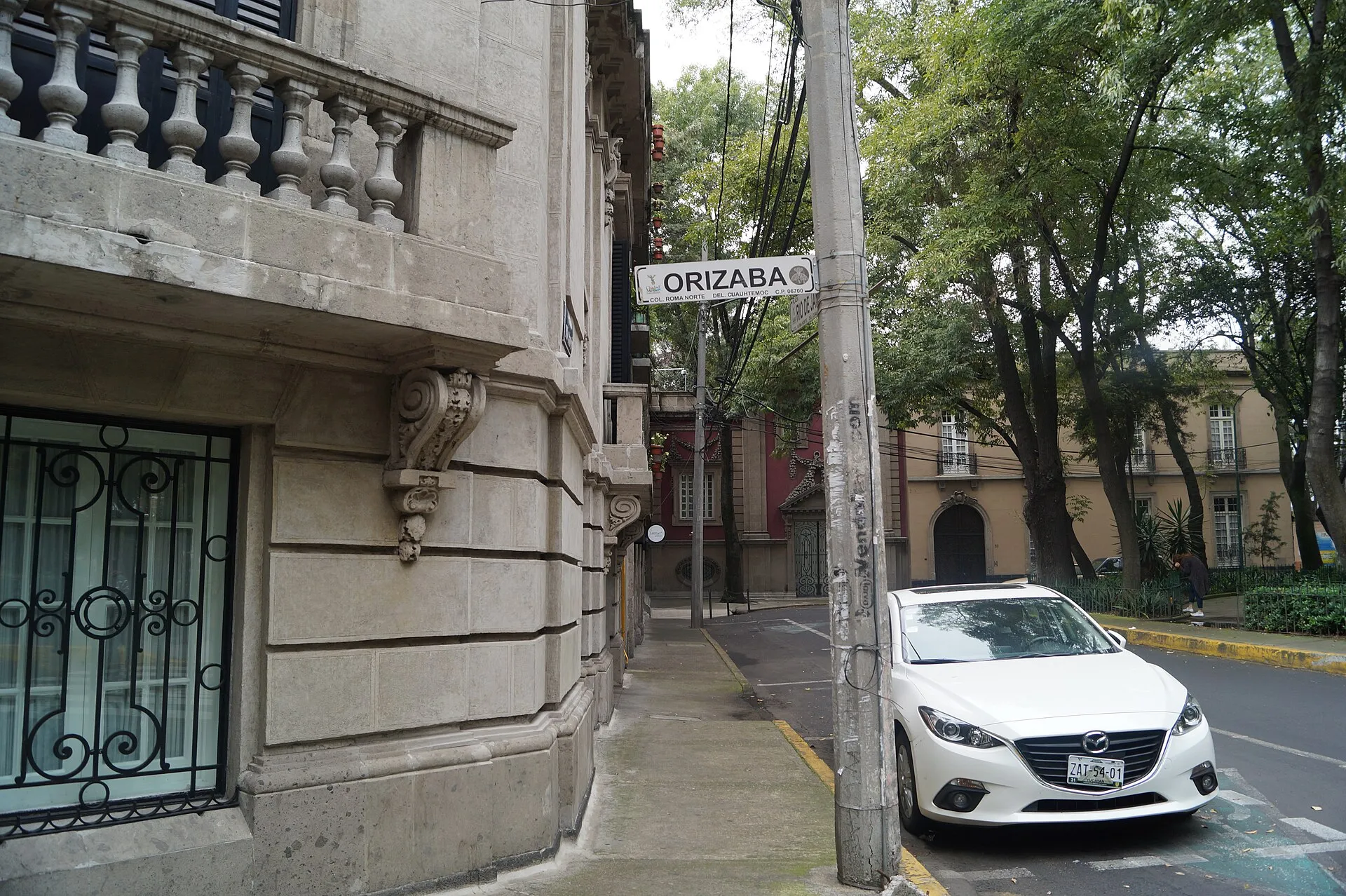 Stone corner building on Calle Orizaba near Plaza Río de Janeiro, Roma Norte. Photo: Pedro Camilo Márquez Vallarta, Wikimedia Commons, CC BY-SA 4.0.
Transport safety: Metro, Metrobús and ride-hailing
- Ride-hailing first after dark: Uber and DiDi show the price in the app, track the route and take cashless payment. Match the licence plate and driver photo before getting in, and share your trip status in the app if you are travelling alone late at night.
- Skip street-hailed taxis: Do not flag down a taxi from the kerb. If you need a traditional cab, ask your hotel or restaurant to call a registered sitio taxi.
- Public transit habits: The Metro and Metrobús are usable all day, but the UK FCDO notes that pickpocketing and theft are common on public transport. Weekday morning and evening peaks are the most crowded. Women and children can use the front Metro carriages reserved for them at all hours, every day (see our public transport guide).
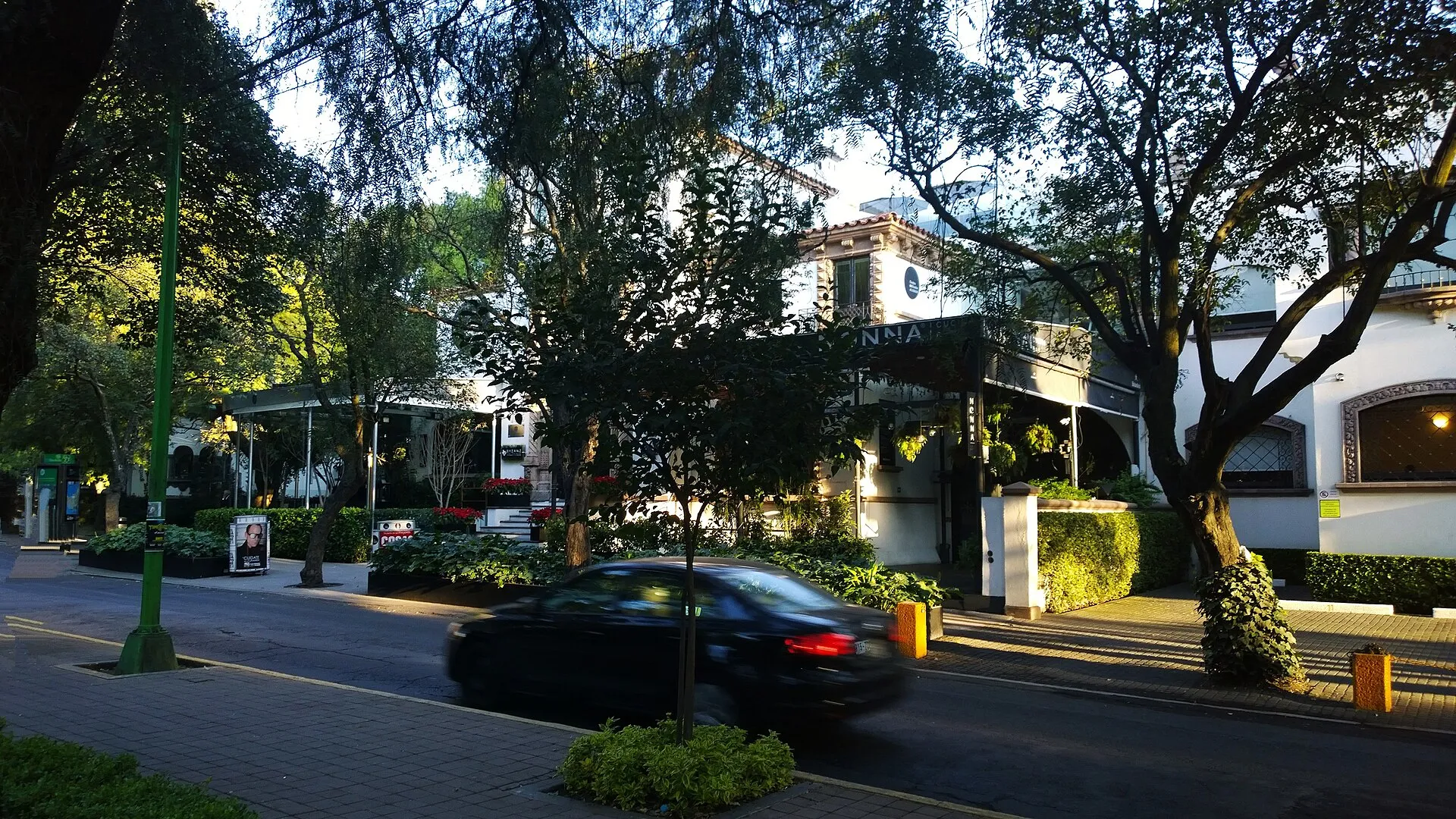 Tree-lined street beside Parque Lincoln in Polanco. Photo: randreu, Wikimedia Commons, CC BY 3.0.
Common tourist scams to recognise
- Terrace menus without prices: Touts along Calle Madero and the Zócalo invite visitors up to terraces overlooking the square. Fix: Sit only where the menu shows MXN prices before you order, and check la cuenta (the bill) before paying.
- Airport taxi touts: People in arrivals offering an “official Uber” or “VIP taxi” are not part of the airport’s list of authorised taxis. Walk past them and order inside the Uber app or through an authorised company (see Mexico City airport to city).
- ATMs and currency conversion: The UK FCDO says criminals have targeted people using ATMs and exchange offices, and advises using ATMs in daylight inside shops or malls, avoiding large withdrawals and watching who is around you. Decline currency conversion so your card is charged in MXN (see money in Mexico City).
- Xochimilco boat quotes: Agree the total price and the time before you board, and compare it with the borough’s listed MXN 750 per hour per boat. See the Xochimilco guide.
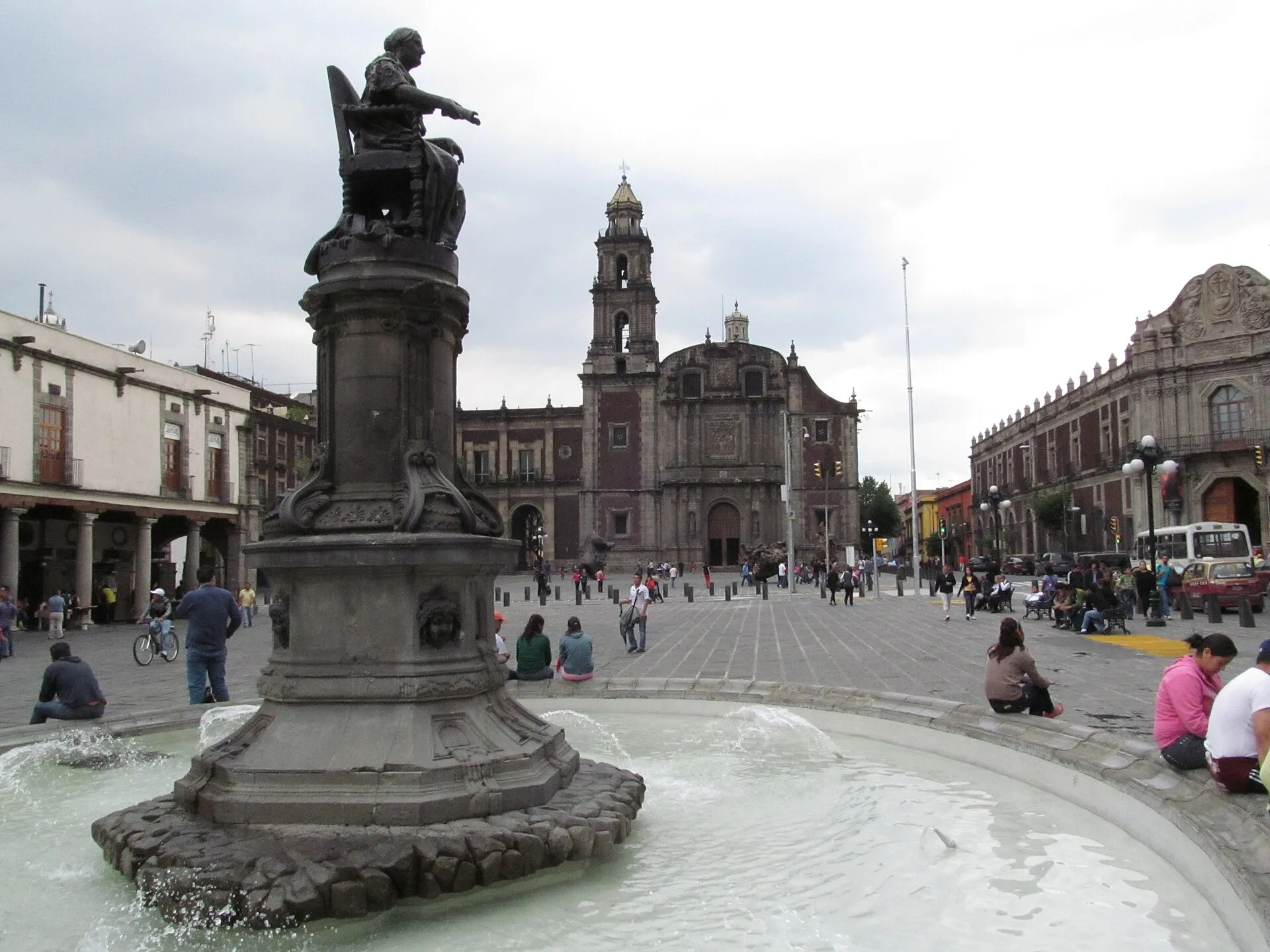 Plaza de Santo Domingo in Centro Histórico. Photo: Omarem, Wikimedia Commons, CC BY-SA 3.0.
Water, street food, altitude and earthquakes
- Water: Do not drink tap water anywhere in Mexico City. Buy sealed agua purificada bottles or refill from the large garrafón dispensers that hotels and apartments provide.
- Street food: Mexico City’s street food is a major draw. Eat where locals queue and the food is cooked in front of you, and skip pre-cut fruit that has sat out in the sun.
- Altitude (2,240 metres / 7,350 ft): Expect breathlessness on stairs, quicker dehydration and stronger sun on your first day. Drink extra water, go easy on mezcal your first evening and wear sunscreen.
- Earthquake alerts (Alerta Sísmica): Mexico City sits in an active seismic zone and runs an early-warning loudspeaker system. If you hear the siren outside a scheduled drill, move calmly to a green Punto de Reunión sign outside, away from glass and power lines, or follow building staff.
- Emergency numbers: Dial 911 for police, ambulance or fire. The UK FCDO lists the Mexico City Tourist Police on (0052) 55 5207 4155.
Common questions
Is Mexico City safe for tourists?
Visitors spend most of their time in a central corridor (Roma Norte, Condesa, Polanco, Juárez, Coyoacán, Chapultepec, Reforma and Centro Histórico by day) and the usual problem there is petty theft. The UK FCDO says street crime is a serious issue in Mexico's major cities and that pickpocketing and theft are common, including on public transport. Take the precautions you would in any large city.
Which neighbourhoods in Mexico City do visitors usually stay in?
Roma Norte, Condesa, Polanco, Juárez (around Paseo de la Reforma) and Coyoacán are the usual bases. They are walkable and have busy streets with restaurants and cafés well into the evening.
Which areas of Mexico City should tourists skip?
Do not wander on foot into Tepito (just north of Centro Histórico), the back streets around La Merced market or Colonia Doctores after dark. Take an Uber door to door to Arena México in Doctores for Lucha Libre.
Is it safe to walk around Centro Histórico at night?
The main pedestrian streets, such as Calle Madero, and the Zócalo and Alameda Central are busiest in the daytime and early evening, and side streets empty once the shops close. Enjoy Centro by day and take an Uber back to Roma, Condesa or Polanco for late evenings.
Can you drink tap water in Mexico City?
No. The UK FCDO's advice for Mexico is to drink only boiled or bottled water and to avoid ice in drinks. Use sealed or filtered water (*agua purificada*) and, if you want ice, ask for *hielo purificado* at a place that makes clear it uses purified water.
Is Mexico City safe for solo female travellers?
Many women travel alone in Mexico City. Stay in a busy neighbourhood such as Roma, Condesa, Polanco or Coyoacán, use the front Metro carriages reserved for women and children, take Uber or DiDi after dark and keep bags zipped across your front in crowded plazas.