One of 2 self-guided walks in Mexico City. See every walk.
In this guide
💡 The Short Version: Mexico City’s Centro Histórico runs from Aztec ruins to colonial palaces and early 20th-century marble halls along one flat corridor of about 3.5 km. Start at the Zócalo, look into the Gran Hotel Ciudad de México, visit the Metropolitan Cathedral and the Templo Mayor overlook, loop north to Plaza de Santo Domingo, walk west down pedestrianised Calle Madero past the Palacio de Iturbide and Casa de los Azulejos, see Palacio Postal and the Torre Latinoamericana, and finish at Palacio de Bellas Artes and Alameda Central. Or book a tour: the 3-hour Mexico City: Historic Center Essentials Walking Tourad is led by a certified local guide and covers the Zócalo, the Cathedral, Templo Mayor and Bellas Artes.
⚠️ Watch for Monday museum closures. You can walk this street route any day of the week, including Mondays, but Templo Mayor, Palacio de Bellas Artes and MUNAL close every Monday. Start around 09:00 to stroll Calle Madero before the crowds build.
The route
Map of the walk numbered stops in walking order
Open the whole route in Google Maps - all ten stops in walking order, set to walking directions for your phone.
- Distance: about 3.5 km, flat
- Duration: 90 minutes non-stop, or 3–4 hours with church interiors, Palacio Postal and coffee stops
- Start: Metro Zócalo/Tenochtitlan (Line 2)
- Finish: Metro Bellas Artes (Lines 2 & 8) or Hidalgo (Lines 2 & 3)
| Stop | Approx. distance | Entry cost (MXN) | Highlights |
|---|---|---|---|
| 1. Zócalo | 0.0 km | Free | Ceremonial square, giant flag, National Palace facade |
| 2. Gran Hotel Ciudad de México | 0.2 km | Free lobby look | Art Nouveau lobby and a large stained-glass ceiling |
| 3. Metropolitan Cathedral | 0.4 km | Free | Leaning columns, Altar of the Kings, Sagrario facade |
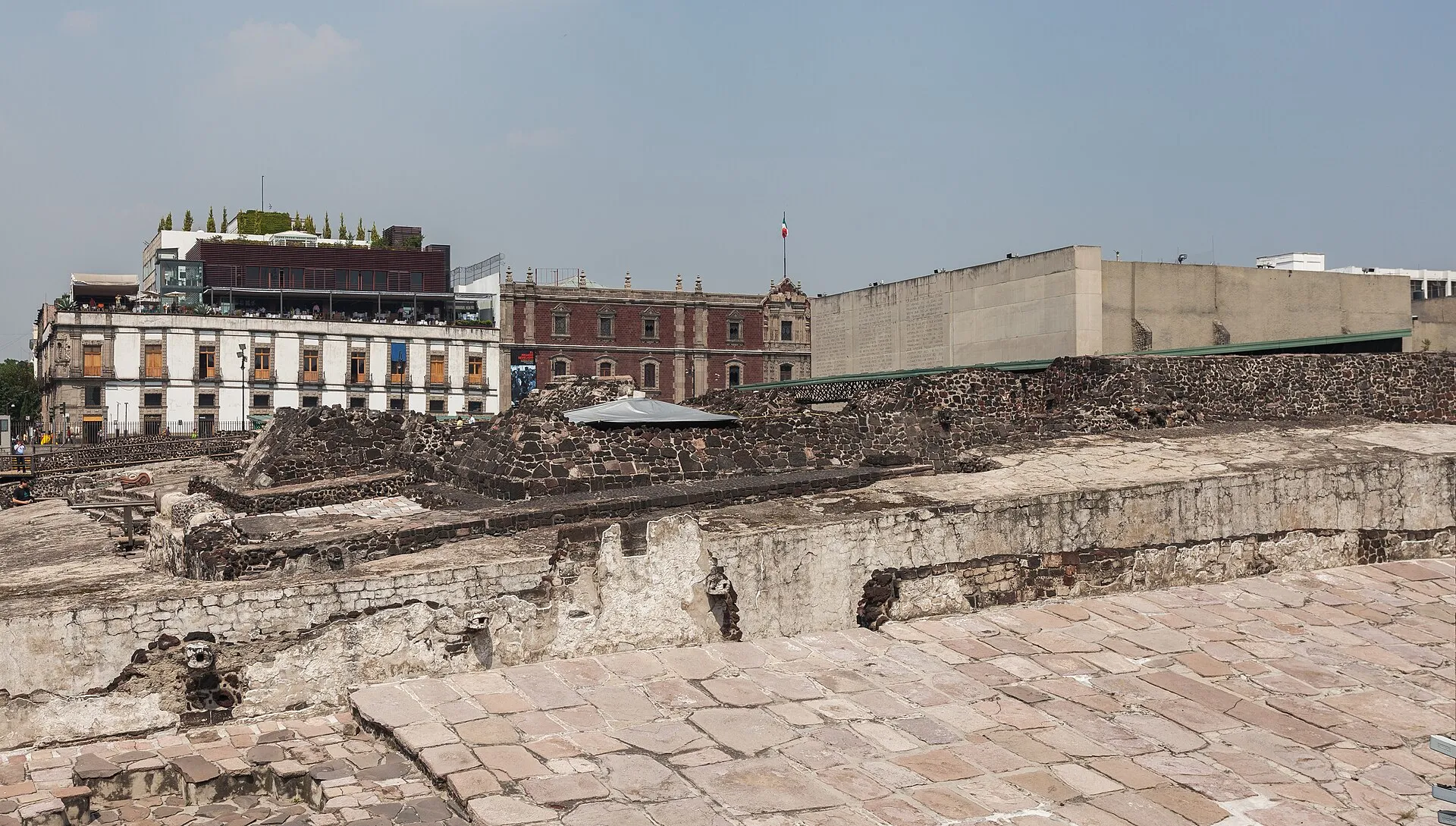
| 4. Templo Mayor | 0.6 km | Free overlook / MXN 210 inside | Aztec Great Temple ruins beside a colonial street |
| 5. Plaza de Santo Domingo & Calle Donceles | 1.1 km | Free | Colonial arcades, public scribes, antiquarian bookshops |
| 6. Calle Madero | 1.9 km | Free; Palacio de Iturbide free | Pedestrian spine, Palacio de Iturbide, Atrio de San Francisco |
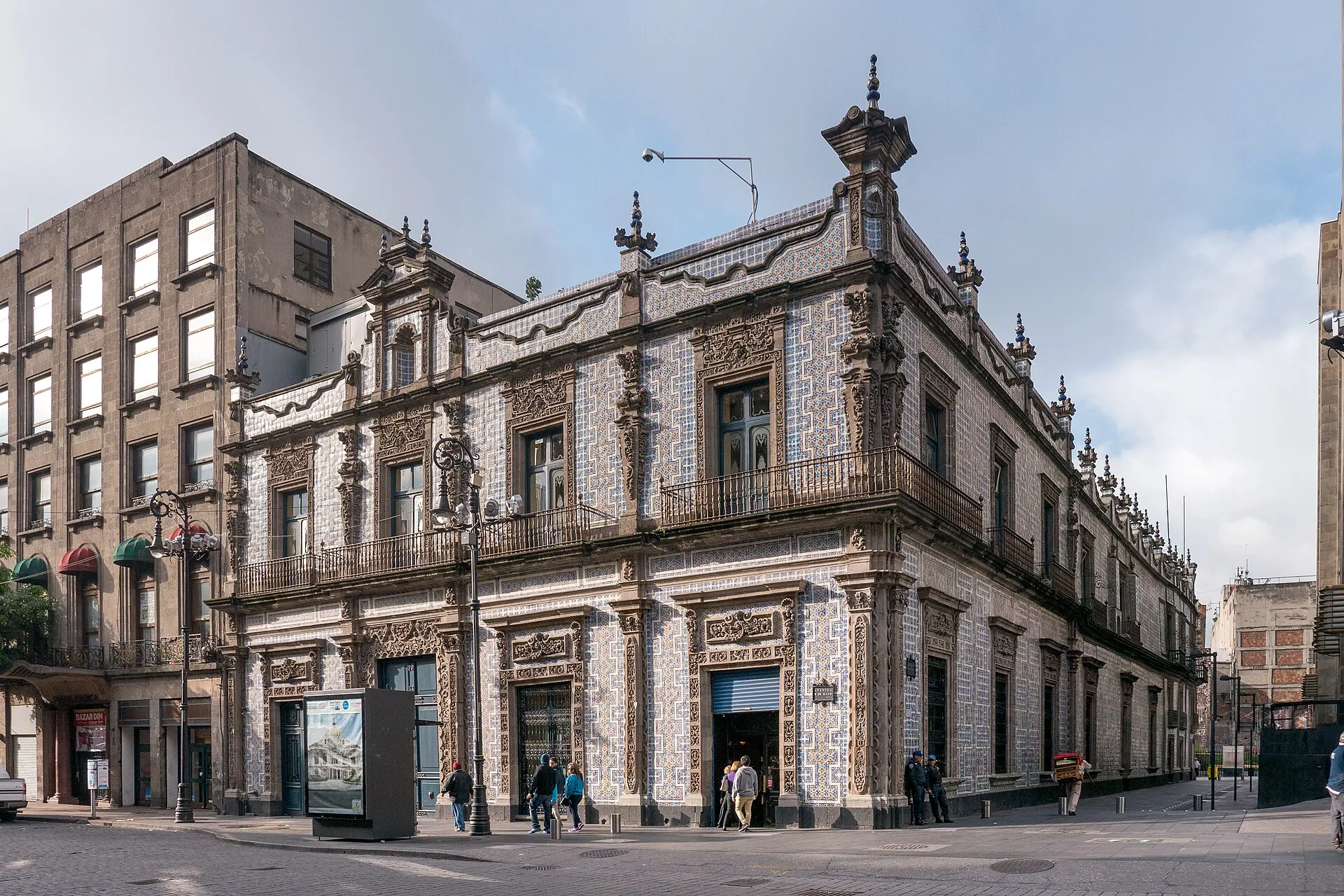
| 7. Casa de los Azulejos | 2.3 km | Free to peek / cost of a coffee | 18th-century tiled palace with an Orozco stairwell mural |
| 8. Palacio Postal & Torre Latinoamericana | 2.6 km | Free post office hall | Boari’s 1907 post office and the Mirador tower |
| 9. Palacio de Bellas Artes | 2.9 km | Free exterior / MXN 95 museum | Marble palace with murals by Rivera, Orozco and Siqueiros |
| 10. Alameda Central | 3.5 km | Free | Park laid out in 1592 and the Hemiciclo a Juárez |
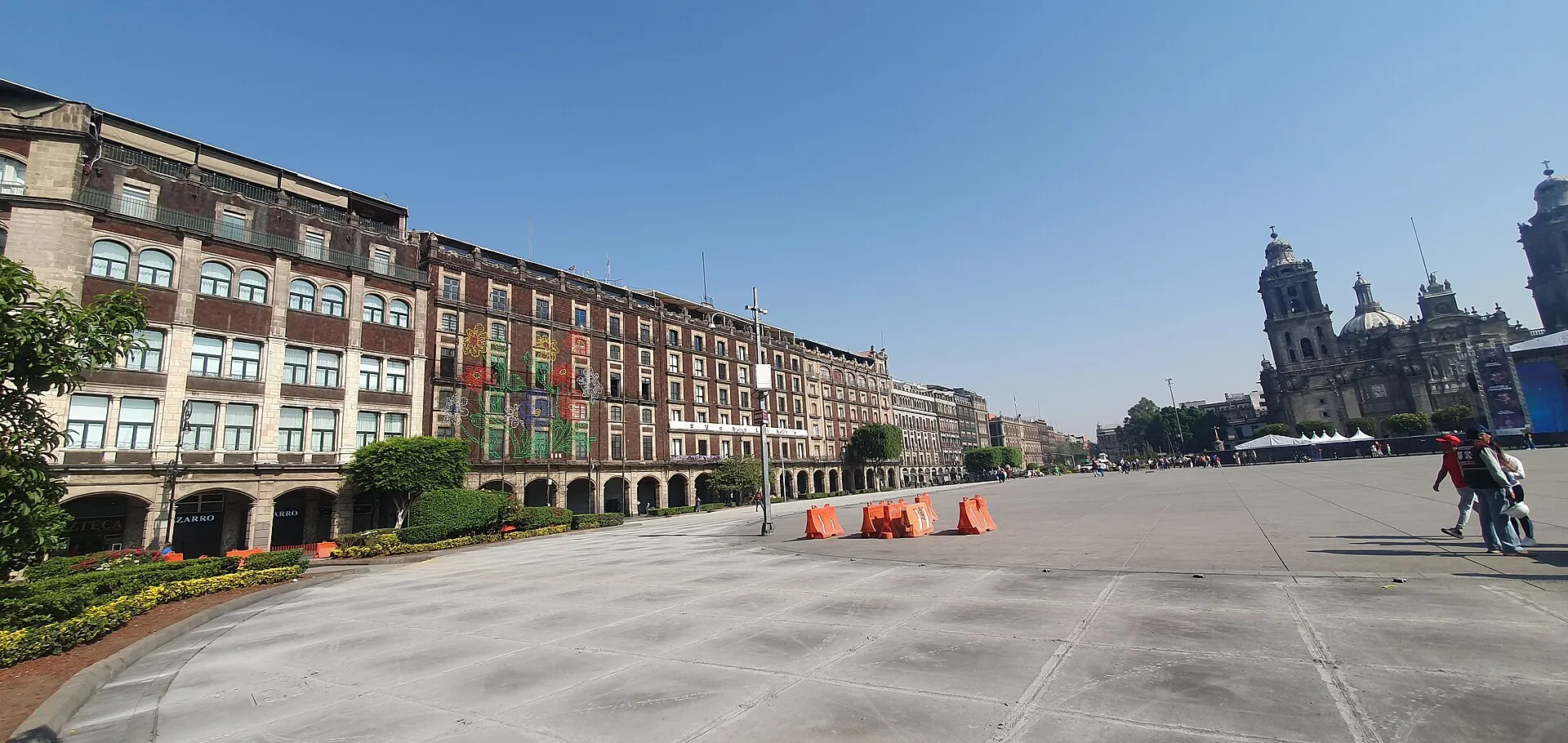 The Zócalo west-side portales looking towards the Cathedral. Photo: José Luiz, Wikimedia Commons, CC BY-SA 4.0.
1. Zócalo
Step up out of Metro Zócalo/Tenochtitlan (MXN 5 on the Tarjeta de Movilidad Integrada; see public transport) onto the stone expanse of Plaza de la Constitución. Pause on the west side beside the Portal de Mercaderes arches to frame the square, the giant central flag and the National Palace across the plaza.
2. Gran Hotel Ciudad de México
The Gran Hotel Ciudad de México is at 16 de Septiembre 82, just off the Zócalo. Its own site describes Art Nouveau architecture, a stained-glass work by Jacques Grüber that it calls one of the largest in the world, and a Terraza restaurant with views over the square. Look into the lobby for a minute, or have a drink on the terrace.
3. Metropolitan Cathedral
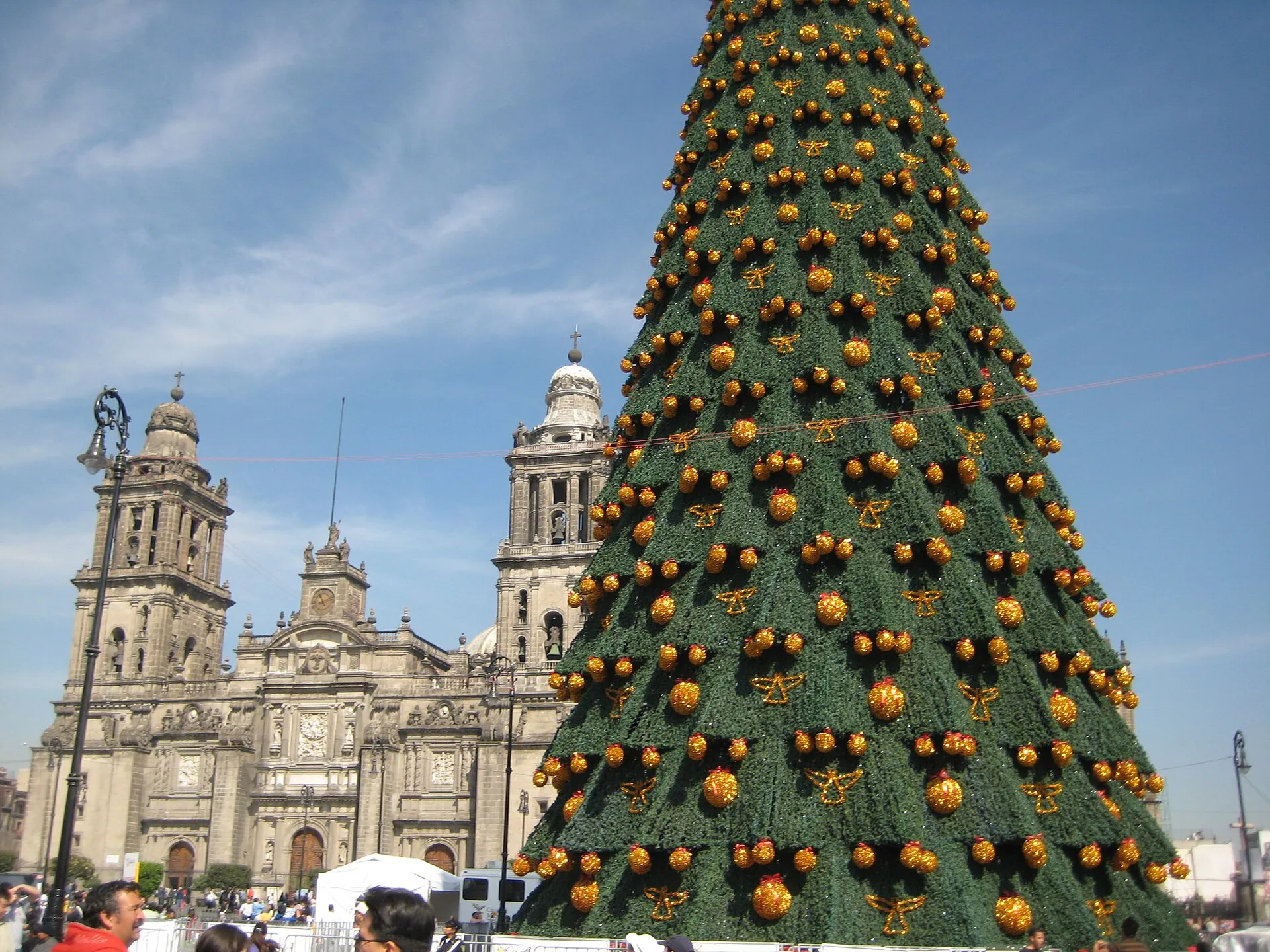
Cross to the north side of the square and step inside the Metropolitan Cathedral, built between 1573 and 1813. It stands on soft lakebed ground, so notice how the stone piers lean before you look at the gilded Altar de los Reyes at the rear and the Churrigueresque Sagrario Metropolitano chapel attached to the east side. It is an active church, so keep quiet during Mass.
4. Templo Mayor
Leave the Cathedral on its east side and take Calle Seminario. Even if you save the Templo Mayor ruins and museum (MXN 210 general admission, Tue–Sun 09:00–17:00) for later, you can see part of the excavated foundations of Tenochtitlan’s Great Temple from the street, which shows how colonial Mexico City was built on top of the Aztec capital. Allow about two hours for the ruins and museum.
5. Plaza de Santo Domingo and Calle Donceles
Continue north up Calle República de Brasil to Plaza de Santo Domingo, a colonial square quieter than the Zócalo.
- Portal de los Evangelistas: along the colonnade, evangelistas (public scribes) work on typewriters, producing letters, forms and invitations for customers.
- Baroque architecture: the square is framed by the Templo de Santo Domingo and the former Palace of the Inquisition, which houses a medical museum.
- Calle Donceles: from the plaza, head for Calle Donceles, a street of secondhand and antiquarian bookshops. Browse for prints and architecture books, then turn south towards Calle Madero.
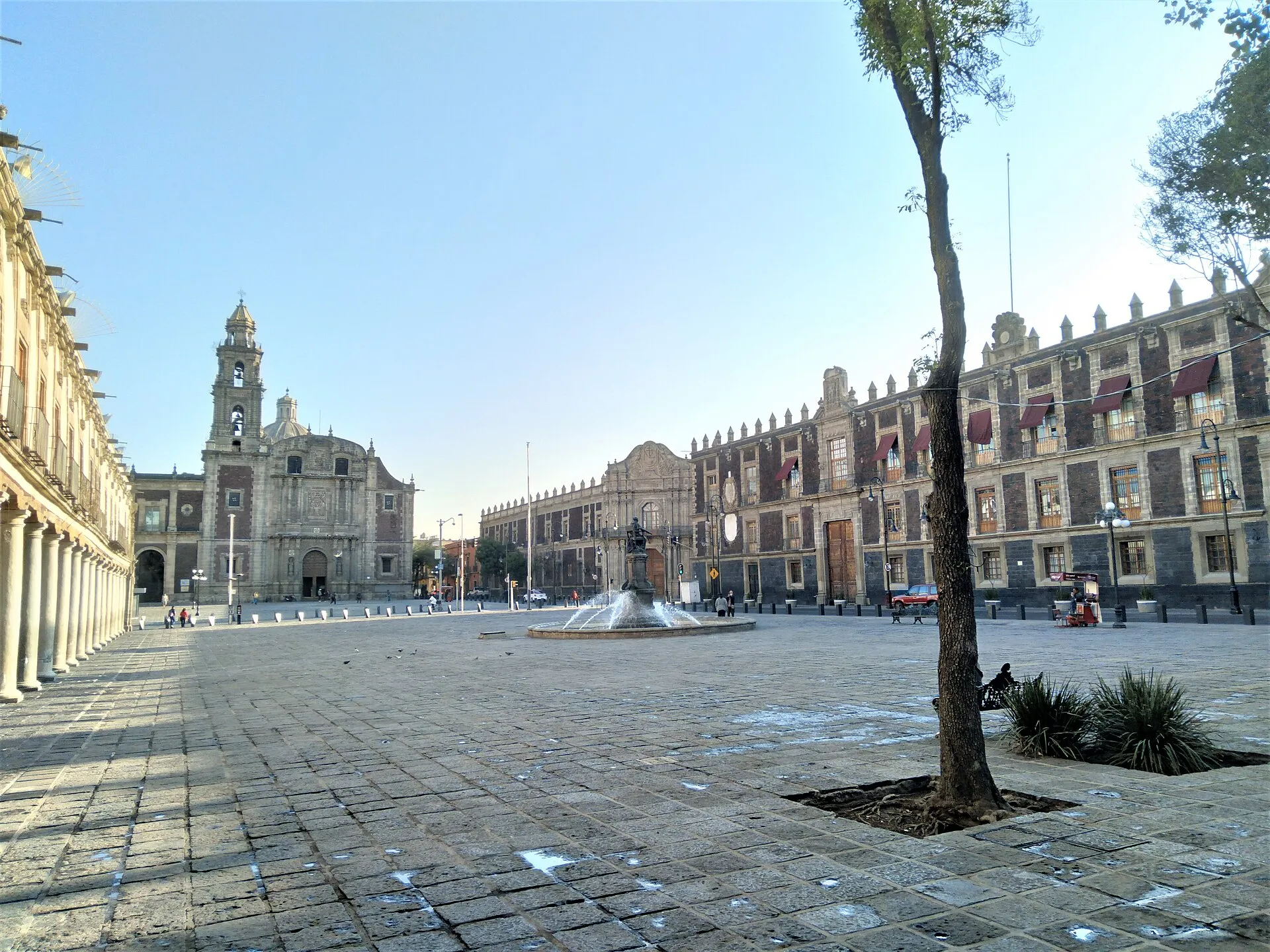 Plaza de Santo Domingo and its colonial colonnade. Photo: YoelResidente, Wikimedia Commons, CC BY-SA 4.0.
Guided walking tour alternative
If you want a guide to connect the sights along this route:
Mexico City: Historic Center Essentials Walking Tour
From MXN 445 · 4.8 stars from 1,429 reviews · 3 hours
The Mexico City: Historic Center Essentials Walking Tourad is a 3-hour walk with a certified local guide. Its listing names the Zócalo, the Cathedral, Templo Mayor and Bellas Artes, along with hidden spots and stories. That leaves your afternoon open for museums or a Mexico City food tour.
6. Calle Madero
Avenida Francisco I. Madero is the pedestrian street that links the Zócalo to Bellas Artes. Walk west at an easy pace and look above the ground-floor shopfronts at the carved stone balconies and reliefs:
- Palacio de Cultura Banamex, Palacio de Iturbide (Madero 17): free to enter, open daily 10:00 to 19:00 according to Fomento Cultural Banamex. The three-level baroque palace was built between 1779 and 1785 by Francisco Guerrero y Torres, and Agustín de Iturbide lived here until March 1823, after he had been crowned Emperor of Mexico. Free guided visits run daily at 12:00, 14:00 and 16:00.
- Atrio de San Francisco (Madero 7): a free exhibition space run by Museo Soumaya, open daily 09:00 to 20:00 per the Soumaya site.
7. Casa de los Azulejos
Across from San Francisco stands the House of Tiles (Casa de los Azulejos, Madero 4), an 18th-century mansion clad in blue-and-white Puebla Talavera tiles. It houses a Sanborns restaurant and shop.
- Go inside: walk into the covered courtyard, with its columns, fountain and staircase bearing José Clemente Orozco’s 1925 mural, Omnisciencia. It is a handy place for coffee, chilaquiles or a restroom stop (see where to eat in Mexico City for more Centro picks).
8. Palacio Postal and Torre Latinoamericana
At the western end of Calle Madero you reach wide Eje Central Lázaro Cárdenas, with two very different landmarks close together:
Torre Latinoamericana (Mirador)
The tower opened in 1956. Its own site lists a Mirador observation deck, a restaurant (Miralto) and two museums, and the deck looks straight down onto Palacio de Bellas Artes and Alameda Central. The tower’s site, torrelatinoamericana.com.mx, is the place to check current prices and hours.
Palacio Postal (Central Post Office)
Cross Eje Central and walk one block north along Calle Tacuba to Palacio Postal, the working Central Post Office, completed in 1907 to a design by Adamo Boari, the Italian architect who also began Bellas Artes. Look inside at its stonework, bronze ironwork, marble floors, double staircase and skylight.
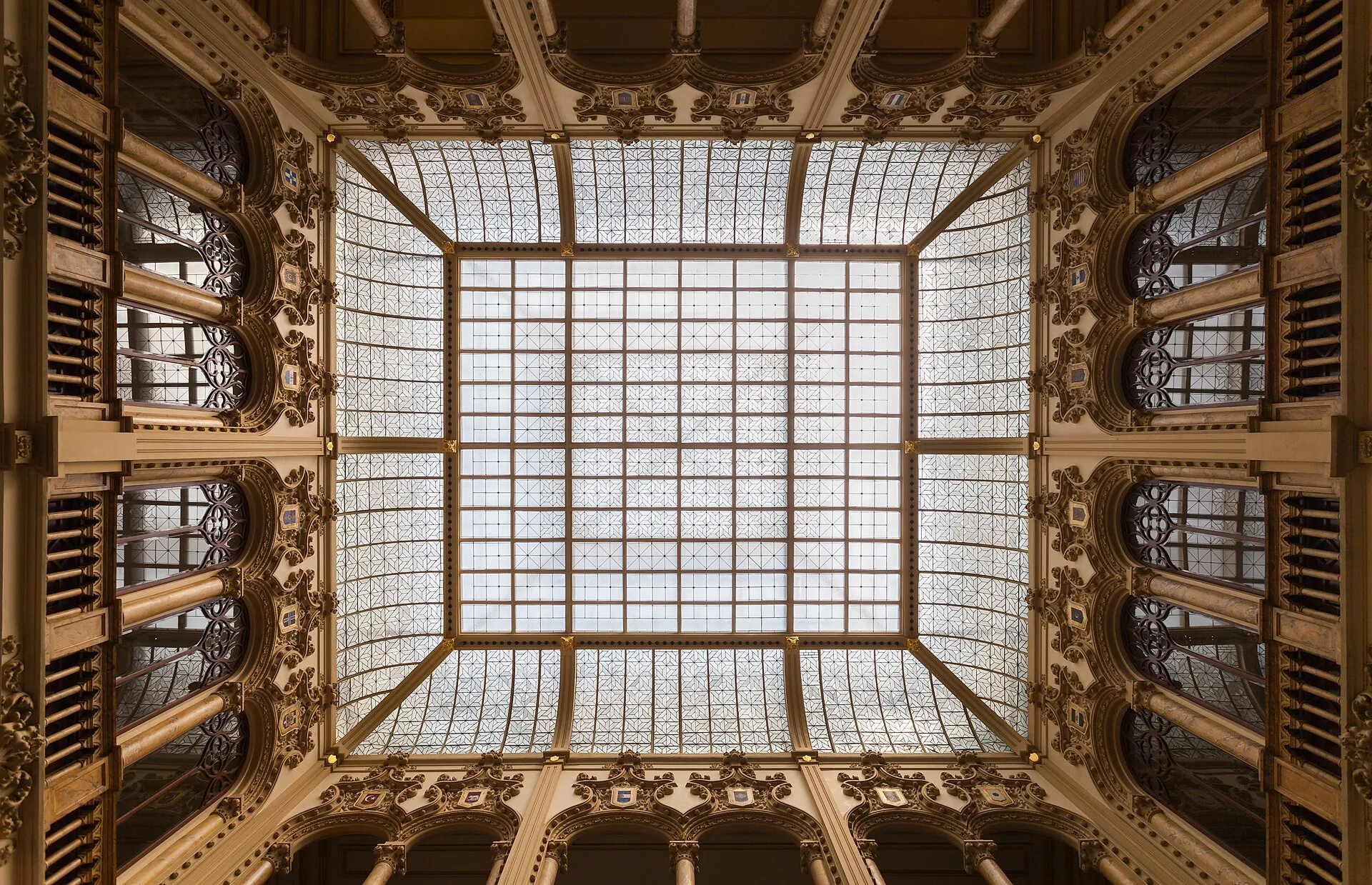 The skylight and ironwork inside Palacio Postal. Photo: Diego Delso, Wikimedia Commons, CC BY-SA 4.0.
9. Palacio de Bellas Artes
Walk west from Palacio Postal across the esplanade to Palacio de Bellas Artes. The museum lists MXN 95 admission for its murals, free on Sundays, open Tue–Sun 10:00–18:00 and closed Mondays.
- Optional detour: MUNAL (Museo Nacional de Arte) is at Tacuba 8, beside the Post Office. Its own site lists Tuesday to Sunday 10:00 to 18:00, with last entry at 17:30, and closure on 1 January and 25 December. It is housed in a neoclassical palace and shows Mexican art.
10. Alameda Central
Stroll west past Bellas Artes into Alameda Central, laid out in 1592, and sit by the white marble Hemiciclo a Juárez monument. From here walk south to Barrio Chino or Mercado de San Juan for lunch before returning to Roma, Condesa or Juárez via Metro Bellas Artes (Line 2/8) or Metrobús Line 4.
Practical walking tips and onward walk
- Footwear and altitude: Centro Histórico is flat, but cobblestones and uneven flagstones reward cushioned shoes. Drink more water than usual at 2,240 metres.
- Cash and snacks: carry small notes for street tacos, fresh juice and public restrooms (see money in Mexico City). Churrería El Moro, open since 1935, has a branch at Eje Central Lázaro Cárdenas 42 that its own site lists as open 24 hours every day.
- Street awareness: keep phones tucked away in tight crowds on Calle Madero, and plan your Centro Histórico walk for daytime; save evenings for Lucha Libre at Arena México or dining in Roma and Condesa.
- Next walk: on another day, explore the city’s leafy western and southern neighbourhoods with our Roma Norte, Condesa and Coyoacán walk.
The Palacio Nacional and SEP murals along this route are explained in Diego Rivera murals in Mexico City, and the Turibus Historic Centre circuit covers the same streets by bus.
Common questions
How long does the Centro Histórico walking route take?
The route is about 3.5 km on flat ground and takes about 90 minutes of pure walking, or 3 to 4 hours at a sightseeing pace with stops inside the Metropolitan Cathedral, Palacio Postal, Casa de los Azulejos and Palacio de Iturbide. Add 2 more hours if you also tour Templo Mayor and Palacio de Bellas Artes.
When should I walk Centro Histórico?
Start around 09:00 on a Tuesday to Saturday. Templo Mayor opens at 09:00 and Palacio de Bellas Artes at 10:00, so the route lines up with their opening times, and Calle Madero is quieter early.
Is Centro Histórico safe to walk on your own?
During daylight the main tourist streets (the Zócalo, Calle Madero, Tacuba, Donceles, 5 de Mayo and Alameda Central) are busy with locals and visitors. Keep bags zipped in front, watch your phone in dense crowds on Madero, and stick to the main streets after dark.
Can I walk Centro Histórico on a Monday?
Yes. The Zócalo, the Metropolitan Cathedral, Plaza de Santo Domingo, Calle Madero, Casa de los Azulejos and Alameda Central can all be visited on Mondays, and the Palacio de Iturbide is open daily. Templo Mayor, MUNAL and the Palacio de Bellas Artes museum close on Mondays, so Tuesday to Sunday gives you full museum access.
Is Palacio Postal free to enter?
The Palacio Postal, completed in 1907, is a working post office, and its main hall can be seen from inside. Opening hours follow the post office's counter hours.
Can I go up the Torre Latinoamericana?
Yes. The tower's own site lists a Mirador observation deck, a restaurant and two museums. Check torrelatinoamericana.com.mx for current prices and opening hours before you go.